Weekly Word is a weekly post intended to illustrate the meaning and use of a single word. The chosen word will begin with a different letter of the alphabet each week, as Louise (my daughter) and I work our way through the alphabet.
stuffy musty airless unventilated fusty close muggy stifling suffocating oppressive stale stagnant smelly fetid malodorous rank damp acrid
Antonyms:
airy ventilated
Related Forms:
Frowstier (comparative adjective)
Frowstiest (superlative asjective)
Other words from Frowsty:
Frowstily (adverb)
Frowstiness (noun)
Word Origin:
British
First recorded in 1860–65; perhaps dialectal variant of frowzy (of unknown origin)
Use the Word in a Sentence:
1. Mary couldn’t understand how her sophisticated mother could enjoy the company of a gaggle of frowsty old women who spent their afternoons in an even frowstier old bingo hall.
2. Doctor Simons caught his breath as he followed the old man into his home. An overpowering stench of sickness filled the frowsty, overly warm room and his first impulse was to throw back the shutters to allow the fresh air to circulate.
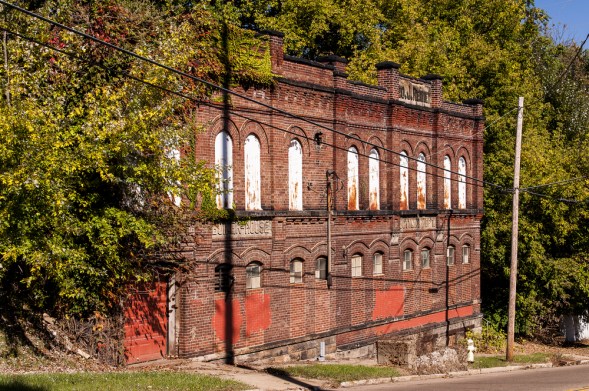
3. The frowstiness of the air inside the derelict brewery told of years of it being locked and barred from the outside world.
***
If you would like to join us in doing this weekly post, both Louise and I would be happy to see you. You can pick of your own word and illustrate its use in any way you choose(even a short story) or use your chosen word to follow a similar pattern to our posts.
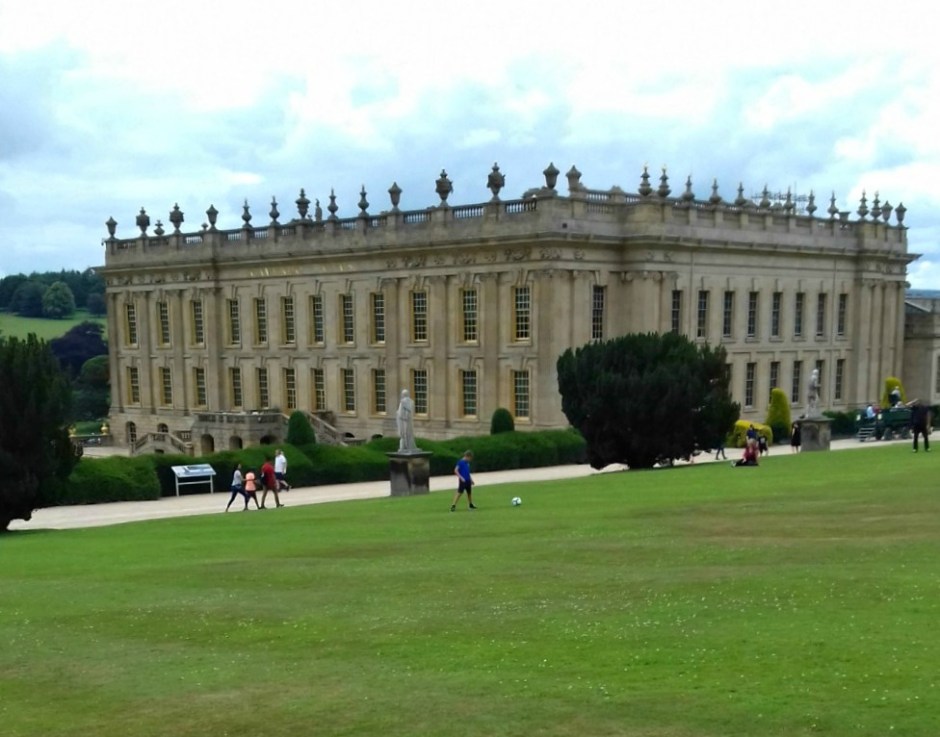
Chatsworth House is probably the best known of the stately homes in Derbyshire and has been voted Britain’s favourite country house several times. It is situated nine miles west of Chesterfield and three and a half miles north-east of Bakewell.
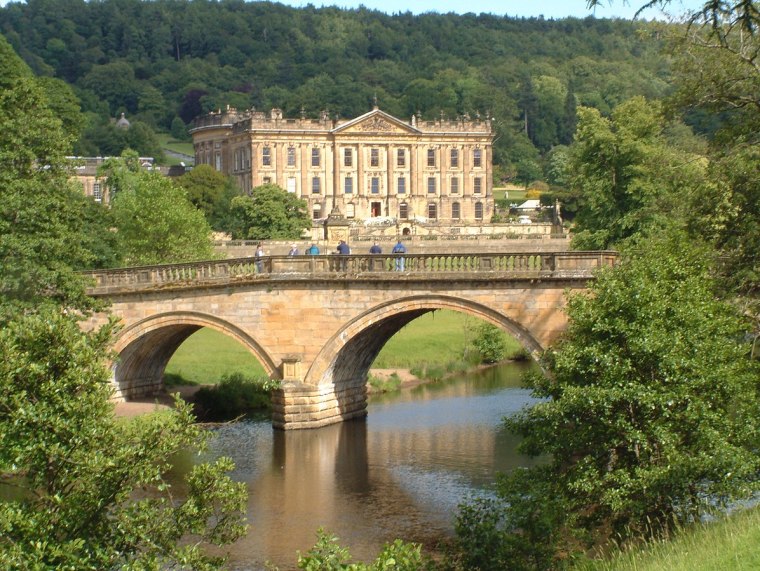
The house stands on the east bank of the River Derwent, looking across to the hills between the Derwent and the Wye valleys.
The river bridge and the house at Chatsworth, Author: Rob Bendall
The magnificent yellow-stoned house, set in expansive parkland and backed by wooded, rocky hills rising to heather moorland, is the seat of the Duke and Duchess of Devonshire and has been passed down through sixteen generations of the Cavendish family.
The original Tudor House was built in 1552 after the estate was acquired in 1549 by Sir William Cavendish. Sir William died in 1557 with the house partly constructed and it was left to his formidable wife, Bess, also known as Bess of Hardwick, to complete it. Little of that original house remains today.
17th century painting of the west front of the Elizabethan Chatsworth. 1680s or earlier. Artist unknown. Pubic Domain
Mary Queen of Scots was imprisoned here at various times between 1569 and 1584, and although the rooms of her apartment have since been rebuilt, two rooms are still called the Scots Apartment.
Mary, Queen of Scots (1542-87) painted by François Clouet (1510-72) Public Domain
After Bess’ death in 1608, Chatsworth passed to her second son, also named William. In 1618 he was created the first Earl of Devonshire and in 1694 the fourth Earl was created the first Duke of Devonshire. (For anyone who doesn’t know, a duke/duchess is higher in the ranks of nobility than an earl/countess. A duke/duchess comes after prince/princess who is second to king/queen).
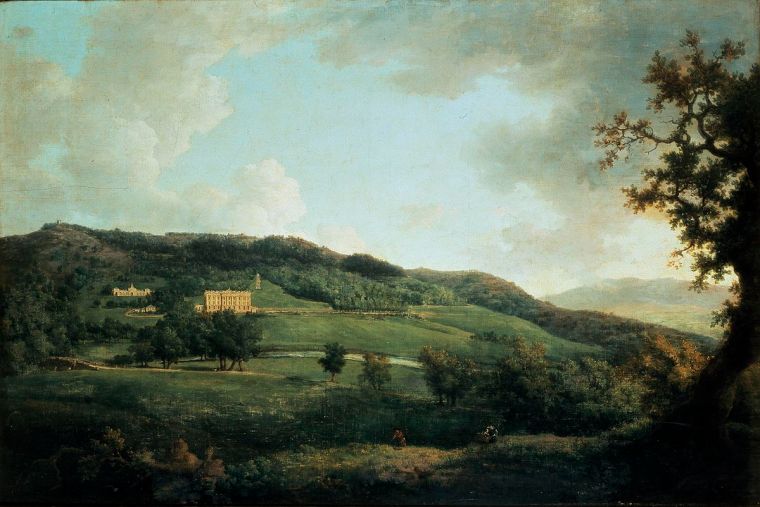
Between 1686 and 1707 the first Duke rebuilt Chatsworth in Classical style and between 1720-64, the park was landscaped by the fourth Duke. The famous ‘Capability’ Brown was hired to reshape the then formal gardens to how we still see them today. The stables and the bridges over the Derwent were also added in the 18th century.
A late 18th century oil painting by William Marlow. It emphasises the romantic aspects of Chatsworth’s setting on the edge of the Peak District. Public Domain
The library and north wing were added to the house by the sixth Duke between 1790 and 1858.
A view of Chatsworth from the south-west circa 1880. The stables can be seen behind the house and the Hunting Tower is visible in Stand Wood. Public Domain
On entering the house through the North Entrance, we made our way to the Painted Hall and Great Staircase. There were a lot of people in the room, but we managed a few photos during a relatively ‘quiet’ time. This is a magnificent hall, the artwork on the walls and ceiling being particularly stunning. Our photos don’t do it justice due to the glare from the many lights.
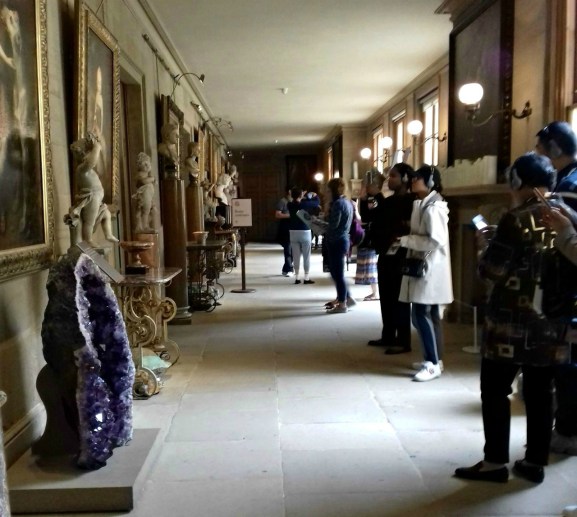
We continued along the Chapel Corridor, with lots of sculptures, paintings and other items of interest to look at…
…which, unsurprisingly, took us to the Chapel. This is another fabulous room, richly ornamented with a colourful ceiling.
Next to the Chapel is the Oak Room. No prizes for guessing why it is called that:
Though it lacks the colour of many of the rooms, the Sculpture Gallery contains some really beautiful pieces.
Other rooms in which we managed to take photos include the Great Dining Room, the State Music Room, the Library, the State Bedchamber and one of the Guest Bedroom. I’ve added a mix of these rooms to the gallery below, including a few of the many paintings on display. The images showing wallpaper are included because, as in a few other stately homes we’ve visited, many wallpapers were of a Chinese design and hand painted. I believe the imitation European versions were called Chinoiserie, and although the first were seen in Europe in the 16th century, they were particularly popular in stately homes in the 18th – 19th centuries. A dictionary definition of Chinoiserie is: a decorative style in Western art, furniture, and architecture, especially in the 18th century, characterized by the use of Chinese motifs and techniques.
Great Music Room
Great Music Room
Statue at the entrance to the Great Dining Room
Guest Bedroom
Hand painted wallpaper
Great Music Room
Ceiling in the Great Chamber
Hand painted wallpaper
Last year (2019) Chatsworth was celebrating all things ‘dog’. It was officially titled, The Dog: A celebration at Chatsworth. It explored the Cavendish family’s enduring love of dogs. Around the site are a variety of dog sculptures, paintings, drawings and photos, some from the Devonshire collection and others on loan from public and private collections. These are just a few of them:
Surrounding the house, the extensive parkland, farmyard and playground would take more that a day to fully explore and we had little time to see much of it during our visit. What we did see was impressive, but we would have loved to have got down to the Arboretum and Trout Stream. In the afternoon, we spent some time wandering around the immediate lawns and kitchen gardens. We had planned another visit this year – but I think that will now have to wait until next year.
These are some of the many photos we took around the immediate grounds and gardens:
There are plenty of places to eat at Chatsworth, and a number of talks and activities are available. Chatsworth is a place for family days out as well as for couples, singles, and anyone who loves a good dose of history or lovely scenery. Chatsworth is not a National Trust property and entry prices for both house and grounds are not cheap and can be as much as £17.50 per adult for last minute bookings – as was ours. However, many local families come to just enjoy and picnic in the grounds, which is considerably cheaper. All I can say is that Chatsworth is a truly fabulous place and, at very least, well worth a visit. This amazing fountain has a history all of its own. But I’ll leave that for another post.
Weekly Word is a weekly post intended to illustrate the meaning and use of a single word. The chosen word will begin with a different letter of the alphabet each week, as Louise (my daughter) and I work our way through the alphabet.
A calm mental state, especially after a shock or disappointment or in a difficult situation; emotional stability or composure so that you never lose your temper or become upset
Early 17th century (1600-10) from the Latin aequanimitas – which is equivalent to aequ(us), meaning even, plain, equal + anim(us) meaning ‘mind’, spirit, feeling.
Use the Word in a Sentence:
1. Sitting out here, gazing across this beautiful lake, was the only way that Mike could restore his equanimity after his latest row with his wife. How sad to think that their once loving and equanimous relationship had turned so sour.
3. No matter how tense or stressed Janet felt after a hard day at the office, a session of yoga was enough to ensure that her equanimity soon returned.
If you would like to join us in doing this weekly post, both Louise and I would be happy to see you. You can pick of your own word and illustrate its use in any way you choose(even a short story) or use your chosen word to follow a similar pattern to our posts.
The Deep is a public aquarium in the city of Kingston-upon-Hull (often referred to simply as Hull) in East Yorkshire, and it’s a great place for a family day out.
Base map of East Yorkshire courtesy of Wikipedia
The building was designed by world class architects, Sir Terry Farrell and Partners and opened in 2002. Perched right on the confluence of the River Hull and the Humber estuary, it still looks pretty modern today. It’s 5 minutes walk from Hull Marina and a short distance from the city centre.
The Deep In Kingston-upon-Hull from geog.org.uk. Author Philip Pankhurst. Creative Commons
The Deep in KIngston-uopn-Hull, viewed fron the base of the River Hull tidal barrier. Author Immanuel Giel. Public Domain
Our visit to The Deep was on a rainy day last year and we’re very glad we went when we did, especially as we’d been considering going for some time. Unfortunately, like so many museums, parks and historic sites we like to visit, the aquarium has been closed since March this year due to Covid-19. We can only hope this wonderfully educational resource can survive financially to continue in the future.
The journey through the aquarium begins with taking either the scenic lift or the stairs – eight flights of them – up to the third floor, where the main cafe (Castaways) is located. We chose the stairs (and my knees will never forgive me). The ‘scenic lift’ is very very popular and queues to get in it were quite long when we were there.
The winding route down takes us through over 4 billion years of ocean history.
The first display is The Awakening Earth, which comprises hands-on activities and 4D screens showing creatures that would have been swimming around in the oceans up to 400 million years ago. These included Dunkleosteus (370 m years ago) Ichthyosaur (240 m years ago) and Xiphactinus (80 m years ago).
There are also living starfish to see, a species which appeared on Earth around 450 m years ago. Starfish typically have five arms but some have up to forty! Those we saw all had only five:
This freshwater creature was also around almost 400 m years ago. It is called a tiktaalik and it grew to 3m in length, had sharp teeth and looked like a cross between a fish and a crocodile. It was, however, technically a fish and it lived on a continent called Laurentia, which was around the equator and had a warm climate.
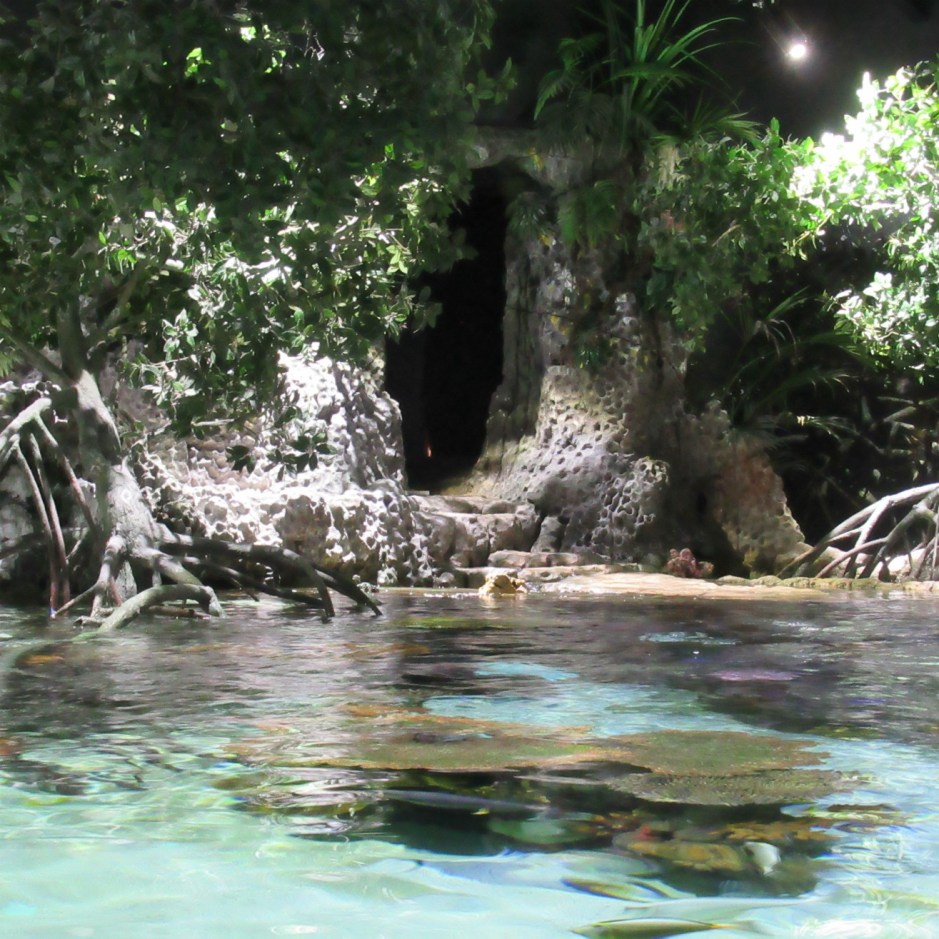
The Lagoon of Light is a lovely display, being an open stretch of blue, tropical water filled with aquatic life found in a mangrove lagoon. Hundreds of colourful, tropical fish, rays and small sharks delight all visitors and are particularly popular with children.
There are information boards along the route, some specifically aimed at children, others for older visitors. They are all so useful and informative, like these about the importance of mangrove swamps:
There are also smaller tanks with living sea creatures of all types from specific environments of today, including Coral Reefs.
Lovely and colourful, and home to 25% of marine life on Earth, the variety of life on coral reefs is equal to that of the Amazon rainforest. It includes tiny plankton to predatory sharks – all of which depend upon each other for survival. Worryingly, coral is very sensitive to environmental change, pollution and overfishing and the future of these fabulous reefs remains severely threatened.
The Kingdom of Ice is intended to give visitors a glimpse of life in the polar realm and its importance to the ocean food chains, global warming, ocean acidification and so on. The Gentoo penguins proved popular with adults and children alike and it was difficult to get close enough to the glass to take photos. We managed a few in the end.
There are so many different ocean environments as well as displays of some species in the Amazon Flooded Forest to visit. To show them all here would mean a very long post, so here are a few random photos, including a few information boards. There are tanks full of clown fish for all Nemo fans to enjoy, but the little fish must have been hiding in the anemones when we were there. Not surprisingly, another name for them is anemonefish. (The photo of the information board below is rather blurred, unfortunately.) At feeding times, the hiding clown fish readily emerge from amongst the stinging tentacles.
The main tank, called The Endless Ocean, fills the centre of the building, extending from the ground floor to the top, and can be viewed through large ‘windows’ on several levels, including an underwater viewing tunnel. The tank is filled with 550,000 imperial gallons of water (660,000 US) and 87 tons of salt. A variety of sharks can be seen, including White tip, Grey reef sharks and Zebra sharks, rays, and the only pair of Green sawfish in the UK. Turtles and rays swim past regularly, too. And although it wasn’t feeding time when we took these photos, we caught a glimpse of a diver in the tank, too.
The Endless Ocean can also be viewed from the Tunnel, which is 10 m below the surface. The tunnel is made is 6 inch thick acrylic and can take the weight of three elephants. It was very hard to take photos through, so the few we took aren’t very clear:
The Deep is a wonderful place for a day out, or for anyone on holiday in the East Yorkshire area. Children are fascinated by it and spend lots of time on the hands-on activities. There are cafes and picnic areas (some outside for when the weather is good). On rainy days the aquarium does get quite packed but it all adds to the fun. We had a great day there and learned a lot about the oceans and some of the hundreds of species that live in them.
The following quote from the ‘Welcome to Yorkshire’ website sums up the objectives of The Deep:
‘The Deep is an environmental and conservation charity, not run for profit, and is dedicated to increasing the knowledge and interest of the world’s oceans through its participation in vital research and conservation schemes around the world.‘
She waited, poised and smiling, filling her lungs to a regular rhythm that would convey an air of confidence to the judgemental audience before her. At the piano, Edward’s fingers hovered over the keys and their daughter, Dottie, had a look of determination on her face as she prepared to turn the pages of music.
Jemima had always loved to sing. Music was in her very soul and as the dulcet tones issued from deep inside, she was transported to a different plane: a place where all that mattered was the meaning of the words she sang. And tonight, it was a love song of such sadness, Jemima’s tears threatened to flow.
At the rear of the room her beloved watched, waiting for the concert to end. He and Jemima had loved each other for years, but the time had never been right to forsake their marriages and growing children. Now they would delay no longer. Beyond the gates a carriage waited to whisk them away, to a place where no one would find them.
Jemima would miss her darling Dottie, and her guilt at causing her pain would stay with her forever. But Dottie knew naught of her Papa’s true nature: a jealous and vindictive bully who had watched Jemima’s every move, chastising her with his fists if she failed to comply to his wishes.
After twenty years of cruel abuse, it was time to leave.
*
This piece of flash fiction forms the first part of a two-part story. Part 2 – which I’ve since titled The Outcome – was published back in May here. Yes, I know I’ve done this the wrong way round, but I hadn’t written Part 1 then. It was done as an afterthought. (I seem to have a lot of afterthoughts. Lol )
Weekly Word is a weekly post intended to illustrate the meaning and use of a single word. The chosen word will begin with a different letter of the alphabet each week, as Louise (my daughter) and I work our way through the alphabet.
Not totally honest, frank or sincere; not speaking the complete truth.
Pretending to know less about something than one actually does; falsely or hypocritically ingenuous (i.e. honest, sincere and trusting, sometimes in a way that seems childlike and naive).
1. Having been hurt too many times by Enrico’s philandering ways, Maria had no intention of being influenced by his disingenuous compliments and attempts to win her back. She would simply smile sweetly and send him on his way.
2. The disingenuousness of the newest recruit to their company was evident to several of the board members but, unfortunately, they had been outvoted.
3. ‘Our new business will use only eco-friendly technology and provide employment for many of the local workforce…’ The three colleagues listened to the disingenuously delivered spiel before standing and leaving the guy to clear up his gear and see himself out.
***
If you would like to join us in doing this weekly post, both Louise and I would be happy to see you. You can pick of your own word and illustrate its use in any way you choose(even a short story) or use your chosen word to follow a similar pattern to our posts.
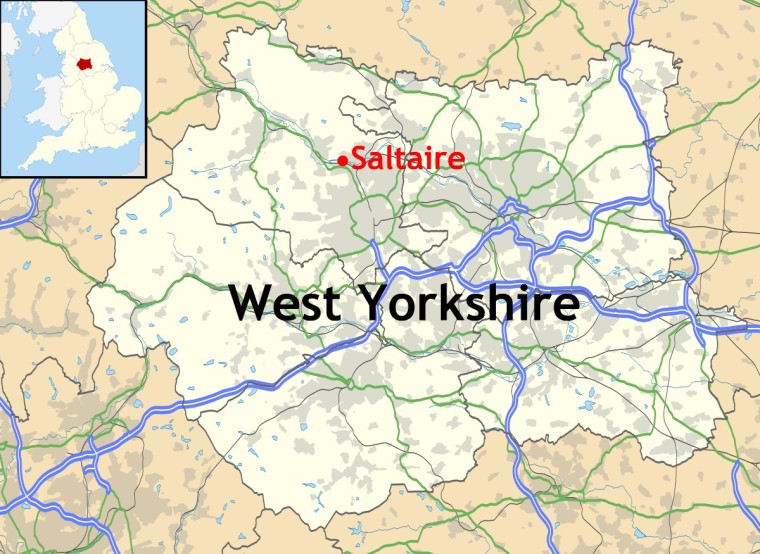
Built between 1851 and 1876, the Victorian model village of Saltaire is located in Shipley, a commuter suburb and small town in the City of Bradford Metropolitan District in West Yorkshire, UK.
The name Saltaire is derived from the surname of industrialist, entrepreneur and philanthropist, Sir Titus Salt, who had the village built, and the River Aire which flows through it.
Every year, hundreds of visitors come to Saltaire to visit the village itself, and/or take a look round Salts Mill, the woollen ‘supermill’ that Titus Salt had built in the town. To do justice to both village and mill ideally takes (at least) a whole day. There is much to see and plenty of places where visitors can buy drinks, snacks or meals when required – both around the village and inside the mill.
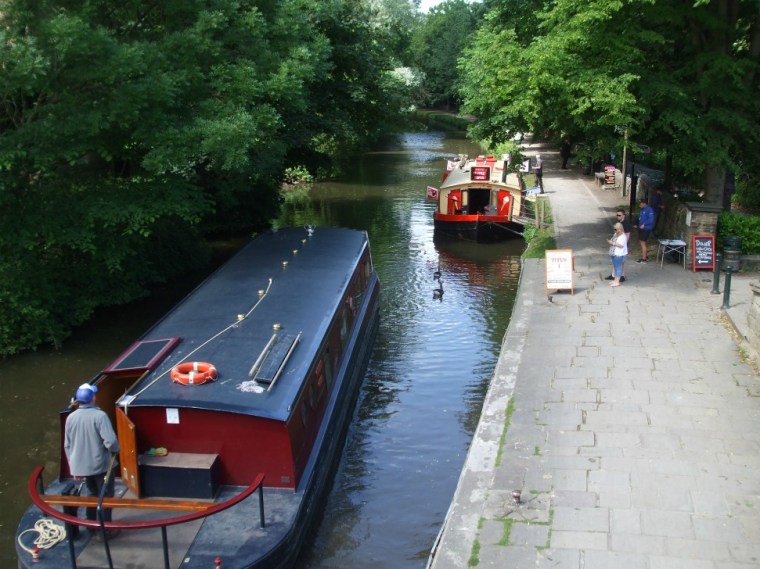
Saltaire is situated by the River Aire, the Leeds and Liverpool Canal and the Airedale railway line, all ideal for the import of raw materials for Salt’s woollen mill and export of the manufactured goods.
Map photographed from a information board in Saltaire
Titus Salt cared about the welfare of the workers for his planned new mill on the edge of Bradford. He wanted to create a community in which they could live healthier and happier lives than they had in the slums of Bradford, where cholera epidemics were frequent. Saltaire was 3 miles from central Bradford and surrounded by open countryside with plenty of fresh air. In addition to these evident health benefits, Salt installed the latest technology in his mill, intending working conditions for his workers to be far better and safer than they were in mills elsewhere in the country. Undoubtedly, such improvements would also benefit output from his mill.
Salt employed local architects Henry Lockwood and Richard Mawson to design his new village. The first building to be finished in 1853 was the mill itself, while building work on the rest of the village continued until 1876.
When the mill opened in 1853, on Titus Salt’s 50th birthday, he threw a huge party for all his workforce. It was the biggest factory in the world, four storeys high and the room known as ‘The Shed’ measuring 600 feet in length. The mill employed 3000 workers and had 1200 looms. Over a period of twenty-five years, 30,000 yards of cloth were produced per day. The noise from the machines would have been deafening and the workplace very hot. Yet working conditions for employees in Salt’s Mill were still far better than in most other textile mills.
The following photos of the working mill were taken from a video playing inside the mill:
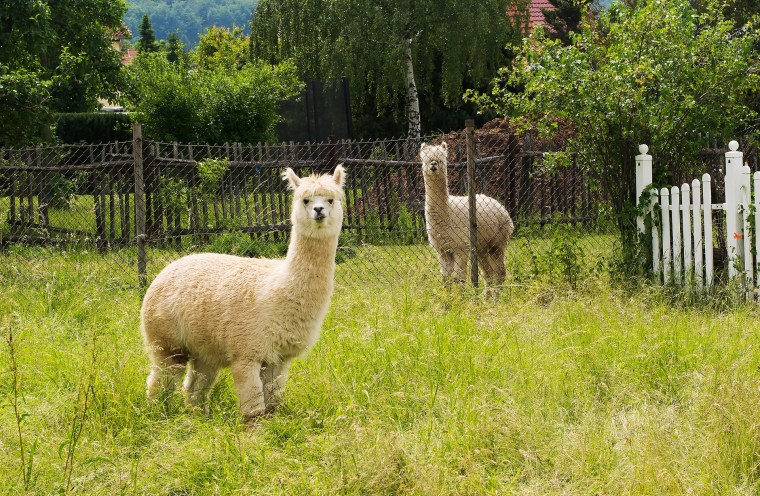
Salt’s enormous success in the textile industry was partly due to his use of the wool from alpacas. He combined it with other materials to create new varieties of worsted cloth. Wool worsted cloth as well as wool/cotton and wool/silk worsted cloths already existed for making men’s suits. In Salt’s day it was fashionable for ladies clothing. Most ladies would have wanted (but many couldn’t afford) expensive silk – and Alpaca made a light, smooth fabric with the lustre of silk, but was more affordable.
Alpacas, courtesy of Pixabay
Architecture in the village was of a classical style, inspired by the Italian Renaissance. The rows of neat stone buildings were all terraced, arranged in a grid pattern. All streets were named after members of his family, such as Caroline Street after his wife. In total there were 823 houses, shops, a school, two churches, a school an adult education institute, park, hospital, and almshouses for the aged. The streets also had gas lamps. Each house had its own outdoor toilet – a luxury for the working classes in of the nineteenth century.
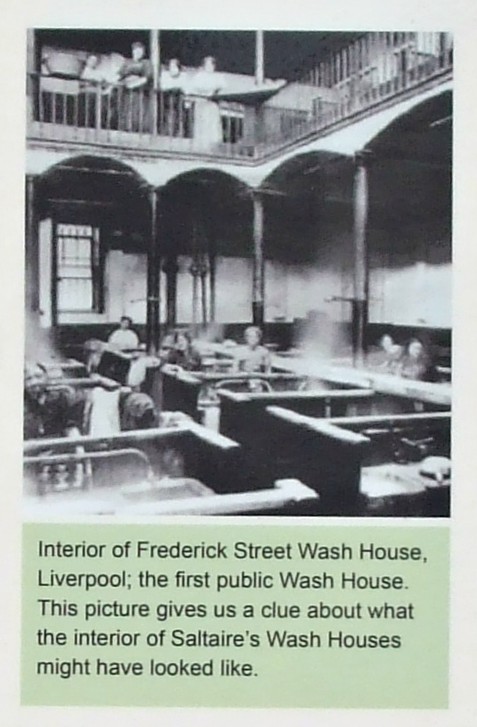
Salt also had a wash house and baths built in the village, the wash house because he objected to seeing lines of washing hanging in the back yards. Dirty washing could be brought to the wash house on Mondays to Thursdays. There were six washing machines powered by steam engines and four rubbing and boiling tubs using hot and cold water. Clothes were put through the wringing machine and dried in a drying closet before being mangled and taken home. The whole process took an hour.
Photo taken from and information board at the community garden in Saltaire
There were 24 baths for public use with separate entrances for men and women. There was even a Turkish bath. The baths were open every day but Sunday from 8am to 8pm. Salt’s care for the health of his workers is evident but, unfortunately neither wash house nor bath house was popular and the building was converted into housing in the late 19th century. The houses were demolished in the 1930s and replaced by garages which were demolished in the 1950s. The site is now a small community garden.
Saltaire Congregational Church (now the United Reformed Church) was one of Lockwood and Mawson’s finest works and is set in a spacious landscaped garden. Salt was a staunch Methodist and insisted his workers attended chapel on Sundays. He also frowned upon gambling and the drinking of alcohol. A mausoleum beside the church is where Titus Salt was buried.
The Victoria Hall is also worth a look inside:
Robert’s Park, alongside the River Aire is a pleasant, open space to spend a little time. The alpaca statues are a reminder of the importance of their wool to the continuing success of Titus Salt, whose statue is also in the park.
Salts Mill closed as a textile mill in 1986 and was bought the following year by Bradford entrepreneur, Jonathan Silver who had it renovated. Today it houses a number of business, commerce, leisure and residential concerns. The main mill is now an art gallery, shopping centre and restaurant complex. There is a fish restaurant and Salts Diner, a cafe which serves a variety of dishes.
The 1853 Gallery takes its name from the date of the building in which it is housed and it contains many paintings by local artist David Hockney. A bust of Titus Salt welcomes visitors through the door.
Today, Saltaire is a popular place to visit, as an educational experience or simply e a lovely village in which to spend some time. Families come for many reasons, and boat rides along the canal seemed popular on the day we were there. Oddly enough, one of the boats was called Titus. I wonder why…
World Heritage status was bestowed upon Saltaire in 2001. It is described on an information board in the village:
Our visit to Saltaire was three years ago now. We had planned to go back again sometime this year. But as they say, ‘All the best-laid plans of mice and men…’ Perhaps next year, then…
Weekly Word is a weekly post intended to illustrate the meaning and use of a single word. The chosen word will begin with a different letter of the alphabet each week, as Louise (my daughter) and I work our way through the alphabet.
1. The old pharaoh had been a cruel and capricious ruler and few people would mourn his passing.
2. The weather changed capriciously during the week and completely ruined our hiking holiday.
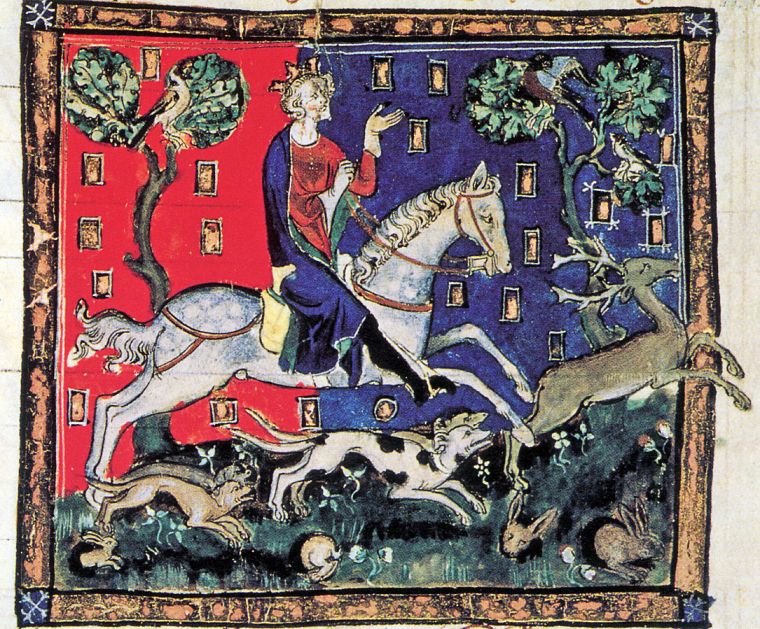
4. The capriciousness of Prince John has been portrayed in every Robin Hood film I’ve ever seen.
King John of England, 1167-1216. Illuminated manuscript, De Rege Johanne, 1300-1400. MS Cott. Claud DII, folio 116, British Library. Scanned from the book The National Portrait Gallery History of the Kings and Queens of England by David. Public Domain
***
If you would like to join us in doing this weekly post, both Louise and I would be happy to see you. You can pick of your own word and illustrate its use in any way you choose(even a short story) or use your chosen word to follow a similar pattern to our posts.
Eyam is a village in Derbyshire, U.K. and lies within the Peak District National Park:
The village was founded by the Anglo-Saxons and, as in many limestone areas of the Peak District, lead had been mined in the vicinity since Roman times. In the early and mid-17th century, the industry employed many of Eyam’s inhabitants.
Today the pretty Derbyshire village attracts visitors from around the world, not only due to its location within the National Park, but because of its fame as ‘the plague village’. In addition, hundreds of visitors flock into Derbyshire from spring to autumn each year (though not this year!) to see the fabulously ‘dressed’ wells in many of the villages, Eyam being one of them. I did a post about Well Dressing here
The plague that hit Eyam in 1665-1666 is referred to as ‘The Great Plague’. It was not ‘The Black Death’ – the outbreak of plague that reached England in 1348. The plague that occurred in both periods was basically the same bubonic plague, the different names denoting the different times in which it struck. In the 300 years between the two, numerous other outbreaks of plague occurred across the country and some small settlements disappeared altogether.
Bubonic plague is a disease carried by several rat species, most commonly the black rat, also known as house rat or ship rat.
The fleas that live in the rat’s fur are carriers of plague bacilli and when they feed on the rodent’s blood they leave the bacilli in its body, causing rapid death. If the number of rats plummets, infected fleas will take the blood of humans or other small mammals.
In London alone in 1665-6, almost 70,000 deaths were recorded during this outbreak of plague, though it is thought the real number was closer to 100,000. Many towns and villages across England also suffered. In Eyam, 260 of the estimated population of 1,000 died.
The plague in Eyam is believed to have been caused by fleas that had got inside a bale of cloth brought to Eyam from London for a travelling tailor’s assistant named George Viccars who was lodging with Mary Hadfield and her family. When he unfolded the cloth it was damp, so he laid it out to dry – and the plague-carrying fleas jumped out.
George became the first man to die of the bubonic plague in Eyam. More deaths soon followed and within days, the disease had spread through the village, affecting many households.
The most well-known effect of bubonic plague are the buboes, the massive, tender swellings which form in the lymph nodes, generally in the armpits or groin:
Plague patient displaying a swollen, ruptured inguinal lymph node, or buboe. Image courtesy of the Centers for Disease Control and Prevention’s Public Health Image Library. Public Domain
There are various other effects, too – fever, vomiting, headaches and delirium being just a few of them. The lungs can also become infected, causing pneumonic plague. This is less common but much more dangerous, due to the ease in which it can spread through sneezing. A third form of the disease is believed to be septicaemic plague, a life-threatening infection of the blood.
Having no scientific knowledge enabling them to account for the outbreak of the plague, to the villagers the disease could only be explained in religious or supernatural terms. The wrath of God inflicted upon sinful people could only be pacified by prayer and repentance. Many devout villagers refused to take preventative measures for fear of angering God further. Others relied on herbal and other age-old remedies. Between the September and December in 1665, 42 villagers died.
There is no record of how many villagers actually left Eyam and it is now believed the number was higher than originally thought. But it is known that most were wealthy landowners and mine owners – all of whom would have had somewhere else to go.
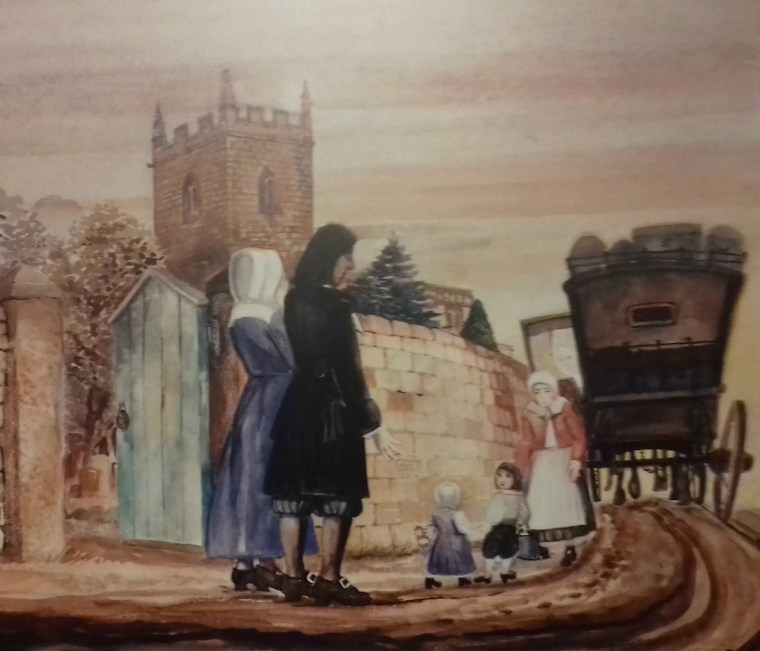
A few families sent just their children away to safety, as did William Mompesson, the recently elected reverend, and his wife, Catherine:
Few of the poorer, tenant farmers and labourers could abandon their livelihoods and just pack up and leave, but in a bid to escape almost certain death, a few poor people chose to try their luck elsewhere. Some built makeshift homes on nearby Eyam Moor or in fields or on hillsides.
There is also plenty of evidence of poorer refugees of the plague being barred or violently driven away from their chosen places of refuge. The people of the city of Sheffield, approximately 15 miles away, erected barriers and posted guards. The picture below shows an Eyam woman being chased out of the nearby village of Tideswell as she attempted to mingle unnoticed with shoppers at the market.
Mortality rates over the winter 1665-66 saw a drop, primarily due to the rats nesting in warm places like thatches on the roofs. There would also be ample foods for the rats in the unhygienic homes of the times. Comfortable, warm rats would provide plenty of food for the fleas, so they would have no need to seek out alternative sources of blood.
Nevertheless, death rates were still well above the normal winter average, and since the villagers knew that plague was a summer disease, the number of deaths was expected to increase with the rise in temperatures in the spring of 1666. After a slight lull in casualties in the May, a sudden and dramatic increase occurred in June, and it became clear to the newly appointed reverend, William Mompesson, that something needed to be done. Together with a former rector of Eyam, Stanley Thomas, a three-fold plan was devised.
Firstly, there would be no more organised funerals and church burials. Families would be responsible for burying their own dead in their gardens, orchards or fields.
Secondly, the church would be locked and future services held in the open air.
The third part of the plan was the greatest and toughest of them. A ‘cordon sanitaire’ would be imposed around the village in an attempt to stop the disease spreading further afield. In other words, the village would be quarantined – a condition to which all villagers needed to give their consent. Quarantine would mean that, shut away from the world, many people in the village would meet the inevitable end.
Mompesson promised to do all in his power to get essential foods and medications into the village. A boundary stone was erected, separating Eyam from the nearby village of Stoney Middleton. The stone had specially made holes in its top, which were filled with vinegar, which acted as a disinfectant. Eyam villagers could put their money into these holes in exchange for supplies. The stone is still in its original place today and visitors can find it by following the signs around the village.
In addition, in exchange for their promise of obeying the cordon, the Earl of Devonshire from nearby Chatsworth House, freely donated foods and medications to the people of Eyam. These were left at a place known as Mompesson’s Well.
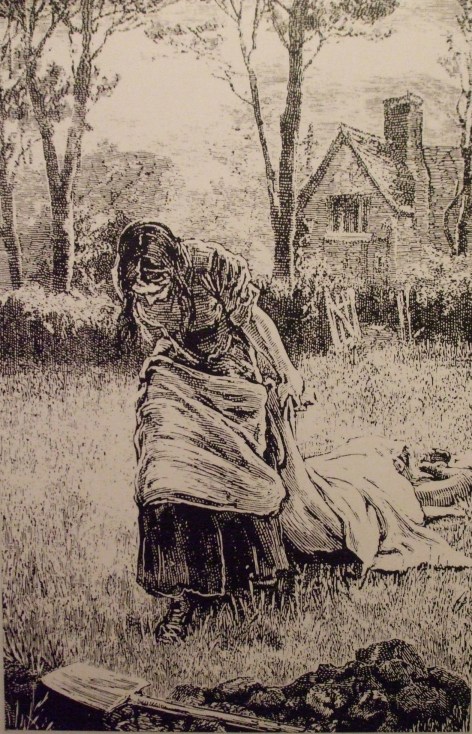
The highest number of deaths was recorded in August 1666, as many as 5 or 6 deaths per day. In the heat of the summer, the fleas were more active and the disease rapidly spread. Households became deserted, communal tasks left unfinished and cattle wandered unattended. Nevertheless, few people attempted to leave (only 2 known). Elizabeth Hancock buried her husband and six of her children, though she remained unaffected herself. Their graves are known as the Riley Graves, after the name of the farm on which they lived. Like the boundary stone, these graves can be visited today.
William Mompesson’s wife, Catherine, worked tirelessly, visiting the sick until falling victim to the plague herself in late August, 1666. Her tomb can be seen in the churchyard.
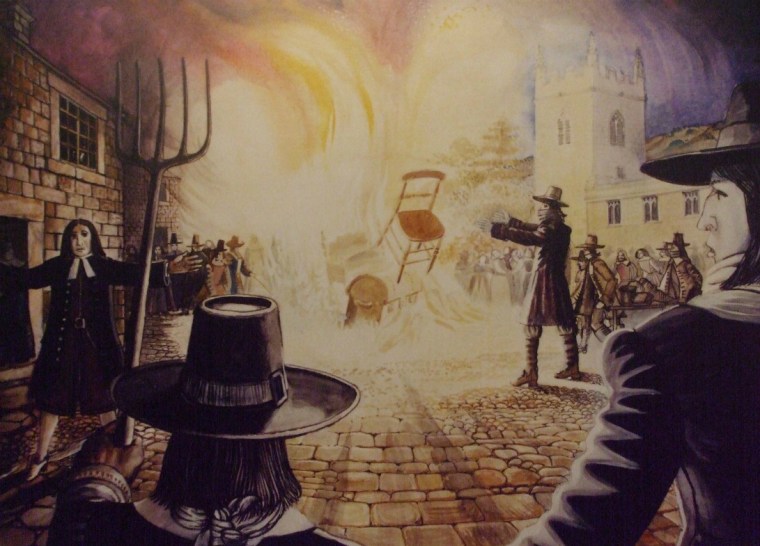
By Christmas 1666, after 14 months and the deaths of 260 people, it was all over. Life in the village slowly began to return to normal. In an effort to stop further outbreak of the pestilence the following summer, there was ‘a great burning’ of everything in Eyam that could have harboured the ‘plague seeds’. Mompesson set the example by burning everything of his own except the clothes he was wearing.
To finish with, here a few photos we took around the village. With the exception of the one buboes (which is from Wikipedia) those shown above were all taken in the little Eyam Museum, which is well worth a visit.
Also of interest, with plenty of information about the Great Plague at Eyam, are Saint Lawrence’s Church, and the Plague Cottages. Eyam Hall – which is a 17th century, grade 2 listed historic house – is also well worth a visit. In the churchyard are Catherine Mompesson’s tomb and a fabulous Anglo-Saxon Cross dating from the 8th-9th century.
Inside the church, there is a famous stained glass window depicting scenes connected to the plague and a record of those who died from the disease.
Wednesday Word is a weekly post intended to illustrate the meaning and use of a single word. The chosen word will begin with a different letter of the alphabet each week, as Louise (my daughter) and I work our way through the alphabet.
Boorish, originally referring to behavior characteristic of an unlettered rustic or peasant. Now it implies a coarse and blatant lack of sensitivity to the feelings or values of others:
1. Mrs Meredith threw a look of despair at her daughter, whose new boyfriend could only be described as a complete boor.
2. Lord Harcourt tolerated the peasants when they came to help with the harvest on his estate, or to dig ponds, and ditches, but he disliked their boorishness intensely.
Feiernde Bauern (Celebrating Peasants), artist unknown, 18th or 19th century
3. The bus driver looked squarely at the three rowdy football supporters as they got on his bus, cans of beer in hand, and said, ‘We don’t allow drinking or other boorish behaviour on our buses, lads, so I suggest you put your drinks away and quieten down before taking your seats’.
Note:
From all the examples of boorish I found, it appears that it and its related forms apply mostly to males. In fact, I found something to that effect on one website I was looking at, then couldn’t find it next time I looked. Duh…
I can only assume the reason for the word’s application to males is due (in part, at least) to it’s origin in connection with country bumpkins, peasants and so on, who worked on the land. I’m pretty sure that the behaviour of some women could also be described as boorish.
If you would like to join us in doing this weekly post, both Louise and I would be happy to see you. You can pick of your own word and illustrate its use in any way you choose (even a short story) or use your chosen word to follow a similar pattern to our posts.















 The Deep is a public aquarium in the city of Kingston-upon-Hull (often referred to simply as Hull) in East Yorkshire, and it’s a great place for a family day out.


 The first display is The Awakening Earth, which comprises hands-on activities and 4D screens showing creatures that would have been swimming around in the oceans up to 400 million years ago. These included Dunkleosteus (370 m years ago) Ichthyosaur (240 m years ago) and Xiphactinus (80 m years ago).

















 The fleas that live in the rat’s fur are carriers of plague bacilli and when they feed on the rodent’s blood they leave the bacilli in its body, causing rapid death. If the number of rats plummets, infected fleas will take the blood of humans or other small mammals.







 Millie Thom

_-_Google_Art_Project.jpg)

.JPG)

