No Creepy Gargoyles- Flash Fiction for Aspiring Writers

Flash Fiction for for Aspiring Writers is a writing challenge hosted by Priceless Joy. The challenge asks us to write a piece of fiction from the photo prompt provided in around 100- 150 words – give or take 25 words. It encourages participants to comment, constructively, on other entries, so supporting each other’s writing. If you’d like to join in with this challenge, follow the link in the title of PJ’s, blog: Beautiful Words to see what to do. The challenge runs from Wednesday to Wednesday every week.

Here is this week’s prompt, kindly provided by Priceless Joy . . .
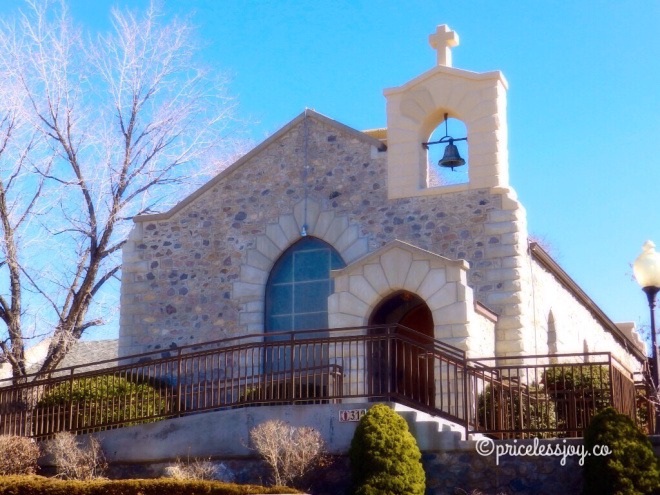
wpid-photo-20150524135809869

For this story, I’ve resurrected a couple of North of England-type characters from a piece I wrote a while ago for Monday’s Finish the Story entitled, Wine and Women. Harry has now happily returned from his little trip in the spacecraft.

So here is this week’s story . . .

Fred stood beside his best mate, squinting up at the new church atop the hill on the edge of town, trying to decide whether he liked it or not.

‘What d’yer make of this new church then, Harry? It’s a bit different, in’it?’

Harry nodded. ‘I s’pose it’s different t’ old one in town centre. But it’s kinda neat and clean-looking.’

‘But it ha’n’t got a steeple… or a tower! Churches are s’posed to have ’em, to reach up t’Heaven or summat. There’s none of them ugly things round the top, either.’

‘Why the heck would you want gargoyles?’

‘Fred shrugged. ‘Give me the creeps, they do …but it don’t look like a church without them.’

‘Course it does, yer moron! It’s got a bell, han’t it… and a Cross on top? And arched windows and –’

‘Not stained-glass ones, though.’

Harry sighed and tried one last tactic. ‘I heard the new vicar’s a woman … quite dishy, un’ all!’

Fred’s face lit up. ‘Fancy coming t’ Sunday Service wi’ us next week…?’

Word Count: 175

*

If you’d like to view other entries, click the little blue frog:


For anyone interested, I’ve put together a short piece about gargoyles and what they actually were, mostly from Wikipedia:

In architecture, a gorgoyle is a carved grotesque (an ugly or comically distorted figure or image) with a spout designed to convey water from the roof away from the sides of the building. A trough is cut into the back of the gargoyle and rainwater exits through the open mouth.  The length of the gargoyle determines how far water is thrown from the wall.

Canaleta (8381247424)
By Juanedc from Zaragoza, España (Canaleta Uploaded by juanedc). Wikimedia Commons
We often think of gargoyles as being medieval, but they have been used throughout history as a means of water diversion when not conveyed in gutters:

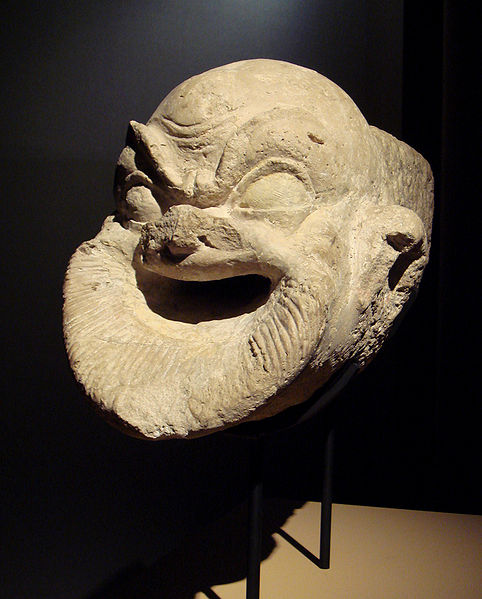
First century, Hellenistic gargoyle representing a comical cook slave from Al Khanoum, Afghanistsan. Guimet Museum. Personal photograph 2006. Commons

Gargoyles were viewed in two ways by the Church throughout history:

1. To convey the concept of evil – especially useful in sending a stark message to the common people, most of whom were illiterate.

2. They were also said to scare evil spirits away from the church, thus assuring the congregation that evil was kept outside the church walls.

Here are a few more images of gargoyles:

Gargoyle in form of a lion Cathedral Saint-Etienne de Meaux. Author: Vassil. Wikimedia Commons
Gargoyle in form of a lion Cathedral Saint-Etienne de Meaux. Author: Vassil.
Wikimedia Commons
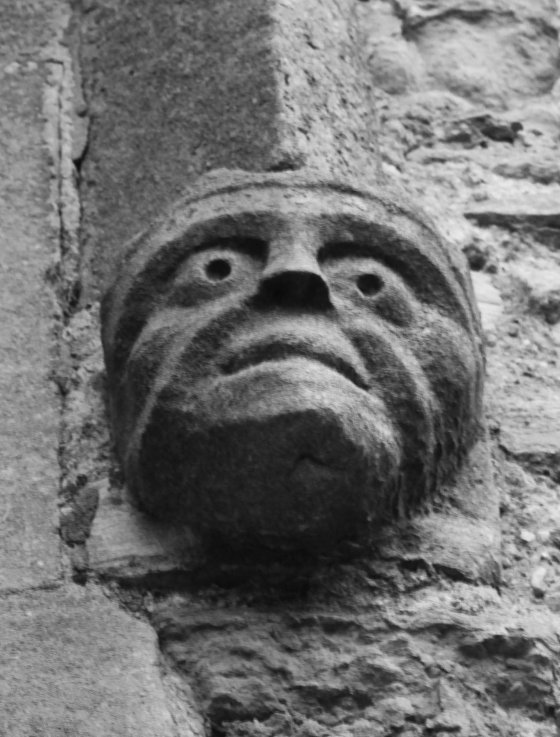
Paisley Abbey Gargoyle. Author: Colin. Wikimedia Commons
Gargoyle representing a comical demon at the base of a pinnacle with two smaller gargoyles, Visby, Sweden. Author: Alexandru Baboş  Albabo . Commons
Gargoyle representing a comical demon at the base of a pinnacle with two smaller gargoyles, Visby, Sweden. Author: Alexandru Baboş
Albabo . Commons

Another form of grotesque is the chimera. These were similarly distorted faces and figures to the gargoyles, but without the water spout and used mostly as decoration. Here are a couple from the little village church a hundred yards from my house. They were taken by my daughter, Louise (afairymind) for one of her posts a while ago:

Sleeping chimera. Copyright Louise Bunting
Sleeping chimera.
Copyright Louise Bunting
Awake chimera. Copyright Louise Bunting
Chimera awake. Copyright Louise Bunting

The Summerhouse – Flash Fiction for Aspiring Writers

Flash Fiction for for Aspiring Writers is a writing challenge hosted by Priceless Joy. The challenge asks us to write a piece of fiction from the photo prompt provided in around 100- 150 words – give or take 25 words. It encourages participants to comment, constructively, on other entries, so supporting each other’s writing. If you’d like to join in with this challenge, follow the link in the title of PJ’s, blog: Beautiful Words to see what to do. The challenge runs from Wednesday to Wednesday every week.

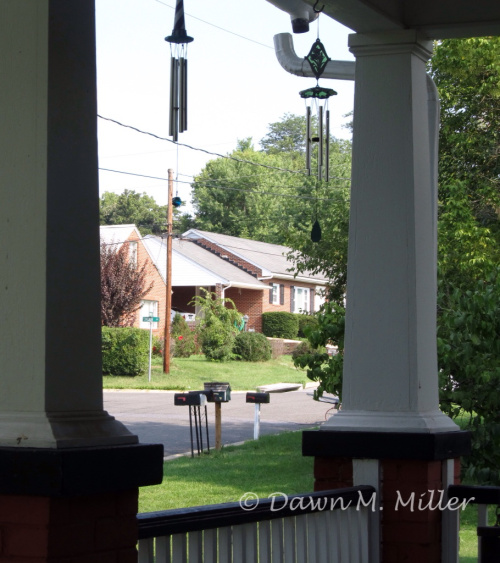
Here is this week’s prompt, kindly provided by Dawn M. Miller :

wpid-photo-20150519080132329. . . and this is my story:

‘Marry me, Jen…’ Mark grinned at his fiancée puzzled face as they hurried into the old summerhouse out of the cold, November rain. ‘Let’s get married now instead of waiting until spring.’

Jenny waited for the Spitfires to pass over before speaking. Life was so different since war had been declared two months ago. ‘But what will people think …? Don’t answer that, I already know.’

Mark pulled her close and rested his face against her auburn curls. ‘They’ll understand when they know…’

‘When they know what?’

‘I’ve had my call-up papers, love.’

*

Ninety-five-year old Jenny roused from her daydream as her daughter halted her wheelchair beside the gazebo. The old summerhouse had long since gone, yet another casualty of wartime bombs, unlike her memories…

Three short years after that day in 1939, Mark had been killed in action, leaving her alone and pregnant. They’d had so little time together.

Still, Susan had been a wonderful daughter, and she’d be with Mark again soon enough. And this time it would be forever.

Word Count: 175

shutterstock_211174471

If you’d like to view other entries, click here.

***

A little bit of info

Whilst I was writing this piece, I started wondering about the differences between a gazebo, a summerhouse, and a pavilion, and whether the names could be used interchangeably. I know this may sound like mere trivia, but I delight in trivialities. So this is what I found, from various sources:

A gazebo is a timber structure with a roof that gives shelter and shade. It is not a completely enclosed building. Many gazebos have no side panels at all, whilst others are half-panelled or completely panelled in parts. Some gazebos have trellis panelling so that plants can be trained to grow up and around the structure. Unlike a summerhouse, a gazebo has no door or fitted windows and is often hexagonal in shape.

Gazebo in Sam Houston Park, Houston, Texas, USA. Author: i_am_jim.  Creative Commons
Gazebo in Sam Houston Park, Houston, Texas, USA. Author: i_am_jim. Creative Commons

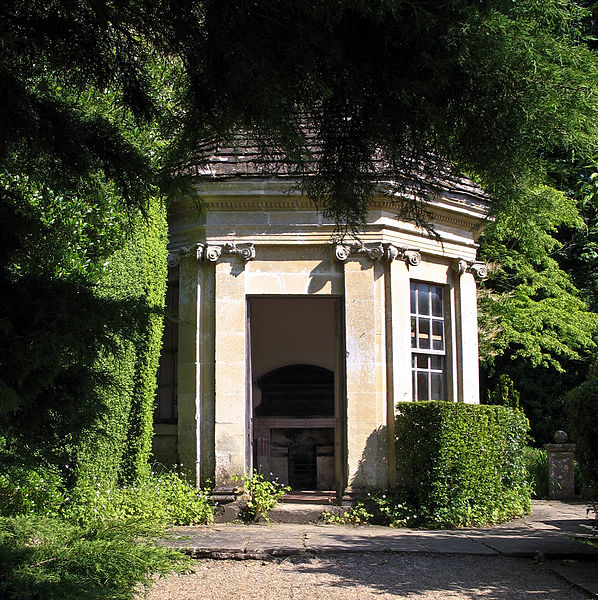
Modern summerhouses are generally wooden buildings that have a complete roof, sides and an entrance door. Most have windows to allow plenty of light into the building. So, the main difference between a gazebo and a summerhouse seems to be that once inside a summerhouse it will feel as though you are indoors, whereas you will always feel as though you are outdoors in a gazebo. In the past many ornamental summerhouses were stone. Some old, stone summerhouses still stand today, as the image above shows. I found thisGothic styled one while looking for one to put on my post:

Ilford Manor Summerhouse, UK. Author: Neosnaps. originally uploaded on Flckr.  Wikimedia Commons
Ilford Manor Summerhouse, UK. Author: Neosnaps. originally uploaded on Flckr. Wikimedia Commons

This is one person’s view I found of the differences between a gazebo and summerhouse:

As far as I can tell there isn’t a great deal of difference between summerhouse and a gazebo except perhaps the shape. Most gazebos do tend to be hexagonal in shape. To me, summerhouses seem to be like glorified sheds with windows, whereas gazebos seem to be more attractive in shape and design.” (Source: Successful Garden design)

So what is a pavilion?

A pavilion may be a small outbuilding, similar to a summerhouse. Pavilions were particularly popular in the 18th century and often resembled small classical temples and follies. A pool house by a swimming pool, for example, may have enough character and charm to be called a pavilion. But a free-standing pavilion can also be a far larger building such as the Royal Pavilion at Brighton (UK), which is a large oriental style palace.

A sports pavilion is usually a building next to a sports ground used as a changing room and a place providing refreshments. Often there will be a veranda. We have a (wooden) cricket pavilion in the next village to us. The term pavilion is also used for stadiums/stadia such as baseball parks. Of course, most modern pavilions are built of wood.

It seems to me that the main differences stem from the uses of these buildings. The gazebo is the odd one out because it is generally open to the elements.  Summerhouses and pavilions are closer in design because they are enclosed.

Still confused? Me too – mostly because there are many of these structures that don’t fit neatly into these descriptions For example, here are two structures described as summerhouses I found on Wikimedia Commons – both with open sides!:

800px-Třemošná,_summerhouse
Tremosna Summerhouse, Czech Republic. Author: Wikipedia User
800px-Tring_park_summerhouse
Tring Park Summerhouse, Hertfordshire England. Author: D Royal


Refs to information:  Jack’s Garden Store, Successful Garden Design and Wikipedia.

The Village Pond – Flash Fiction for Aspiring Writers

Flash Fiction for for Aspiring Writers is a writing challenge, kindly hosted by Priceless Joy. The challenge asks us to write a piece of fiction from the photo prompt provided in around 100- 150 words – give or take 25 words. It encourages participants to comment, constructively, on other entries, so supporting each other’s writing. If you’d like to join in with this challenge, follow the link in the title of PJ’s, blog: Beautiful Words to see what to do. The challenge runs from Wednesday to Wednesday every week.

Here is this week’s prompt, provided by Priceless Joy:

wpid-photo-20150512024240757

. . . and this is my story:

As a girl I would dance at the edge of the pond, laughing at the ducks waddling along the grassy bank and sliding into the water. When I was grown and wed, I would scrub Tom’s tunics in that water till my hands were almost raw.

Tom worked hard on our farm and I contented myself with my chores. I tended my herbs and earned a little coin selling cures for ailments -chamomile to erase weariness and feverfew for headaches and fever…

But I couldn’t save Tom from the plague.

I kept the farm going after he’d passed, and continued to sell my herbs. And the company of my cats kept me from being lonely.

Then, in 1646, the Puritans came with their henchman.

The villagers jeered … called me ‘witch’… as my tortured body was dragged to the ducking stool. Three times I survived the ducking, but my fate was already sealed. I can never forget the pain of the flames …

I come here sometimes to watch the ducks waddling along the banks.

Word Count: 175

If you’d like to view other entries, click here.

***

For anyone interested, here is a little piece I’ve put together (from various sources) by way of explanation about witchcraft and the use of the ducking stool.

Cucking_stool

The main period of witch-hunts in Europe and North America was between 1450 and 1750, the last recorded execution of people convicted as witches being in the 18th century.

For many years, magic had been part of everyday life, and was only considered wrong if it worked effectively – but for the wrong reasons. Witches were often called on to help church ministers with illnesses, or to help deliver a baby. If anything went wrong, people would question whether the witch had made a pact with the devil. Witches were handled cruelly, often being subjected to awful tortures in order to exact a confession and the names of others involved in their craft. Thumb screws and leg irons were common – the great pain of which usually resulted in confession.

In 1645-6, a short period of ‘witch fever’ gripped England. Renowned witch finder, Matthew Hopkins, had 68 people from Bury St. Edmunds and 19 people from Chelmsford put to death in a single day. His main tool to discover witches was a ‘needle’, used to poke/prod a wart, mole or insect bite to see if the woman felt any pain. If she did not, she was a witch. It is believed that the needle was a 3 inch spike that retracted into a spring-loaded handle so that the witch felt nothing!

The most likely women to be targeted as witches were widows, who managed to keep a household going alone. No woman was believed to be that strong – unless she had help from the devil. Those who offered/sold cures for illnesses and those who kept cats also came under suspicion. A cat (typically a black one) was said to be the witch’s ‘familiar’ or ‘familiar spirit’ – a supernatural being that helped and supported her evil work.

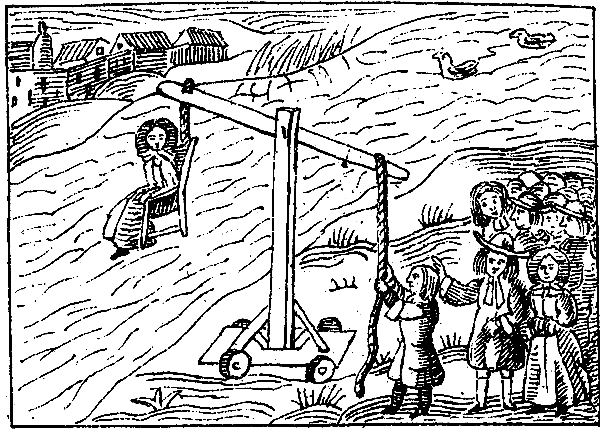
The ducking stool had long been a common punishment to inflict upon women, though some men were also subjected to it (e.g. dishonest tradesmen). It was generally used on prostitutes, scolds (women who nagged their husbands, or gossiped too much) and women accused of witchcraft. If the ‘witch’ survived the ducking, she was said to have been saved by the devil, so she was executed anyway – either hung or burnt at the stake.

The ducking stool tended to be replaced simply by the ‘swimming test’ in many places. The woman was tossed into the water with her thumbs tied to opposite toes. If she floated she was a witch, therefore executed. If she sank and drowned she was innocent! Either way, she couldn’t win.

800px-Ducking-Stool_1_(PSF)
Ducking Stool. Wikimedia Commons

Pesky Neighbours – Friday Fictioneers

Friday Fictioneers is a flash fiction challenge which asks us to write a story in no more than 100 words from the photo prompt kindly provided by the host, Rochelle Wisoff Fields. To join in with the challenge, or find out more about it, just follow the link to Rochelle’s blog.

Here is this week’s prompt . . .

keck
Photo prompt © Douglas MacIlroy

and this is my story . . .

‘Reckon you’ll like it here, Ve?’ Jim flashed his wife a lop-sided grin as he sat down opposite to her. ‘At least there’re no pesky neighbours to meddle in other folk’s business…’

Vera shrugged. ‘House i’nt bad … but I can’t go anywhere, with them big dogs prowlin’ about. An’ there’s nowhere t’ dry me smalls.’

‘But board and lodgin’s free.’

‘Of course they’re free, yer blithering idiot! Who’d pay t’ be stuck out ’ere on their own?’

‘Ah, Vera, love… If yer hadn’t knifed that old gossip, Mrs. Burke, you wouldn’t be sampling this newfangled isolation centre.’ 

Word Count: 98

If you’d like to read other entries, click on the little blue frog below:

friday-fictioneers

Lunch Dates – Flash Fiction for Aspiring Writers

Flash Fiction for for Aspiring Writers is a writing challenge, kindly hosted by Priceless Joy. The challenge asks us to write a piece of fiction from the photo prompt provided in around 100- 150 words – give or take 25 words. It encourages participants to comment, constructively, on other entries, so supporting each other’s writing. If you’d like to join in with this challenge, follow the link tabove to see what to do. The challenge runs from Wednesday to Wednesday every week.

Here is this week’s prompt, kindly supplied by Vanessa Rodriguez:

wpid-photo-20150422065241749   . . . and this is my story:

Every Wednesday, on her day off, Margaret took the 6.15 am train to visit her mother at the Nursing Home on Morecambe Promenade. It was a grand old building, with excellent staff, and views right across Morecambe Bay to the Lake District mountains beyond.

The train was already five minutes late. Still, it gave her time to contemplate the day ahead. After visiting Mum, she would hurry to the restaurant for lunch with Peter, the lovely man she’d met at the Nursing Home a few weeks ago.

In fifteen years of marriage, Margaret had never been unfaithful to Jack, despite his numerous affairs and drunken rages. So far, meetings with Peter had been innocent. But last week, Peter had hinted at taking their relationship further. And why not? Jack wouldn’t care, even if he knew.

As the train hissed to a stop, Margaret smiled. A little hanky-panky would improve her life tremendously. Besides, Jack’s advancing cirrhosis meant he’d be gone before long. And, if she played her cards right, Peter would be waiting…

Word Count: 173

If you’d like to view other entries, click the blue frog below:

*

A little note about Morecambe (pronounced Morcum).

Morecambe was once a thriving seaside town in North-West England. Like so many British seaside resorts, Morecambe’s heyday has long since passed as many Brits fly off in search of sunnier climes for their hols. It’s sad to see so many lovely old Victorian resorts sink into decline.

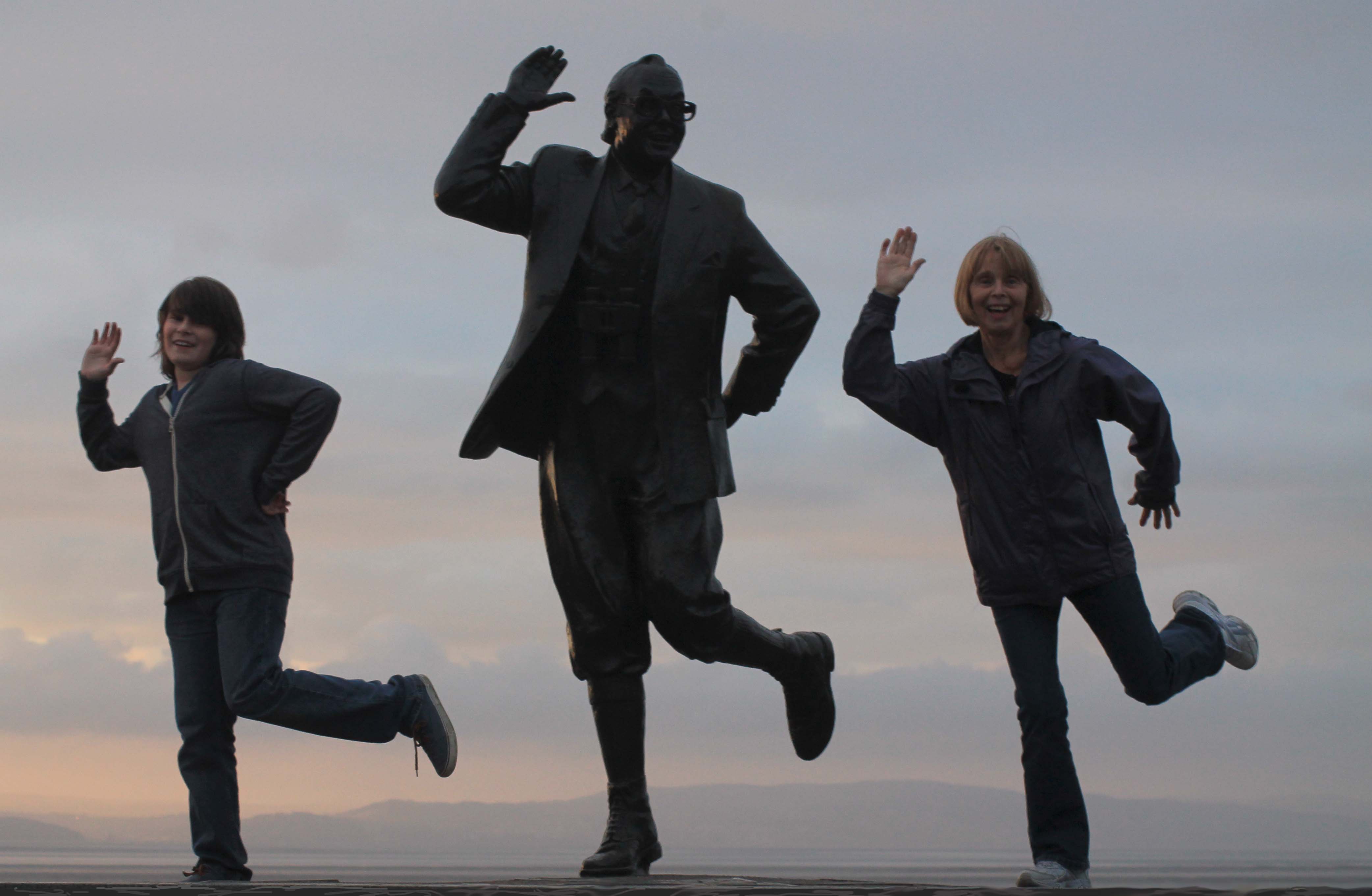
Morecambe’s most famous celebrity was Eric Morecambe. (He took his stage name from the town in which he was born.) He was one half of the 1960s comedy duo, Eric and Ernie. There’s a statue of him on Morecambe Promenade, which was, sadly vandalised not long ago by idiots with nothing better to do! I believe it has now been repaired.

These photos were taken three years ago, one evening when we passed through the town. My grandson was twelve at the time, and we had a bit of fun next to Eric’s statue. He definitely got the pose better than I did!

morcambemorecambe 2

Six Attributes – Picture it and Write

Picture It and Write is a weekly writing challenge, posted every Sunday by Eliabeth, the author of Emiliablog. The challenge is to write a piece of fiction or a poem in response to the photo prompt supplied by the host. Here is this week’s photo . . . steampunk-pens and this is my story . . .

‘Choose wisely, my son. The implement you select will show little remorse should it sense resistance to its flow.’

I nod as my father smiles, gesturing to each pen as he expounds. ‘The first will show you as an honest man, straight paths laid out before you: a man who cuts no corners to the truth. Think on it … is that really you?’

I frown at the implied dishonesty, but my father’s finger moves to the right. ‘This pen has a pleasing design: straight threads leading to a central core. The spider-web design will show you to be a man of ambition: blinkered to all else that life has to offer until he reaches his goal. Could that be you?’

I touch the badge on my jacket, identifying me as Sergeant Matthews of HRH Queen Victoria’s Police Force. Did my ambition to be Chief Inspector blind me to other aspects of life?

Father’s finger hovers over the third pen from the left. ‘Here we see shapes of varying size and shape. This pen will reveal the writer to be a thoughtful man, willing to consider a variety of issues placed before him. Whereas the fourth pen…

… will show the grid-iron nature of a man unwilling to adapt to outside influences, too fixed in his comfortable existence to share his life with others.’

I wonder … is that what I want, a comfortable yet solitary life? I picture the lonely years ahead – and baulk at the scene.

‘As to the fifth pen,’ my father continues, ‘its design resembles the brickwork of a house. The tilted effect suggests some creativity in the architect, a man who will experiment a little and explore his own strengths.’

I nod again, considering such attributes within myself.

‘Now to the last implement in my collection … Note how the irregular shapes fit perfectly together, as would a jigsaw puzzle. The user of this pen will be shown to be a complex man, capable of multiple emotions, ambitions and desires; a man able to deal with any obstacle placed in his way.’

I reach for the sixth pen to my father’s nod of approval. ‘I confess to having a little of all of the qualities you describe, Father, but none to the exclusion of all others. I believe this pen would suit me admirably. I shall write to Gwendolyn immediately, assuring her that once we are wed our life together will be one of honesty, exploration and love. We will face all obstacles together.’

***

If you would like to read other entries click on the link here.

pictureitandwrite2copy-1

That’ll Teach ’Em – Friday Fictioneers

Friday Fictioneers is a flash fiction challenge which asks us to write a story in no more than 100 words from the photo prompt kindly provided by the host, Rochelle Wisoff Fields. To join in with the challenge, or find out more about it, just follow the link to Rochelle’s blog.

Here is this week’s prompt . . .

fire-roger-bultot
Photo prompt © Roger Bultot

and this is my story . . .

Sammy grabbed his brother’s arm. ‘I can’t see the bedroom through all that smoke.’

Rick grinned. At nine, and a year older than Sammy, he was the one in charge. ‘The firemen just went into the house…  They’ll probably find the candles.’

‘But they’ll know it was us if they do!’

Rick shrugged. ‘It’ll teach Mum not to send us to our room in future –‘

‘Rick! They’ve got two people on stretchers. Wonder who they are.’

‘Can’t tell. We’re moving further away all the time.’

Sammy reached out his arms and giggled. ‘These clouds feel really nice.’

*

Word Count: 98

If you’d like to read other entries, click on the little blue frog below:


Diary of John Henry – Flash Fiction for Aspiring Writers

Flash Fiction for for Aspiring Writers is a writing challenge, kindly hosted by Priceless Joy. The challenge asks us to write a piece of fiction from the photo prompt provided in around 100- 150 words – give or take 25 words. It encourages participants to comment, constructively, on other entries, so supporting each other’s writing. If you’d like to join in with this challenge, follow the link in the title of PJ’s, blog: Beautiful Words to see what to do. The challenge runs from Wednesday to Wednesday every week.

Here is this week’s prompt, courtesy of Pixabay.com . . .

wpid-photo-20150414165334759

. . . and this is my story (genre: historical fiction):

In the autumn of 1842, I secured passage on a sailing ship bound for the East Indies out of Southampton. My aim was to indulge my passion for sketching rare seabirds … and to forget the girl who had broken my heart. By the time we rounded the Cape, the abundance of seabirds raised me from my moping self-pity and I exulted in the daily filling of my sketchpad.

Three days from the Cape an angry storm swept in, whipping the sea into a frenzy. In earnest I prayed for our lives and, although we were blown considerably off course, our ship survived unscathed. A heavy mist the following morning dissipated to reveal a small, green-swathed isle portside. I was delighted when the captain ordered his crew to make for the shore.

Albatross Isle has been my home these past thirty years. I found great peace amongst the islanders … and a loving wife who has borne me four sturdy children. I have many sketches of seabirds that soar in the vast blue expanse above.

Word Count: 175

*

I’ve been concentrating on writing my book a lot this week, and I can’t seem to get my head out of historical fiction. I’ve also allowed myself to go to the word limit of 175, when I’m normally quite strict with myself and keep to 150. I just found I needed a few more words to tell this story.

If you’d like to view other entries, click here.

Take My Hand – Friday Fictioneers

Friday Fictioneers is a flash fiction challenge which asks that we write a story in no more than 100 words from the photo prompt kindly provided by the host, Rochelle Wisoff Fields. To join in with the challenge, or find out more about it, just follow the link on the challenge title above.

Here is this week’s prompt, copyright Jennifer Pendergast . . .

OLYMPUS DIGITAL CAMERA

and this is my story . . .

‘Take my hand,’ you say. ‘Come with me on a journey to the stars. We could reach the ends of the Universe, you and I; wonder at things hitherto unseen. No boundaries to hold us back.’

I smile up at your handsome face; the fire that burns in your eyes. You want me, it’s clear, though you hardly know me at all.

You reach out your hand, unfurl your fingers in a gesture of love. I recoil from the small white package so tenderly cradled mere moments ago. I shake my head and turn away from your proffered hand.

Word Count: 99

*

If you’d like to read other entries, click on the little blue fellow below:

The Rockery – Flash Fiction for Aspiring Writers

Flash Fiction for for Aspiring Writers is a writing challenge, kindly hosted by Priceless Joy. The challenge asks us to write a piece of fiction from the photo prompt provided in around 100- 150 words – give or take 25 words. It encourages participants to comment, constructively, on other entries, so supporting each other’s writing. If you’d like to join in with this challenge, follow the link in the title of PJ’s, blog: Beautiful Words to see what to do. The challenge runs from Wednesday to Wednesday every week.

Here is this week’s prompt, kindly provided by Dawn M. Miller . . .

wpid-photo-20150404164052486

and this is my story for this week . . .

‘You’d be better off selling this old place,’ David said, twisting to face his mother on the veranda. ‘You can’t cope with this big house now that Dad’s gone …’

Mildred was pleased her son didn’t pursue the matter of his father’s leaving. She’d known about Ralph’s affair with Doris for months and was glad to see the back of him.

‘And that huge garden … I know you said Dad built that rockery, but it’s a great eyesore and needs shifting. You can’t do that on your own.’

‘The rockery holds fond memories of your father, David, and I wouldn’t dream of shifting it. If I change my mind, my new handyman, Eric, can deal with it.’

Mildred sipped her tea, willing David to go home. Tonight Eric would join her for drinks in the garden. She’d raise her wine glass to the rockery, silently wishing her husband a peaceful night’s rest, before embarking on a bit of rough and tumble between the sheets with Eric.

Word Count: 166

*

If you’d like to read other entries, click here.