I am a reader and writer of historical fiction with a keen interest in the Earth's history and all it involves, both physically and socially. I like nothing better than to be outdoors, especially in faraway places, and baking is something I do when my eyes need respite from my computer screen.
Word of the Week (WOW) is a weekly meme created by Heena Rathore P. It’s a fun way to improve vocabulary by learning new words every week.
To participate, simply do a post with your word and leave the link as a comment on Heena’s WOW post for this week (above link). It’s a nice post to do and will give you some practice with a dictionary, of which there are several online. Illustrations are by no means necessary, but it’s up to you.
Here is my WOW for this week:
Word: Insular
Pronunciation: In-su-lar (in-suh-ler)
Part of Speech: Adjective
Noun: insularism; insularity
Adverb: insularity
Meaning:
1. Of, relating to, or constituting an island
2. Dwelling or situated on an island > insular residents
3. Characteristic of an island people, especially having a narrow provincial viewpoint
4. Isolated or separated
5. Illiberal or narrow minded
A well-to-do mother, resistant to her daughter’s doctor using vaccine from their neighbour’s child. It illustrates the narrow-mindedness of the petty, provincial middle classes. Source: Wikimedia Commons: wellcomeimages.org
6. (Pathology) Occurring in or characterized by one or more isolated spots or patches
Friday Fictioneers is a flash fiction challenge which asks that we write a story in no more than 100 words from the photo prompt kindly provided by the host, Rochelle Wisoff Fields. To join in with the challenge, or find out more about it, just follow the link on the challenge title above.
Here is this week’s prompt, copyright David Stewart . . .
and this is my story . . .
The lights of the bandstand glow against the darkening sky, lively tones of the violins dancing on the evening air. The merry tune is well suited to the May Day mood. I gaze at my husband, so focused on his playing he will not see me …
In truth, James rarely does see me, for he’s a violinist of perfection and married to his music. But, after three years of loneliness, my musical appreciation has waned.
Tones of the violins soar as I turn away. The note on the kitchen table will not pluck too fiercely at James’ heartstrings.
Word Count: 99
If you’d like to read other entries, click on the little blue fellow below:
Flash Fiction for for Aspiring Writers is a writing challenge, kindly hosted by Priceless Joy. The challenge asks us to write a piece of fiction from the photo prompt provided in around 100- 150 words – give or take 25 words. It encourages participants to comment, constructively, on other entries, so supporting each other’s writing. If you’d like to join in with this challenge, follow the link in the title of PJ’s, blog: Beautiful Words to see what to do. The challenge runs from Wednesday to Wednesday every week.
Here is this week’s prompt . . .
. . . and this is my story:
I cannot see you, but I know you are there, your lovely face hidden by the flimsy curtainsacross the second floor window. The heat of your stare sears through … and right to my heart.
Last time we met I could not speak for grief. You called to me as I walked through the cemetery gates. Now you don’t answer my calls; my letters return unread. So I must come to you …
I press the bell for Apartment 3b and focus on my worn leather shoes, wondering what you will say.
The door swings back and you are in my arms.
‘A whole year, Dad?’ you say, stepping back to scrutinise my dishevelled appearance. ‘Where have you been?’
I shake my head. ‘Couldn’t face the world without your mother …’
My daughter’s smile is full of understanding. ‘We’ll visit Mum’s grave together from now on, if you like.’
It’s time for Monday’s Finish the Story again. This is a flash fiction challenge which asks that we write a story in 150 words from the picture and first line prompt, kindly provided by the host, Barbara W. Beacham.
Here is this week’s photo . . .
. . . and this is my story, including the first line prompt:
When the team heard the dam explode, they knew they had limited time to make it to safety.
Dave made the split-second decision that offered his team the only hope of survival. Ahead lay the series of rapids they’d been preparing to negotiate: too late now to escape the river’s fast-flowing pull. Behind them the raging dam waters neared.
‘Blades down!’ he yelled from the helm, thrusting his paddle into the billowing foam. ‘We’re in this together, so control this baby!’
The raft plunged over the dip … straight into the clutches of violent eddies that sent them spinning into jagged rocks. The raft tilted perilously and water swamped the craft. Two men momentarily disappeared, only practised survival skills preventing them from being swept into the suds.
They hit the pool mere yards from the bank as the deafening roar reached the dip.
‘Swim for it!’ Dave yelled.
‘Great teamwork, guys,’ Greg hollered down as they scrambled up the bank. Sound effects OK? River rescue practice tomorrow …’
Picture It and Write is a weekly writing challenge, posted every Sunday by Eliabeth, the author of Ermiliablog. The challenge is to write a piece of fiction or a poem in response to the photo prompt supplied by the host.
Here is this week’s photo . . .
and this is my story . . .
Evaline Rawston flicked on her favourite CD and sank into a comfortable armchair, closing her eyes as Madame Butterfly’s dulcet soprano soared. Memories of her final performance at the Theatre Royale flooded back: such applauds; such ovation. So many friends with promises of keeping in touch …
Two years had passed since her glorious, thirty-year career had ended. Her throat could have taken no more. Time to cease the hours of rehearsal and gruelling performances, before her voice completely failed.
The heyday of her life was over; the fiery sun of summer set. No friends had flocked to her door. Autumn had hurried in fast, and once the mellowing colours had faded, years of cold, wintry loneliness and regret would follow.
For twenty years Geoffrey had wanted Evaline to marry him, but she’d always put her career first, imagined he’d wait until she was ready. News of his leaving had hit her like a hammer blow; six short months before she’d retired. How she still missed his deep, soft voice, his gentle touch.
Beyond the window, October sunlight played on the ambers and golds. She loved this old house with its beautiful garden; drew comfort from its ever changing moods …
‘Miss Rawston, there’s a gentleman at the door. Says you know him.’
‘Really?’ Evaline said, smiling at her housekeeper. ‘Then you’d better show him in.’
‘Evaline, my dear, how are you?’ Geoffrey asked as he entered the room.
‘Much better for seeing you,’ was all Evaline could say over the thumping of her heart. Winter suddenly seemed a lifetime away.
*
If you would like to read other entries click on the link here.
Word of the Week (WOW) is a weekly meme created by Heena Rathore P. It’s a fun way to improve vocabulary by learning new words every week.
To participate, simply do a post with your word and leave the link as a comment on Heena’s WOW post for this week (above link). It’s a nice post to do and will give you some practice with a dictionary, of which there are several online. Illustrations are by no means necessary, but it’s up to you.
Here is my WOW for this week:
Word: Hirsute
Pronunciation: hir-sute (hur-soot)
Part of Speech: Adjective
Noun: Hirsuteness (hir-sute-ness)
Meaning:
1. Hairy; shaggy : having a lot of body hair, especially on the face or body
2. (Biology) Covered with coarse, stiff hairs (as a hirute leaf)
Early 17th Century from Latin hirsutus (shaggy). Akin to Latin horrére, meaning to bristle and hirtus, meaning hairy.
Use in a sentence:
1. Many hirute males believe that chest hair makes them feel more manly.
2. Olaf was a large, hirsute Viking with an aggressive, blustery personality.
3. (Noun) Hirsuteness in men is often seen as a sign of attractiveness.
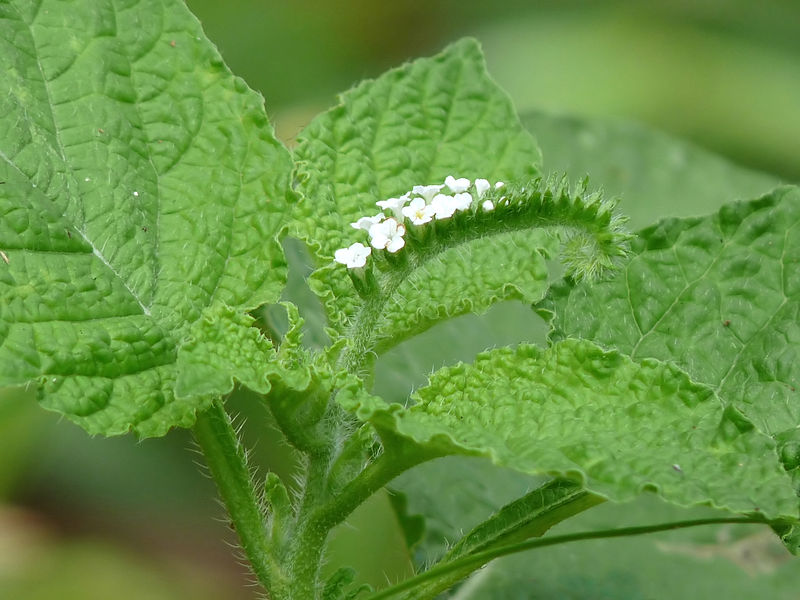
4. I found a really hirsute caterpillar feeding on one of our growing cabbages this morning.
Hirsute caterpillar of a Java moth. Attribution gbohne from Berlin, Germany.
I think this is a good word to use when describing hairy people, plants, insects and so on. It definitely adds a little something more to a sentence than merely saying ‘hairy’. It can be used to describe women too, of course, although, apart from ‘The Bearded Lady’* of Victorian fame it would not generally refer to facial hair. In women, the condition of excessive hair growth – usually dark and thick rather than fine and fair – is called HIRSUTISM.
* If anyone has never heard of this sad story, Ive added link to a Wiki page about one of these ladies HERE. (There are similar stories of other women who suffered this affliction.)
If you’d like to check out more interesting words then visit Heena’s page:
Flash Fiction for for Aspiring Writers is a writing challenge, kindly hosted by Priceless Joy. The challenge asks us to write a piece of fiction from the photo prompt provided in around 100- 150 words – give or take 25 words. It encourages participants to comment, constructively, on other entries, so supporting each other’s writing. If you’d like to join in with this challenge, follow the link in the title of PJ’s, blog: Beautiful Words to see what to do. The challenge runs from Wednesday to Wednesday every week.
Here is this week’s prompt . . .
. . . and this is my story:
Marnie took in the building’s formidable exterior and shuddered. ‘Really think it’ll make a good hotel, hun? Looks kinda creepy to me.’
‘It’ll be perfect, Marn.’ Carson grinned at his glitzy wife; the thick fur coat, the diamonds dangling from her ears. ‘Spend a few bucks … and bingo!’
‘But those stories …?’
Carson shook his head, chuckling. ‘Punters’ll be queuing to stay in a joint where a headless dame walks the corridors.’
‘But the agent I met on the roof said–’
‘Which agent?’ Carson cut in.
‘The one dressed like Batman’s butler.’
‘Doll, we ain’t got no agent yet.’
‘Well, this guy said one story was true – some servant, wrongly accused of strangling a rich guest. They hung him, up on that roof.’
Carson’s gaze fixed on the gabled roof … and the dark figure glaring down at them.
It’s time for Monday’s Finish the Story again. This is a flash fiction challenge which asks that we write a story in 150 words from the picture and first line prompt kindly provided by the host, Barbara W. Beacham.
Here is this week’s photo . . .
. . . and this is my story, including the first line prompt:
A body suddenly crashed through a plate glass window at the brigadier’s house. It plummeted past Brigadier Humphreys, lounging on the balcony below. He sped upstairs and into the room, his lower jaw quivering in outrage.
‘What the deuce is going on?’ he demanded, glaring at the shattered window.
‘Relax, Brigadier,’ Mike Jewson soothed, his Texan drawl pronounced. ‘You’ll be reimbursed real well for use of your place once we’re done.’
‘B … but the body …?
Jewson shrugged. ‘No worries, man. Best way to deal with the double-crosser, is all.’
Charles Humphries glanced about the room, taking in the amused faces and their fancy equipment. ‘But you can’t just murder someone, it–’
‘ – was necessary, Brigadier,’ a tall, suave man in tux and bow tie cut in. ‘Agent 008 at your service,’ he added, grinning. ‘He was threatening British Security.’
‘Ah, that’s different then,’ the brigadier murmured as he left.
‘Go retrieve the dummy, Hank, then we roll with scene two.’
It’s early morning and I’m enjoying some peace and quiet before my tribe of six offspring (plus partners and grandchildren) invade for Sunday/Mother’s Day lunch. We tend to spend Mother’s Day here, at our house, because we have the biggest dining table for seating everyone. Besides, I love to cook for them all. I’m also looking forward to receiving my selection of lovely cards, flowers, chocolates and whatever other knick-knacks they decide I might like this year. I’ve never asked it of them, but I sincerely appreciate all that they bring. It’s like Christmas all over again. And to think, my birthday’s less than a month away, too.
Well, today I thought I’d have a think about what Mother’s day actually involves in the U.K. and how it originated. I won’t delve into how the celebration started in the U.S. in 1908 – which, I believe, is celebrated in May. There’ll undoubtedly be plenty of American bloggers to do that when the time comes. The actual term Mother’s Day, which stems from the American celebration, has now been adopted in many parts of the world and is usually celebrated either in March or May.
Here in the U.K. Mother’s Day is celebrated on the fourth Sunday of Lent, so the date varies from year to year, depending on the dates of Lent (in turn dependent upon the date of Easter). It was observed as early as the 16th Century, when it was known as Mothering Sunday. This was a time when people returned to the ‘mother church’ – the main church or cathedral in the area – for a special service called Laetare. The day was one of relaxation from normal Lenten observations; a day of hope with Easter being at last within sight.
Mothering Sunday was often the only time when the whole families could be together due to conflicting working hours on other days. Children and young people ‘in service’, as household servants, were given the day off to visit their families. Children often picked wild flowers on the way, either to put in church or give to their mothers. So eventually the tradition evolved into the giving of gifts to mothers.
But Mothering Sunday was by no means a new idea, even in the 16th Century. Celebrations of mothers and motherhood can be traced back to the ancient Greeks and Romans, who held festivals in honour of the mother goddesses Rhea and Cybele.
In the U.K. today, Mothering Sunday is known by the American term of Mother’s Day, as it is in most countries where the Day is celebrated. Many gifts are given to mothers, including the traditional flowers. Chocolates are also still popular, but a variety of other gifts are given as well. Unfortunately, as is to be expected, the cost of flowers rises dramatically as the special day approaches.
Flower stall on Cheapside, London, displaying flowers for sale before Mother’s Day. Wikimedia Common. Attribution: Kate Jewell
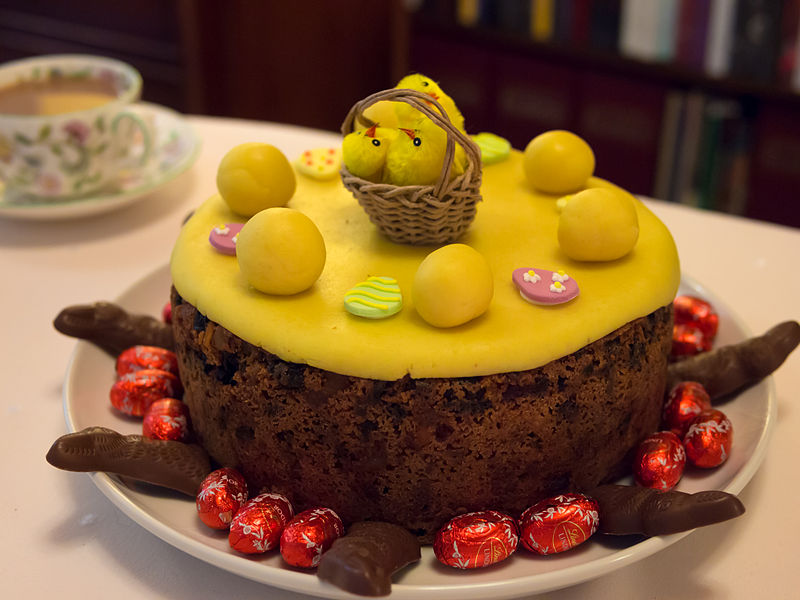
In the early days, Mothering Sunday was also known as Refreshment Sunday because the fasting rules for Lent were relaxed for that day. The special food item associated with the Day was Simnel cake – a fruit cake with two layers of almond paste (marzipan) one on top and one in the middle. It is made with eleven balls of marzipan on top, representing the eleven disciples. (Judas is not included.) Traditionally, sugar violets would also be added.
Simnel Cake. Both images: Wikimedia Commons. Attribution: James Petts, London, England.
The name Simnel probably comes from the Latin word simila, referring to a fine wheat flour usually used for baking cakes. A legend has it that a man called Simon and his wife Nell argued over whether the cake for Mothering Sunday should be baked or boiled. In the end they did both, so the cake was named after both of them: SIM-NELL.
This short poem was written in 1648, by Robert Herricks:
I’ll to thee a Simnel bring
’Gainst thou goes a mothering
So that when she blesseth thee
Half that blessing thou’lt give to me
For me, Mother’s Day is also a day when I remember my own mother and the many Mother’s Days we shared. She passed away in 1998 and I still think of her a lot. But especially on Mother’s Day.
Word of the Week (WOW) is a weekly meme created by Heena Rathore P. It’s a fun way to improve vocabulary by learning new words every week.
To participate, simply do a post with your word and leave the link as a comment on Heena’s WOW post for this week (above link). It’s a nice post to do and will give you some practice with a dictionary, of which there are several online. Illustrations are by no means necessary, but it’s up to you.
1. Jenny was a gregarious little girl who wanted to play with every child she met and be their friend.
2. The main problem with Martin was that his gregarious confidence vanished in social situations.
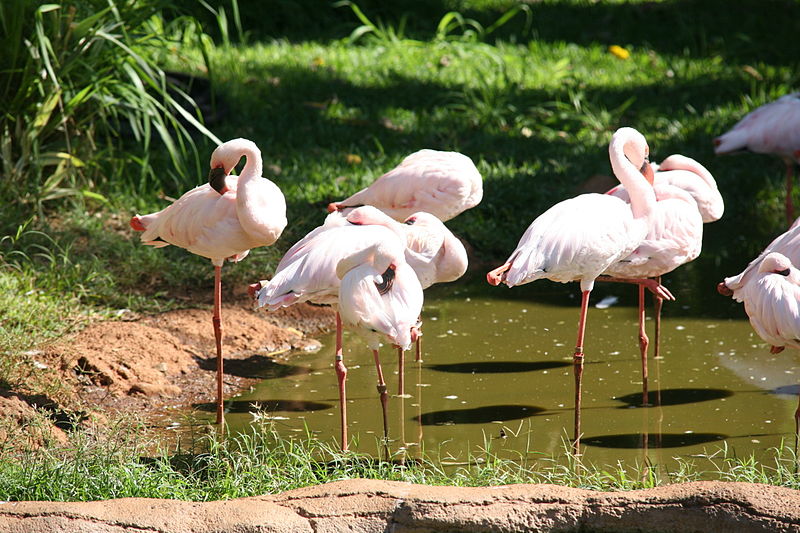
3. Flamingos are gregarious birds that do not do well in small flocks.
American Flamingos. Commons: Attribution Cliff from Arlington, Virginia, USA.
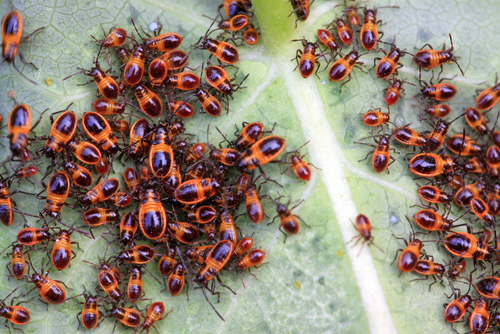
4. Gregarious behaviour benefits birds because it provides protection in numbers, giving individuals a better chance of survival.
Evening roost over woods. Commons: attribution Rob FarrowStinkbug lava on grass
Gregarious is a useful word to use in writing, and can easily be applied to our characters, as sentences 1 and 2 above show. I first came across the word when I was about eleven, when a teacher was explaining its use by referring to the behaviour of sheep. Like all herd animals, they simply need to keep together for safety. Safety in numbers, as they say.
If you’d like to check out more interesting words then visit Heena’s page:























 Millie Thom