I am a reader and writer of historical fiction with a keen interest in the Earth's history and all it involves, both physically and socially. I like nothing better than to be outdoors, especially in faraway places, and baking is something I do when my eyes need respite from my computer screen.
Word of the Week (WOW) is a weekly challenge created by Heena Rathore P. It’s a fun way to improve vocabulary by learning new words every week.
To participate, simply do a post with your word and leave the link as a comment on Heena’s WOW post for this week (above link).
I’m up to the letter Zthis week another letter with limited choice, so I’ll be happy to get back to starting the alphabet again.
So, here is my WOW for this week:
Word:
Zoomorphic
Pronunciation:
zoo-morphic (UK)
zo-o-mor-phic [zoh-uh–mawr-fik] (U.S)
Part of Speech:
Adjective
Related Forms:
Noun: zoomorph; zoomorphism
Meaning:
of or relating to a deity or other being conceived of as having the form of an animal:
Pavement mosaic with the head of Pan. Roman artwork, Antonine period (138-192 CE). Public Domain
Pavement mosaic with the head of Pan. Roman artwork, Antonine period (138-192 CE). Public Domain
2. characterised by a highly stylised or conventionalised representation of animal forms:
Zoomorphic decoration from the Book of Kells. Uploaded by Soerfin. Public Domain
3. representing, or using, animal forms:
In Hinduism, the cow is the symbol of wealth, strength, abundance, selfless giving and a full Earthly life. Attribution: copyrighted to Himalayan Academy Publications, Kapaa Kauai, Hawaii. Commons
Synonyms:
None
Word Origin:
Late 19th century: from zoo ‘of animals’ + Greek morphē ‘form’ + -ic
Use in a Sentence:
1. The Egyptian gods were often depicted as zoomorphic.
2. It was a very warm day when we visited the street fair, and one young man had taken off his shirt, revealing a zoomorphic tattoo on his left shoulder:
Vincent Gallo tattoo at the Urban Bear strees Fair. Author: istolethetv. Commons
3. The White Horse at Uffington is thought to be a zoomorphic representation of some symbol or belief of a tribe of Ancient Britons, possibly the Artrebates:
The White Horse at Uffington, Oxfordshire, UK. Author: USGS. Public Domain
The White Horse at Uffington, Oxfordshire, UK. Author: USGS. Public Domain
If you’d like to see more interesting words visit Heena’s page:
This post and the flash fiction post that accompanies it (which can be found here) are the first posts I’ve done for almost two weeks. I was away from home for eight days, and since being back we’ve been invaded by family and had several outings. So I must apologise to all those people whose posts I’ve missed. I hope to catch up on at least some of them.
So, this is a brief summary of some of the methods of besieging a castle.
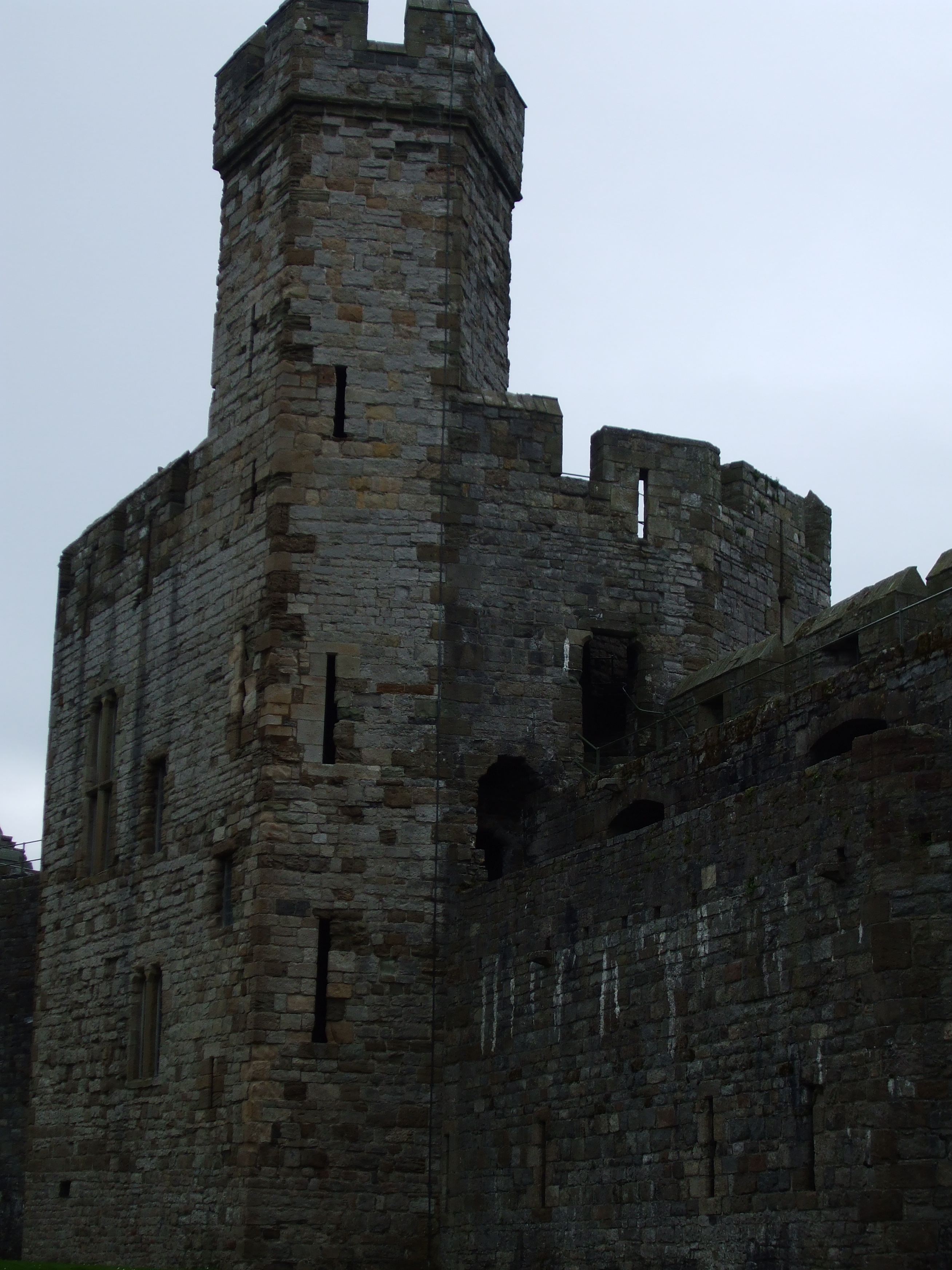
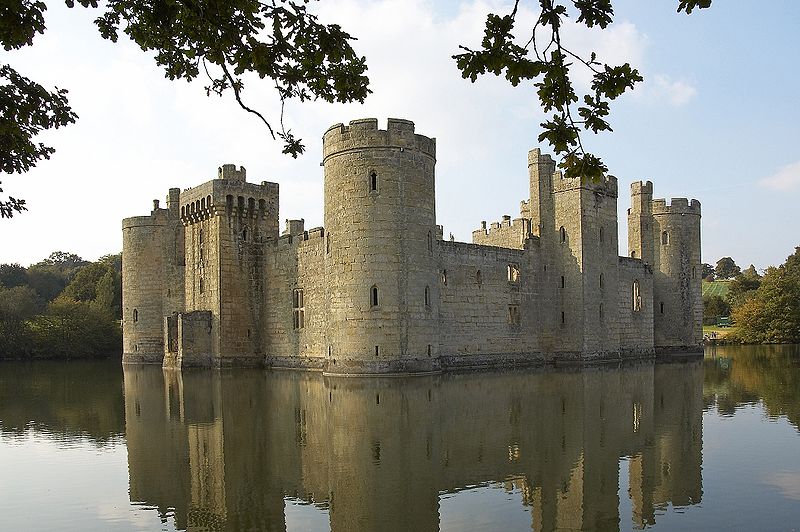
By the 12th and 13th centuries, castles had evolved into powerful fortresses, able to withstand great assaults. Once the portcullis was down, the gates closed and drawbridge raised, they were very difficult to attack:
Bodiam Castle throughthe trees (Sussex UK) Author Pilgrimsoldier. Wikimedia Commons
Medieval soldiers used a variety of methods to breach the castle defences and sieges were common. Siege tactics became very complex and did not just involve attackers rushing at the castle – which would risk the loss of too many men.
To begin with, leaders would search the realm in order to employ the best archers, carpenters, blacksmiths, sappers and engineers … and once they were all in place at the castle, the procedure followed a general pattern:
First, the castle would be surrounded, thus cutting off any means of escape and all supplies to the inhabitants. At the same time, besiegers would ensure that their own encampment was fortified, sometimes even constructing an earthen embankment around it and organising a constant night watch. Then they would simply wait for the lord of the castle to surrender – which could take many months. If the lord still refused to surrender, assault on the castle would commence.
By this time, attackers would have located the castles weakest points, such as the weakest doorways and lowest curtain walls – preferably with no outer river or moat, which entailed using barges to cross them.
The River Avon acts as a natural moat along the curtain wall at the eastern side of Warwick Castle.
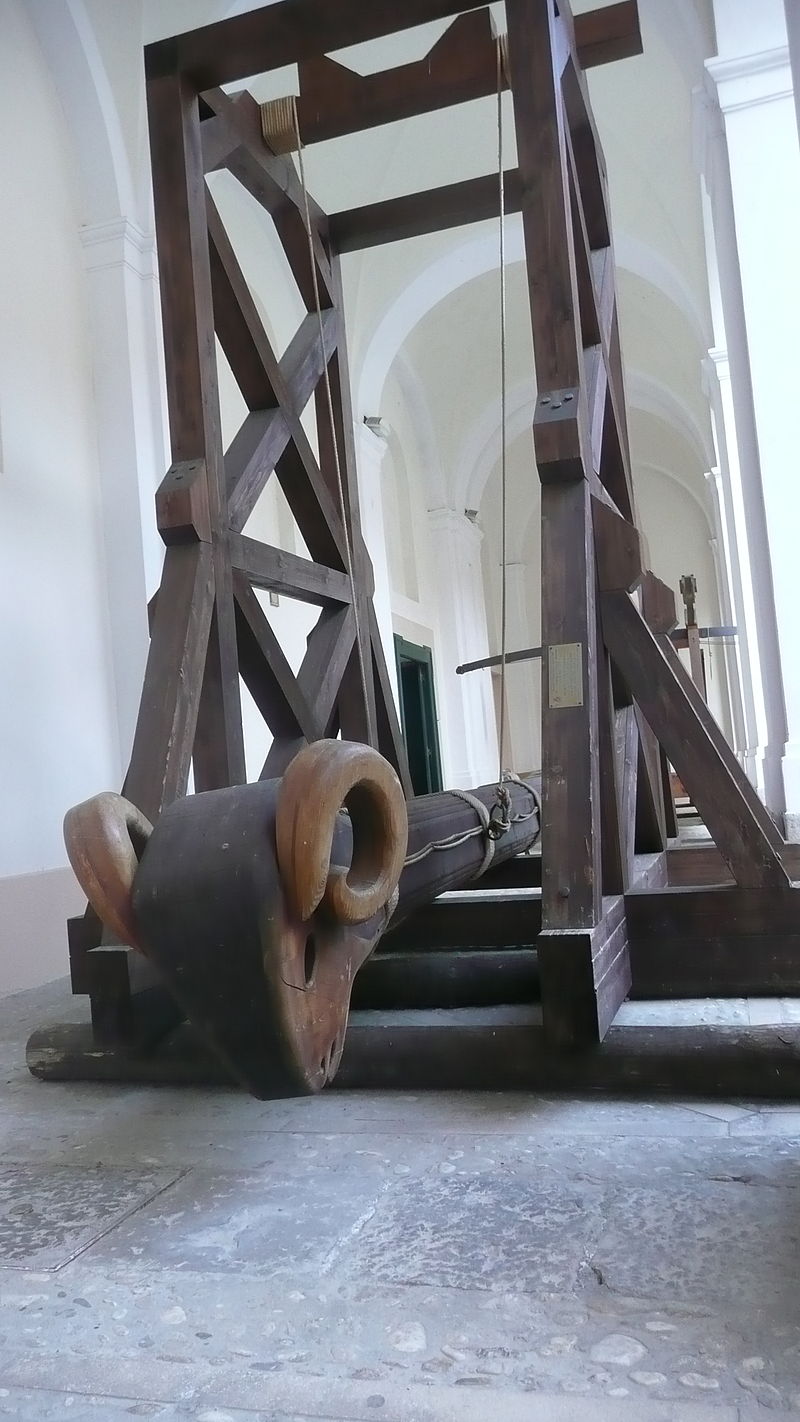
It stands to reason that gateways are likely to be the weakest points, and they would be attacked first. To do this, a battering ram came in useful (of which there were many sizes and designs):
Medieval battering ram at Chateau des Baux, France. Photo: ChrisO. Commons
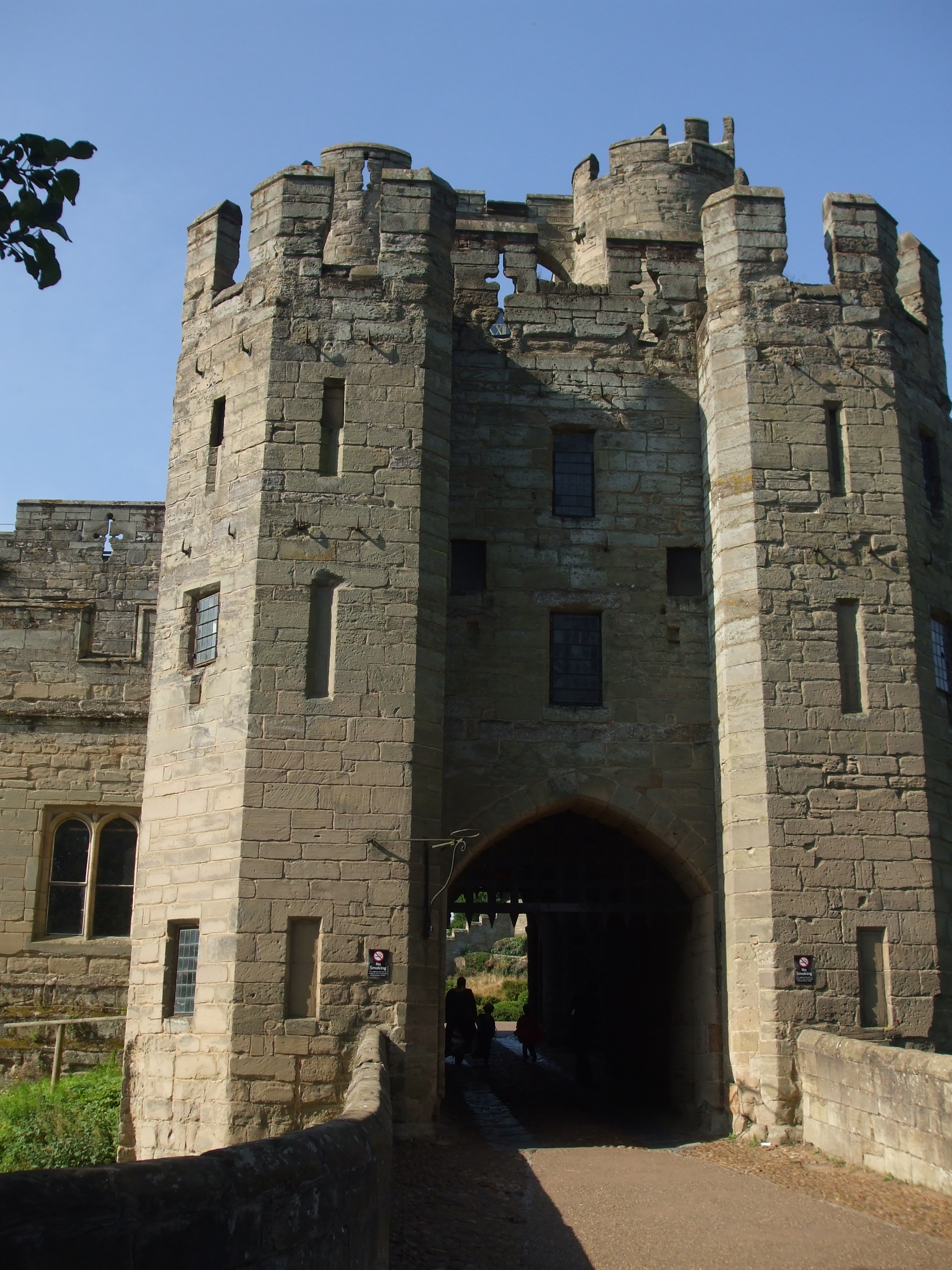
Many castle gateways, particularly the main ones, were heavily fortified by a series of structures and mechanisms (like drawbridges, portcullises and thick wooden doors, as well as ‘murder holes’ above the inner passageway, should attackers get that far). A fortified outpost or gateway, like this one at Warwick, was called a barbican:
At the same time as the gateways were being attacked, ladders would be carried up to scale the walls, often to be met by defenders who simply pushed the ladders away, or greeted rising besiegers with boiling oil. For scaling the walls, lofty siege towers (or belfries) were wheeled up. At the top of these was a drawbridge which would be lowered to allow men to stream out and attack defending guards. Sometimes, belfries were used from a distance to fire arrows down into the castle.
Medieval English siege tower. Author: Grose-Francis. Public Domain
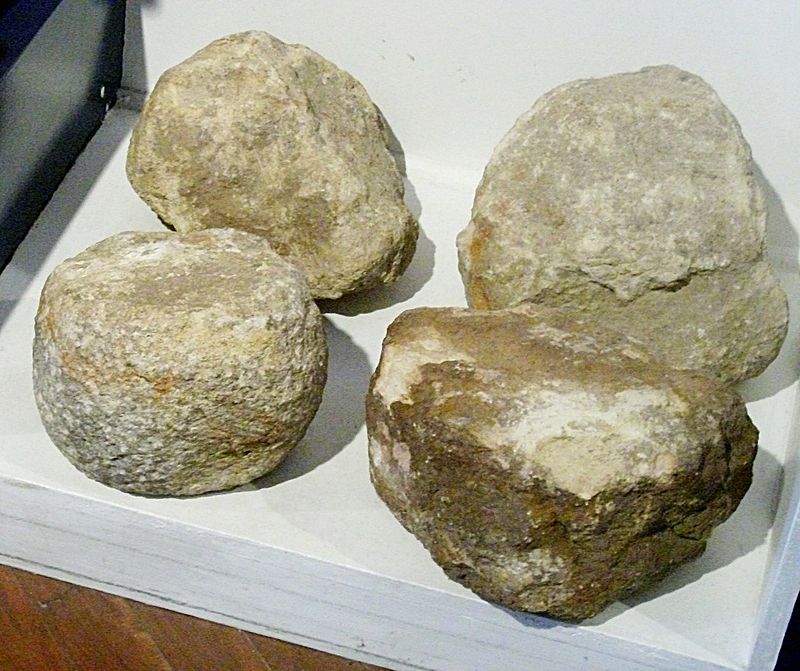
Other machines (effectively different versions of catapults) were designed to breach the castle walls and towers by hurling large rocks and missiles at them. Dead animals were also hurled over the walls in the hope of spreading disease amongst the inhabitants.
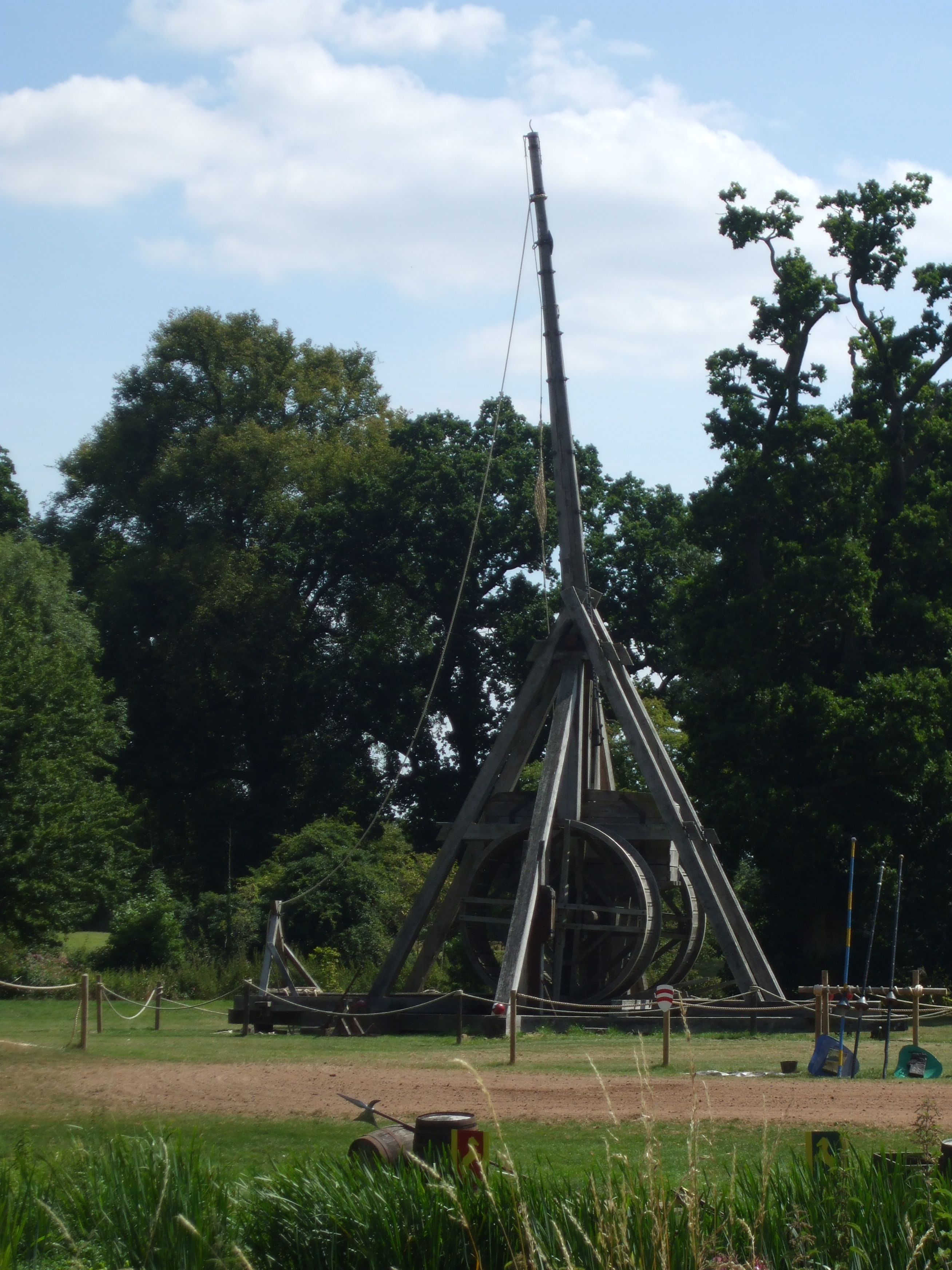
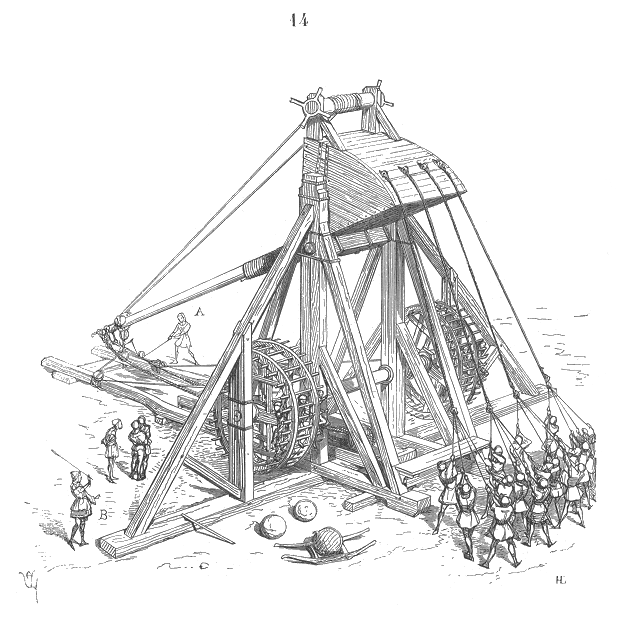
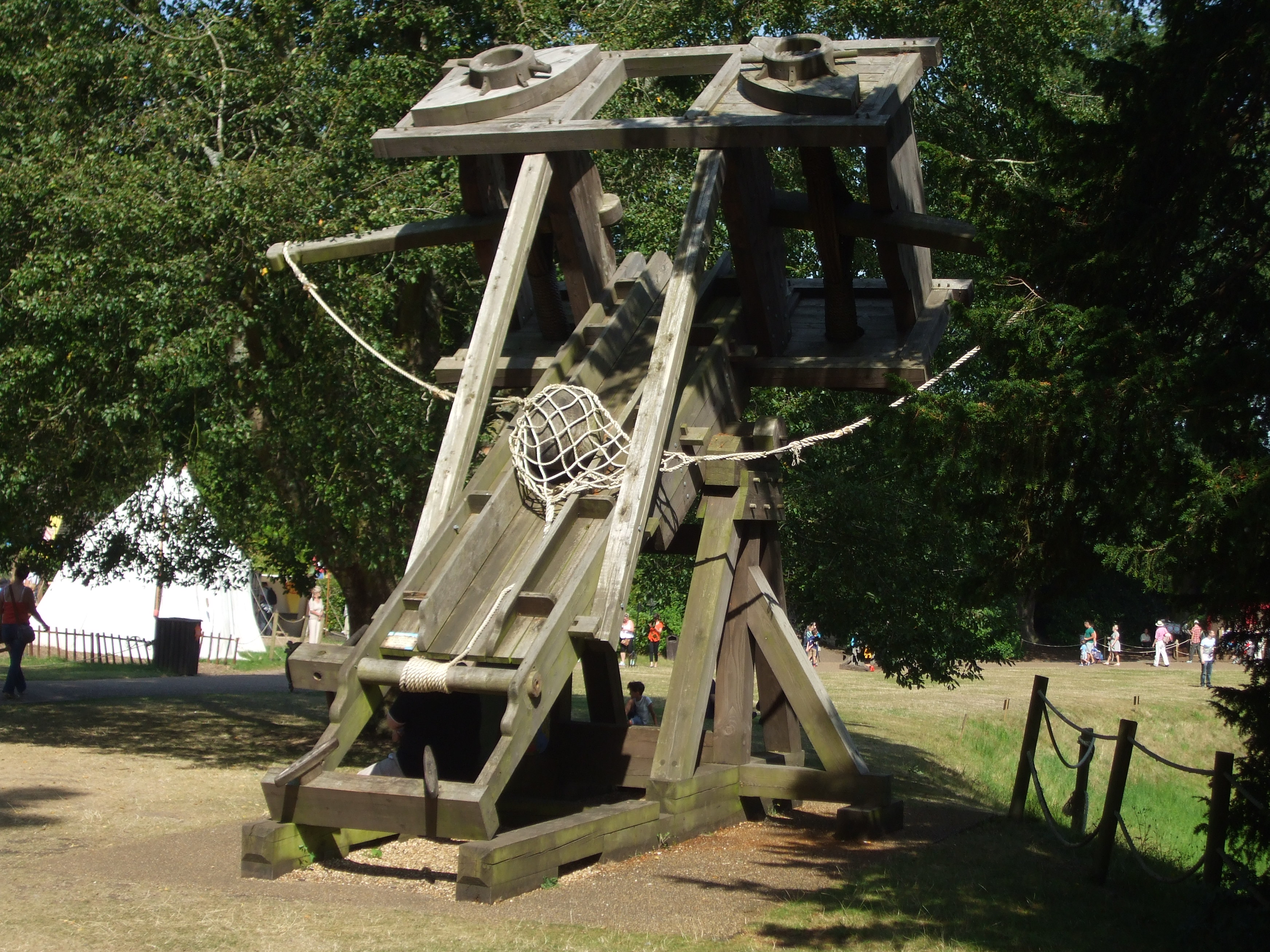
Trebuchets were built in all shapes and sizes, some with wheels so they could be moved around the castle. They were massive, gravity-powered catapults, consisting of a lever and sling and capable of hurling rocks of up to 200lbs for 300 yards. They could also be disassembled in order to transport them from place to place. This is one we saw at Warwick Castle:
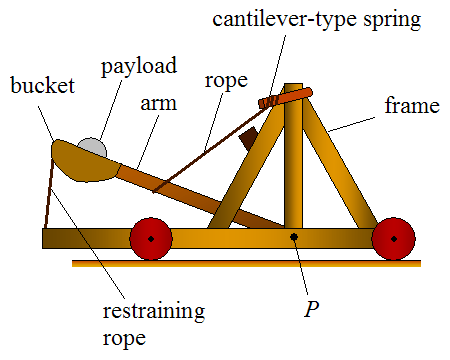
The mangonel also hurled boulders, and had a throwing arm like the trebuchet, but it was less accurate than the trebuchet, with a shorter throwing range, and aimed directly at the castle walls rather than over the top of them.It worked by torsion:
English mangonel. Author: Rpanjwani. CommonsMedieval Mangonel. From “Dictionary of French Architecture fron 11th-16th Century” by Eugene Viollet in 1856. Public Domain,Mangonel shot used in the siege of Bedford Castle in 1224. Author Simon Speed. Public Domain.
A ballista was built like a huge crossbow and designed to shoot bolts (huge,metal-covered arrows) into the castle. It was manoeuvrable and played an important part in sieges for over a thousand years, originating in ancient Greece. This weapon utilized two torsion springs and two throwing arms to launch its load along a central track.
Some ballistas also hurled rocks, like this one we saw at Warwick Castle:
While all this was going on at the top of the castle, miners/sappers would be busy tunnelling up to the castle and tower walls in order to collapse them. To do this they would remove the foundation stones and replace them with wooden props. A fire would then be lit and the miners got out quick! Once the props burnt through, there would be nothing to hold up the wall, so it simply collapsed. The corners of square castles were the weakest parts and miners would often aim for those. Inside the castle, guards would place pots of water near the towers and walls. When the water rippled, they would know that enemy miners were at work.
Needless to say, a great variety of hand weapons were used during attacks, amongst others a variety of swords, knives, axes, spears, clubs, maces, flails, halberds, crossbows and longbows. And all soldiers would be heavily weighted down with necessary armour. It’s always mind-boggling to think of the enormous weight medieval soldiers had to carry whilst fighting for their lives.
Naturally, defenders had many techniques for countering attacks on their castles, a few of which I’ve mentioned above, and not every siege was successful …
Flash Fiction for for Aspiring Writers is a writing challenge hosted by Priceless Joy. It asks us to write a piece of fiction from the photo prompt provided in around 100-150 words – give or take 25 words. It encourages us to comment, constructively, on other entries, so supporting each other’s writing. If you’d like to join in with this challenge, follow the above link to see what to do. The challenge runs from Wednesday to Wednesday every week.
Here is this week’s prompt, a beautiful picture, kindly provided by Sonya:
. . . and this is my story:
Sir Robert de Baux peered over the battlements, wary of revealing himself to the archers below. Fires of the enemy encampment encircled the castle – as they had done every night for the past six months.
Today, a determined assault on the castle had begun. Mangonels had hurled rocks at his outer walls and rams pounded the eastern and western gateways. None had met with success – but the trebuchets were almost constructed and the assault could go on for weeks. And food supplies were already dangerously low.
In the welcomed silence of the nightfall, he headed for the Eagle Tower, where his young wife would be waiting for news of earlier negotiations.
‘What says Sir Hugh, my lord?’ Alys asked eagerly as he entered their quarters.
‘My elder brother still claims the castle is rightfully his and that Father unlawfully disinherited him for siding with King John. The assault will continue until we surrender.’
Alys gave a wan smile. ‘The pigeon I sent out returned today. My father’s forces should be here within the week.’
Word Count: 174
*
My ‘extra information’ was too long on this occasion to attach to this post, so I’ve made it into a post of its own. For anyone interested, it can be found here.
*
If you’d like to view other entries, click the little blue frog below:
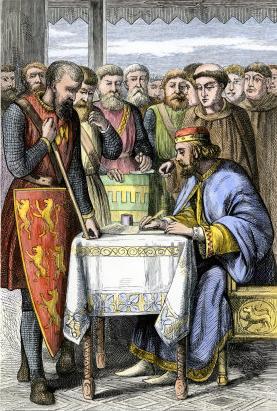
On June 15, 1215 – or 19th according to some sources – at a place called Runneymede (near Windsor) on the River Thames, King John of England reluctantly signed a treaty with the powerful barons of the realm. The document was a series of written promises that John would govern the country and deal with its people according to the customs of feudal law. In other words, the charter was an attempt by the barons to stop John from abusing his power and the people of England suffering as a consequence. The charter became known as the Magna Carta: Latin for the Great Charter. Here are a couple of artistic interpretations of the signing:
19th century coloured wood engraving of king John signing the Magna Carta. Public DomainLink John Magna Charta by Ernest Normand, 1900. Uploaded by william Avery. Public domain
By 1215, John had been king for 16 years, and had a series of mistakes, misdemeanours, and cruel or treacherous acts behind him and at last the barons had snapped. I intend to look at some of these in another post, but today, I want to think about the Magna Carta.
2015 marks the 800thanniversary of the signing of the Magna Carta. Several copies were originally made and delivered to religious establishments all over the country. Only four of these copies are still in existence today: two in the British Library, one in Salisbury Cathedral and one belongs to Lincoln Cathedral but is on display in Lincoln Castle. Lincoln’s copy has been in the city since it was sealed by King John – it even has instructions to deliver to ‘Lincolnia’ written on the back.
Lincoln is also the only place in the world where you can find an original copy of Magna Carta together with the Charter of the Forest, issued in 1217 to amplify the document, and is one of only two surviving copies.
Throughout the summer, Lincoln has been celebrating this momentous signing, along with several other places around the country. And since Lincoln is only 7 miles away from where we live, Husband and I decided to pop along and have a look.
Lincoln Castle is worth a post on its own – another one I have planned for later on. It’s a fine old Norman structure, unusual in having two keeps. The County Law Courts are still located inside the castle, as is the old prison – well worth a visit in itself. It is in the subterranean vault inside the prison building that the Magna Carta is on display. It’s the red brick building in the photo (bottom left) below.
Unfortunately, the controlled lighting in the vaults makes taking photographs impossible. Flash photography is a no-no. So I have no photos of the documents to show. But there are some online that can be seen.
As part of the anniversary celebrations in Lincoln, the organisers have created the Barons’ Charter Trail for children to follow. Twenty five fun ‘barons’ have been created, all painted in bright colours and given amusing names like ‘Truck Driver Baron’, ‘Wild Flower Baron’ and ‘Lincolnshire Waterways Baron’. They are spread out across the cultural and commercial areas of Central Lincoln. On finding all 25, and copied down the code for each, children collect a bag of King John’s gold – in other words, chocolate money.
We found all of these ‘barons’ and here is a selection of them:
The barons’ shields, used as the header image above, are on display on the wall outside the vault where the documents are housed.
A week after this visit to Lincoln Castle, we had a visit to nearby Newark Castle, where a re-enactment group were putting on a display about John and medieval life in general. We have some good photos of that event, too. Needless to say, John is featured a lot this summer. He was an interesting character, and one of the most memorable kings in English history.
I’ve been tagged by the lovely Suganiya to write a post about summertime reading. Suganiya is a blossoming writer, who has an interesting and varied blog, with posts on book reviews, discussions on fictional characters, and customs and traditions. She also participates in flash fiction writing challenges. You can read all these on her blog, Infinite Passion.
So here are the tag post requirements:
1. SHOW A BOOK WITH A SUMMERY COVER – e.g. the sea, beach and sun!
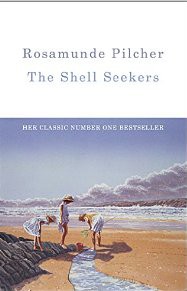
Not a great deal of choice for me with this one because my usual holiday reading tends to be in the same genres I read for the rest of the time, namely historical fiction and crime novels. But I can remember reading a few books with summery covers over the years and this is one of them:
This cover is of the Kindle version (the top third of which is unfortunately white, so doesn’t show up well) but I read a paperback edition that was in a bookcase in a holiday house we rented in Dorset a few years ago. The original cover had the same beach scene on it, as it’s a picture of a painting (called ‘The Shell Seekers’) which is the central theme of the story. The book was written by Rosamunde Pilcher in 1988. It’s an old-fashioned kind of book, almost cosy, family-saga styled compared with some gimmicky or fast-moving modern books with 21st style language and so on. I enjoyed it as a change from my usual reads.
2. PICK ONE FICTIONAL PLACE THAT WOULD BE THE PERFECT DESTINATION FOR YOUR SUMMER VACATION.
I’m going to cheat with this one because the place isn’t strictly fictional. This place was once a thriving city and now is just ruins, having been buried beaneath volcanic material for two thousand years. Of course I’m talking about Pompeii. The novel is set during the time of the eruption of Mt. Vesuvius in AD 79, so descriptions of the city are based on the author’s imagination, undoubtedly aided by the plan of the ruins and the artefacts found there. This is the book:
I’m also cheating because I’ve already been to Pompeii (as it is today, of course) and I took this book to read on the flight and any spare moments during our stay. When I say that I’d like to have a vacation there, I mean a quick trip in my Tardis back to Pompeii in the days before the eruption.
3. YOU’RE ABOUT TO GO ON A FLIGHT TO YOUR SUMMER VACATION AND WANT TO READ A BOOK THAT LASTS FOR THE WHOLE FLIGHT. WHAT NOVELLA DO YOU CHOOSE?
I’m not a fan of novellas as a rule, but I did have a think about a possibility for this question. So I picked this book because it looks very light and quick to read. It’s now on my Kindle, so I’ll have a read next week when I’m travelling up to Hadrian’s Wall. (I won’t be driving, on this occasion!)
4. YOU HAVE A CASE OF SUMMERTIME SADNESS. WHAT HAPPY BOOK DO YOU PICK UP TO PUT A SMILE ON YOUR FACE?
Right now I’d probably choose one of the books from the Falco series by Lindsey Davis. I’ve read most of them, but I think there are still a couple I didn’t manage to get around to. I’m really ‘into’ Romans at the moment and Falco always makes me smile. This is one I have already read, but it’s appropriately about Falco on a summer holiday:
5. YOU’RE SITTING ON A BEACH ALL ALONE… WHICH FICTIONAL CHARACTER WOULD BE YOUR BEACH BABE?
Definitely Thor from the film/movie of that name (i.e. played by Chris Hemsworth). He and his hammer can share my beach space any time. If he can’t make it across the Bifrost, I’ll have Falco.
6. TO MATCH YOUR ICE CREAM YOU WANT AN ICY COOL SIDEKICK! WHICH FICTIONAL SIDEKICK WOULD YOU PICK?
My first choice of sidekick would be Tonto from the movie The Lone Ranger (played by none other than the gorgeous Johnny Depp). I can justify this story as being based on books because I found quite a few of them on Amazon when I looked. Most are ‘kiddie books’, but that’s about my level. 😀
Here’s the cover of one such book – but no Tonto in sight! It called The Lone Ranger Book Classic and was written by Steff Fletcher and E. Joseph Dreany in 1956:
I also found one book with the characters from the film on the front. This was written by Elizabeth Rudnick:
7. SHARE THE SUMMERTIME HAPPINESS! WHO DO YOU TAG? (One person)
I thought I’d elicit a little male imput for this. So… I nominate Udit at The Almanac of Life.
Flash Fiction for for Aspiring Writers is a writing challenge hosted by Priceless Joy. It asks us to write a piece of fiction from the photo prompt provided in around 100-150 words – give or take 25 words. It encourages us to comment, constructively, on other entries, so supporting each other’s writing. If you’d like to join in with this challenge, follow the above link to see what to do. The challenge runs from Wednesday to Wednesday every week.
Here is this week’s prompt, a beautiful picture, kindly provided by Etol Bagam:
. . . and this is my story:
Lost in his memories, Richard stood on the bridge that spanned the river as the tour guide delivered his spiel about the awesome falls. He’d been saving for this trip for two long years, and now their wedding anniversary had arrived.
Claire had always loved waterfalls. ‘There’s something magical about them,’ she’d said, so many times. ‘Imagine standing so close, small and insignificant in the drenching spray, whilst rainbow colours of light dance over the swirling plunge pool.’
Thirty years of married life had passed by in a haze of hard work and raising children. Now the four had flown the nest, leaving Richard and Claire alone. So happy together …
The illness had taken her from him, just six months before their anniversary. Towards the end, Claire had made him promise not to cancel their holiday.
‘Just look at that rainbow, Richard!’ Claire’s joyful voice sounded inside his head.
Richard focused on the vibrant colours, blinking back the teardrops that threatened to flow like the cascading waters of the falls.
Word Count: 171
Rainbowbywaterfall. Licenced under Public Domain. This rainbow is in Iceland, but they are common in the water vapour /spray around many waterfalls.
*
If you’d like to view other entries, click the little blue frog below:
*********
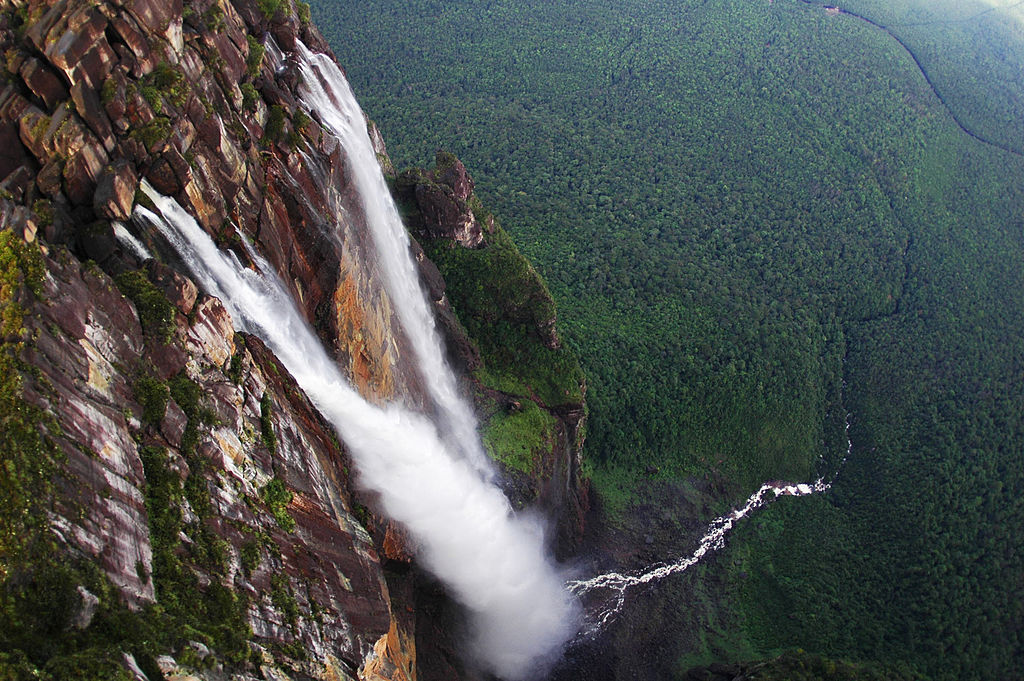
Today’s prompt brought to mind a waterfall that I’ve looked at in geography lessons with Year 8 on several occasions. I don’t know whether the picture is of the Angel Falls or not, but there’s a definite similarity. I’ve never seen a photo showing a bridge, however, so it could well be somewhere else.
For anyone interested, here’s a little bit of information about the Angel Falls, mostly from Wikimedia, but other snippets from various sites.
View of Angel Falls in National Park, Canaima, Venezuela. Author: Paulo Capiotti, uploaded by Slick-o-bot. Commons
Angel Falls is situated in the Canaima National Park in Venezuela (South America) and is a UNESCO World Heritage Site. It is on the Guaja River (sometimes called the Kerep River or Kerepacupai). It is the highest uninterruptedwaterfall in the world, dropping almost a kilometer (979 meters/3212 feet) from a cleft near the summit of table top mountain, Auyán-tepu, into Devil’s Canyon below. It is five times higher than the Niagara Falls and three times as high as the Eiffel Tower in Paris.
During the rainy season, the waterfall splits into two:
Angel Falls, Venezuela, in the rainy season. Author: Luis Carillo. Commons
In the dry season (December -April) it looks like this:
Salto Angel in the dry season. Author: Tomaszp. Commons
Angel Fall was named after the American airborne gold prospector, Jimmie Angel. In 1933, he flew over the falls in his Flamingo monoplane in search of a valuable ore bed. In 1937 he returned with his second wife, Marie, on board, along with acquaintances Gustavo Henry and Miguel Delgado. Although landing successfully at the summit of the falls, the plane’s wheels became stuck in the mud and they had to walk 12 miles through the jungle, which took 12 days. News of their adventure spread and the waterfall was named Angel Falls in his honour. The common Spanish name for the waterfall, ‘Salto Angel’, was first published on a Venezuelan government map in December 1939.
The plane remained marooned at the top of the mountain until 1970, when it was taken down by a helicopter. It can usually be seen at the Aeronautics Museum of Maracay.
Jimmie Angel’s aircraft, exhibited in front of Bolivar airport. Photo uploaded by Yosemite. Commons
Angel Falls is one of Venezuela’s top tourist attractions, though a trip out to it is a quite a complicated one, as the falls are located in isolated jungle. It requires a flight out to Canaima camp, followed by a boat or jeep ride to the falls. Tourists have only been permitted to visit since 1990. The first visitors stayed at Boulton Camp (now known as Campamento Canaima).
These Falls also inspired the setting of the Disney film Up in 2009, although it was called Paraduse Falls. It was also seen briefly inthe Disney film Dinosaur, as well as the 1990 film Arachnaphobia.
Panoramic, partly clouded, view of Angel Falls. Author Jlazovskis. Commons
Word of the Week (WOW) is a weekly challenge created by Heena Rathore P. It’s a fun way to improve vocabulary by learning new words every week.
To participate, simply do a post with your word and leave the link as a comment on Heena’s WOW post for this week (above link).
I’m up to the letter Ythis week and, as with X, I’ve had limited choice for this week’s word – and I imagine Z will be just as bad. I can’t wait to get back to starting the alphabet again.
Middle English yameren,alteration of yomeren -to murmur, be sad – from Old English gēomrian -akin to Old High German jāmaron, to be sad. First known use: 15th century
Use in a Sentence:
1. After the earthquake, the seismographs yammered for days:
2. Maria escorted the old lady back to her house, smiling patiently as she yammered on about the old days:
3. Chris yawned, willing the teacher to stop yammering about boring algebraic equations:
4. Left alone in the isolated cottage, Judith found the constant yammer of the guard dog quite unnerving:
Image courtesy of Pixabay
If you’d like to see more interesting words visit Heena’s page:
Last Sunday, July 19, we headed off to Derbyshire with our 16-year-old grandson to visit the Crich Tramway Museum (the letter i in Crich is pronounced like the word ‘eye’). The museum is situated in the Crich Tramway Village, close to the town of Matlock and is an hour-and-a-half drive from where we live:
We specifically picked this weekend because it was a World War One weekend, and the event was attended by a number of people in period costume or WW1 army uniform. A re-enactment group were also in uniform or other Edwardian dress. Shop windows displayed WW1 foods and there were various recruitment posters about:
It’s thirteen years since we last visited Crich, when Kieran was only three. On that occasion, it was a Thomas the Tank Engine weekend, and Kieran was mad about all the different, colourful engines. His love of Thomas and friends dwindled very soon afterwards, when real steam engines took over. His passion for those has never waned. In fact, trams fall a long way short for him, but he enjoyed the day well enough.
The heart of the village is Tramway Street, a cobbled street with a shiny ‘lacework’of metal running along it, flanked by period buildings. Above, the overhead wire has been described as ‘a mad woman’s knitting’. Both the tracks and wires have been retrieved from towns and cities all over the country…
… as have the buildings and street furniture, some of which were moved stone by stone from their original destinations. There is a pub – the Red Lion Pub, a cafe (Rita’s Tearooms) an old-style sweetshop, the Yorkshire Penny Bank and the impressive Derby Assembly Rooms with its grand Georgian frontage (originally built between 1765 and 1774). It now houses the video theatre and other displays about Britain’s tramways. There is a bandstand in a little park area, and a number of old gas lamps and a couple of telephone boxes. The village is also home to the Eagle Press, a small museum dedicated to letterpress printing, including an 1859 Columbian printing press:
The Bowes-Lyon Bridge (seen above) crosses the road. From up there we could watch the trams going underneath us. These pictures give a good view of the ‘mad woman’s knitting’ design of the wires, with the tracks beneath:
There are fifty trams on display at Crich, both single and double-deckers, some from places abroad, including France, Germany, Belgium, Portugal, South Africa and the U.S. The idea is to portray each of the significant stages in the evolution of the British tramcar. The gaps have been filled in with tramcars from outside the U.K.
Several trams run through the village and visitors can ride up and down the one-mile track along the edge of the beautiful Derwent Valley.
Visitors can get on and off a variety of trams at different spots to view the sites. These include a lead mine, with the rails for the trolleys, a woodland walk with some unusual wooden sculptures (several of the Green Man) and views of the quarry:
The Derwent Valley was named a World Heritage Site by UNESCO due to its historical importance. The valley can rightly be described as the birthplace of the Industrial Revolution. The village of Cromford, only a mile away, was where Richard Arkwright built his new mill in 1771. George Stevenson, the great railway pioneer, had a close connection with Crich and the present tramway follows part of the mineral railway he built to link the quarry with the village of Ambergate.
On their arrival in Britain in 1860 from the US (where they were developed) trams were welcomed as a means of transport that gave a far smoother ride than previous horse drawn buses. They also provided a far cheaper form of urban transport for the masses. When the electric tram arrived in 1900, it was a wonder of the age. By the 1920s there were 14,000 electric trams in Britain. The trams at Crich mostly ran along the streets of cities in United Kingdom before the 1960s, with some trams rescued and restored (even from other countries) as the systems closed.
Besides the trams constantly rumbling along the streets, there are many inside the exhibition halls to be brought out on different days, and some in the workshop undergoing restoration:
Decline of the trams came after WW1, notably when the internal combustion engine was developed. Vehicles powered that way offered reliability and perceived low cost, and were not restricted to rails. However, it took many years before buses became swifter and carried more passengers than trams. Even when the motor car was developed, public transport still thrived. But few towns invested in new trams and the cheaper buses eventually took over. By the 1950s only a handful of tramway systems were left. Blackpool closed before the 60s and Glasgow Corporation Tramways in 1962.
There has been a recent revival with new networks such as the Croydon Tramlink, Sheffield Supertram, Midland Metro, Edinburgh Trams, Manchester Metrolink, and Nottingham Express Transit being built and extended. Whether or not other cities will follow remains to be seen.
Here’s a smile inducing piece of information to end with, complete with illustration, from inside the Discovery Centre:
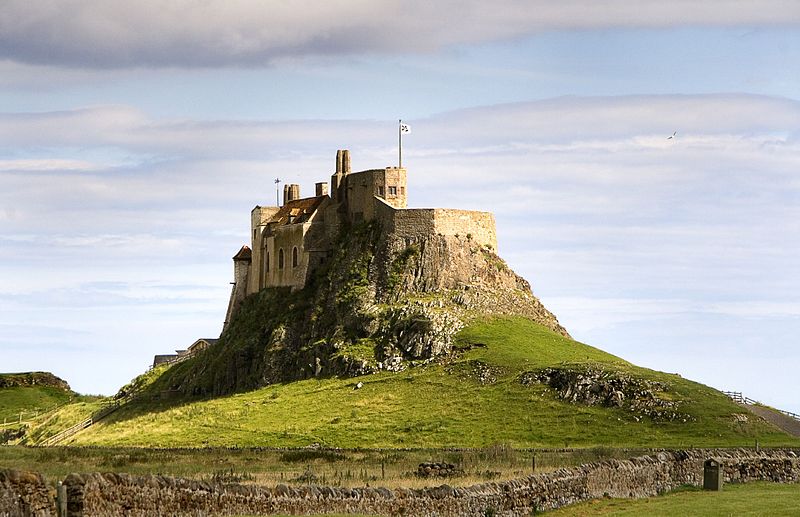
This week’s prompt for Flash Fiction for Aspiring Writers reminded me of one of my favourite spots to visit in the UK: Lindisfarne (or Holy Island). So I have TJ Paris to thank for bringing it to my mind. This is his photo . . .
I would normally add a little bit of ‘extra’ information at the end of my story each week, but I thought this was a little too long for that today. So here it is, as a separate post:
I’ve always been fascinated by offshore islands, whether inhabited by humans or simply by colonies of seabirds. It has been suggested that there as many as 5000 islands in total around the coast of the UK – a number difficult to verify as it depends on a person’s definition of an island. Some ‘islands’ may be just small lumps of rock. But there are certainly more than 1000.
As for Lindisfarne, it is well worth a visit. We usually head up there when we’ve been staying around Hadrian’s Wall, just for a change for a day out. It has a lot to offer for tourists, including the requisite souvenir shops, hotels, restaurants and cafes etc. Of course, most people go there to see the historical sites.
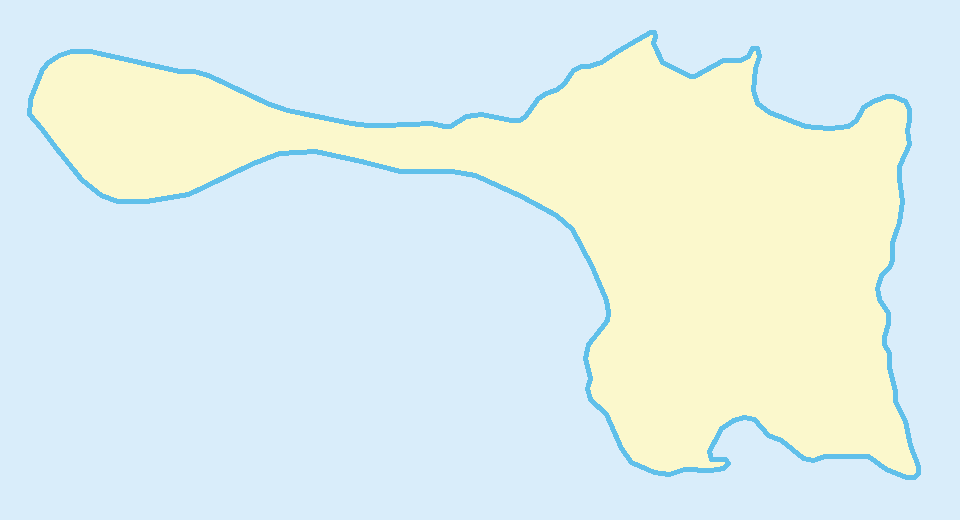
Lindisfarne lies just off the coast of NE England, in the county of Northumberland. It is connected to the mainland by a tidal causeway, and there is a castle and priory on the island.
(Note. A causeway is a raised road or track across low or wet ground. e.g. “an island reached at low tide by a causeway”)
Map of Northumberland showing offshore islands. Lindisfarne is the larger, more northerly isle. Author: Nilfanion. CommonsSimplistic map of Holy Island. Author: Fhah 4. Commons
Lindisfarne has recorded history from the 6th century, although we know the Romans were in the area much earlier, and there could have been a village of Britons on the isle. In the 6th century, Lindisfarne was an important centre for Celtic Christianity under Saint Aiden, who came from Ireland and established an Irish-type wooden monastery with a small church and various huts and workshops. He eventually became Bishop of Lindisfarne and was buried there in 651. But at the end of the 9th century, when the priory was abandoned, his remains were taken to Durham Cathedral, where they still remain today. Ther is a statue of St. Aidan by the Priort ruins, which are on the site of the monastery built by him:
Lindisfarne Priory ruins and statue of St. Aidan. Author: Kim Traynor. Commons
Much is written about the history of Lindisfarne and the ‘saints’ who came after St. Aidan. But the event that captures most people’s interest – most certainly mine – is that of the Viking raid on the island in 793. This event is now taken to be the beginning of the Viking Age.
Here’s the modern English version (as opposed to the Anglo Saxon one) of the raid, from the Anglo Saxon Chronicle:
“In this year fierce, foreboding omenscame over the land of the Northumbrians, and the wretched people shook; there were excessive whirlwinds, lightning, and fiery dragonswere seen flying in the sky. These signs were followed by great famine, and a little after those, that same year on 6th ides of January,* the ravaging of wretched heathen people destroyed God’s church at Lindisfarne.”
(*The generally accepted date for the Viking raid on Lindisfarne is 8th June, when sailing across the North Sea would have been more likely for the Vikings. The’ 6th ides of January’ is now considered to be a translation error.)
Alcuin, a Northumbrian scholar at Charlemagne’s court at the time, wrote:
“Never before has such terror appeared in Britain as we have now suffered from a pagan race. . . The heathens poured out the blood of saints around the altar, and trampled on the bodies of saints in the temple of God, like dung in the streets.”
These raids by Norwegian Vikings were not followed up. Most of the later raiders sailed north around Scotland. The 9th century invasions came from the Danes … which, of course is the topic of my books.
The Priory on Lindisfarne was built in the 11th century on the site of the Irish-styled monastery founded by St. Aidan in 636. Here are some pictures of the ruins today.
Remains of Lindisfarne Priory: 1798 by Thomas Girton. The priory’s rainbow arch (which still survives) is shown truncated for artistic effect.
East end of Priory showing the Rainbow arch. Author Nilfhanion. Commons
View of Priory from the churchyard of the parish church. Nilfhanion. Commons
West end of Priory. Author Nilfanion. Commons
The castle was built in 1550 by Henry VIII in defence of the realm against attack by Scotland and in pursuit of their Spanish allies. It is said to have been constructed of stone taken from the priory.
Londisfarne Castle from the harbour on a rainy day. Author: Russ Hamer. CommonsLindisfarne Castle. It is sited on top of a volcanic mound known as Beblowe Craig. Author: Matthew Hunt. Commons
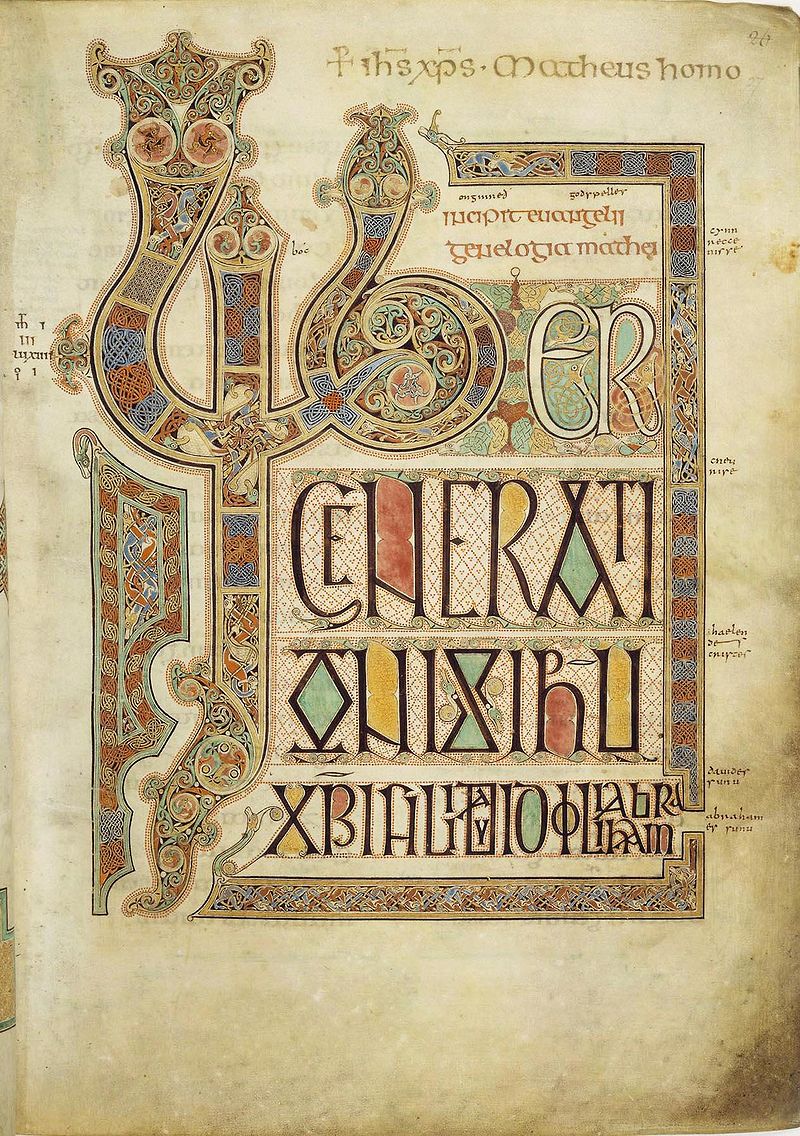
The Lindisfarne Gospels are among the most celebrated illuminated books in the world. A 10th century inscription at the end of the text was made in honour of God and Saint Cuthbert by Eadfrith, Bishop of Lindisfarne, who died in 721. The Lindisfarne Gospels are part of a collection of Sir Robert Cotton (died 1631) in the British Library in London.
Folio 27r from the Lindisfarne Gospels contains the incipit from the Gospel of St. Matthew. Uploaded by Airump. Public DomainLindisfarne Gospelsshowing John the Evangelist. Permission PD-Art. Public Domain
Flash Fiction for for Aspiring Writers is a writing challenge hosted by Priceless Joy. It asks us to write a piece of fiction from the photo prompt provided in around 100-150 words – give or take 25 words. It encourages us to comment, constructively, on other entries, so supporting each other’s writing. If you’d like to join in with this challenge, follow the above link to see what to do. The challenge runs from Wednesday to Wednesday every week.
Here is this week’s prompt, kindly provided by TJ Paris:
. . . and this is my story:
Amelia withdrew to her bedchamber, leaving Edward to his business affairs. Through the open window she watched the seagulls wheeling over the blue-grey water, their mournful dirge echoing her own misery. During their first year of marriage, she had seen little of her husband, whose business focused on London, so far away.
Bequeathed to Edward by his grandfather, the house had been built eighty years ago, in 1756, in place of a dilapidated keep, and was encircled by the castle’s towering fortifications. Enveloped by the sea, storms utterly terrified Amelia, as malevolent waves battered the defences like some ancient foe firing deadly cannon.
Despite numerous servants, she felt so alone; no babe yet swelled her womb.
Edward was suddenly beside her. ‘Amelia, I think we should move to London… We can afford it now, and in London you’ll be close to your family –’
Amelia threw her arms round his neck, sobbing her relief.
‘We’ll spend more time together,’ he whispered, ‘raise a child or two… And bequeath this house to the nesting gulls.’
Word Count: 174
If you’d like to view other entries, click the little blue frog below:
I usually add a little bit of ‘extra’ information connected to the topic of my story every week. Today I thought this information was a little too long, so I’ve made it into a separate post. If you would like to read it, you can find it here.






























 Millie Thom