I am a reader and writer of historical fiction with a keen interest in the Earth's history and all it involves, both physically and socially. I like nothing better than to be outdoors, especially in faraway places, and baking is something I do when my eyes need respite from my computer screen.
Word of the Week (WOW) is a weekly challenge created by Heena Rathore P. It’s a fun way to improve vocabulary by learning new words every week.
To participate, simply do a post with your word and leave the link as a comment on Heena’s WOW post for this week (above link).
I’ve now been through the alphabet once, so I’ve started again, and am now looking at the letter B.
So, here is my WOW for this week:
Word:
Buffoon
Meaning
A person who does silly things, usually to make other people laugh:
Jester-Joker Card001 by GoShaw. Creative Commons
2. A person given to coarse or undignified joking (a boor).
Pronunciation:
buf·foon[buh–foon]
Audio: buffoon. (No discernible difference between UK and US pronunciations for this one.)
Part of Speech:
Noun
Related Forms:
Noun: buffoonery
Adjective: buffoonish
Word Origin:
Mid 16th century: from French bouffon, from Italian buffone, from medieval Latin buffo, meaning ‘clown’. Originally recorded as a rare Scottish word for a kind of pantomime dance, the term later (late 16th century) denoted a professional jester.
“Buffoon Playing a Lute”. Auhtor Frans Hals, 1623. Oil on canvas. Current location: Louvre Museum. Photographer: Web Galley ally of Art. Public Domain
Synonyms:
jester, clown, fool, boor, comic, comedian, wag, joker, dag (New Zealand, informal) harlequin, droll, silly-billy (informal), joculator or (fem) joculatrix, merry-andrew, zany, prankster.
Antonyms:
None
Use in a Sentence:
1. Once she got behind her desk, the generally quiet Teresa seemed to transform into a buffoon, hurling coarse and insulting remarks at her colleagues:
2. I hoped my husband would stop acting like a buffoon before our friends deserted us at the party:
3. In most of their films, Bob Hope played the buffoon of the comedy duo, whilst Bing Crosby was the straight man.
Screen shot of Bob Hope (left) Bing Crosby and Dorothy Lamour from “The Road to Bali”, 1952. Public Domain4. Adjecive use: Six-year-old Jonathan was not impressed by the clown’s buff
4. (Use of related noun) On his first visit to the circus, Jonathan was not impressed by the clown’s constant buffoonery:
Image courtesy of Pixabay
If you’d like to view more interesting words, visit Heena’s
This post is intended to accompany my story for this week’s Flash Fiction for Aspiring Writers (here). Having a grandson like Kieran (now sixteen) who has been mad about steam engines since losing interest in Thomas the Tank Engine when he was four…
… we’ve had a good few years to visit lots of places where steam locomotives can be seen. Such places include museums and historical, working railways and associated events. We also dash to Newark, Lincoln or Grantham stations when particular engines are passing through. It’s amazing how many steam fanatics do the same thing. These events are always packed.
So, here is a quick look at the history of steam locomotives…
Steam locomotives were first developed in Britain in the early 19th century. Their use transformed the world, carrying people and goods at hitherto unthinkable speeds around the globe, and dominating railway transport until the middle of the 20th century, when they were replaced by diesel and electric locomotives.
The creation of steam locomotives began with the development of the steam engine. In 1698, Thomas Savery patented a machine that used steam to pump water out of the mines. His design was later improved by Thomas Newcomen in 1712 and further still by James Watt in 1763. It was Watt’s improvements to the steam engine that led the way to the steam locomotive.
Newcomen Steam Engine. Author: Newton henry Black, Harvey Nathaniel Davis. Public Domain. Wikimedia Commons.
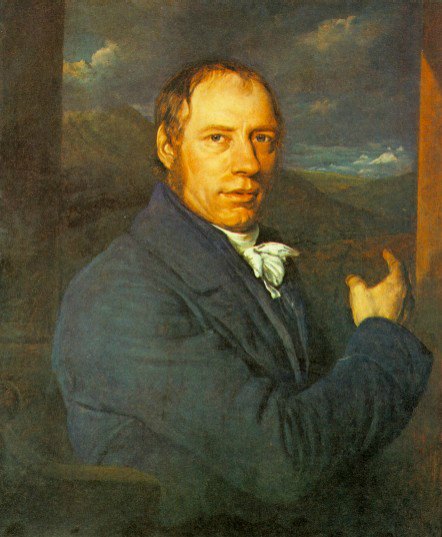
The first steam locomotive was made by Richard Trevithick in 1804. It was called the Puffing Eagle. Trevithick was a tall, strong Cornishman, described by his schoolmaster as ‘obstinate and inattentive’, who learnt his craft in the Cornish tin mines. He later moved to South America before dying penniless at the age of 62. But his idea was developed by others, and by 1845, 2,440 miles of railway were open – used by 30 million passengers in Britain alone.
Painting of Richard Trevithic. engineer, !816. Author: John Linnell. Public Domain. Wikimedia Commons
Another well-known early locomotive was the Puffing Billy built by engineer William Hedley in 1813-14 and is the oldest one preserved, and on display in the Science Museum in London.
Puffing Billy (the oldest surviving steam locomotive in the UK). Location : Science Museum, London. Author: Arkady Rose. Creative Commons.
George Stephenson built the Locomotion for the Stockton and Darlington Railway in north-east England, the first public steam railway in the world. In 1829 he built The Rocket, which won the Rainhill Trials and established his company as the foremost builder of steam engines used on railways in the UK, US, and much of Europe.
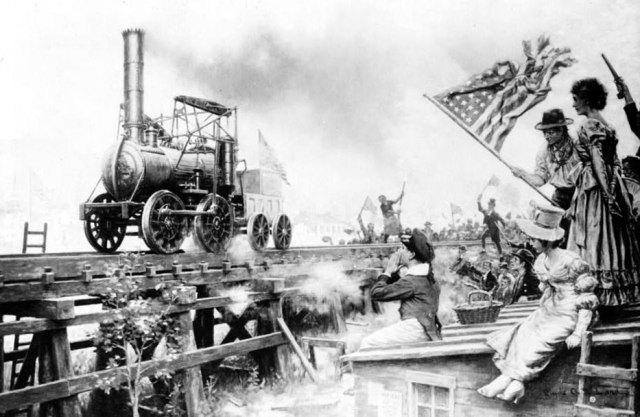
The first steam locomotive to run in the U.S. was shipped from Britain and called the Stourbridge Lion. It was ordered for transporting coal but, at 7.5 tons, it was too heavy for the tracks which were intended to hold 4 tons. Another locomotive imported from Britain was the John Bull.
First run of the Stourbridge Lion, August 8, 1829, in Honesdale, Pennsylvania. Painted 1916. Public Domain. Wikimedia Commons
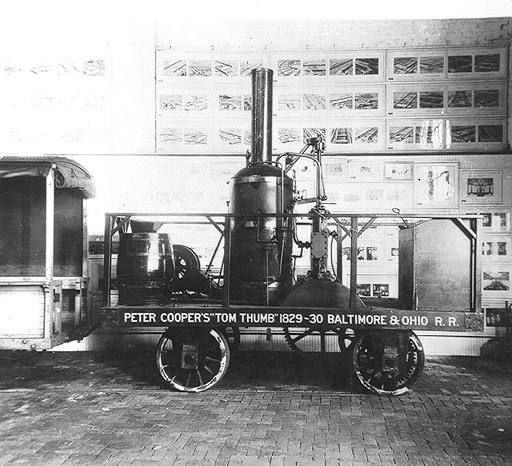
The first steam locomotive built in America was the Tom Thumb, which had its first run in 1830 on the Baltimore and Ohio railroads. It carried 36 passengers and travelled at 18mph.
Replica of Tom Thumb, first American built locomotive designed by Peter Cooper. Author: E.T. Kenney. Public Domain. Wikimedia Commons
The first railway service in Continental Europe was opened in May, 1835, in Belgium, between Mechelenand and Brussels. The locomotive was The Elephant.
Today, most steam locomotives still in use are for historical, educational or entertainment purposes. Railway museums have many interesting exhibits, and I have a post to do sometime on the National Railway Museum in York, which I visited (yet again!) two weeks ago with Kieran and other family members. We’ve come a long way since Trevithick launched his first practical steam locomotive in 1804. Today, several high-speed trains are regularly travelling 30 times faster. Japan’s first bullet trains in 1964 were capable of running at speeds more than 130mph. The world record speed today is 361mph!
Line up of Sinkansen trains. Author: Author: User Pagemoral. Creative Commons
But Japan is no longer alone in the high-speed rail department. France, China and Germany all operate trains capable of similar extreme speeds. Plans are also underway to construct a high-speed rail line connecting the Californian cities of San Francisco and Anaheim.
Flash Fiction for for Aspiring Writers is a writing challenge hosted by Priceless Joy. It asks us to write a piece of fiction from the photo prompt provided in around 100-150 words – give or take 25 words. It encourages us to comment, constructively, on other entries, so supporting each other’s writing. If you’d like to join in with this challenge, follow the above link to see what to do. The challenge runs from Tuesday to Tuesday every week.
Here is this week’s prompt, kindly provided by Louise:
And this is my story:
A Deadly Game
Dusk was falling when Nicole heard the first, distant toot of the 7.15 from Edinburgh. The September air was chill and she hugged her slender frame to stop herself from shivering. The station was deserted, and few people ever alighted the train at this remote spot. She was grateful for that…
The great engine heaved to a halt, a proud warhorse engulfed in billowing steam, its huge brakes screaming displeasure of the controlling rein.
Gripped by fierce determination, Nicole waited for the face to appear at an opened carriage window. Lancasters roared overhead, heading for mainland Europe. Would this cursed war never end?
‘Nicole,’ the man’s voice called. ‘Be quick, before the whistle blows. What you got for us?’
The gun with its silencer felt reassuring as she pulled it from her bag and fired, straight at that detested brow. She’d spent months, working undercover for MI6, to gain this traitor’s trust. Passing him false information was a deadly game.
This traitor would betray his country no more…
Word Count: 168
If you’d like to view other entries, click the little blue frog below:
I hate to say it, but I’m very much in danger of becoming a ‘Steam Engine Geek’. I’ve spent a lot of time in recent years visiting heritage railways and museums, mostly to satisfy grandson, Kieran. Between us in the familiy, we have hundreds of train photos. Louise has visited many of these sites too, but her interest lies mostly in photographing the engines for photography’s sake. She’s also very clever at editing photos, and I love what she’d done with this one. I couldn’t help writing something historical for it. The woman on the station is my eldest daughter, Nicola – with somewhat ‘edited’ clothing! Now, she is definitely not a train geek. She always stands with folded arms when she’s bored to tears!
I’ve done my ‘extra information’ as a separate post this week, as it somehow ended up being a bit too long to put here. For anyone interested, you can find it here.
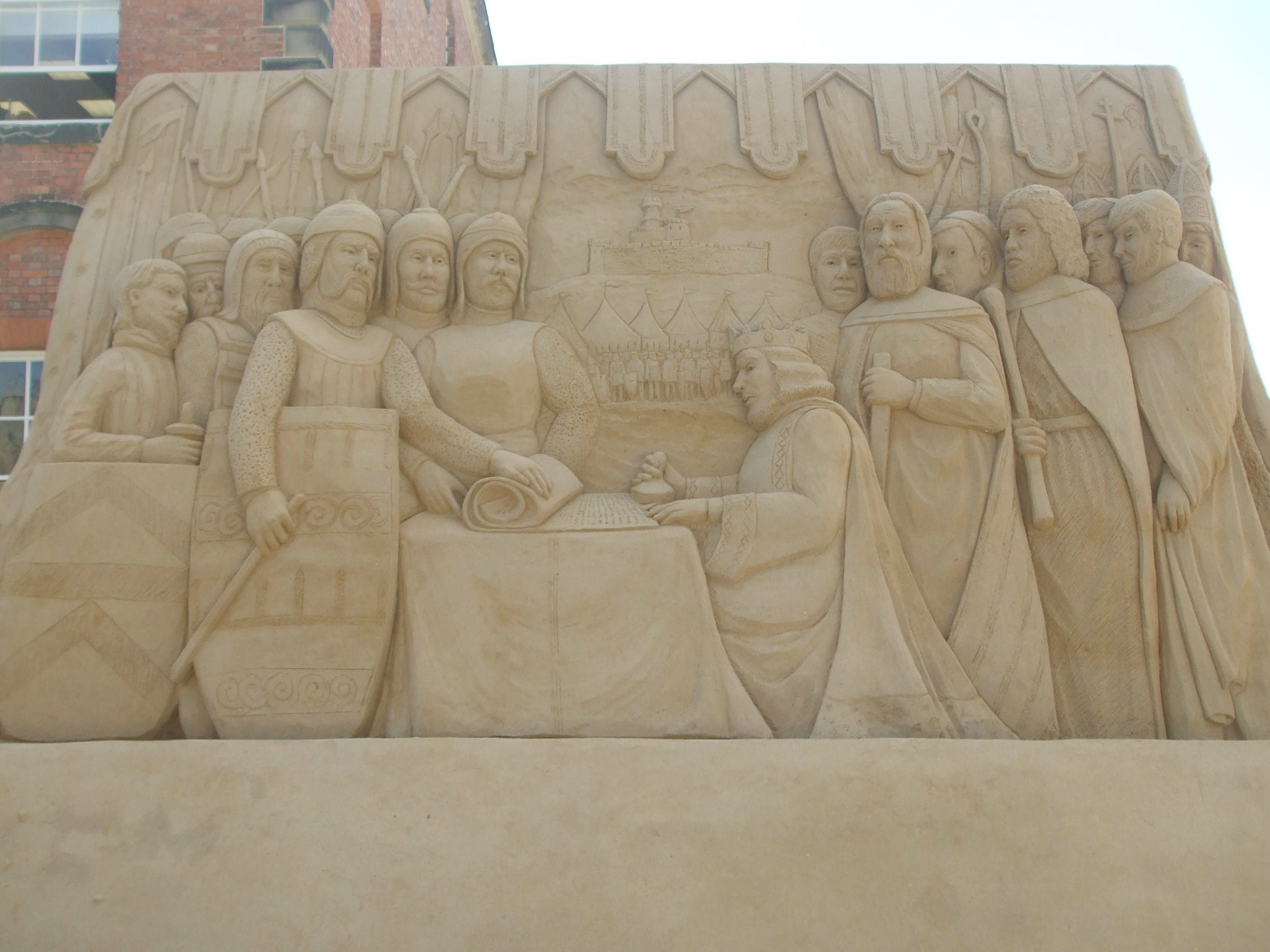
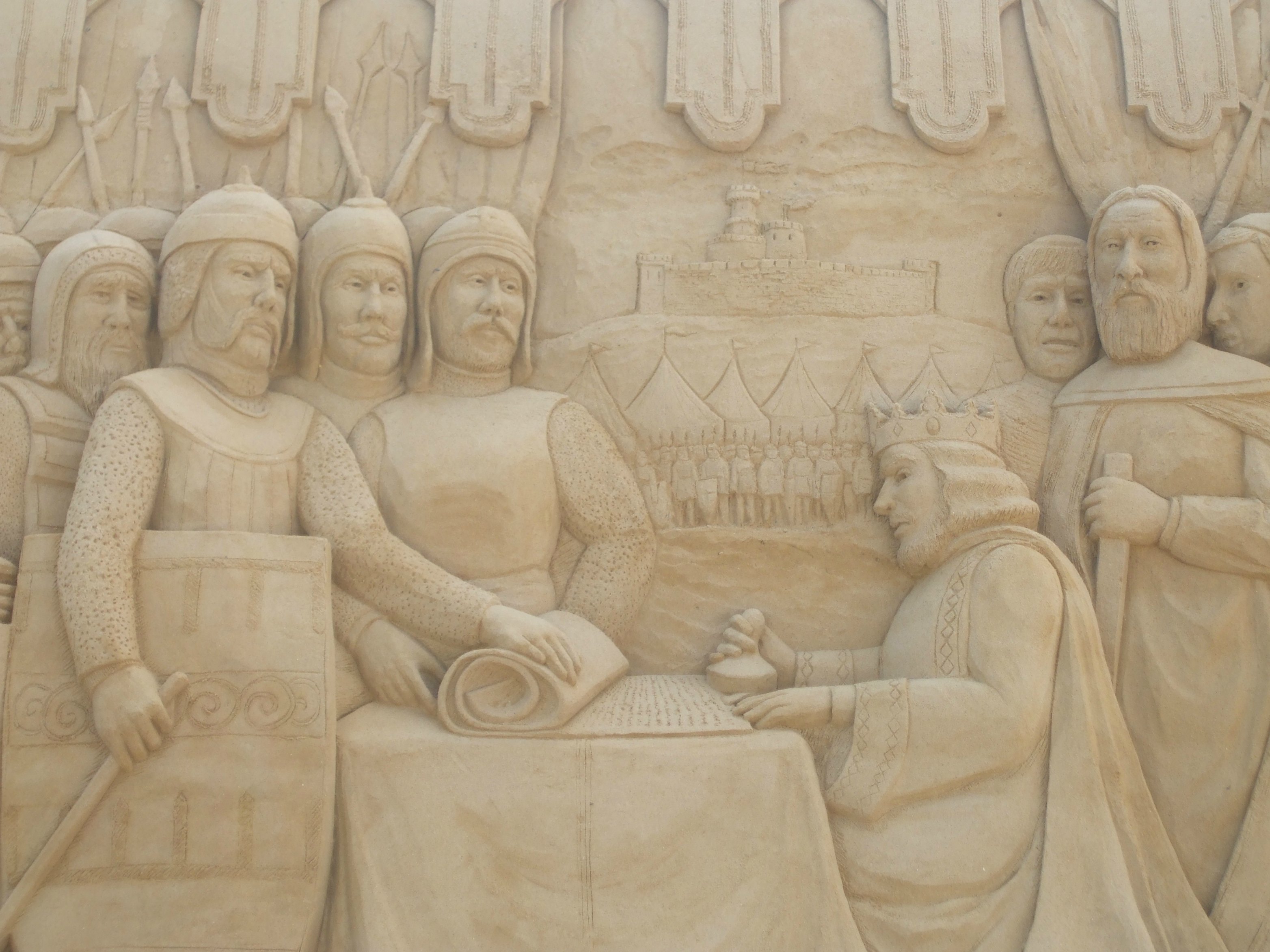
This is my fourth and last post about King John and the Magna Carta – a short one this time, following another trip to Lincoln this afternoon. We went specifically to take a few photos of the newly created sand sculpture in the grounds of Lincoln Castle:
This impressive, 3D sculpture is 13ft. (4m) tall and 30ft. (9m.) wide. Work started on August 17th and continued for two weeks. It was created as part of the celebrations marking the 800th anniversary of the signing of the Magna Carta (Festival800) and depicts King John meeting with the barons at Runnymede in 1215:
Its creators were the world renowned Dutch artist, Remy Hoggard and her husband, Paul, originally from Beverley in East Yorkshire. Between them, the couple have more than 30 years experience of sand sculpting. Of their sculpture at Lincoln, Paul Hoggard said, ‘This is probably one of our most adventurous projects in terms of size and scale…after fourteen days of shovelling, pounding, shaping and sculpting we were physically aching and are ready for a few days’ rest.’
The end product is quite awesome and well worth seeing.
The couple now live on a farm in Bulgaria, but spend most of their time travelling around the world, creating amazing sand sculptures. Remy said about their work: ‘With sand and water we make very detailed two or three-dimensional works, as well as large sculptures, in a relatively short amount of time.’
The brief video I found to finish with shows the delivery of the sand and the artists discussing the work about to be undertaken:
Susan passed her driving test with her usual aplomb:
2. The famous artist showed aplomb when surrounded by so many reporters:
(Artist Florentijn Hofman surrounded by reporters. Shutterstock photo.)
3. The word aplomb comes from the use of a ‘plumb-line’ (with a metal weight, or ‘plumb-bob’, suspended at the end of it) to determine the verticality or depth of a building undergoing construction:
A plum-square from ‘Cassell’s Carpentry and Joinery’. Public Domain.
If you’d like to view more interesting wods, visit Heena’s
Flash Fiction for for Aspiring Writers is a writing challenge hosted by Priceless Joy. It asks us to write a piece of fiction from the photo prompt provided in around 100-150 words – give or take 25 words. It encourages us to comment, constructively, on other entries, so supporting each other’s writing. If you’d like to join in with this challenge, follow the above link to see what to do. The challenge runs from Tuesday to Tuesday every week.
Here is this week’s prompt, kindly provided by Dawn M. Miller:
And this is my story, which is a little more ‘outside the box’ than usual this week:
A Treasured Friend
We were born opposites, you and I: you, the cosseted only child of an affluent family, and I, a simple labourer’s son. I often saw you as we grew, though never with friends of your own. I caught the look of longing in your eyes as you passed my happy group on our way to the local comprehensive. You were tucked inside your chauffeur-driven Rolls, en route to that costly private school. On Saturdays, I’d occasionally see you with your fur-clad mother, heading into those expensive boutiques. How glum you looked…
But you smiled at me sometimes, generating a radiance that lit up my world. I often wondered what it was like to be so rich, and yet so alone … cut off from the company and friendship of others. We were miles apart, you and I, with no means of spanning the distance between.
Attending the same university afforded the bridge across which our two worlds could meet. That bridge has been our treasured friend these past fifty years.
Word Count: 170
*
If you’d like to view other entries, click the little blue frog below:
*
As this week’s prompt has a bridge as one of its prominent features, I thought I’d do something historical about bridges. I decided just to focus on one!
So, for anyone interested, here’s some information about one of the U.K’s most famous bridges: the Iron Bridge.This is a photo we took a few years ago:
The Iron Bridge crosses the River Severn in Shropshire, England …
… and was the first arch bridge in the world to be made of cast iron. It has become Britain’s best-known industrial monument, giving its name to the wooded gorge which was once an industrial powerhouse and has become known as the birthplace of the Industrial Revolution:
Downstream of the Iron Bridge. Author: Jon M. Commons.The Iron Bridge (aerial) by James Humphreys – Salopian James. Commons
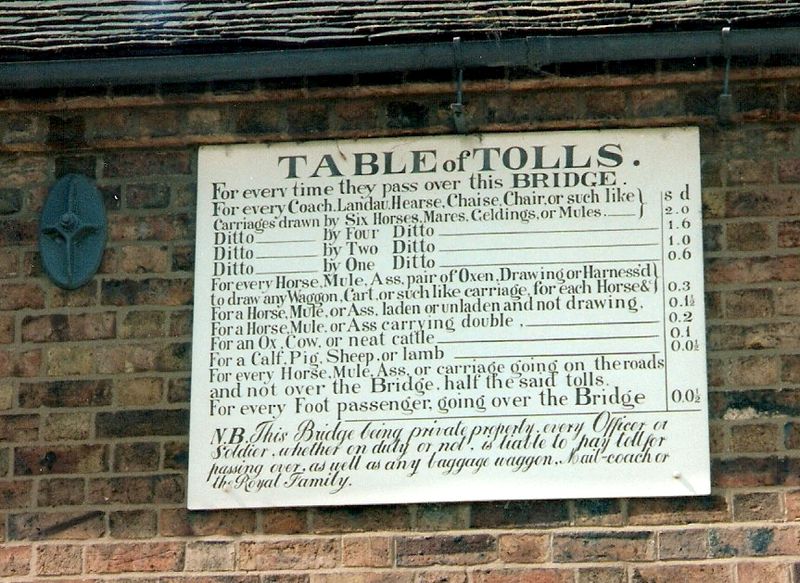
Construction on the bridge began in 1779 and it was opened in 1781. In 1934 it was designated a Scheduled Ancient Monument and was closed to all vehicles. Tolls for pedestrians were collected until 1950:
The brick tollhouse at one end of the bridge. Author: John M. geograph.org.uk. CommonsIronbridge Tolls by Rodhulandemu. Commons
At the beginning of the 18th century, Abraham Darby I pioneered the process of using coke made from local coal to smelt local iron ore. But industrial expansion was hindered by the lack of a bridge across the Severn – which had to be a single span to allow for barge traffic. An iron bridge was first suggested by Thomas Pritchard, who designed a single bridge of 30 metres long, but died just as work began. The project was taken over by Abraham Darby III (grandson of Abraham Darby I) and the bridge was cast in his Coalbrookdale foundry. It used 378 tons of iron and cost £6,000.
Painting of the bridge by William Williams, artist. Public Domain.
Today, the Iron Bridge is a great place for starting a tour of the Gorge’s many museums and attractions. The area is now far from industrial: the factories have long-since gone and the Gorge has been restored to its natural beauty. It is now a maze of footpaths, bridleways and country lanes. One of my favourite places to visit in this area is Blists Hill Victorian Town – an authentic reproduction of a Victorian town, complete with shops, public houses and a bank.
The Ironbridge Gorge, together with the town of Ironbridge and the Iron Bridge is now a World Heritage Site.
Pedestrians crossing the Iron bridge with Ironbridge in the background. Author: Boerkevitz at nl.wikipedia. Commons.
References: Wikipedia, English Heritage, Virtual Shropshire.
This is my third post about King John, and I just thought that, having written about the 800th anniversary of his signing of the Magna Carta, it could be useful to have a look at the reasons why the barons decided that such a charter was necessary. Was John really that bad…?
King John has the worst reputation of any English king. Other kings were seen as incompetent (Henry II) some as cruel (Richard III) but to his contemporaries, John was seen as both. It is true that most of the sources that condemn his actions were written by monks -and John was no friend of the Church – but his reign was obviously bad enough to lead to one of the most famous documents in history: the Magna Carta.
‘He feared not God, nor respected men.’ (Gerald of Wales)
‘A pillager of his own people.’ (the Barnwell annalist)
Just how true are these quotes?
John’s problems seem to have started on the day he was born…
John was born in Oxford on Christmas Eve, 1167, the last of the four children of King Henry II and the formidable Eleanor of Aquitaine.
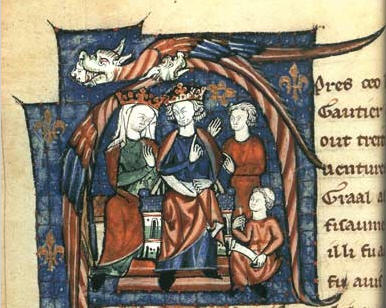
John’s parents: Henry II and Eleanor of Aquitaine, holding court. Anonymous. Public Domain
As such, he lived in the shadow of his older brothers: Henry, Geoffrey and Richard. At an early age he was given the nickname of ‘John Lackland’ because, unlike his elder brothers, he received no land rights in the continental provinces and was never expected to become king.
As a young man, Prince John was notorious for events during his role of Lord of Ireland. He squandered his money and offended Irish lords by mocking their unfashionably long beards. Then, in 1189, he broke his father’s heart by siding in a rebellion against him. On Henry’s death, since his two eldest sons had died by this time, Richard became the next king. All of Henry’s lands went to Richard, thus continuing his nickname of ‘Lackland’.
John was forever in Richard’s shadow. Richard was loved and respected by his subjects and his men, and famous for glorious deeds across the known world.
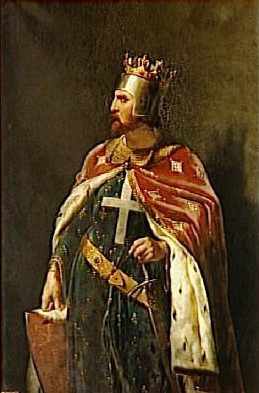
19th century portrait of Richard the Lionheart by Merry-Joseph Blondel (oil on canvas). Nor in the Palace of Versalles. Public Domain.
John could never compete. Richard even forgave John for rebelling against him and gave him To assure Richard of his newfound loyalty, John went to Évreux in Normandy and took a castle. Unaware of John’s reconciliation with Richard, the garrison thought he was still allied to King Philip of France and accepted him. John massacred them all.
So John already had a reputation for treachery before he became king – a reputation that worsened after Richard I was killed by a crossbow wound in 1199 and John took the throne.
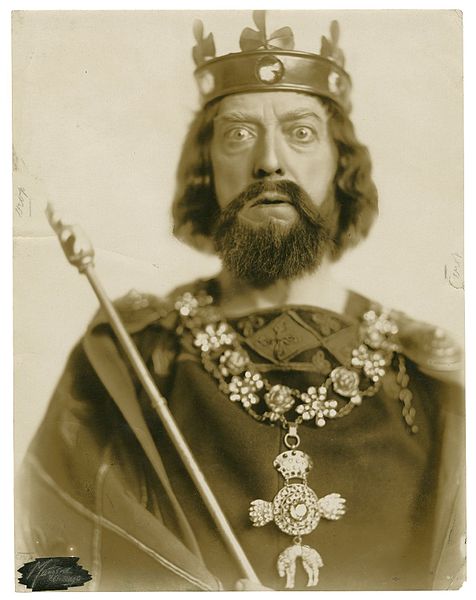
19th century drawing of a scene from ‘King John’ by Thomas Nast. Folger Shakespearean Library. Commons.
His reign started reasonably well, although many incidents soon occurred. War broke out with France again and King Philip supported 16-year-old Arthur of Brittany against John. As the son of John’s elder brother, Geoffrey, many believed Arthur was the rightful heir.
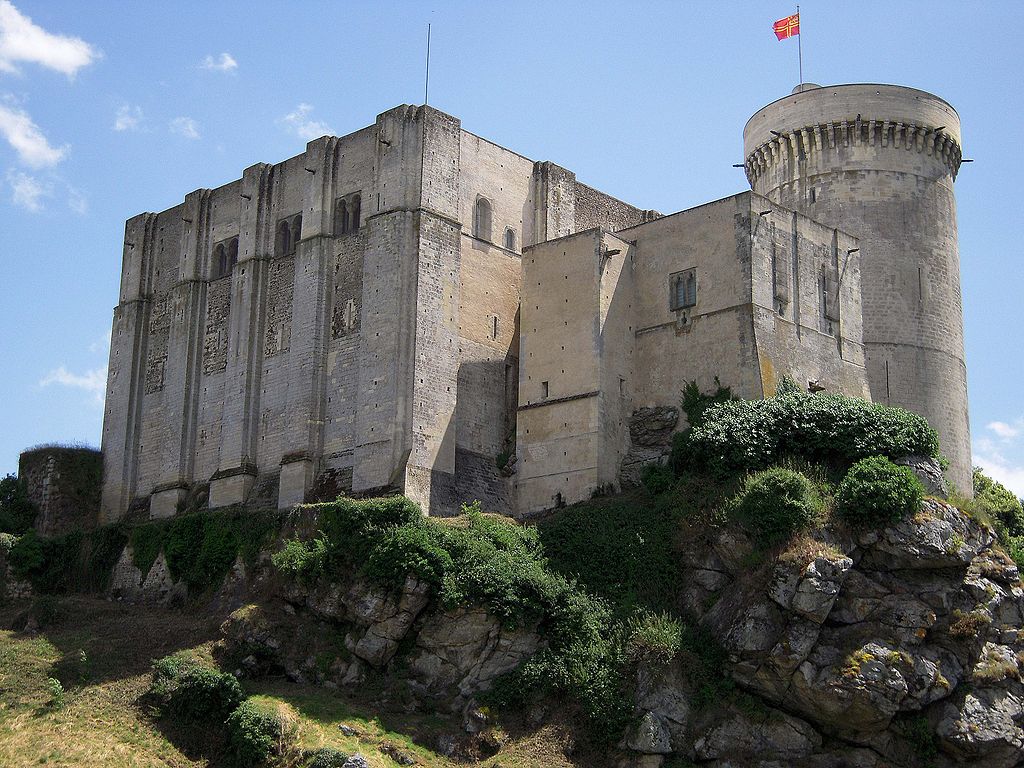
Chateau de Falaise, where Arthur was imprisoned by John. Uploaded by Ollamh. Commons
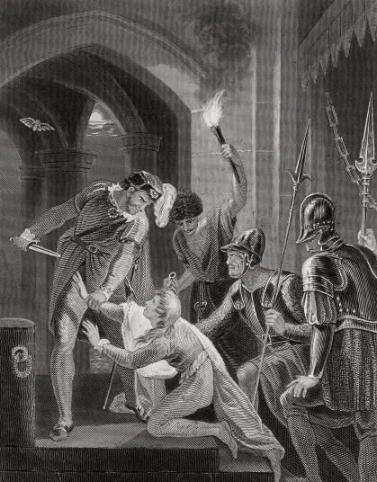
There are sources that suggest that John was responsible for Arthur’s death. Some maintain that John killed him in a drunken rage and dumped his body in the River Seine; others say that Arthur died after being castrated. However the boy died, it is believed to have been at John’s hands.
The Murder of Prince Arthur by Thomas Welly, 1754. Source: Hulton Archive. Public domain.
John was always at loggerheads with the Church, one incident being particularly noteworthy. This was over John’s protest at Pope Innocent III’s choice of Cardinal Stephen Langton as Archbishop of Canterbury. In 1208, the pope placed the whole of England under papal interdict. Church services and sacraments were suspended across England (except for baptism and extreme unction). Bodies were buried in woods, ditches, and by the side of the road. Only two bishops remained in England. The following year, the pope excommunicated John from the church.
John raked in money during the interdict, exploiting the weakened Church and amassing the huge sum of over £65,000 (£30 million in modern money). But the interdict also encouraged John’s enemies. King Philip of France planned an invasion in 1213 with papal blessing. As John wanted Rome on his side, he dramatically submitted to Rome and accepted Langton as Archbishop of Canterbury. And a surprise attack by English naval forces in May, 1213, ended Philip’s threat.
Coronation of Philippe Auguste in the presence of Henry II of England. Uploaded by Jan Arkensteijn. Public Domain
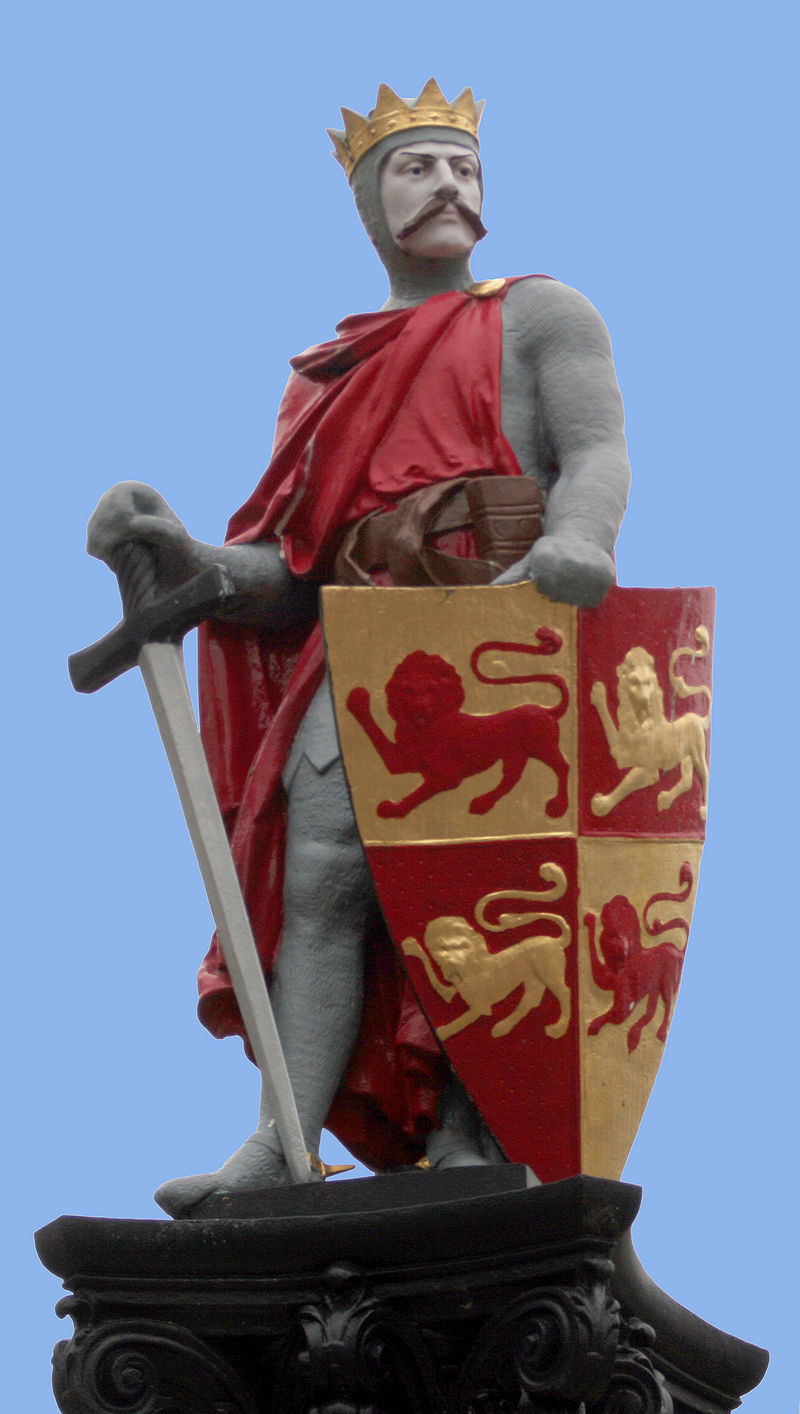
During the interdict, John had been free to impose his dominance over the British Isles. He made the old Scottish king accept costly and humiliating terms. In 1210, he led a force of 800 men to Ireland to quell an open rebellion against him led by powerful lords such as William Marshal, William de Braose and the de Lacy Brothers – who were protesting at John’s financial and political demands for funds in his campaigning in France. The barons submitted or fled. In Wales, Llywellyn the Great also rebelled, but faced with John, he retreated into the hills of Snowdonia and agreed to harsh terms.
Statue of Llywellyn the Great in Conwy. Uploaded by Rhion. Public Domain
The act that one historian described as ‘the greatest mistake John made during his reign’ involved John’s heinous treatment of the family of William de Braose.
The rebellion in Ireland gave John the excuse he needed to go after a personal enemy. De Braose had been John’s right hand man for years. In 1201, John offered him the honour of Limerick in Ireland for 5,000 marks. Six years later, de Braose still owed most of the money. After the rebellion in 1210, de Braose fled to France, but his lands and his wife, Matilda, and his son were still in Windsor Castle. John moved them to Corfe Castle in Dorset and threw them in the dungeon, where he let them starve to death … perhaps his most notorious and malicious act. One chronicler reports that the bodies were found with the mother slumped across her son, with her head lying on his chest. She had been gnawing at his cheeks for food. Rumours circulated that John had killed them because they knew the truth about Arthur of Brittany’s death. William de Braose had been with John at the time of the boy’s disappearance.
Many of the barons did not feel safe after the de Braose affair. They also had many, accumulated grievances regarding financial burdens, the nature of John’s rule and penalty system and personal grievances about his notorious womanising and taking mistresses – even the wives and daughters of powerful men. The final straw came after John’s long-awaited attack on France ended in defeat and John returned, demanding even more scutage from them…
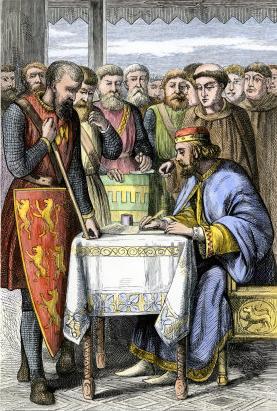
In 1215 the barons broke homage to John and formed the Army of God and the Holy Church – a declaration of war on the king. They offered the crown of England to Prince Louis of France, King Philip’s son and heir, if they would cross the Channel with an army to help them. On the 17th May, the barons seized the capital of London and drew up their demands in a document originally called the Articles of the Barons. It was the first draft of what later became known as the Great Charter – the Magna Carta.
19th century wood engraving of King John signing the Magna Carta. Public Domain.
By October 1215, after the signing/sealing of the Magna Carta at Runneymede in June – a treaty that John had no intention of keeping – war with the barons resumed. In May 1216, Prince Louis of France invaded with a powerful force in support of the English barons who had wanted him crowned king in place of John. John spent the rest of his reign trying to regain control of his kingdom. At Lynn (now King’s Lynn) in October he fell ill, possibly of dysentery. On October 11th he led his army on a short cut across The Wash at low tide – a disastrous move. Whether due to the returning tide or the quicksand there, his baggage train and treasure were lost beneath the waves. This was the last disaster of a disastrous reign.
John’s health rapidly deteriorated and he headed for Newark Castle on a litter, reportedly ‘moaning and groaning’ that the journey was killing him.
On arrival he confessed his sins and received Communion for the last time. He died on the night of 18/19 October in the middle of a great storm.
Drawing of the effigy of King John in Worcester Cathedral from ‘History of England’ by Samuel R. Gardiner. Public Domain
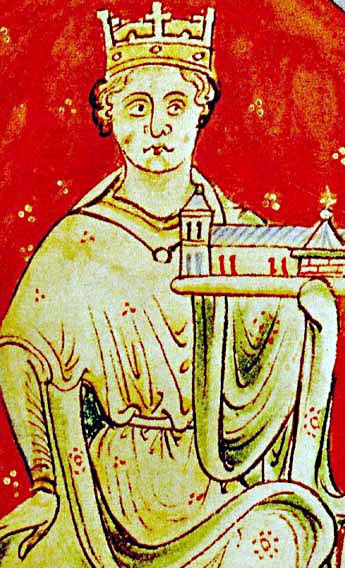
*Note: The header image shows John of England (John Lackland) by Matthew Paris from his Historia Anglorum, 1250-59. British Library royals MS. Public Domain.
I intended to write this post before I headed off to Hadrian’s Wall a couple of weeks ago but, as usual, I didn’t manage to fit it in. I particularly wanted the post at that time, as it was to be a ‘follow up’ to the one on the Magna Carta I’d done the week before (here). Still, the Magna Carta celebrations in Lincoln will continue into October, and I suppose any information about King John could be shared at any time. So here it is now…
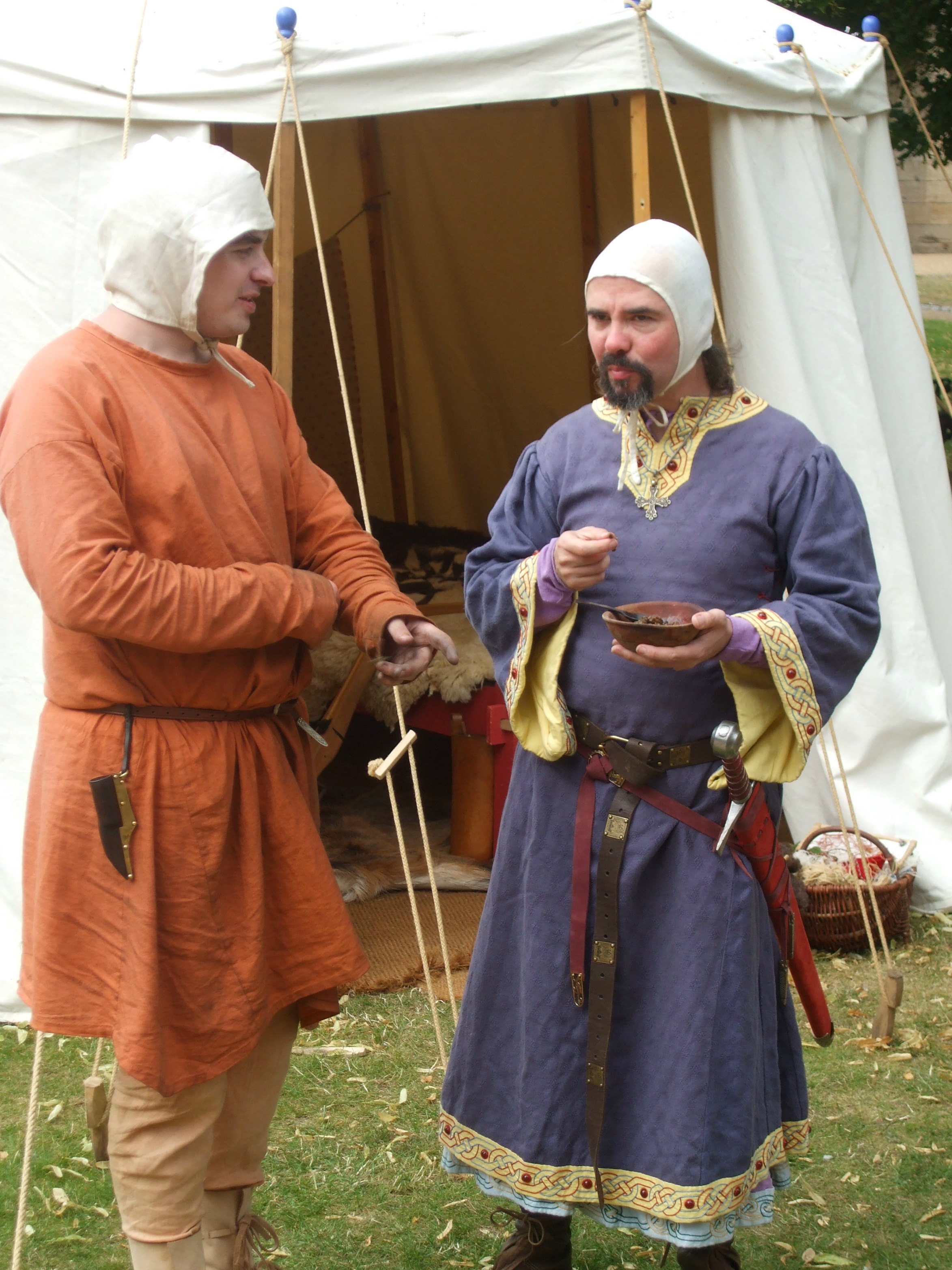
Over the weekend of July 22, about forty members of the re-enactment society, Regia Anglorum, presented a living history ‘encampment’ in the grounds of Newark Castle to demonstrate to visitors how people would have fed and clothed themselves at the time of King John and demonstrate use of their weaponry skills. The society was invited to Newark by the castle warden as part of the region’s celebrations to mark the 800th anniversary of the Magna Carta.
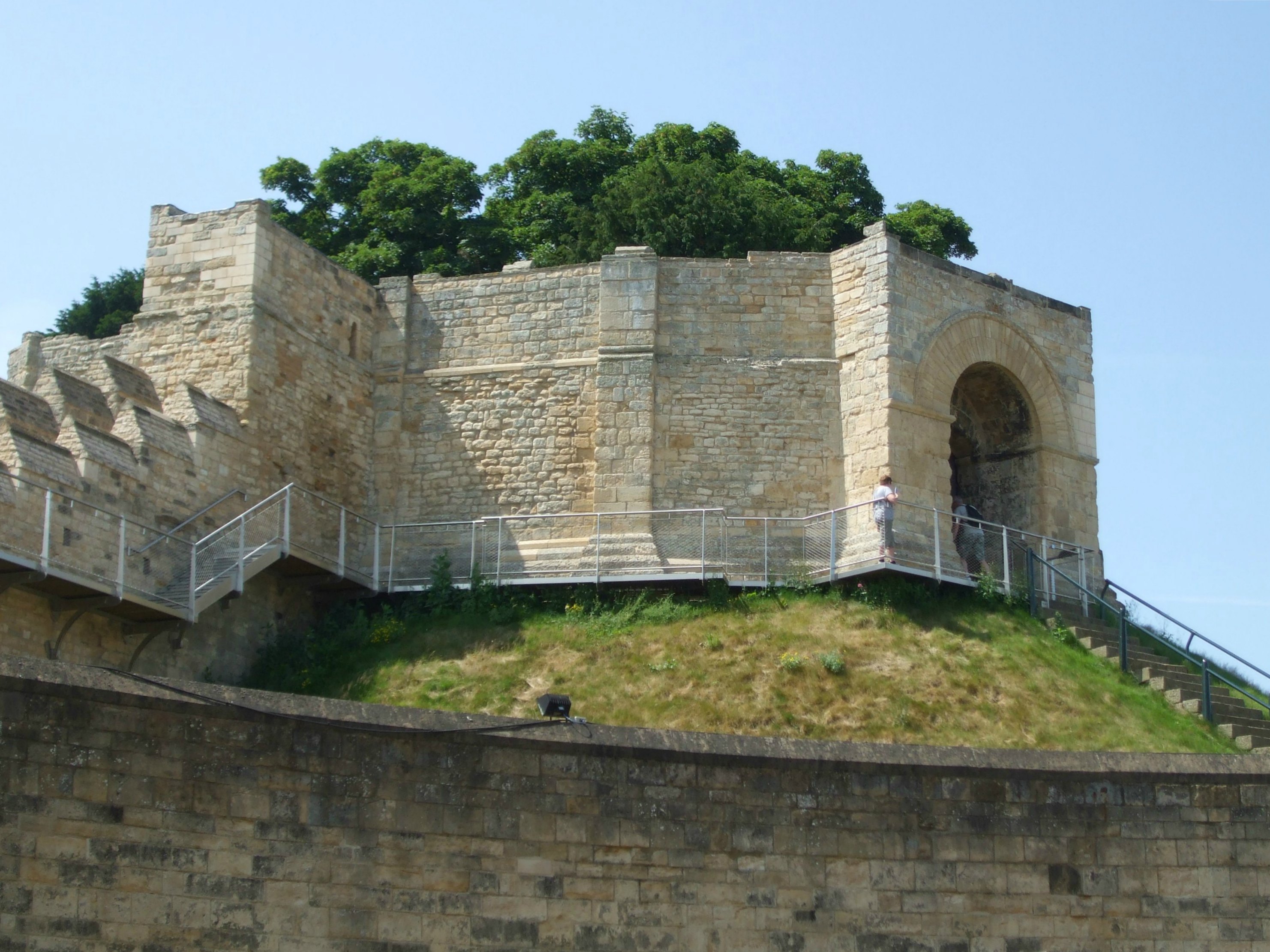
Newark is about 18 miles away from Lincoln, and the castle at that time belonged to the Bishop of Lincoln, who was also present. Here are a few photos of what is left of the castle today. Some are of the outside from across the River Trent and others are views of the inside of the curtain walls and gates:
And here are is a photo of King John as he looked on this occasion. John is the one in the decorative blue tunic, enjoying a snack:
And this is the Bishop of Loncoln, inside his tent:
Medieval characters were milling about enjoying the day or gossiping around the camp:
Throughout the day, display tents were set up to demonstrate the different roles in 13th century society – from shoemakers, leatherworkers, metalworkers, chainmail and jewellery makers to those carving a variety of everyday goods from deer antler, such as combs, needles and gaming dice. Other stalls displayed common foods eaten and demonstrated cooking methods:
The highlight of the day was a tournament put on by twenty members of Regia Anglorum. Warriors came from all ranks of society – peasants, sergeants and knights – to entertain King John and the Bishop of Lincoln, the Right Rev Hugh de Wells, with their skills – some of them hopeful of being selected as future knights. The king and bishop put on jovial faces for the tournament, when in reality (according to the actor who played the bishop) relations between the two were never easy. At one time he had been banished by John.
Here are some pictures of the tourney and preparations made by the combatants beforehand. Squires were on hand to assist the knights into their gambesons (padded jerkins) and heavy chain mail. King John certainly seemed to be enjoying himself:
King John has often been linked with the Nottingham-Newark-Lincoln area through the many legendary tales about Robin Hood and Sherwood Forest, which once covered much of this area. But perhaps an even greater link with Newark is that he died inside its castle:
By October 1215, after the signing of the Magna Carta at Runneymede in June – a treaty that John had no intention of keeping – war with the barons resumed. In May 1216, Prince Louis of France invaded with a powerful force in support of the English barons who had wanted him crowned king in place of John. John spent the rest of his reign trying to regain control of his kingdom. At Lynn (now King’s Lynn) in October he fell ill, possibly of dysentery. On October 11th he led his army on a short cut across The Wash at low tide – a disastrous move. Whether due to the returning tide or the quicksand there, his baggage train and treasure were lost beneath the waves. This was the last disaster of a disastrous reign.
John’s health rapidly deteriorated and he headed for Newark Castle on a litter, reportedly ‘moaning and groaning’ that the journey was killing him. On arrival he confessed his sins and received Communion for the last time. He died on the night of 18/19 October in the middle of a great storm.
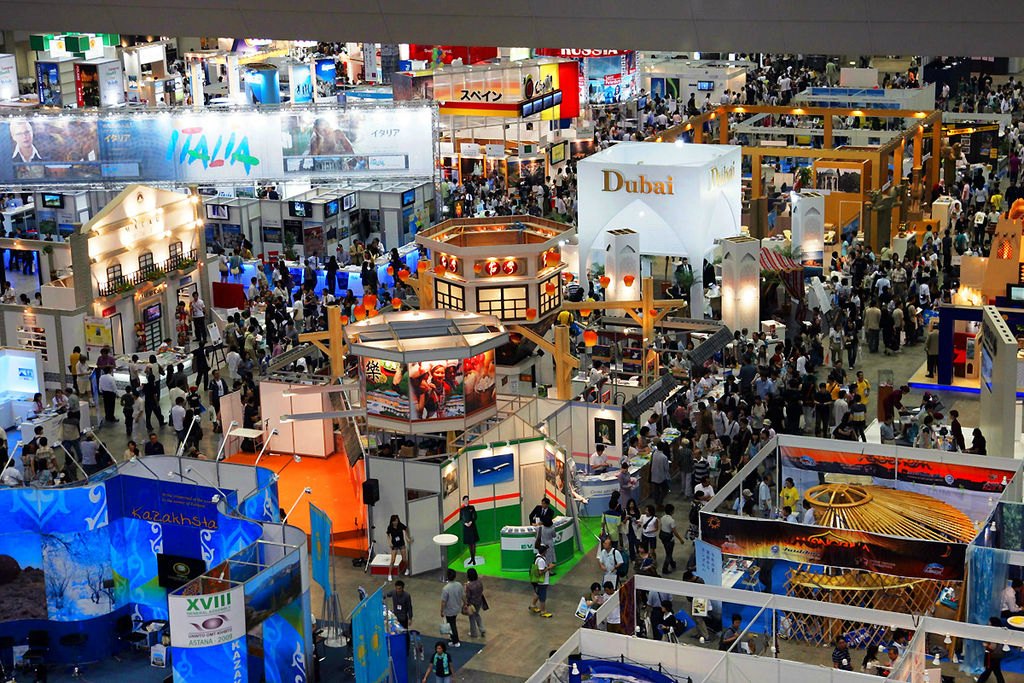
A fair, or the older version of the word, faire or fayre, is a gathering of people for various entertainments and activities. Many fairs are temporary, some lasting for a mere afternoon, others for lasting for several weeks. Types of fairs include trade fairs, street fairs, agricultural shows, fêtes, festival and travelling carnivals or funfairs.
A trade fair for the travel industry. Author: JATAWTF. Commons
It was once believed that the Romans introduced fairs into Britain, and the word fair is derived from the Lain word, feria. But the tradition is more deeply rooted, having its origin in pagan customs. Their seasonal gatherings, thought to be for festivity and trade, contained the elements of the fair.
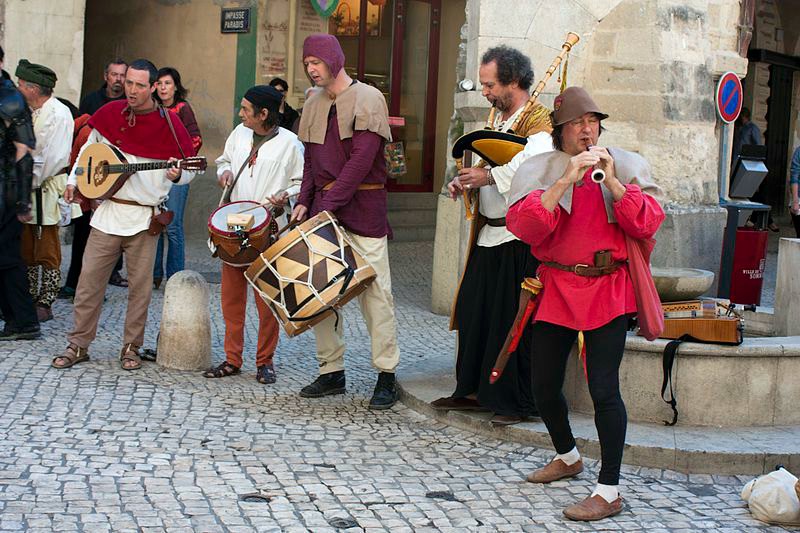
Following the Norman Conquest, trade became the more important part of holding a fair, when they were restructured along French lines. Charters were granted by the king, giving fairs legal status, and they became increasingly important to the economic life of the country. Fairs were often tied to Christian occasions, such as Saints’ Days at the local church, and became important landmarks in the calendar, socially and culturally. As well as drawing in traders and farmers, they were venues for a variety of entertainments, including jugglers, tumblers and musicians. Dancing bears were sometimes a crowd-drawing feature.
Medieval Jugglers and Minstrels. Author: Daniel Villafruele. Commons
Close to 5,000 fairs were granted royal charters during the Middle Ages. An example of one such fair is the Nottingham Goose Fair, granted a charter by King Edward I in 1284, (Edward was the king responsible for the building of the Welsh castles I did posts about a few weeks ago.)
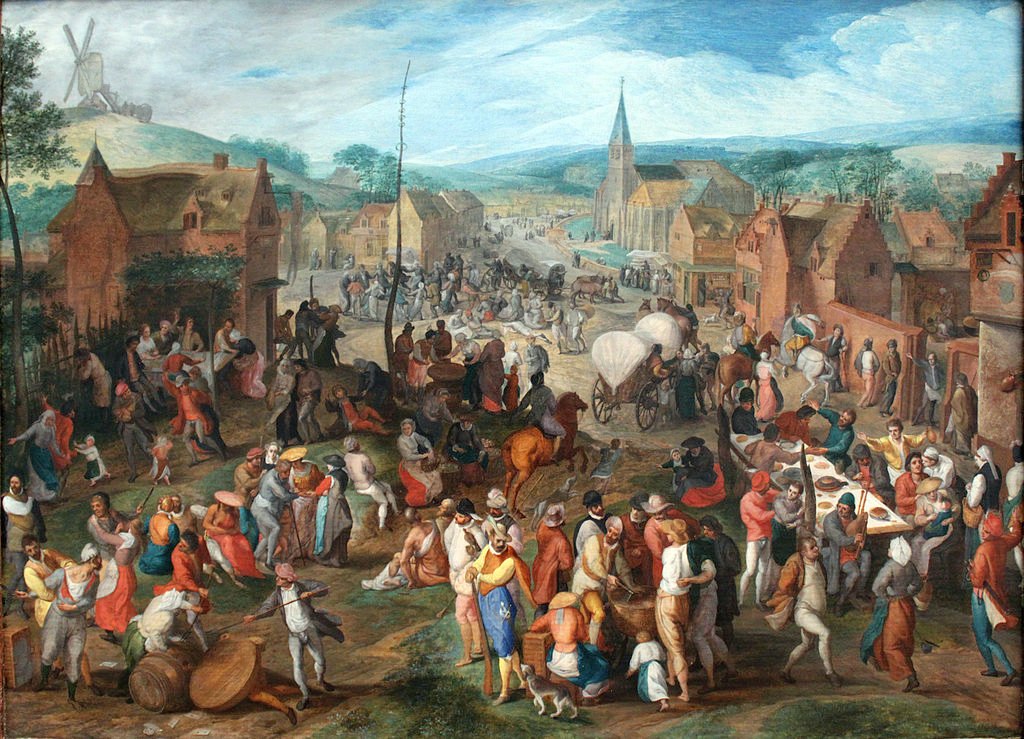
‘Village Fair’, a painting by Flemish artist, Gillis Mostaert in 1590. Photographer: anagoria. Painting now in Gemäldegalerie art museum in Berlin.
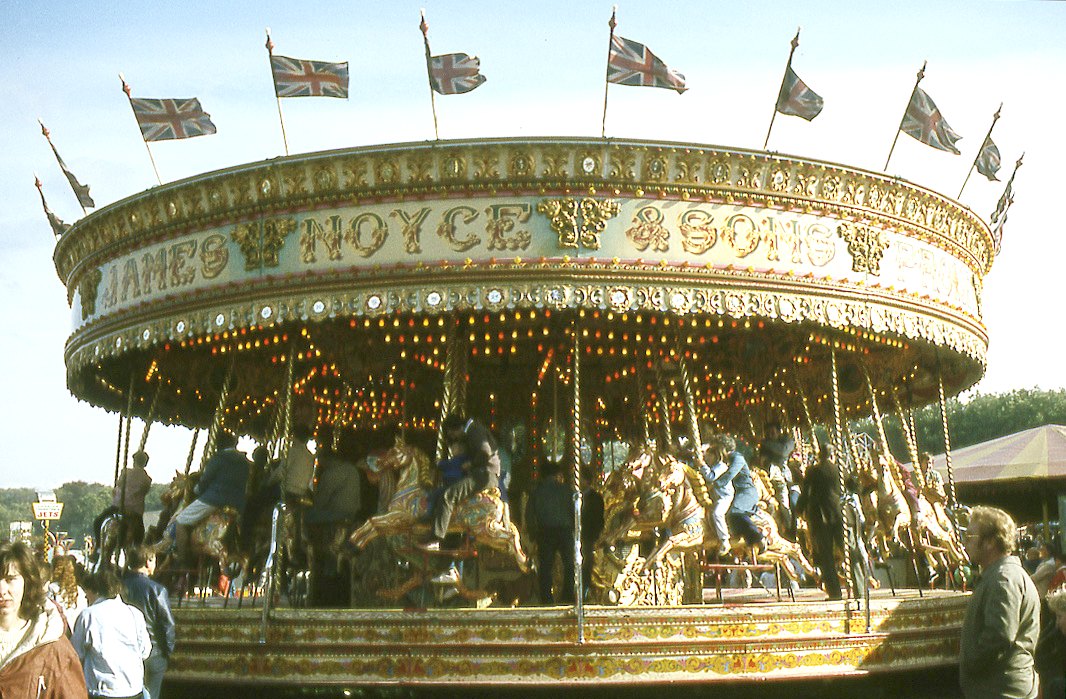
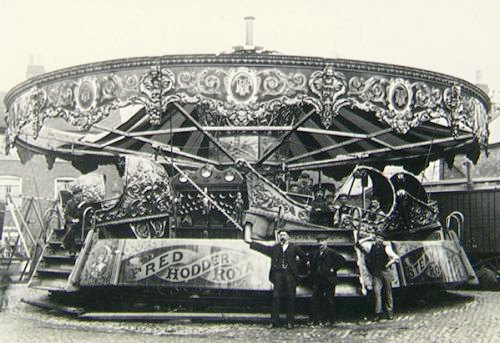
By the 18th century the trading side of fairs had waned, and some fairs, like the famous Bartholomew Fair in London, were devoted entirely to pleasure and amusement. It was around this time that the first fairground rides appeared – simple, hand-turned roundabouts and swingboats. Shows were still the main attraction and were until the 1860s when engineer, Frederick Savage devised a method of driving roundabouts by steam power. Since they didn’t depend upon muscle power, roundabouts were soon made larger, more heavily ornamented and more spacious:
Picture of ‘Sea-and-Land’ a fairground amusement ride from the 1880s. Author unknown. Public Domain
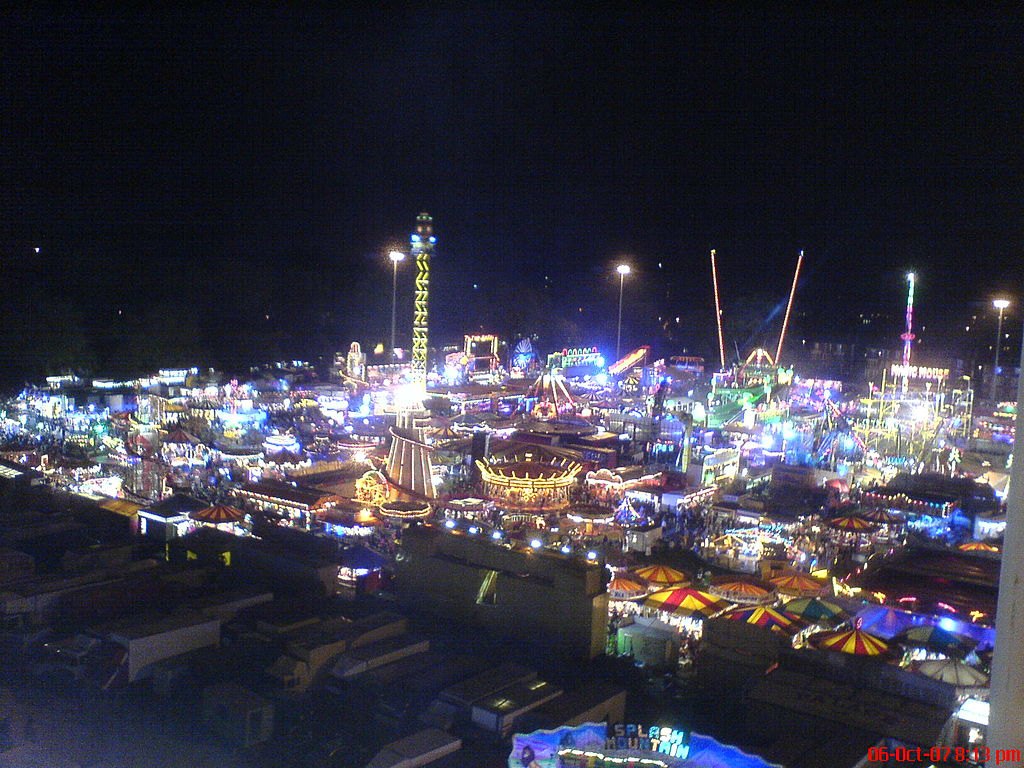
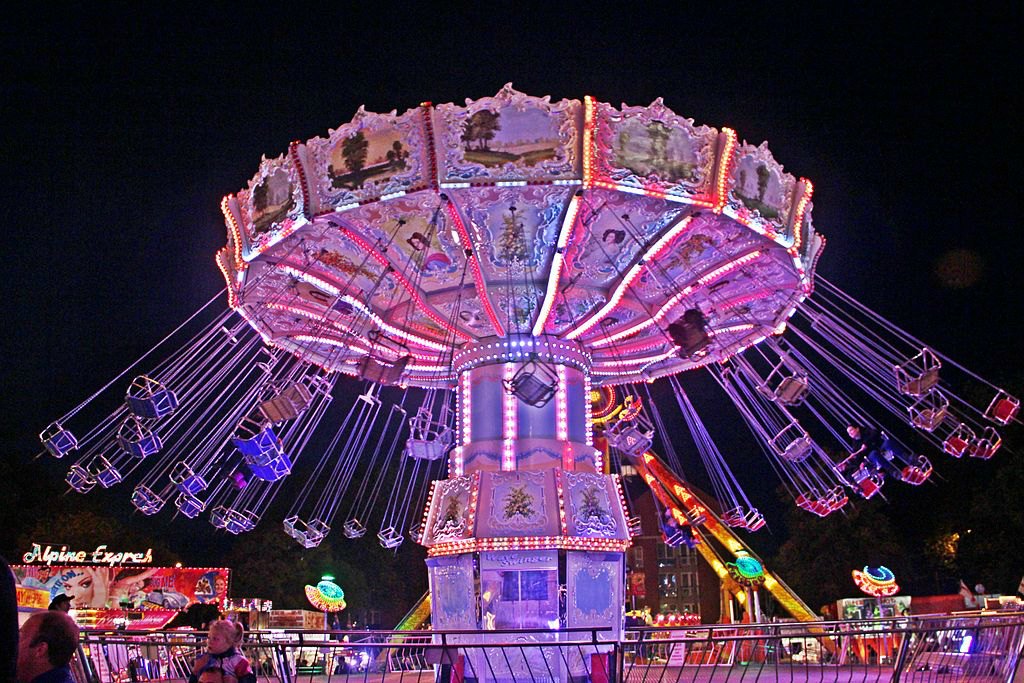
Fairs of all types are still very popular today. In Nottingham, Goose Fair is an annual attraction and people return to it year after year. It is held on 1st October. Here are some pictures of it:
View of Nottingham Goose Fair from the ferris wheel in 2007. Author: Klickingart. Commons.Evening ride at Goose Fair in 2012. Author: Will Robson. Commons
In India, the Kumbh Mela, held every 12 years at Allahabad, Haridivas, Nashik and Ujjain, is one of the largest fairs in the country. Sixty million people gathered in 2001, making it the largest gathering in the world. In the U.S. fairs draw 150 million people each summer. Children’s camps range from breeding small animals to robotics, whilst the organization 4-H (a youth development programme) has become a traditional association.
Flash Fiction for for Aspiring Writers is a writing challenge hosted by Priceless Joy. It asks us to write a piece of fiction from the photo prompt provided in around 100-150 words – give or take 25 words. It encourages us to comment, constructively, on other entries, so supporting each other’s writing. If you’d like to join in with this challenge, follow the above link to see what to do. The challenge runs from Tuesday to Tuesday every week.
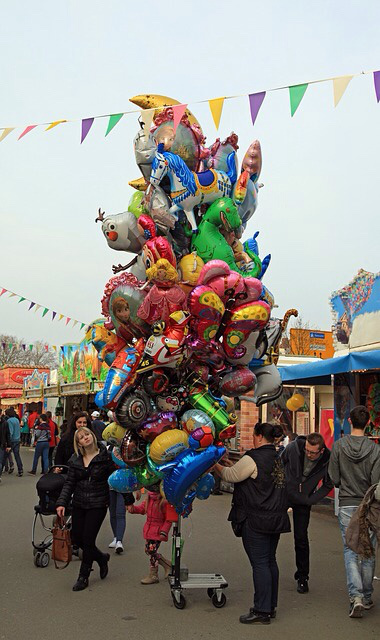
Here is this week’s prompt, courtesy of Pixabay:
And this is my story, for which I’ve resurrected the pair of incorrigible rogues, Fred and Harry, who haven’t made an appearance in my flash fiction for a while now. I’ve added a note about the Yorkshire dailect below:
*
Harry Hobson squinted at the many colourful stalls and gave a loud belch.
‘Grand fair,’ he said, glancing at his equally inebriated drinking buddy. ‘I think I’ll get one of them there balloons t’ tek home ter missus. Might stop ’er rantin’ about me bein’ in pub too long.’
Fred pulled a face. ‘Yer’ve tried that tactic afore, mate. An’ look where it got yer … sleepin’ on sofa for a week.’
‘Can’t blame me fer tryin’, Fred. Anyways, I like balloons meself. Might buy a couple … yer know: ‘His an’ Hers’. Women go all gooey over that kind o’ stuff.’
‘Your Nora goes ‘gooey’ ’bout nowt, Harry, except mebbe Bingo on Wednesday nights wi’ my Doreen.’
‘A man’s got t’ try ter be a good ’usband,’ Harry replied, fishing his wallet out of his pocket and scowling at its meagre contents. ‘P’raps I’ll leave the balloon buyin’ ’til next week, Fred. I need me last few quid ter have a go on that coconut shy yonder…
‘Nora’d like a nice pair o’ coconuts…’
Word Count: 175
*
For anyone not familiar with the Yorkshire dialect, here’s a note about it:
1. Many words have either the first or last letter missing – a form of lazy speech:
Her has the first letter dropped (e.g. ‘look at ’er’) as does the word about (e.g. ‘It’s ’bout time, too!’) Sleeping has the last letter dropped (e.g. sleepin’) as do the words being (e.g. bein’) and ranting (rantin’.)
2.Some words have more than one letter missing:
‘Come with me’ becomes ‘Come wi’ me’. Perhaps becomes ‘p’raps’.
To is often written just as a t (e.g. ‘Fish ‘n’ chips t’ tek away, please.’ In that sentence the and is also reduced to just the middle letter n.
3. Completely missed out words are often open to guesswork:
‘Lets’ go fer a walk in woods’ – instead of ‘a walk in the woods’. And ‘I’m off to the pub’ becomes ‘Im off t’ pub.’
4. Some words are simply down to Northern pronunciation:
For becomes fer. (e.g. ‘It’s a present fer Nora.’) To becomes ter (e.g. ‘I’ll give the balloon ter Nora.’) Nothing becomes nowt. ( e.g. ‘It’s nowt to do wi’ me!’) Take becomes tek. Before becomes afore. Maybe becomes mebbe.
*
My ‘extra information’ was again too long to attach to this post, so I’ve made it into a post of its own. For anyone interested, it can be found here.
*
If you’d like to view other entries, click the little blue frog below:


 3. In most of their films, Bob Hope played the buffoon of the comedy duo, whilst Bing Crosby was the straight man.




















 Millie Thom

