The City of York – a gem of a place for historical fiction writers

022

Last Tuesday, my husband and I had a trip out to the wonderful old city of York. We’re regular visitors to the city itself, which is roughly eighty miles from where we live, but on this occasion our main purpose was to  revisit the Jorvik Viking Centre. We hadn’t been to Jorvik since the early 1990’s and the whole place has been considerably updated since then, although the basic layout of the Viking streets was much as I remembered it.

JOR30-red-1024x284
Jorvik Viking Centre is 30 years’ old!

York itself is a magnet for tourists from many parts of the world. Cameras are out wherever you go in the central areas, aiming to capture as many of the beautiful or quaint old buildings as possible. Others aim for more specific periods of history, because York is one of those places that display a veritable journey through time.

To quote from Wikipedia:

The history of York as a city dates to the beginning of the first millennium AD but archaeological evidence for the presence of people in the region of York date back much further to between 8000 and 7000 BC.’

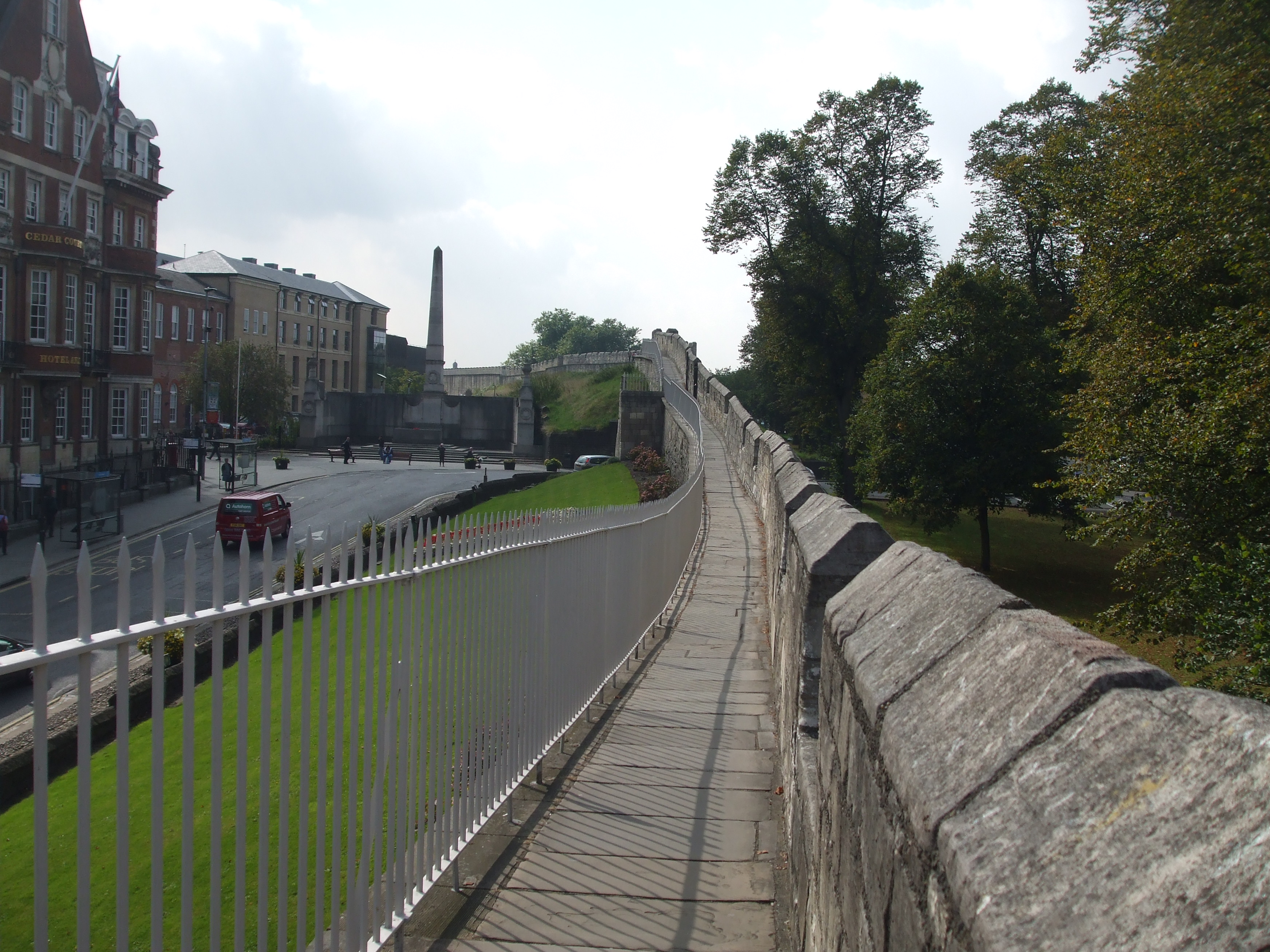
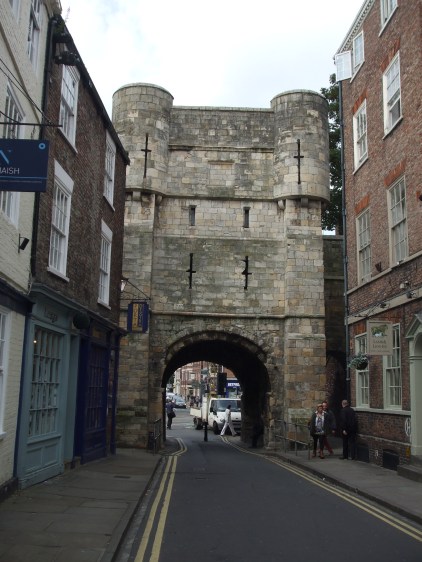
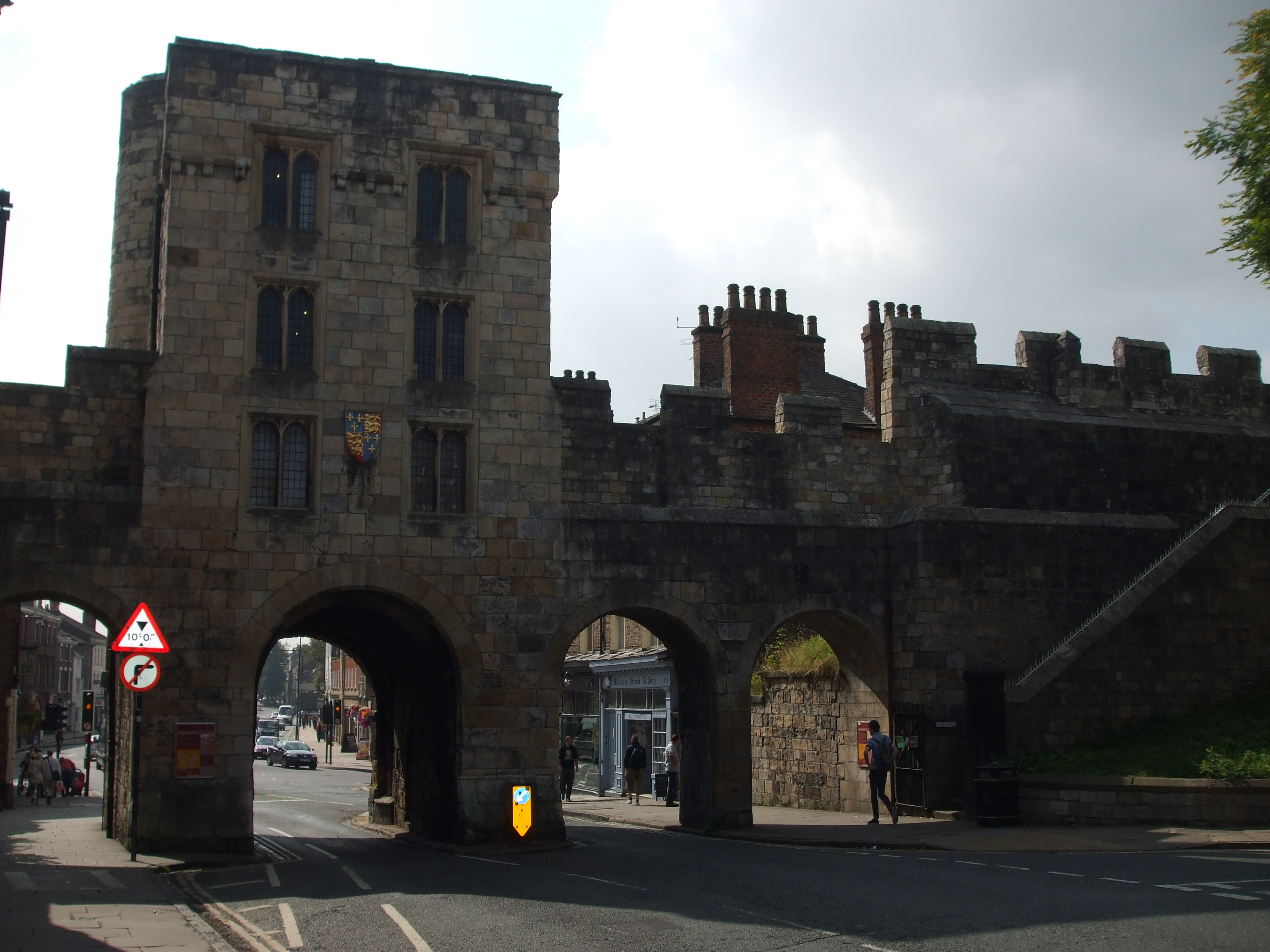
In the first century AD, the town was called Eboracum, and was one of the major Roman cities – their ‘capital’ in the North of Britain. Prior to that, the region belonged to Celtic tribes, the most well know of which were the Brigantes. There’s abundant evidence for the Roman occupation around the city, from the town walls and gates . . .

028
Section of the Roman Wall
020
Bootham Bar – the main , northbound gateways in the Roman wall
Micklegate Bar
Micklegate Bar

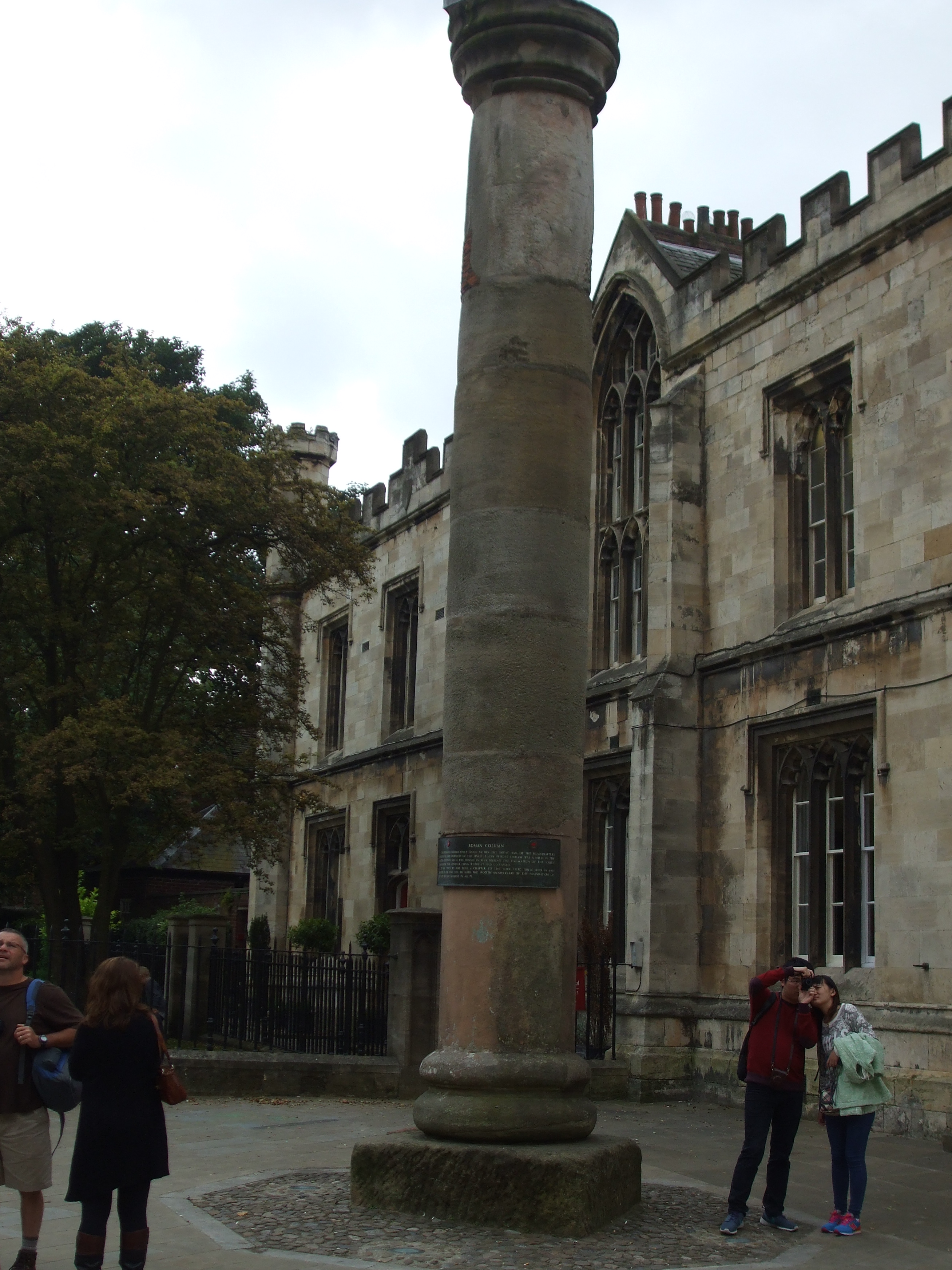
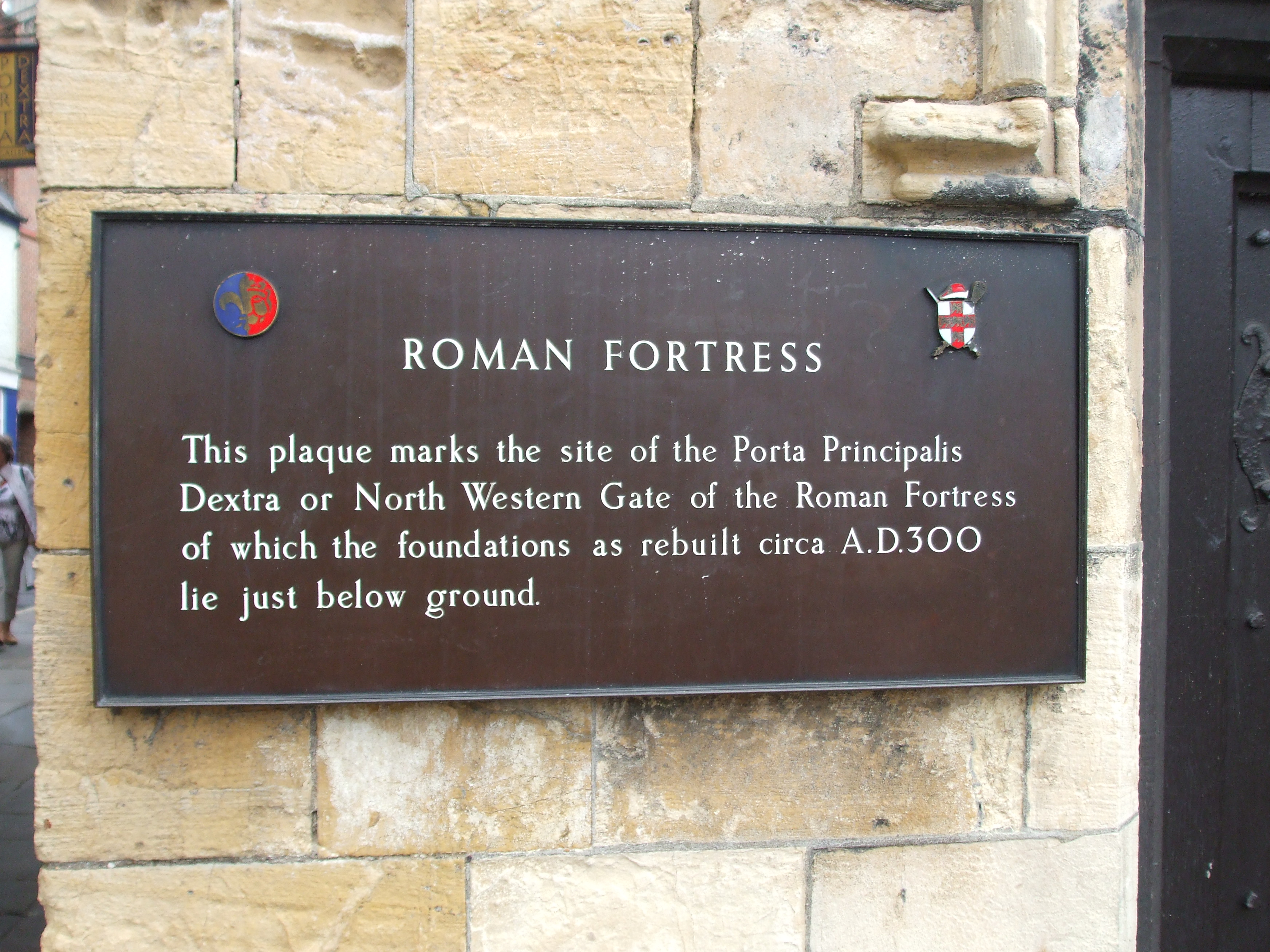
. . . to columns and plaques signifying what once stood on particular sites, as well as umpteen artefacts in The Yorkshire Museum.

014
Roman column
021
Plaque at Bootham Bar

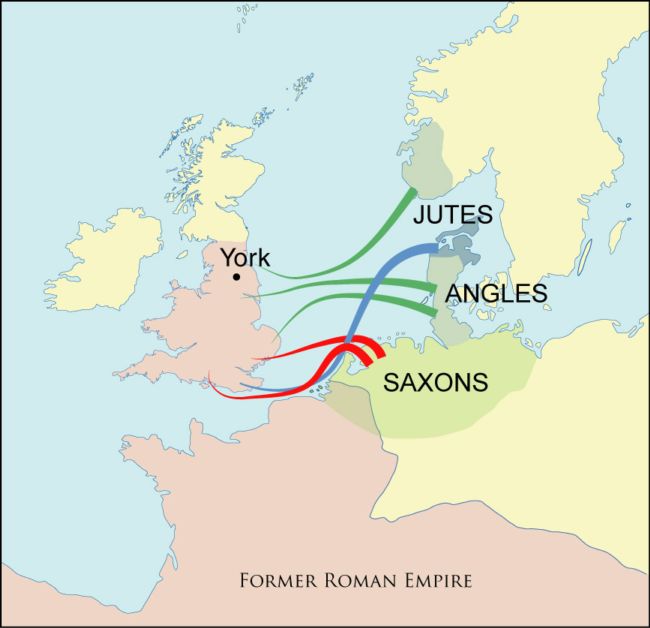
Following Roman withdrawal from Britain, the whole country was left open to raiders from across the sea – notably at this period, those we call the Anglo Saxons. The map shows areas on the Continent from which some of these peoples came:

anglian-homelands
Where the Anglo-Saxon peoples came from

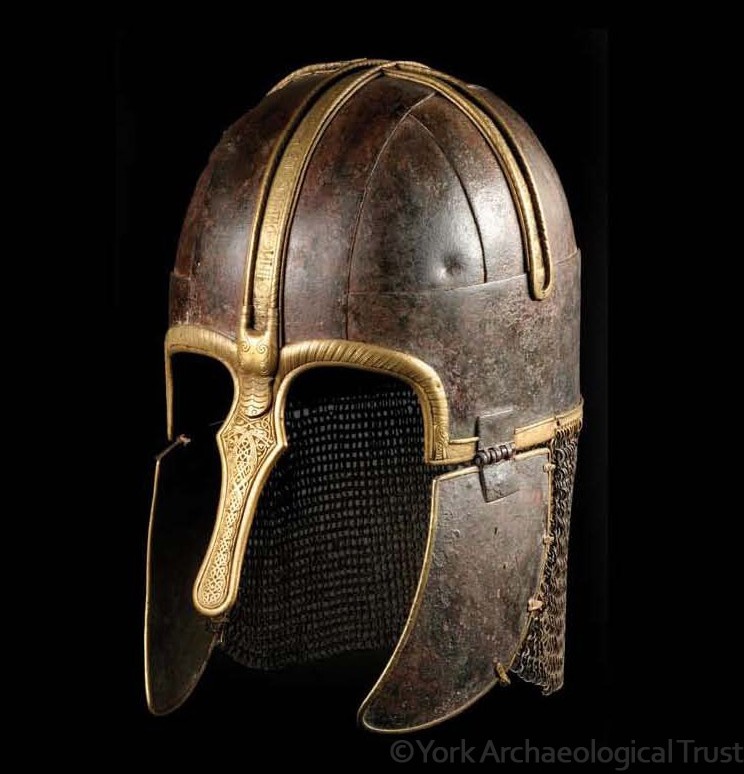
It was the Angles who mainly settled in Northumbria, the Saxons being much further south. The Angles called the city, Eorforwic (in some texts Eorferwic). The favoured building material of the Anglo-Saxons was wood, which, unfortunately for archaeologists and historians, does not endure through the centuries. So, little remains of Anglo-Saxon York other than general artefacts, like this 8th century helmet found on Coppergate, which also happens to be the the main street in Viking York.

coppergate-walk-sign-1024x151

Coppergate-Helmet
The Coppergate Helmet – Coppergate also happens to be the main street in Viking York.

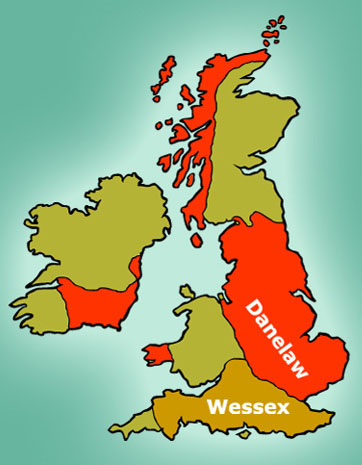
The Vikings (mostly Danes) first subjugated York in 866, a year after the arrival of what we call the ‘Great Heathen Army’ in East Anglia 865. Danish settlement in the area would doubtless have taken place gradually, but by the time of the establishment of the Danelaw (following a treaty between Alfred the Great  and the Danish leader, Guthrum, in 886) the Anglo-Saxon name of Eorforwic had become the Danish name, Jorvik.

danelaw
The Danelaw

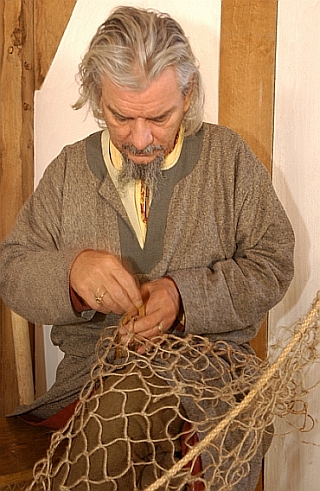
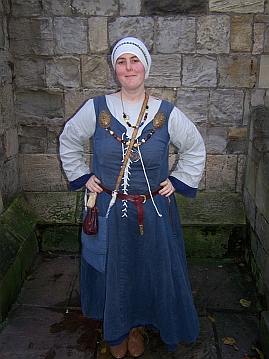
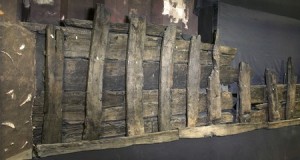
Here are some illustrations  and artefacts from the Jorvik Viking Centre website. As in most museums, flash photography is forbidden (which meant that our camera was banned) so if photos are wanted, visitors need to remember to carry something with a built-in flash. The marketing manager, Mr. Paul Whiting, very kindly suggested I use the photos from their website. Here’s the link -Jorvik for anyone who’d like to have a look for themselves:

Woodturner
howdidtheylive
Fisherman working on his net
howdidtheylive2
Viking woman in traditional dress
timbers-300x160
Jorvik building timbers

The Jorvik holds several events over the year, which cover the whole period of Viking York up to the time of the Norman Invasion in 1066. After that date the tale of Medieval York begins – for which there is boundless evidence all over the city . . . And so on through to more recent times. The ‘veritable journey through time’ to which I referred earlier can be seen through the strata meticulously displayed in the Jorvik Centre.

image517-300x225
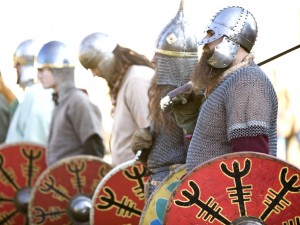
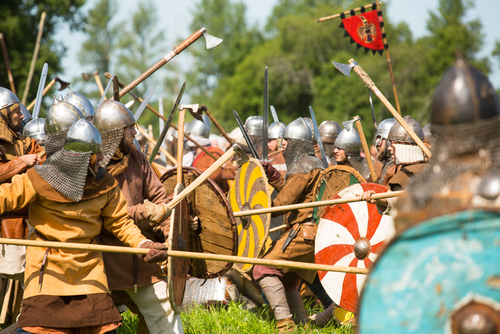
Ready for the shield-wall
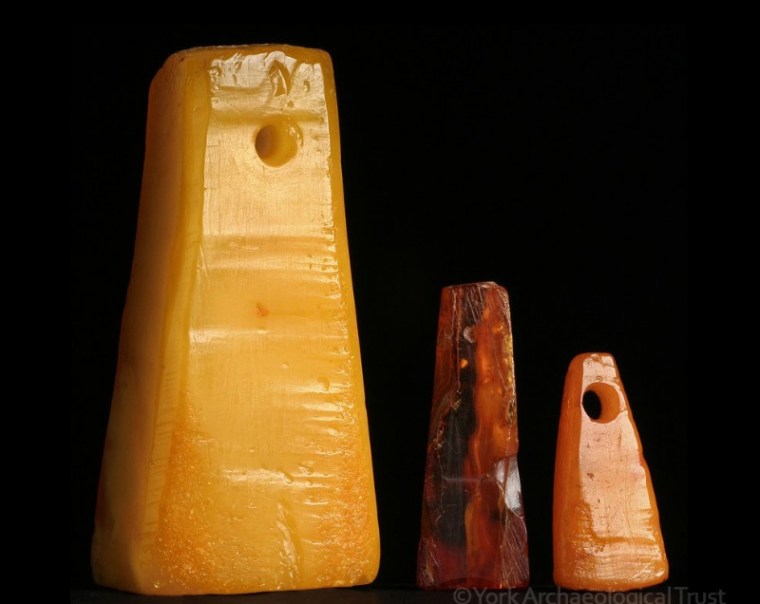
Amber
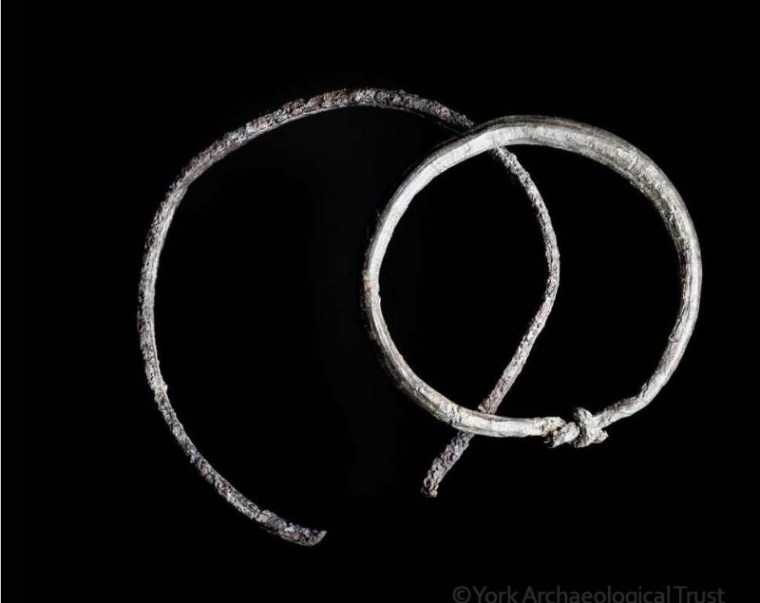
Arm-rings
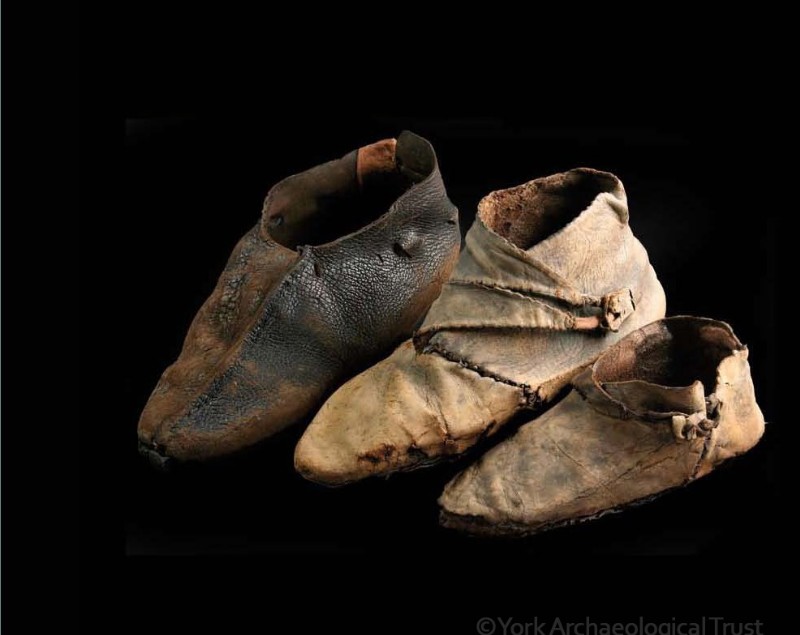
Leather-Shoes
Leather shoes
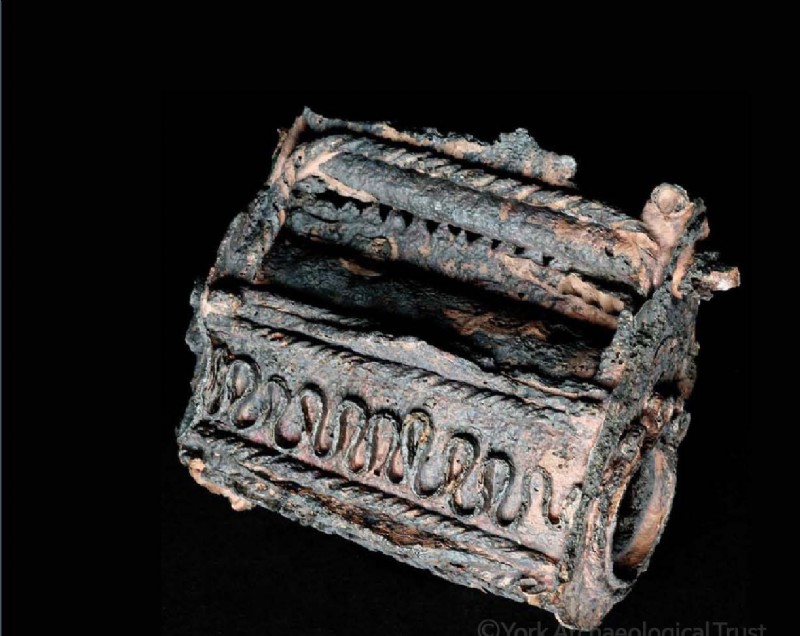
Padlock
Padlock
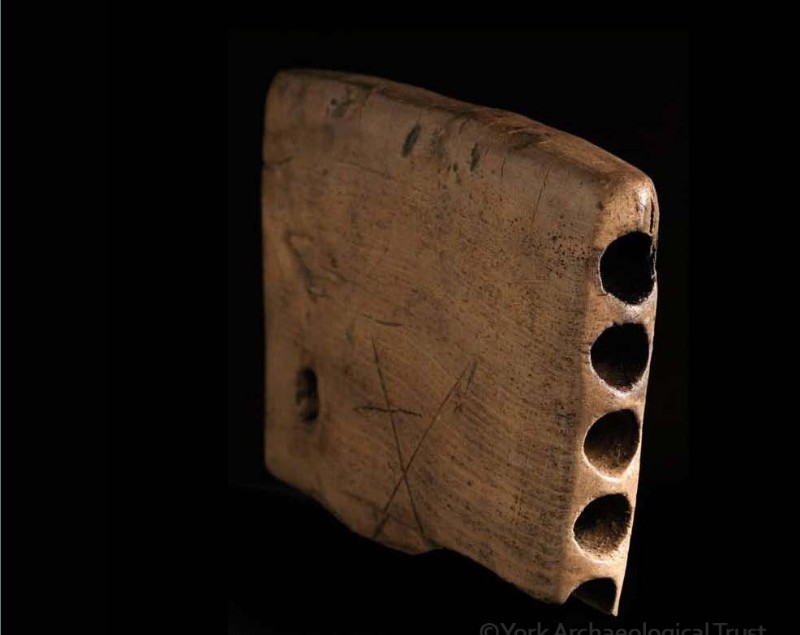
Pan-Pipes
Pan-pipes

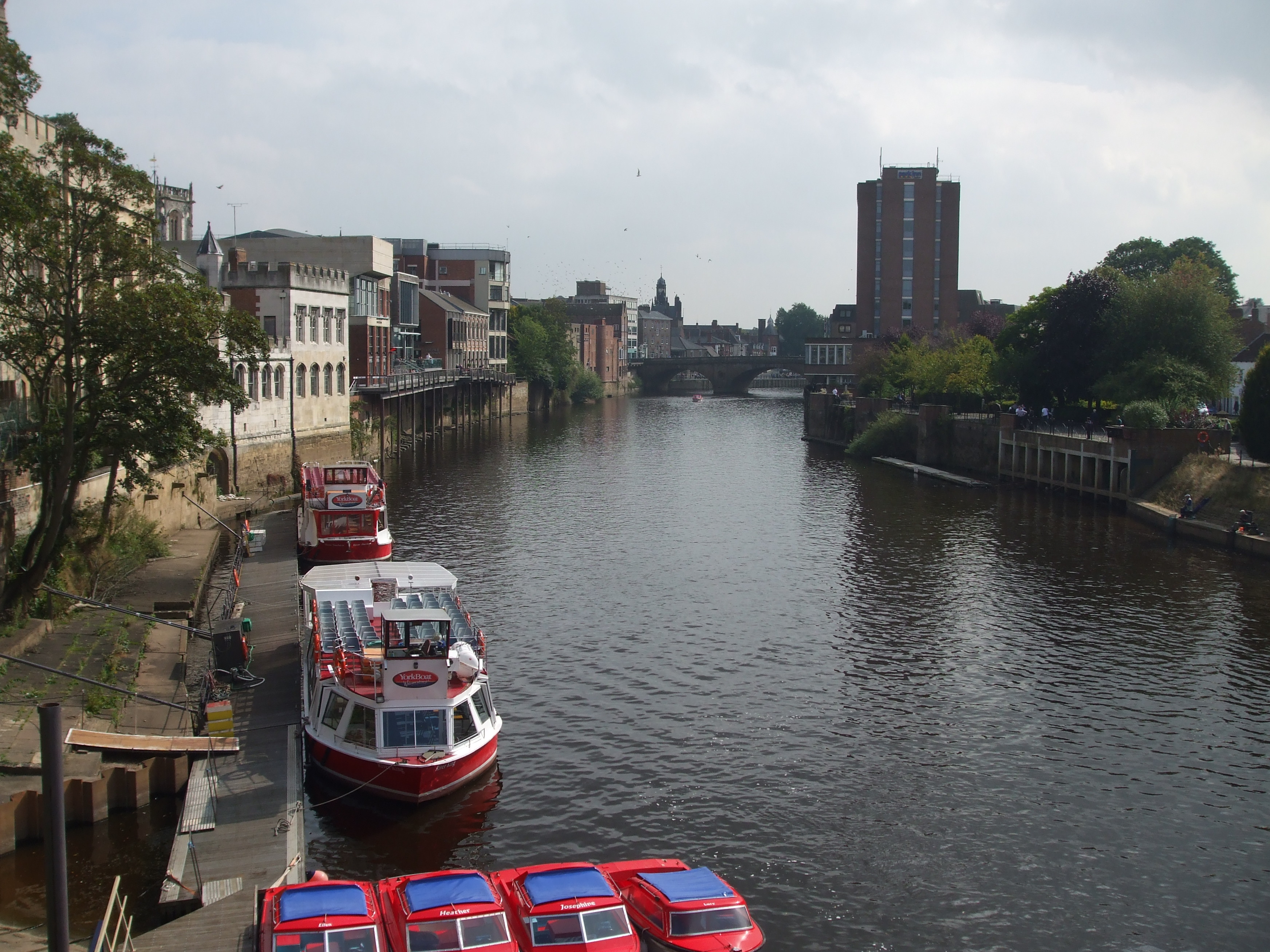
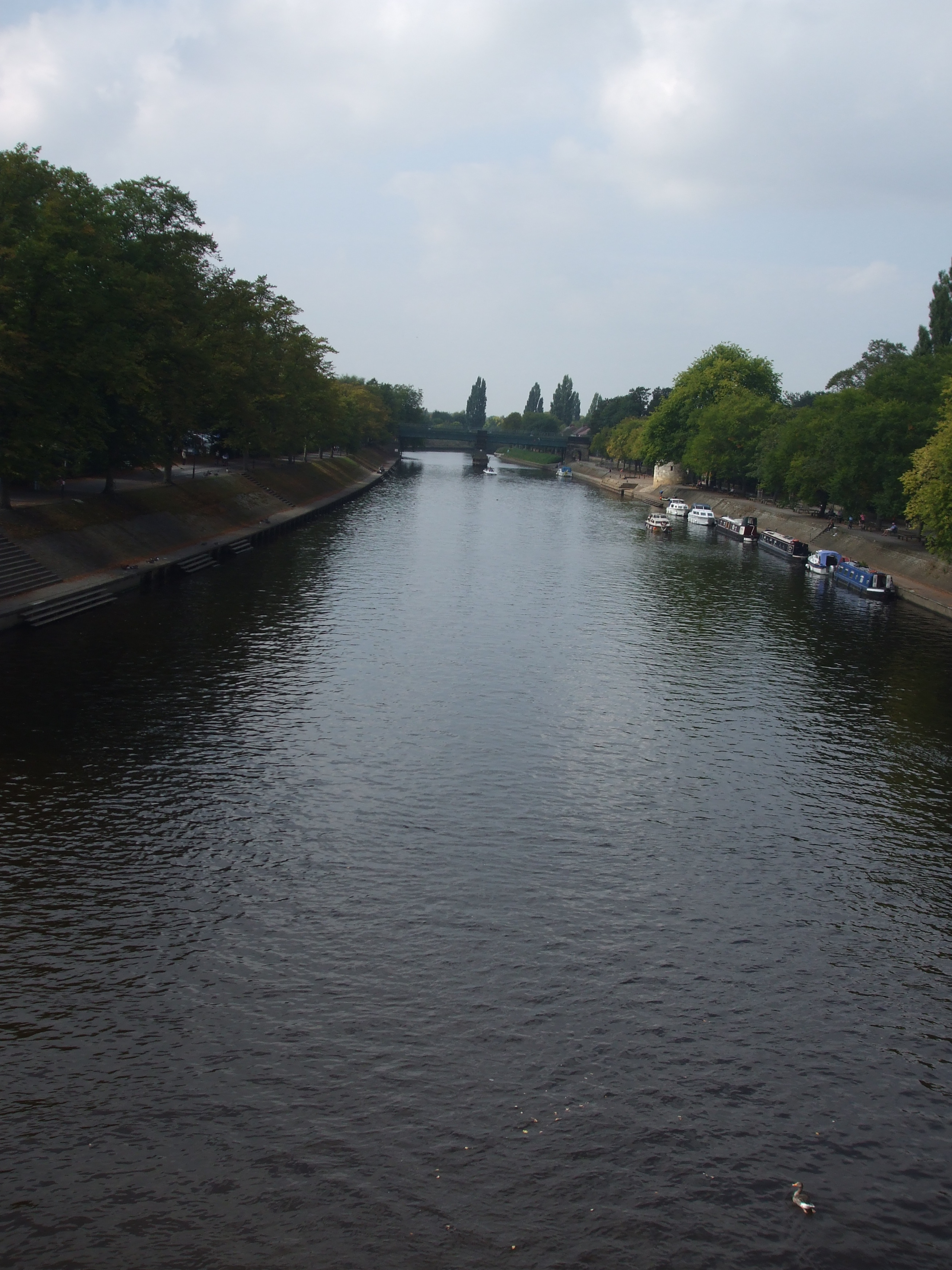
York has been like a honey-pot to settlers since ancient times. The River Ouse, which flows through the city and out to the North Sea, would have provided a natural route inland for settlers and raiders alike.

024
River Ouse

The river’s confluence with the smaller River Foss provided the requisite natural defences for the early city, and the surrounding fertile and flat land was ideal for crops.

Since my Sons of Kings trilogy is set in the mid-late 9th century, it’s the Anglo-Saxon and Viking evidence that presently draws me to York. But I also love all things Roman and medieval. After the end of the Wars of the Roses in 1487 my interest tends to wane, but it sparks right back up again with the onset of the Victorian period and the First World War.

But right now, I’m even dreaming of Anglo-Saxons and ‘Vikings’ – and King Alfred’s almighty struggle to keep his kingdom . . .

Vikings! Who Were They – And How Did They Get That Name, Anyway?

shutterstock_150508262

The definition of the word ‘Viking’ in the Oxford Dictionaries is as follows:

Any of the Scandinavian seafaring pirates who raided and settled in many parts of North West Europe in the 8th and 9th centuries.

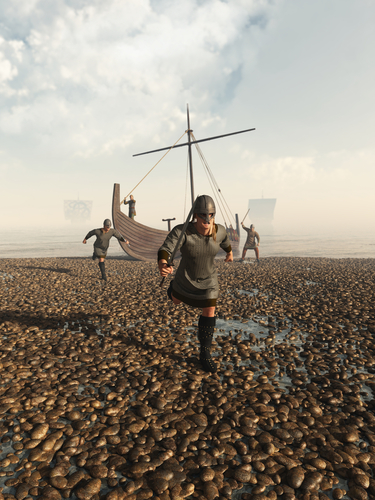
According to many films, TV series (not documentaries) and novels, the hiss of that single word, ‘Vikings!’, stuck terror into the hearts of peoples across North West Europe – especially the inhabitants of coastal or riverine settlements. But, from what I’ve deduced from a variety of texts, the word was not generally used at the time.

The origin of the word is still open to debate, but it’s undoubtedly an ancient word, as it appears on rune stones of the Viking Age. In some cases it refers to a person who travels, or an adventurer, and it is possible that even at this time the word applied to raiders. Yet, according to David Wilson in his book, ‘The Vikings of the Isle of Man’, the term was not in general usage in the English language until the mid nineteenth century.

Referring to the Hurstwic website:

In the Norse language, vikingr means a man from vik, where vik may have the sense of a bay, or the specific bay called Vikin in the south of Norway. Perhaps the name was applied because the first Viking raiders were from Vikin, or perhaps the raiders waited in sheltered bays for their victims.

shutterstock_167851352

No one can doubt that such raids took place but, at the time, the marauders, and later on, settlers, would collectively have been referred to as ‘Northmen’, or ‘Norsemen’ – men from the north.

In the ninth century, the Northmen / Norsemen who raided and eventually settled in the Anglo-Saxon kingdoms (which did not become known as England until the tenth century) would have come primarily from the area we now know as Denmark and from Norway. Most of the Swedes tended to head east, up river valleys into the heart of Eurasia. Like England, the names of Denmark, Norway and Sweden did not exist either, and the entire region would have been called the Norselands.

shutterstock_117777481

When writing fiction, this becomes quite problematic, and it is often easier to use the names we know today – which I have done in places in my own novels, Shadow of the Raven and Pit of Vipers (the latter should be on Amazon soon).

I know I’m not alone when I say I find the Viking world fascinating. Norse mythology is both complex and colourful, the multiple gods and goddesses and their entire universe a trigger for the imagination.

shutterstock_56714761
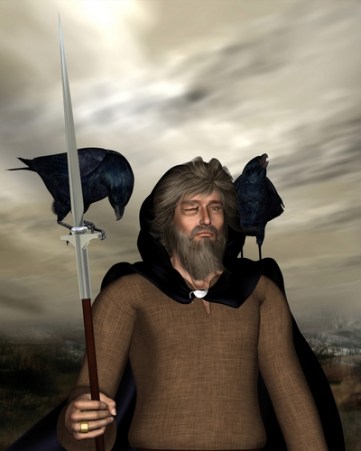
Odin, the All Father, with his two ravens, Hugin and Munin (Thought and Memory)

I realise that certain aspects of the Viking culture leave some people shouting utter condemnation – the blood sacrifices to the gods and the barbaric raids in particular. But what we have to bear in mind is that moral standards of the period were so vastly different to those of most modern-day cultures. Many such practices were based on the need for survival throughout the harsh winter months. Raids gained the Viking people silver, or goods to trade or sell in order to buy basic requirements of everyday life, including food. Today we may well see their actions as monstrous, but it’s simply how it was.

And let’s not forget, the Vikings were only one group of the many such raiders, including the Anglo-Saxons, who, by the time of the first Viking raids (as on the monastery at Lindisfarne) were well established Christians. I’m sure you could list a whole lot more.

One of my earliest encounters with Vikings was in the 1950’s film, aptly entitled, ‘The Vikings’. I’m sure even those amongst you who hadn’t even been born then, have heard of it. Well, in 1959, at the age of eleven, I loved it. I was on holiday with my family in the Isle of Man – and what wet and cheerless weather we had! So we had an afternoon at the cinema. Now, of course, the film is too dated and corny to interest real Viking fans, like me.shutterstock_123315433

*****

The Trials And Tribulations Of A First Time Novelist

shutterstock_185968619

At present I have one book well and truly finished (Shadow of the Raven). It has been professionally edited, and is now published on Amazon. I’m currently working on the final sections of Book 2 of the trilogy (Pit of Vipers) and hope to have that on Amazon before too long.

I have to admit that my writing speed has improved with Book 2. Shadow of the Raven seemed to take forever: I wrote and rewrote, deleted and saved, or totally scrapped so much of it. I can say with all honesty that my ‘Deleted’ file is almost a novel’s worth in itself!

But for Book 2, much of the basic research into the historical events and everyday life in the mid ninth century has already been done, and my writing style, storyline and characters have taken shape. So I feel much more confident in getting my ideas down this time around. That is not to say that the writing now just flows effortlessly to the computer keys with every scene. With some sections it does, but there are many new settings, situations and characters to be described and developed in Book 2 – and, of course, hopefully made to sound interesting – if not totally intriguing!

For experienced authors, many of the things I’ve agonised over are not an issue. Though I found little difficulty with viewpoint and character depiction, the development of the plot was a different matter. I knew what my story was about and what I wanted to include, but I soon learned that the story was not the same as the plot. Keeping the right balance between action scenes, emotional and humorous ones – or even those just necessary to move the story along – needs detailed planning, as well as careful consideration of the ‘show don’t tell’ element. Thankfully, I do love writing dialogue, and find it a wonderful way of ‘showing’ the many facets of characters.

Please bear in mind that I’m still new to the novel writing business. I have no doubt that many of you out there could easily write pages on the points I’m trying to make here. What I’m really saying is that novel writing is a long, slow learning process, and at the beginning I think it’s normal to struggle with the intricacies of the job. Me . . . well, I even whittled about word count, for goodness sake!

With regard to the latter, many of the scenes in my ‘Deleted’ file are there by virtue of my own editing once the book was finished. On consideration of the length of my original manuscript (which had grown to become a great monstrosity of a thing!) I set about deleting scenes I thought unnecessary to the continuation of the plot. For me, that was hard, since everything I had written was there because I liked it – and had taken time to do in the first place. Still, the over-long tale had to be shortened somehow.

But I love writing and no matter what ‘trials and tribulations’ I meet along the way, I know I’ll persevere. I have several ideas for future novels, but right now I’m focusing on getting my Sons of Kings trilogy finished.


I’d like to share one of the deleted sections here. It would have featured towards the end of what is now Chapter 4 of Shadow of the Raven. It’s a battle scene – something I really wasn’t looking forward to doing in the first place – in which King Aethelwulf of Wessex defeats the marauding Dane, Rorik.

Rorik’s raids play a vital part to the future events of the story, but I found that by removing the entire chapter in which this scene featured, I not only saved words but was able to move the main plot along quicker. The results of the battle are revealed indirectly in the following chapter. I still have qualms over whether I should have left it in. Anyway, here’s the scene:


shutterstock_145907300

The Battle of Aclea

An owl screeched its alarm, flapping from a low branch to glide like a spectre between the oaks of the woodland behind. One of the horses whinnied in response to the harsh cry and King Aethelwulf prayed the sound would not carry to the enemy below.

Entrusting their mounts to a handful of men until the battle was done, Aethelwulf and his hundred warriors crouched at the top of a gentle slope, taut as bowstrings; shields slung across backs, two or three javelins held inside each, and swords hanging from baldrics. Beyond the slope, the shadowy plain stretched for less than a mile before rising to the wooded ridge. Along the foot of the ridge, remnants of watch fires threw muted light on the edge of the camp. Aethelwulf hoped the guards would be too drowsy at this hour to be vigilant.

The eastern sky was paling fast; at sunrise the camp would rouse, the element of surprise lost. Scanning the top of the ridge, praying that Osmund and Aethelbald’s men were waiting, he raised his arm, the signal to advance down the slope.

Stooping low they moved in silence, crouching at intervals behind scrubby gorse and bramble, panted breaths evidence of heightened tensions as inevitable combat neared. The shouted alarm came as they moved across the open ground in the growing light of imminent dawn, the camp now less than a hundred yards away. The Danes swarmed from their tents, howling to their gods; hurling spears and rocks at their rapidly nearing assailants.

‘Shield wall!’ Aethelwulf yelled.

The manoeuvre into the tight wall was instant; two rows deep, shields overlapping, left sides over right. At Aethelwulf’s side in the centre of the front line the standard bearer hoisted the Wessex banner, the great white dragon on its backdrop of red, eliciting jeers and hammering of spears on shields from the Danes, now lined in their own defensive wall barely twenty five yards away. But, as Aethelwulf had hoped, few wore body armour: shields and helmets were all the late alarm had afforded.

The drumming on shields abruptly ceased and an ominous silence pervaded the plain. Warriors stood rigid, muscles flexed for the opening strike.

The first spears whistled as the two lines strove to weaken each other’s defences. Most flew overhead. Some glanced off shields; some slammed into them and held fast. A few struck unresistant flesh. Men screamed and fell.

And the gaps in the shieldwalls reclosed.

Gradually the missiles lessened, then ceased, and Aethelwulf moved forward a pace, his eyes fixed on a bull-necked figure standing prominently in the enemy front line. ‘So… the straggling remnants of Rorik’s warband think to challenge the might of Wessex!’ he mocked. ‘Naked raven chicks are no match for the clutch of the dragon!’

Rorik stepped out and threw open his arms. ‘We quake in our boots at the prattle of a deranged old man!’ The Danes wailed in mock terror. ‘Look closely at what you face, great king. Naked of armour we may be, but we are double your number. Yet you think to better us!’ He threw back his head and roared, the sound a chilling mix of derisive laugh and snarl. ‘Our chicks enjoyed pecking the eyes from your Saxon whores and butchering the curs you call men! And your gold will serve us well.’

Aethelwulf snorted. ‘Your murderous hordes have gained no more than a few captives and a modicum of plunder from poor homesteads. Saxon gold will never be within your thieving grasp.’

Rorik seethed, Aethelwulf’s denigration too accurate to deny. ‘Say your prayers to your god old man. Your mangy carcasses will feed the buzzards!’

The clash of colliding armies defiled the peace of the dawning day. Weapons thrust through gaps between shields, stabbing and slashing at legs, feet and faces, maiming exposed flesh and bringing men down, creating crucial breaches in the enemy wall. Danes dropped like swatted flies, despite outnumbering the Saxons two to one, their lack of body armour costing them dear. Aethelwulf fought with the vigour of a warrior half his age, his focus on Rorik. But gradually the craven jarl retreated behind his men, safe from Wessex swords.

Then Osmund’s hundred men were careering across the plain. Panicked, too many Danes turned to counter the oncoming wave, ignoring the continued frontal assault. Beset from front and rear the already depleted Danish force stood little chance and Saxon warriors showed no mercy. The battle was soon over.

Shouts alerted Aethelwulf to the group of riders fleeing from the empty camp towards the Roman road, Rorik’s swarthy bulk in their midst. But Saxon mounts had not yet been retrieved, and Aethelwulf could do no more than watch the riders fade into the distance. Tracking them down would be futile. Though he knew Rorik would head eventually for Thanet, Aethelwulf could not spare the men to cover the myriad, minor tracks he might take.

They buried their dead with Christian prayers and full honour; those men had given their lives for Wessex. Enemy corpses were relieved of their spoils and left where they’d fallen, a feast for the scavengers.

‘Gather their horses,’ Aethelwulf yelled. ‘Take whatever we can make use of from the tents, then fire them. Then we head home.’


Whether or not I did the right thing in deleting this, it’s too late now. The book is published. But I’ve brought attention to it here simply to add weight to what I said about the long, slow learning path towards becoming an experienced and, hopefully, good novelist. In this instance, deleting a great chunk of this chapter rid me of 1,526 words (the battle scene itself is 879 words) but at the expense of causing me some pangs of regret – not to mention annoyance at myself for wasting time writing it in the first place.

*****

My Favourite Historical Novels

bookworm

I’ve been a ‘bookworm’ for as long as I can remember and, somehow, tales set in the past always claimed my attention much more easily than contemporary ones. Once my childhood fixation with stories of shipwrecks had waned (Robinson Crusoe, The Coral Island and Swiss Family Robinson) I seemed to fixate upon those involving animals. I loved Anna Sewell’s Black Beauty, Jack London’s Call of the Wild and White Fang and Rudyard Kipling’s Jungle Book and Just So Stories.

shutterstock_197038109

Then, when I was twelve, I read Charlotte Bronte’s  Jane Eyre. I started reading the book in the back of my dad’s car on a journey to visit relatives. Somehow I managed to ignore the chatter of my younger sister and brother sitting next to me, and concentrate on the book . . . And I kept on concentrating right through the said visit (oh, how utterly rude!) and all the way home. By that time, of course, I had very little of the book to finish. To say that it had got me hooked would sound about right. From then on I went through several more of the classics, amongst them various works by Dickens – Oliver Twist being a favourite at the time.

Although I enjoyed Jane Austen’s Pride and Prejudice, I can’t say it sent me into raptures. It was a ‘class reader’ in my fourth year (Year 10) and, like George Eliot’s Mill on the Floss, which I studied for ‘O’ Level the following year, I suppose we analysed it to death! Conversely, I really enjoyed studying Emily Bronte’s Wuthering Heights for ‘A’ Level. And what a dark and brooding tale that is – so like the Yorkshire Moors can be at times.

shutterstock_204075802

One interesting little book I read during my second year of secondary school (Year 8) was Elizabeth Goudge’s, The Middle Window. By that time I’d begun to take a real interest in history at school, and since we’d just been learning about the Jacobites and their fate at Culloden, the book was very meaningful to me. I also loved the appeal of the Scottish Highlands. Whether or not I’d find the writing style to my liking now, I can’t say.

And talking about writing style . . .

The author of historical fiction I most admire is Dorothy Dunnett. I read the six books of one of her famous series, The Lymond Chronicles, eighteen years ago, and have been telling myself for years that a reread is in order. In my opinion, Dorothy Dunnett’s novels need reading several times over in order to actually grasp the depth of the characters, particularly Lymond (Francis Crawford) himself. The writing style, too, is incredibly complex, and some pages need reading a few times in order to make sense to lesser mortals such as myself. But, once past the first few pages of Book 1, Game of Kings, I ‘caught on’ to the language/style and from then on, was able to follow the story. Dorothy Dunnett’s use of poetry is quite amazing – and much of it is in French! And what an opening line:

‘Lymond is back.’

Just three little words that have the power to induce so many questions . . .

In more recent years, one of my favourite historical novels has been River God by Wilbur Smith. His descriptions of ancient Egypt enthralled me, as did the character of Taita.

shutterstock_206276143

Similarly, Christian Jacq’s many books set in Egypt fuelled my imagination. I read the five books in his series about Ramses II, then Paneb the Ardent from his the Stone of Light series. Needless to say, I really enjoy most books about Egypt.

But it’s not only Egypt that holds me fascinated. Roman novels have a similar pull. I particularly enjoyed Colleen McCullough’s Caesar and Caesar’s Women. I intend to start on Ben Kane’s first Roman novel, Hannibal: Enemy of Rome very soon. I also love novels set in Victorian and Edwardian times, and also during World War 1.

I desperately need to reread several works by American authors, including some written by Mark Twain. I can only remember reading abridged versions of both The Adventures of Huckleberry Finn and The Adventures of Tom Sawyer, early on in school. I also feel quite ashamed to admit that I haven’t even read Harper Lee’s, To Kill a Mocking Bird yet, although it’s been on my Kindle for months. Then I’d like to read Alice Walker’s The Color Purple, followed by Alex Hale’s novel, Roots. I did watch the TV series of Roots in the late 1970’s so I know that the story is incredibly moving.

I must add that I also enjoy novels with a crime/detective element. Many of these have had historical settings, but some have not. At present I particularly enjoy the grittiness of Val McDermid’s storylines and the quirky humour and unconventional tactics of Mark Billingham’s detective, Tom Thorne. I also like Patricia Cornwell’s novels involving the pathologist, Dr. Kay Scarpetta and the details of forensic work described.

I’ll finish for now and get back to writing Pit of Vipers – Book 2 of my Sons of Kings series.

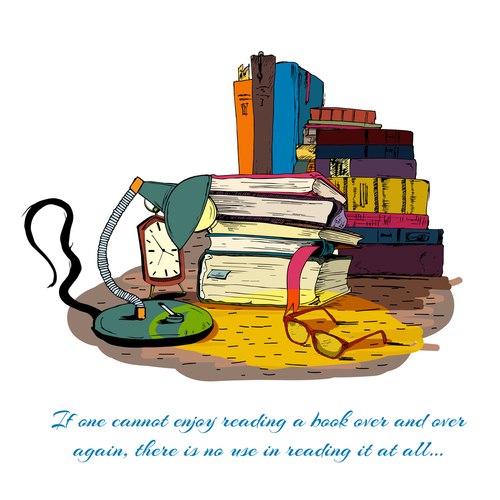
shutterstock_194185796A few interesting quotes about books and reading:
I’m writing a book. I’ve got the page numbers done. (Steven Wright)

If there’s a book that you really want to read but it hasn’t been written yet, then you must write it. (Toni Morrison)

Anyone who says they have only one life to lead must not know how to read a book. (Author unknown)shutterstock_182063360

History is all around us

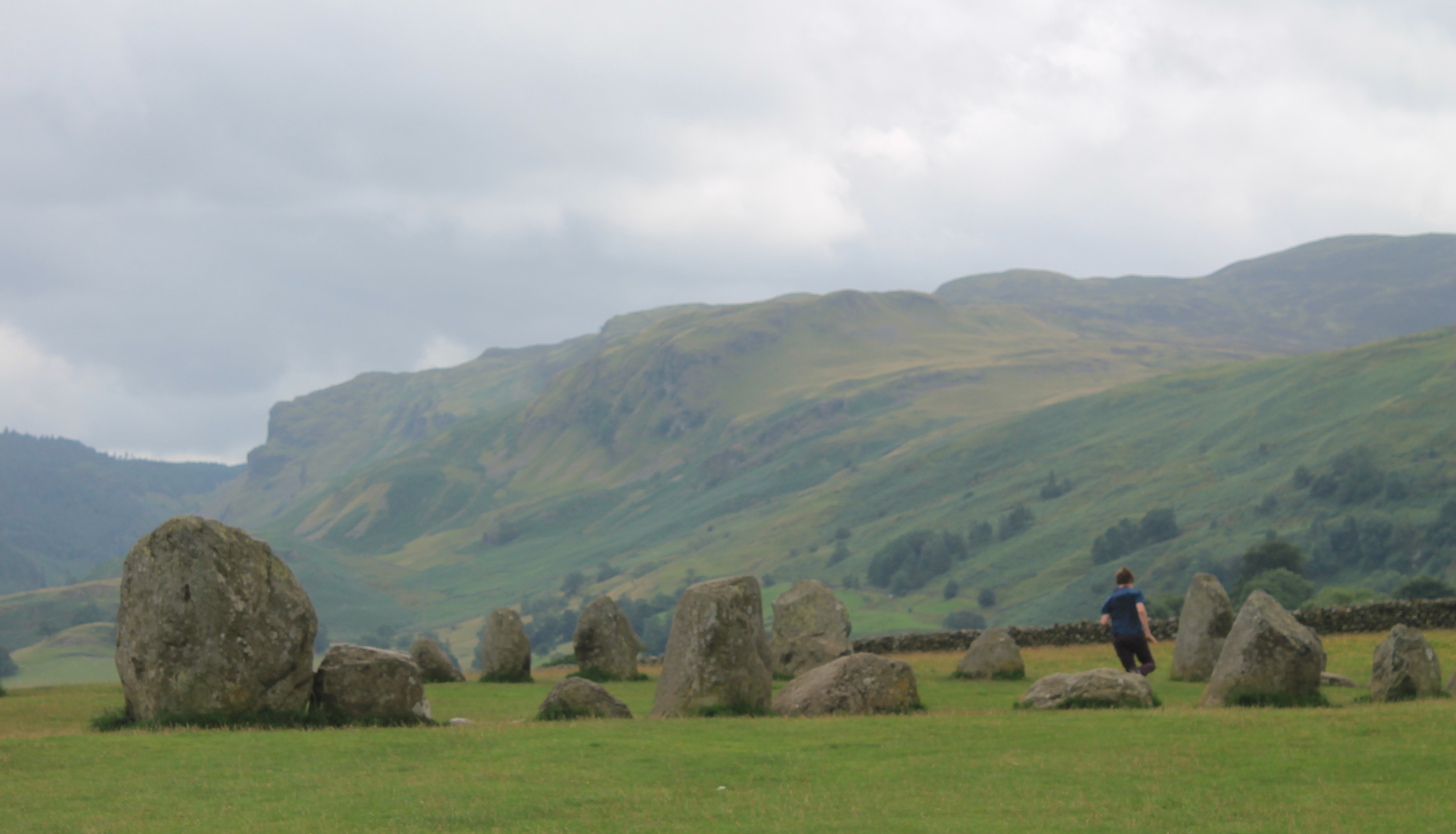
There are so many wonderful sites around the world that serve as a constant reminder of our past. Such sites can also stimulate the imaginations of writers of historical fiction and, in many novels, form the backdrop against which the characters can play out their tales.

IMG_4234
Castlerigg Stone Circle, Cumbria

I’ve even visited a few such places myself. I’ve stood with the rest of a tour group and goggled at Egyptian and Greek temples, the Bronze Age ruins at Knossos, and the remains of Pompeii, Herculaneum and Carthage. The splendours of these places will stay with me forever: they are locked inside my head. The colours, sounds and smells, and the clamour of the local people at any one of these places can spring to life again in an instant if I should just close my eyes…

Mum's Wantage pctures 012
Wayland’s Smithy: long barrow, Oxfordshire, UK

I suppose I’m lucky to live in a country where every city, town, or village can boast some structure or crumbling ruin that owes its origins to a bygone age. In Britain we have everything from prehistoric stone circles, tumuli and hill forts, to Roman walls, villas and bath-houses and medieval castles and cathedrals.

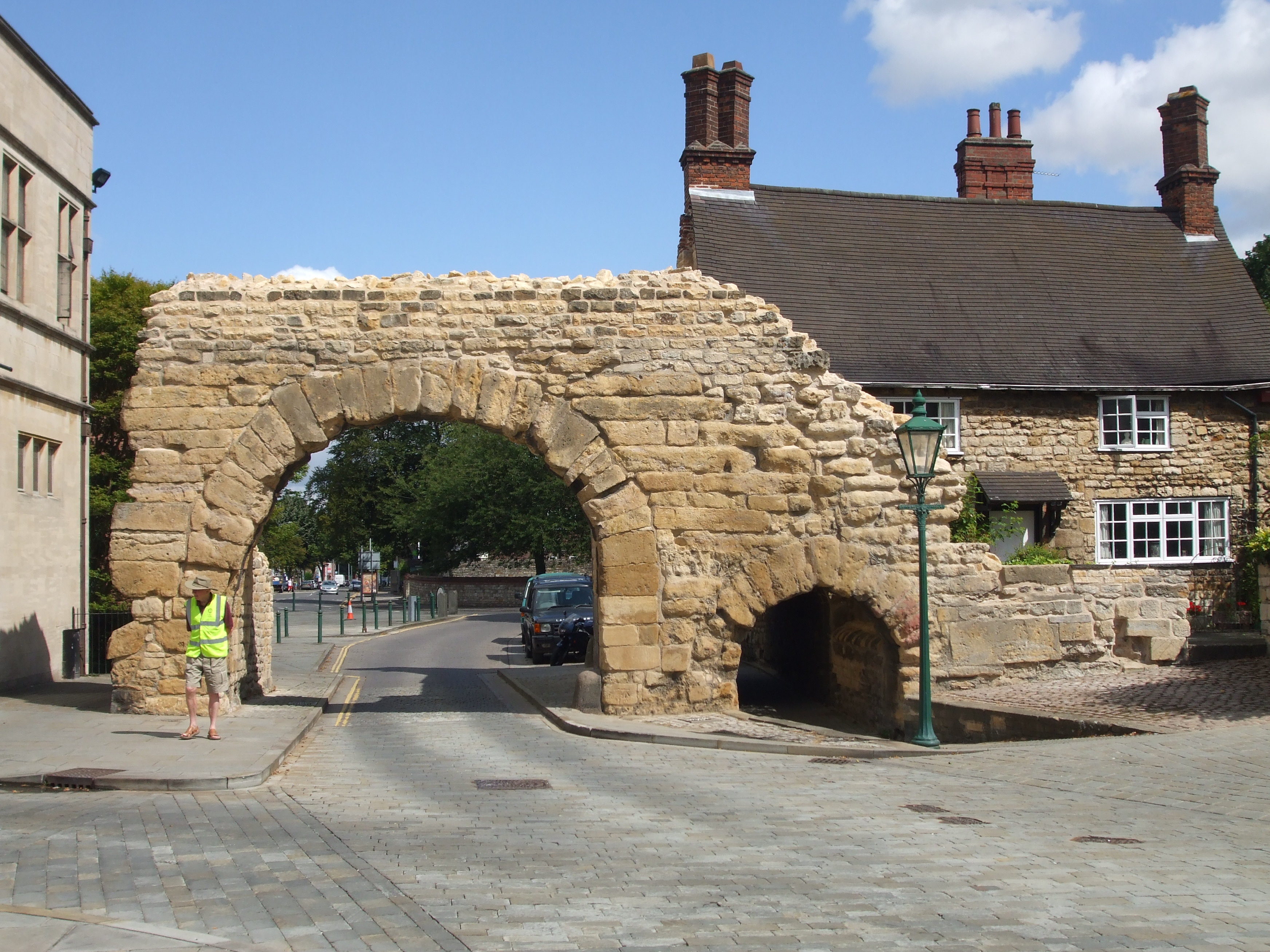
The remains of the Roman arch on Newport, Lincoln
025
Lincoln Cathedral. The first foundations of this magnificent structure were laid in 1088

And so it continues throughout the centuries, through Tudor and Stuart times to the period of the great Victorian architects and builders. And side by side with those great structures stand the simpler, quaint old cottages and farmhouses.

IMG_3989
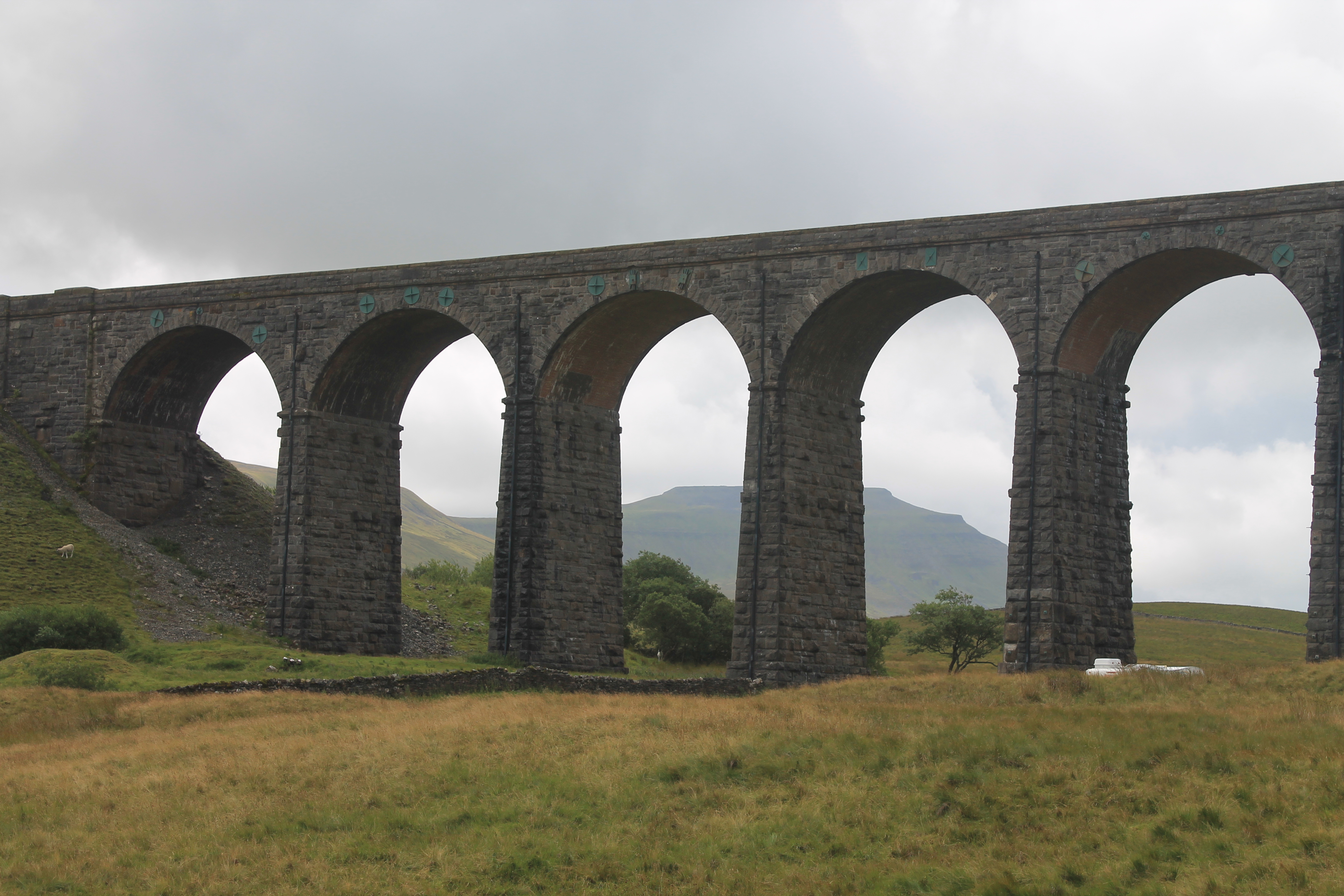
The Ribblehead Viaduct carries the Settle to Carlisle railway, built 1870-74

Writers of historical fiction, or rather, good writers of historical fiction, have the knack of making those bygone times seem like now. They bring the action alive, so that we see, hear, smell, feel or even taste whatever the characters in the story are experiencing. And that is a commendable skill, one that I kept firmly in mind whilst I was writing my own first book, Shadow of the Raven.

I’ll finish off with these thought-provoking  quotes:

I think that all of us who write about the past feel a deep and haunting connection with it. Socrates said that all knowledge is possessed by the soul and it’s just a matter of remembering it. I believe that to be true.’

(Karen Essex)

The truth of it is that it is simply not possible to create an accurate portrait of the past. No one can faithfully reproduce the reality of the 1970’s, let alone the 1570’s.

(Tim Wilcox)

History never looks like history when you are living through it.’

(Samuel Butler)

*****