The Holly and the Ivy … and a Little Sprig of Mistletoe

holly_christmas_card_from_nli
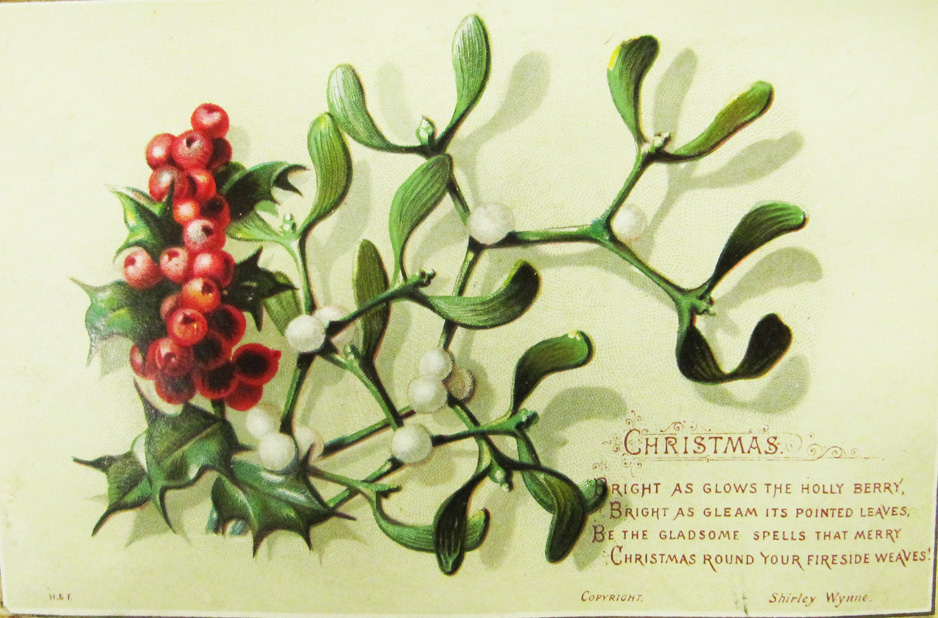
Traditional Christmas card with holly and mistletoe. Date circa 1880s. Author: Shirley Wynne. Public Domain

Over the last couple of years I’ve written a number of posts about Christmas traditions in the U.K. I’ve done posts about Christmas trees, Yule logs, Boxing Day and Wassailing. I’ve also written about the Winter Solstice celebrations and Christmas markets. So this year, my first ‘Christmassy’ post is about the use of greenery – other than the Christmas tree.

Evergreens such as holly, ivy, mistletoe, laurel, fir and yew have been used in Northern Europe since pre-Christian times to celebrate the winter solstice (December 21). Staying green in the middle of winter, and not dying like most other plants, meant that evergreens symbolised eternal life. Hanging greenery in the home would ensure that new vegetation would return with the coming spring, as well as warding off evil spirits.

Greenery was also used in Rome for Saturnalia, the mid-winter celebration in honour of the god, Saturn. Romans decorated their houses with greenery, lit candles and enjoyed feasting and exchanging gifts with family and friends.

As Christianity spread, pagan cultures continued many of their midwinter practices, despite the disapproval of the Christian Church. Eventually, by 1600, the use of greenery became accepted in churches, though it took on a Christian perspective.

Holly is perhaps the most popular and well-known of the Christmas evergreens. Its prickly leaves symbolise the crown of thorns worn by Christ at His crucifixion and the bright red berries symbolise his drops of blood. In Scandinavia, holly is known as Christ Thorn.

ilex-aquifolium_europaeische_stechpalme-1
European holly (Ilex aqufolium) leaves and fruit. Author Jurgen Howaldt. Creative Commons

In early days, holly was believed to be a fertility symbol as well as having magical powers and the ability to drive away witches, goblins and demons. In medieval England, when people were very afraid of such supernatural beings – which were thought to be particularly active at Christmas time – unmarried women would tie a sprig of holly to their beds to guard themselves against such things. In Germany, holly was considered to be a good luck charm against the hostile forces of nature.

In the 1640s, during the rule of Oliver Cromwell when Puritans banned Xmas, Christian country folk still continued to hang up bunches of ‘holy’ boughs of evergreens as a symbol of Christmas. This became the holly bough we know today.

We have two, smallish holly trees in our garden. One has variegated leaves and red berries, the other is not variegated and has yellow berries (Ilex aquifolium Bacciflavia). I always think of Christmas colours being red and green, so we don’t usually bring any of the yellow one indoors at Christmas, but it’s quite pretty all the same. Here are a few photos of the two trees:

Ivy is such a common evergreen. Various species grow in so many places – often to heights of 30 metres above the ground. The following  pictures show just three varieties of the hedera species.

And these are a few photos from around our village. The bird table is in our garden and the ivy growing up it started life in a basket of flowers sent by one of our children a few years ago.

Ivy needs to cling to something to support itself – which, in the Christian view, reminds people of the need to cling to God for support in their lives.

In Roman times ivy was the ancient symbol of Bacchus, the god of wine and revelry. Due to such association with pagan festivals, ivy was banned from the insides of churches and Christian homes, and used only to decorate the outsides. In Germany, a piece of ivy tied to the outside of a church was once thought to protect it from lightning.

Nowadays, ivy has become part of the traditional Christmas greenery, particularly as part of Christmas wreaths that many people hang outside their front doors.

Before I say a little bit about mistletoe, here’s a nice little version of the old hymn, The Holly and the Ivy that I found on YouTube. There are several versions of it but I liked the sweet little images in this one from MyVoxSongNurseryRhymes.

Mistletoe is one of the Christmas greens that everyone knows something about. Kissing beneath it has become the norm at get-togethers and parties. Some people avoid it like the plague, other people scheme and plan as to how they can entice someone they fancy to stand beneath it.

One little snippet I read regarding the origin of the name ‘mistletoe’ did make me laugh. Apparently, the name comes from two Anglo Saxon words: ‘mistel’ – meaning dung – and ‘tan’ – meaning stick. So next time you stand canoodling beneath the mistletoe, remember that you’re doing it beneath some ‘poo on a stick’. (Not my words!).

shutterstock_227017606

Mistletoe is a parasitic plant which attaches to and penetrates the trunk and branches of a tree or shrub by a structure called the haustorium, through which it draws water and minerals from the host.
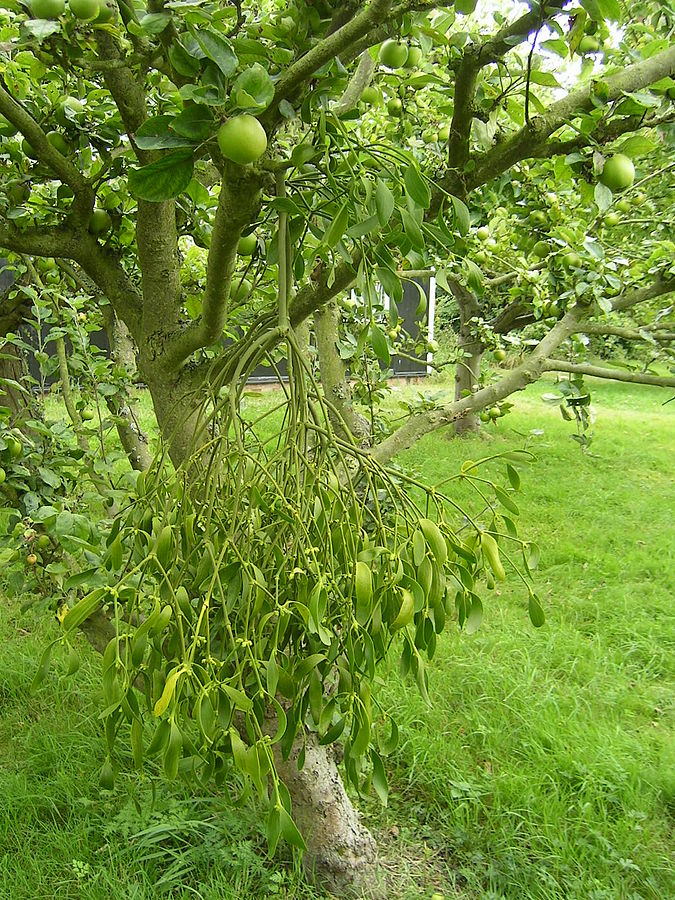
European Mistletoe on an apple tree in Essex, England. Author: Chilepine. Public Domain
European Mistletoe (Viscum album) on an apple tree in Essex, England. Author: Chilepine. Public Domain
mistletoe_berries_uk
Mistletoe growing in a tree in the Wye Valley, UK, showing white berries in medium close-up. Author: Alexbrn. Public Domain

The name originally referred to the species Viscum album (European mistletoe) found in Great Britain and much of Europe. Separate species occur in Spain, Southern Portugal, North Africa, Australia and Asia.  Over the centuries the term has broadened to include other species of parasitic plants with similar habits found in other parts of the world. The Eastern Mistletoe is native to North America. Viscum album is not native to North America but it has been introduced in California.

Eastern mistletoe has smooth edged, oval, evergreen leaves in pairs along a woody stem with waxy, white berries in clusters of 2-6. The Eastern mistletoe of North America is similar but has shorter, broader leaves and longer clusters of 10 or more berries.
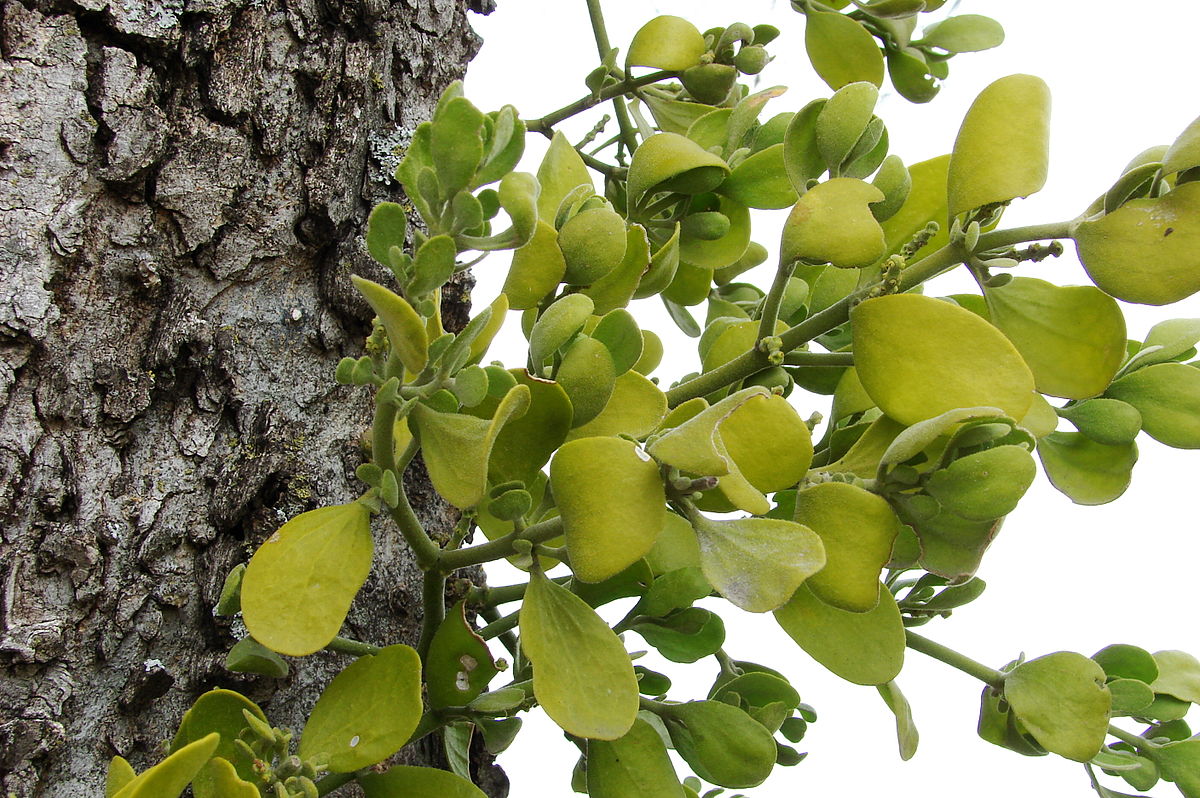
Eastern Mistletoe (Phoradendron leucarpum) in Northeast Texas. Author: Loadmaster (David R. Tribble). Creative Commons

Mistletoe is an attractive plant which provides contrast and interest when used alongside holly, ivy and other greenery, as in many Christmas wreaths and other arrangements of foliage.

shutterstock_208426180

The Romans treated it with great respect due to (what they saw as) its magical/mystical properties. Although all parts of the plant are poisonous, mistletoe’s healing powers have been recently recognised. It can be used in homeopathic recipes used to lower blood pressure and it may also have a role in cancer remedies. (The usual warning applies here: Don’t try this at home!)

Mistletoe was sacred to the people of ancient Britain and, as in ancient Rome, it was considered to have magical properties. In the Celtic language the name ‘mistletoe’ was ‘all heal’ as it was thought to cure diseases and render poisons harmless. It could also make humans and animals fertile and protect the house from ghosts and bring good luck.

Druid priests used it in their sacrificial ceremonies, and possibly, also in marriage ceremonies, and people meeting under a tree bearing mistletoe were forbidden to fight – even if they were enemies. The kissing custom is believed to have comes down to us from the Celts, so perhaps the friendship offered beneath the tree was the start of things.

Later on, hanging up the mistletoe in a house was originally done to ward off evil spirits, as was the case with most evergreens. The Victorians used it in doorways and hung it from ceilings and it eventually it became acceptable for the odd ‘mistletoe kiss’ to take place. Tradition has it that the more berries the mistletoe has, the more kisses are possible. With every kiss a berry was plucked until the berries were all gone and the kissing stopoed.

shutterstock_353595911

I’m adding this final picture simply because I like it!

adrien_barrere14
The Mistletoe Seller by Adrien Barrere. Date: before 1932. Author: Adrien Barrere ((1874-1931). Public Domain.

References:

1. Christmas Traditions and Customs:

http://www.whychristmas.com/customs/hollyandivy.shtml

2. Fashion Era: ChristmasCustoms -The Tradition of the Holly and the Ivy:

http://www.fashion-era.com/Christmas/christmas_customs_holly_history.htm

3. Woodland Trust:

https://www.woodlandtrust.org.uk/visiting-woods/trees-woods-and-wildlife/british-trees/native-trees/holly/

4. Wikipedia:

https://en.wikipedia.org/wiki/Holly

https://en.wikipedia.org/wiki/Hedera

https://en.wikipedia.org/wiki/Mistletoe

*****

An Inappropriate Reply – FFfAW

Flash Fiction for Aspiring Writers is a writing challenge hosted by Priceless Joy. It involves writing a piece of fiction from the given photo prompt in around 75-150 words – give or take 25 words. If you’d like to join in with the challenge, follow the above link to see what to do. The challenge runs from Tuesday to Tuesday every week.

Here is this week’s prompt, kindly provided by Louise. Thank you, Lou!

photo-20161128154638337

And this is my story:

An Inappropriate Reply

Quentin stormed into the morning room and thrust the letter into his wife’s hands. Amelia shifted in her chair, avoiding his outraged glare. The note-paper was all too familiar.

‘Where did you find it?’ Such a mundane question, yet she could think of nothing appropriate to say.

‘That’s irrelevant!’ Quentin snapped, pacing the floor. ‘After twenty-three years of marriage, you owe me a plausible explanation. I was bound to realise soon enough.’

Amelia stared at the letter, grasping for explanations. She’d never kept secrets from Quentin before. ‘James made me promise not to tell you until –’

‘Until it was too late for me to stop him…!’

‘At twenty-one, James has every right to enlist in Kitchener’s army, Quentin. Our son knows what he’s doing.’ Unshed tears suddenly welled. ‘But I can’t bear the thought of him in Normandy. He could be killed, or wounded and–’

Quentin knelt to comfort her. ‘We’ll need to be extremely brave for just a few months, my love. They say this war will be over by Christmas…’

Word Count: 174

***

If you’d like to read other stories, or add one yourself, click on the little blue frog:

A Note about WW1 and Lord Kitchener’s Recruitment Campaigns:

kitchener-leete1
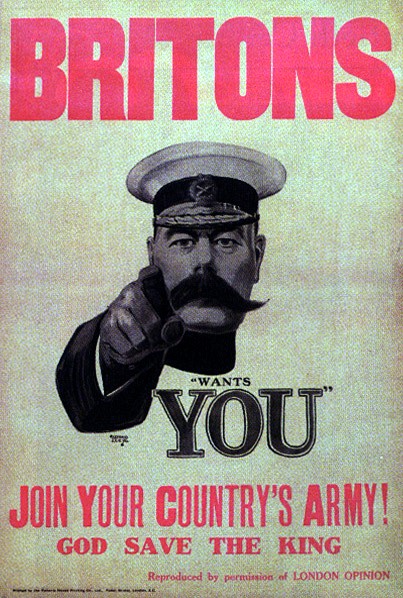
Kitchener World War 1 Recruitment poster. Date:1914 Author: Arthur Leete (1882-1933). Public Domain.

When war broke out in August 1914, it became clear that the British Army needed far more men than the numbers already recruited in the regular army. The war minister at the time, Lord Kitchener, began a campaign to urge men aged between 19 and 30 to (voluntarily} join up. Three weeks later, the upper age limit was raised to 35. By mid-September, over 500,000 men had volunteered – and over a million by January 1915.

Many officials in both the military and the government initially believed that the war with Germany would be ‘over by Christmas’. But Lord Kitchener was unconvinced. Needless to say, as war dragged on, eventually to last four long years, concerns over the provision of manpower led to again altering the recruitment ages, this time for men between 18 and 50. During this time, many young men (250, 000 of them in Britain) found little difficulty in falsifying their age. There are stories of boys as young as 15 – a few even younger – joining up, until eventual conscription in March 1916 made it more difficult for them to do so.

*****

Gullfoss Waterfall with a Shake (Subtitle: I Really Need a Tripod!)

gullfoss-b

I intended to show the video (below) on the post I wrote in early October about some of the sites we’d visited during our holiday in Iceland. (A glimpse of Iceland). Well… I can come up with several excuses for not doing so, but the main ones are simply that I hadn’t got around to getting it onto YouTube – and then, when I did, it looked far too jumpy and shaky to use.

The moral of the story is that for good, ‘steady’ videos we need a tripod. It’s impossible not to be jostled around at popular tourist spots and holding a camera perfectly level whilst moving it along to show different aspects of the feature is a big no-no (for me anyway).

Gullfoss (Golden Falls) is the most spectacular and well known of the Icelandic waterfalls, and we visited it as part of the popular Golden Circle Tour. The roaring noise is fascinating! Anyway, here’s the shaky video:

The second half of this video has somehow been lopped off – which is probably just as well, as it was far worse than the first half!

Here’s a little bit of additional information about these falls, mostly from tourist information boards at the site:

The Gullfoss Falls are on the River Hvitá where it descends from the highlands into the Hvítårgljúfor Canyon.  The waterfall cascades in two tiers into the canyon and is about 31m high. The upper waterfall faces south and is 11 m high, the lower one faces west and is 20 m high. The two tiers can be seen in this photo:

two-tiers-of-gullfoss

For many years attempts were made to buy or rent the waterfall and harness its power, and disputes continued throughout the 20th century.  A woman named Sigridur Tómasdóttir (1871-1957), a farmer’s daughter and later owner of the nearby farm, Brattholt, became ‘standard bearer’ in the fight to protect the Gullfoss, and devoted most of her long life to preventing its destruction.

Happily, Gullfoss and its environs were designated a nature reserve in 1979.

There are a couple of theories as to why these falls became known as the ‘Golden Falls’. The first is because of the golden evening hue which often colours its glacial waters. The second is that the name was inspired by the rainbow that often appears when the sunshine hits the water spray. But I prefer this story, which tallies with all the other fanciful tales abounding in Iceland. It was found in the travel journal of Sveinn Pálsson:

A farmer named Gýgur lived at Gýgurjarhóll. He had plenty of gold and could not bear the thought of anyone else having it after he’d died. (What a meanie!) So he placed the gold in a coffer and threw it in the waterfall – which has been called Gullfoss ever since.

Well that’s the last post I’ll be doing on Iceland – for a while, anyway 🙂

****

Burnby Hall and Gardens

lake-and-water-lilies-3-july

With 2016 racing towards its end I thought I ought to write up about some of the many places we’ve visited around the UK this year. I’ve already posted some of them, as well as a couple of posts about our holiday in Iceland, but I’ve still loads left to do! So I thought I’d start with somewhere we’ve visited twice this year. The first time was in April when trees were only just coming into leaf, and the second in July, when summer flowers were blooming and water lilies patterned and coloured the lakes.

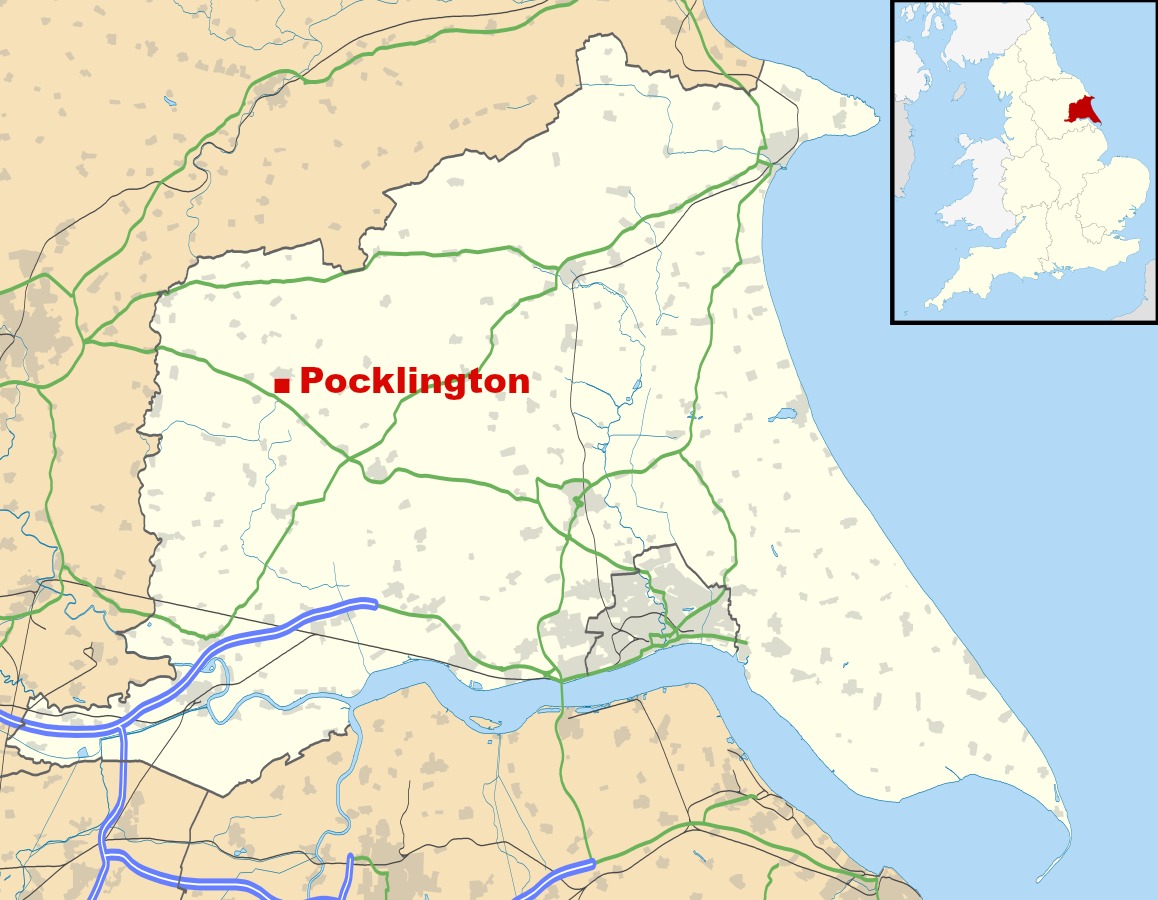
Burnby Hall Gardens wasn’t somewhere we’d set out to visit on our first short break in Yorkshire in April, but we saw leaflets about it in the hotel and thought we’d have a look. And it came as a pleasant surprise. It’s located in the market town of Pocklington in the East Riding of the county.

east_riding_of_yorkshire_uk_location_map-svg
Map of the East Riding of Yorkshire. Source: Ordnance Survey OpenData. Author: Nilfanion. Creative Commons

The Gardens have been described as ‘the jewel in Yorkshire’s crown’ and consist of upper and lower lakes set in nine acres of woodland. There are pathways around the lakes, an ornamental bridge, an aviary, a Victorian garden, a rockery and more recently a stumpery has been added – which I’ll explain about later in the post.

The two lakes are home to a national collection of over a hundred varieties of hardy water lilies which flower between June and August – the reason we visited for a second time in July. The lakes are home to lots of carp and roach which people happily feed with cartons of fish pellets purchased from the shop. The carps’ gaping mouths are very amusing.

When we visited in early April most trees were still bare or just coming into leaf, and blossoms and spring flowers adorned the site. Before I say anything about how the Gardens came into existence, here are a few springtime photos we took:

The site of Burnby Gardens was originally the estate of Major Percy Marlborough Stewart (1871 – 1962) who was descended from the earls of Galloway and the Spencer-Churchills and was the godson of the Duke of Marlborough. The gardens were created when Major Stewart returned to settle at home after eight trips around the world, during which he visited every continent except Antarctica. On some of the trips he was accompanied by his wife, Katharine. He is described in the Burnby Hall and Gardens website as ‘an adventurer, traveller, scholar, philanthropist, collector and environmentalist’. His travelling days apparently started after a remark he made to Katharine:

‘We’re terribly dull people, let’s travel round the world and then we shall have something to talk about.’

Many of the cultural and religious artefacts Major Percy collected can be seen in the museum which is housed in the estate’s house.  Many of these have been recognised by UNESCO as being of national and international importance. (I won’t write about the museum here or this post will become far too long!).

On his death in 1962, having no children and his wife having predeceased him, Major Stewart willed that the Gardens and Collection should be left in trust for the benefit of the people of Pocklington.

Here are some of our summertime photos when the water lilies, in particular, were really beautiful – and the reason we decided to go back to Burnby in July:

lake-at-burnby-in-july

To finish with, a little about the stumpery (taken from an information board at the Burnby Stumpery).

A stumpery is a garden feature constructed mainly from the upturned roots of large trees. The roots are artistically shaped and once in place, plants are used to break up the strong lines and soften the angles. Stumperies have been described as ‘Victorian oddities’ and were popular during the 19th century. The stumpery at Burnby was inspired by the one at Highgrove, the main residence of HRH the Prince of Wales. His stumpery has over 95 sweet chestnut trees and covers 9000 square feet. When his father, Prince Philip, first saw it, he is reputed to have said, ‘When are you going to set fire to this lot?’

Work on Burnby’s stumpery started in 2011 with the removal of 40 dead wych elms (dead as a result of Dutch elm disease) and general clearance of the site. Soil bunds were added to give the stumpery some height. A large quantity of oak stumps were provided by a local Wilberfoss timber agent and the Hobbits’ house in the centre was added for interest.

Environmentally, the stumpery provides for many different species of flora and fauna. Amongst many others, the flora includes many ferns and spring bulbs. Amongst the fauna are grey squirrels, shrews, hedgehogs and occasional rabbits and foxes. Many insects, spiders and snails also make their homes here and the log-like cabins provide excellent ‘bug hotels’ and habitats for hibernating fauna.

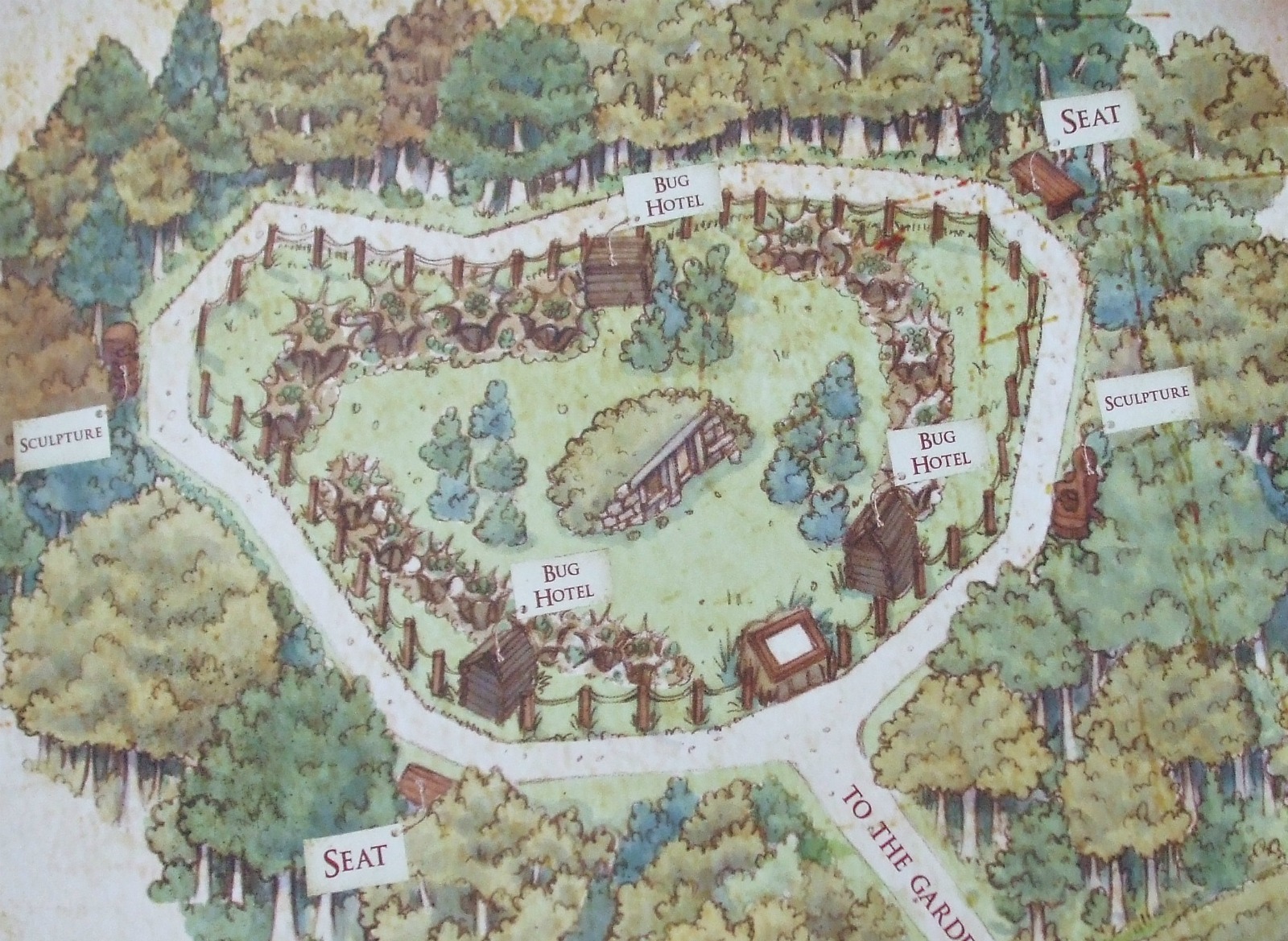
This a plan of the stumpery (from the same information board.)

plan-of-the-stumpery

… and some photos which are a mixture of ones taken in both April and July. There were quite a few little Green Men around, too.

Well, perhaps it’s time to say, ‘That’s all for now folks.’

It’s Just a Game – FFfAW

Flash Fiction for Aspiring Writers is a writing challenge hosted by Priceless Joy. It involves writing a piece of fiction from the given photo prompt in around 75-150 words – give or take 25 words. If you’d like to join in with the challenge, follow the above link to see what to do. The challenge runs from Tuesday to Tuesday every week.

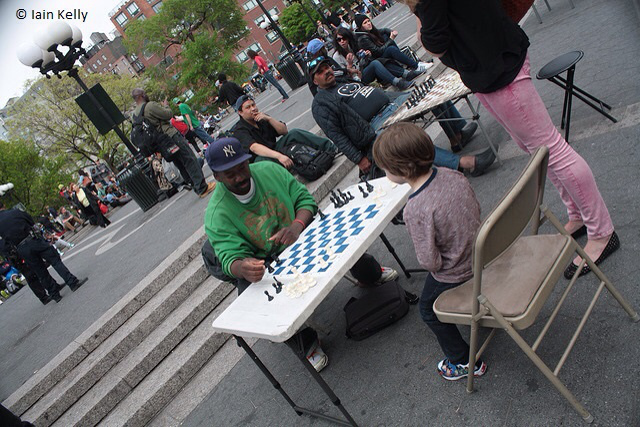
Here is this week’s prompt, kindly provided by Iain Kelly:

photo-20161108072242355-1

And this is my story:

It’s Just a Game

Twelve-year-old Aelric made his first move and glared across the hnefatafl board at his burly opponent: the brute whose marauding band had seized his father’s village.

A yellow-toothed grin creased Halvar’s face. “Don’t look so glum, boy. It’s just a game.’

Aelric stayed mute, contemplating how best to move his knights to capture his cocksure opponent’s white king and claim the victory. For Halvar had vowed to Aelric’s father: ‘We’ll leave your village, Wulfgar, when one of your people can beat me at hnefatafl.’

Many games had been played and lost, and now all hope rested with Aelric…

‘It’s just a game, Halvar,’ he said as he finally took the white king. Halvar’s outraged face turned puce, but he kept his word and his thieving band left the village that day.

Wulfgar hoisted Aelric onto a table and raised his ale mug. ‘To the hnefatafl champion of Wessex!’ he yelled and grinned at his son. ‘Good thing we didn’t tell Halvar you haven’t been beaten by anyone in the kingdom since you were eight.’

Word Count: 175

***

If you’d like to read other stories, or add one yourself, click on the little blue frog:

A Word about Hnefatafl…

zhnefa
Hnefatafl. Author Andreas Zautner. Public Domain

Hnefatafl – also known as ‘King’s Table’ – was a common board game for two people played by the Vikings. It soon spread to all the lands where the Vikings travelled, however, including Britain, Ireland and Lapland. In Old Norse, the word tafl means ‘table’ or ‘board’. The game is not the same as chess, although it is played on a chequered board. Henefatafl involves two unequal sides: the smaller ‘kings’ side of 12, initially positioned in the centre of the board, and the opposing 24 knights set out against the four sides.

The object of the game is for the king to escape. If he reaches one of the four corners he wins the game. If the attackers manage to capture him – by the strategic movement of players – the attackers win.

*****

This is the first time I’ve been on my blog for almost four weeks. We’ve had a lot of family issues to deal with, including serious ill health of a family member. Consequently my blogging, and writing in general, has been ‘on hold’. I hope to back again soon

A Lesson Learned – FFfAW

Flash Fiction for Aspiring Writers is a writing challenge hosted by Priceless Joy. It involves writing a piece of fiction from the given photo prompt in around 100-150 words – give or take 25 words. If you’d like to join in with the challenge, follow the above link to see what to do. The challenge runs from Tuesday to Tuesday every week.

Here is this week’s prompt, kindly provided by Maria at Doodles and Scribbles. Thank you, Maria!

photo-20161009092947512

And this is my story:

A Lesson Learned

Maisie scuttled down the back stairs towards the Hall’s large kitchens, her heart thumping. To be late on her first day could lose her the job before it even started.

The kitchen went quiet as she entered. Mrs Bridges glowered, pointing at the clock that registered nine minutes past six. ‘I’m sorry I’m late,’ Maisie croaked, ‘but my alarm–’

‘Hold your tongue, girl, or you’ll be out that door!’ Cook’s ample bosom heaved. ‘Start making amends by scrubbing down the shelves and restacking them.’

Maisie gazed at the huge shelves along two of the walls, all packed solid with foodstuffs, condiments and spices. It would take hours to do what Cook ordered…

The smell of the Middleton family breakfast cooking, followed by listening to the domestic staff enjoying theirs, was agony. But Maisie continued to scrub and stack until satisfied everything was done.

Mrs Bridges grinned as she inspected Maisie’s work. ‘You’re not short on elbow grease, I’ll give you that, girl. Lesson learned?’

Maise nodded.

‘Good. Now… bacon and eggs do for you?’

 Word Count: 175

***

If you’d like to read other stories, or add one yourself, click on the little blue frog:

The Hidden Folk of Iceland

Iceland is a truly mystical island. The stunning scenery, with its many hot springs and geysirs, volcanoes and waterfalls and its rugged, rocky coastline lends itself perfectly to the many folk tales that abound. Such tales are deeply embedded in Icelandic culture, and surveys have shown that well over half of all Icelanders believe in the existence of the ‘hidden folk’.  So just who are these ‘hidden folk’ or huldufólk?

In Iceland – and also in the Faroe Islands – the term refers mostly to the elves and trolls, although belief in fairies, gnomes and ghosts is also widespread.

Our guide on one of the tours we went on informed us that in a recent survey, 80% of Icelanders professed to believe in (or at least, they refused to deny) the existence of elves and other hidden beings. Most sources I’ve read online tend to have the figure around 54%, which may simply be based on an earlier survey. But 80% is staggeringly high. Of course, many people worldwide hold beliefs in magical creatures, although it’s generally in the name of ‘fun’. Dragons and unicorns, ghosts and fairies etc. are common topics in many fantasy books and films. In Britain, if something goes wrong, or something disappears, we jokingly blame it on the ‘gremlins’. And in Ireland, we have belief in the leprechauns, another type of fairy, or pixie.

But in Iceland, the hidden people are taken much more seriously.

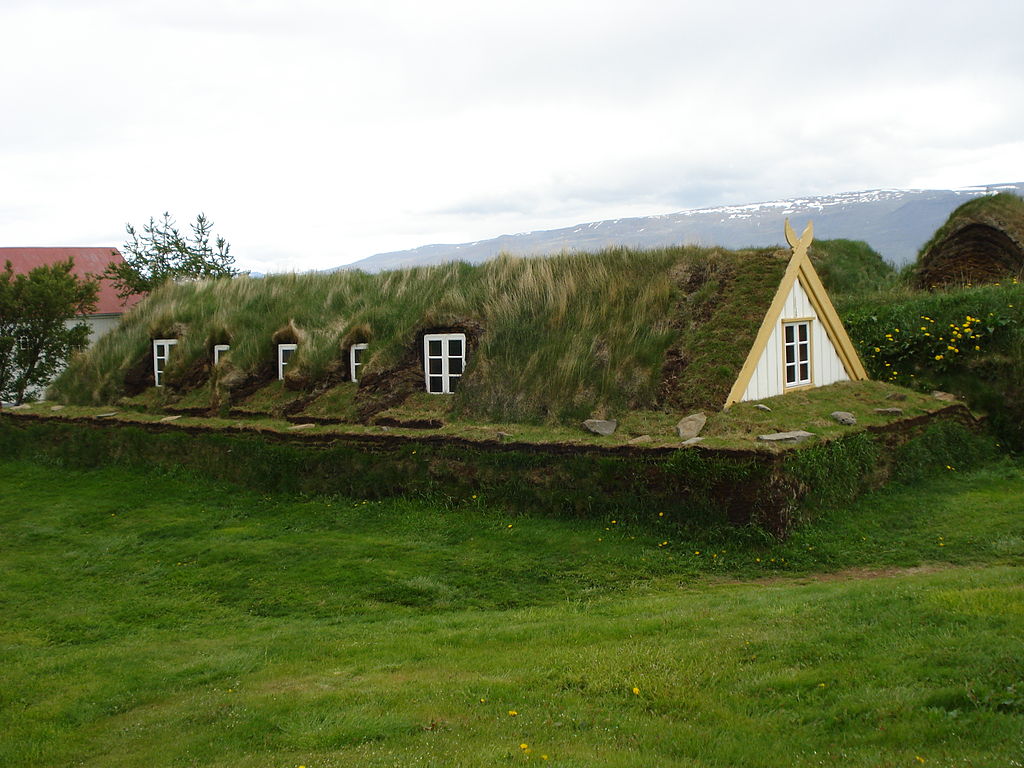
The origin of such strong beliefs revolves around Iceland’s geographical isolation.  At such high latitudes and out there in the middle of the Atlantic Ocean, with the rest of Europe and North America so far away, life on the island changed little in hundreds of years. Although things have changed greatly in modern times, until little over a century ago, most of the population lived in turf houses, farming and fishing for their living. And with this simple, age-old way of life, superstitions and beliefs from long-gone times, lingered on. Even the Icelandic Christian Church condones these beliefs.

1024px-glaumbaer9
Turf house in Glaumbaer, Iceland. Author TommyBee. Public Domain.

The huldufólk are common topics of conversation among Icelandic people. To upset the elves – particularly by disturbing their homes – can lead to very strange happenings. For example, engineers have been forced to divert the planned routes of roads in order not to disturb the elves.

This short video by Torsten Scholl describes some of the things the elves reputedly did to stop a road disturbing one of their homes:

Trolls are another feature of Icelandic culture that can be seen all over the island, inside and outside of souvenir shops as well as across the countryside in rocky places. They can be seen along the rocky coast, too, as stacks out at sea as well as in the cliffs. Because, you see, many trolls are simply dead!

Trolls are creatures of the night, doing their work and enjoying themselves in the hours of darkness. But as soon as the sun comes up, like vampires, they must rush indoors and sleep. To be caught in the sunlight means certain death: they are turned to stone for all eternity.

This fun video by Sunnefa Palsdottir,  which I really enjoyed, explains all about trolls and is well worth watching, if you have the time:

Yes, Iceland is a country with far more to offer than initially meets the eye. But the huldufólk are never too far away…

A Glimpse of Iceland

Last week we had a short break in Iceland – ‘short’ meaning just five days. In that time we managed to see some of the island as well as the capital city of Reykjavik where our hotel was located. This post is just an introduction to Iceland with a few of the many photos we took over the week. I’ll post about some of the places we visited over the next few weeks. Well, that’s the plan.

flag_of_iceland-svg
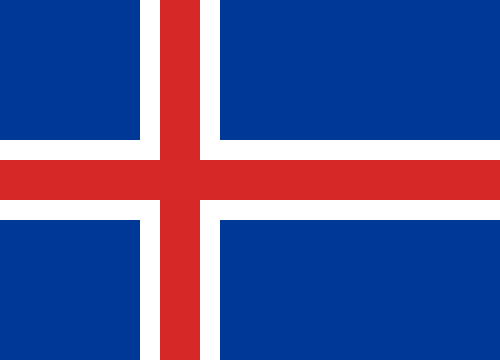
Flag of Iceland. Author: Aevar Arnfjord Bjarmason, Zscout 370 and others. Public Domain.

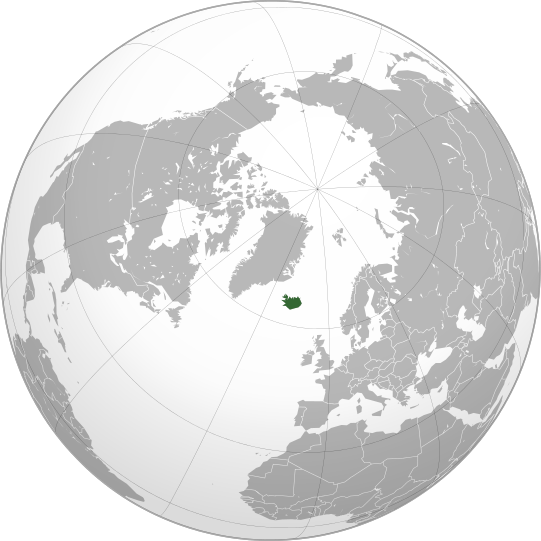
The Republic of Iceland is a sparsely populated Nordic island country located in the North Atlantic Ocean:

iceland_orthographic_projection-svg
Location of Iceland. Author: Ninrouter. Creative Commons

It has a population of 332,529, of which 206,000 – roughly two-thirds – live in Reykjavik, the capital city in the south-west of the island.

800px-map_of_iceland-svg
A map of Iceland showing the major towns, rivers, lakes and glaciers. Translated from a map on the Greek Wikipedia. Author: Max Naylor, 2007. Public Domain.

Iceland’s location on the Mid-Atlantic Ridge, dividing the Eurasian and American continental plates, results in the island being volcanically and geologically active and is famous for its hot springs, geysers and active volcanoes.

rift-valley
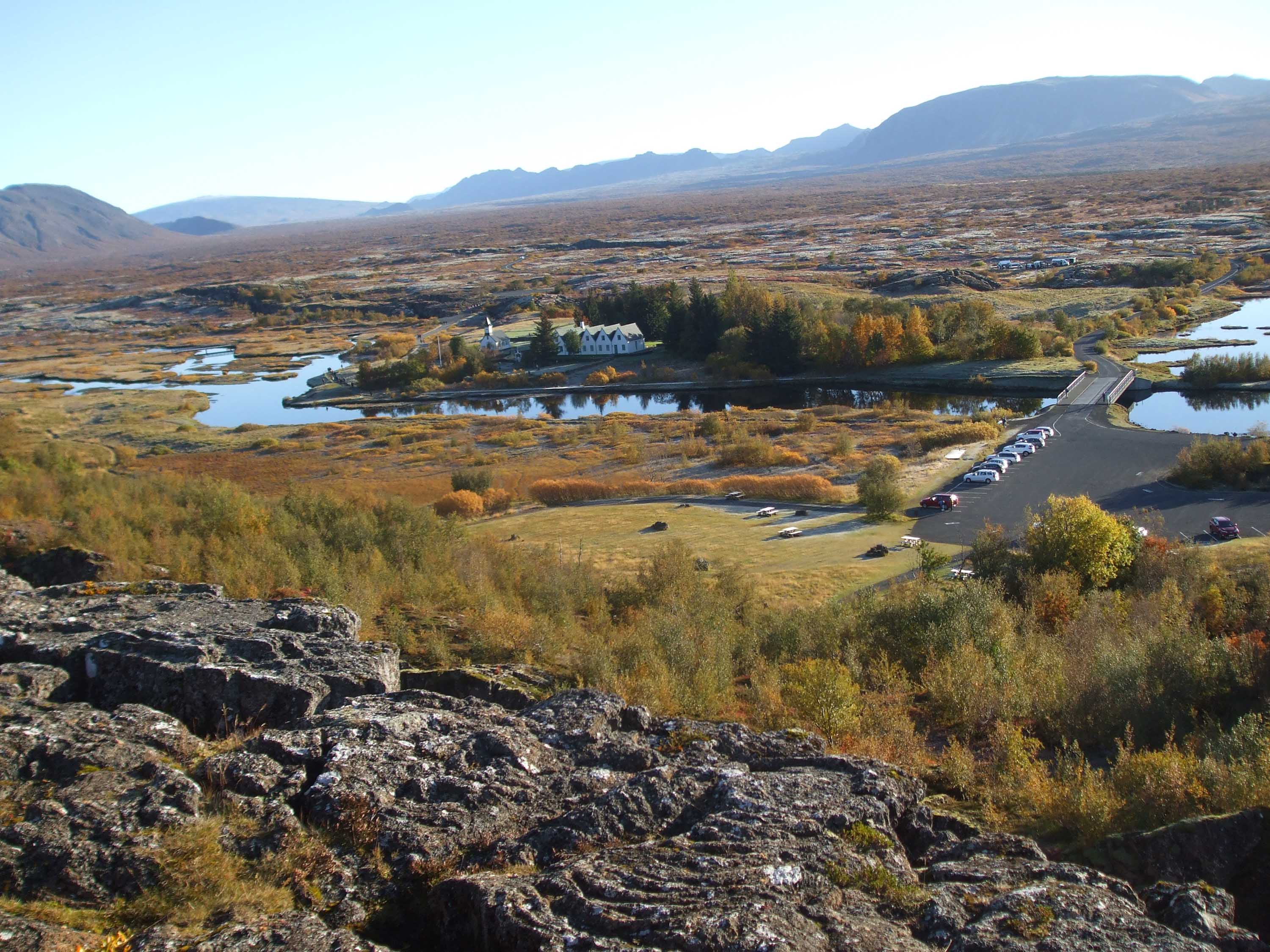
Þingvellir National Park (anglicised Thingvellir) looking from the viewing platform on the North American tectonic plate, across the rift valley to the Eurasian plate. This is the site of the foundation of the Icelandic parliament, which I’ll write about in another post, and is now one of the most popular tourist destinations on the island.

There are 130 active and dormant volcanoes in Iceland, eighteen of which have erupted since the first settlers arrived around AD 900. Perhaps the best known ones are Hekla (once believed to be the entrance to hell) Katia and Krafla. And, of course, most people know of the volcanic island of Surtsey – which made its appearance in 1963. Lava fields cover 11% of the land and waterfalls and glaciers can be seen in the highlands.

Hot water is pumped from underground to supply much of the country’s heating. Geothermal energy provides roughly 25% of Iceland’s electricity,  the rest being mainly from HEP and only 0.1% from fossil fuels. Geothermal energy in Iceland has been used for many years for bathing and washing, as well as for central heating systems in buildings. Pipes also run beneath the pavements in cities like Reykjavik and Akureyri to keep them ice free in winter.

Despite Iceland’s latitude close to the Arctic Circle, the general climate of southern, coastal areas is described as temperate, although the high latitude and the influence of the sea keep summers chilly. Inland in the highlands, where the climate is tundra, glacial rivers make their way down to the sea. In winter, nights are extremely long and dark, the only daylight being between 11 am and 4 pm, whereas in summer the nights are bright all over the island. In June the sun never fully sets in the north of Iceland.

bei_akranes_2
Landscape at Akranes in Western Iceland at 11pm on June 9th 2016. Author: Zairon. Creative Commons

It’s often been thought that the absence of forests in Iceland is because of its latitude and thin volcanic soils. That is not the case. The island was once naturally forested, but settlement since 900 and the resultant burning of scrubland for the grazing of livestock and forest clearance for buildings, fuel and so on are the main cause. Over the last hundred years, several reforestation schemes have been started, with varying degrees of success with different tree species. But in recent years increased afforestation is noticeable across areas of open countryside, although many of these young trees are naturally still very short and stubby. Around Reykjavik, however, many homes and public buildings have trees around them, mostly silver birch, rowan or various species of conifer:

Unlike the rest of Europe, Iceland remained uninhabited until the 8th century. Irish monks came to the islands and, although they left no physical trace, crosses have been found carved into a cave wall.  Within a hundred years, Norwegian settlers arrived. These people were thought to be escaping from persecution and economic hardship at home. The official ‘first settler’ was Ingólfur Arnarson in 874.

During the following centuries many Norwegians and a few other Scandinavians settled in Iceland, bringing with them Gaelic thralls (slaves). Icelandic culture is founded on this Scandinavian heritage. The language is descended from Old Norse and is closely related to the Faroese and West Norwegian dialects.

Between 1262 and 1814, Iceland was ruled first by Norway and then Denmark. It became independent in 1918 and a republic in 1944. The monetary unit is the Icelandic króna and if you decide to visit this intriguing country, be prepared to splash out! Iceland is a very expensive place – food/eating out, all alcohol, clothing and other souvenir items are far from cheap. But the island is a fabulous place for anyone interested in geology, the natural world, or history – or a combination of all of these. Whale watching trips are popular, as are boat trips out to see the puffins.

Iceland is fast becoming one of the most popular tourist destinations in the world, last year seeing a record breaking number of visitors. This isn’t really surprising as the island has so much to offer in whichever season tourists decide to visit.In the coldest months, winter sports and activities are on offer. We picked September this time simply because of the high chance of seeing the Northern Lights/Aurora Borealis at that time. We weren’t disappointed – except for the fact that we really need better cameras to do justice to the event! Needless to say, our photos of the Lights aren’t very clear – but at least we can say we’ve seen them. This photo was  taken over Reykjavik harbour.

northern-lights-day-1-3

To finish with, here are a few photos of Iceland, all but the Icelandic horses taken in Reykjavik.

Nighttime Adventure – FFfAW

Flash Fiction for Aspiring Writers is a writing challenge hosted by Priceless Joy. It involves writing a piece of fiction from the given photo prompt in around 75-150 words – give or take 25 words. If you’d like to join in with the challenge, follow the above link to see what to do. The challenge runs from Tuesday to Tuesday every week.

Here is this week’s prompt, kindly provided by Joy Pixley. Thank you, Joy!

photo-20160918072949267

And this is my story:

Nighttime Adventure

Urging him to silence, Edeline clasped Robert’s small hand as they crept down the dimly-lit stairs. It had been easy to persuade the boy to join her on a nighttime adventure. Even little princes loved adventures.

She smiled to herself, imagining Jerald’s face when he realised his son was gone. She’d been careful with her plans, so no one could have guessed. And tonight, when they snored like hogs after too much banqueting wine, those plans would be fulfilled.

‘See, our transport awaits,’ she said, as they left the palace grounds. Excited, Robert sped ahead… just as King Jerald stepped out of the carriage and guards seized Edeline’s arms.

‘No sister, you will not be holding my son to ransom! I’ve known of your lover’s desire for my throne for some time and I’ve paid trusted retainers to become my eyes and ears. Besides, Robert chatters incessantly to our loyal old nurse…

‘Enjoy your adventure in my dungeon with your lover,’ he added, hoisting Robert onto his shoulders. ‘The rats will keep you company’.

Word Count: 174

***

If you’d like to read other stories, or add one yourself, click on the little blue frog:

Hill Figures of Britain

Hill figures are large designs or motifs created by cutting into a steep hillside to reveal the underlying geology. They are a type of geoglyph, and are intended to be seen from some distance away. There are many such figures in Britain, England in particular, although they can also be found in other parts of the world. They include human and animal forms, especially horses, as well as more abstract symbols, and nowadays, even advertising brands. There are sixteen known white horses in the UK (seventeen if the painted one on Cleadon Hill is included). Many hill figures date from around the 17th and 18th centuries, and some from much more recently. My favourite and the oldest by far, is the famous Uffington White Horse, included amongst those shown here:

The geology of England, particularly in the south with its rolling chalk hills (downs) makes it very suited to the creation of these figures – which are often just called ‘Chalk Figures’. The county of Wiltshire is especially well known for these figures.

There are three main methods of creating them, the first being one used in areas where the soil is thin. It involves stripping away the the turf and soil so that the underlying white chalk stands out clearly. This is a quick method, but one that needs regular maintenance if it is not to become overgrown and disappear from view.

A second method is known as the trenching method, used in areas where the chalk is not near the surface. It involves digging trenches down to the rock along the figure’s outline and filling them in with rock brought from elsewhere. This is a far more permanent method and allows traces of the figure/design to remain visible even when it becomes overgrown. The Uffington White Horse was created by this method.

A third method, known as the covering method, involves laying rocks along outlines cut into the turf, and is generally used in areas where there is either no underlying chalk, or no tools are available for cutting down to it.

The Fovant Regimental Badges, on a chalk hill in south-west Wiltshire, are examples of the covering method. They were created by soldiers garrisoned nearby waiting to go out to France during WW1. The first was made in 1916, although many of the original carvings failed to survive the elements and by the end of WW1 there were 20 identifiable badges. During World War II, they were left to become overgrown so they couldn’t be used as landmarks by enemy aircraft, but once war ended the local Home Guard formed themselves into an Old Comrades Association and began the task of restoration. I believe only twelve remain today.

I’ll say a word here about the painted horse at Cleadon, up in North-East England. This is quite different to the hill figures of further south, being a small figure of a white horse, two metres tall and three metres long, painted on a low cliff on the hill. Interestingly, it is one of only four ‘horses’ in the UK that face to the right.

the_7th_october_2012_repaint_of_cleadon_white_horse-jpeg
The Cleadon White Horse, repainted, located in South Tyneside, North East England. Author: S. Whitelaw Creative Commons

Today it is very defaced by graffiti. It’s thought to have appeared in the 1840s and there are at least six possible reasons for its creation. I won’t go into these, but I’ll add a link HERE to a site with a photo of it in its graffitied state and a little bit about it so you can have a quick look at it if you’ve time.

The reasons for the creation of hill figures are still obscure, but the practice dates back to prehistoric times. They could have simply been created for artistic reasons, or as representations of particular gods. They may even been symbols of the nearby tribe and act as a warning to other tribes to keep out of their territory – as the Uffington White Horse.

uffington-white-horse-sat
Uffington White Horse. Satellite image from USGS Creative Commons

Stylised in shape, this is the oldest hill figure in Britain, now believed to be 3000 years old. It is also the second largest figure measuring 360 feet /110m by 126 feet/38.5m. It is located in Oxfordshre (formerly Berkshire) about a mile and a half from the village of Uffington, the village associated with the famous 19th century novel, Tom Brown’s School Days, written by Thomas Hughes. The figure is believed to have held political significance as it sits high on the Berkshire Downs escarpment, dominating the valley below – aptly called the Vale of White Horse.

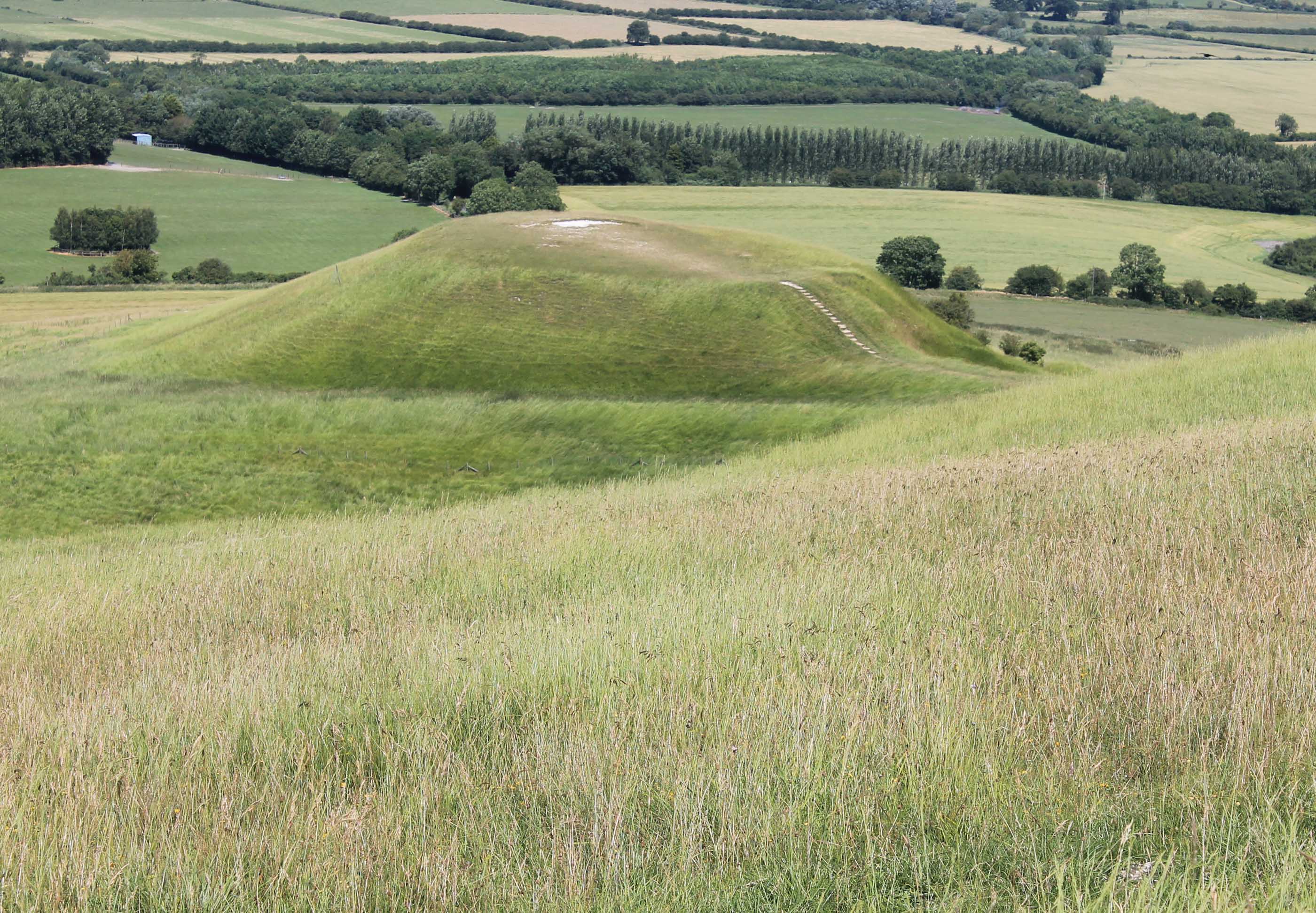
It is thought there were many white horses at the time of the Celts, but time and the ever invasive grass and weeds have caused many to disappear from view. As I mentioned above, there are sixteen known white horses in the UK today. White horses were considered to be lucky by the Celts, as were horseshoes. Some historians believe the Uffington Horse figure represents the goddess Epona, protector of horses, who was connected with the local Celtic tribe, the Atrebates. An alternative theory suggests it is not a horse at all but the mythical dragon slain by Saint George. A mound at the foot of White Horse Hill is known as Dragon Hill.

st-georges-mount
Dragon Hill

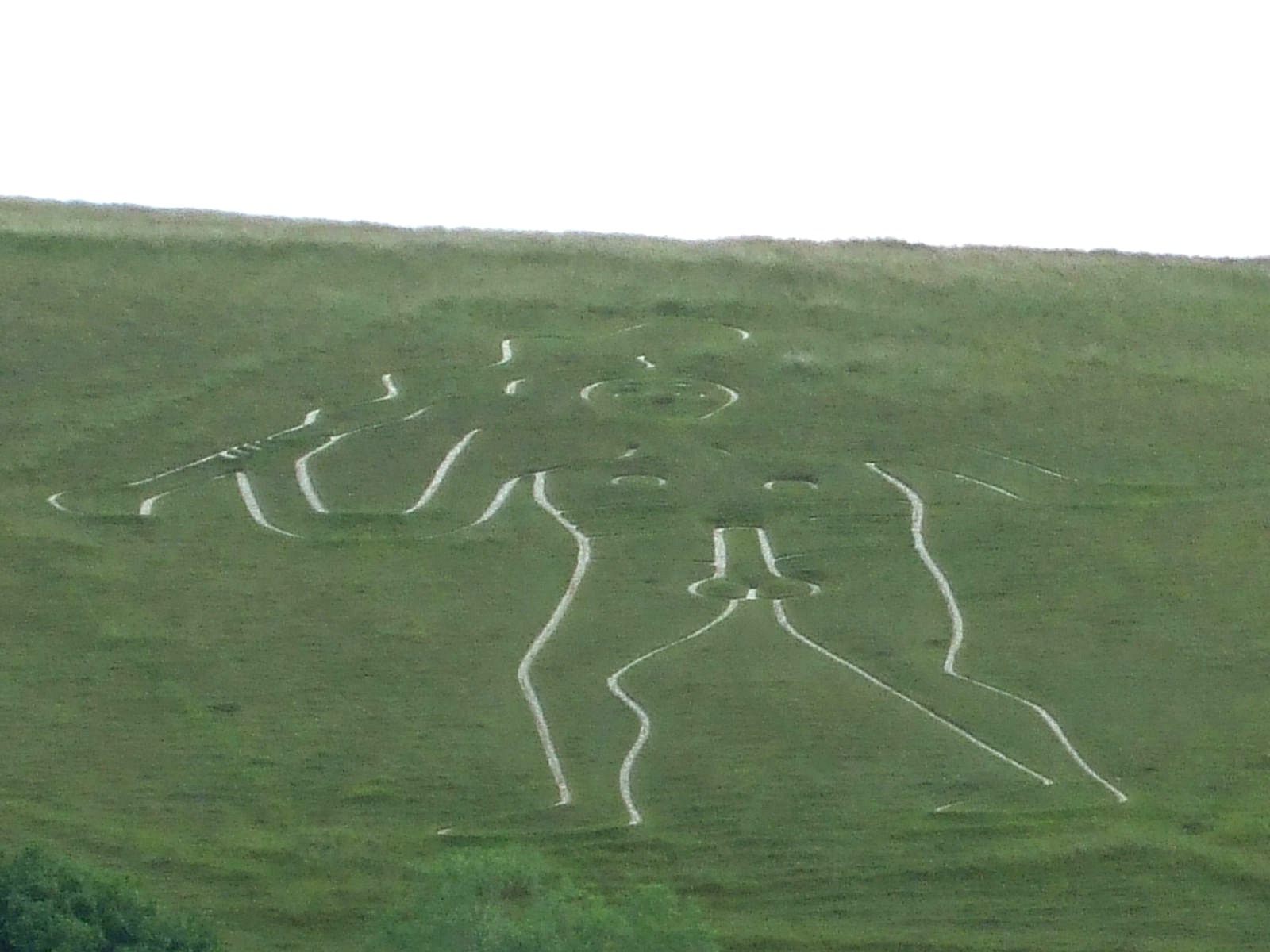
My second favourite hill figure is the Cerne Abbas Giant – also known as ‘The Rude Man’ or ‘The Rude Giant’ – and is one to make little old ladies blush and everyone else just giggle. He can be found at the village of Cerne Abbas near Dorchester in Dorset and we dropped by to say ‘hello’ to him four years ago. This is our picture of the figure as in can be seen from the road. It doesn’t show the complete outline too well, so I’ll add an image from Wikipedia:cerne-abbas-giant-dorset

cerne-abbas-giant-2001-cropped
Cerne Abbas Giant at Cerne Abbas, Dorset, Author: PeteHarlow. Creative Commons

The Cerne Abbas Giant is 180 feet/55 m high and 167 feet/51 m wide, making him the largest human chalk figure in Britain. The club in his right hand is 120 feet in length. The figure was created by a turf-cut outline being filled with chalk. It was once thought to have been Celtic in origin, some sources claiming he was identified as Hercules during Roman times. But the figure’s actual history can’t be traced back further than the late 17th century, making that claim difficult to prove. It is not mentioned in writings before 1694, and it has been suggested the figure is an offensive representation of Oliver Cromwell.

It isn’t known how many hill figures have disappeared over the years, and many at present are in danger of becoming ‘lost’. Grass gradually encroaches and the figures need constant maintenance to keep them visible. Many figure undergo organised restoration every few years. I believe it’s every seven years for the Uffington White Horse.

**

References:

Historic UK

Wikipedia – (general site on hill figures)

Various Wikipedia sites for different hill figures

The Chesterfield Pagans

Chalk Figures of England