Forsooth, Sir, Canst Thou Not Speak More Plainly?

shutterstock_217997104
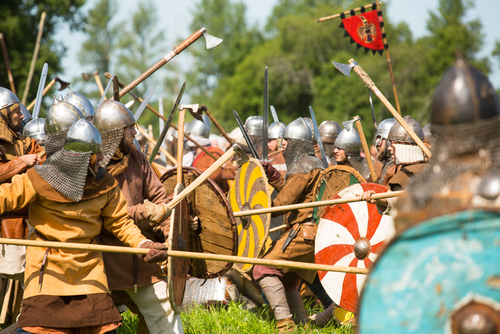
Egads, mistress, art thou addressing me?

The style of language to adopt when writing historical fiction is a topic that keeps authors continuously arguing. Readers, too, have their own strong opinions as to whether a novel’s language is suited to the period in question. The main issue, of course, is whether or not the words sound too modern for the time. We hear comments like, ‘People in sixteenth century England would not have used those words.’ And in some cases, they are correct. We only need to check the derivation of the word to find out.

It’s very easy with everyday items. We all know, for example, that cars, trains and planes should not make an appearance in the sixteenth century. Nor washing machines, duvets or a million other things that we take for granted today. Not to mention electricity pylons across the countryside!

shutterstock_102673817
An sight unknown on the ancient landscape

But when it comes to general word use in a story, things are not as simple as that.  Language is constantly evolving. New words are added as technological advances are made. Other words become obsolete. And, of course, populations evolve. Immigration and emigration are nothing new. The English language is basically composed of a mixture of Celtic, Latin, Anglo-Saxon, Norse, and Norman. But during the last seventy years in particular the massive scale of immigration into Britain, for example, has added many other words to the language – as indeed it has cultures. I know the United States can claim the same.

When all’s said and done, novelists are out to tell stories – and those stories must be accessible and interesting to readers. A novel set in Tudor times littered with thees, thous, wilts, hasts and forsooths and so on, would soon become . . . well, in my opinion, absolutely comical. We have many TV comedy sketches to back that up.

Naturally, this doesn’t mean that the writer should resort to phrases such as, ‘What yer playin’ at buster?’ or, ‘Henry looked a right charlie in that hat.’ Gross exaggerations, of course, just to make a point, but such phrases would look no more out of place in a novel about Henry VIII than a string of egads and forsooths. 

shutterstock_130331855
Old language must be translated to be understood

What I believe most writers of historical fiction aim for is something close to a happy medium. A sprinkling of skilfully placed authentic historical terms will not appear ridiculous, whereas too many would do. Perhaps it’s all a question of style. A writer must set the correct tone for the period yet still move the story along in an engaging manner that modern readers can relate to.

Some years ago I read a short article by Michael Jecks, who’s written many historical fiction novels, many of them murder mysteries. Most are set in the Middle Ages. In the article, Jecks discussed criticism he’d had from reader(s) who considered the language used in his books to be inaccurate for the time. His answer was excellent. He simply pointed out that in the Middle Ages, the language used was totally different to that of modern times (basically Anlglo Saxon with a sprinkling of Celtic, Latin, Norse etc: in other words, Middle English) which today, only scholars of the period would understand.

More recently I found a YouTube presentation by Michael Jecks on the same theme. Here’s the link for anyone interested.

I’m sure that most historical fiction authors already do work along the lines Jecks outlines here. I know that I have tried to do so in my own two novels, Shadow of the Raven and the soon to be completed, Pit of Vipers.

One of the funniest things I’ve read on this subject was in a ‘Writing’ magazine back in the nineties. The author of the article was an editor, who told of the worst example of historical inaccuracy he’d ever come across in a work submitted to him in hope of publication. The novel was about Mary Queen of Scots. Although my wording may not be absolutely accurate (I read it a long time ago) it is certainly very close. In this scene, Mary supposedly says to her husband, Darnley:

‘Darnley, honey, let me fix you a chicken sandwich.’

Any comments on this fascinating subject would be very welcome.

*****

Vikings! Who Were They – And How Did They Get That Name, Anyway?

shutterstock_150508262

The definition of the word ‘Viking’ in the Oxford Dictionaries is as follows:

Any of the Scandinavian seafaring pirates who raided and settled in many parts of North West Europe in the 8th and 9th centuries.

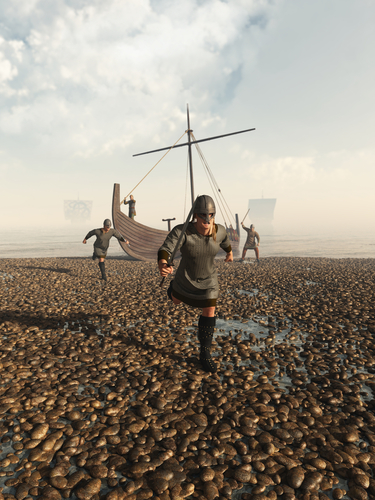
According to many films, TV series (not documentaries) and novels, the hiss of that single word, ‘Vikings!’, stuck terror into the hearts of peoples across North West Europe – especially the inhabitants of coastal or riverine settlements. But, from what I’ve deduced from a variety of texts, the word was not generally used at the time.

The origin of the word is still open to debate, but it’s undoubtedly an ancient word, as it appears on rune stones of the Viking Age. In some cases it refers to a person who travels, or an adventurer, and it is possible that even at this time the word applied to raiders. Yet, according to David Wilson in his book, ‘The Vikings of the Isle of Man’, the term was not in general usage in the English language until the mid nineteenth century.

Referring to the Hurstwic website:

In the Norse language, vikingr means a man from vik, where vik may have the sense of a bay, or the specific bay called Vikin in the south of Norway. Perhaps the name was applied because the first Viking raiders were from Vikin, or perhaps the raiders waited in sheltered bays for their victims.

shutterstock_167851352

No one can doubt that such raids took place but, at the time, the marauders, and later on, settlers, would collectively have been referred to as ‘Northmen’, or ‘Norsemen’ – men from the north.

In the ninth century, the Northmen / Norsemen who raided and eventually settled in the Anglo-Saxon kingdoms (which did not become known as England until the tenth century) would have come primarily from the area we now know as Denmark and from Norway. Most of the Swedes tended to head east, up river valleys into the heart of Eurasia. Like England, the names of Denmark, Norway and Sweden did not exist either, and the entire region would have been called the Norselands.

shutterstock_117777481

When writing fiction, this becomes quite problematic, and it is often easier to use the names we know today – which I have done in places in my own novels, Shadow of the Raven and Pit of Vipers (the latter should be on Amazon soon).

I know I’m not alone when I say I find the Viking world fascinating. Norse mythology is both complex and colourful, the multiple gods and goddesses and their entire universe a trigger for the imagination.

shutterstock_56714761
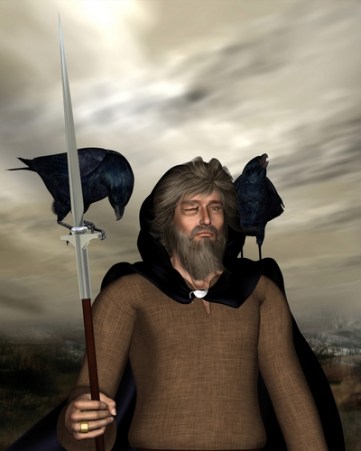
Odin, the All Father, with his two ravens, Hugin and Munin (Thought and Memory)

I realise that certain aspects of the Viking culture leave some people shouting utter condemnation – the blood sacrifices to the gods and the barbaric raids in particular. But what we have to bear in mind is that moral standards of the period were so vastly different to those of most modern-day cultures. Many such practices were based on the need for survival throughout the harsh winter months. Raids gained the Viking people silver, or goods to trade or sell in order to buy basic requirements of everyday life, including food. Today we may well see their actions as monstrous, but it’s simply how it was.

And let’s not forget, the Vikings were only one group of the many such raiders, including the Anglo-Saxons, who, by the time of the first Viking raids (as on the monastery at Lindisfarne) were well established Christians. I’m sure you could list a whole lot more.

One of my earliest encounters with Vikings was in the 1950’s film, aptly entitled, ‘The Vikings’. I’m sure even those amongst you who hadn’t even been born then, have heard of it. Well, in 1959, at the age of eleven, I loved it. I was on holiday with my family in the Isle of Man – and what wet and cheerless weather we had! So we had an afternoon at the cinema. Now, of course, the film is too dated and corny to interest real Viking fans, like me.shutterstock_123315433

*****

The Trials And Tribulations Of A First Time Novelist

shutterstock_185968619

At present I have one book well and truly finished (Shadow of the Raven). It has been professionally edited, and is now published on Amazon. I’m currently working on the final sections of Book 2 of the trilogy (Pit of Vipers) and hope to have that on Amazon before too long.

I have to admit that my writing speed has improved with Book 2. Shadow of the Raven seemed to take forever: I wrote and rewrote, deleted and saved, or totally scrapped so much of it. I can say with all honesty that my ‘Deleted’ file is almost a novel’s worth in itself!

But for Book 2, much of the basic research into the historical events and everyday life in the mid ninth century has already been done, and my writing style, storyline and characters have taken shape. So I feel much more confident in getting my ideas down this time around. That is not to say that the writing now just flows effortlessly to the computer keys with every scene. With some sections it does, but there are many new settings, situations and characters to be described and developed in Book 2 – and, of course, hopefully made to sound interesting – if not totally intriguing!

For experienced authors, many of the things I’ve agonised over are not an issue. Though I found little difficulty with viewpoint and character depiction, the development of the plot was a different matter. I knew what my story was about and what I wanted to include, but I soon learned that the story was not the same as the plot. Keeping the right balance between action scenes, emotional and humorous ones – or even those just necessary to move the story along – needs detailed planning, as well as careful consideration of the ‘show don’t tell’ element. Thankfully, I do love writing dialogue, and find it a wonderful way of ‘showing’ the many facets of characters.

Please bear in mind that I’m still new to the novel writing business. I have no doubt that many of you out there could easily write pages on the points I’m trying to make here. What I’m really saying is that novel writing is a long, slow learning process, and at the beginning I think it’s normal to struggle with the intricacies of the job. Me . . . well, I even whittled about word count, for goodness sake!

With regard to the latter, many of the scenes in my ‘Deleted’ file are there by virtue of my own editing once the book was finished. On consideration of the length of my original manuscript (which had grown to become a great monstrosity of a thing!) I set about deleting scenes I thought unnecessary to the continuation of the plot. For me, that was hard, since everything I had written was there because I liked it – and had taken time to do in the first place. Still, the over-long tale had to be shortened somehow.

But I love writing and no matter what ‘trials and tribulations’ I meet along the way, I know I’ll persevere. I have several ideas for future novels, but right now I’m focusing on getting my Sons of Kings trilogy finished.


I’d like to share one of the deleted sections here. It would have featured towards the end of what is now Chapter 4 of Shadow of the Raven. It’s a battle scene – something I really wasn’t looking forward to doing in the first place – in which King Aethelwulf of Wessex defeats the marauding Dane, Rorik.

Rorik’s raids play a vital part to the future events of the story, but I found that by removing the entire chapter in which this scene featured, I not only saved words but was able to move the main plot along quicker. The results of the battle are revealed indirectly in the following chapter. I still have qualms over whether I should have left it in. Anyway, here’s the scene:


shutterstock_145907300

The Battle of Aclea

An owl screeched its alarm, flapping from a low branch to glide like a spectre between the oaks of the woodland behind. One of the horses whinnied in response to the harsh cry and King Aethelwulf prayed the sound would not carry to the enemy below.

Entrusting their mounts to a handful of men until the battle was done, Aethelwulf and his hundred warriors crouched at the top of a gentle slope, taut as bowstrings; shields slung across backs, two or three javelins held inside each, and swords hanging from baldrics. Beyond the slope, the shadowy plain stretched for less than a mile before rising to the wooded ridge. Along the foot of the ridge, remnants of watch fires threw muted light on the edge of the camp. Aethelwulf hoped the guards would be too drowsy at this hour to be vigilant.

The eastern sky was paling fast; at sunrise the camp would rouse, the element of surprise lost. Scanning the top of the ridge, praying that Osmund and Aethelbald’s men were waiting, he raised his arm, the signal to advance down the slope.

Stooping low they moved in silence, crouching at intervals behind scrubby gorse and bramble, panted breaths evidence of heightened tensions as inevitable combat neared. The shouted alarm came as they moved across the open ground in the growing light of imminent dawn, the camp now less than a hundred yards away. The Danes swarmed from their tents, howling to their gods; hurling spears and rocks at their rapidly nearing assailants.

‘Shield wall!’ Aethelwulf yelled.

The manoeuvre into the tight wall was instant; two rows deep, shields overlapping, left sides over right. At Aethelwulf’s side in the centre of the front line the standard bearer hoisted the Wessex banner, the great white dragon on its backdrop of red, eliciting jeers and hammering of spears on shields from the Danes, now lined in their own defensive wall barely twenty five yards away. But, as Aethelwulf had hoped, few wore body armour: shields and helmets were all the late alarm had afforded.

The drumming on shields abruptly ceased and an ominous silence pervaded the plain. Warriors stood rigid, muscles flexed for the opening strike.

The first spears whistled as the two lines strove to weaken each other’s defences. Most flew overhead. Some glanced off shields; some slammed into them and held fast. A few struck unresistant flesh. Men screamed and fell.

And the gaps in the shieldwalls reclosed.

Gradually the missiles lessened, then ceased, and Aethelwulf moved forward a pace, his eyes fixed on a bull-necked figure standing prominently in the enemy front line. ‘So… the straggling remnants of Rorik’s warband think to challenge the might of Wessex!’ he mocked. ‘Naked raven chicks are no match for the clutch of the dragon!’

Rorik stepped out and threw open his arms. ‘We quake in our boots at the prattle of a deranged old man!’ The Danes wailed in mock terror. ‘Look closely at what you face, great king. Naked of armour we may be, but we are double your number. Yet you think to better us!’ He threw back his head and roared, the sound a chilling mix of derisive laugh and snarl. ‘Our chicks enjoyed pecking the eyes from your Saxon whores and butchering the curs you call men! And your gold will serve us well.’

Aethelwulf snorted. ‘Your murderous hordes have gained no more than a few captives and a modicum of plunder from poor homesteads. Saxon gold will never be within your thieving grasp.’

Rorik seethed, Aethelwulf’s denigration too accurate to deny. ‘Say your prayers to your god old man. Your mangy carcasses will feed the buzzards!’

The clash of colliding armies defiled the peace of the dawning day. Weapons thrust through gaps between shields, stabbing and slashing at legs, feet and faces, maiming exposed flesh and bringing men down, creating crucial breaches in the enemy wall. Danes dropped like swatted flies, despite outnumbering the Saxons two to one, their lack of body armour costing them dear. Aethelwulf fought with the vigour of a warrior half his age, his focus on Rorik. But gradually the craven jarl retreated behind his men, safe from Wessex swords.

Then Osmund’s hundred men were careering across the plain. Panicked, too many Danes turned to counter the oncoming wave, ignoring the continued frontal assault. Beset from front and rear the already depleted Danish force stood little chance and Saxon warriors showed no mercy. The battle was soon over.

Shouts alerted Aethelwulf to the group of riders fleeing from the empty camp towards the Roman road, Rorik’s swarthy bulk in their midst. But Saxon mounts had not yet been retrieved, and Aethelwulf could do no more than watch the riders fade into the distance. Tracking them down would be futile. Though he knew Rorik would head eventually for Thanet, Aethelwulf could not spare the men to cover the myriad, minor tracks he might take.

They buried their dead with Christian prayers and full honour; those men had given their lives for Wessex. Enemy corpses were relieved of their spoils and left where they’d fallen, a feast for the scavengers.

‘Gather their horses,’ Aethelwulf yelled. ‘Take whatever we can make use of from the tents, then fire them. Then we head home.’


Whether or not I did the right thing in deleting this, it’s too late now. The book is published. But I’ve brought attention to it here simply to add weight to what I said about the long, slow learning path towards becoming an experienced and, hopefully, good novelist. In this instance, deleting a great chunk of this chapter rid me of 1,526 words (the battle scene itself is 879 words) but at the expense of causing me some pangs of regret – not to mention annoyance at myself for wasting time writing it in the first place.

*****

For The Love Of Writing…

shutterstock_124971299

I know I’m not telling anyone anything new when I say that the writing of any work of fiction, whether novel or short story, requires both knowledge and creativity, not to mention a lot of hard work.

In the words of American writer, Dennis R. Miller:

 “Writing a novel is like traveling the universe on foot.”

And from Samuel Johnson:

“What is written without effort is generally read without pleasure.”

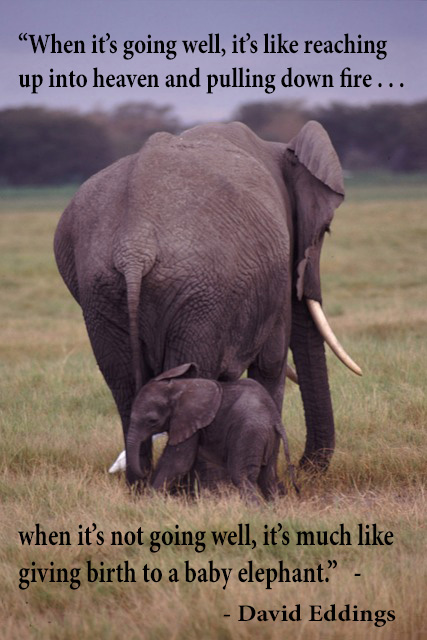
And this quote about writing from David Eddings, who, sadly, died in 2009, always makes me smile:

baby elephant quote

shutterstock_113166655

We all gain a considerable amount of knowledge during our journeys through life, but for writing about places, situations, characters and time periods beyond our own little boxes, there’s always the good old Internet! Failing that, there are scores of books for sale out there on every subject imaginable – many in cheap bookstores, charity shops, second hand bookstores or car boot or garage sales. And in my experience, most librarians are more than willing to point us in the right direction. In short, there’s really no excuse to shirk the research, whatever the genre being written.

shutterstock_162914093

But for some genres more than others – and I’m talking about fiction here, not non-fiction, for which research must be a mammoth task – thorough research is vital: historical fiction, naturally, being uppermost on my mind, with crime and law enforcement close on its heels (all that forensic stuff!). Anything involving medical issues is another one.

shutterstock_144745006

Creativity in novel writing is also vital. Without it, the story would be flat and lifeless and characters very dull. In the words of Jack Kerouac WD: 

“It ain’t whatcha write, it’s the way atcha write it.”

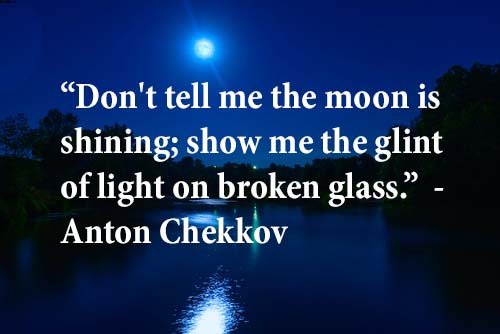
In other words, writing should appeal to the senses, and we should remember to ‘show, don’t tell’.

moon's light


I’ve included a short scene from my book, Shadow of the Raven, here. It comes fairly close to the beginning of the story, and is intended as an introduction to young Eadwulf’s father, King Beorhtwulf of Mercia, and his brother Burgred, Eadwulf’s uncle. Eadwulf is one of the book’s two protagonists – Alfred of Wessex being the other. As the harsh winter in the year 851 begins to melt into spring, the scene also serves to present the first hint that life in Mercia is about change.


With his huntsmen and attendant thegns, King Beorhtwulf rode back from the forest, his two great wolfhounds loping along beside him. It had been a good hunt, confirmed by the quarry slung over the backs of the pack horses. Cooks flapped in appreciation as the huge deer and smaller game were laid outside the wattle-walled building that served as kitchen and bakehouse.

Beorhtwulf surveyed the carcass of the felled deer, an old stag with massive, branching antlers. The slow old beast had made easy prey. ‘It hardly seems fair, does it brother?’

‘What doesn’t seem fair?’ Burgred squinted at Beorhtwulf as unaccustomed sunshine brightened the sky. The air had lost its penetrating bite and he fingered the brooch fastening his black cloak.

‘To end a long life like this…’ Beorhtwulf shrugged his broad shoulders, touching the toe of his boot to the lifeless form. ‘He looks a noble creature; probably sired many calves in his time. To end up spitted over our hearth seems to deprive him of all dignity in death.’

‘Your sentimentality is misguided brother. The beast would surely be gratified to know he afforded many people much pleasure and kept our bellies full. And he was old… would soon have fallen to the forest floor where his carcass would have slowly rotted away, or been eaten by woodland scavengers. Does that sound very dignified to you? Besides, what use would scavengers have for those antlers, when our craftsmen can turn them into such useful things? You know how Morwenna loves her antler combs and bits of jewellery. I’m partial to antler knife handles myself, and the men would be lost without their gaming dice.’

Beorhtwulf grinned at his younger brother, half a head shorter than himself, his red-brown hair less fiery than his own bright red. ‘Point taken, Burgred. The meat will be more useful to us than foxes and the like. Let’s hope today marks the onset of a warm spring,’ he murmured, a note of optimism in his voice. ‘Our people grow restless to sow the corn and move the stock out to pasture.’

But Beorhtwulf was a worried man. The onset of spring would bring a far greater threat to Mercia than the snows, and at tomorrow’s meeting of the Witan there were urgent matters to discuss. With a heavy sigh he whistled for his hounds and strode towards the reed-thatched hall to share the morning meal with his wife and son.

*****

shutterstock_212116630

‘I admire anybody who has the guts to write anything at all.’  (E. B. White)

Bringing History to Life

shutterstock_170481449
The Bayeux Tapestry – an embroidered cloth depicting events leading up to the Norman conquest of England. Some historians believe it could have been made in England – not Bayeux – in the 1070’s

Most people would probably agree that to present history as a mere list of dates, or the minutiae of births, deaths, battles, coronations and political treaties and alliances, would be the best way of putting anyone off the subject for life. Undoubtedly the information referred to has its place; the chronology of historical events is vital. We wouldn’t want people believing, for example, that the Battle of Hastings was a mere hundred years ago.

But there are ways of presenting information that overcome the mundane . . .

I believe that to appreciate the importance of history – and by that I mean the magnitude of its effect on the lives we lead today; the great advances in technology that make our lives so much easier – we must project our minds back to the time being studied, or read about.

Feel it. Live it.

For me, as for millions of others, history comes alive through fiction. Historical fiction has become almost an obsession to me. I read little else. Even my favourite detective novels have an historical setting. I read novels set in any era, any culture. I love to be transported from the here and now to a world of past times; to characters with completely different moral values and attitudes to life than our own.

It all helps to understand how life has progressed; just how far – or in some cases, how little – we’ve come.

I’ll leave with these snippets to consider (there are many more on the ‘Brainy Quotes about Historical Fiction’ webpage):

‘One thing I like about historical fiction is that I’m not constantly focusing on me, or people like me; you’re obliged to concentrate on lives that are completely other than your own.’ (Emma Donoghue)

‘The thing that most attracts me to historical fiction is taking the factual record as far as it is known, using that as a scaffold, then letting imagination build the structure that fills in those things we can never find out for sure.’ (Geraldine Brooks)