To Sleep, Perchance To Dream . . .

shutterstock_169334765

This week I’ve been following a discussion on The Online Book Club regarding whether or not dream sequences should be used in novels. As with most things, opinions vary greatly. Some people see dreams as a useful method of imparting additional information about a character or events, whereas others proclaim they should be avoided at all cost.

In my novel, Shadow of the Raven, I have one short scene in which my protagonist, Eadwulf – Ulf at this stage in the book – experiences a great tragedy in his life. The dream is a result of events too traumatic for him to bear. Here it is:


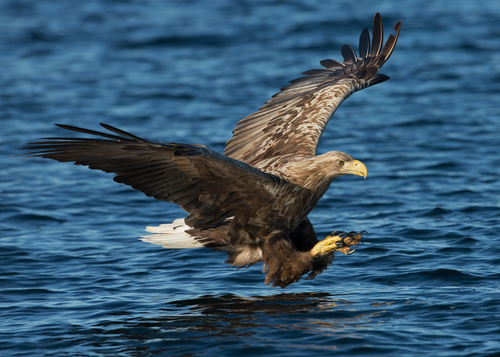
Ulf was aboard the Sea Eagle, sailing north towards the beguiling Lofoten Islands. The heavy sail flapped and seabirds wheeled and screeched, guillemots, gulls and kittiwakes amongst them. Waves slapped the hull, sunlight glistened on the blue-grey water and the salty breeze ruffled his hair. Coastward, the green-swathed Norwegian mountains, intersected by steep-sided fjords, almost took his breath away. Colonies of black and white puffins with brightly coloured beaks perched on their nests along the cliffs and cormorants stretched, drying their wings in the sun. A sea-eagle swooped to inspect the ship to which it had given its name before plucking a fish from beneath the brine. Whilst seaward, foam-white sea-horses played on the water’s surface and whiskered seals bobbed. The massive bulk of a silver whale shot great spouts of water high into the air, to cascade down again, rainbow colours of light dancing in their midst.

Somehow Ulf knew he was dreaming; yet he refused to wake up. His mind was cushioned by this sense of peace, taking him to where he wanted so much to be: this place out at sea with Bjorn and his crew, where he was valued, respected for what he was. He inhaled deeply, savouring the aroma of salty air. But the smell gradually lessened, evolving into the sharp tang of spices, mingled with the earthy smells of vegetables.

His eyes shot open . . .


Any opinions regarding the use of dreams in fiction would be very welcome.


This Self Promotion Business Isn’t As Easy As It Sounds!

shutterstock_110314841

So I’ve got my book on Amazon. Now what do I do? As idiotic as that may sound, that’s exactly how I felt when I eventually published my book online. Being totally ignorant of the workings of online retailing, I thought that was that, and just let the book sit there, stagnating for a few months.

Sales?  Perhaps one step higher than the one labelled ZILCH.

Only to be expected when the book is buried beneath thousands of others!  I know that now. I didn’t, then. It never entered my head that I had to actually do things to make my book more visible. I can hear you saying, ‘Which planet has this woman been living on for the past ten years?’ I‘ve since learned of multiple strategies adopted by authors to get their book(s) visible to potential readers – both before and after publication.

I have no intention of talking about them all. I simply want to highlight a few of the ways in which I failed miserably in the art of self-publishing.shutterstock_165912134

Firstly, I failed to get the word out that my book would soon be published on Amazon (preferably several weeks prior to the date).  No one outside my close family was aware of my intentions, not even people I knew or formerly worked with. I didn’t see the need. I just imagined that once the book was on Amazon it would be seen, and hopefully sell.

Wrong!

Then I proceeded to make a great bodge of everything else.

I hadn’t tried any kind of advertising for my book. As with everything else, I hadn’t given it a thought. Now I see that there are many places/websites that feature adverts to promote books, both free and paid ones.

shutterstock_150645260

Many are designed to advertise particular promotions by the author, including the 5 free days’ promotion with Amazon KDP Select.

But I hadn’t heard of Amazon Select until someone mentioned it to me -by which time my book had been published for almost three months.

kdp-select

So far, I’ve only tried the five free days once, and have mixed feelings about it.  My book had plenty of downloads – well, over a thousand between Amazon.co.uk and Amazon.com.  (That sounded a lot to me, but perhaps it wasn’t, comparatively.)

I waited for reviews to start coming in, but none arrived, other than the few I’d specifically requested from known Amazon reviewers or bloggers who offered reviews. I didn’t realise that most readers, no matter how much they enjoyed a book, rarely reviewed. Ah, well . . .

shutterstock_157721531

So next time I’m trying the Amazon Countdown Deal to see how that works. I’ve got one booked for the end of November.

I also now know that I should have sent out lots of review requests, not just a few. I suppose I’m just not the pushy type. I haven’t even ‘spread the word’ amongst people I know. More fool you, you would say – and you’d be right. Perhaps I just have too much of the famous ‘British reserve’.  But I do realise that I have to buck my ideas up, somehow!

And this is where I am today.  I’ve had some excellent reviews from the few reviewers I approached and several on Amazon.co.uk from general readers. Naturally I’m heartened by their favourable ratings and comments.

All I have to do now is find a way of getting more of them.

I’ve recently joined Goodreads, an invaluable site for authors, and I’m enjoying that immensely – except for the fact that it just tempts me to read more books instead of getting on with my own!

goodreads

I’ve also spent time writing book reviews on Goodreads, which, although enjoyable, is also time consuming – as is writing this blog, which I’m still trying to decide how best to use. As a new blogger, it’s all very much a matter of trial and error, and a lot of patience, I know.  Unless a blogger is already a well-known personality, I realise it can take a long time to build up a good following.

In conclusion, I’ve now had advice from a number of sources and read a lot about ebook promotion and advertising. At least I’m a little better informed nowadays. All I have to do now is put some of this new-found knowledge into practice!

I’ll finish with a few interesting quotes about self-publishing:

“The good news about self-publishing is you get to do everything yourself. The bad news about self publishing is you get to do everything yourself.”   Lori Lesko

“Anyone who says it’s easy to self-publish a book is either lying or doing a shitty job.”   Nan McCarthy

“The best self promotion is your next book. And the book after that and after that …”  Bella Andre

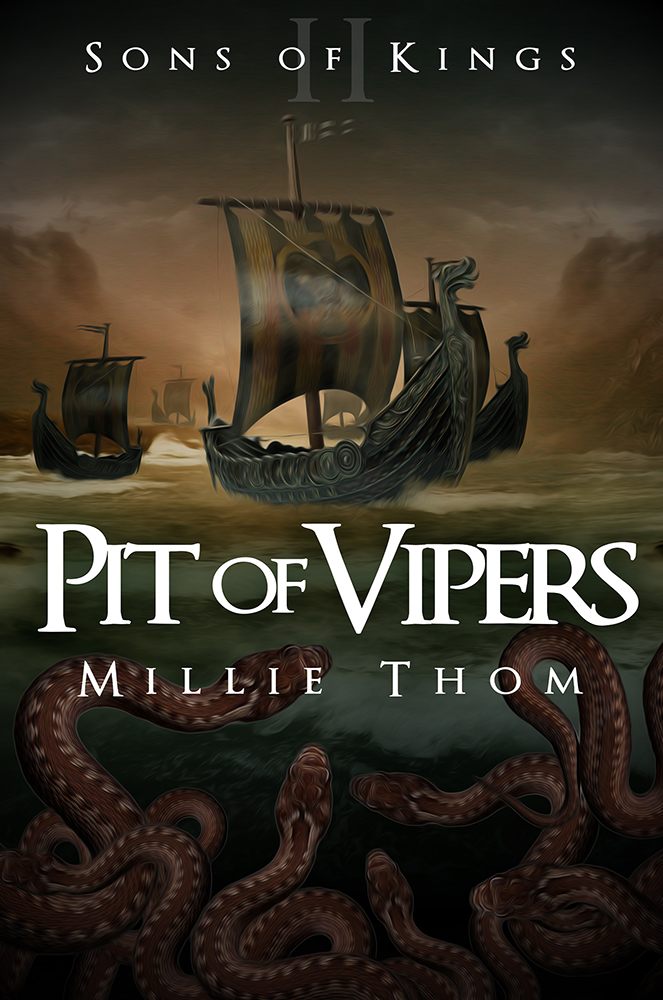
I’m working hard on the last quote! This will be the cover of Book 2 of my Sons of Kings trilogy.

Pit of Vipers Final (Small)

To Contract Or Not To Contract, That Is The Question . . .

6dd2190117

I’ve been mulling over this question for a while now. Most of us use word contractions in our everyday conversations – how stuffy our chatting would sound without them? Imagine saying to a best friend, ‘Let us go for a walk now the rain has stopped.’ Wouldn’t we be more likely to say, ‘Let’s go for a walk now the rain’s stopped’? 

Perhaps not something you’d say to your best friend, anyway, but I hope you get my meaning.

So what can we say about the use of contractions in novel writing?

Personally, I think the same thing applies to written fiction as to everyday speech. Surely, a book written without the commonly used contractions, especially in speech, would be dull and extremely stilted. (There are several definitions of this word, the following amongst them: stiff or artificially formal; wooden; pompous.)

So, how can we apply this to historical fiction?

Someone who read and reviewed my book on Goodreads (very favourably with an excellent, 5 star rating) messaged me privately to say that she wasn’t sure about the use of contractions in a novel set in the ninth century . . .

Well, I was a little thrown by that at first, although I’ve read many historical novels that do use contractions. So I consulted my editor, a very experienced professional. His immediate reaction to my suggestion of removing contractions from my current work-in-progress was one of almost shock-horror!

shutterstock_187060769Then he added, ‘Don’t even consider taking out the contractions, if only for my sake!’

This was followed by a lecture which, basically, followed the theme of my earlier post entitled, ‘Forsooth sir, canst thou not speak more plainly?’

Everything comes down to the changes in language over the centuries and how it is used. The language used in ninth-century Britain would have been as different to modern English as Russian is today. And who’s to say whether or not people contracted their words in bygone days? I imagine they would have done, and an interesing article I found on the Historically Irrelevant website supports that belief.

Even Shakespeare used a contraction in the title of his play, ‘All’s Well That Ends Well.’ Admittedly, that was several hundred years later than the ninth century – but I still hold to my point.

These are the key things I understand from all this:

  1. A fiction writer obviously needs to make a story interesting. In an informal/colloquial setting, stilted speech is out of place, and would probably not endear the character to the reader (unless we are purposely creating a stiff, pompous kind of person).
  2. In formal writing, language should not be littered with contractions. In informal writing, contractions seem to be acceptable.
  3. The use of contractions in historical fiction should not be seen as incorrect – unless the author particularly chooses to write in a more formal way.

When it comes to the nitty gritty, like most things in life it’s all a question of personal preference.

Did you know . . .?

  • The commonly used word, ‘Goodbye’ is a contraction of the old phrase, ‘God be with you’? A more detailed look at this can be seen here.
  • Most word contractions use only one apostrophe. But here are a few double contractions, with two apostrophes to think about (although, I must admit, I’ve never seen the third one with two apostrophes before. I know it’s made up of two words, shall and not, but it’s usually just written as shan’t . . . isn’t it?):
blackboard_double_contractions
Image from the ‘about education’ website

Note: Header image, ‘Contractions’, is from k-3teacherresources.com

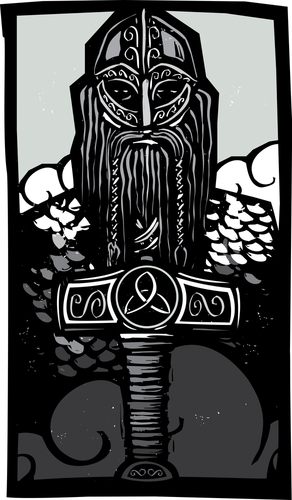
Accept our offering, mighty Thor . . .

shutterstock_144162493
The sun hung low in the near-cloudless sky, the late afternoon dry and cold with the promise of frost when darkness fell. Winter was nudging her icy nose into people’s lives and they did not relish the prospect. They’d done all in their power to ensure the well-being of the village during the bleak months ahead and hoped their hard work would reap its dividend. All that was needful now was the blessing of the gods. In sombre mood, villagers waited for the ceremony to begin. Continue reading “Accept our offering, mighty Thor . . .”

Shall I Get On With My writing – Or Just Read That Book?

shutterstock_169978604

Like most writers I’m a voracious reader.  I’ve read all my life and have no intention of stopping now – unless my eyesight suddenly packs in. Then, of course, there are always audio books . . .

So what’s the problem?

Well, the problem is that if I get into a really good book, I just want to read until I’ve finished it. Not a good thing when my second novel is sitting there, just waiting for the last couple of chapters to finish it off.

shutterstock_155992808

I’ve just had a great holiday in Malta, as my last post showed, doing all the things I enjoy. I love the sunshine and swimming aspects of holidaying in warmer climes, but what I don’t like is inactivity. I’m one of those people who simply must be doing something. Lounging around sunbathing I can tolerate only in very short bursts, and then only with a book to read – which in itself means an overhead canopy (so no sunbathing because I can’t read in sunlight, with or without sunglasses).

But reading is never boring to me. I read three books whilst in Malta, though they weren’t great, marathon tomes, I admit.

To get back to my main issue: should a writer spend time reading when his/her own book is in progress?

My own thoughts on this . . .?  Well, yes and no.

Yes . . . because we all need some leisure time away from our work. And that is what my writing has become – a substitute for my ‘paid’ employment since retiring. I love to write, pay or no pay. And I love the theme of the trilogy I’m in the middle of. My problem arises when I have an urge to read when I should be pounding the keys on my laptop.

No . . . for obvious reasons, already touched on above. Turning to my reading when I should be writing is simply putting off focusing and applying myself to the more important or pressing task. And to be honest, I know I only do so when I hit a section of the narrative that demands a great deal of thought and application.

One final point concerns the type of books an author should read in the middle of writing – whether the author is still at the ‘would be’ stage or already published.  I write historical fiction and also love to read that genre, along with some crime novels now and then. I choose to read many books in these genres while I’m writing . . . except other novels set in the  same Viking period as my own .

Now, I love Bernard Cornwell’s writing in particular, and have read many of his books set in a variety of periods. I really enjoyed his Arthur series. But I won’t read his books about King Alfred until I’ve finished my own trilogy – also about King Alfred and the Danes. I certainly don’t want influencing by his storylines, as brilliant as I’m sure they are.  There are bound to be overlaps in some of the events during Alfred’s life, but how they are told is unique to each author.

Can’t wait to read Bernard Cornwell’s ‘Warrior Chronicles’!

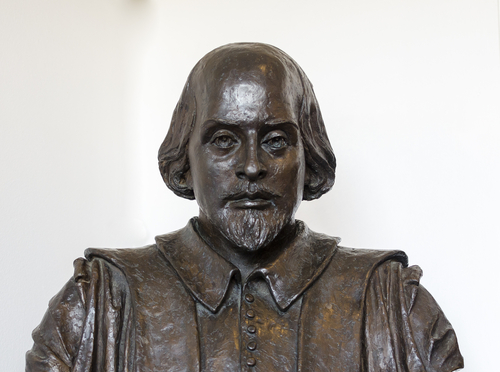
And I wonder what this man would have said about all this . . .?

shutterstock_175855697
William Shakespeare

A last thought from Roald Dahl:

Two hours of writing fiction leaves this writer completely drained. For those two hours he has been in a different place with totally different people.

Time for him to read something else, perhaps . . .?  (What a great writer he was, too.

The City of York – a gem of a place for historical fiction writers

022

Last Tuesday, my husband and I had a trip out to the wonderful old city of York. We’re regular visitors to the city itself, which is roughly eighty miles from where we live, but on this occasion our main purpose was to  revisit the Jorvik Viking Centre. We hadn’t been to Jorvik since the early 1990’s and the whole place has been considerably updated since then, although the basic layout of the Viking streets was much as I remembered it.

JOR30-red-1024x284
Jorvik Viking Centre is 30 years’ old!

York itself is a magnet for tourists from many parts of the world. Cameras are out wherever you go in the central areas, aiming to capture as many of the beautiful or quaint old buildings as possible. Others aim for more specific periods of history, because York is one of those places that display a veritable journey through time.

To quote from Wikipedia:

The history of York as a city dates to the beginning of the first millennium AD but archaeological evidence for the presence of people in the region of York date back much further to between 8000 and 7000 BC.’

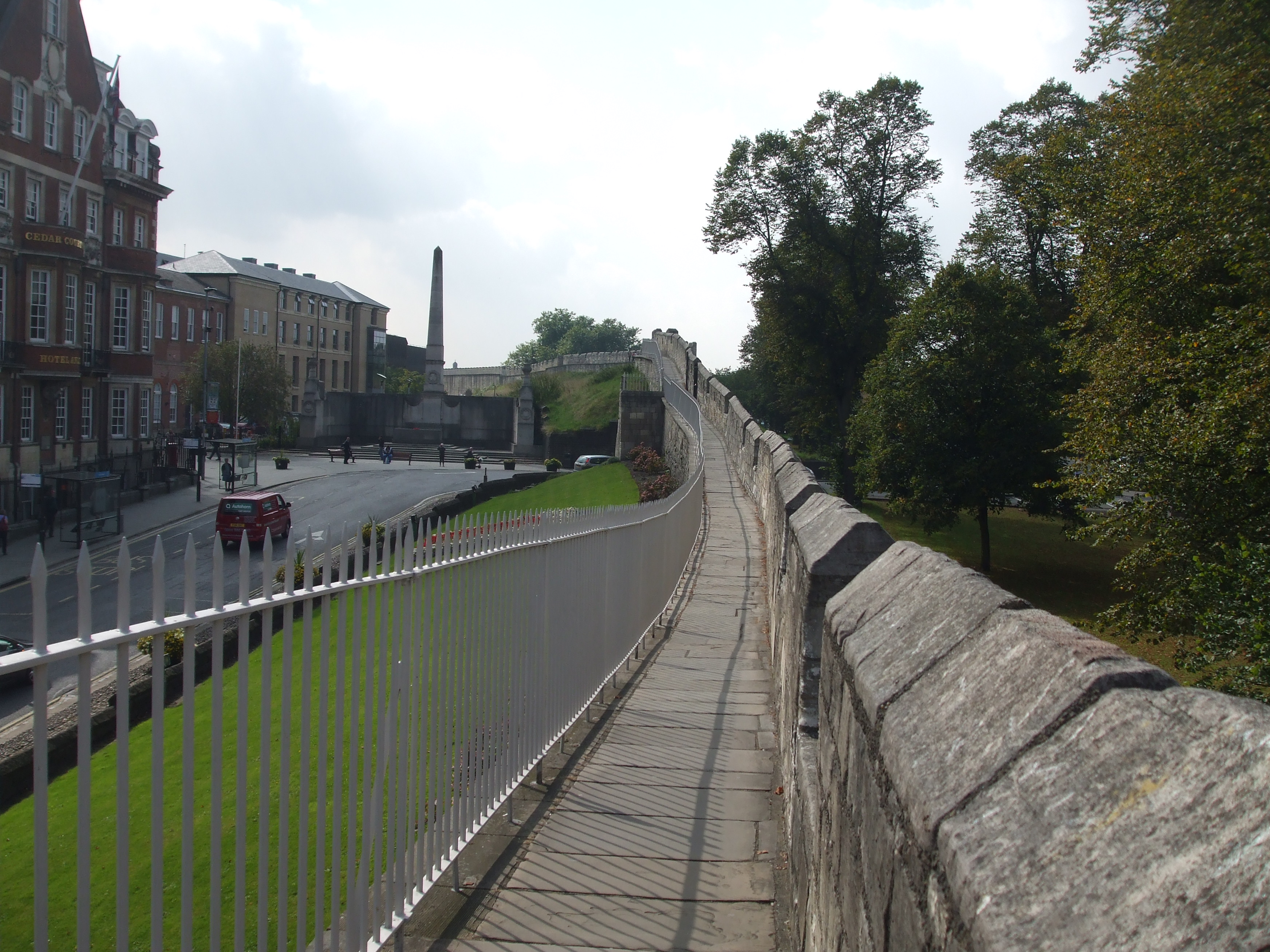
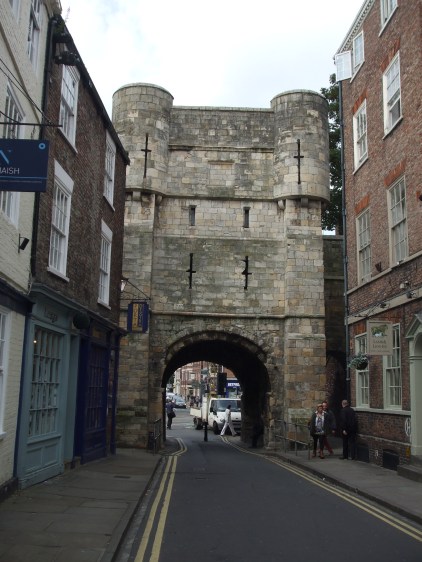
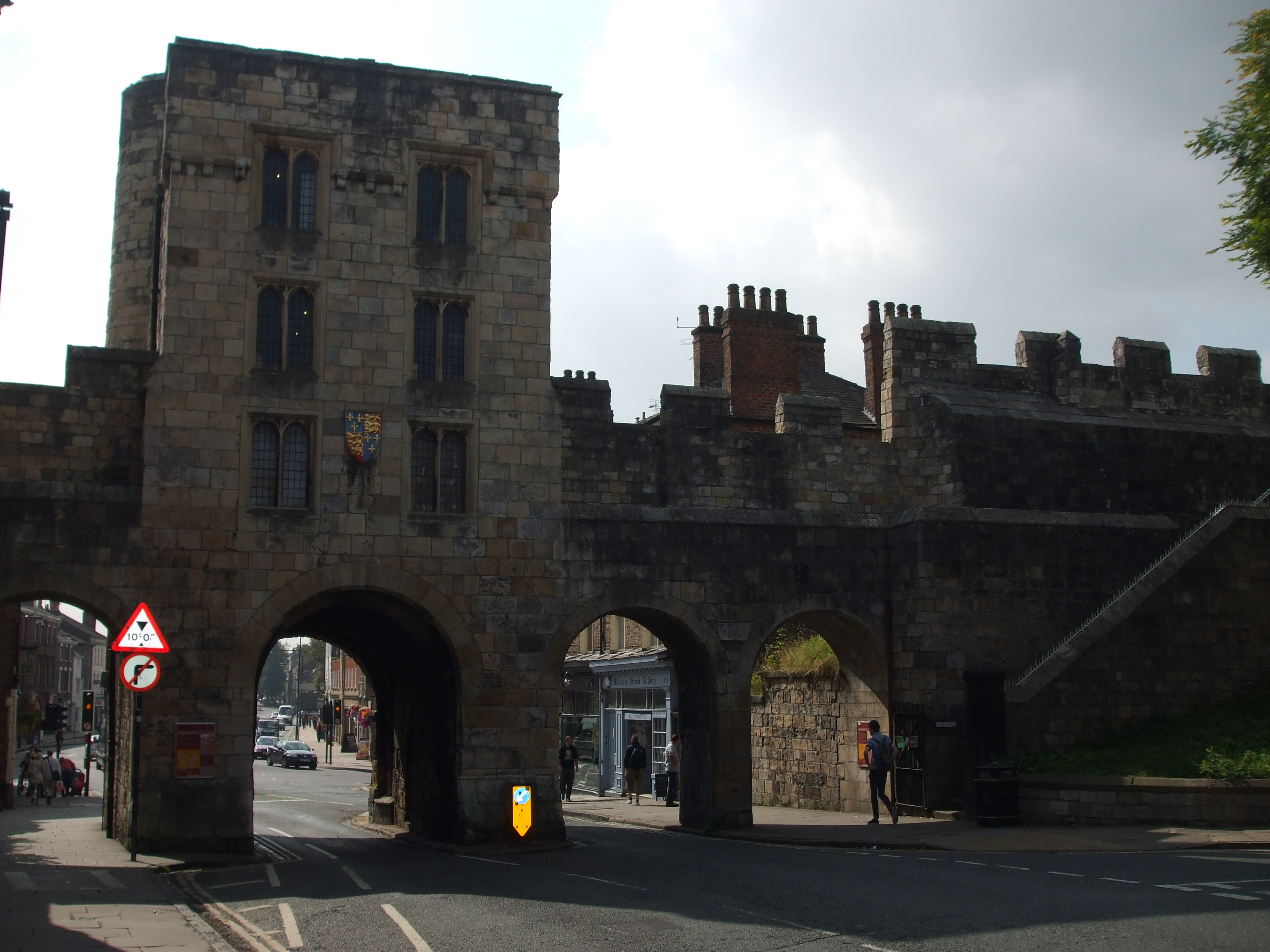
In the first century AD, the town was called Eboracum, and was one of the major Roman cities – their ‘capital’ in the North of Britain. Prior to that, the region belonged to Celtic tribes, the most well know of which were the Brigantes. There’s abundant evidence for the Roman occupation around the city, from the town walls and gates . . .

028
Section of the Roman Wall
020
Bootham Bar – the main , northbound gateways in the Roman wall
Micklegate Bar
Micklegate Bar

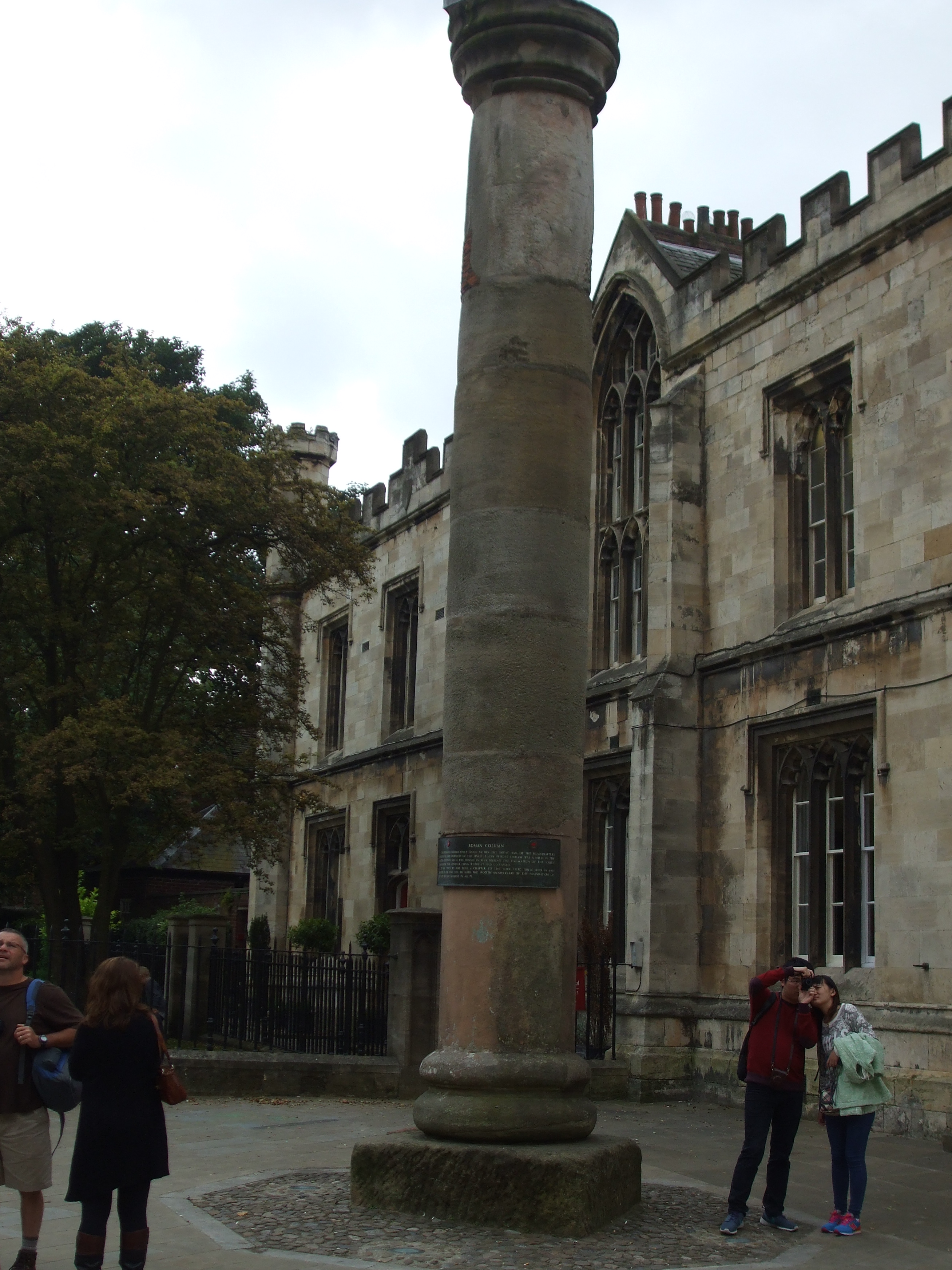
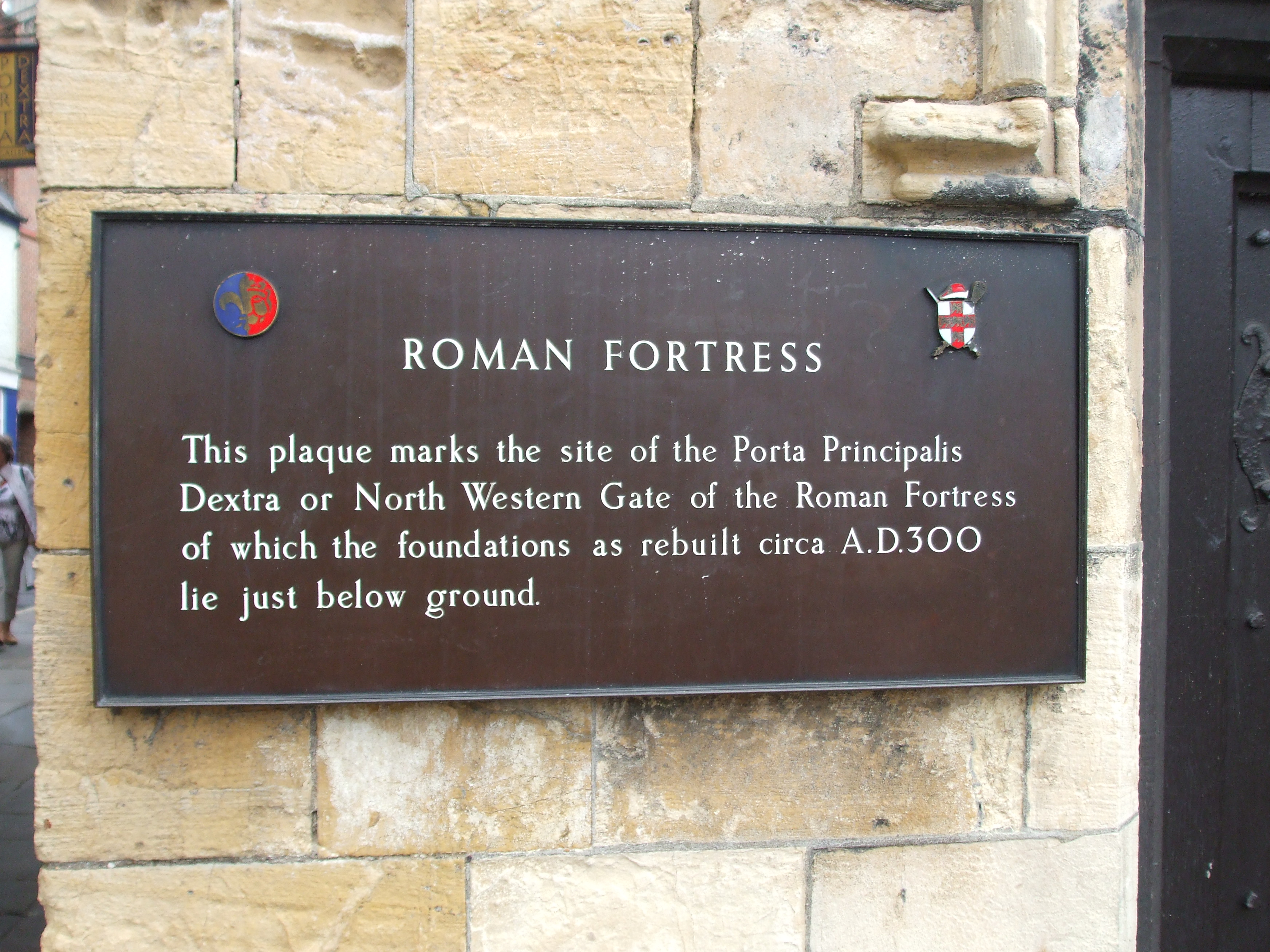
. . . to columns and plaques signifying what once stood on particular sites, as well as umpteen artefacts in The Yorkshire Museum.

014
Roman column
021
Plaque at Bootham Bar

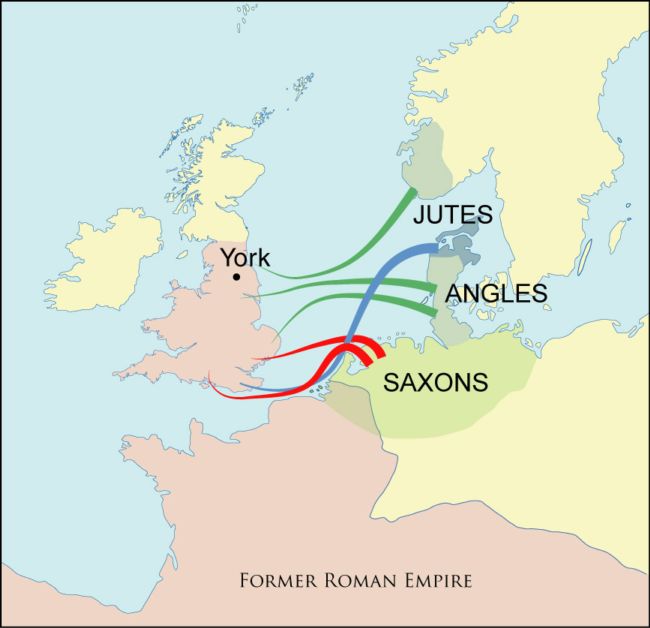
Following Roman withdrawal from Britain, the whole country was left open to raiders from across the sea – notably at this period, those we call the Anglo Saxons. The map shows areas on the Continent from which some of these peoples came:

anglian-homelands
Where the Anglo-Saxon peoples came from

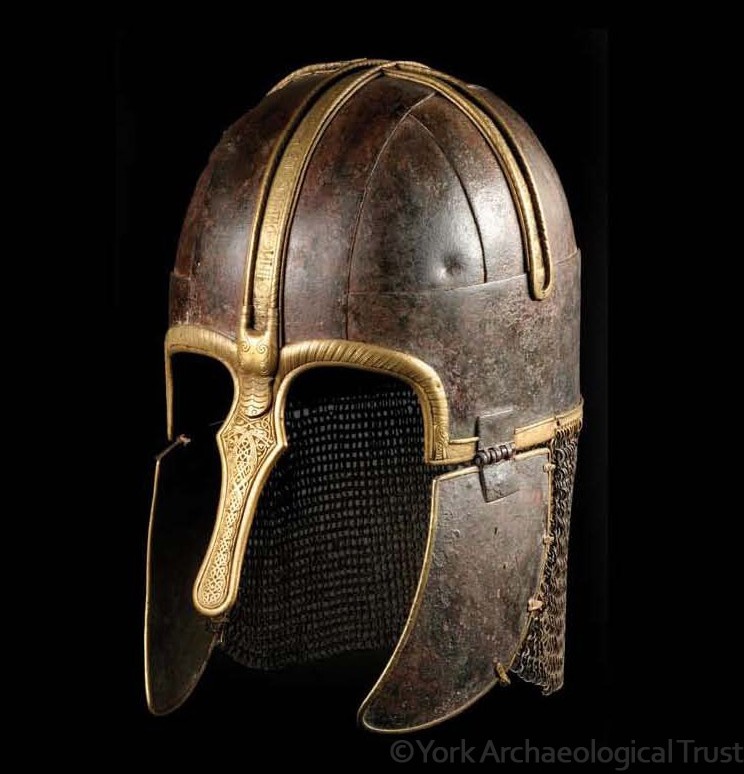
It was the Angles who mainly settled in Northumbria, the Saxons being much further south. The Angles called the city, Eorforwic (in some texts Eorferwic). The favoured building material of the Anglo-Saxons was wood, which, unfortunately for archaeologists and historians, does not endure through the centuries. So, little remains of Anglo-Saxon York other than general artefacts, like this 8th century helmet found on Coppergate, which also happens to be the the main street in Viking York.

coppergate-walk-sign-1024x151

Coppergate-Helmet
The Coppergate Helmet – Coppergate also happens to be the main street in Viking York.

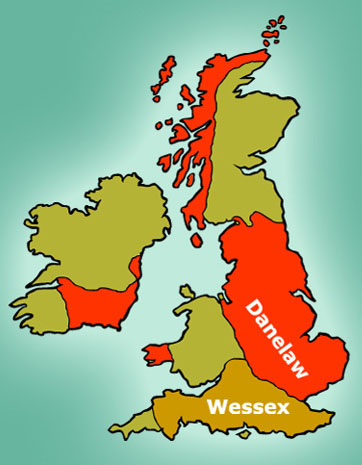
The Vikings (mostly Danes) first subjugated York in 866, a year after the arrival of what we call the ‘Great Heathen Army’ in East Anglia 865. Danish settlement in the area would doubtless have taken place gradually, but by the time of the establishment of the Danelaw (following a treaty between Alfred the Great  and the Danish leader, Guthrum, in 886) the Anglo-Saxon name of Eorforwic had become the Danish name, Jorvik.

danelaw
The Danelaw

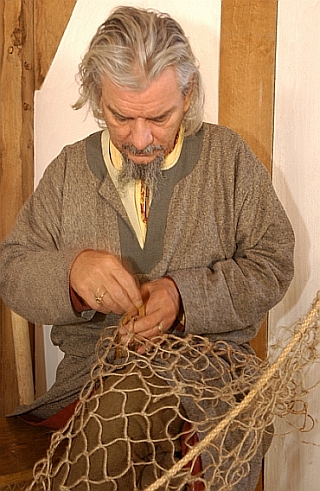
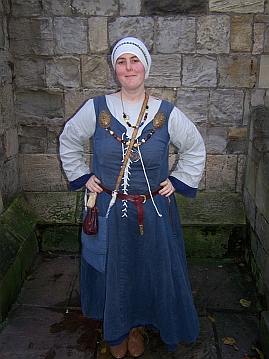
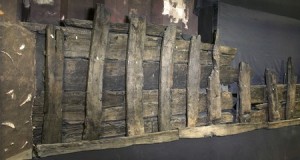
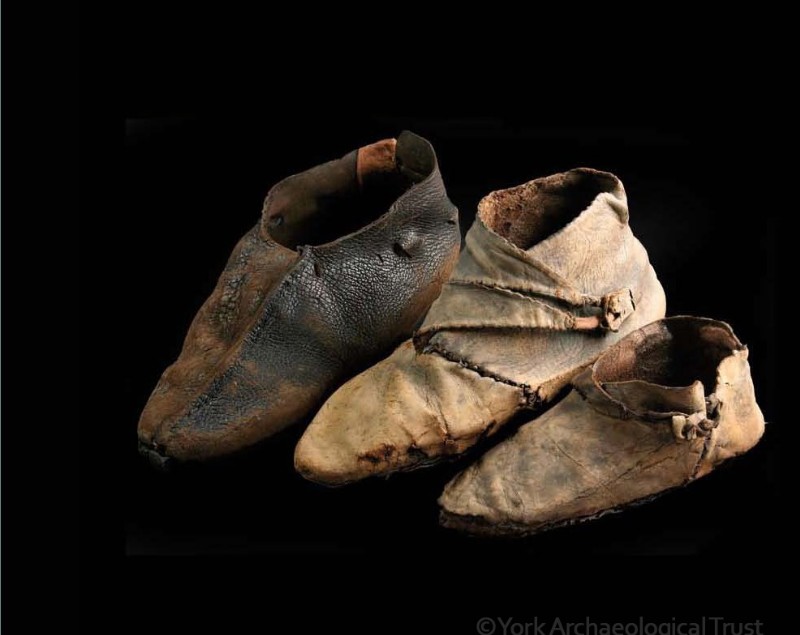
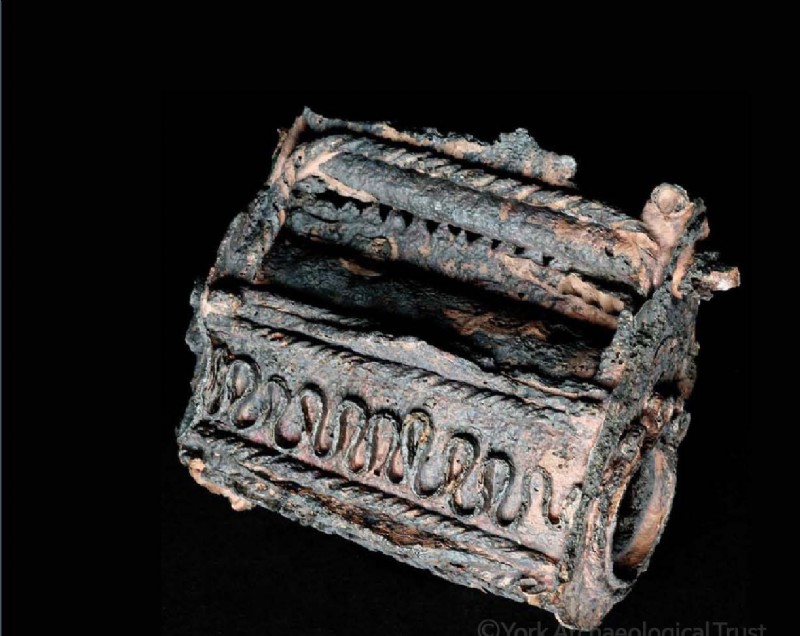
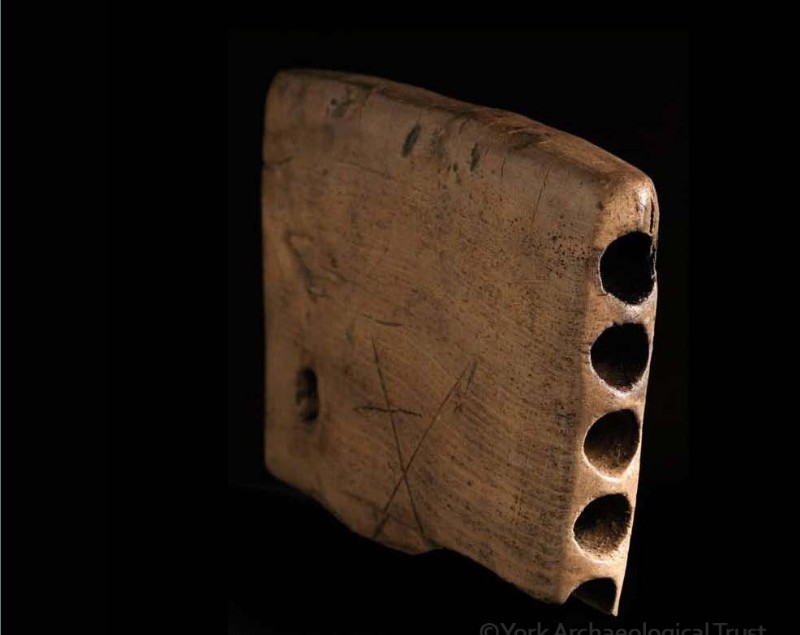
Here are some illustrations  and artefacts from the Jorvik Viking Centre website. As in most museums, flash photography is forbidden (which meant that our camera was banned) so if photos are wanted, visitors need to remember to carry something with a built-in flash. The marketing manager, Mr. Paul Whiting, very kindly suggested I use the photos from their website. Here’s the link -Jorvik for anyone who’d like to have a look for themselves:

Woodturner
howdidtheylive
Fisherman working on his net
howdidtheylive2
Viking woman in traditional dress
timbers-300x160
Jorvik building timbers

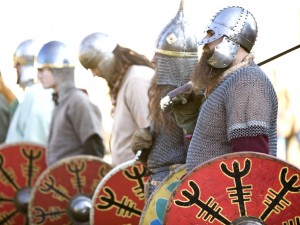
The Jorvik holds several events over the year, which cover the whole period of Viking York up to the time of the Norman Invasion in 1066. After that date the tale of Medieval York begins – for which there is boundless evidence all over the city . . . And so on through to more recent times. The ‘veritable journey through time’ to which I referred earlier can be seen through the strata meticulously displayed in the Jorvik Centre.

image517-300x225
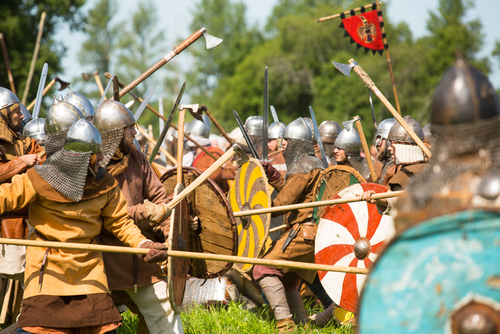
Ready for the shield-wall
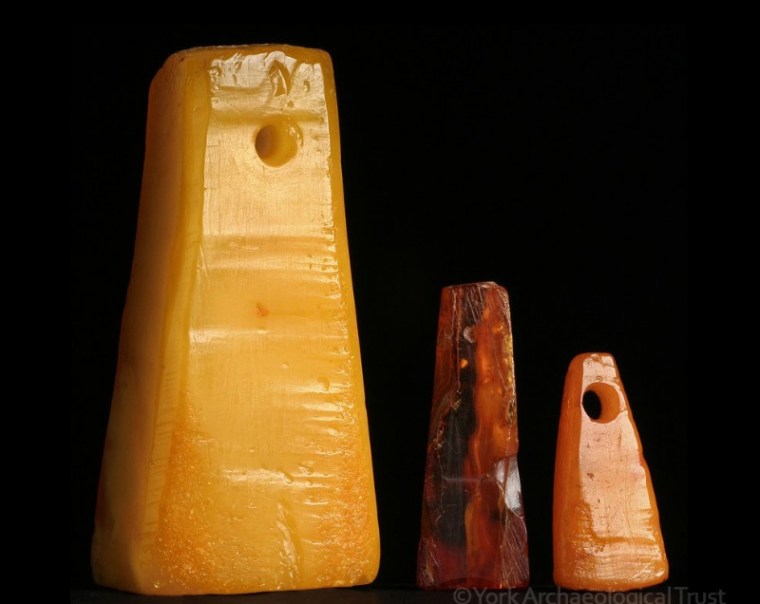
Amber
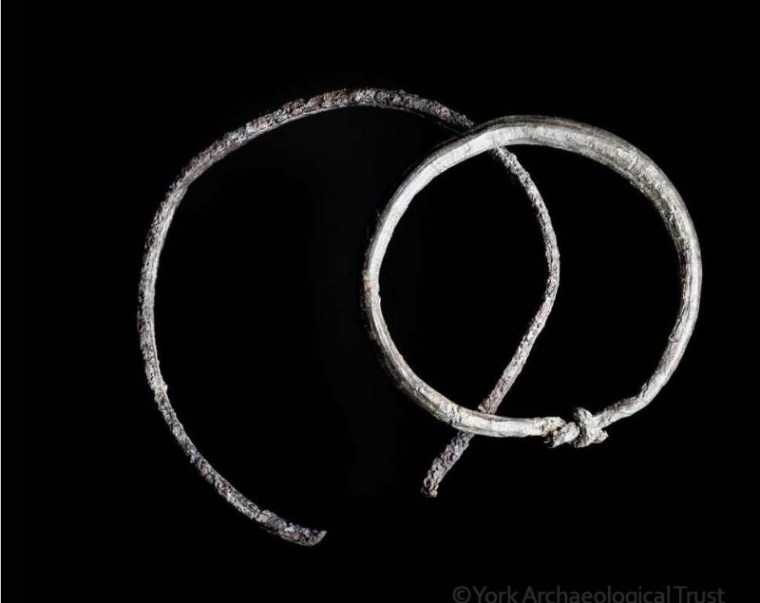
Arm-rings
Leather-Shoes
Leather shoes
Padlock
Padlock
Pan-Pipes
Pan-pipes

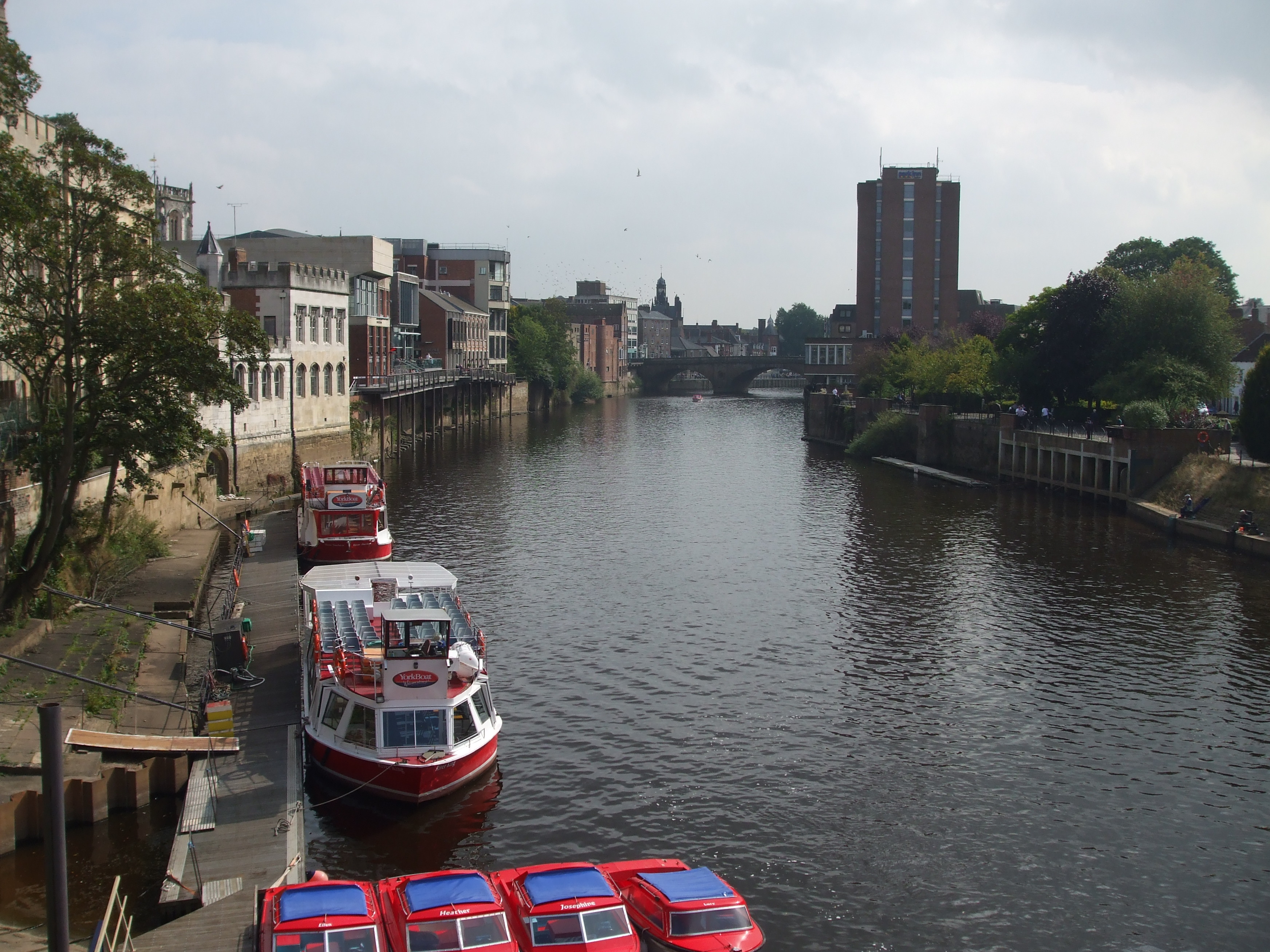
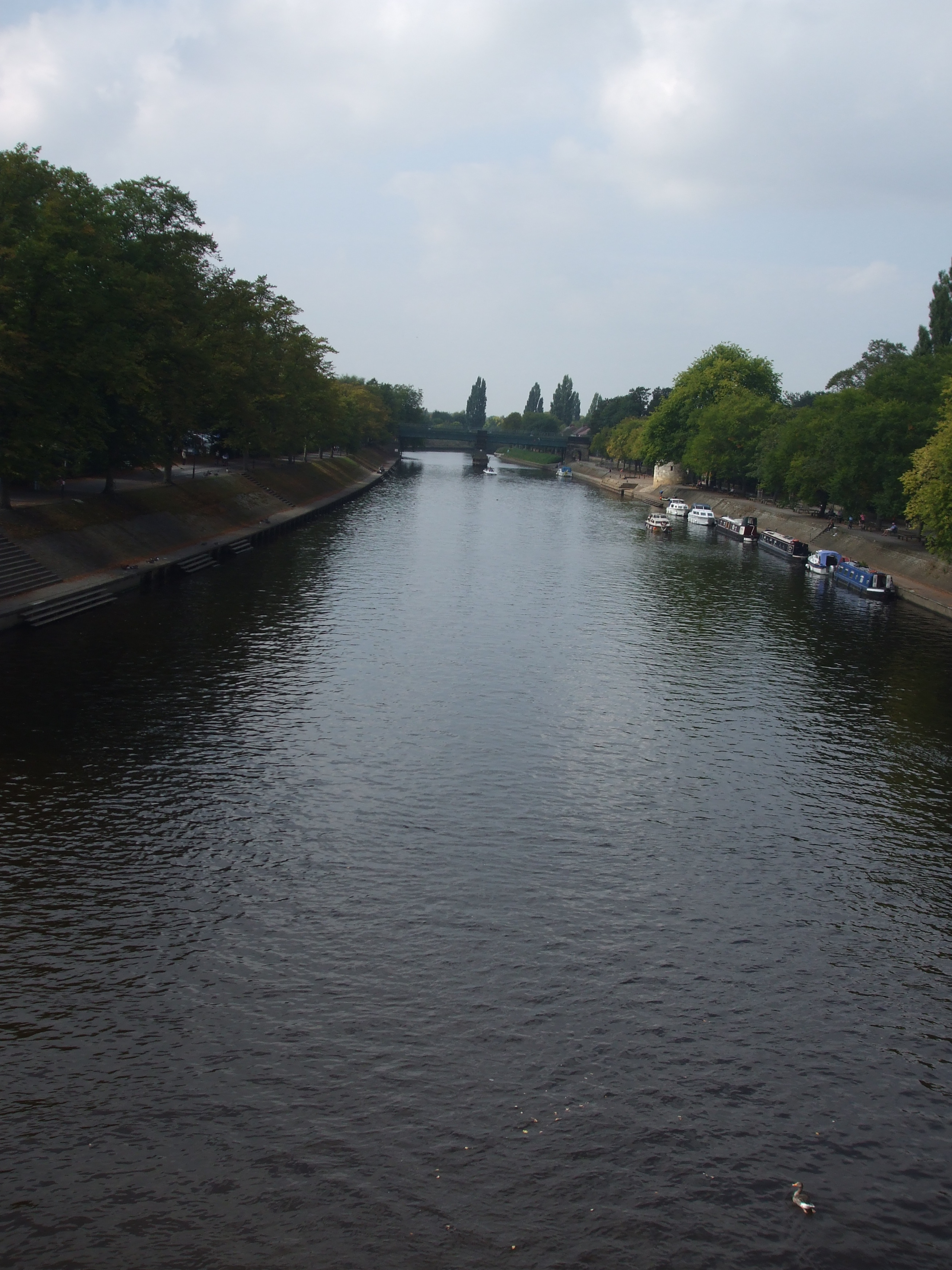
York has been like a honey-pot to settlers since ancient times. The River Ouse, which flows through the city and out to the North Sea, would have provided a natural route inland for settlers and raiders alike.

024
River Ouse

The river’s confluence with the smaller River Foss provided the requisite natural defences for the early city, and the surrounding fertile and flat land was ideal for crops.

Since my Sons of Kings trilogy is set in the mid-late 9th century, it’s the Anglo-Saxon and Viking evidence that presently draws me to York. But I also love all things Roman and medieval. After the end of the Wars of the Roses in 1487 my interest tends to wane, but it sparks right back up again with the onset of the Victorian period and the First World War.

But right now, I’m even dreaming of Anglo-Saxons and ‘Vikings’ – and King Alfred’s almighty struggle to keep his kingdom . . .

The Trials And Tribulations Of A First Time Novelist

shutterstock_185968619

At present I have one book well and truly finished (Shadow of the Raven). It has been professionally edited, and is now published on Amazon. I’m currently working on the final sections of Book 2 of the trilogy (Pit of Vipers) and hope to have that on Amazon before too long.

I have to admit that my writing speed has improved with Book 2. Shadow of the Raven seemed to take forever: I wrote and rewrote, deleted and saved, or totally scrapped so much of it. I can say with all honesty that my ‘Deleted’ file is almost a novel’s worth in itself!

But for Book 2, much of the basic research into the historical events and everyday life in the mid ninth century has already been done, and my writing style, storyline and characters have taken shape. So I feel much more confident in getting my ideas down this time around. That is not to say that the writing now just flows effortlessly to the computer keys with every scene. With some sections it does, but there are many new settings, situations and characters to be described and developed in Book 2 – and, of course, hopefully made to sound interesting – if not totally intriguing!

For experienced authors, many of the things I’ve agonised over are not an issue. Though I found little difficulty with viewpoint and character depiction, the development of the plot was a different matter. I knew what my story was about and what I wanted to include, but I soon learned that the story was not the same as the plot. Keeping the right balance between action scenes, emotional and humorous ones – or even those just necessary to move the story along – needs detailed planning, as well as careful consideration of the ‘show don’t tell’ element. Thankfully, I do love writing dialogue, and find it a wonderful way of ‘showing’ the many facets of characters.

Please bear in mind that I’m still new to the novel writing business. I have no doubt that many of you out there could easily write pages on the points I’m trying to make here. What I’m really saying is that novel writing is a long, slow learning process, and at the beginning I think it’s normal to struggle with the intricacies of the job. Me . . . well, I even whittled about word count, for goodness sake!

With regard to the latter, many of the scenes in my ‘Deleted’ file are there by virtue of my own editing once the book was finished. On consideration of the length of my original manuscript (which had grown to become a great monstrosity of a thing!) I set about deleting scenes I thought unnecessary to the continuation of the plot. For me, that was hard, since everything I had written was there because I liked it – and had taken time to do in the first place. Still, the over-long tale had to be shortened somehow.

But I love writing and no matter what ‘trials and tribulations’ I meet along the way, I know I’ll persevere. I have several ideas for future novels, but right now I’m focusing on getting my Sons of Kings trilogy finished.


I’d like to share one of the deleted sections here. It would have featured towards the end of what is now Chapter 4 of Shadow of the Raven. It’s a battle scene – something I really wasn’t looking forward to doing in the first place – in which King Aethelwulf of Wessex defeats the marauding Dane, Rorik.

Rorik’s raids play a vital part to the future events of the story, but I found that by removing the entire chapter in which this scene featured, I not only saved words but was able to move the main plot along quicker. The results of the battle are revealed indirectly in the following chapter. I still have qualms over whether I should have left it in. Anyway, here’s the scene:


shutterstock_145907300

The Battle of Aclea

An owl screeched its alarm, flapping from a low branch to glide like a spectre between the oaks of the woodland behind. One of the horses whinnied in response to the harsh cry and King Aethelwulf prayed the sound would not carry to the enemy below.

Entrusting their mounts to a handful of men until the battle was done, Aethelwulf and his hundred warriors crouched at the top of a gentle slope, taut as bowstrings; shields slung across backs, two or three javelins held inside each, and swords hanging from baldrics. Beyond the slope, the shadowy plain stretched for less than a mile before rising to the wooded ridge. Along the foot of the ridge, remnants of watch fires threw muted light on the edge of the camp. Aethelwulf hoped the guards would be too drowsy at this hour to be vigilant.

The eastern sky was paling fast; at sunrise the camp would rouse, the element of surprise lost. Scanning the top of the ridge, praying that Osmund and Aethelbald’s men were waiting, he raised his arm, the signal to advance down the slope.

Stooping low they moved in silence, crouching at intervals behind scrubby gorse and bramble, panted breaths evidence of heightened tensions as inevitable combat neared. The shouted alarm came as they moved across the open ground in the growing light of imminent dawn, the camp now less than a hundred yards away. The Danes swarmed from their tents, howling to their gods; hurling spears and rocks at their rapidly nearing assailants.

‘Shield wall!’ Aethelwulf yelled.

The manoeuvre into the tight wall was instant; two rows deep, shields overlapping, left sides over right. At Aethelwulf’s side in the centre of the front line the standard bearer hoisted the Wessex banner, the great white dragon on its backdrop of red, eliciting jeers and hammering of spears on shields from the Danes, now lined in their own defensive wall barely twenty five yards away. But, as Aethelwulf had hoped, few wore body armour: shields and helmets were all the late alarm had afforded.

The drumming on shields abruptly ceased and an ominous silence pervaded the plain. Warriors stood rigid, muscles flexed for the opening strike.

The first spears whistled as the two lines strove to weaken each other’s defences. Most flew overhead. Some glanced off shields; some slammed into them and held fast. A few struck unresistant flesh. Men screamed and fell.

And the gaps in the shieldwalls reclosed.

Gradually the missiles lessened, then ceased, and Aethelwulf moved forward a pace, his eyes fixed on a bull-necked figure standing prominently in the enemy front line. ‘So… the straggling remnants of Rorik’s warband think to challenge the might of Wessex!’ he mocked. ‘Naked raven chicks are no match for the clutch of the dragon!’

Rorik stepped out and threw open his arms. ‘We quake in our boots at the prattle of a deranged old man!’ The Danes wailed in mock terror. ‘Look closely at what you face, great king. Naked of armour we may be, but we are double your number. Yet you think to better us!’ He threw back his head and roared, the sound a chilling mix of derisive laugh and snarl. ‘Our chicks enjoyed pecking the eyes from your Saxon whores and butchering the curs you call men! And your gold will serve us well.’

Aethelwulf snorted. ‘Your murderous hordes have gained no more than a few captives and a modicum of plunder from poor homesteads. Saxon gold will never be within your thieving grasp.’

Rorik seethed, Aethelwulf’s denigration too accurate to deny. ‘Say your prayers to your god old man. Your mangy carcasses will feed the buzzards!’

The clash of colliding armies defiled the peace of the dawning day. Weapons thrust through gaps between shields, stabbing and slashing at legs, feet and faces, maiming exposed flesh and bringing men down, creating crucial breaches in the enemy wall. Danes dropped like swatted flies, despite outnumbering the Saxons two to one, their lack of body armour costing them dear. Aethelwulf fought with the vigour of a warrior half his age, his focus on Rorik. But gradually the craven jarl retreated behind his men, safe from Wessex swords.

Then Osmund’s hundred men were careering across the plain. Panicked, too many Danes turned to counter the oncoming wave, ignoring the continued frontal assault. Beset from front and rear the already depleted Danish force stood little chance and Saxon warriors showed no mercy. The battle was soon over.

Shouts alerted Aethelwulf to the group of riders fleeing from the empty camp towards the Roman road, Rorik’s swarthy bulk in their midst. But Saxon mounts had not yet been retrieved, and Aethelwulf could do no more than watch the riders fade into the distance. Tracking them down would be futile. Though he knew Rorik would head eventually for Thanet, Aethelwulf could not spare the men to cover the myriad, minor tracks he might take.

They buried their dead with Christian prayers and full honour; those men had given their lives for Wessex. Enemy corpses were relieved of their spoils and left where they’d fallen, a feast for the scavengers.

‘Gather their horses,’ Aethelwulf yelled. ‘Take whatever we can make use of from the tents, then fire them. Then we head home.’


Whether or not I did the right thing in deleting this, it’s too late now. The book is published. But I’ve brought attention to it here simply to add weight to what I said about the long, slow learning path towards becoming an experienced and, hopefully, good novelist. In this instance, deleting a great chunk of this chapter rid me of 1,526 words (the battle scene itself is 879 words) but at the expense of causing me some pangs of regret – not to mention annoyance at myself for wasting time writing it in the first place.

*****

For The Love Of Writing…

shutterstock_124971299

I know I’m not telling anyone anything new when I say that the writing of any work of fiction, whether novel or short story, requires both knowledge and creativity, not to mention a lot of hard work.

In the words of American writer, Dennis R. Miller:

 “Writing a novel is like traveling the universe on foot.”

And from Samuel Johnson:

“What is written without effort is generally read without pleasure.”

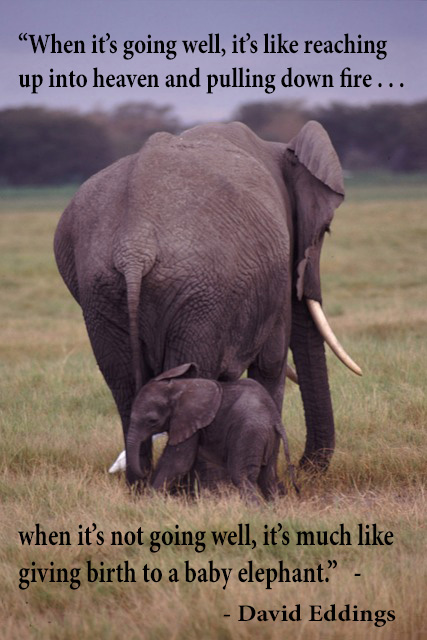
And this quote about writing from David Eddings, who, sadly, died in 2009, always makes me smile:

baby elephant quote

shutterstock_113166655

We all gain a considerable amount of knowledge during our journeys through life, but for writing about places, situations, characters and time periods beyond our own little boxes, there’s always the good old Internet! Failing that, there are scores of books for sale out there on every subject imaginable – many in cheap bookstores, charity shops, second hand bookstores or car boot or garage sales. And in my experience, most librarians are more than willing to point us in the right direction. In short, there’s really no excuse to shirk the research, whatever the genre being written.

shutterstock_162914093

But for some genres more than others – and I’m talking about fiction here, not non-fiction, for which research must be a mammoth task – thorough research is vital: historical fiction, naturally, being uppermost on my mind, with crime and law enforcement close on its heels (all that forensic stuff!). Anything involving medical issues is another one.

shutterstock_144745006

Creativity in novel writing is also vital. Without it, the story would be flat and lifeless and characters very dull. In the words of Jack Kerouac WD: 

“It ain’t whatcha write, it’s the way atcha write it.”

In other words, writing should appeal to the senses, and we should remember to ‘show, don’t tell’.

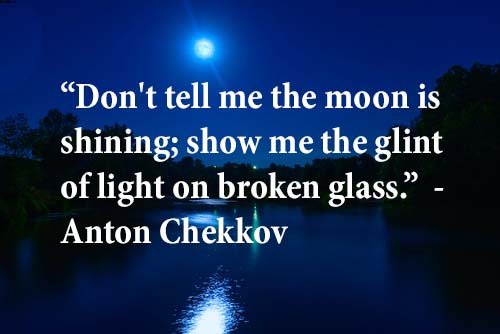
moon's light


I’ve included a short scene from my book, Shadow of the Raven, here. It comes fairly close to the beginning of the story, and is intended as an introduction to young Eadwulf’s father, King Beorhtwulf of Mercia, and his brother Burgred, Eadwulf’s uncle. Eadwulf is one of the book’s two protagonists – Alfred of Wessex being the other. As the harsh winter in the year 851 begins to melt into spring, the scene also serves to present the first hint that life in Mercia is about change.


With his huntsmen and attendant thegns, King Beorhtwulf rode back from the forest, his two great wolfhounds loping along beside him. It had been a good hunt, confirmed by the quarry slung over the backs of the pack horses. Cooks flapped in appreciation as the huge deer and smaller game were laid outside the wattle-walled building that served as kitchen and bakehouse.

Beorhtwulf surveyed the carcass of the felled deer, an old stag with massive, branching antlers. The slow old beast had made easy prey. ‘It hardly seems fair, does it brother?’

‘What doesn’t seem fair?’ Burgred squinted at Beorhtwulf as unaccustomed sunshine brightened the sky. The air had lost its penetrating bite and he fingered the brooch fastening his black cloak.

‘To end a long life like this…’ Beorhtwulf shrugged his broad shoulders, touching the toe of his boot to the lifeless form. ‘He looks a noble creature; probably sired many calves in his time. To end up spitted over our hearth seems to deprive him of all dignity in death.’

‘Your sentimentality is misguided brother. The beast would surely be gratified to know he afforded many people much pleasure and kept our bellies full. And he was old… would soon have fallen to the forest floor where his carcass would have slowly rotted away, or been eaten by woodland scavengers. Does that sound very dignified to you? Besides, what use would scavengers have for those antlers, when our craftsmen can turn them into such useful things? You know how Morwenna loves her antler combs and bits of jewellery. I’m partial to antler knife handles myself, and the men would be lost without their gaming dice.’

Beorhtwulf grinned at his younger brother, half a head shorter than himself, his red-brown hair less fiery than his own bright red. ‘Point taken, Burgred. The meat will be more useful to us than foxes and the like. Let’s hope today marks the onset of a warm spring,’ he murmured, a note of optimism in his voice. ‘Our people grow restless to sow the corn and move the stock out to pasture.’

But Beorhtwulf was a worried man. The onset of spring would bring a far greater threat to Mercia than the snows, and at tomorrow’s meeting of the Witan there were urgent matters to discuss. With a heavy sigh he whistled for his hounds and strode towards the reed-thatched hall to share the morning meal with his wife and son.

*****
shutterstock_212116630

‘I admire anybody who has the guts to write anything at all.’  (E. B. White)

History is all around us

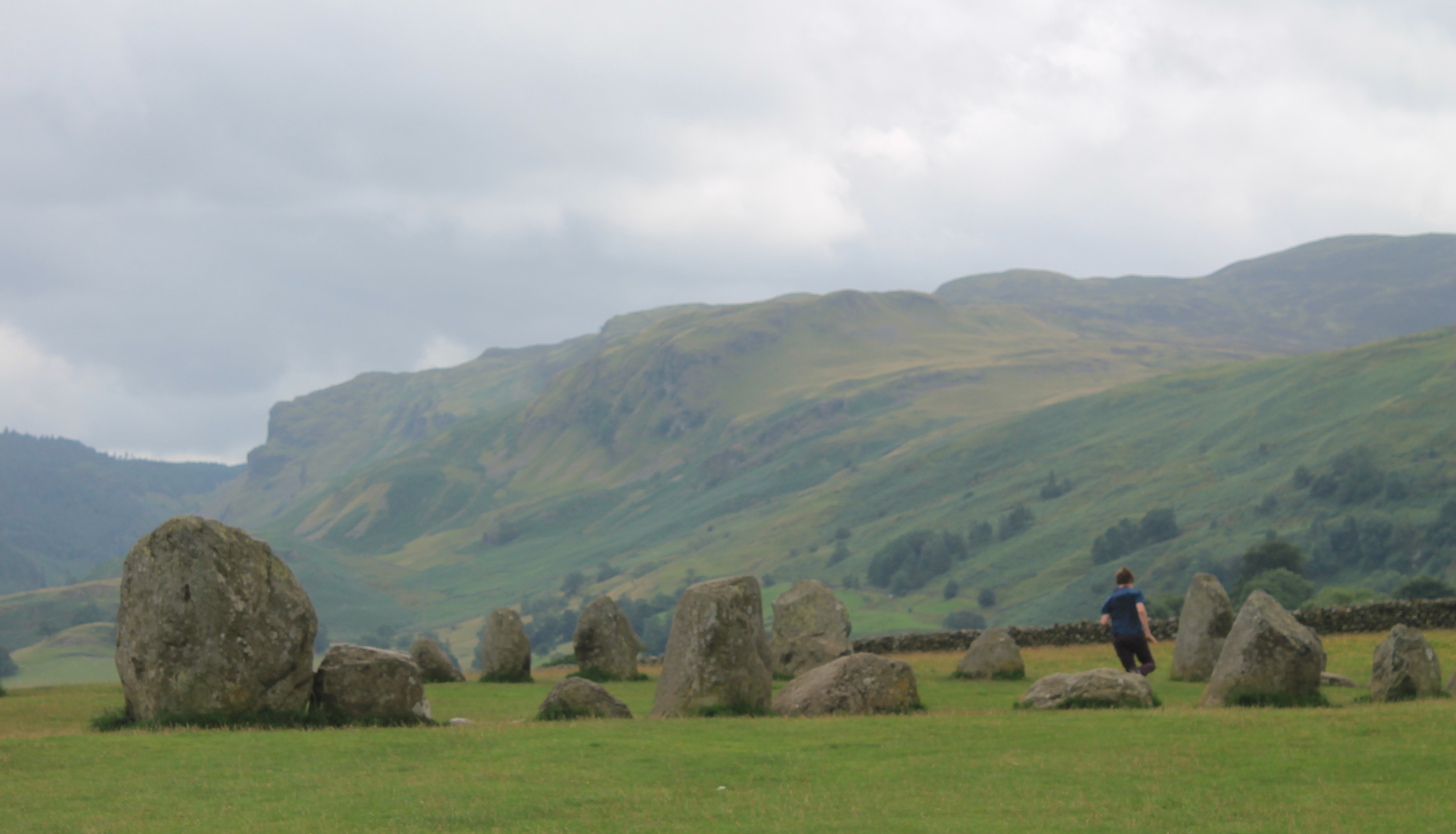
There are so many wonderful sites around the world that serve as a constant reminder of our past. Such sites can also stimulate the imaginations of writers of historical fiction and, in many novels, form the backdrop against which the characters can play out their tales.

IMG_4234
Castlerigg Stone Circle, Cumbria

I’ve even visited a few such places myself. I’ve stood with the rest of a tour group and goggled at Egyptian and Greek temples, the Bronze Age ruins at Knossos, and the remains of Pompeii, Herculaneum and Carthage. The splendours of these places will stay with me forever: they are locked inside my head. The colours, sounds and smells, and the clamour of the local people at any one of these places can spring to life again in an instant if I should just close my eyes…

Mum's Wantage pctures 012
Wayland’s Smithy: long barrow, Oxfordshire, UK

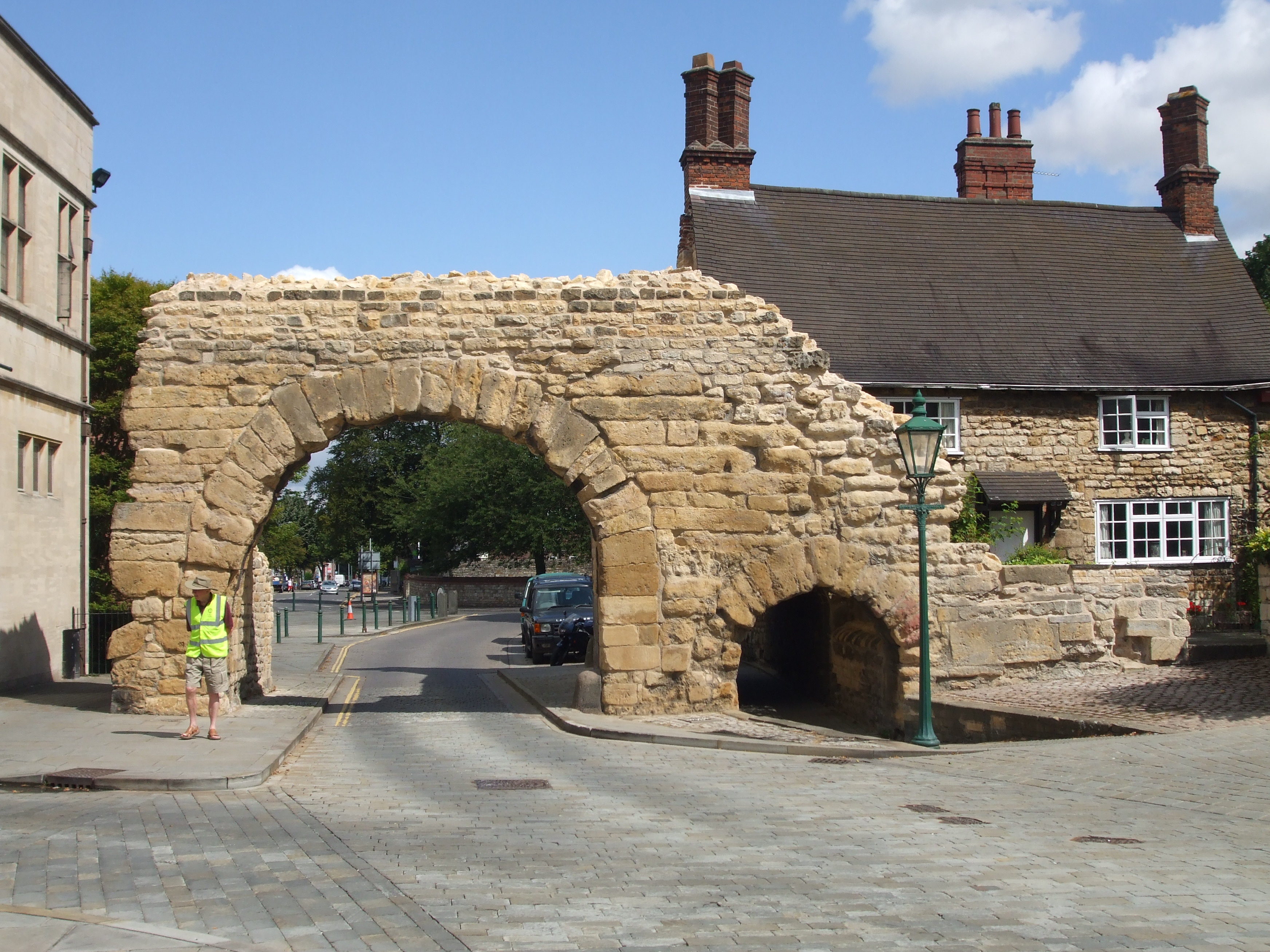
I suppose I’m lucky to live in a country where every city, town, or village can boast some structure or crumbling ruin that owes its origins to a bygone age. In Britain we have everything from prehistoric stone circles, tumuli and hill forts, to Roman walls, villas and bath-houses and medieval castles and cathedrals.

The remains of the Roman arch on Newport, Lincoln
025
Lincoln Cathedral. The first foundations of this magnificent structure were laid in 1088

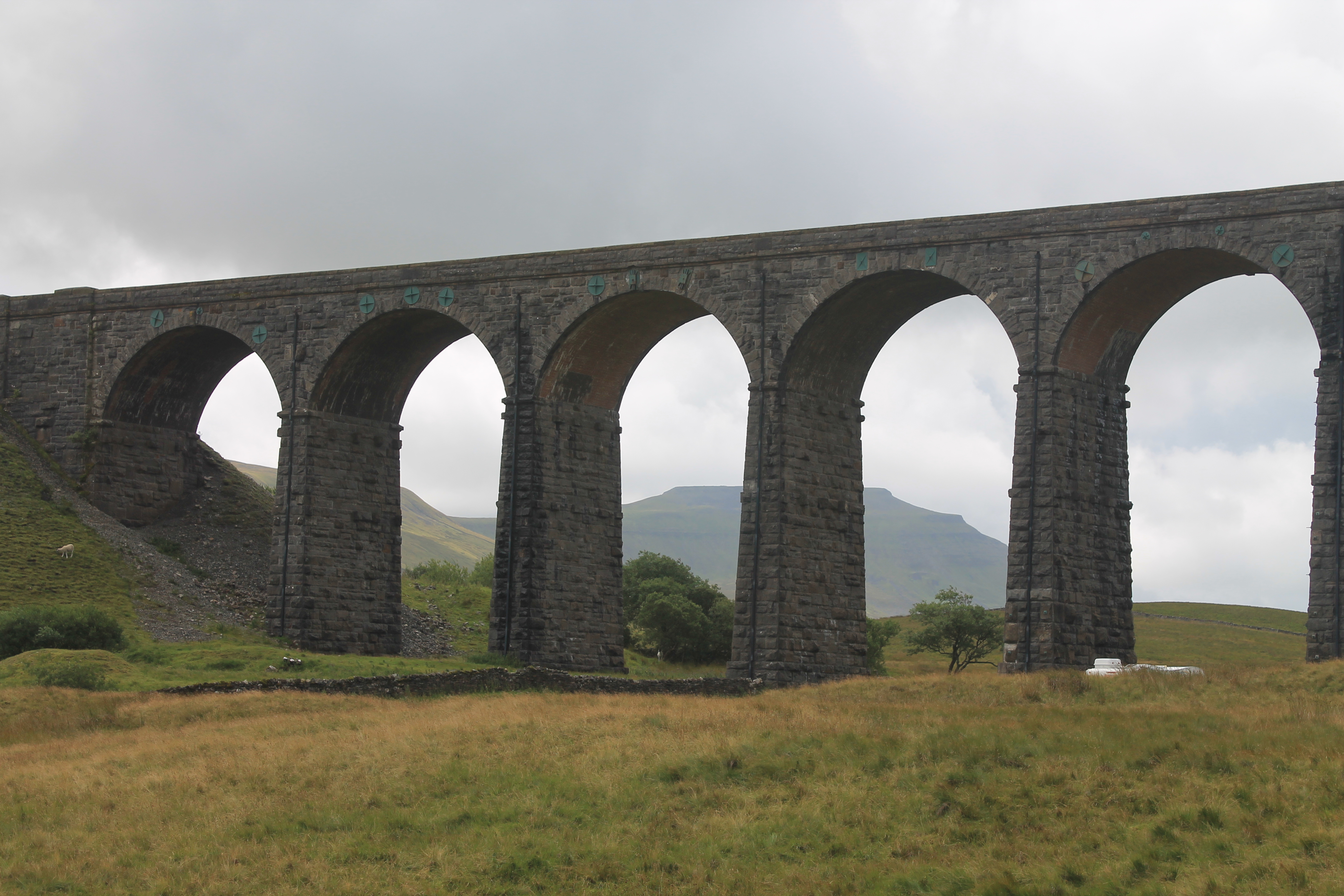
And so it continues throughout the centuries, through Tudor and Stuart times to the period of the great Victorian architects and builders. And side by side with those great structures stand the simpler, quaint old cottages and farmhouses.

IMG_3989
The Ribblehead Viaduct carries the Settle to Carlisle railway, built 1870-74

Writers of historical fiction, or rather, good writers of historical fiction, have the knack of making those bygone times seem like now. They bring the action alive, so that we see, hear, smell, feel or even taste whatever the characters in the story are experiencing. And that is a commendable skill, one that I kept firmly in mind whilst I was writing my own first book, Shadow of the Raven.

I’ll finish off with these thought-provoking  quotes:

I think that all of us who write about the past feel a deep and haunting connection with it. Socrates said that all knowledge is possessed by the soul and it’s just a matter of remembering it. I believe that to be true.’

(Karen Essex)

The truth of it is that it is simply not possible to create an accurate portrait of the past. No one can faithfully reproduce the reality of the 1970’s, let alone the 1570’s.

(Tim Wilcox)

History never looks like history when you are living through it.’

(Samuel Butler)

*****
Shadow of the Raven

1589389052

Sons of Kings: Book One

By the mid ninth century, Danish raids on Anglo-Saxon kingdoms have escalated. Several bands even dare to overwinter on the coastal islands, particularly those at the mouth of the Thames, where the kingdoms of Wessex and Mercia border each other. The kings of these lands must put past hostilities aside and take the first steps towards unity; steps they see as vital in the face of this newfound threat to their lands.

Alfred of Wessex and Eadwulf of Mercia are the sons of kings, whose futures have been determined since birth. But the turbulent events in their childhood years change the natural progression of things and shape the characters of the men they will become. Their roads to manhood follow vastly different routes, but both learn crucial lessons along the way: lessons that will serve them well in future years.

Discovering that the enemy is not always a stranger is a harsh lesson indeed; the realisation that a trusted kinsman can turn traitor is the harshest lesson of all.

shadow awards

These are some of the five star reviews for Shadow of the Raven:

    • A fantastic, well written story – Tammy L. Nesheim: Amazon.com
    • truly a remarkable historical fiction… J.L. Hutchisson: Amazon.com
    • …a beautifully crafted and seamlessly linked tale… Tricia Preston: Amazon.co.uk
    • You know those authors that write in a way that the reader can basically smell the soil just from the description? Well, Thom nailed it: Emmeline  (The Book Herald) TOP 50 REVIEWER. Amazon.com

shadow advert forblog

BUY IT NOW ON

amazon-button-png-3