Word of Week (WOW) – Helicoid

wow (1)

Word of the Week (WOW) is a weekly challenge created by Heena Rathore P. and is a fun way to learn new words every week. To participate, simply do a post with your word and leave the link as a comment on Heena’s WOW post for this week (above link).

This is my second time through the alphabet and I’m looking at the letter H this week. Last time round I did the word hirsute.

So here is my WOW for this week: 

helicoid

Word

Helicoid

Pronunciation:

hel•i•coid  [hɛlɪˌkɔɪd]

Audio:

(Pronunciation of this word is different for the U.K. and U.S.)

U.K. : hee-li-koid

U.S. : hel-i-koid

Part of Speech

Adjective

Related Forms:

Adjective: helicoidal

Adverb: helicoidally

Meaning:

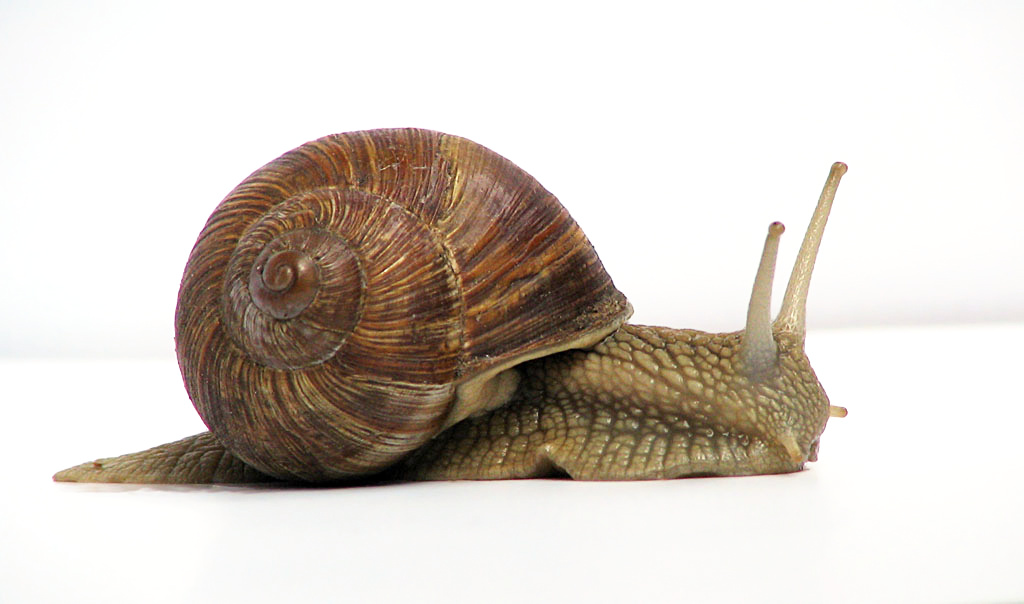
  1. Adjective: coiled or curving like a spiral:
Grapevine Snail by Jurgen Schoner
Grapevine Snail by Jurgen Schoner: Wikimedia Commons

2. Noun: (geometry) a warped surface generated by a straight line moving so as to cut or touch a fixed helix.

Animation of Helicoid. Author: 09glasgow09 Wikimedia Commons

Word Origin:

  • Late 17th century (1690-1700) from Greek helikoeidēs ‘of spiral form’, from helixhelik / helic + oid (where oid means resembling or like)

Synonyms:  

circular, circling, circumvoluted, spiral, corkscrew, curled, cochlear, helical, tendrillar, whorled, screw-shaped

Antonyms: 

straight, uncurling, unwinding

Use in a Sentence:

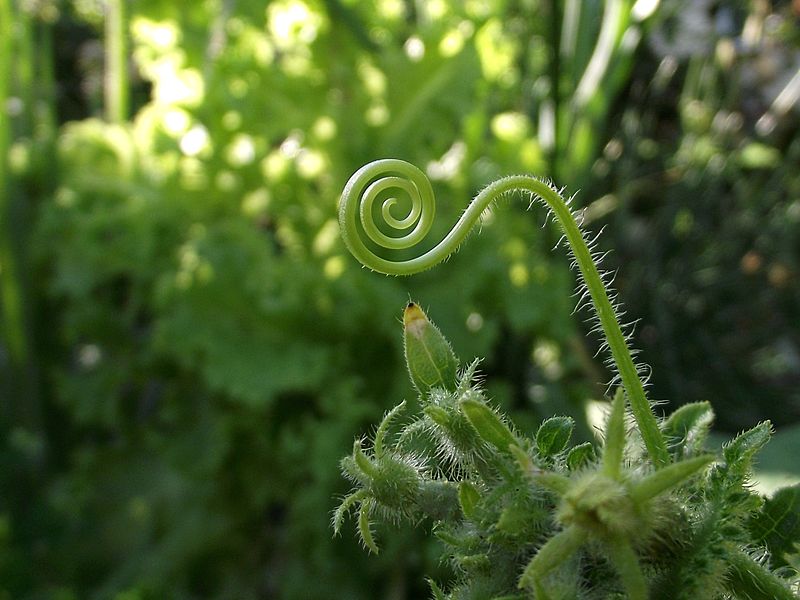
  1.   Bill wandered around his garden, his camera in his hand. The cucumber tendrils that curled in a delicate helicoid were simply too perfect to be ignored.
"Kurgiväät" by Robert Reisman (WooteleF) - Own work. Licensed under CC BY 3.0 via Commons - https://commons.wikimedia.org/wiki/File:Kurgiv%C3%A4%C3%A4t.jpg#/media/File:Kurgiv%C3%A4%C3%A4t.jpg
Cucumber tendril. Photographer: Robert Reisman  Wikimedia Commons

2. The staicase in the old building had been designed like a never-ending helicoid:

Image courtesy of Pixabay

3. For this I have written a short story. It mght be best for anyone who detests physical geography to just ignore it.  🙂

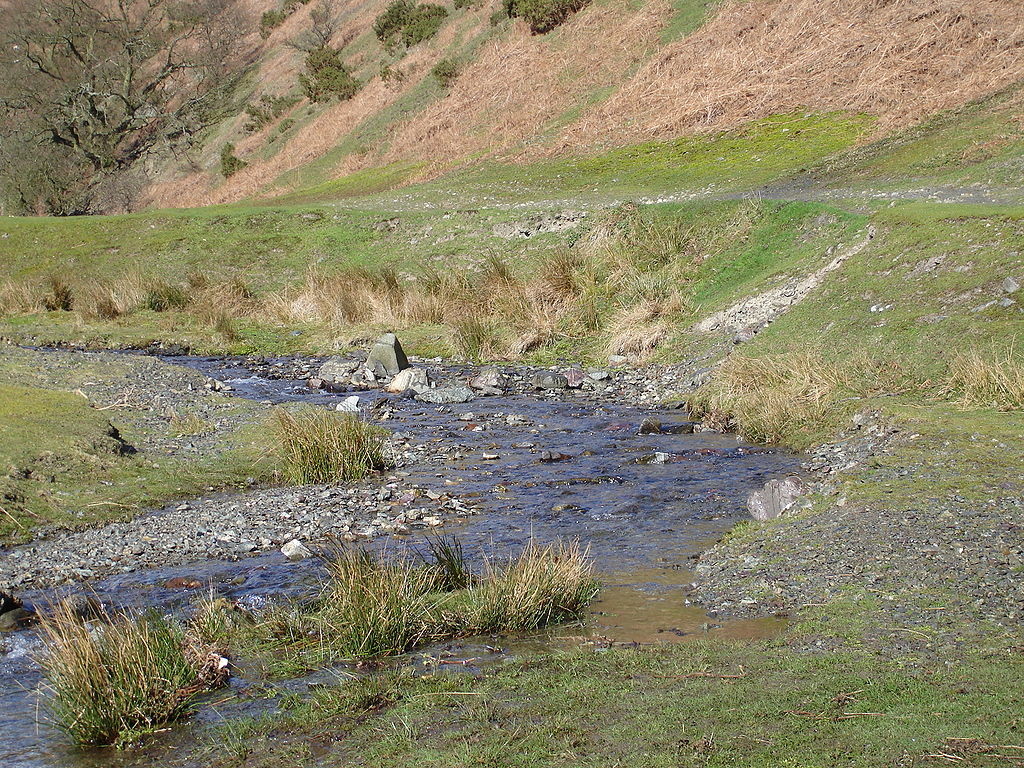
Meander in Ashes Hollow. Author S, Knights.https://commons.wikimedia.org/wiki/File:Meander_in_Ashes_Hollow.jpg
Meander in Ashes Hollow. Author S. Knights: Wikimedia Commons

Mr. Anderson gestured to the meander along a section of the winding stream the Year 10 students had come to study as part of their geography field work.

‘Right then,’ he started, ‘who can tell me how the helicoidal flow of the river contributes to the development of a meander?’

Fifteen year old Matthew Johnson raised his hand. ‘Helicoidal flow means the way the water flows in spirals, a bit like a corkscrew, Sir.’

‘OK… good so far, Matthew.  Now we know what helicoidal flow means. So how can we apply that knowledge to explain how it helps the development of a meander?’

Mary Scrimshaw tentatively raised her hand. ‘It’s to do with the way the surface flow of the water hits the outer, steeper bank, over there,’ she said, pointing across the stream, ‘helping to further erode it. Then the water sort of does a somersault as it bounces off it…’ She hesitated as a few students giggled at the idea of the water doing a somersault.

‘Excellent, Mary,’ Mr Anderson said with an encouraging smile. ‘The somersault you describe is due to the helicoidal motion of the water. Anything more to add…?

Mary took a breath. ‘The water that hits the outer bank then flows along the river bed – eroding more material as it goes, making the middle of the meander quite deep.  Then, when this eroded … er … sediment reaches the opposite bank – the inside bank, that is, where the current is slower – the river dumps it. This makes a sort of little beach on that side.’

Mr. Anderson beamed. ‘Wonderful, Mary… Now, would someone else tell us what we call this area that Mary described as like a ‘little beach’.

‘It’s a slip-off slope’, Jamie Rogers, blurted, looking pleased with himself for knowing that.

‘Hand up, next time James,’ Mr Anderson reproved. ‘But you’re right, a slip-off slope it is.

‘Now, before you begin your sketches, I need to remind you that all this is due to the helicoidal flow and I’d like your completed cross-sections that accompany your sketch to clearly illustrate how that works…’

***

I must confess that I don’t find helicoid a particularly attractive word. I’d much prefer to use helical or spiral in my writing. Helicoid works very well in maths and geography, though. And, after all, my WOW posts are not just restricted to beautiful words – much as we all like them. Many words in our vocabulary are not lovely… but certainly just as important.

If you’d like to view more interesting words, visit Heena’s Page

Word Treasure

The Sisterhood of the World Bloggers Award

sisterhood-award

Having only recently responded to one a blog award nomination, I still have three more to do – so I thought I’d better get on with them. I’m doing each according to when I received the nomination, and this one, from Maria, at Doodles and Scribbles, is from late September.  I really do appreciate being nominated for these awards, but time hasn’t been a particular friend of mine recently. So I must apologise to Maria for hanging onto it for so long. I don’t seem to have enough hours in the day to fit everything in that I need to. Maria writes some lovely posts, including many great flash fiction stories, and I recommend you to take a look at her blog.

The Sisterhood of the World Bloggers Award is one I’ve had before, but not this particular version. I was pleased to find that it didn’t ask for any more facts about me, as I’ve used up a lot of those recently!

The rules for this award are as follows:

shutterstock_140966836

  1. Thank the giver and link their blog to your post.  (done)
  2. Answer the 10 questions given to you.
  3. Pass the award on to ‘N’ (as many as you want) other bloggers of your choice and let them know that they have been nominated.
  4. Give your nominees 10 of your own questions to answer.
  5. Include the logo of the award in a post or on your blog (first image above)

Right then, now to answers the questions:  

smiley-821993_1280

  1. Why do you write?

I’ve always loved to write (such a typical response!). Even in primary school I wrote stories about all kinds of things, often inspired by what I’d been reading at home or at school, or games created in the playground. I was always good at the basic spelling, punctuation and grammar, so it was just a case of using my imagination – which I never had a problem with. Nowadays, I write my books because I have a story to tell and need to get it out. I also become very involved with my characters and love developing them.

2. If you were to create a fictional character for yourself, who it be and why?

Having finished two of the three books of my trilogy, I can say that I’ve created a lot of fictional characters. Several of them, like Alfred the Great, are actual historical characters, so I’ve had to be careful to comply with whatever has been historically documented. But my story is set in the 9th century, when little was written about individuals’ characters, especially those of women. So it’s down to authors to flesh out the details. Sometime in the future, when I’ve finished this trilogy, I’d like to create some interesting Roman characters for a historical crime novel set in Roman Britain. At the moment my protagonist is likely to be a legionary based up on Hadrian’s Wall who will have some devious characters to deal with.

3. What’s your favorite book?

I haven’t got a single favourite book. I’ve read a lot of excellent novels, and enjoyed and admired the skills of the authors who wrote them. I read mostly historical fiction and crime novels, and really like a combination of the two. For historical fiction I’ve enjoyed books by Dorothy Dunnett, Wilbur Smith, Bernard Cornwell and Harper Lee. For crime novels, I’ve liked many authors, most recently Val McDermid. I’ve also enjoyed some of Patricia Cornwell’s crime books which delve into the forensic side of things. If someone twisted my arm for a single, favourite, I would have to cite ‘Game of Kings’ the first book of the Lymond Chronicles as my all-time favourite.

4. Idealism or realism?

I think we need a dollop of both idealism and realism in life: they balance each other out nicely. I believe a life spent totally in fantasyland can be a dangerous thing. We all need to live in the real world and face up to how things really are. Conversely, most of us can dream of having a better life, a better future – both for ourselves and the world in general. In my view, the bravest people are those who go out there and work towards making that happen.

5. What quote do you live by and why?

The quote(s) I like best are those which simply say ‘Be Yourself’. I think it’s so important to keep a firm idea in your head about who you actually are and not behave in a way you think will impress other people. Some of the unhappiest people around are those who try, or pretend, to be something they’re not. I don’t mean we shouldn’t aim high and work hard to achieve better things in work and home life – but when it comes down to it, we need to know ourselves to be ourselves

6. What’s the most challenging thing about being a woman?

For me, the most challenging thing about being a woman has been the need to balance bringing up a family and having a career. Having six children and a teaching career, I found it impossible to work for several years whilst the children were all still young. I admit, I wouldn’t have wanted to leave them with child-minders anyway, as few people did that in those days. And we never lived close to any family. When I had just the four children, I did take on teaching evening classes a few nights a week at a nearby boys’ detention centre  – which has now become a men’s prison – for a few years (the ‘boys’ being aged 14-21). That worked well for us because my husband was home from school by then. But even when I returned to teaching at a secondary school it was hard work fitting in all that needed to be done at home as well as finding time for the marking and preparation of school work. But, as they say … needs must.

Nowadays many women return to work within weeks of giving birth, whether through financial necessity or a love of their careers. Grandparents are called on a lot, and childminding has become far more stringently controlled and managed, almost as a ‘career’. And rightly so: parents need to know that their children are in reliable and responsible hands.

7. If you could spend a day with a character in a book or movie, who would it be and why?

The character I would most like the ‘get my head around’ is Francis Crawford of Lymond, from the novels by Dorothy Dunnett, set in 16th century Scotland. My daughter, Louise, is probably an even bigger fan than I am, and has read the series umpteen times. I have only read the books once and know I should read them again. Lymond, as he’s generally called, is one of the most complex characters I’ve ever come across in a novel and, even if I spent a day with him, I’d barely begin to unravel his many foibles, motives and incredible strengths. After a week, I still don’t think I’d understand the way his mind works and I’d probably want to kill him from the sheer frustration of that. He’s an awesome and totally intriguing character.

8. What is the first thing that comes to mind when you hear ‘feminism’.

Feminism to me means women having equal rights to men. It can conjure up images of the antics of people like Germaine Greer back in the 1960s in their attempts to bring this to public attention. Undoubtedly such antics were intended to shock and get people to take note of the subject of women’s rights, both in the home and workplace. This ‘getting noticed’ plan was little different to the actions of the Suffragettes at the end of the 19th/ beginning of the 20th century. To me, fighting for those rights was justified, in many ways. We only have to watch films and comedy shows set in the 60s to remind us of the way in which women were viewed in western society back then. I believe that, in a place of work, if a woman does the same job as a man, then equal pay is her right. Jobs which involve the physical strength and size of a man are a different thing.

The bad side of feminism that too often raises its ugly head, is women behaving in a derogatory way towards men and being totally obnoxious to any man who offers simple courtesy towards them -by keeping a door open for them, for example (I’ve seen that happen.) To me it’s common courtesy to keep a door open for anyone following behind me, man or woman.  But this particular woman gave the poor man who’d held the door for her a real mouthful of abuse and the usual accusation of being a chauvinist pig! I won’t go into any more examples, but there’s a nasty side of feminism as well as a positive side of equal rights and equal pay. As for drunken and lewd behaviour, my feelings about that are applicable to both sexes. It shouldn’t happen – certainly not on the streets.

9. Name one thing you will never do in life.

Apart from the obvious things like committing crimes of extreme violence (!) and posing naked, I’m struggling to answer this one. I could say that I’d never swim with sharks – or even go down in a metal cage – because I have a real phobia about them. I went snorkelling on the Barrier Reef (Australia) a few years ago, to be asked by our two huge Australian guides when I got back in the boat, if I’d seen the shark down there. I hadn’t … but talk about freaking me out!

shark-47634_640

It was only a reef shark, they said. But a shark’s a shark to me! It put me off snorkelling for a while. But I just can’t resist lovely clear, blue water.

10. If your blog is a body part, what would it be and why?

I don’t see my blog as a body part. I know some people will see it as their heart, but I simply see it as an extension of myself and my writing, and another outlet through which the creative juices can flow. I love my blog dearly because of the wonderful people I’ve ‘met’ and ‘talked’ to regularly, but when it comes down to it, my priority right now is my trilogy. I love writing my blog posts though, particularly the flash fiction, and I also love doing my travel and historical posts. But my own writing needs more attention right now because I’ve neglected Book 3 for a lot of this year whilst indulging myself on WordPress. It’s now time for me to ease off on my blogging.  I won’t be saying farewell to all of my heart – just a part of it.

shutterstock_139583279

I’ll pick up the pieces later on.

***

And here are my nominees:

point-36834_640

Norma at Emovere

Amanda at Something to Ponder About

Susan at Susan’s Personal Blog

Morgan at The Diary of a Computer Science Student

writenlive at Read Write Live

Jean at White House Red Door

Chioma at livehomeandaway

Bekki at Dartmoor Yarns 

Joy at Tales fron Eneana

Daniela at DanielaApostol

Questions for my nominees:

shutterstock_141264133

1. How would you describe what your blog is about?

2. Do you see your blog changing (as in expanding or developing in any way) at some stage in the future?

3. Do you write your blog posts straight onto the WordPress page or onto a word document first?

4.  When you write do you need to be on your own or are you happy to write with others around you?

5. Which is your favourite species of tree, and why do you like it?

6.  If you were to have a day out somewhere easily reachable from your home, where would it be?

7.  Which ‘celebration’ (annual or otherwise) in the country where you live do you enjoy the most?

8.  Which way would you choose to travel, given the choice: car or train?

9. Which subject did you enjoy the most at school?

10. What do you think is the best thing about being a woman today?

A Penny For The Guy . . .

Spectators gather around a bonfire at Himley Hall near Dudley, on 6 November 2010
Spectators gather around a bonfire at Himley Hall near Dudley, on 6 November 2010. Author: SJNikon – Sam Roberts. Wikimedia Commons

On November 5th last year I wrote this post about how the celebrations for Bonfire Night – or Guy Fawkes Night – in the U.K. have changed since my childhood in the 1950s. Yesterday, I posted about the history behind the celebrations and thought it might be an idea to re-post this to complement it. I’ve made a few minor changes to the original and added a couple of pictures (I had no idea I could use Wikipedia or Wikimedia images when I first started my blog!). So here it is...


milliethom's avatarMillie Thom

6_november_bonfire_from_flickr_user_sjnikon Spectators around a bonfire at Himley Park near Dudley Nov. 6. 2010. Author: S.J. Nikon -Sam Roberts. Commons

Remember, remember, the fifth of November,

Gunpowder, treason and plot.

I see no reason why gunpowder treason

Should ever be forgot.

This well known rhyme has been sung in Britain by generations of children as November 5th approached. It is still sung in primary schools as children are taught the historical significance of Guy Fawkes Night / Bonfire Night and why it is celebrated with bonfires and fireworks. Literacy, drama and art work of all types also stem from this colourful spectacle.

There’s more than enough online about Guido Fawkes and his co-conspirators, and why they wanted to blow up King James I and the Houses of Parliament, so I won’t elaborate on that. Guido suffered one of the most horrible deaths imaginable for his part in the plot – and being…

View original post 592 more words

Remember, Remember…

shutterstock_118892797

Last November I wrote a post about how Bonfire Night, or Guy Fawkes Night, is celebrated in the U.K. today – and how different it is now to when I was growing up in the 1950s and 60s. In that post, I didn’t focus on why Bonfire Night is celebrated in the first place: in other words, I wrote little about the history behind the event.  But in this post, that’s what I do intend to do…

In earlier centuries, the Gunpowder Plot of 1605 was often called the Gunpowder Treason or the Jesuit Treason (treason being a crime involving disloyalty to the Crown in any way, including plotting against the sovereign’s life). It was a failed plot by thirteen Catholics to assassinate James I by blowing up the Houses of Parliament.

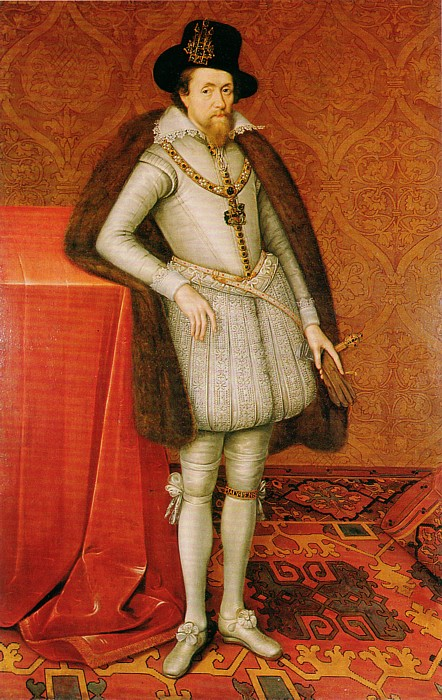
Portrait of James VI and 1, c. 1606, by John de Critz. Now located in the Dulwich Picture Gallery. Public Domain

So what was the reason for the plot?

When Queen Elizabeth I died in 1603, English Catholics who had been persecuted under her rule had hoped that their future would be greatly improved, and her successor, James I, would be more tolerant of their religion. James  had had a Catholic mother (Mary Queen of Scots) and had a Catholic wife. At first, the signs were promising and reforms were made. But by 1605, under pressure from his spymaster, Sir Robert Cecil, and in an effort to appease the more extreme Protestants such as the Puritans, James once again incresed the penalties on anyone practising the Catholic faith.  He ordered all Catholic priests to leave England.

Robert Cecil, 1st Earl of Salisbury. National Portrait Gallery. Wikimedia Commons. Public Domain
Robert Cecil, 1st Earl of Salisbury by John de Critz the Elder. National Portrait Gallery. Wikimedia Commons. Public Domain

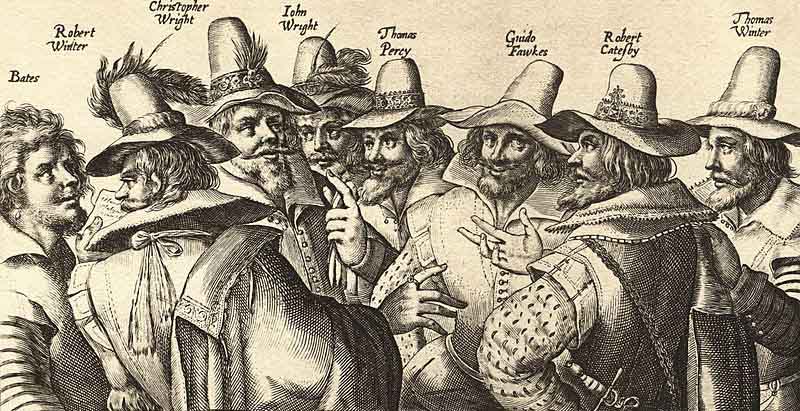
This so angered some Catholics that they were willing to take extreme measures, supported by the Catholic monarchies of Europe. Two plots against James had already failed when a third group of plotters began to take shape, under the leadership of Robert Catesby, a well-to-do gentleman of Warwickshire. The thirteen young men hatched a plan to strike at the opening of Parliament on November 5th, 1605. Eight of them are shown on this picture:

Detail from a contemporary engraving of the Gunpowder Plotters. The Dutch artist probably never actually saw or met any of the conspirators, Source: National Portrait Gallery. Wikimedia Commons

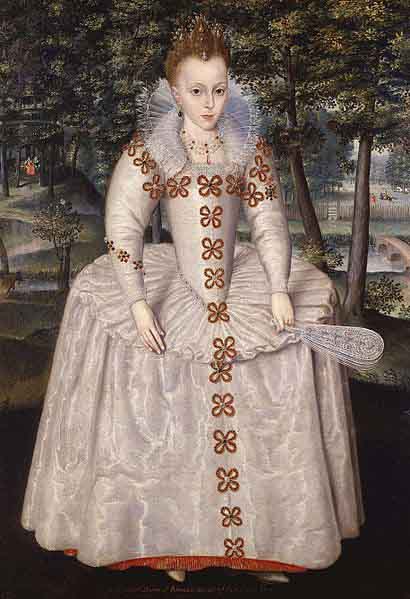
Once James was dead, they intended to put his daughter, Elizabeth, on the throne, thus returning England to the Catholic faith.

Princess Elizabeth of Bohemia, daughter of James 1. Artist: Robert Peake the Elder 1551-1619. Photographer@ Weiss Gallery. National Portrait Gallery, London. Wikimedia Commons. Public Domain.
Princess Elizabeth of Bohemia, daughter of James 1. Artist: Robert Peake the Elder (1551-1619). Photographer: Weiss Gallery. National Portrait Gallery, London. Wikimedia Commons. Public Domain.

It was Guy Fawkes (who had adopted the name of Guido while fighting for the Spanish) who posed as a servant called John Johnson and began locating sources of gunpowder.

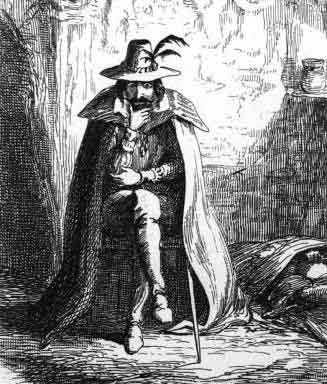
Guy Fawkes by Cruikshank
Guy Fawkes in Ordsall Cave by George Cruikshank in 1840. Public Domain. Wikimedia Commons

The plotters rented a cellar/undercroft beneath the House of Lords (a chamber inside the Houses of Parlaiment shown on the first image above) and began stocking it with enough explosives to kill the king and the most powerful men in the land when they met on November 5th. Eventually they managed to store 36 barrels of gunpowder, enough to reduce the House of Lords to rubble.

The cellar underneath the House of Lords, as drawn by William Capon, 1799. Public Domain. Wikimedia Commons.

As the day planned for the strike neared, it became clear to some of the plotters that innocent people would be killed in the attack, including people who had fought for the rights of Catholics.   Lord Monteagle, the brother of  Francis Tresham, one of the plotters, received an annonymous letter (almost certainly from Tresham)  warning him to avoid attending the opening of Parliament on November 5th. Monteagle passed the letter to Robert Cecil.

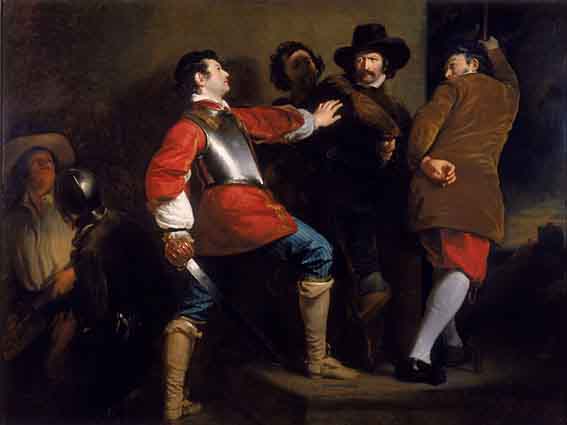
Cecil decided not to act immediately: he wanted to catch the plotters in action. On November 4th he ordered searches of the whole of the Houses of Parliament and Fawkes was arrested. He was dressed ready for a swift get-away, with spurs on his boots.

Painting of the discovery of the Gunpowder Plot and the taking of Guy Fawkes by Sir Thomas Knevet. 1823. Source: Henry Perronet Briggs - http://www.parliament.uk/gunpowderplot/children_arrest.htmWikimedia Commons
Painting of the discovery of the Gunpowder Plot and the taking of Guy Fawkes by Sir Thomas Knevet. 1823.
Source: Henry Perronet Briggs – http://www.parliament.uk/gunpowderplot/children_arrest.htm    Wikimedia Commons

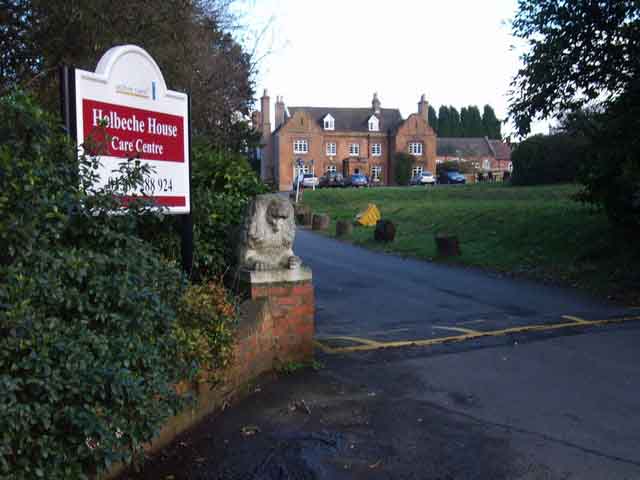
Most of the conspirators fled as they learned of the plot’s discovery. Several made a stand against the pursuing Sheriff of Worcester and his men at Holbeche House, Catesby’s home.

 Holbeche House near Dudley was home of Robert Catesby leader of the Gunpowder plot. It is now a nursing home. Author: Gordon Griffith. geog.org.uk. Creative Commons
Holbeche House near Dudley was the home of Robert Catesby, leader of the Gunpowder Plot. It is now a nursing home. Author: Gordon Griffiths. geog.org.uk. Creative Commons

Catesby was one of the plotters shot and killed, leaving eight of the survivors, including Guido Fawkes, to stand trial.

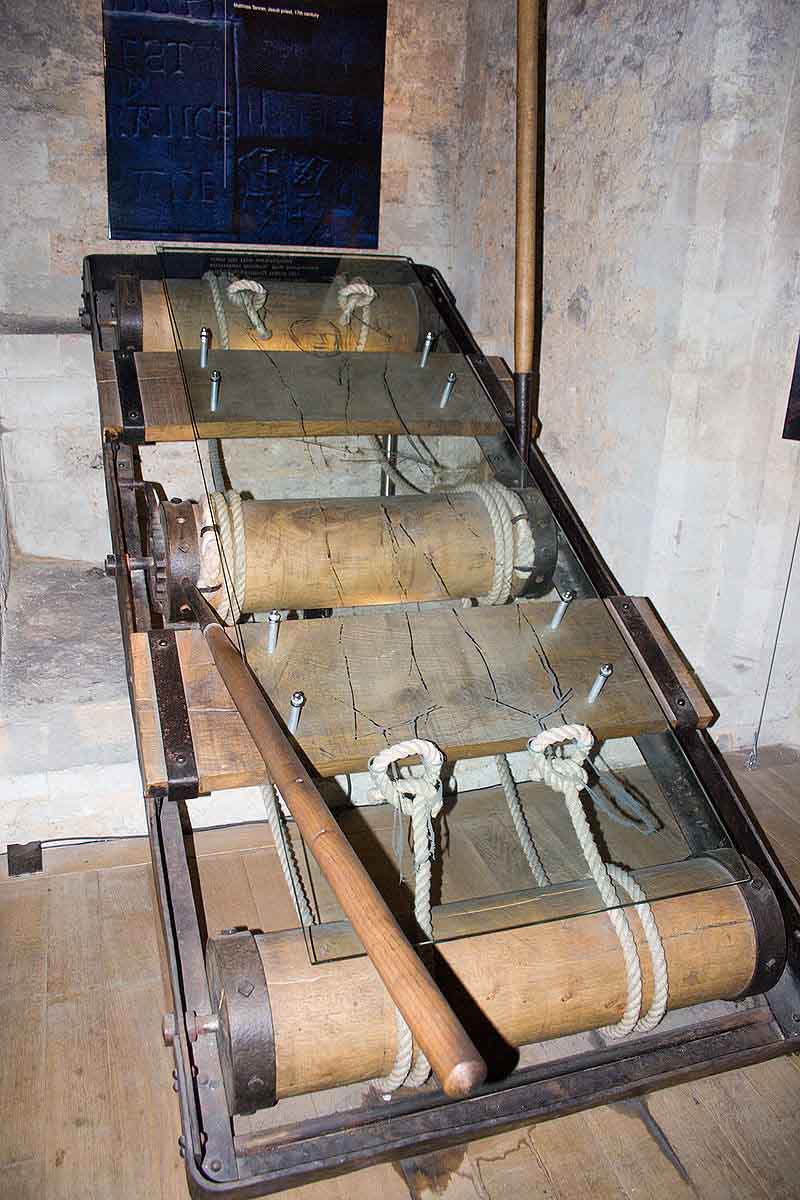
Fawkes suffered two days of severe torture on the rack in the Tower of London before confessing everything.

A torture rack (as the one used on Guido Fawkes) photographed in the Tower of London by David Bjorgen. Creative Commons

His chief interrogator  was Edward Coke:

Sir Edward Coke Author: attributed to Thomas Athow, after Unknown artist, after Cornelius Johnson. Public Domain. Wikipedia Commons
Sir Edward Coke, chirf interrogator of Guido Fawkes.  Author:
attributed to Thomas Athow, after unknown artist, after Cornelius Johnson. Public Domain. Wikipedia Commons

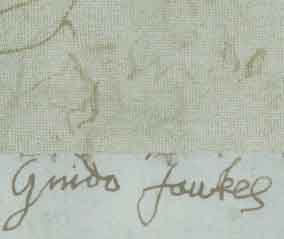
The confession Fawkes signed shows how much his joints, including those in his hands, had been so severely damaged.

Signature of “Guido” on his confession under torture, very faint and shaky. Public Domain

At their trial on January 27th 1606, the eight surviving conspirators, including Fawkes, were convicted of high treason  and condemned to be hanged, drawn and quartered.

The execution of Guy Fawkes' (Guy Fawkes), by Claes (Nicolaes) Jansz Visscher, given to the National Portrait Gallery, London in 1916. Wikimedia Commons
The execution of Guy Fawkes’ (Guy Fawkes), by Claes (Nicolaes) Jansz Visscher, given to the National Portrait Gallery, London in 1916. Wikimedia Commons

The punishment consisted of the the victim being dragged, usually by a horse, on a wooden frame to the place where he was to be publicly put to death. This involved a gruesome procedure in which the victim was first hanged until almost dead, them emasculated, disembowelled, beheaded and quartered (cut into 4 pieces).  The intestines /entrails were thrown onto a fire and the other remains were usually displayed in prominent places, such as London Bridge.

In the months after the plot, new laws were passed removing Catholics’ right to vote and restricing their role in public life.  It was 200 years before these restrictions were fully lifted.

*

In Britain we continue to celebrate the failure of the plot against James I and the execution of his would-be assassins on November 5th every year. The burning of a ‘guy’ – an effigy of Guido Fawkes on top of a bonfire – has ensured the plot survives in national memory.

Remember, remember, the fifth of November

Gunpowder, treason and plot.

I see no reason why gunpowder treason

Should ever be forgot.

Here are a few pictures of Bonfire Night in the U.K.

Word of Week (WOW) – Guttersnipe

wow (1)

Word of the Week (WOW) is a weekly challenge created by Heena Rathore P. It’s a fun way to learn new words every week. To participate, simply do a post with your word and leave the link as a comment on Heena’s WOW post for this week (above link).

This is my second time through the alphabet and I’m looking at the letter this week. Last time round I did the word gregarious.

So here is my WOW for this week: 

xenomania

Word

Guttersnipe

Pronunciation:

gut·ter·snipe

[guht-er-snahyp] ((gŭt′ər-snīp′)

Audio:

guttersnipe

Part of Speech

Noun

Related Forms:

Adjective: guttersnipish

Meaning:

  1. A child of the slums who spends most of his or her time in the streets:
Street Urchins: oil on canvas. Artist: Karl Witkouski, 1810-1910. Public Domain

2.  A contemptuous term applied to anyone regarded as having the unsavoury manners, morals, etc. sometimes associated with those living in filth, poverty, or squalor.

rude-151093_1280


Word Origin:

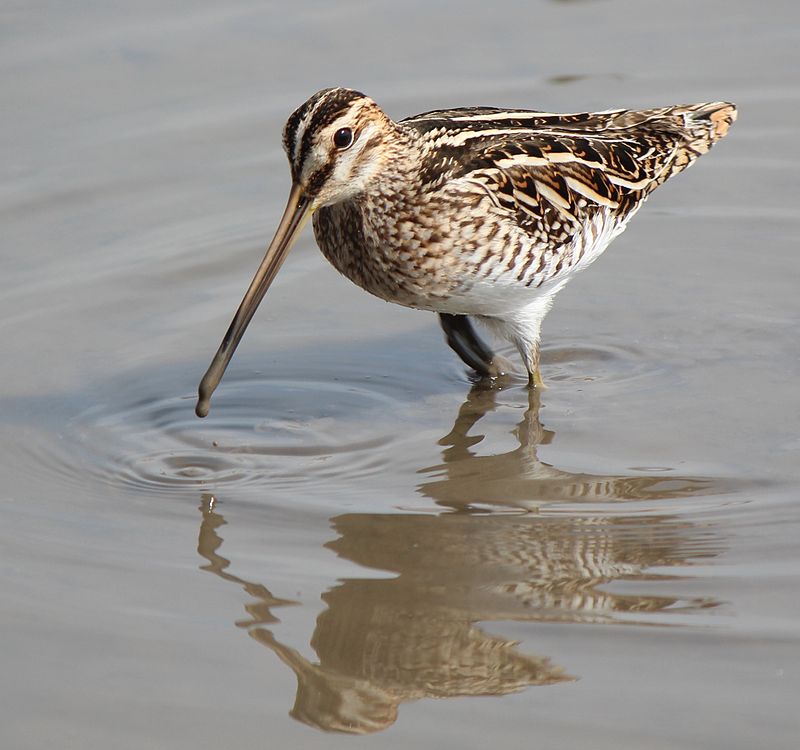
C19: (1855-60) gutter+ snipe: originally a name applied to the common snipe (the bird the common snipe, which picks food out of gutters – and well suited to the boggy marshlands around rivers like the Thames in Victorian London) then to a person who gathered refuse from gutters in city streets.

Common Snipe. Author: Alpsdake. Commons

Synonyms:  urchin, street urchin, ragamuffin, waif, stray, outcast, orphan, scarecrow, gamin (dated)

archaic: mudlark, scapegrace, street Arab (offensive) wastrel, tetterdemalion

Two guttesnipes, 1910. Author: Egon Schiele. Public Domain

Use in a Sentence:

For this, I just have a short story:

Mrs. Rowbotham scowled as she walked into the classroom full of overexcited adolescents. Teaching English to this lot on Bonfire Night was going to be well nigh impossible. Normally well behaved, today, all they could think about was how many fireworks they’d got.

‘Silence!’ she growled as she reached her desk. Silence was instant, as she expected. No one argued with her. ‘You’re behaving like a room full of guttersnipes! And I don’t like mannerless brats in my room.’

Matthew Henderson’s hand shot up, the cheeky grin on his face blatant. This cocky lad always considered himself spokesman for the group.

‘Take that ridiculous grin off your face before you speak, Matthew, or you’ll be seeing me at the end of school.’

The grin instantly dropped. ‘Sorry Miss. I just wanted to ask what a guttersnipe was.’

Mrs. Rowbotham sighed. ‘Does anyone here know what a guttersnipe is …? Well,’ she continued after a negative response, ‘guttersnipe is an old word that can mean someone – generally a child – who spends his or her life in the streets. It could refer to the homeless and destitute, or to someone who lives in an area of squalid housing. It’s often associated with the filthy conditions of the Victorian slums. But we still see the word used today, often in a derogatory way, referring to people living on the streets in many areas around the world. Their situation is often very sad…

A homeless man in Paris, June 2005. Author: Eric Pouhier. Commons

We can also use the word to mean someone with shockingly bad manners – like you rowdy lot today!’

Jenny Marsden’s hand shot up. ‘I saw a great film once… about a Victorian woman called Eliza who came from the slums o’ London. Filthy she were; never ’ad  a bath. She sold flowers in the streets to get money t’ buy food –’

‘And this ’ere rich bloke comes along and decides to make  ’er  into a lady,’ Danny Roberts cut in, ‘with posh manners un’ all. Right good film, that were.’

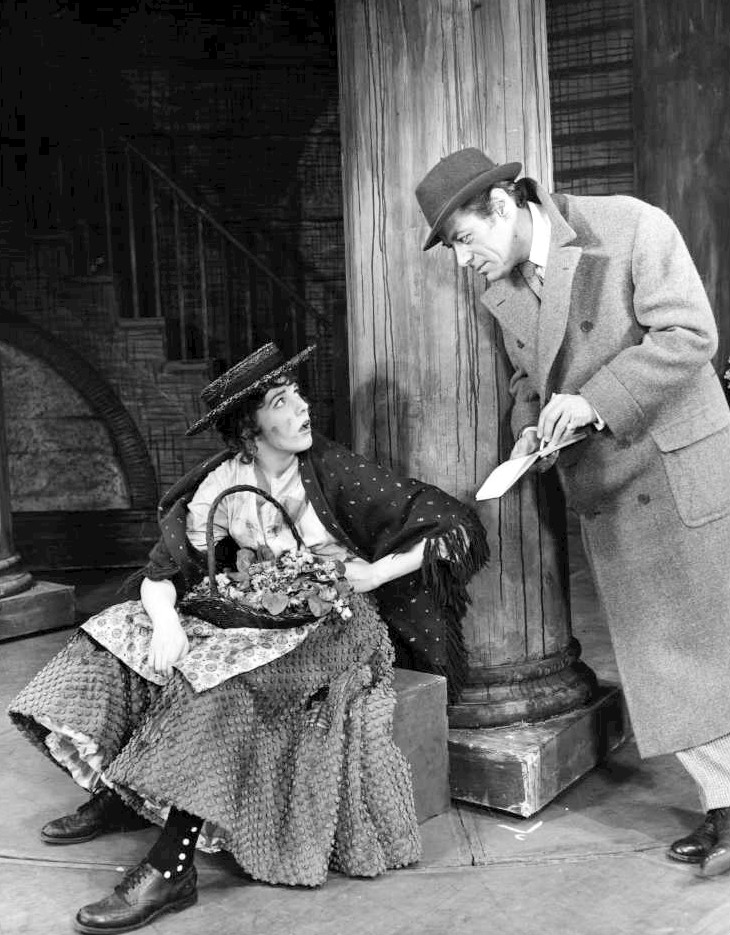
Julie Andrews and Rex Harrison from My Fair Lady. Flower girl, Eliza meets Professor Henry Higgins.

The buzz of agreement sounded and Mrs. Rowbotham nodded approvingly. ‘Ah, so now we’re getting somewhere. The film is undoubtedly ‘My Fair Lady’, based on a play called ‘Pygmalion’ by George Bernard Shaw – although it’s set in Edwardian times, Jenny, a little later than Victorian era. A young, ill-brought-up woman, who lived in the slums of London… Though she wasn’t completely destitute, her appearance and uncouth manners provide a good example of a guttersnipe.

Mrs. Rowbottom  smiled as she lifted a set of books down from the shelf. Though not the lesson she’d planned, ‘Pygmalion’ would do very nicely for a day like Bonfire Night.

‘Please Miss, can I be Professor ’iggins….’ Matthew’s voice rang out.

*

(I’m quite fond of Professor Higgins. I was a Higgins for 23 years before I got married – my dad was Thomas Higgins.  The Yorkshire kids I taught at that time always dropped the ‘h’, so I was invariably Miss ’iggins to them!)

*

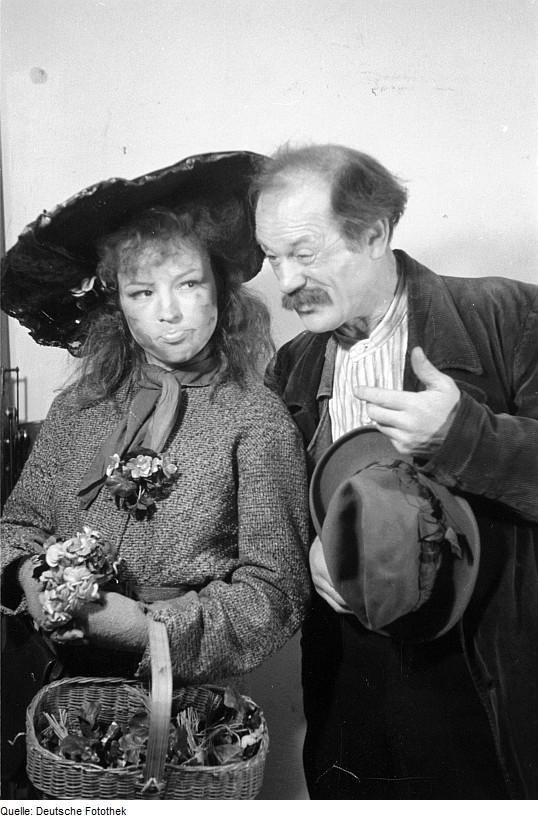
"Pygmalion" by George Bernard Shaw at the Rheingau Theatre in Berlin c1946. Eliza Doolittle with her father. Wikimedia Commons.
“Pygmalion” by George Bernard Shaw at the Rheingau Theatre in Berlin c1946. Eliza Doolittle with her father. Wikimedia Commons.
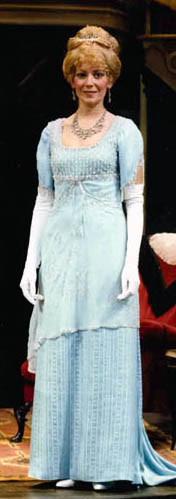
Delrae Knutson as Eliza Doolittle in My Fair Lady, 1986. Author: Delrae Knutson. Commons

If you’d like to view more interesting words, visit Heena’s Page

Word Treasure

A Piece of Flash and a Frog.

nature-808795_1920

This is a short story I wrote earlier this year, intending to post it for a flash fiction challenge (FFfAW) which had a duck pond as the prompt. In the end, I wrote a story about a witch and the ducking stool and posted that one instead. That story can be found here. I came across this story sitting in my Documents file today, and as I’ve (reluctantly) given up writing flash fiction for a while, I thought I might as well bring it out of hibernation. The picture is not the same prompt: this one is courtesy of Pixabay.

So here’s my story:

Frog Wisdom

Drusilla hovered over the edge of the pond, scanning the blue-green water. Around her, the greening leaves of forest trees rustled in the April breeze.

‘Where are you, Alfrin?’ she called. ‘I know you’re down there somewhere. I saw you shoot off when I asked you to lay the table.’

After a few moments, she heaved a sigh. ‘If you don’t show yourself this minute, I’ll send your father to fetch you. You can’t hide anywhere from him, you know.’

A tiny head bobbed up, right next to a lily pad on which a big, green frog squatted. ‘But Dad’s already here!’ Alfrin retorted. ‘He’s showing me how to play hide-and-seek with the tadpoles.’

Freda, the frog, nodded sagely. ‘Of which I heartily approve. Our children need to play.’

A larger head suddenly emerged. ‘Hello darling. The water’s lovely… just couldn’t resist…’

Drusilla flapped her wings, ready to rant, then paused. Alfrin was learning to socialise, after all.

Two water sprites in the family would try the patience of any self-respecting fairy.

elf-157508_1280

Word Count: 173

Autumnal Fountains

144

On Sunday, 25th October, we set off from Newark and up the A1 on our way up to Yorkshire. Along with us was the younger of our two daughters, Louise (afairymind on WordPress). The three of us had decided to have a day out at Fountains Abbey to celebrate our wedding anniversary and Lou’s birthday the previous day.

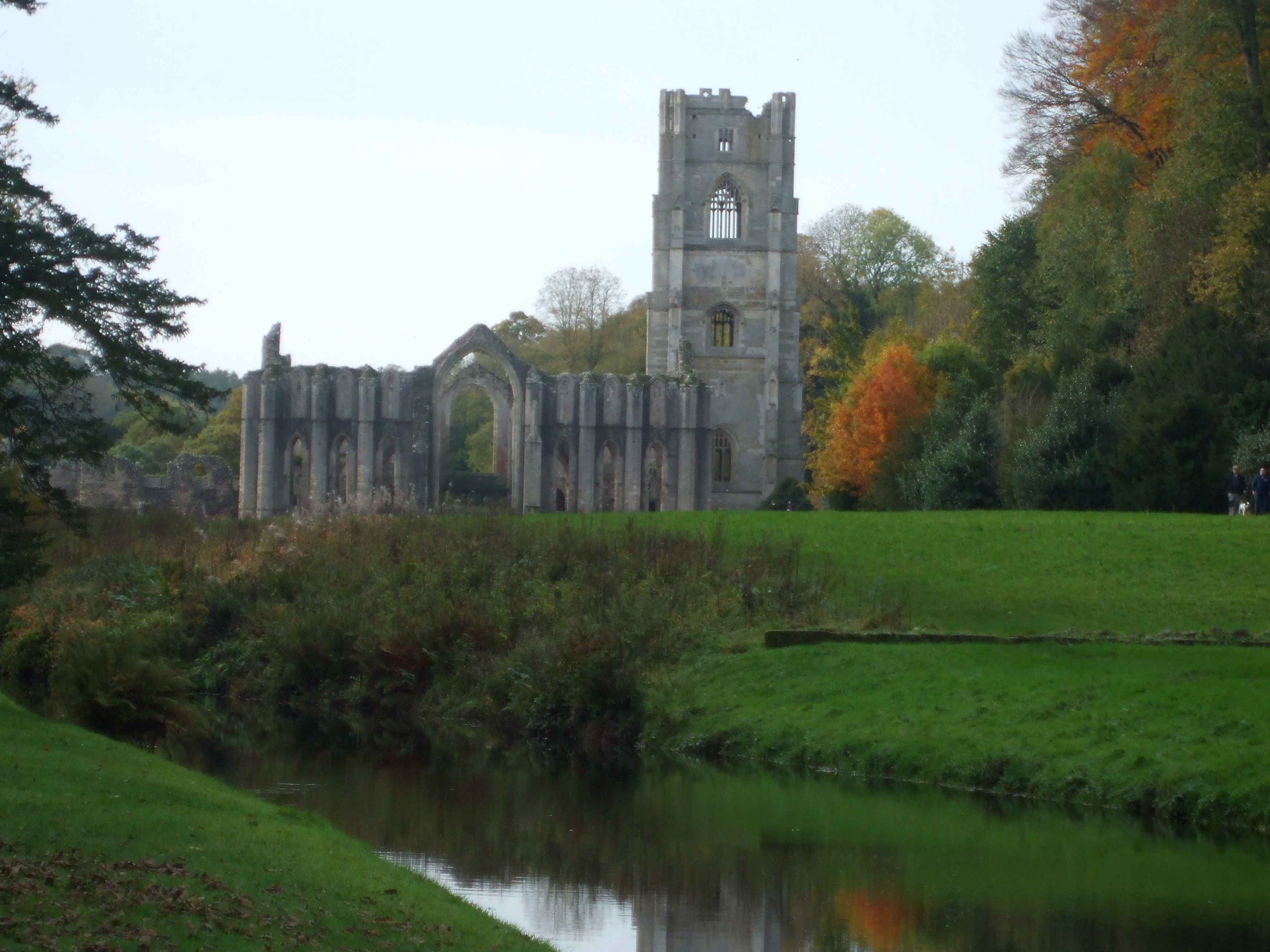
Fountains Abbey is one of the best preserved Cistercian abbeys in England and is located 3 miles south-west of Ripon, near to the village of Aldfield in North Yorkshire.

1024px-North_Yorkshire_UK_location_map

It stands in the valley of the River Skell, which flows eastwards from the boggy, Dales moorland until it enters the grounds of Studley Royal Park, past Fountains Hall and the ruins of Fountains Abbey:

111

The first monks came to this valley on December 27th 1132. The thirteen devout monks had become dissatisfied with the extravagant lifestyle of the monks at the Benedictine Abbey in York and wanted to return to the simpler teachings of St. Benedict. This led to a riot, and under the protection of Thurstan, the Archbishop of York, they fled the abbey to stay at his palace in Ripon. The archbishop’s lands included those alongside the River Skell, which he granted to these monks in order to build their new abbey.

The monks survived the winter by sleeping beneath an elm tree, with only straw for covering themselves. Their only food was the bread sent to them by Archbishop Thurstan. Desperate for help they wrote to Bernard, Abbot of Clairvaux in France, who willingly offered to help.

The first wooden church was quickly contructed, to be replaced some years later by a small one of stone. In 1160, masons completed the great Abbey Church – the ruins of which we see today – using  sandstone cut from the cliff on the valley side:

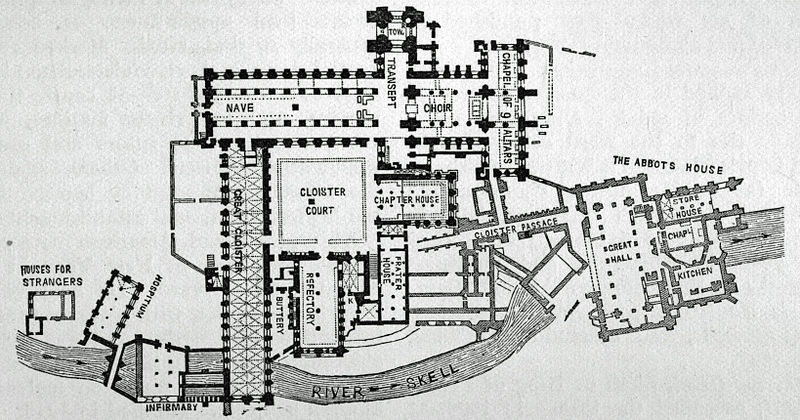
Building work continued until all the structures necessary to the running of a monastery had been completed. These would include: a Guest House, an Infirmary for sick and elderly monks, the Abbot’s House and a Chapter House. Several rooms, some set around the open Cloister, such as the Refrectory (dining room) Warming house and Library, served for everyday needs.

Plan of Fountains Abbey from an early 20th century encyclopedia. Author unknown. Public Domain.
Plan of Fountains Abbey from an early 20th century encyclopedia. Author unknown. Public Domain. Wikimedia Commons

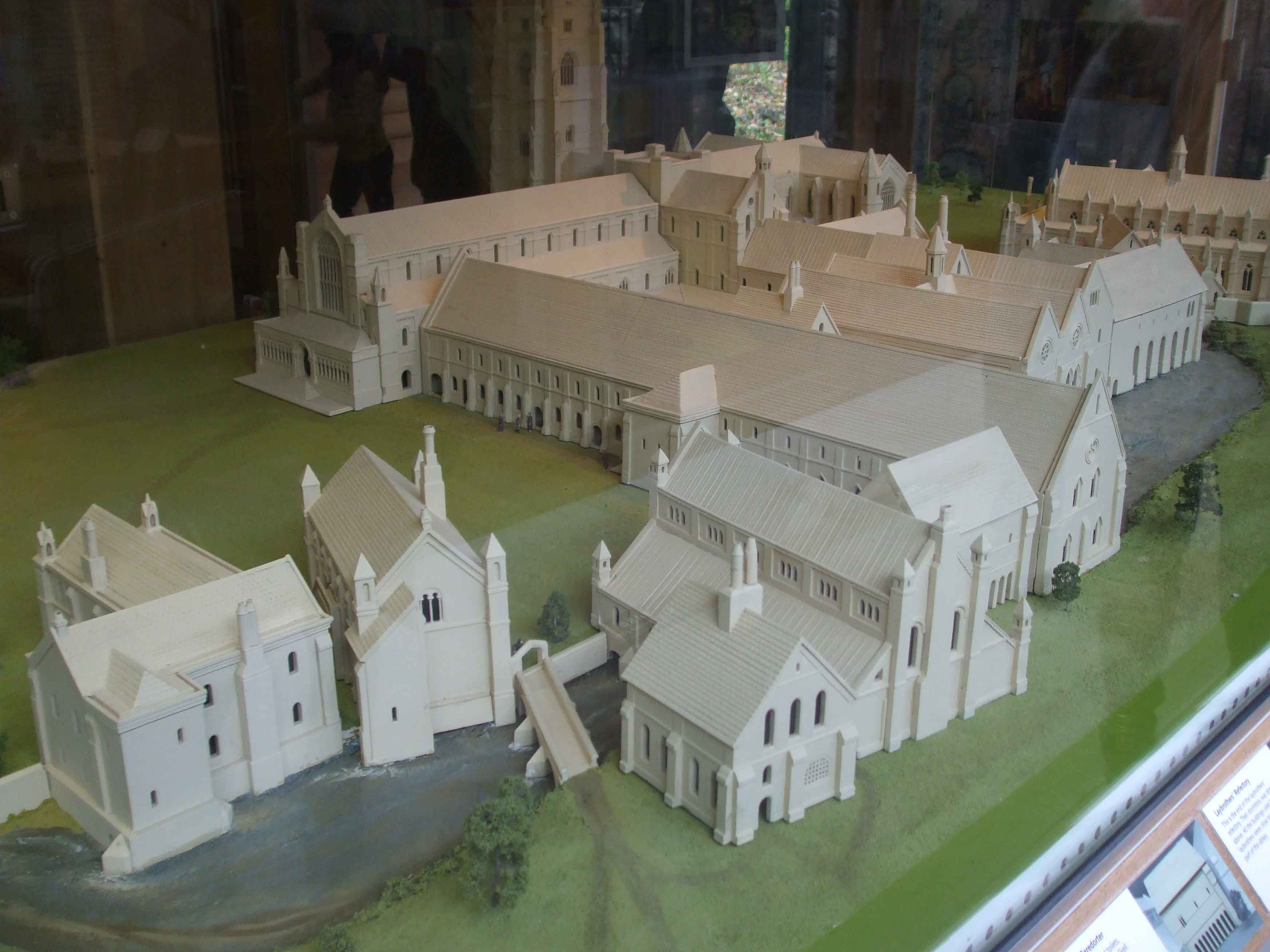
The abbey prospered and the area around it would once have been very busy. Lay brothers worked the land to provide grain and vegetables, and tended sheep for meat and fleeces. High quality fleeces were sold as far away as Flanders and Italy. The Water Mill on the Skell would have been in full swing, grinding wheat into flour, and a tannery and brewery thrived. Fountains grew to become one of the wealthiest abbeys in Europe, at its height throughout the 1200s. This model, now in the old Porter’s Lodge, shows what the abbey wooold have looked like in its heyday:

148

Here are a few pictures of the exterior of the abbey:

Trouble struck in the 1290s when the abbey’s own financial mismanagement led to debts. Sheep disease, and failed harvests due to the changing climate, made the situation very serious. On top of all this were the raids by the Scots (famine in Scotland was severe) followed by the Black Death of 1349-50.

The Black Death killed a third of the population of the country, including monks. There were now too few lay brothers o work the land, so it was rented out to provide income. In the late 1400s, powerful abbots began a revival, which included the building of Huby’s Tower, still seen today. More and more monks were attracted to Fountains and, once again, it became the richest abbey in England … but  not for long.

Henry VIII’s disagreements with the pope over his divorce from Catherine of Aragon, together with his need for more funds, led to the Dissolution of the Monasteries.

Portrait of Henry VIII by Hans Holbein the Younger, 1537-47. Public Domain
Portrait of Henry VIII by Hans Holbein the Younger, 1537-47. Public Domain. Wikimedia Commons

At Fountains Abbey, the deeds of surrender were signed in the Chapter House in 1539 – ending over 400 years of worship at the abbey. The lands were sold to raise money for Henry. Its new owner was Richard Gresham, who bought the estate for a hefty £11,000.

The one condition of sale was that Gresham should render the Abbey Church and Chapter House unfit for religious use. The roofs were pulled down using horse and rope, and the lead from them and glass from the windows were sold by to offset the hefty purchase price he’d paid.  With no monastic community to support them, the tannery, brewery, and other workshops just fell into disrepair. The abbey stone became a source of ready-cut building stone for anyone who wanted to buy it.

Gresham and his family rarely visited but 60 years later a local man, Stephen Proctor bought  the Fountains Abbey Estate and surrounding land. It was he who had Fountains Hall constructed – which he was living in by 1604.

593

But it was not until much later that the owner of the neighbouring Studley Park, William Aislabie, was able to purchase the Abbey Estate in 1767, so combining the two. I won’t go into detail about this, except to say that the lake and water gardens that we walked around, with their follies and statues, were all part of the work done by the Aislabie family. It was they who also had all the rubbish cleared out of the Abbey Church. The deer park and St. Mary’s church are also part of Studely Park. Unfortunately, we didn’t get to see any deer rutting, although it’s the right time of year. A couple of stags had a little confrontation, but one of then soon backed off, so that was that.

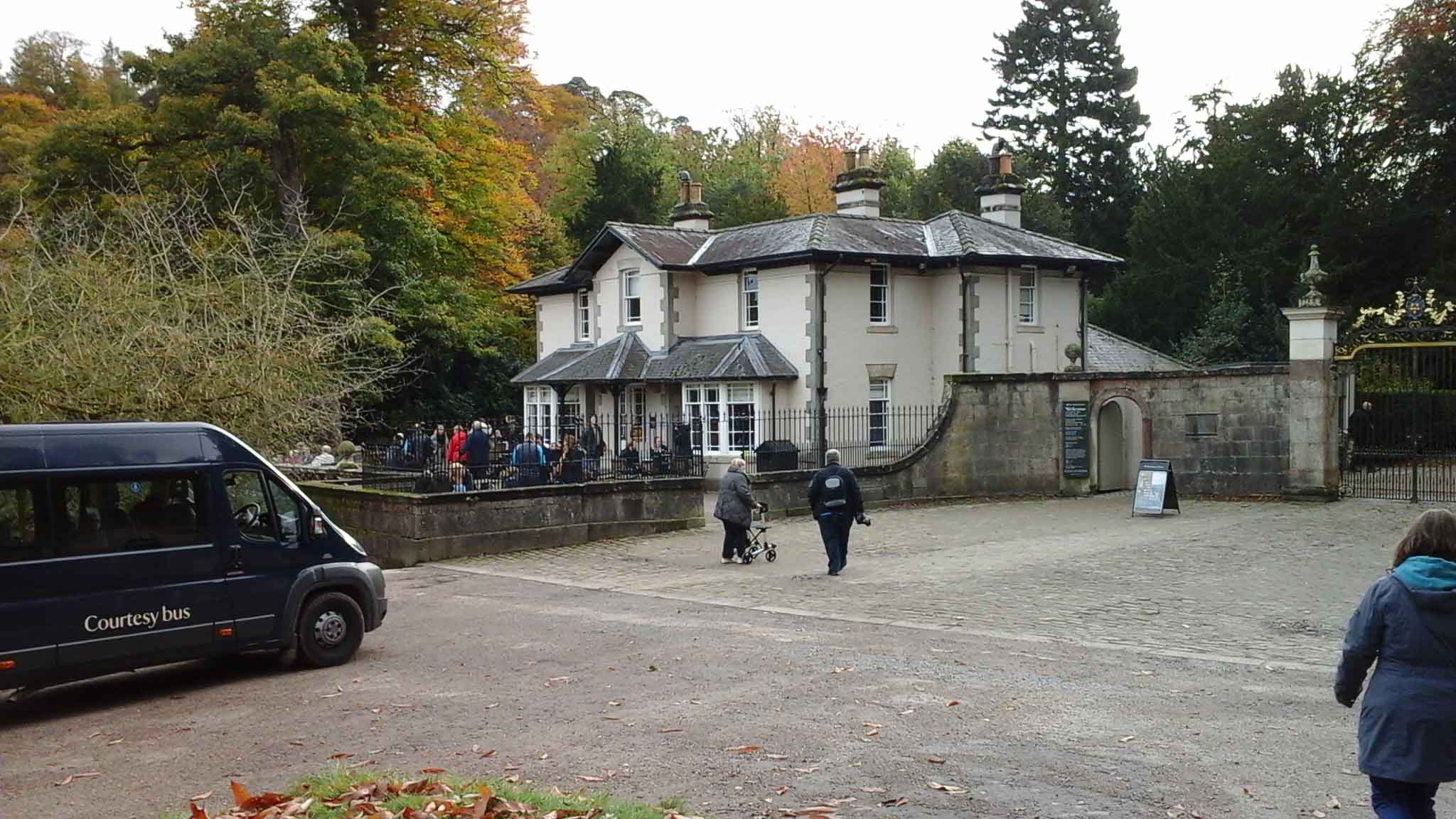
The building next to the lake which is now the Studley Tea Rooms dates back to 1860 and was probably built for the estate stewards of the first Marquess of Ripon.

253

Finally, here are some photos of the ruins of Fountains Abbey as they are today:

Above a window on the outer wall of the very back of the abbey from the main entrance is a small sculpture of the Green Man – a well known figure in the old pagan beliefs. The reason why he adorns a Christian abbey, as well as many other churches and such like around the country is deserving of a short post in itself. For now, here he is:

538For a visit to Fountains Abbey and Studley Royal Park (the whole area is designated a World Heritage Site) you need a whole day. The Park alone has much to see, and a visit to the Mill takes a while – which we didn’t do this time. There’s a restaurant at the Visitor Cente at the main entrance, and a couple of tea rooms around the site. Then, of course, there’s Fountains Abbey itself…  Well worth taking time over. And if you’re members of either The National Trust or English Heritage, entrance is free.

If you’d like to see some additional, super photos from around the site, take a look at Louise’s post at thestorytellersabode.

*

154

The Infinity Dreams Blog Award

wpid-infinitydreamsawardpic

I’m feeling really guilty for not having responded to the nomination for this award earlier. It was September 8th that the wonderful Izzy, at Izzy-grabs-life notified me, and  I replied that I’d get to it once I got back from Malta on September 19th. Well, it will be November next Sunday, and I think I’m just a bit late. So. many apologies, Izzy, and a huge (belated) thank you for nominating me. Izzy is a fantastic blogger and I’d recommend you to have a look at her blog.

thank-you-970920_1280

These are the rules for this award:

* Thank and follow the blog that nominated you

* Tell us 11 facts about you

* Answer the questions set up for you

* Nominate 11 people and make questions for them.

Now for 11 facts about me:

shutterstock_128368295

Having written so many facts about me on previous award posts, I’m rapidly running out of facts – ones that spring readily to mind, at least. So I’ll give my brain a shake up and see if it comes up with anything remotely interesting . . .

  1. I hate most seafood, other than fish, which I love. I have salmon and white fish several times a week. Shrimps and prawns remind me of snails (escargots) which I couldn’t eat in a million years, and the thought of oysters slithering down my throat just makes me shudder.
  2. I’m a perfectionist in most things I do. I keep at a ‘job’ until I’m absolutely satisfied it’s good enough (in my opinion).
  3. I love to bake – I mean specifically baking, as in cake and pie pie making etc. as opposed to cooking meals. I’ve always found baking very relaxing and quite often I’ll go and bake something if I’m feeling bored.
  4. I also love to knit and am used to being jokingly called ‘Granny Noblet’. It’s something I’ve enjoyed since I was four when my grandma taught me. Grandma did all the casting on at that stage, and I didn’t move on to purl stitch for a while. But by the time we were being taught to knit at school when I was about seven (as we were in the distant Dark Ages) I was  already quite a proficient knitter. Right now I’m feeling withdrawal symptoms, as knitting is on hold until I finish Book 3. Then I’ll have a knitting spree.
  5. I hate pink clothes. I haven’t any pink clothes at all, although I daresay pink might have crept into an odd pattern somewhere. On the other hand I love pink blossom on trees… and pink flowers in general. I just don’t want to go around looking like one.
  6. I have boxes and boxes full of both fridge magnets and thimbles stashed away in the loft. I started collecting them years ago from every place I visited, at home and abroad, and gave up a few years ago when I realised the futility of the exercise. I don’t want to throw them out, but they aren’t doing a great deal up in the loft!
  7. I love stories about Robin Hood – partly because we live so close to Sherwood Forest and Nottingham, where the stories were set. My favourite dramatisation of the stories was a 1980s TV series, aptly called ‘Robin of Sherwood’, written by Richard Carpenter. It had a wonderfully mythological and mystical feel, with characters like Herne the Hunter making the odd appearance. The ‘greenwood’ always reminded me of fresh, spring green, and the actors fitted the characters they were playing so well. My two daughters loved this series, too, and the eldest, Nicola, bought all the videos, and later on the DVD’s. I rarely watch anything twice, but some episodes of this series I’ve seen multiple times. No other series, and certainly none of the films, can compare to this version to me.
  8. My favourite colour is blue. It looks like the sky on a bright summer’s day, and the sea – not around British shores though. The Med. is where I have in mind.  Blue is such a ‘cool’ colour.
  9. In winter, I really love an open fire, or a wood/multi-fuel burner, in a room. A fireplace is such a central feature and gives a room a lovely cosy feel. Central heating has its place in other rooms, but in our lounge/living room I am thankful for our multi-fuel burner. We have huge stacks of logs outside from trees cut down by the farmer next door and others around the village.
  10. I hate shopping with a vehemence – and the closer we get to Christmas, the more I try to avoid going into town. ‘Town’, for us is either Newark or Lincoln. The traffic going into Lincoln, even before the beginning of December, is a nightmare – and parking is even worse.
  11. Like Izzy, I hate really high heels and wouldn’t consider wearing stilettos. I have my hiking boots for long walks in winter, and trainers for the rest of the year, and I love to wear sandals in hot weather – if we get any in Britain. When we’re abroad in hot places, sandals and flip-flops are a must. I don’t have wardrobes full of shoes, like some women. I have just boots, trainers and sandals, with the odd pair of what used to be called ‘court shoes’ – smarter shoes but not a really high heel. Killer heels just aren’t my style. Lol

Now for the 11 questions set by Izzy:

shutterstock_141264133

1.  What are you looking forward to (later today or this week)

Tomorrow we’re being invaded by my brother and his wife, along with their daughter (my niece, who is the same age as my eldest daughter) and her husband and two children. They’re over here from Runcorn for the week to stay in a lodge near Sherwood Forest – which they do every year during October half-term. So tomorrow it’s lots of catering to look forward to and I’ve been baking today in readiness. Then, at the weekend, my sister and her husband will be here, too. So, it’s family gatherings I’m looking forward to.

2.  What is the last book you read? Who would you recommend it to?

The last book I read was a while ago now, but it was called The Miniaturist by Jesse Burton, and I would recommend it to anyone who enjoys historical fiction. It’s set in Amsterdam in 1687 and has an added element of fantasy. I enjoyed it because it was a little different to most historical fiction I read.

3.  Are you a planner or a go-with-the-flower?

I generally like to plan things carefully, but am happy to go with the flow at times – like when we’re on holiday and so on. I plan my books carefully and ensure I’ve researched things thoroughly.

4.  Have you ever traveled?

I’ve done quite a lot of travelling but still have a very long list of places I’d like to visit. We love to travel around Britain, particularly during the summer, when there’s a chance of good weather! We often go into Wales and up to Scotland and the Isle of Man, as well as to various places in England.  We’ve visited several other countries over the years and here are some of them: France, Spain, Italy, Portugal, Denmark, Malta, Ireland (Eire), several Greek islands -including Crete, Corfu and Rhodes – Egypt, Tunisia, Kenya, Australia, Cuba and the Dominican Republic. The only place we have planned for next year at the moment is Italy again. We’ve been to Sorento, Sicily, and Aosta in the far north, but never to Rome or Venice. So next year that’s where we’ll head.

5.  Do you listen more than speak, or vice versa?

I do talk a lot, I admit that, but I’m a very good listener, too. As a teacher (and mother) I had to be.

6.  Would you rather lose an arm or a leg?

If that were an actual choice, I’d be very hard pushed to come to a decision. I’d really hate not being able to walk and losing a leg would be awful for me. I know you can get artificial/prosthetic legs, but still …  As for losing an arm, I don’t know how I’d cope without my right hand if I were to lose the right arm. I can do a lot of things with my left hand, but in many things, like writing, I’m very right-handed. And so many things in life need both hands and arms to do – simple things like tying shoe laces, and getting dressed on general. In reality, if we were to have an accident, or an illness that resulted in the need for amputation of leg or arm, we’d have to make the best of the situation.

7.  Do you have or want kids?

I always wanted children and ended up with six – although they’re certainly not ‘kids’ any more. The eldest is 42 and the youngest, 31. If I’d started earlier I would probably have had more. But in my day, when I was having my sixth child, I was considered an ‘older mother’ and didn’t particularly like that title.

8.  What is one thing your family/friends do that warms your heart?

I suppose the nicest thing that family and friends can do for me is to simply come and visit. I think it’s sad when families/friends drift apart and lose touch.  After having a house full of people for so many years, now that the children have all left home, it gets quite lonely – and quiet – at times. Most of our children live in this area, so we do see them quite often, apart from the youngest, Christopher, whose job takes him all over the world. Other family and friends live further away, but it’s nice that they keep in touch, and we try to visit each other whenever possible. I also have some close friends in this area, and we meet up regularly for coffer and the odd meal.

9.  What is one thing your family/friends do that annoys you?

I hate people to turn up late when I have a meal ready. I hate keeping food warm – just a fad of  mine.

10.  What is your favourite breakfast?

I have very simple tastes for breakfast. I very rarely have a cooked breakfast (as in bacon and eggs and such like) even on holiday. I like those foods, but not for breakfast! I generally have fruit, the type depending on what’s on offer, but at home it’s usually grapefruit or orange. Then I just love my porridge. I’ve been a porridge-lover since my mum made it when I was a child.

11.  What is the last movie that made you cry (hooked you enough to feel such emotions)?

I haven’t been to the cinema for years, or seen too many films on TV, as we tend to go for series or serials. I become emotionally involved  all too easily with characters in both books and films. So much so that I tend to get boxes of tissues thrown at me at the first hint of an emotional scene. The only films I can put names to right now are: TitanicPS I Love You, The Boy in the Striped Pyjamas and The Lovely Bones. I found the last two totally disturbing. Both really upset me.

Now for my questions for my nominees:

question-mark-213671_1280

  1. What is your favourite season /time of year and why?
  2. Were your schooldays really ‘the happiest years of your life’?

  3. Does your personality/character suit your sign of the zodiac? (Even if you don’t believe in all that stuff, I’m sure you’ll know which characteristics your star sign assigns to you.)
  4. Which is your preferred way of expressing yourself creatively? (Do you prefer the written word, photography, art, drama …or what?)
  5. Do you prefer to read an ebook (on tablet/Kindle) or the hard copy version?
  6. What is your favourite genre in books and what do you particularly like about that genre?
  7. Are you a thinker or a doer?
  8. Which type of holiday/vacation do you prefer (e.g. the beach, the mountains, skiing, fishing – or any other sport – sight-seeing etc.).
  9. Are you a morning person or a night owl?
  10. Coffee or tea for you – or neither?
  11. Another nice easy one to finish: do you have a favourite colour?

Here are my nominees:

Andy at Fife Photos and Art

Jay at J.C. Wolfe

L.T.Garvin

Morgan at The Secret Diary of a Computer Science Student

Chevvy at Chevvy’s Studio

Yinglan

Asealskhaki at randommusings

I now have 3 more award posts to fit in over the next couple of weeks, so I’ll leave my nominations at 7 for this one. Apologies to anyone I’ve nominated whose blog is award free. I have looked, and hope I haven’t missed anything obvious.

Word of Week (WOW) – Febrile

wow (1)

Word of the Week (WOW) is a weekly challenge created by Heena Rathore P. It’s a fun way to improve vocabulary by learning new words every week. To participate, simply do a post with your word and leave the link as a comment on Heena’s WOW post for this week (above link).

I’m looking at the letter F this week.

So here is my WOW for this week: 

febrile

Word

Febrile

Pronunciation:

fe·brile  [fee-bruh l, feb-ruh l or, especially British, fee-brahyl]

Audio:

febrile

Part of Speech

Adjective

Related Forms:

Noun: febrility

Meaning:

  1. Having or showing the symptoms of a fever: a febrile illness:

influenza-156098_1280

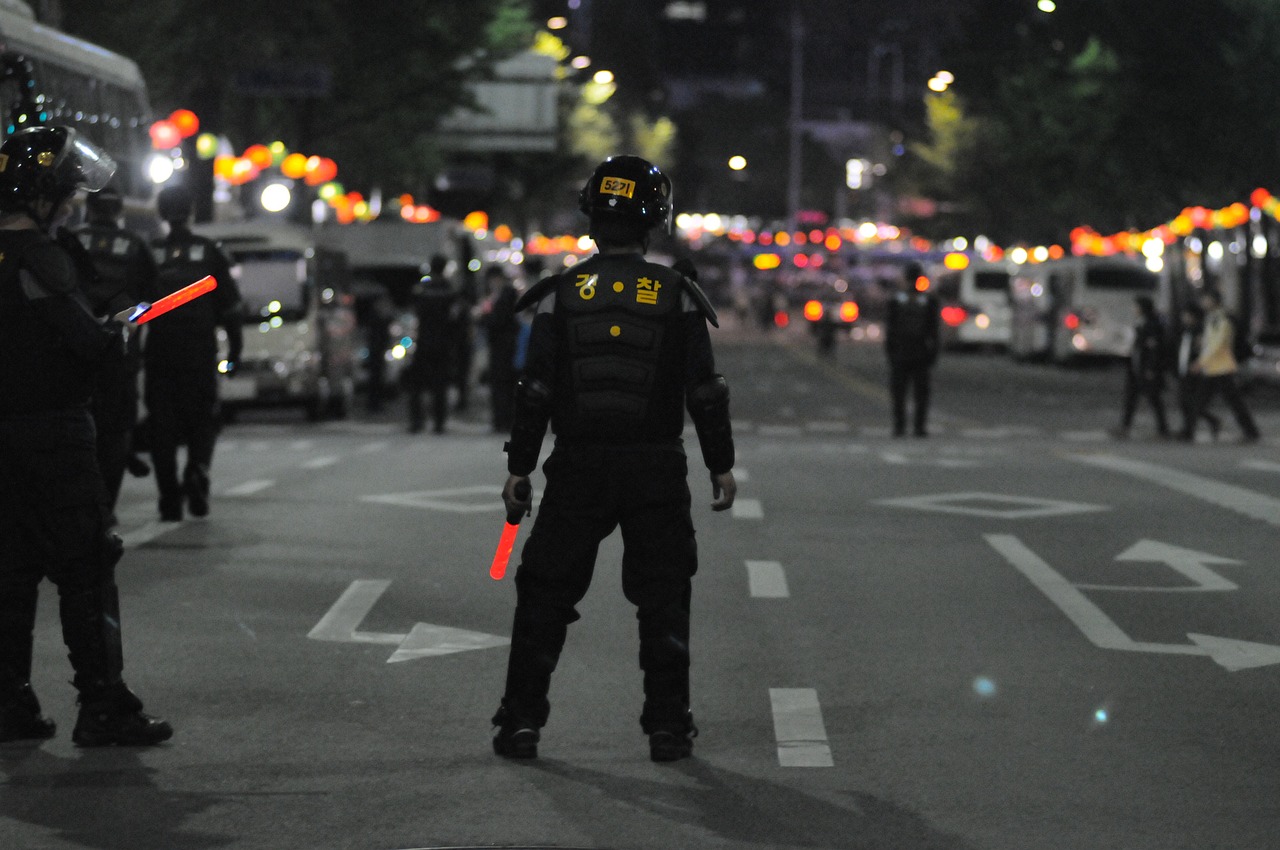
2.  Characterised by a great deal of nervous excitement or energy: the febrile atmosphere of the city following the riots:

Riots in the Republic of Korea. Courtesy of Pixabay


Word Origin:

1645-55 < New Latin, Medieval Latin febrīlis (fever)

Synonyms:

Meaning 1:   feverish, hot, fevered, flushed, fiery, inflamed, delirious, febrific, pyretic (medicine), burning, buring up, sweating

Meaning 2:   anticipatory, interested, excited

Antonyms:

afebrile

Use in a Sentence:

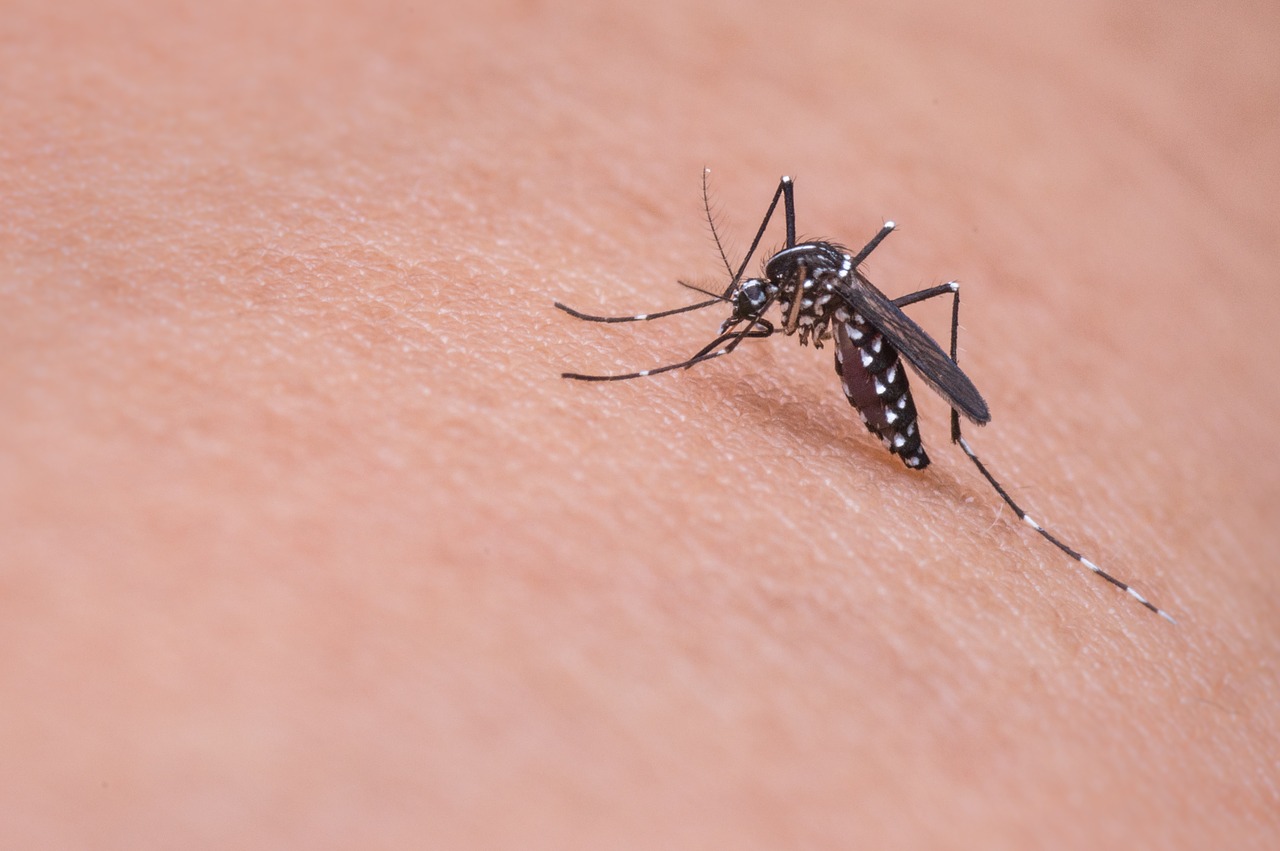
1. Dr. Dennis looked levelly at Janet. ‘I must inform you, Mrs. Eliot, that your son’s febrile condition is synonymous with that of patients suffering from malaria, the disease caused by the bite of an infected mosquito. I believe he has just returned from the South America. . .?

mosquito-719613_1280
Image courtesy of Pixabay

2. The atmosphere in the large stadium was febrile as teenagers screamed their approval of the latest hit single by their idol, Frothing Freddie from Framlington:

shutterstock_265539302

3. Signor Lorenzo Abbatelli sang with febrile intensity throughout the evening performance:

opera-singer-151746_1280
Image courtesy of Pixabay

If you’d like to view more interesting words, visit Heena’s Page

Word Treasure

Be Thankful Challenge

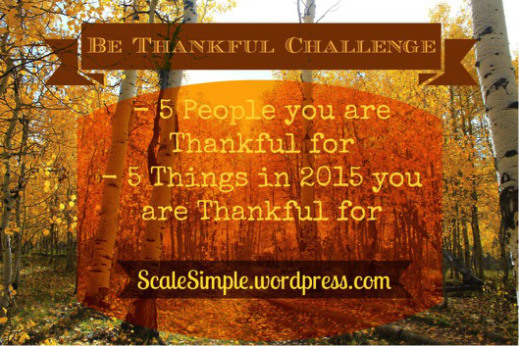
be-thankful
This is the first challenge post I’ve done since the ‘Three Quotes Challenge’ (twice) a few  months ago when everyone here in the U.K. could pretend it was still summer, despite the cloudy skies and lots of rain in some places – like poor old Cornwall. Although this challenge stems from the coming Thanksgiving Day the U.S. (November 26th) most of us around the world have things to be thankful for, including me. I’m also thankful for many wonderful people, without whom my life wouldn’t be nearly as rich and fulfilling.

Before I go any further, I want to say a big THANK YOU to fellow (and much-younger-than-me) North of England blogger, Morgan Mills, over at The Sectret Diary of a Computer Science Student, for nominating me for this challenge. Morgan’s not THAT young – I just liked this picture from Pixabay 😀 ):

thank-970872_1280

Now for the Rules:

shutterstock_152788070* Share this image (top one) in your blog post
* Write about 5 people in your life you are thankful for
* Write about 5 things in 2015 that you are thankful for
* Spread the love and challenge 5 other blogs to take part 

Five people I’m thankful for in 2015 are:

My husband, Nick. He’s been my constant support since we got married 45 years ago (on Saturday, October 24th – our wedding anniversary – and our daughter’s birthday, too (Louise – or on WordPress, afairymind at The Story Teller’s Abode ). Whilst researching my books, he’s happily traipsed all over this country and Denmark with me, visiting Anglo Saxon and Viking sites. He’s also supported me (and been very patient) as I’ve written two of the books, and is still bearing up as I write the third book of the trilogy.

How could I not be thankful for our six children? (Quite easily, I suppose 🙂 In order of age, they are: Nicola, Richard, Neil, Louise, Thomas and Christopther. They have filled my life with joy (seriously!) for the past 43 years. They have also cost me hundreds of hours of lost sleep, thousands and thousands of pounds (sterling: £) and caused enough worry to give anyone dozens of ulcers. But who’s counting little things like that . . .?  

The wonderful, professional editor, Doug Watts, who edited my first two books (the second one, last year) and is waiting for the third – which he’s expecting before Christmas. I haven’t told him yet that it’s going to be a little late beacuse I’ve been having so much fun on WordPress. 🙂 I’ll put off telling him a little longer, I think. 

My fantastic fellow bloggers on WordPress. If I hadn’t found so many lovely people out there in this great big world of Blogland, I’d probably have closed down my blog ages ago. I’ve got to know so many of you, I almost feel as though I’ve known you forever. The community spirit is amazing and to be able to share ideas and feelings is a fantastic thing to do. Thank you, WordPress bloggers, for making me feel so welcome, and valued. I love reading your posts and finding out what’s going on hundreds/thousands of miles away. I’ve learned so much from you all – and I just love to learn new things . . .

My sister, Linda, who has been so very poorly this year. In fact she’s been ill all her life and I worry a lot about her.  When I was three and she was only 6 months, we both had whooping cough, which was prevalent at that time (early in 1950). Nor were children vaccinated against it then. I got through it all well, being older, I suppose. Linda didn’t. The illness left her with very weakened lungs, which have caused enormous problems ever since, as the bottom lobe on each lung is collapsed. Needless to say, she needs constant treatment. But this year, Linda also fell off a chair she was standing on to retrieve something from on top of a wardrobe! Not only did she badly break her wrist, she also dislodged her shoulder blade and damaged her already bad hip. So, in 2015, as well as hospital ‘stays’ for her lungs, she’s had a hip replacement operation and one to realign her wrist. As always, she’s taken it all in her stride and continued as though nothing has happened. I’m thankful she has a devoted husband of 43 years and three wonderful children to love her. And I’m thankful to have such a wonderful sister.

Five things I’m thankful for in 2015:

Keeping healthy throughout the year. This, of course, applies not only to me,  but to my immediate family and friends. Only my sister causes me worry, as mentioned above. But getting older can be a precarious business! (Personally, I don’t like the idea one bit and think ageing  -or aging, if you’re in the US – should be abolished.  But nobody ever listens to me.) I think myself lucky not to have succumbed to any serious illness, as yet. I do try to keep healthy by not eating junk food and getting plenty of exercise and, boring as that may sound, I think the strategy has worked. So far.

All the kind bloggers who have read and reviewed my books! As you’ve no doubt read on the blogs of many writers out there, reviews are like gold dust to an author – even if they’re only a couple of lines long. They must be perfectly honest ones though. I would never ask anyone to lie for me. I’d much rather have honest opinions. I’m totally indebted to those of you who’ve done this for me. I generally do a post to say when my books will be free on Amazon, and I know that many of you have downloaded copies in the past. My next 5 free days will be sometime in November. I thank you all, whether you did a review or not

For living in a stable part of the world. This, I suppose can be viewed in different ways. Regarding tectonic and meteorological hazrds, Britain is rarely at risk. We aren’t near to a plate boundary, and we don’t experience tropical storms and hurricanes, or the tornadoes that plague the American Mid-West. We do have floods sometimes, both river and coastal ones, but not on the scale of those in tropical latitiudes. We are very fortunate in all this and, like most people I know, am always grieved by news of earthquakes, typhoons and so on elsewhere in the world. All we can do – and as  a nation I believe we do it well – is provide aid for those who so desperately need it. Britain is also politically stable at present in the sense that we’re not experiencing civil war or riots. We might all be moaning about the usual inflation, wage cuts and the rest that I won’t go into, but that happens whichever political party is in power. We all know the saying about not being able to please all the people all of the time.

For the wonderful holidays I’ve enjoyed this year. We seem to have been away from home more than ever this year. Since going to Andalucia in early May, we’ve been constantly out and about. I’m thankful for this for a couple of reasons – besides just loving visiting historical sites or going on holiday. The first is that our visit to Southern Spain was primarily to do research for my third book. The second reason is connected to my blog. Everywhere I’ve visited, abroad or in the UK, has given me lots of material to use on my ‘Travel’ or ‘History’ posts on my blog. Even our week in Malta was a constant round of photography. So, I’m very thankful for being able to do this, and still have lots of posts to write up.

Finally,  I’m thankful that, in 2015, we still have a ban on the hunting of mammals with dogs in Britain. The current Government has said it hopes to repeal this Act, so allowing this atrocious ‘sport’ to return. Without getting into any political debates here (and I must add that this is my personal opinion, and I respect the rights of others to hold their own opinions on this issue – but I don’t intend to discuss it on this post!) all I can say is that I find the whole idea of dogs ripping animals (most often fox, deer, hare and mink) to shreds absolutely horrendous – and dread it becoming legal again. (The Act was passed in 2005, banning it.) I just hope that 2016 will see the ban still in place.

*

I have so many things to be thankful for, and realise how lucky I am to lead the life I love, with the people I love. What more could I ask?

These are my five nominees:

Joy Pixley

It’s Good to be Crazy Sometimes

Norma

Lifehomeandaway

Khloe