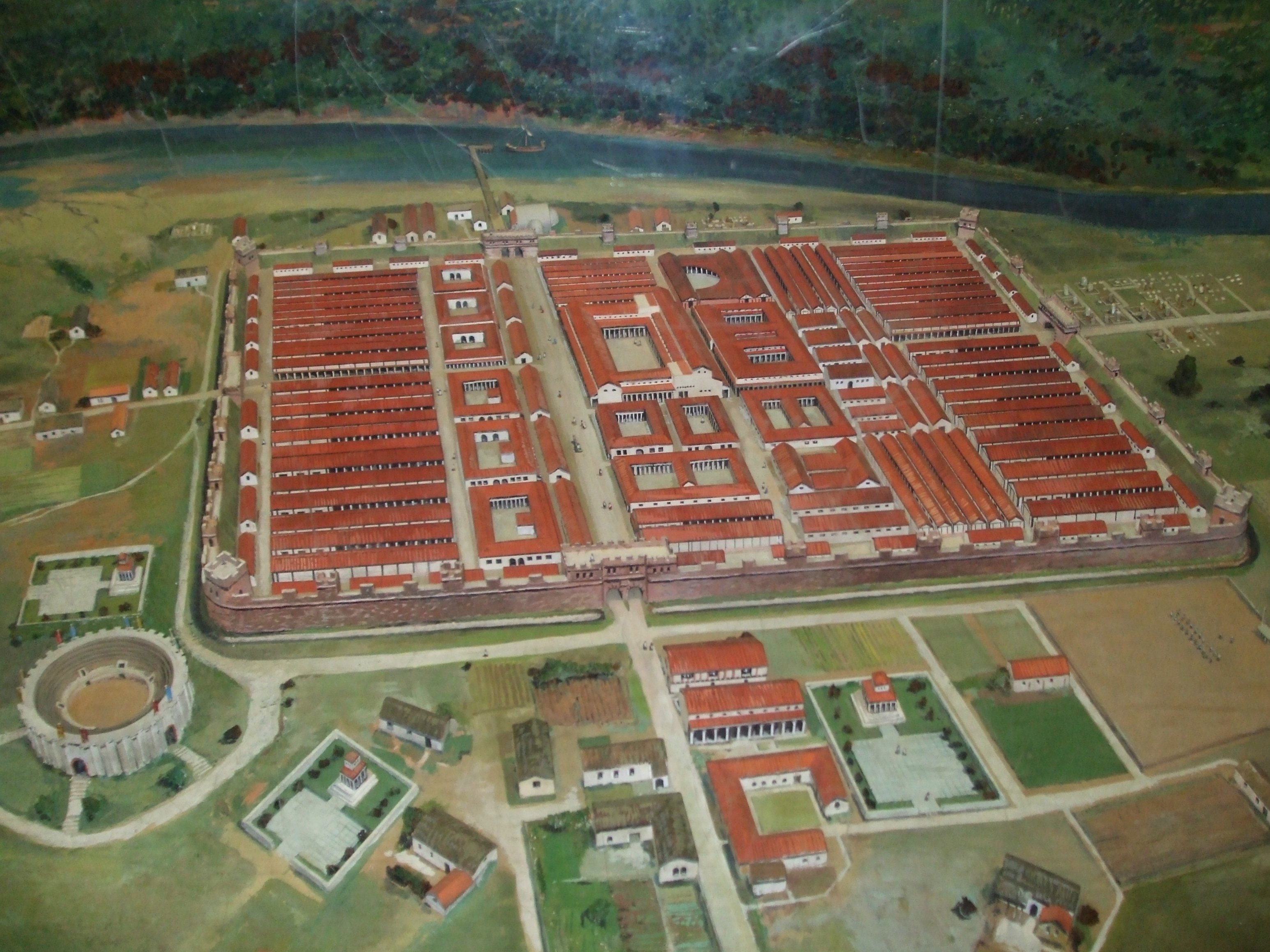
A Look at Roman Chester

Plan of fort and location of ampitheatre

Last June we had a few days in Chester, mostly to visit my aunt and uncle in North Wales but also to visit some of the castles along the North Wales coast. We managed to do all that, and I posted three ‘castle posts’ once we got home, as well as one about Bodnant Gardens. We were staying at a hotel in Chester, so we also spent one of our days in the city – but I never did get around to posting about it. So today I’ve duly written it up.

Chester is located in the county of Cheshire in the north-west of England, south of the River Mersey and the much larger city of Liverpool. The River Dee flows through it in its way to the Irish Sea:
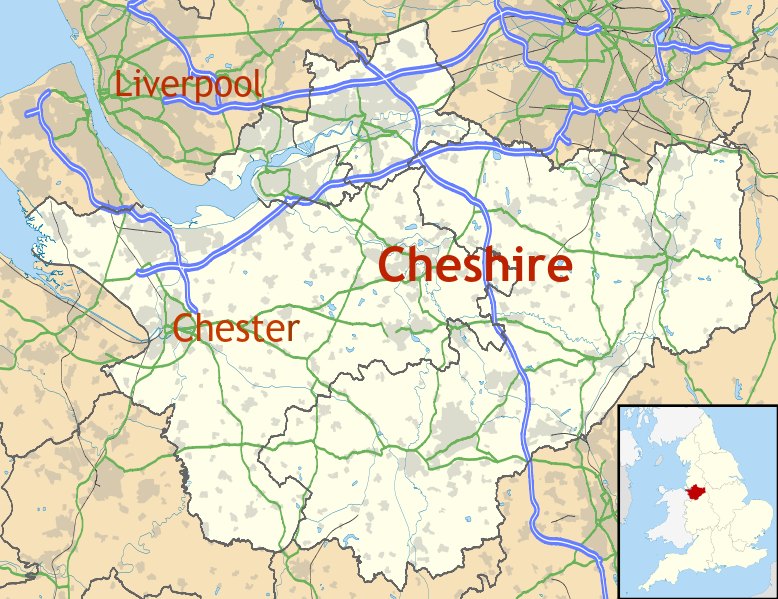
Map of Cheshire showing location of Chester. Source: Ordnance Survey OpenData. Author: Nilfanion, Creative Commons

Chester’s a lovely old city, with evidence of settlement throughout various periods since Roman times. The town centre is known for its many ‘black and white’ buildings and galleried shops, or the ‘Chester Rows’.
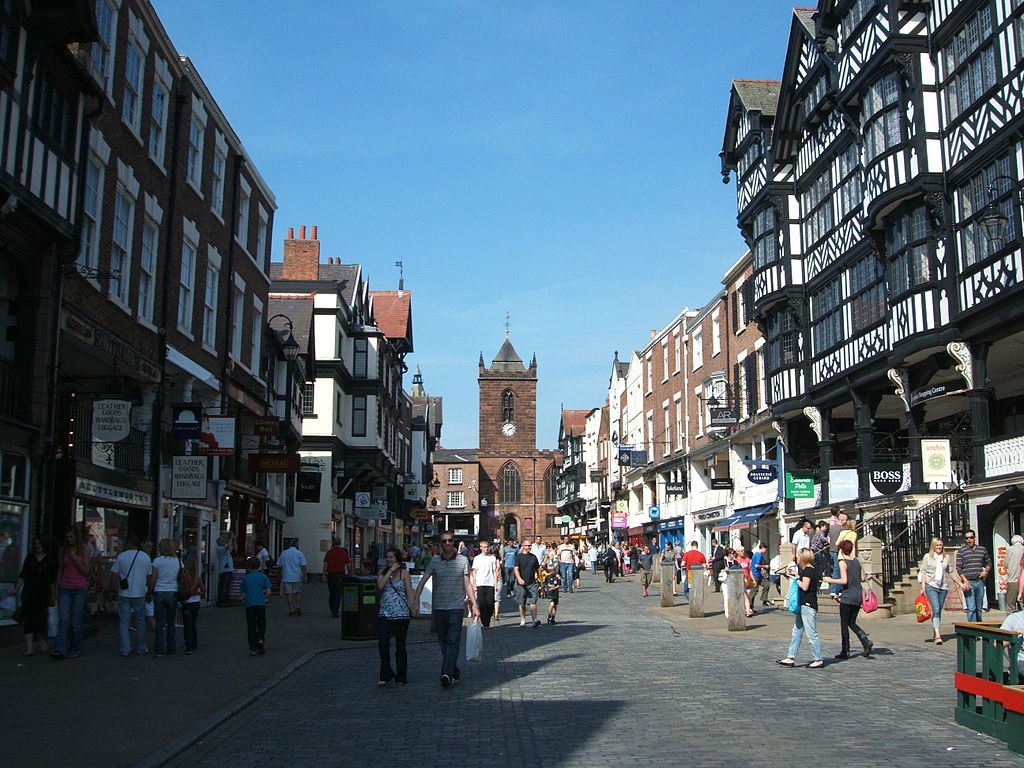
Bridge Street, Chester (2)
Bridge Street, Chester.  Author: Crashlanded. Creative Commons

There is a lot about this city I could talk about – including the Anglo-Saxon period and the medieval castle and city walls . . .
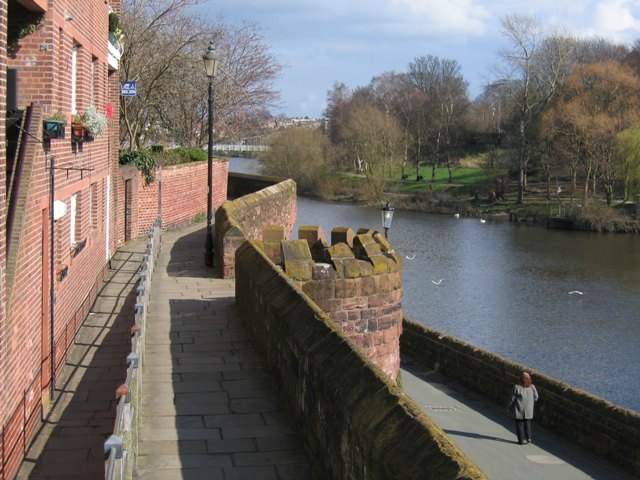
Chester's City Walls -Bridgegate to Eastgate (2)
Chester’s City Walls – Bridgegate to Eastgate, Source: geog.org.uk. Author: John S. Turner. Creative Commons

In the ‘Dewa’ Roman museum, there are cellar remains showing settlement at various levels/strata – through Roman, Saxon and later medieval periods. Buildings around the city also provide evidence for these periods, as well as later times.
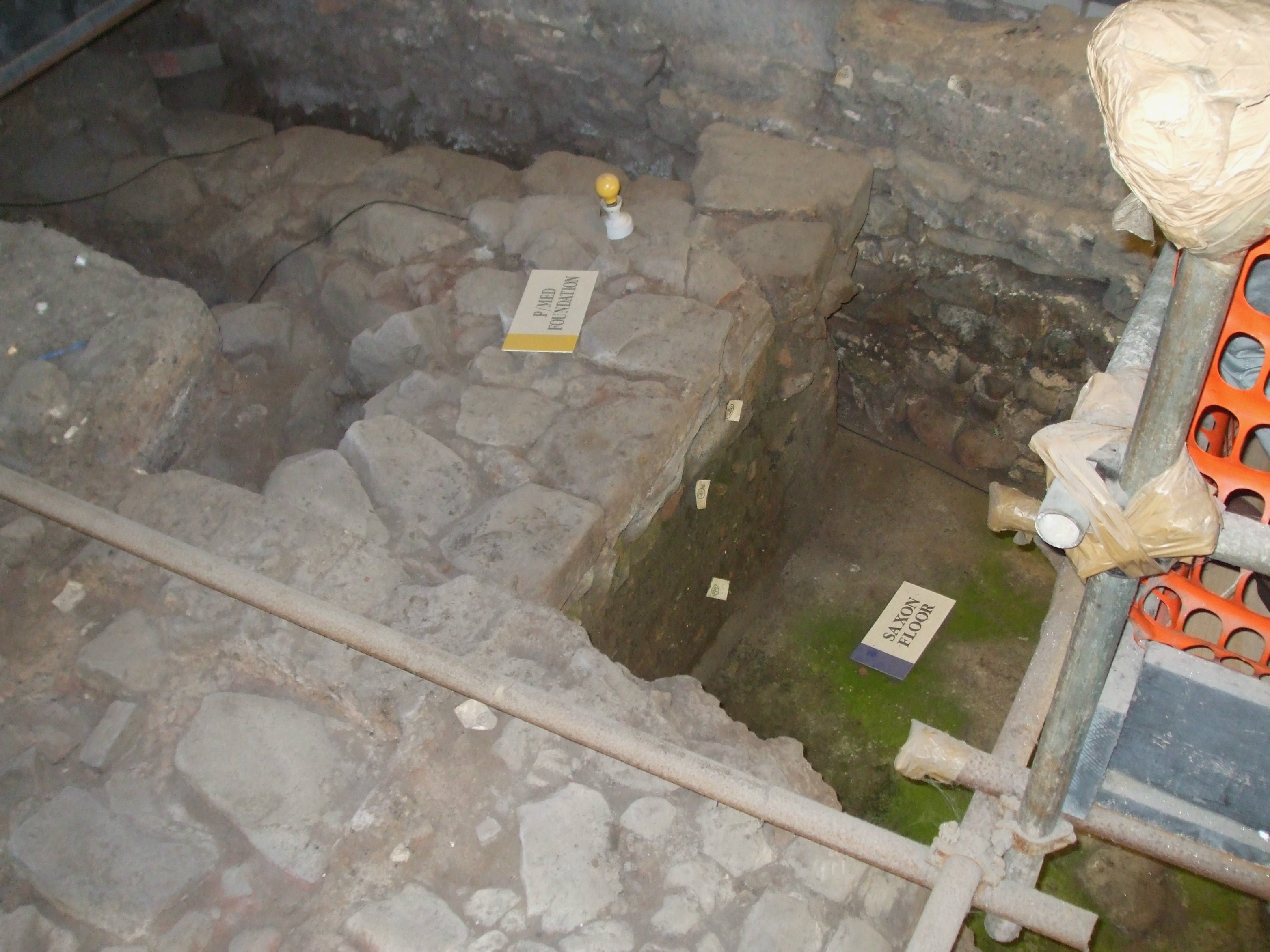
Cellar remains showing levels of settlement at Dewa Museum

But today I want to focus on the Roman settlement at Chester (Deva or Dewa).

Dewa/Deva stood on a ridge of red sandstone in a loop of the River Dee. This photo shows a ‘cut’ through the ridge for the Chester – or Shropshire Union – Canal:
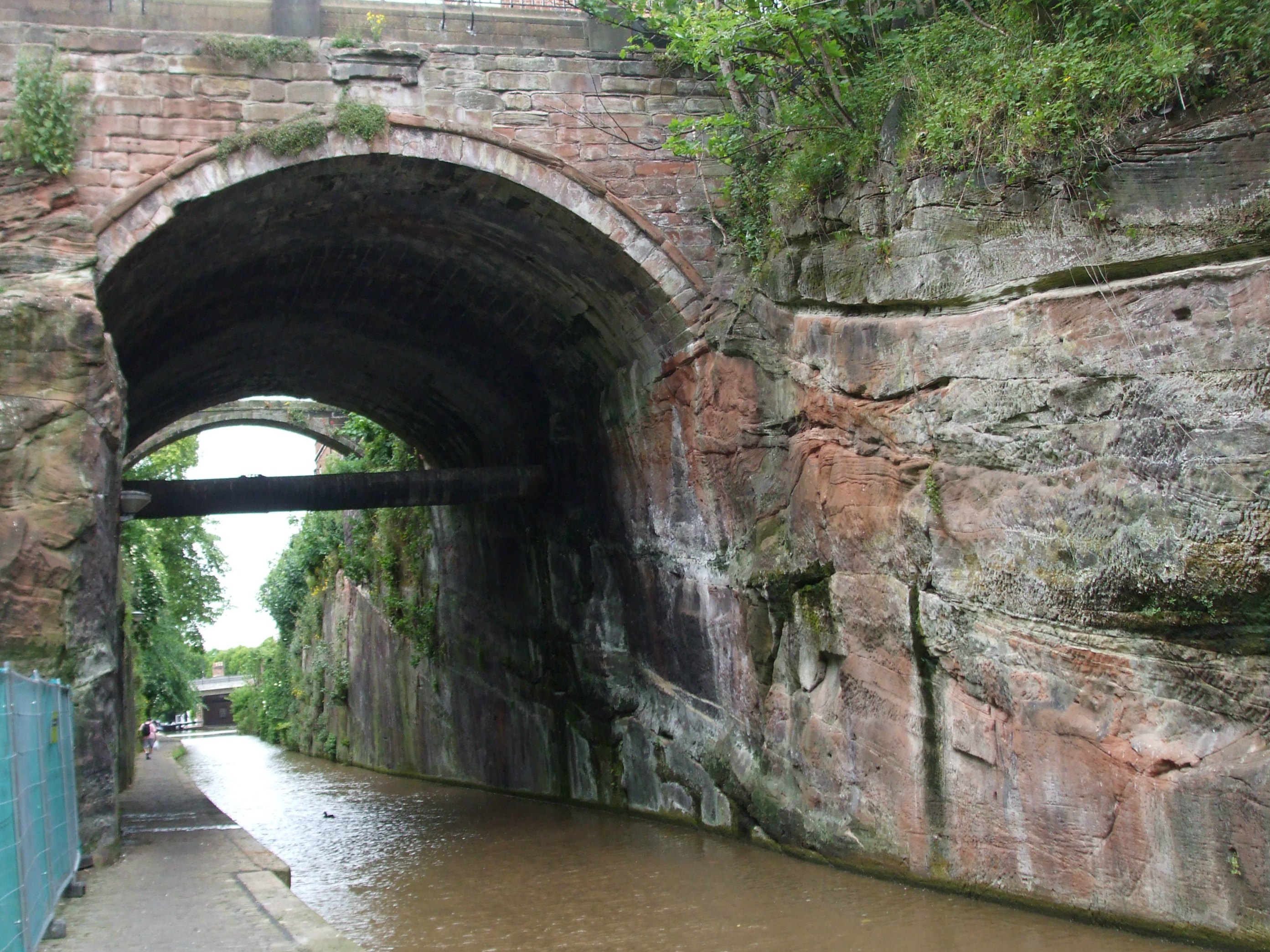
Triassic Sandstone along canal

The settlement began life as a mostly wooden fortress built by the Second Legion, Adiutrix, in AD 70, and was named after the local name for the goddess of the river, Dewa. The site was perfect for several reasons. It controlled the newly occupied and hostile areas of the Welsh as well as those of Northern Britain, and the River Dee was navigable up to the sandstone ridge, providing good harbour facilities and good protection on the southern and westerly sides. It is also possible that the fortress was intended as a supply base and embarkation point for the intended conquest of Ireland.

At the end of the 80s, the 2nd Legion was sent to Germany and the Twentieth Legion, Valeria Victrix, moved into the fortress:
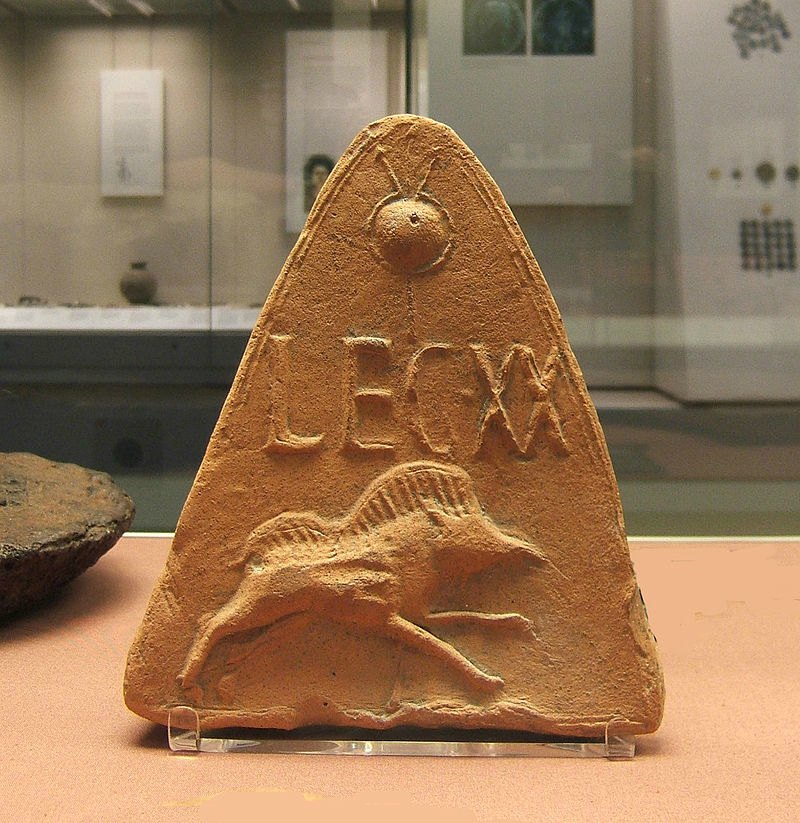
Moulded antefix roof tile showing badge and standard of the Lefion XX - from Holt, Clwed, Wales. Author: AgTigress. Creative Commons
Moulded antefix roof tile showing badge and standard of the Legion XX – from Holt, Clwyd, Wales. Author: AgTigress. Creative Commons

The Twentieth replaced the wooden buildings with stone and stayed in the fortress until the 5th century.

Remains of a wooden jetty have also been found. Exports would have included tin, silver, hides, oysters, wooden products, basketry, slaves and hunting dogs. Despite Britain’s mineral wealth, Rome gained little from the country and needed to import far more goods in order to meet the demands of the Roman soldiers stationed here. According to the Roman writer, Strabo, imports included ivory, amber, gems, glass vessels, wine, olives and olive oil, figs, pottery, papyrus and spices.

Here are some photos of some of the artefacts, plus a few replicas, of Roman items we saw on display at the Dewa Roman Museum:

Deva had the typical ‘playing card’ design of all Roman forts. The outer edge was a tall, thick stone wall, five courses high, and with four gatehouses to enter:

Plan of fort and location of ampitheatre

Outside the fortress wall, as well as the civilian settlement (canabae/vicus) were a bath house and an amphitheatre. Evidence of the amphitheatre was first discovered in 1929 but it wasn’t until 1993 that excavation work started on it. To date only half of it has been excavated. It is thought to have been the biggest amphitheatre in Britain and seated 7,000 spectators. There were four entrances, the main one being on the northern side.

Model of ampitheatre

A small room at the east entrance may have held the beasts – which would most likely have included stags, bulls and bears, not the lions and elephants etc seen in Rome.
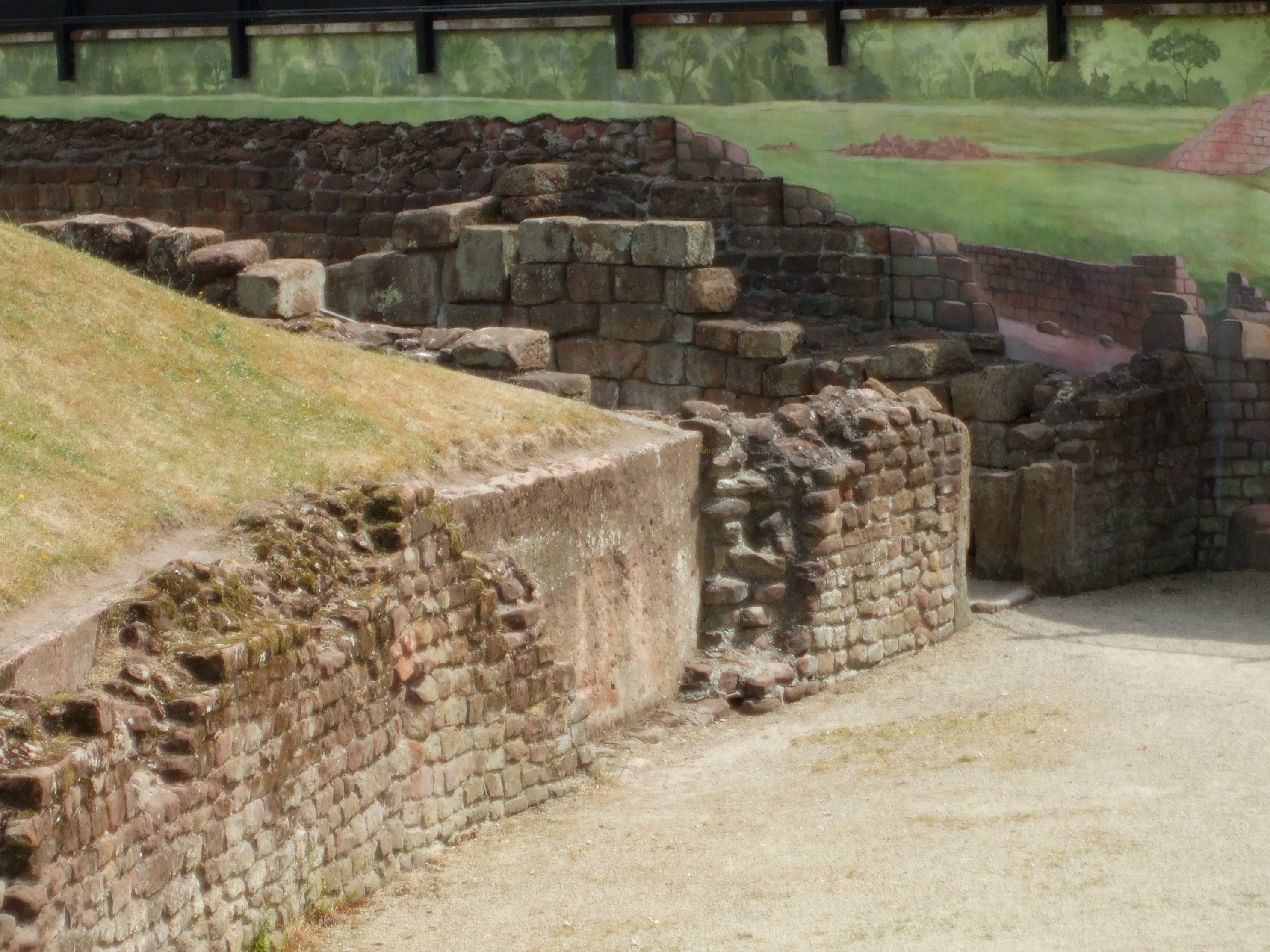
The entrance to the passageway shown is thought to have led to area where the beasts were held
The entrance to the passageway shown is thought to have led to the area where the beasts were held

A shrine to the goddess, Nemesis, was discovered beside the north entrance and an altar dedicated to the centurion, Sextius Marciano. The walls of the arena were painted a reddish brown to give a marbled effect and the arena floor was covered in yellow sand to stop combatants from slipping. It could also be easily cleaned.

Gladiator fights were popular and aroused great passions. Gladiators were often prisoners of war or condemned slaves reprieved from execution and specially trained. Combat gave them a chance to win a ‘new life’ by showing skill and courage. The killing of beasts would have reinforced the belief in man’s dominion over nature – important in a world in which wild animals still posed a real threat.
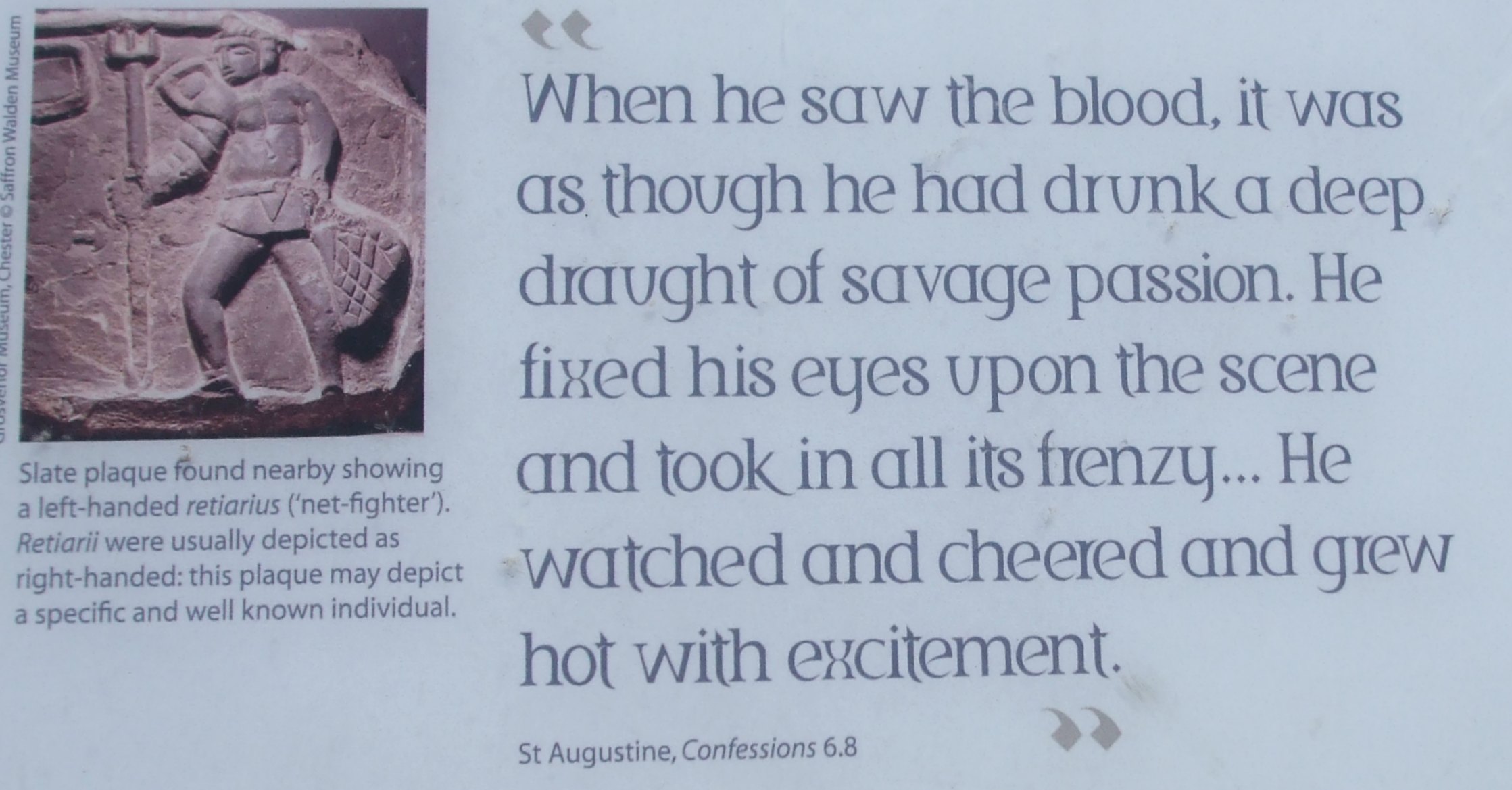
Gladiator info.

Gladiator fights

All in all, Chester is well worth a visit. Many tourists also come to see Chester Cathedral, too, which belongs to the later medieval period. Built of the local red Triassic sandstone it was opened in 1541.

Here are some photos of the cathedral to finish with:

Blackpool Out of Season


Blackpool Promenade looking south (2)

Last week I wrote a post about our day out to the pine woods and sand dunes at Formby, a few miles down the coast from my hometown of Southport. It was fantastic for me to be by the sea again. I can’t tell you how much I miss it…

The following day, we decided to be totally reckless and head off to Blackpool:

Location map of Blackpool (2)
Map of Lancashire with Blackpool highlighted. Source: OS Survey OpenData. Author: Nilfanion. Creative Commons.

I don’t mean any disrespect to the town in saying that, it’s just that in February many seaside towns are notoriously ‘dead’ and, on this occasion, Blackpool proved to be no exception.

Here are a few photos of the Promenade as we walked along it. Admittedly the absence of sunshine didn’t help . . .

Like most seaside towns around Britain, Blackpool’s heyday has been and gone. The 1950s and 60s saw these towns thriving – until a mix of factors, including cheaper air fares, longer holidays, higher pay etcetera – led to the great increase in Brits heading abroad in the following decades, mostly to Spain and other Mediterranean countries. The British seaside towns saw a gradual decline, many looking very sorry for themselves and sadly neglected. (But it’s good to see that many are now undergoing a ‘rejuvenation process’.)

Blackpool got its name from a historic drainage channel called Spen Dyke, which ran over a peat bog. Blackened water was discharged into the Irish Sea, forming a black pool on the other side of the sea. Dublin (or Dubh Linn) comes from the Irish name for ‘black pool’.

The area behind the town, known as the Fylde, was once inhabited by a Celtic tribe called the Setantii, a sub tribe of the Brigantes (whose most famous queen was Cartimandua, who stayed loyal to the Romans at the time of the Boudica rebellion).

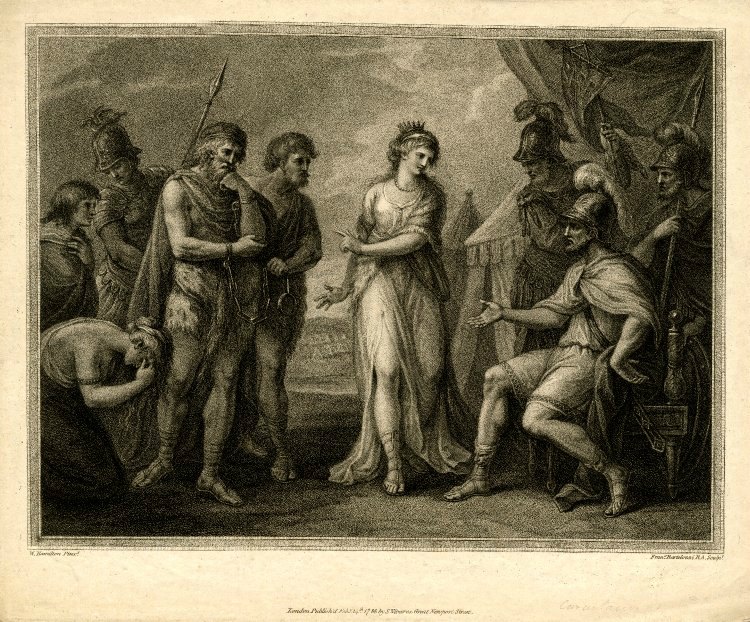
Cartimandua delivering Caractcus to the Romans
Caractacus, King of the Silures, being delivered to the Roman general, Ostorius, by Cartimandua. Author: Francesco Bartolozzi (publisher, printer: 1728-1815). Public Domain

The area developed very slowly for hundreds of years, some of the small, coastal villages eventually becoming part of Blackpool. But it wasn’t until the 18th century, when the practice of sea bathing to cure diseases became fashionable with the wealthier classes, that Blackpool really began to grow.

By 1781 a private road was built to the town and a regular stagecoach service to Manchester and Halifax started. A few amenities, hotels, an archery stall and a bowling green developed – and the town steadily grew By 1801, the population was 473. But the most important factor in Blackpool’s early growth was the arrival of the railways. By 1851 the population had reached 2,500.

With the sudden increase of visitors came the need for more accommodation, and more attractions. Gas lighting was introduced in 1852 and piped water in 1854.

By this time, the Lancashire cotton industry was thriving and it became the practice among mill owners to close for one week a year for servicing and repairing machines. Many mill workers would stream into Blackpool. Fortunately, each mill closed for a different week, enabling the town to keep a steady flow of visitors throughout the summer.

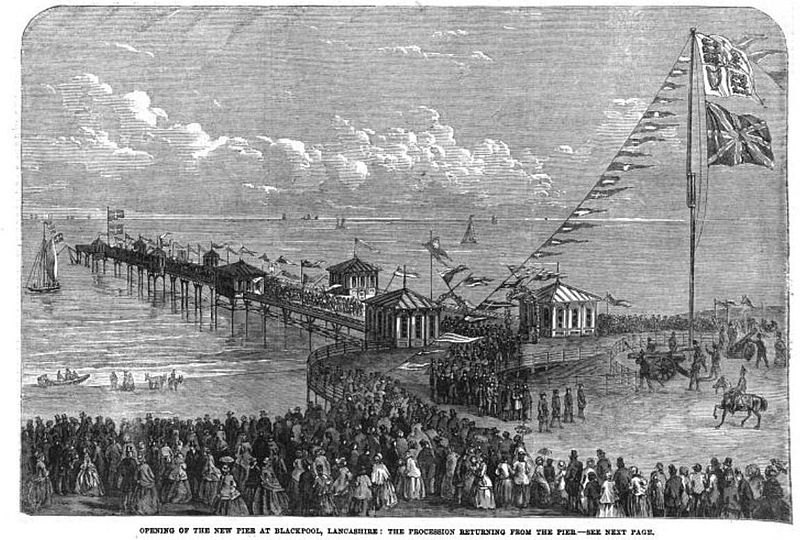
Between 1863 and 1893, three piers were constructed out over the sea (North, Central and South Piers) – and Blackpool proudly became the only town in Britain with three piers.

Blackpool North Pier opening. Author: Mr. W. Woods of Liverpool, 1863. Public Domain

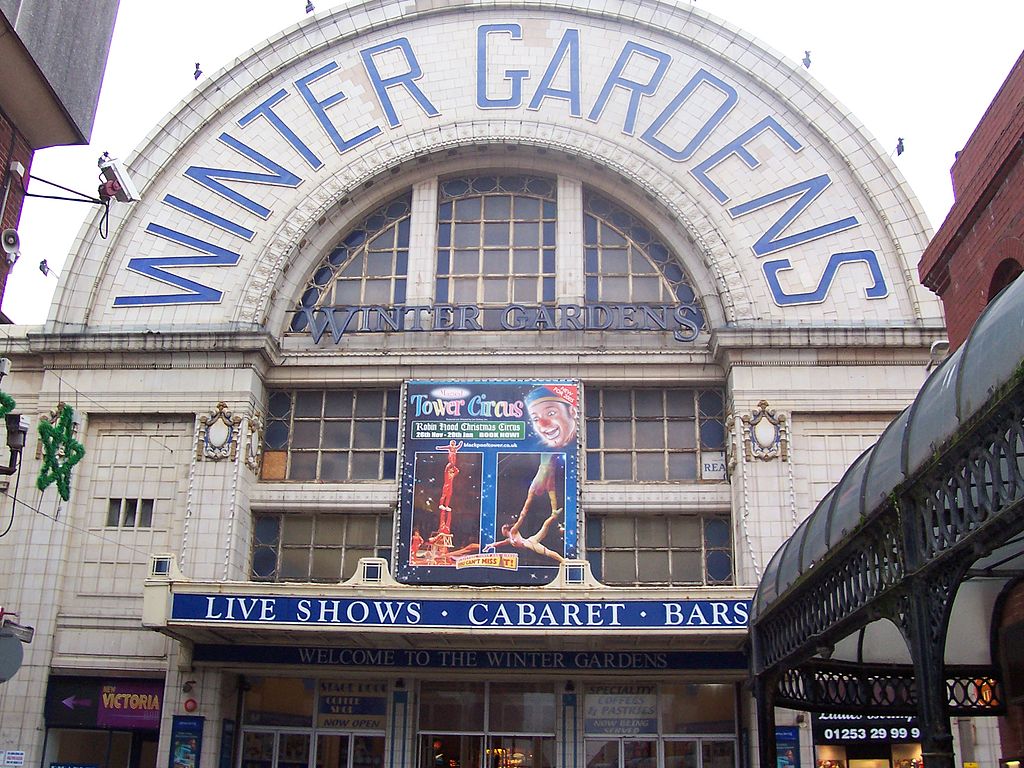
The Winter Gardens (a larger entertainment complex including a variety of venues, including a theatre and ballroom and conference facilities) was opened in 1878.

1024px-BlackpoolWinGar

And the town’s most famous building, the Blackpool Tower, was first opened to the public in 1894.

800px-Blackpool_Tower_general_view
Blackpool Tower, general view. Author: http://www.flickr.com/photos/ingythewingy/ Creative Commons

Inspired by the famous Eiffel Tower in Paris, Blackpool Tower was built at a total cost of £290,000 (for design and construction). It is now a Grade 1 listed building. It houses several attractions, including the famous Blackpool Tower Circus and equally famous ballroom:

Jazz event in the Tower Ballroom. Author Lukasz Nurczynski. Creative Commons

At 518 feet high, it is the 103rd tallest freestanding building in the world. On clear days it can be seen from as far away as North Wales and the Lake District. At the summit is a flagpole and buried beneath the foundations is a time capsule. How exciting! (No, I’m not being sarky.) The picture below is looking south from the top of the Tower.  The Central and South Piers can be seen.

Blackpool's ' Golden Mile' viewed from the top of the Tower. From geog.org.uk. Author: Mike Hartley. Creative Commons
Blackpool’s ‘ Golden Mile’ viewed from the top of the Tower. From geog.org.uk. Author: Mike Hartley. Creative Commons

Two years after the Tower was completed, the Pleasure Beach (amusement park/fairground) was founded and has become one of the most visited tourist attractions in the UK and one of the top twenty most visited amusement parks.

Blackpool 'Pleasure Beach'. Author Gambitek. Creative Commons
Blackpool ‘Pleasure Beach’. Author Gambitek. Creative Commons

It holds the record for having the most roller coasters in Europe. Of the ten it has, five are wooden.

In 1897, Blackpool became the first municipality in the world to have electric street lighting as long stretches of the Promenade were wired. This lighting, and the accompanying pageants, played a big part in the development of the Blackpool illuminations in the autumn – a Lights Festival which runs for around 60 days.

Illuminated Trawler at Blackpool. Author Mark Jobling. Public Domain

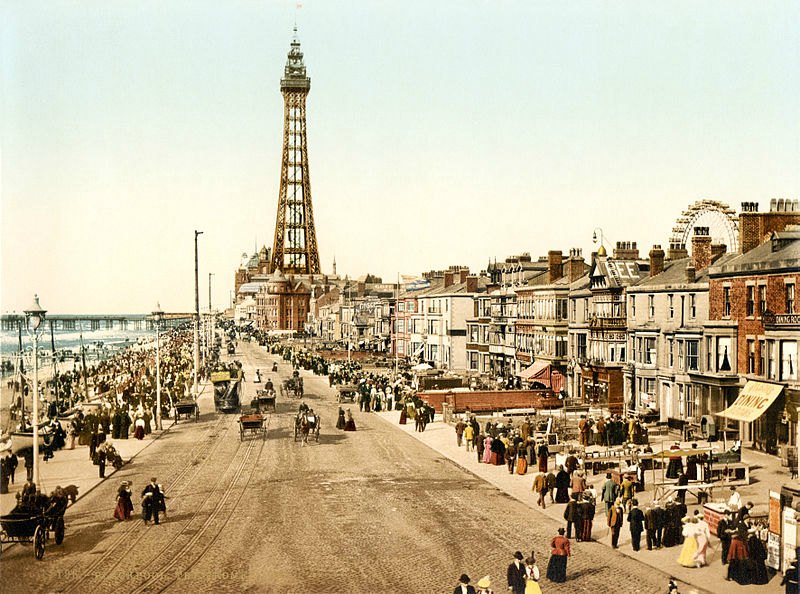
Blackpool has seen many changes in fortune over the years, but it still has the reputation of being one of the UK’s most well known seaside resorts. The following picture (which is looking north) shows what the Promenade was like in 1898:

Blackpool Promenade c 1898. Author Detroit Publishing Co. under license from Photoglob Zurich. Public Domain

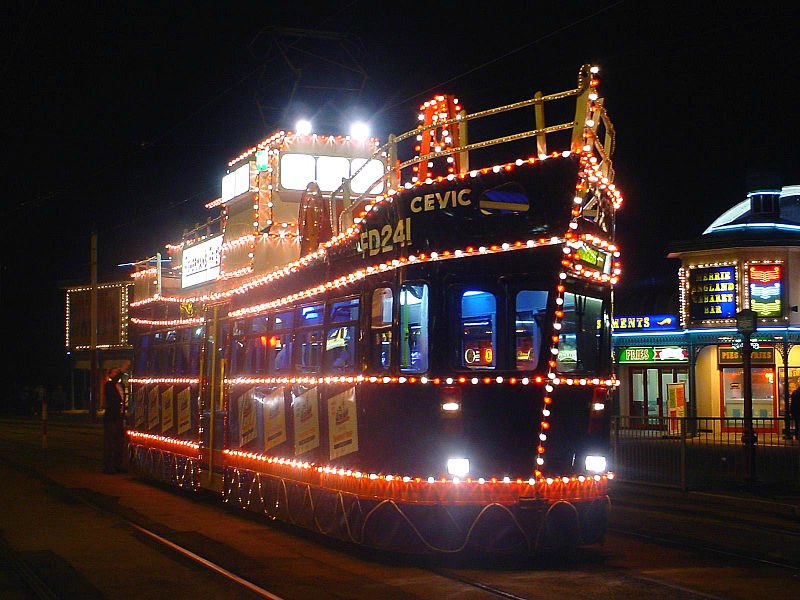
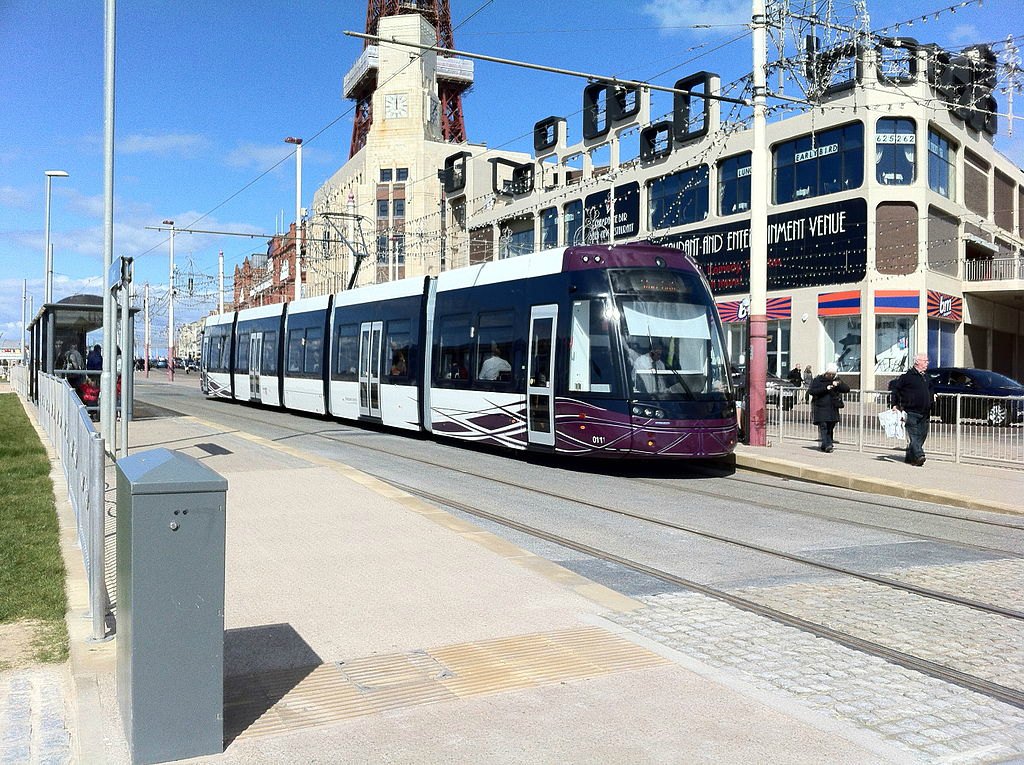
Today, Blackpool manages to maintain a steady stream of holidaymakers and day trippers during the summer, and the town still has a thriving tram route, which runs from Starr Gate to the south of the town to the fishing port of Fleetwood to the north – a distance of 9.9 miles:

Tram at Tower tram stop. Author: Chris Wharton. Creative Commons

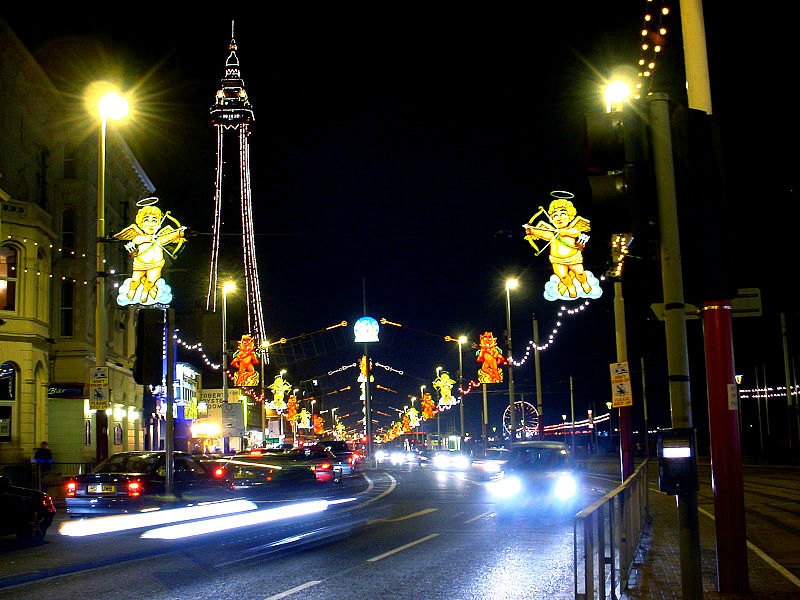
Large numbers of people visit the illuminations every year. In 2016 they will be ‘on’ from September 2nd until November 6th (66 days). As a child, my parents took us to see the illuminations on several occasions, and I found the lights, the Disney characters and all the other features totally magical.

Blackpool Illuminations and Tower. Author: Mark S. Jobling. Public Domain

References: a variety of Wikipedia pages (for images other than my own, plus additional historical detail).

Happy Mother’s day

Like Christmas, Easter, birthdays and a host of other anniversaries, Mother’s Day comes but once a year. And like all of the others, that’s part of the reason why it’s so special. I’ve had a wonderful day with the family so far, and have so many flowers that the house looks like a Garden Centre! Mother’s Day in the U.K. has an interesting history, and as I’ve nothing extra to add to what I wrote last year, I thought I’d simply reblog.
Happy Mother’s Day to all mums everywhere. ❤

milliethom's avatarMillie Thom

shutterstock_99041393

It’s early morning and I’m enjoying some peace and quiet before my tribe of six offspring (plus partners and grandchildren) invade for Sunday/Mother’s Day lunch. We tend to spend Mother’s Day here, at our house, because we have the biggest dining table for seating everyone. Besides, I love to cook for them all. I’m also looking forward to receiving my selection of lovely cards, flowers, chocolates and whatever other knick-knacks they decide I might like this year. I’ve never asked it of them, but I sincerely appreciate all that they bring. It’s like Christmas all over again. And to think, my birthday’s less than a month away, too.

Well, today I thought I’d have a think about what Mother’s day actually involves in the U.K. and how it originated. I won’t delve into how the celebration started in the U.S. in 1908 – which, I believe, is celebrated in May…

View original post 569 more words

Formby Point in February

037 View to the SeaFor the past few weeks I’ve been attempting to get on with my writing and for the most part, have succeeded in doing that. I still have some distance to go before I finish Book 3, but it’s coming along reasonably well. Unfortunately, last week, we needed to visit my 87-year-old aunt in Carnforth (north Lancashire) who has been unwell recently, so my writing was again ‘on hold’.

On one of the days we were there, we managed a run out to my hometown of Southport – a Victorian seaside town on the north-west coast of England.

Map of Merseyside, UK. Source Ordnance Survey Open Data. Author Nilfanion. Creative Commons.

Southport has had its ups and downs over the years, particularly since losing its place in Lancashire and becoming part of Mersyside in the early 1970s. I intend to write a post about the town at some stage, as I’ve always loved it and often long to be back there. Many golfers from around the world will know this coastal region for its famous links golf courses, including Royal Birkdale, Hillside and Ainsdale.

On this occasion we first drove a little further down the coast to Formby Point, and I thought I’d share some photos of the sand dunes and pine woods there. This whole area of coastline is managed as a Special Area of Conservation (SAC). Parts of the stretch, at Ainsdale, a litttle closer to Southport than Formby, have been a Nature Reserve for many years now – even when I lived there in the 1950s and 60s. The Reserve is the habitat of the Great Crested Newt, Britain’s most protected species of amphibian. I believe its numbers are now on the increase at the Reserve.

My sister and I often used to cycle down to the pine woods with a picnic when we were teenagers, and it hasn’t changed a lot since then – except that Formby Point is now managed by the National Trust.

The sand dunes are an important habitat for both the natterjack toad, now an endangered species, and the rare sand lizard. The pine woods are one of the few remaining areas in Britain where our indigenous (and also endangered) red squirrels are found. The woods flank the landward side of the dunes, so we walked through those first. The oak leaves and acorn symbol is that of the National Trust:

098 National Trust Squirrel Walk

100 Squirrel Walk

The ‘cages’ up in the trees are feeders for the squirrels. We caught a couple of  them inside, but the photos we took didn’t turn out well. We also saw a few scuttling across the ground – but they were too distant and fast moving to show up on a photo. I don’t have a good zoom on my tablet, and our small camera isn’t too wonderful either. This picture gives a vague idea -you can see a red squirrel in there, if you look closely enough:

020 Red Squirrel 2

These are a few photos of our walk through the dunes before we reached the beach. The marram grass is essential to the conservation of the dunes – without it, the westerly winds would very quickly erode them.

And eventually . . . the beach and the Irish Sea. The beach was almost deserted due to the time of year and the fact that it was mid-week:

On another day we went to Blackpool – an even more desolate seaside town at this time of year.  I’ll share a few photos of the town, and the adjoining Lytham St Annes another time.

*****

Just Who Was Saint Valentine?

This is the second post I wrote last year that I’ve decided to reblog recently. After all, information about St. Valentine hasn’t changed since then. Perhaps next year, I’ll find a different angle to talk about. 🙂
Happy Valentine’s Day! ❤

milliethom's avatarMillie Thom

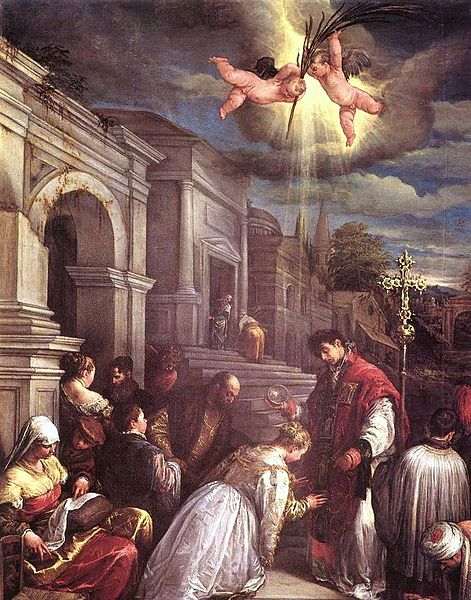
 471px-St-valentine-baptizing-st-lucilla-jacopo-bassanoValentine was a Roman priest during the reign of Emperor Claudius the Second in the third century AD. He is sometimes known as Claudius the Cruel – and is not the Emperor Claudius who was responsible for ordering the building of Hadrian’s Wall across the North of England in AD 122-130.

The story tells us that Claudius believed that married men did not make good soldiers. They worried too much about leaving wives and families behind if they were killed to be truly effective in battle. So Claudius issued an edict, prohibiting the marriage, or engagement, of young people.

Now, Roman society at this time was very permissive, and polygamy was popular. Yet some of the people were still attracted to the Christian faith. Unfortunately for them, since the Christian Church taught that marriage was sacred between one man and one woman, this posed a problem. It was obvious…

View original post 479 more words

A Hundred Year Wait – Flash Fiction for Aspiring Writers

Flash Fiction for for Aspiring Writers is a writing challenge hosted by Priceless Joy. It asks us to write a piece of fiction from the photo prompt provided in around 100-150 words – give or take 25 words. It encourages us to comment, constructively, on other entries, so supporting each other’s writing. If you’d like to join in with this challenge, follow the above link to see what to do. The challenge runs from Tuesday to Tuesday every week.

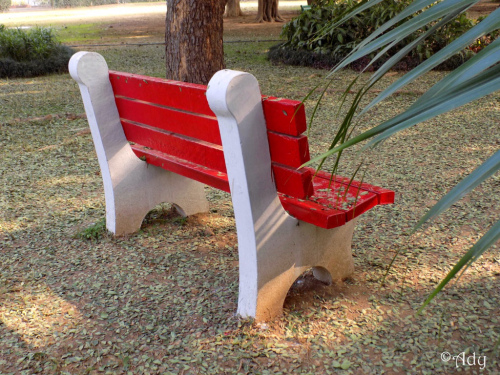
This is the prompt, kindly provided by Ady . . .

photo-20160208115053605

. . . and this is my story:

A Hundred Year Wait

Light-headed and disoriented, Albert drifted through the park he’d once known so well, struggling to understand why he was here at all. The colourful bench confused him further, posturing shamelessly where the old one had once reigned. He’d sat here so often with his pretty young wife . . .

‘Don’t go!’ Mary begged, grasping his hand. ‘We’ll run away… go to Scotland. They’d never find us there!’  But they would have done, and he’d have been shot at dawn . . .

The shrill whistle pierced Alfred to the core. He clasped his bayoneted rifle, scrambling ‘over the top’ of the trench’s parapet into No Man’s Land below. Enemy shells exploded; a volley of machine gun fire rang out: men fell to the quagmire’s embrace.

Albert sank into the comforting mud, knowing he’d never see Mary again. The Somme Offensive had claimed him: July 1st, 1916 . . .

A shadowy shape materialised on the bench. ‘Sit with me,’ Mary urged, beckoning. ‘I’ve waited a hundred years to see you, my love. I knew you’d return today.’

*

Word Count: 175

If you’d like to read other entries, or add a story yourself, click on the little blue frog:

Note about WW1:

July 28th, 2016 marks one hundred and two years since the start of the war that was once dubbed ‘the war to end all wars’. Unfortunately, too may wars since then has long since proven that to be false. In Britain, the war was originally known as ‘The Great War’, but is now variously called  ‘The First World War’ or simply ‘World War One’ (or WW1).

War started in 1914, and word soon spread that it would ‘all be over by Christmas’. Such optimism was soon found to be erroneous: it lasted four long years.

The Battle of the Somme – also known as the Somme Offensive  was fought by British and French troups against the German Empire on either side of the River Somme, in France. It lasted from July 1st – November 18th, 1916, and was one of the longest battles of the First World War. More that a million men were wounded or killed. It has become known as one of the ‘bloodiest battles in human history’. On the first day alone, (July1st) 58, 786 British, 49,859 French and 103,000 German soldiers died.

There are too many aspests of trench warfare for me to talk about here – and this is not a post to explain why trenches were dug and used as they were.  Anyone interested can easily look this up for themselves. All I can say is that I agree with Wikipedia’s estimation of it:

Trench warfare is associated with mass slaughter in appalling conditions‘.

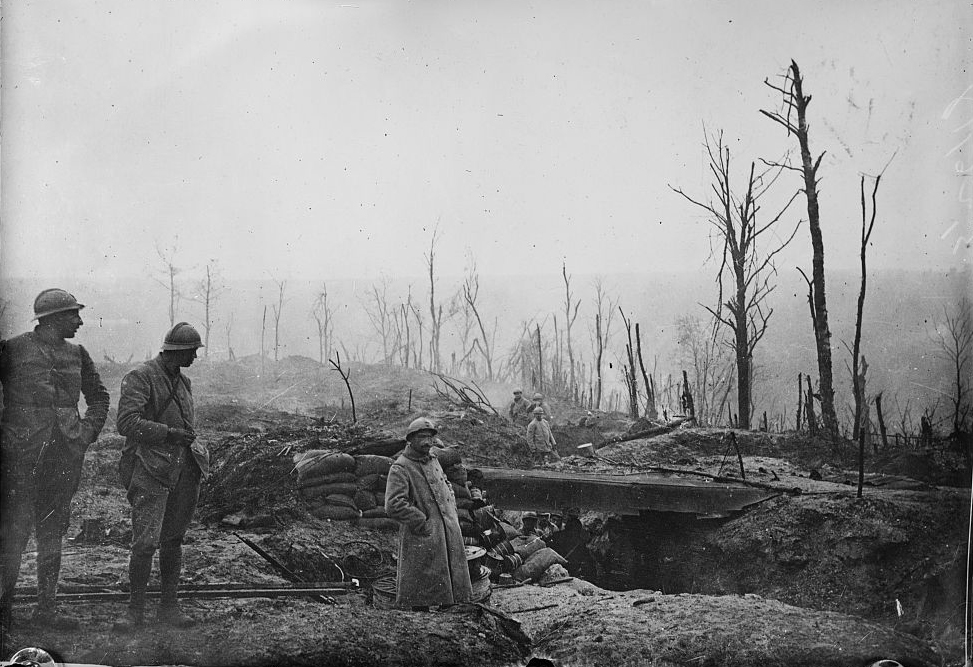
No Man’s Land was the name given to the land between the trenches of the opposing forces. It soon became a desolate area: all trees and other vegetation were destroyed by the  constant bombardment:

A French trench in NE France. Author: Bain News service. Public Domain.

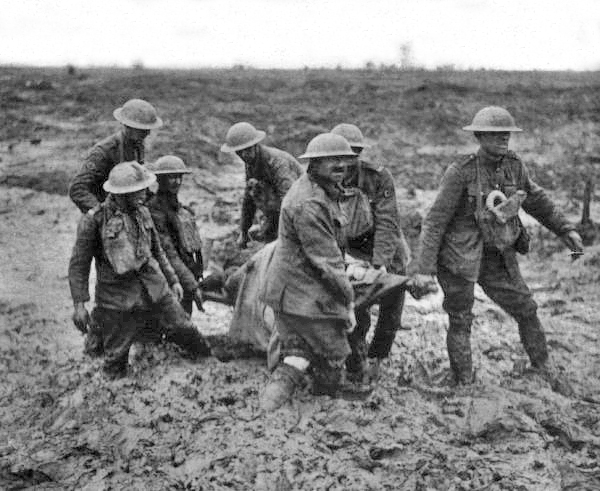
The shell fire of both sides left the area riddled with craters which, after periods of heavy rain, became filled with water. The land came to resemble a quagmire – a stretch of thick, muddy land that resembled a bog:

Stretcher bearers at the Battle of Passchendale. August 1917. Author: John Warwick Brooke. Public Domain.

Three Quotes Challenge – Day 3

shutterstock_32653303

Once again, I am happy to have been nominated for the Three Quotes Challenge, this time by Inese, whose blog, Inese MJ Photography is excellent. Inese is a wonderful photographer over in County Tipperary in Ireland, and her posts are always really interesting and inspirational. Most are about places and events in Ireland, but others are from places further afield. I recommend you all to check out Inese’s blog. Thank you so much for the nomination, Inese!

Tse are the rules for this challenge:

  1. Thank the person who nominated you.
  2. Post one fresh quotation on three consecutive days.
  3. On each of the three days, nominate three folk who have not yet taken part to continue the challenge.

As with many challenges, the rules can be bent a little, if need be, to fit in with people’s blogging schedules. Inese, who nominated me, posted all three quotes in one go. I’ve seen other people posting them over three weeks rather than three days. It’s really down to whatever suits you.

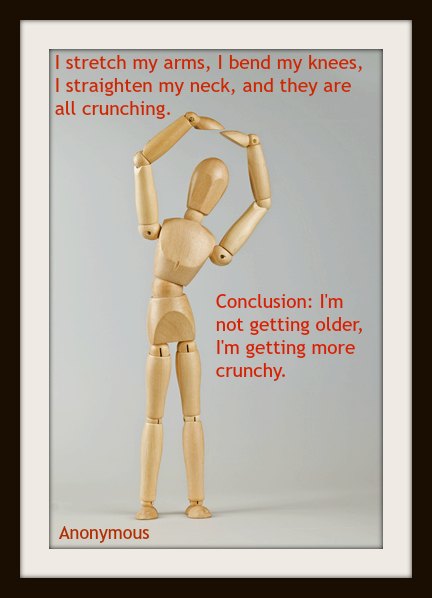
This is my third and last quote, and one that I found amusing, especially when directed at myself. It’s funny how many quotes there are around on the theme of ageing – or perhaps it’s just that I particularly notice them nowadays. As for creaking, crunchy joints . . . I just pretend I’m deaf.

shutterstock Crunchy Bones

Here are my three nominees for today:

  1. Susan at Susan’s Personal Blog
  2. Lynne at Lynne’s Recipe Trails
  3. Amanda at Something to Ponder About

What Is Pancake Day All About?

I wrote this post exactly one year ago – and yes, you’ve guessed it, it’s Pancake Day again here in the U.K. So I decided to reblog this post and put the third quote of the challenge I’m doing on hold for a day.

milliethom's avatarMillie Thom

shutterstock_130466882

This evening I cooked enough pancakes to sink a battleship. Everyone in our family loves the things, and we had several of our offspring round to join us (and save themselves the hassle of making and cooking them!) Naturally, being just ‘Mum’, I’ve got hours of spare time to cater for everyone! I wish!

Well, now I’ve just decided to write about where and when this tradition of stuffing ourselves stupid with pancakes started. So here’s the gist of it:

Shrove Tuesday – or Pancake Day – is exactly 47 days before Easter Sunday. It is called a moveable feast because it’s determined by the cycles of the moon. The date can be anywhere between February 3rd and March 9th and falls immediately before Ash Wednesday, the first day of Lent.

The word ‘shrove’ is derived from the English word, shrive – which means gaining absolution (forgiveness) for…

View original post 510 more words

Three Quotes Challenge – Day 2

shutterstock_242725570

I am happy to have been nominated again for this challenge, this time by Inese, whose blog, Inese MJ Photography is excellent. Inese is a wonderful photographer over in County Tipperary in Ireland, and her posts are always really interesting and inspirational. Most are about places and events in Ireland, but others are from places further afield. I recommend you all to check out Inese’s blog. Thank you so much for the nomination, Inese!

Here are the rules for this challenge:

  1. Thank the person who nominated you.
  2. Post one fresh quotation on three consecutive days.
  3. On each of the three days, nominate three folk who have not yet taken part to continue the challenge.

As with many challenges, the rules can be bent a little, if need be, to fit in with people’s blogging schedules. Inese, who nominated me, posted all three quotes in one go. I’ve also seen people posting them over three weeks rather than three days. It’s really down to whatever suits you.

This time I’ve picked quotes with no common theme other than the fact that they’re all amusing.  My second quote will probably appeal more to older people – including me! All I can say about it is that I’m trying to believe it’s true. Age creeps up on us all, but as they say, you’re as young as you feel – and I still feel 30. Of course, feeling it and looking it are two different things, but I won’t go into that one. Not to mention that all six of my children are over 30 anyway.

Enough of that, here’s the quote . . .

shutterstock_cheese

. . .  and I categorically refuse to be a cheese.

Here are my next three nominees:

  1. Hninn at Hnin adventures
  2. Frances at Loving Leisure Time
  3. Maria at Doodles and Scribbles

Three Quotes Challenge – Day 1

shutterstock_320923202

I am happy to have been nominated again for this challenge, this time by Inese, whose blog, Inese MJ Photography is excellent. Inese is a wonderful photographer over in County Tipperary in Ireland, and her posts are always really interesting and inspirational. Most are about places and events in Ireland, but others are from places further afield. I recommend you all to check out Inese’s blog. Thank you so much for the nomination, Inese!

These are the rules for this challenge:

  1. Thank the person who nominated you.
  2. Post one fresh quotation on three consecutive days.
  3. On each of the three days, nominate three folk who have not yet taken part to continue the challenge.

As with many challenges, the rules can be bent a little, if need be, to fit in with people’s blogging schedules. Inese, who nominated me, posted all three quotes in one go. I’ve seen other people posting them over three weeks rather than three days. It’s really down to whatever suits you.

This time I’ve picked quotes with no common theme other than the fact that they’re all amusing.  This first one is by one of the greats in comic fantasy – so who am I disagree with his logic?

shutterstock_open mind

Here are my first three nominees:

  1. Smiling Notes
  2. Aletta at nowathome
  3. Parul at Gharkepakwan