A Secret Shared – FFfAW

Flash Fiction for Aspiring Writers is a writing challenge hosted by Priceless Joy. It involves writing a piece of fiction from the given photo prompt in around 75-150 words – give or take 25 words. If you’d like to join in with the challenge, follow the above link to see what to do. The challenge runs from Tuesday to Tuesday every week.

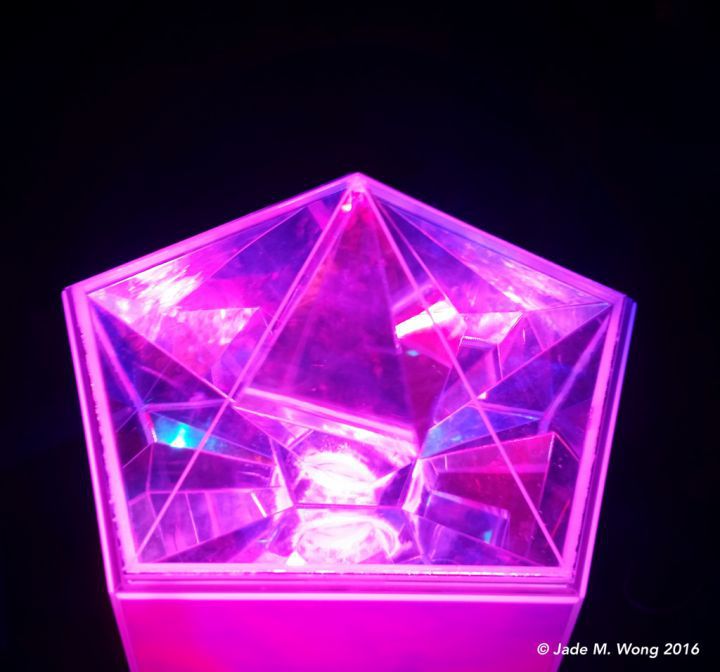
Here is this week’s prompt, kindly provided by Jade.M. Wong

ffaw-13th

And this is my story:

A Secret Shared

The emir’s eyes narrowed against the dazzling glow of the diamond proffered on the palm held out before him; a jewel of such majesty it would stand preeminent in his collection. Muhammad’s wealth was as renowned as the might of his emirate.

And wealth had bought him that power.

Muhammad’s control was absolute: his executions struck terror in men’s hearts. Many attempted to gain his favour; only a few succeeded.

He pointed a long-nailed finger at the low-born cradling the diamond and curled it slowly back. ‘You found this gem in a cave, you say?’ he whispered, shielding his words from attendants’ ears.

‘Deep inside the cliffs, Eminence,’ Aasif whispered back, nodding. ‘Legends say countless more adorn the tunnels beyond, but my torch was burning low, so I ventured no further.’

Muhammad licked his greedy lips. ‘This cave’s whereabouts…?

Aasif duly replied and Muhammad gestured to his guards before whispering, ‘Reflect on the folly of sharing secrets with strangers before your execution at dawn. But be assured, Aasif, this secret is safe with me.’

Word Count: 174

***

If you’d like to read other stories, or add one yourself, click on the little blue frog:

Wayland’s Smithy

Wayland's Smithy Long Barrow

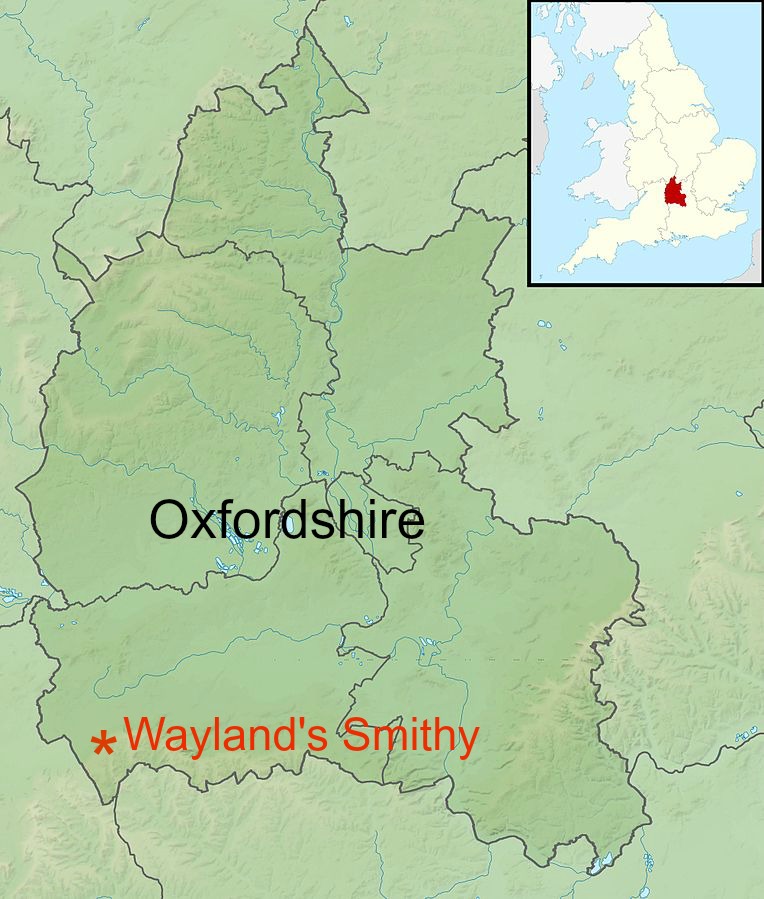
Wayland’s Smithy – sometimes called ‘Wayland’s Smithy Cave’ – is a Neolithic long barrow, or burial chamber, located in a copse of beech trees close to the ancient Ridgeway Path and the steep scarp slope of the Berkshire Downs, now in the county of Oxfordshire.

waylands-smithy-in-oxfordshire-uk
Map of Oxfordshire showing the location of Wayland’s Smithy. Source: Ordnance Survey OpenData. Author: Nilfanion, created using OS data. Creative Commons. (Annotations added by Millie Thom)

It overlooks the beautiful Vale of White Horse – so named after the famous Uffington White Horse barely two miles from Wayland’s Smithy.

There are many barrows in this region, both round and long, but Wayland’s Smithy is the only long barrow in Oxfordshire (Berkshire pre-1974 *). In neighbouring Wiltshire, the county in which Stonehenge is located, there are 260 long barrows, over half of Britain’s total.

The excavations carried out in the 1960s showed that Wayland’s Smithy was built in two stages:

Wayland’s Smith 1 is now invisible. It was a mortuary structure with a stone floor surrounded by sarsen stones and chalk built between 3590 and 3555 BC. Fourteen bodies were discovered in here in 1963: eleven men and three women. They appeared to have suffered violent deaths, possibly from arrow wounds, which would suggest battle. Two of the bodies had been gnawed by animals. This original mound was partly destroyed when the second barrow was constructed:

Wayland’s Smithy 2, built between 3460 and 3400 BC, was a much larger barrow built over the top of the first. It consisted of a 55 metre/almost 200 foot-long earth mound with a sarsen kerb and outlying ditches. The south entrance to the tomb was blocked by six large sarsen stones. Today, only four of the stones remain, but it is easy to see where the missing two once stood, particularly in the first photo of this post. A six metre-long earth passage leads through an antechamber into the burial chamber.

This larger, more obvious barrow was first excavated in 1919. Eight bodies were found in the burial chamber, one of a child, but no grave goods were present, nor were there any thigh bones with the skeletons! Wild animals again…? Victorian research…?

So why has this ancient burial site become known as Wayland’s Smithy?

There are various forms of the legend associated with this site. Most of them centre round the Anglo-Saxon Weland/Wolund/Volund. Weland was a Germanic smith-god, so it seems evident that the name of the site was applied by the Anglo Saxons… four thousand years after the mound was constructed.

volund
An illustration of Völundr (Weland/Wayland). Public Domain. Wikimedia Commons

One story has it that Weland/Wayland was the son of the great God-Giant, Wade, King of the Finns. By the time he was an adult, Wayland’s metalworking skills far surpassed those of his tutors.. This is an interesting and entertaining story, but far too long to relate here. If anyone would like to read it, it can be found on the site, Royal Berkshire History, and another version of it can be found on Wikipedia. I’ll just say that after many incidents and escapades, the Wayland in both of these stories still ends up at his smithy high up on the Berkshire Downs.

Another story tells us that Weland was an invisible elvin smith of outstanding skill who lived in the long barrow: Wayland the Smith. Some versions even tell us he was a lord of the elves. If a traveller’s horse should lose a shoe, a penny left in the roofstone of the right-hand burial chamber – traditionally known as ‘The Cave’ – the horse would be reshod by the time the owner returned to collect it.

Both of these stories include Wayland’s ‘run in’ with the cruel, Germanic king, Nidudr, or Niduth. In this tale, Wayland was captured by this Swedish king, Nidudr, lamed (by being hamstrung) to prevent him escaping and forced to work in the king’s smithy. In revenge, Wayland killed the king’s two sons and made drinking cups from their skulls, with jewels made from their eyes, and a brooch from their teeth. He then sent these to Nidudr. His final act of revenge was to rape the king’s daughter, who had brought a gold ring for him to mend, before flying away by magic.

Fun story, eh?

I’ve been to Wayland’s Smithy many times, and we never fail to say ‘hello’ to the White Horse while we’re up on the Ridgeway. I’ll devote a post to this handsome feature – er, creature –another time.

uffington-white-horse-sat
Satellite view of the Uffington White Horse. Source: World Wind Author: USGS  Public Domain

I have to admit, I love this whole area. It was all part of the kingdom of Wessex in King Alfred the Great’s time (9th century) and Alfred was born in Wantage, one of the springline settlements at the foot of the Berkshire Downs escarpment.

Wayland’s Smithy no longer plays a part in my books about King Alfred, but it did when I first wrote Book One – which was initially historical fantasy. It took a long time to change it into straight historical fiction! I decided fantasy really didn’t suit a story about the famous King Alfred, despite there being many fanciful myths about him burning the cakes and sneaking into the Viking camp disguised as a wandering minstrel.

***

I decided to write this post partly because it’s on my long list of history-type posts ‘to do’, but mostly because my blogging friend Amanda (Forestwoodfolkart) over there in Australia featured Wayland’s Smithy as her Monday’s Mystery Photo last week. The information may be of interest to anyone who had a guess as to the photo’s location. If you don’t do Amanda’s weekly challenge, and would like to have a go at the many interesting photos she shows, hop over to her blog, Something to Ponder About. Amanda also does a great post every Thursday in which she presents different proverbs and quotes for readers to ponder about.

***

* In the UK, many county boundaries were changed in 1974. All this area of the Ridgeway and the Vale of White Horse had been in the county of Berkshire since just before 849 – the year of King Alfred’s birth. In a treaty made with the Kingdom of Mercia, Alfred’s father, King Aethelwulf of Wessex, was given a small area of  Mercia, which became a new Wessex shire of Berkshire. Today, all this area is in Oxfordshire – yet the rolling chalk hills known locally as the Downs, are still called the Berkshire Downs.

***

Golden-hued Days of Autumn – FFfAW

Flash Fiction for Aspiring Writers is a writing challenge hosted by Priceless Joy. It asks that we write a piece of fiction from the given photo prompt in around 100-150 words – give or take 25 words. If you’d like to join in with this challenge, follow the above link to see what to do. The challenge runs from Tuesday to Tuesday every week.

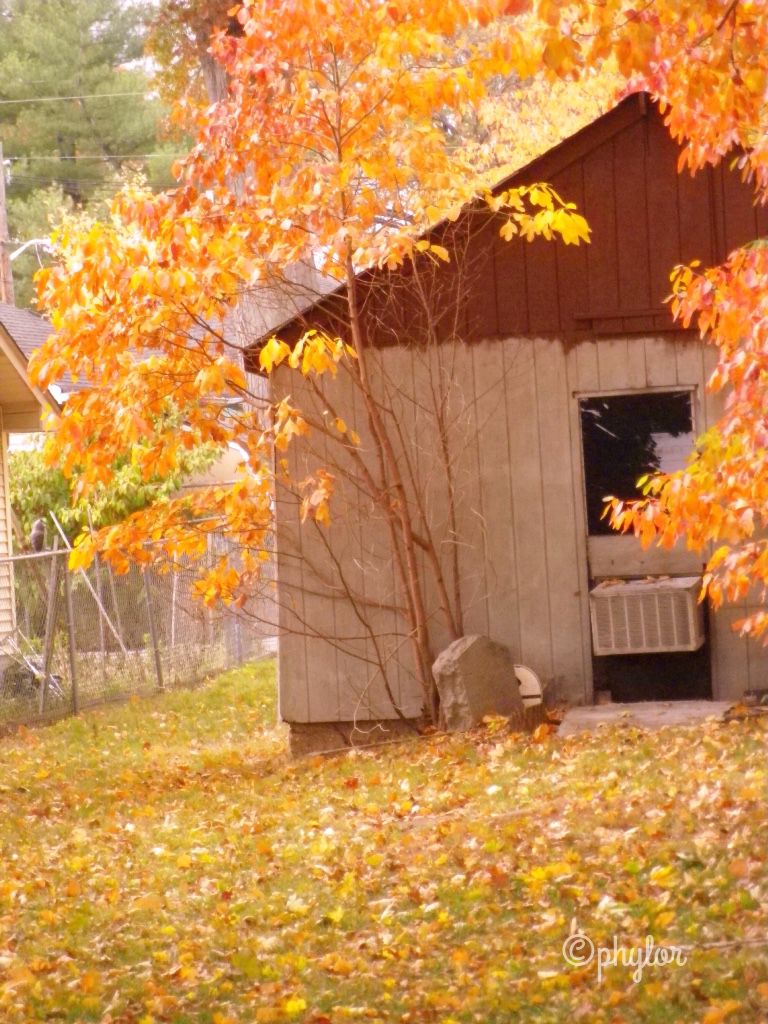
Here is this week’s prompt, kindly provided by Phylor.

photo-20160904121409530

And this is my story:

Golden-hued Days of Autumn

The shed at the bottom of the garden was Marigold’s very favourite place, her retreat when others got her down. They simply didn’t understand her and her brother, Perkin, was forever on her case.

‘Why can’t you be like the rest of us and enjoy being who we are?’ he’d yelled, the last time they’d disagreed. ‘You always have to be different!’

Their intolerance upset Marigold because she really didn’t know why she was different. It wasn’t because she revered the beautiful Earth – all her people did that. So it must be because she’d enjoyed the company of mortals over the years.

The mellowing of summer’s radiance into the golden-hued days of autumn always left Marigold in pensive mood. It was hard to watch her human friends gradually age and die, whilst she and her kind enjoyed lives of eternal summertime.

She flapped her faery wings, hoping she’d meet them again one day. But until that time, she’d flutter round the garden and help the next generation of humans appreciate the glorious world around them.  

Word Count: 175

***

If you’d like to read other stories, or add one yourself, click on the little blue frog:

Why Was King Alfred So Great?

I thought I’d share this Guest Post, so kindly posted by Jason, theopinionatedman, on his blog, Harsh Reality. Thank you, Jason! As one of the two main characters in my trilogy, I’ve lived with King Alfred for a few years now and decided to write a little about his ‘greatness’. So here it is…

My Internet Got Up And Went – Yet Again!

shutterstock_461496979

Before I start, I must tell you that this is nothing more than a ‘moany’ post – and I’ll try to write something more sensible by tomorrow. Right now I’m having a sulk.

Sometimes I hate living in this village! Pretty as it is, and the surrounding countryside is lovely, our Internet connection is abysmal! Or rather, it’s just downright unreliable.

On Wednesday afternoon, I’d decided to do some catching up on reading posts I’ve missed due to my writing commitments. I’d been on my blog for five minutes and yes… you’ve guessed it… our Internet connection flew out the window. AGAIN!

It’s now Friday afternoon, and we’ve just been reconnected. Engineers couldn’t come out before today so we’ve had two whole days of twiddling our thumbs. The Internet in this village is very slow at the best of times and despite having been promised ‘Superfast Broadband’ for the past two years, we’re still waiting – whist surrounding villages have had it for ages!

shutterstock_199521074Perhaps we’re just too small a village to bother with. But the fact is, there are a lot of people who work from home living here, to whom the Internet is crucial.

The problem regarding losing connection altogether is something else, and no one seems to be able to tell us why this keeps happening – or perhaps the engineers just aren’t telling us.

Anyway, I must apologise to anyone who has left a comment on my last posts which I haven’t replied to. Also, I have several new followers I still need to get back to. Thank you for being so patient and understanding.

thank-you-970920_1280

Moan over.

Have a great weekend!

Researching for Historical Fiction

shutterstock_212107063

Historical fiction is something I love to write. The reason…? I simply love history, any time period and any setting. At present I’m concentrating on the Viking era in the mid-ninth century as I finish the third book in my Sons of Kings trilogy. The first two of these are in my sidebar over there, and the third will be titled Wyvern of Wessex. After that, I have plans for several other ‘histfics’, but not set in the Viking era.

So what exactly is historical fiction?

Well, until recently, most definitions told us that stories set fifty or more years ago could be classed as historical fiction. Recently, however, I’ve seen various sites that have reset that definition to twenty-five years. For someone of my age, twenty-five years ago seems just like yesterday and that definition does little for my self-image. I’m already feeling like an old fossil.

cell-phone-1298944_640

Twenty five years only takes us to the early nineties. So a book set in 1991 is now classed as historical fiction. Oh my…! But when I think about it, even yesterday is history… one second ago is history. I suppose past times, no matter how recent, are all ‘history’.

As for actually writing historical fiction, just what does it involve?

For starters, like several other genres, it involves the writer doing a lot of research (unless he or she a hugely successful author and can afford to hire people to do it for them). Fortunately, doing research is so much easier nowadays than it was years ago when the only place for doing it, other than buying your own text books, was the good old library. But now, authors have the Internet and access to numerous informative sites, including those about history.

shutterstock_449853445

Having said that, I would never, ever, dismiss the value of good books about the period and historical characters I want to write about. I have some excellent texts that have been invaluable. But online sources can give us lots of interesting – and different – information. And, of course, there’s still the library.

shutterstock_266506829

Exactly what you research can include anything from dates of characters’ births and deaths, to dates of important events of the time. But details about everyday life are important, too. We need to know things like building types, foods (and how and when they were cooked and eaten) clothing and general customs and attitudes. All add to the authenticity of the story – but must be ‘fed’ carefully and intermittently into the story.

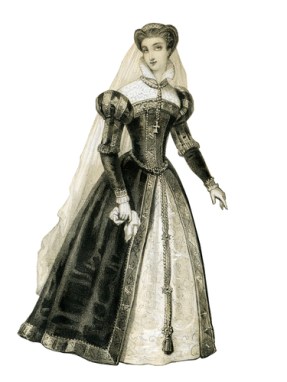
Getting details about the period wrong is definitely not a good idea, as there will always be at least one reader who’ll notice. Several years ago I read an article in a Writing magazine by an editor in the US. In this article, he quoted what he called the ‘worst example of historical inaccuracies’ he’d ever come across. It was in a book about Mary Queen of Scots, who was beheaded in 1587. (The author’s name and book title were not divulged, of course). He quoted a scene between Mary and her husband, Lord Darnley, which I’ll re-quote as closely as I remember it. Mary supposedly says:
shutterstock_87588178

Darnley, honey, let me fix you a chicken sandwich.

I’ll leave you to pick out what’s wrong with that one – but I found it hilarious!

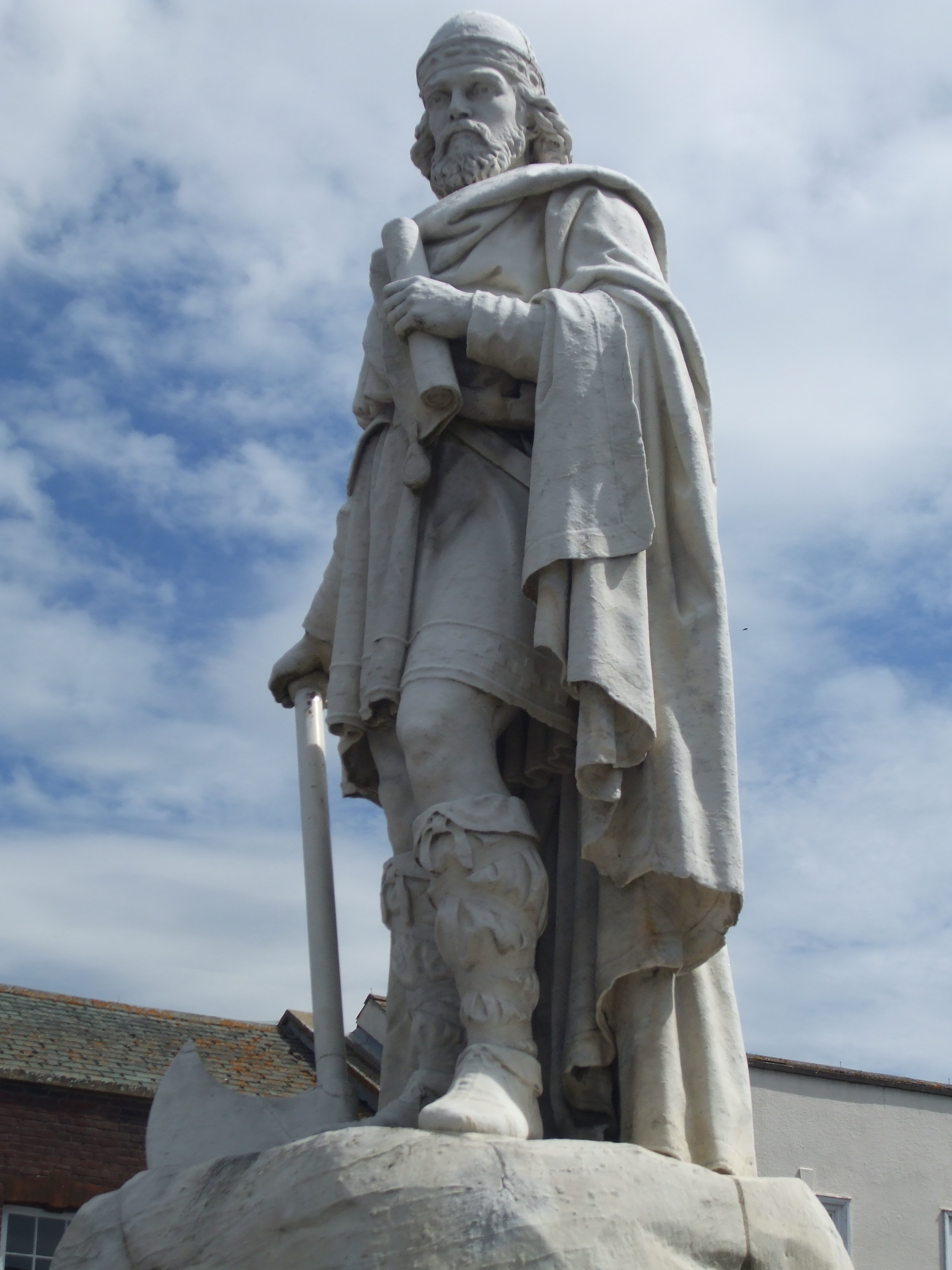
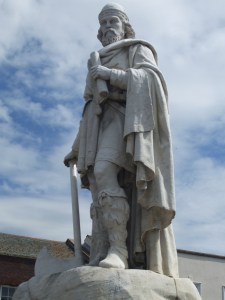
For my trilogy there were two main things I had to focus on. The first was the life of King Alfred the Great, one of the two main protagonists. This is one of the two statues erected in his honour (both in Victorian times as you can probably tell from the photo below). This one is in the Market Place in Wantage, Oxfordshire (formerly Berkshire), which is believed to be where Alfred was born.
011

I also had to focus on Viking ships and voyages as well as everyday lifestyles of both Vikings and Anglo-Saxons in the mid-ninth century.These are a few ‘photos of photos’ we took in Denmark, so I apologise for the poor quality of them. They were taken at Lindholm Høje in northern Denmark. Some are from inside the museum, others are of the very famous Viking burial ground there.

The Jorvik (pronounced Yorvik) Viking museum in York (Yorkshire, UK) was also excellent for information about Viking life. The museum succumbed to floodwaters when the River Ouse flooded in December 2015 and won’t be open again until spring 2017. Fortunately, most of the exhibits were saved.

All in all, the research kept me busy for quite some time. But, we visited some wonderful historic sites and museums in both England and Denmark as part of it. So that can’t be bad, can it? The visit to Denmark really helped with the parts of the books set there – a lot of Book One in particular, which is mostly about my second protagonist, Eadwulf of Mercia. Although he’s a fictional character, the main events in my book that take place in his kingdom, are not.

We still love to visit historical sites related to all periods of history. Reenactments are a particular favourite at the moment, and we’ve been to a few this year. These photos are from a battle between Alfred and the Danes staged at Corfe castle in Dorset in May.

And these are from the Viking Village at Murton, near York. I wrote a post about this in April this year.

‘Bear’ is really quite something, and he was very helpful in explaining all about his unusual helmet and why few Vikings ever adopted that style. All ‘grist to the mill’, as they say.

shutterstock_155992808

Softie – FFfAW

Flash Fiction for Aspiring Writers is a writing challenge hosted by Priceless Joy. It asks that we write a piece of fiction from the given photo prompt in around 100-150 words – give or take 25 words. If you’d like to join in with this challenge, follow the above link to see what to do. The challenge runs from Tuesday to Tuesday every week.

Here is this week’s prompt, kindly provided by Louise at thestorytellersabode:

photo-20160821095532483

And this is my story:

Softie

Twelve-year-old Charlie braced himself against the biting February wind, scouring the beach as he walked. Dad would wallop him if he didn’t find any coal washed up on the morning’s tide. Mum needed whatever he fetched to supplement the spindly sticks they collected.

The shiny object suddenly caught Charlie’s eye, just nestling amongst the colourful pebbles.

‘You’ve found it!’ a girlish voice squealed as he picked it up. ‘Mum was heartbroken when she lost it yesterday. She’s had it for twenty years. See, the date she got it’s on the back: nineteen fourteen. And you found it…’

Charlie scrutinised the expensive-looking watch. Dad’d be pleased to have it to sell – but furious if he learnt Charlie’d just given it away.

‘Finders keepers,’ he retorted. ‘That makes it mine!’

The girl’s tears flowed and he thrust her the watch. Dad had always called him ‘Softie’…

Eighty-two-year-old Alice laid the flowers on Charlie’s grave, fingering her mother’s watch. Memories of the day she’d met her Softie were never too far away, and she’d meet him again, very soon.

*

Word Count: 176

If you’d like to read other entries, or add a story yourself, click on the little blue frog:

My story about collecting lumps of coal on the beach may seem far-fetched to many people, but that’s just what many poor families had to do in earlier times. I was basing the story on my dad’s early life in the seaside town of Southport in Lancashire (a very sandy beach, with sand dunes – and not the pebbly beach in Louise’s photo, which I’ll leave her to talk about). He was born in 1922, and times were hard.

The coal would mostly have been carried down in the rivers from the Lancashire coalfield and out into the Irish Sea. The incoming tide would then wash some of it up onto the beach – where poor families made good use of it.

How Charlie and Alice met in this story was not how my mum and dad (Millie and Thomas) met. At the time when my dad was collecting coal on the beach, my mum was happily growing up eighteen miles away, in Liverpool – until the heavy bombing of that city during WW2 took her to Southport. My home town.

*****

The Bumpy Road to ‘A Dash of Flash’

A Dash of Flash Banner 0806 2It seems ages since I was active on my blog, but I’m now looking forward to having a little more time for writing and reading posts. It’s been a funny year for me so far, though I know the problems are all of my own making. We’ve been away a lot for a start, and I’ve been writing two books at the same time – probably not the best idea I’ve ever had. I should have finished off the third book of my trilogy before taking on anything new.

But at last my flash fiction book is finished, edited and published on Amazon. Happy me! (This nice, happy-looking young lady is evidently not me – the picture just shows how I feel. 🙂 )

shutterstock_173293160

I thought that having so many stories already on my blog, the book would take little time to do. WRONG. I soon realised I also needed new/unread stories in the book, so I started to write some.  I also decided to make the book a decent length – at least novella size* – so I ended up writing quite a lot of new stories. A good half dozen are almost  1,000 words (the generally accepted upper word limit for ‘flash’.) Several are over 500, and some of the stories from my blog have either been tweaked a little and/or lengthened. The book finally ended up at almost 23,000 words. (*Novellas are usually between 18,000 to 30,000 words.

The editing of A Dash of Flash was finished over seven weeks ago, but the person I initially sent the book to for formatting and converting to epub and mobi files kept me waiting for weeks. And even then it wasn’t done properly! Eventually I was sent a word document (supposedly formatted) with assurances that most of his clients used word documents to upload onto Amazon. Having only uploaded mobi files for my Viking books, I was sceptical, but accepted this ‘professional’s’ advice.

A Dash of Flash (Small)

I uploaded this file onto Amazon at 9 pm last Saturday. It looked good on the previewer, so I was happy. It generally takes anything up to 12 hours before books go ‘live’ and I’d thought that by morning I’d be able to check the book by downloading my own copy and if anything was wrong with it, I could quickly unpublish…

Imagine how I felt when I saw that indents were all over the place for a start. To make matters worse, the book had come live on Amazon before midnight (UK time) and someone on the .com site had already bought a copy!

I was mortified!

Confused (from Pixabay)

Naturally I immediately unpublished. If the person unlucky enough to have got that dodgy copy is reading this, please email me and I’ll send you a mobi or epub file of the properly formatted version – with my sincere apologies.

I immediately sent the book to the person who’d formatted my other two books, and kicked myself for going elsewhere this time. Alan Cooper has made an excellent job of formatting and converting all three of my books now, and he’ll certainly be doing the next one.

If anyone would like to read A Dash of Flash, it’s available on Amazon USAmazon UK and Amazon AU. It is on KDP Select, but I haven’t got around to ordering my first 5 free days just yet.

Needless to say, I’d love to know what people think, and honest reviews would be more than gratefully received. Publishing a book of ‘flash’ is new territory for me – although many of the stories have historical settings.

This is how all authors feel about receiving reviews:

shutterstock_48630106
*****

Dash of Flash

1589562028

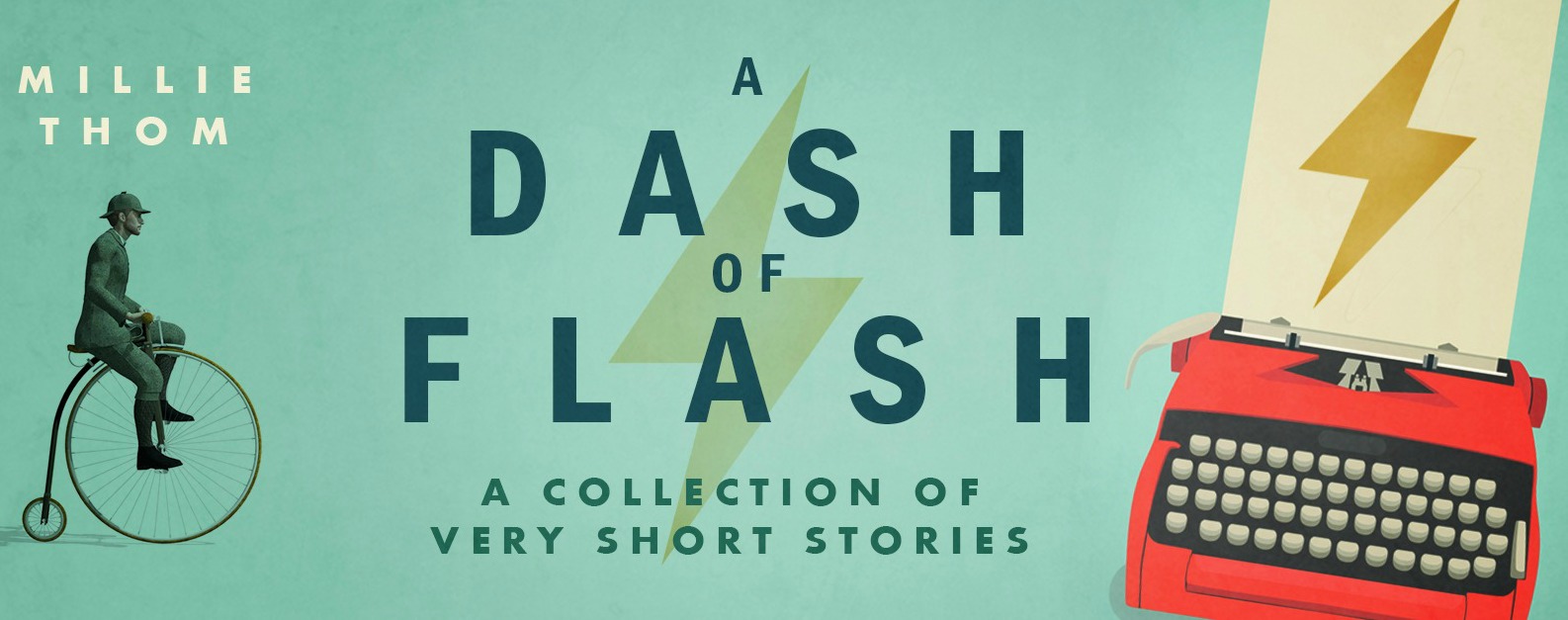
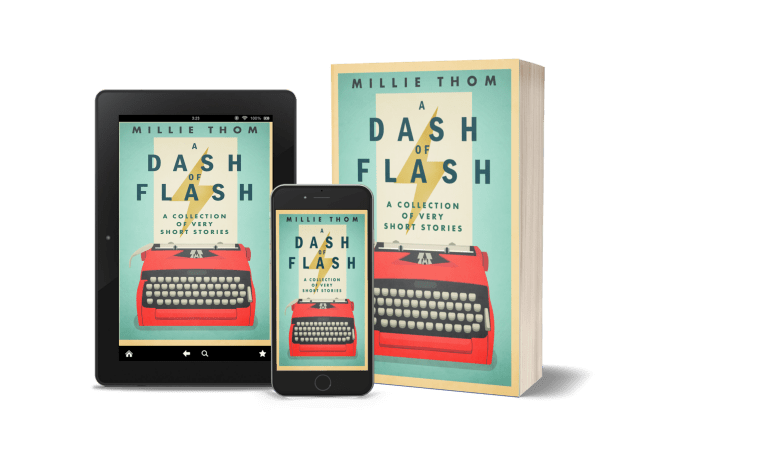
A Dash of Flash: A Collection of Very Short Stories

My third book is something quite different. It is a collection of 85 flash fiction pieces / very short stories, ranging from 100 to 1,000 words. Over 50 of the stories are illustrated, giving the text a bright and cheery feel. Here’s a brief description of the book:

A Dash of Flash is an eclectic mix of stories with both contemporary and historical settings, plus a few fairy tales and ghost stories added for good measure.

Step inside and join the many and varied characters at their times of joy or sorrow, remorse or loss. Laugh at their foibles, commiserate with their grief and indulge with them as they reminisce. Or simply smile at the fantasy of the tale.

Glimpse them all for but a mere flash in time…

5 star reviews of A Dash of Flash:

    • Thoroughly enjoyed these (very) short stories! This is the first collection of flash fiction I’ve read. I loved the variety of stories. This, together with the ultra-short length of the stories, really keep your attention. This is a perfect collection for people who have short attention spans (like most of us these days, myself included)! Most of the stories have enticing images accompanying them – these really set the stage for each piece – and are a clever addition. I found each story (‘The Double Crosser’, my favorite) to be well-written and very engaging. Five stars & looking forward to more flash fiction! … Amazonian, Amazon.com
    • This is a stunningly diverse collection of yarns, a mix of pathos, sorrow, joy and retribution. I enjoyed every one ~ Maureen Turner, Amazon.co.uk
    • “A Dash Of Flash: A Collection of Very Short Stories” is a work I highly recommend for anyone who likes the delight and brevity of the interesting, cleverly written short story. This assortment of flash fiction by author Millie Thom fits that bill … Millie Thom’s writing style is strong, her storytelling expertise wonderful, and her marvelous imagination and sense of humor brings to life so many delightful characters and plot situations all in the small space called flash fiction. This book is a joy to read, the stories brief, interesting, and cleverly composed ~ J.R. Cotner, Amazon.com
    • I happily spent two afternoons in the company of this miscellany of imaginative vignettes, eavesdropping on conversations and peeping through keyholes.
      I chuckled as a bikini top floated out to sea, marvelled at the beat of a fairy’s wing and nodded approvingly as I read a story that was written without using the letter ‘e’.
      Millie Thom has an engaging writing style and employs literary technique to good effect, using ambiguity, colloquialisms, metaphors and misdirection to amplify each dénouement.
      Pleasingly, she is a graduate of the ‘show and not tell’ school of writing and therefore trusts the reader to fill in the blanks.
      As well as subtle paradoxes, there is pathos-a-plenty to be found, but poignancy, wistfulness and whimsy take centre stage.
      The author’s tastes are wide-ranging; anything from mythical kings to alien spaceships takes her fancy.
      Overall, a most enjoyable read. Highly recommended! ~ K, Amazon.co.uk

dash of flash advert

BUY IT NOW ON

amazon-button-png-3

Sudbury Hall and the Museum of Childhood

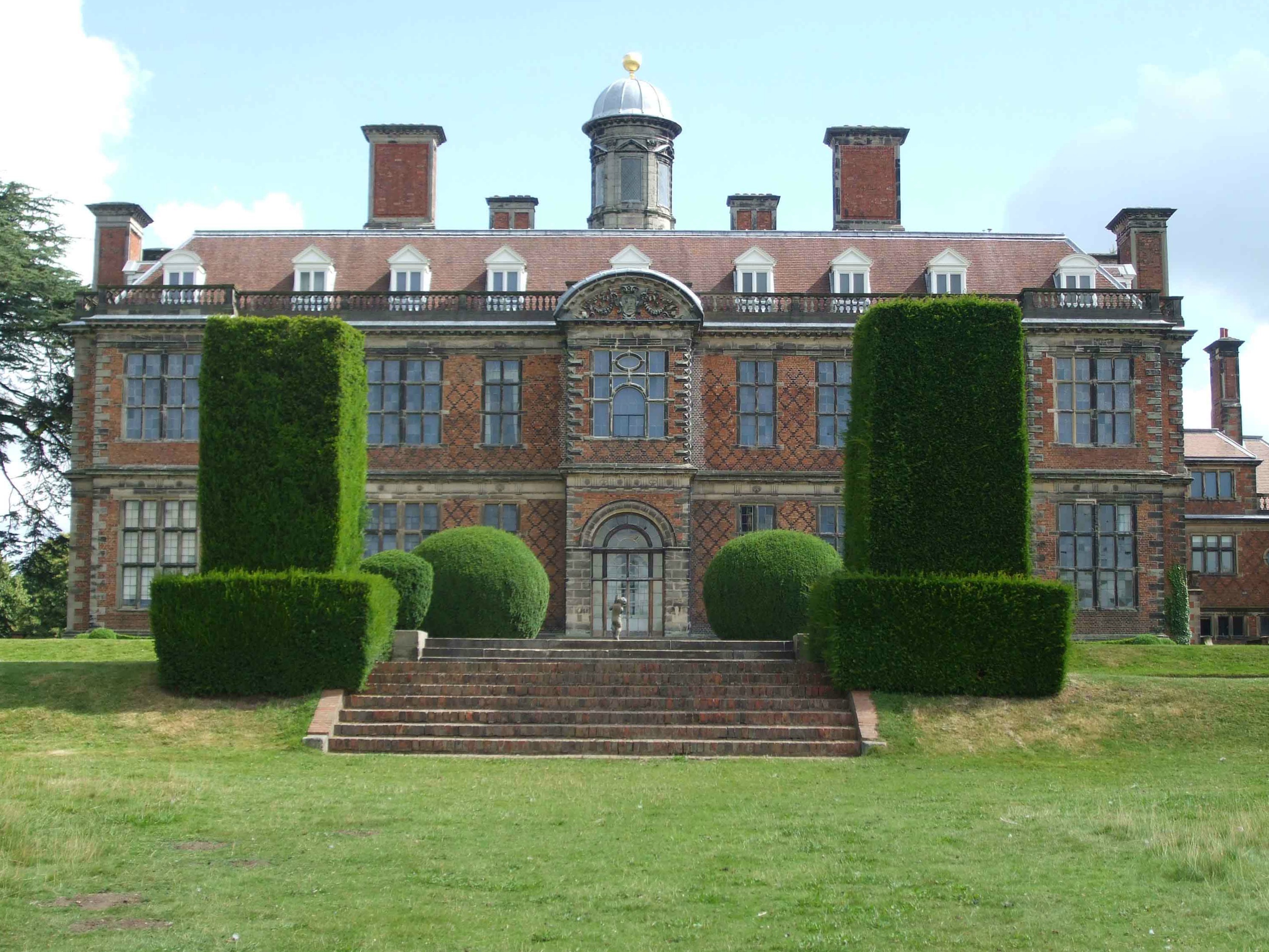
Rear of Sudbury Hall 2

Last Sunday we headed off to visit the stately home of Sudbury Hall in the neighbouring county of Derbyshire. Along with us was our elder daughter, Nicola. Sudbury is located close to Ashbourne on the southern edge of the Peak District National Park. We had quite a clear run (meaning no traffic hold-ups) and it took us about an hour and twenty minutes to get there.

We last visited Sudbury in 2003, so we thought it was about time we had a revisit. But this time it wasn’t the Hall itself we wanted to see – although we did have a quick look round – but the adjacent Museum of Childhood, which has been revamped in recent years. To be honest, we couldn’t really remember how the museum was laid out in 2003 so I can’t make comparisons, but it’s an interesting place, with exhibits (mostly toys) dating from the 18th century, but focusing mostly on Victorian times, complete with a Victorian schoolroom.

Sudbury Hall was built by George Vernon in the latter half of the 17th century. It is a redbrick building, now owned by the National Trust. Outside, formal gardens lead down to a lovely lake. These are a few pictures we took of the Hall, outside and in:

We took far too may photos inside the Museum of Childhood to show here. The exhibits were all inside glass cases, too, and the thick glass with the lights over each display made some of the photos very poor, due to the glare. The toys were all very interesting, and took the three of us down ‘Memory Lane’ for a while: with Nick and I it was the toys from the ’50s and 60s while Nicola reminisced over those from the ’70s and 80s. Many of the Victorian toys were just amusing and some of them very clever, if not particularly suitable for children. There were also gollywogs amongst the soft toys and many dolls. Gollywogs have been a controversial issue for some years now, and I’m not even sure whether they were banned. But I well remember them during my 1950s childhood.

Here’s a jumbled up collection of some of the toys:

Parts of the museum focuses on the lives of some of the poorest Victorian children, and the gruelling jobs they were forced to do to contribute to the family’s meagre earnings. These are a few of the snippets of information about three of the jobs that Victorian children would have done – chimney sweep, pit boy and household maid.

The reconstructed Victorian schoolroom was complete with desks that resembled the ones Nick and I remember from the 1950s and the handwriting on the blackboard is very similar to the style I was taught (with the teacher hovering over us all, ready to rap the knuckles of anyone who didn’t get the letters perfect!)

Lastly, this poster, which must show somewhere in the US, since Rachel Carson was an American author, took me back to my days of ‘playing out’ with my friends. We weren’t city dwellers, or so poor that I had no shoes, but the idea of groups of us running round and getting into mischief is just the same. I’ve climbed over lots of walls in my time, as well as up many trees. What fun it was! A Child's World

All in all, a lovely day out – and the weather smiled on us, too.

***