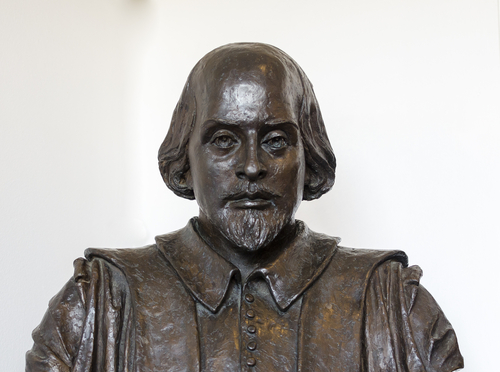
Get It Up Front!

shutterstock_48630106

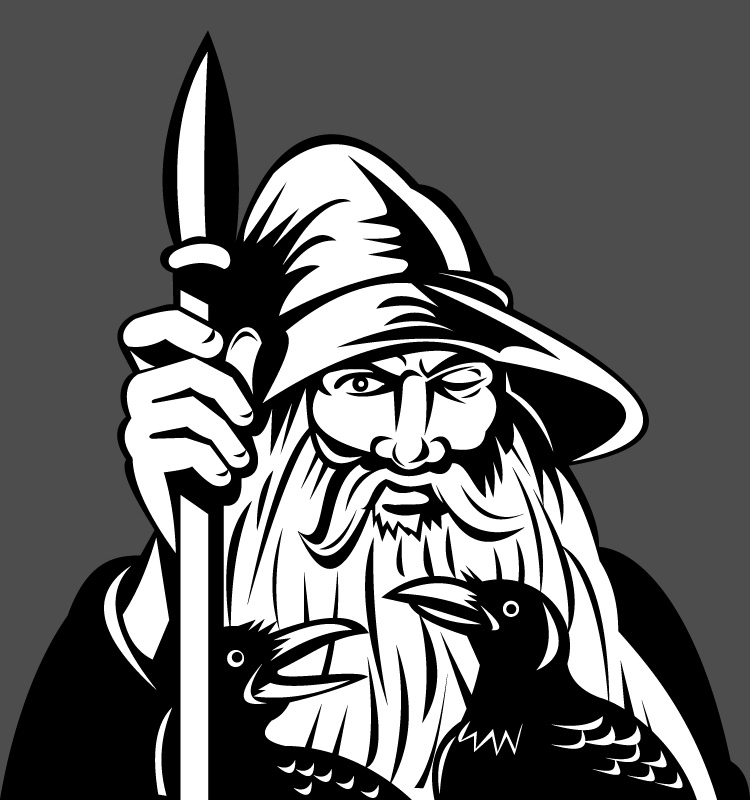
This was me – or, perhaps, just a semblance of me – yesterday. I actually finished writing the second book of my Viking trilogy, Sons of Kings. I wrote the last sentence with a feeling akin to euphoria, as I’d been determined for weeks to get it finished by the end of November. (My personal version of NaNoWriMo, I think!) I’ve sent the last couple of chapters to my editor and – provided there are no massive amendments to be made – I hope to have the book on Amazon as soon as it’s been formatted. I’m aiming for Christmas, but I’ll see how things go.

Of course, I know only too well that I haven’t completely finished – and I’m not talking about all the promotion! I’ve now got to work on the ‘Front Matter’ (meaning, all the necessary information that goes at the front of the book before the actual story starts). And, of course, there’s the promotional blurb that goes on the Amazon sales page to do.

So, what does the Front Matter entail?

If you look at the front of any book – whether traditionally or digitally published – you’ll see several pages of details. Since my experience is only with ebooks, that’s obviously all I can talk about – and do remember that the front matter, and how it is organised, is down to individual authors.

With ebooks, after the cover design, there is usually a written title page, in large print, simply repeating what the cover says.

My book, Shadow of the Raven, says:

SHADOW OF THE

RAVEN

Millie Thom

SONS OF KINGS: BOOK ONE

I have this positioned in the middle of the page, but every author will choose his/her own style and where they want it on the page. I’ve seen some at the top, some similar to mine.

The Contents page that follows will link to all the chapters in your book. The links are simply so that readers can navigate their way easily around the book.

Next is often page with the Copyright © – plus related information. The ISBN if often included around here, if applicable. – Then comes a page with the dedication to the person(s) of your choice.

Some books have an ‘About The Book’ page, giving general information that the author wishes to be known. It could be background to the historical period, the book’s location – or whatever!  Other books have an Acknowledgements page.  Some books have neither.
 

Family_tree

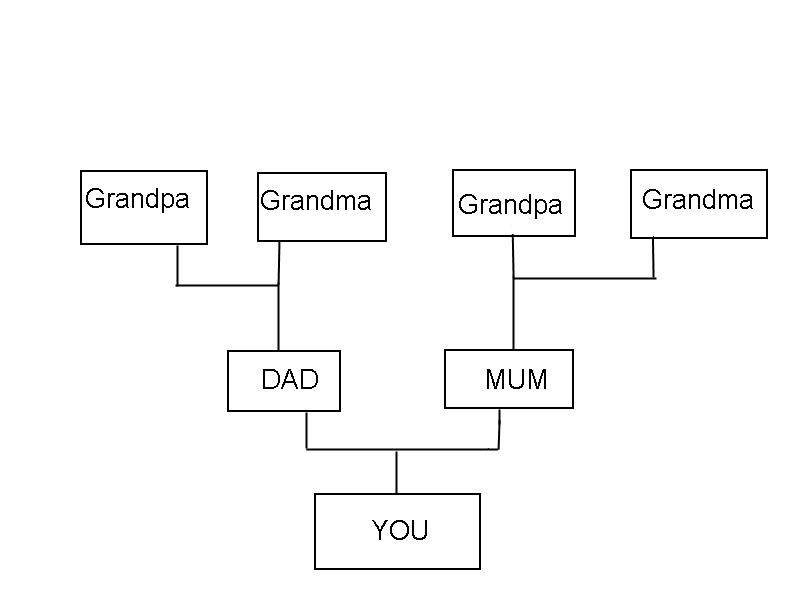
Sometimes maps are put at the front and/or family trees. Both of these are familiar aspects of ‘otherworld’ fantasies and historical novels. Family trees are also common in family sagas. Finally, authors with previously published books may wish to add a good review or two, or other praise about the previous books. Of course, to be able to quote praise from fellow authors (preferably successful ones) is any writer’s dream!

So, here I am, about to sort out what I need for my Front Matter and get everything ready for formatting. I’ve already done a List of Characters, so that’s a start!

Pit of Vipers Final (Small)

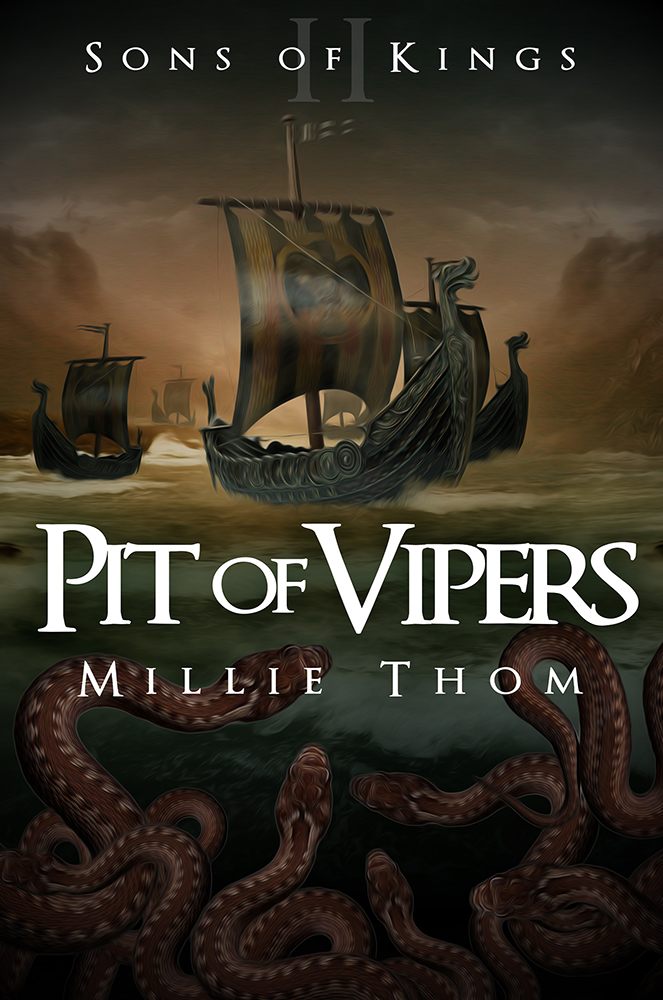
Book Two of my trilogy is entitled Pit of Vipers and continues the story started in Book One, Shadow of the Raven. The three novels follow the lives and adventures of King Alfred of Wessex and Eadwulf of Mercia. I’ve had the cover for a while now and the designer is currently working on one to match it for Shadow of the Raven. I was never happy with the one you see in my side bar, and I want all three to be in the same style.

With my second book to be on Amazon soon I’d like to mention that if any bloggers out there would like a copy of Shadow of the Raven in exchange for an honest review, please contact me at millie_thom@hotmail.com. Let me know whether you’d like a Mobi or ePub file.

To finish, here are a couple of quotes about self-publishing:

“Anyone who says it’s easy to self-publish a book is either lying or doing a shitty job.”  Nan  McCarthy

Authors today need a publisher as much as they need a tapeworm in their guts.”  

Rayne Hall
The Horrors of the Blood Eagle.

10648971_292228200969226_128901728781322149_o

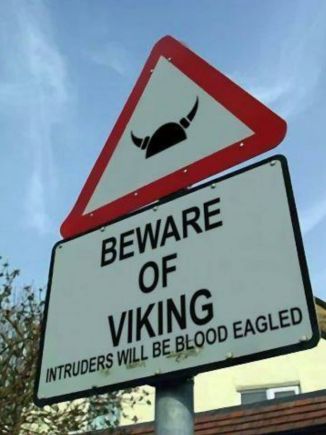
This incredible hazard sign was shared on Facebook on November 11th by The Heathen Mead Hall. It was one of my daughters who drew my attention to it. I don’t know where the sign came from, or who made it, but it’s quite hilarious – considering it refers to such a gruesome thing.

I’m sure that anyone who has been following the TV series ‘Vikings’ will already be familiar with what the blood eagle execution entailed. I haven’t watched the series, for the same reason that I haven’t read the wonderful Bernard Cornwell’s books about King Alfred and the Danes. I don’t want to be influenced in any way by what either say/show until I’ve finished my own books.

Here’s the blood eagle scene from the ‘Vikings’ Tv Series, uploaded to YouTube by Star Wolf:

Wikipedia tells us that the blood eagle was a method of execution, ‘performed by cutting the skin of the victim by the spine, breaking the ribs so they resembled blood-stained wings, and pulling the lungs out through the wounds in the victim’s back. Salt was sprinkled in the wounds. Victims of the method of execution, as mentioned in skaldic poetry and the Norse sagas, are believed to have included King Aella of Northumbria, Halfdan son of King Harald Harfagri of Norway, King Maelgualai of Munster, and possibly Archbishop Aelfeah of Canterbury’.

I’d like to add a couple of points about this barbaric ritual. I’ve referred to, and combined, a number of sources here, so if there are any mistakes, they are my own. Historians today are still in dispute over the authenticity of such accounts. The Viking Orkney website discusses whether the blood eagle was really a method of execution, or simply a literary addition, included for dramatic effect. It tells us that the blood eagle appears in several Nordic accounts, including one from the Anglo Saxon Chronicle. In that we hear how the Northumbrian king, Aella, was executed by Ivar the Boneless:

“They caused the bloody eagle to be carved on the back of Ælla, and they cut away all of the ribs from the spine, and then they ripped out his lungs.”

It also appears in Norna-Gests páttr, where Regin executes Lyngvi:

“Regin then took his sword from me, and with it carved Lyngvi’s back until the ribs were cut from the back, and the lungs drawn out. Thus Lyngvi died with great valour.”

Some scholars firmly believe that the blood eagle took place. Others believe it could be derived from metaphors used in Skaldic verse – as in the saga attributed to Einar, in which the term ‘eagle’s claws’ represents violent death. Following Halfdan’s death, Einar recited:

“Mighty men of no mean race,
From divers mansions of the earth;
But for that they do not know,
These, until they lay me low,
Which of us the eagle’s claws
Shall bow beneath ere all be o’er.”

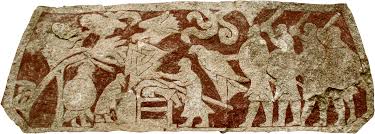
It’s been suggested that this could be the source of the blood eagle episode. But whether the practice was used or not is still highly debatable, although take a look at this image on the Hannars I Stone on the island of Gotland. It clearly shows a person lying on their front over a table and someone attacking his back with a weapon:

images (2)
A scene from the Stora Hammars 1 stone. Author: The Man in Question (from source: Sacrificial scene on Hammar). Creative Commons.

Viking novels and films have become popular in recent years – many of them including scenes of extreme violence and brutality. They make good reading or viewing. And as long as we don’t accept everything we read or watch as totally accurate, that’s fine. I even have a ‘blood-eagling’ scene in my own second book. But I take care not to present all the Vikings as totally evil and/or debauched. I even have some rather nice ones.

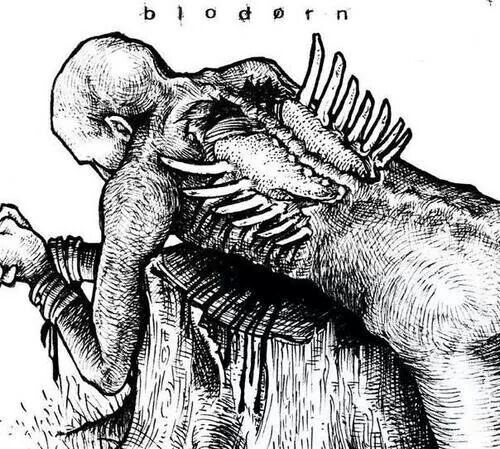
Another gruesome image – but not exactly primary evidence.

574431c10852ddb294f159969674236f
Image from Pinterest

Why Do Writers Write?

shutterstock_120303967

This probably sounds like a silly question, considering we could ask the same thing of people in all walks of life. Naturally I have my own reasons for wanting to write and I’ve come across other writers’ answers during TV interviews and so on. So I’ve attempted a summary of responses. Perhaps you can recognise your own reasons in at least one of them.  You may have some I haven’t touched on. Anyway, here they are:

  1. To write has been a long-held ambition.

Often, when young people are faced with the question of why they want to pursue a particular career their immediate response is, ‘I’ve always wanted to . . .’ Many years ago, at my college interview, I was asked, ‘Why do you want to teach?’ At school we’d had it drummed into our heads that if the question arose on interview, we did not reply, ‘I’ve always wanted to.’ I suppose the message stuck. This kind of question definitely needs a carefully thought-out response, even though the instinctive reply of ‘always wanted to’ may be quite true.

shutterstock_125129291

So, where did this life-long desire originate? Many fiction writers will tell you how their love of stories from an early age inspired them to write – first listening to them being read to them, then reading the words for themselves. As a child I loved tales of adventure, which inspired me to write my own little stories, both at home and at school.  With most people the love of story ‘type’ gradually becomes more selective and certain genres appeal more than others.

2.  You have a story simply bursting to be told

Sometimes, an author has a story whirling around inside his/her head, begging to be told. It may have been lurking there for years, or have recently arrived with a sudden POW! Perhaps it was created entirely by the author’s imagination, or is a well-known story imploring a different manner of telling. In my own case, this is certainly true.

shutterstock_124971299

  1. You want to share your own particular area of expertise

For non-fiction authors, the desire to inform looms high – whatever the subject. Many of us have relied on a variety of reference books in our time, and I certainly value the research done by these authors.

shutterstock_217328944

With fiction writers, the need, to inform is still there. But in this case, the background, factual detail is undoubtedly best fed into the story gradually and discreetly. If not, the book will sound like a text book and probably put readers off.

  1. A realisation that you can actually write hits you

Sometimes, the wanting to write only surfaces after a person has already pursued a career in another profession. Perhaps that person took no interest in reading until then, or maybe someone recommended a good book. Perhaps the chosen job didn’t satisfy a creative urge that has only now manifest itself, or the job itself involves writing documents, letters and so on that others frequently admire. Who knows? But tales of people who veered into writing from completely different careers are everywhere. Unusual careers themselves often make good reading matter, whether fiction or non-fiction.

  1. You can express your thoughts and ideas better in writing

The need to apologise is a good example here. The coward’s way out, you may say. Yet the example illustrates my point well. Thoughts, especially emotional ones, are so much easier to write than say. So are lies, I suppose.

shutterstock_160737380

The spoken word involves interaction with people and their judgemental, discerning eyes. The computer page, or notepad, does not have eyes and a writer can pour his/her heart out. And writers may draw on personal experience of events too difficult to talk about, assigning them more easily to fictional characters.

  1. You write for the sheer love of words

Words are the writer’s tool, and it is how individual writers use them that can determine whether a book is fascinating or utterly dull. I’m not saying an entire book should be written in elaborately flowery language – that would be as bad as having no particularly descriptive passages.  Nor am I overlooking the need for a great plot and memorable characters. Words are to be tested and sounded out before used; something writers are usually good at. They play around with different possibilities or, perhaps, use them in similes and metaphors, creating images that come to life as we read . . .

shutterstock_199190972

Ah well, I always did love to read.

The Value Of A Good Editor

shutterstock_109130930

Once I’d finished writing my first book, and revised and edited it to death, I was in two minds whether or not to send it to a professional editor. Would it be at all beneficial? On the one hand, I supposed it couldn’t do any harm to have someone else’s opinion. (I must add that at this stage, no one else had read a single page of my sacred book. Not even my family. I’d certainly jabbered on about it – probably bored them to tears with it. But read it? NO! I didn’t want effusive praise simply because they felt obliged to give it. After seeing my devotion to my book, I know they wouldn’t have had the heart to criticise.)

So sending it off to an editor could be a good idea . . .

shutterstock_161593631

But, on the other hand, I was absolutely certain that after all my own editing, I had no mistakes. My spelling, punctuation and grammar were perfect, my plot was well paced and my characters did not act inappropriately. In short, I really couldn’t see the point of shelling out good cash for someone to tell me I had no mistakes.

Where had this idea of such perfection come from? Of course, then the inevitable doubt set in.

shutterstock_193060580

I knew very well there was more to a ‘good’ book than perfect spelling, punctuation and grammar. I needed someone to tell me whether the storyline was interesting, the characters sufficiently intriguing, the plot well paced and so on. So, after a careful scan online I selected the Jacqui Bennett Writers Bureau. This agency offers a variety of services, from actual writing courses to different critique and editing packages. They deal with a variety of genres, including non-fiction, and their prices compare favourably with some better known agencies.

My editor’s name is Doug Watts and he’s an absolute gem – for so many reasons:

Firstly: he made me believe in myself and my writing – something every first-time writer needs so badly. His praise meant the world to me and helped brush away any self-doubt that had set i

shutterstock_167532497

Secondly: Doug has a hawk-like ability to spot a spelling, punctuation or grammatical error from at least a hundred paces. I’m even wary when emailing him for fear he’ll send it back corrected.

shutterstock_120956638

And I soon learned what he thought about the overuse of exclamation marks and italics. I also make the odd typo (which I fail to notice because my spell check has a nasty habit of cutting out less than half way through my books. Because of all the Anglo Saxon and Danish names, the malicious little programme virtually tells me I can’t spell and abandons me. And since I’ve no idea how to reinstall it, it stays off. I know – I fully admit to being a computer ignoramus.)

Thirdly:  Doug not only edits line by line, but appraises and critiques every two or three chapters. I really like this because if there’s anything to amend, it can be done in stages. Of course, I get an overall critique at the end as well.  His appraisal of different scenes, and to what degree they work in the plot, is invaluable. He’s also on the lookout for plot holes and other inconsistencies in plot, character or dialogue and is always ready to comment on sections that need a little more detail, as well as those that may need tightening up.

Oddly enough, I found it was sometimes a little more he wanted in some scenes – which I should probably explain. When I edited the book myself, I cut out a lot of what I decided was unnecessary detail. I’d read that agents frown upon books from new authors that are much over 80,000 words and at that time my book was still over 150,000. So I decided that some serious cutting was called for. By the time I sent the manuscript to Doug, I’d got it down to around 85,000 words. Fortunately, I’d kept everything I cut out in a ‘Deleted’ file, and simply put some of these sections back in when called for! Admittedly, I did have a couple of extra bits to add to as well.

Fourthly: I always feel that Doug is there for me. Not only does he give me tremendous support and encouragement, he is happy for me to email and ask for advice at any time. I really can’t praise him enough. One of the things he says to me is, ‘Believe in yourself . . . because I do.’ How heartening is that?

shutterstock_212116630

A Viking sacrifice to Odin

shutterstock_44316751

Norse mythology tells us that blood sacrifices to placate the gods took place at the key times of year – spring, summer, autumn and mid winter. Some archaeological and documented evidence also supports this. Blood sacfrifices were known as ‘blots’ -the Misumarblot, for example. Though fairly scant, there is evidence to support the idea that human sacrifice took place as well as animal.

Here’s my version of one such ceremony. It’s from my book, Shadow of the Raven. The manner of’ killing the victim I describe was selected from a few different methods I’ve read about. Gruesome stuff! Here it is:


In the sombre, grey light before sunrise, the people of Aros filed from their longhouses and followed their jarl in his flowing white robes. Guided by the fiery luminance of torches borne by a handful of thralls, the column moved in respectful silence along a narrow path that snaked between the cultivated fields and up the gentle slope behind the village. On the crest of the hill stood the sacred grove, a short way from the woodland where Eadwulf had recently collected kindling for winter fires. The ancient oaks loomed dark and ominous against the silvery-grey of the lightening sky and Eadwulf shivered, overcome with sudden foreboding.

The silent train streamed between the outer rings of trees to a clearing within. At its centre a solitary oak towered proudly over its attendants; a truly gigantic tree, the girth of its trunk of such immense proportions. Its lower branches were thick and sturdy, reaching out and dividing into myriad, twisted routeways; its still abundant foliage evidence of the oak’s jealous retention of its leaves long after most forest trees stood denuded and exposed.

The jarl’s small group positioned themselves into the shape of an arrowhead, tapering away from the wide trunk, the single figure of the jarl comprising the arrowhead’s tip. Behind him stood his sons, Bjorn, Ivar and Halfdan, and five of his men formed the rear. Amongst them was the brutal Ulrik.

Ragnar moved three paces forward, and turned to face the oak, his robes shimmering in the torchlight as he raised his arms.

‘O . . . di . . . in,’ he intoned, sinking to his knees. ‘All-Father, lord of wisdom, war and death, mighty god of all gods . . .’ Around the grove the people knelt, lifting their arms to the tree. ‘We are humbled in the shadow of your sacred oak, knowing that you are close. I, Ragnar, priest of the gods, beseech you, Father: hear the voice of your humble servant.’

‘Odin, Odin . . .’ The chanting began, rising to fever pitch before settling to a lilting hum; outstretched arms swayed like meadow grasses in the breeze. People were surely evoking the very presence of their god.

‘The wheel of the seasons has turned and winter will soon be upon us,’ Ragnar’s baritone rang out. ‘We bring our gifts of thanks and ask that you safeguard your people from the hardships of the frozen months. Let them live to serve you.’

A strong, unheralded gust swept the grove, whistling through the oak’s branches. Torches listed wildly and the droning stopped. ‘God of gods, lord of earth and sky, giver and taker of life,’ Ragnar intoned, his hands reaching up to two black shapes, now perched on the thick branch above his head. ‘We are unworthy to look upon your holy companions and avert our eyes in their presence.’

Eadwulf stayed on his knees, not understanding what was happening. He knew that Odin’s ravens, Hugin and Munin – Thought and Memory – were believed to be the god’s eyes and ears; awesome, black birds sent out each dawn to fly over Midgard, gathering information to report to Odin by the evening. But he’d always dismissed such a story as pagan nonsense before.

Ragnar rose and faced the kneeling crowd. ‘To your feet, my people, and witness our offerings to the All-Father, who has given his sign of acceptance.’

The wasted body of Cendred was dragged from the wagon, his wrists bound behind him. Panic and anger surged through Eadwulf and he drew breath to cry out.

‘Do not make a sound,’ Toke hissed. ‘Great insult to Odin if you do.’ His eyes flicked up to the tree’s thick branches. ‘Could be you or me up there next.’

Cendred slumped, seeming resigned to his gruesome end after weeks of imprisonment. His filthy clothes hung limp on his half-starved body; his hair greasy and matted from his bowed head, concealing whatever expression was on his face. At his sides two of Ragnar’s men stood grim-faced, and a few paces behind, Ulrik held a huge, heavy-headed axe. Close by, Bjorn carried a large coil of thick rope.

‘Odin!’ Ragnar shouted. ‘May the lifeblood of our people’s enemy please and strengthen you.’

Cendred was yanked to his feet and the heavy, flat handle of the axe-head crashed down on his skull. Eadwulf recoiled from the sickening crunch of shattering bones as Cendred’s head caved in like a crushed eggshell under the force of Ulrik’s strength.

The lifeless body sprawled on the rotting leaves, his blood soaking into the earth. Bjorn severed the bonds holding Cendred’s arms and rolled him over, rebinding his wrists above his head with one end of rope. The two warriors dragged the corpse beneath a thick branch close to the ravens and Bjorn hurled the loose end of the rope over it. Cendred’s body was hauled up high, where Eadwulf guessed it would stay, dangling by the wrists to feed the crows.

Bright-eyed and motionless, the ravens surveyed all.

Ragnar clutched the sacrificial knife above his head. ‘Odin!’ he yelled. ‘Remember our gifts when winter comes. Let the season be kind, our huntsmen find success, and our people survive!’

The ravens lifted their wings to take flight and the strange, gusting wind raged a second time. The flapping of silken feathers hummed through the grove, then the black shapes soared into the distance to continue their daily tasks for the All-Father.

shutterstock_204011722


In this extract, Eadwulf has been a thrall/slave of the Danes for a few months, and is still striving to come to terms with their customs and way of life. This is his first experience of a human sacrifice to Odin, the highest of the gods and father of the great Thor. It takes place in late October – a few days after the horse sacrifice to Thor I described in a recent post – when people have the bleakness of  winter ahead of them.

Aros was in the region of modern-day Aahus.


What’s In A Name . . .?

shutterstock_208645051

The names we choose for the characters in our novels may come to us in a blinding flash . . . or we could spend days, weeks, or even months dredging them up from the bottom of the fish pond. Alternatively, we might have already chosen our main characters’ names before we even start writing the book. Then again, we might have known for years we would write about a particular character or characters.

How do we actually go about the name-choosing process? For example, why did we call the pretty and very feminine young lady ‘Daisy,’ or ‘Poppy’ – or any such flowery name – whereas, for the older strait-laced woman we opt for Gertrude, Beatrice or Penelope?

shutterstock_174166391
You may call me Miss Gertrude Ramsbottom.

Of course, the abbreviated form of these formal-sounding names (e.g. Gertie) could be used for a less prim and starchy figure.

Often, we pick names we feel suit the characters so well, or even their professions. Or perhaps, the name is so inappropriate to the character that it’s comical – which is, undoubtedly, the author’s intent. How many times has a tall, brawny man acquired the nickname of ‘Tiny’?

There seem to be a whole list of things to take into consideration, including ethnic origin of the character(s) and/or where the story is set. Then there’s simply that gut feeling that the name is just right.

shutterstock_172866236

Certain names are definitely more prevalent than others at particular periods. Many names used in novels set in the Victorian era include names we associate with that time. A few examples could be Albert, Ernest and Frederick, and Minnie, Florence and Bertha. Many Victorian names have had a big ‘come-back’ in recent years, although many tend to use the shortened versions – Sam for example, and not the complete, Samuel. My mother’s name, Millicent, is now used quite a lot for girls in the UK, but generally as Millie (or Milly).

When writing historical fiction, unless the complete cast of characters is fictional, many of our characters’ names are predetermined. We can hardly call Henry VIII, Julius Caesar or Alexander the Great anything other than those names. Right?

shutterstock_180979211
Just call me Fred

“What’s in a name?  That which we call a rose
By any other name would smell as sweet.”
-William Shakespeare, Romeo and Juliet

My books are set in the mid 9th century, and one of my two protagonists is King Alfred of Wessex (later known as Alfred the Great).  Alfred is an easy enough name to get your tongue around (although it was originally in the form of Aelfraed, which oddly enough means, ‘Elf counsel’).

011
Statue of King Alfred of Wessex in Wantage – reputed to be his birthplace

But most Anglo-Saxon names are extremely difficult to pronounce, and to spell. There seem to be letters stuck in places which look quite out of place to us. For example, Alfred’s grandfather was called Ecgberht. What’s with the extra ‘c’ and ‘h’? For pronunciation they mean little; we simply say Egbert.

I can’t change real historical people’s names. In my book, I have lots of Anglo-Saxon and Danish/Viking names, but the A.S. ones are the most confusing. Alfred himself is one of six children, their father being King Aethelwulf of Wessex. Like Aethelwulf himself, five of his children have names beginning with the prefix ‘Aethel’. Only Alfred is different, which is quite convenient, really! Even Alfred’s only sister is called, Aethelswith.

Perhaps readers could just drop the ‘Aethel’ part and just remember the last syllable. It would be easy to think of Aethelstan as Stan, or Aethelberht as Bert!

Confusing names can put people off – but what can the poor historical fiction author do about it? I have a list of characters at the front of the book and hope readers will use it. And I don’t really think that pronunciation matters so much, as long as a reader knows which character is which. One reviewer on Amazon.co.uk said that they enjoyed my book once they’d got used to all the difficult names. An honest opinion, and obviously valued as such. But I could name many novels with difficult-sounding names – many fantasy novels, in particular.

Anglo-Saxon place names are equally difficult, in many cases they are nothing like the names of English towns today. I know that some authors have used these A.S. names and added a list at the back/front giving their modern equivalents. I decided to call the towns and villages in A.S. England by their modern names, simply not to complicate things further. It’s easy enough for anyone to find a webpage of comparative lists.

A few interesting quotes about names:

Now you people have names. That’s because you don’t know who you are. We know who we are, so we don’t need names.” -Neil Gaiman, Coraline

Emilie. A beautiful name for a beautiful girl.”  -Marissa Meyer, Scarlet

Fate tried to conceal him by naming him Smith.” -Oliver Wendell Holmes, Jr.

This Self Promotion Business Isn’t As Easy As It Sounds!

shutterstock_110314841

So I’ve got my book on Amazon. Now what do I do? As idiotic as that may sound, that’s exactly how I felt when I eventually published my book online. Being totally ignorant of the workings of online retailing, I thought that was that, and just let the book sit there, stagnating for a few months.

Sales?  Perhaps one step higher than the one labelled ZILCH.

Only to be expected when the book is buried beneath thousands of others!  I know that now. I didn’t, then. It never entered my head that I had to actually do things to make my book more visible. I can hear you saying, ‘Which planet has this woman been living on for the past ten years?’ I‘ve since learned of multiple strategies adopted by authors to get their book(s) visible to potential readers – both before and after publication.

I have no intention of talking about them all. I simply want to highlight a few of the ways in which I failed miserably in the art of self-publishing.shutterstock_165912134

Firstly, I failed to get the word out that my book would soon be published on Amazon (preferably several weeks prior to the date).  No one outside my close family was aware of my intentions, not even people I knew or formerly worked with. I didn’t see the need. I just imagined that once the book was on Amazon it would be seen, and hopefully sell.

Wrong!

Then I proceeded to make a great bodge of everything else.

I hadn’t tried any kind of advertising for my book. As with everything else, I hadn’t given it a thought. Now I see that there are many places/websites that feature adverts to promote books, both free and paid ones.

shutterstock_150645260

Many are designed to advertise particular promotions by the author, including the 5 free days’ promotion with Amazon KDP Select.

But I hadn’t heard of Amazon Select until someone mentioned it to me -by which time my book had been published for almost three months.

kdp-select

So far, I’ve only tried the five free days once, and have mixed feelings about it.  My book had plenty of downloads – well, over a thousand between Amazon.co.uk and Amazon.com.  (That sounded a lot to me, but perhaps it wasn’t, comparatively.)

I waited for reviews to start coming in, but none arrived, other than the few I’d specifically requested from known Amazon reviewers or bloggers who offered reviews. I didn’t realise that most readers, no matter how much they enjoyed a book, rarely reviewed. Ah, well . . .

shutterstock_157721531

So next time I’m trying the Amazon Countdown Deal to see how that works. I’ve got one booked for the end of November.

I also now know that I should have sent out lots of review requests, not just a few. I suppose I’m just not the pushy type. I haven’t even ‘spread the word’ amongst people I know. More fool you, you would say – and you’d be right. Perhaps I just have too much of the famous ‘British reserve’.  But I do realise that I have to buck my ideas up, somehow!

And this is where I am today.  I’ve had some excellent reviews from the few reviewers I approached and several on Amazon.co.uk from general readers. Naturally I’m heartened by their favourable ratings and comments.

All I have to do now is find a way of getting more of them.

I’ve recently joined Goodreads, an invaluable site for authors, and I’m enjoying that immensely – except for the fact that it just tempts me to read more books instead of getting on with my own!

goodreads

I’ve also spent time writing book reviews on Goodreads, which, although enjoyable, is also time consuming – as is writing this blog, which I’m still trying to decide how best to use. As a new blogger, it’s all very much a matter of trial and error, and a lot of patience, I know.  Unless a blogger is already a well-known personality, I realise it can take a long time to build up a good following.

In conclusion, I’ve now had advice from a number of sources and read a lot about ebook promotion and advertising. At least I’m a little better informed nowadays. All I have to do now is put some of this new-found knowledge into practice!

I’ll finish with a few interesting quotes about self-publishing:

“The good news about self-publishing is you get to do everything yourself. The bad news about self publishing is you get to do everything yourself.”   Lori Lesko

“Anyone who says it’s easy to self-publish a book is either lying or doing a shitty job.”   Nan McCarthy

“The best self promotion is your next book. And the book after that and after that …”  Bella Andre

I’m working hard on the last quote! This will be the cover of Book 2 of my Sons of Kings trilogy.

Pit of Vipers Final (Small)

To Contract Or Not To Contract, That Is The Question . . .

6dd2190117

I’ve been mulling over this question for a while now. Most of us use word contractions in our everyday conversations – how stuffy our chatting would sound without them? Imagine saying to a best friend, ‘Let us go for a walk now the rain has stopped.’ Wouldn’t we be more likely to say, ‘Let’s go for a walk now the rain’s stopped’? 

Perhaps not something you’d say to your best friend, anyway, but I hope you get my meaning.

So what can we say about the use of contractions in novel writing?

Personally, I think the same thing applies to written fiction as to everyday speech. Surely, a book written without the commonly used contractions, especially in speech, would be dull and extremely stilted. (There are several definitions of this word, the following amongst them: stiff or artificially formal; wooden; pompous.)

So, how can we apply this to historical fiction?

Someone who read and reviewed my book on Goodreads (very favourably with an excellent, 5 star rating) messaged me privately to say that she wasn’t sure about the use of contractions in a novel set in the ninth century . . .

Well, I was a little thrown by that at first, although I’ve read many historical novels that do use contractions. So I consulted my editor, a very experienced professional. His immediate reaction to my suggestion of removing contractions from my current work-in-progress was one of almost shock-horror!

shutterstock_187060769Then he added, ‘Don’t even consider taking out the contractions, if only for my sake!’

This was followed by a lecture which, basically, followed the theme of my earlier post entitled, ‘Forsooth sir, canst thou not speak more plainly?’

Everything comes down to the changes in language over the centuries and how it is used. The language used in ninth-century Britain would have been as different to modern English as Russian is today. And who’s to say whether or not people contracted their words in bygone days? I imagine they would have done, and an interesing article I found on the Historically Irrelevant website supports that belief.

Even Shakespeare used a contraction in the title of his play, ‘All’s Well That Ends Well.’ Admittedly, that was several hundred years later than the ninth century – but I still hold to my point.

These are the key things I understand from all this:

  1. A fiction writer obviously needs to make a story interesting. In an informal/colloquial setting, stilted speech is out of place, and would probably not endear the character to the reader (unless we are purposely creating a stiff, pompous kind of person).
  2. In formal writing, language should not be littered with contractions. In informal writing, contractions seem to be acceptable.
  3. The use of contractions in historical fiction should not be seen as incorrect – unless the author particularly chooses to write in a more formal way.

When it comes to the nitty gritty, like most things in life it’s all a question of personal preference.

Did you know . . .?

  • The commonly used word, ‘Goodbye’ is a contraction of the old phrase, ‘God be with you’? A more detailed look at this can be seen here.
  • Most word contractions use only one apostrophe. But here are a few double contractions, with two apostrophes to think about (although, I must admit, I’ve never seen the third one with two apostrophes before. I know it’s made up of two words, shall and not, but it’s usually just written as shan’t . . . isn’t it?):
blackboard_double_contractions
Image from the ‘about education’ website

Note: Header image, ‘Contractions’, is from k-3teacherresources.com

Accept our offering, mighty Thor . . .

shutterstock_144162493
The sun hung low in the near-cloudless sky, the late afternoon dry and cold with the promise of frost when darkness fell. Winter was nudging her icy nose into people’s lives and they did not relish the prospect. They’d done all in their power to ensure the well-being of the village during the bleak months ahead and hoped their hard work would reap its dividend. All that was needful now was the blessing of the gods. In sombre mood, villagers waited for the ceremony to begin. Continue reading “Accept our offering, mighty Thor . . .”

Shall I Get On With My writing – Or Just Read That Book?

shutterstock_169978604

Like most writers I’m a voracious reader.  I’ve read all my life and have no intention of stopping now – unless my eyesight suddenly packs in. Then, of course, there are always audio books . . .

So what’s the problem?

Well, the problem is that if I get into a really good book, I just want to read until I’ve finished it. Not a good thing when my second novel is sitting there, just waiting for the last couple of chapters to finish it off.

shutterstock_155992808

I’ve just had a great holiday in Malta, as my last post showed, doing all the things I enjoy. I love the sunshine and swimming aspects of holidaying in warmer climes, but what I don’t like is inactivity. I’m one of those people who simply must be doing something. Lounging around sunbathing I can tolerate only in very short bursts, and then only with a book to read – which in itself means an overhead canopy (so no sunbathing because I can’t read in sunlight, with or without sunglasses).

But reading is never boring to me. I read three books whilst in Malta, though they weren’t great, marathon tomes, I admit.

To get back to my main issue: should a writer spend time reading when his/her own book is in progress?

My own thoughts on this . . .?  Well, yes and no.

Yes . . . because we all need some leisure time away from our work. And that is what my writing has become – a substitute for my ‘paid’ employment since retiring. I love to write, pay or no pay. And I love the theme of the trilogy I’m in the middle of. My problem arises when I have an urge to read when I should be pounding the keys on my laptop.

No . . . for obvious reasons, already touched on above. Turning to my reading when I should be writing is simply putting off focusing and applying myself to the more important or pressing task. And to be honest, I know I only do so when I hit a section of the narrative that demands a great deal of thought and application.

One final point concerns the type of books an author should read in the middle of writing – whether the author is still at the ‘would be’ stage or already published.  I write historical fiction and also love to read that genre, along with some crime novels now and then. I choose to read many books in these genres while I’m writing . . . except other novels set in the  same Viking period as my own .

Now, I love Bernard Cornwell’s writing in particular, and have read many of his books set in a variety of periods. I really enjoyed his Arthur series. But I won’t read his books about King Alfred until I’ve finished my own trilogy – also about King Alfred and the Danes. I certainly don’t want influencing by his storylines, as brilliant as I’m sure they are.  There are bound to be overlaps in some of the events during Alfred’s life, but how they are told is unique to each author.

Can’t wait to read Bernard Cornwell’s ‘Warrior Chronicles’!

And I wonder what this man would have said about all this . . .?

shutterstock_175855697
William Shakespeare

A last thought from Roald Dahl:

Two hours of writing fiction leaves this writer completely drained. For those two hours he has been in a different place with totally different people.

Time for him to read something else, perhaps . . .?  (What a great writer he was, too.