Happy Mother’s day

shutterstock_99041393

It’s early morning and I’m enjoying some peace and quiet before my tribe of six offspring (plus partners and grandchildren) invade for Sunday/Mother’s Day lunch. We tend to spend Mother’s Day here, at our house, because we have the biggest dining table for seating everyone. Besides, I love to cook for them all. I’m also looking forward to receiving my selection of lovely cards, flowers, chocolates and whatever other knick-knacks they decide I might like this year. I’ve never asked it of them, but I sincerely appreciate all that they bring. It’s like Christmas all over again. And to think, my birthday’s less than a month away, too.

Well, today I thought I’d have a think about what Mother’s day actually involves in the U.K. and how it originated. I won’t delve into how the celebration started in the U.S. in 1908 – which, I believe, is celebrated in May. There’ll undoubtedly be plenty of American bloggers to do that when the time comes. The actual term Mother’s Day, which stems from the American celebration, has now been adopted in many parts of the world and is usually celebrated either in March or May.

Here in the U.K. Mother’s Day is celebrated on the fourth Sunday of Lent, so the date varies from year to year, depending on the dates of Lent (in turn dependent upon the date of Easter). It was observed as early as the 16th Century, when it was known as Mothering Sunday. This was a time when people returned to the ‘mother church’ – the main church or cathedral in the area – for a special service called Laetare. The day was one of relaxation from normal Lenten observations; a day of hope with Easter being at last within sight.

Mothering Sunday was often the only time when the whole families could be together due to conflicting working hours on other days. Children and young people ‘in service’, as household servants, were given the day off to visit their families. Children often picked wild flowers on the way, either to put in church or give to their mothers. So eventually the tradition evolved into the giving of gifts to mothers.

But Mothering Sunday was by no means a new idea, even in the 16th Century. Celebrations of mothers and motherhood can be traced back to the ancient Greeks and Romans, who held festivals in honour of the mother goddesses Rhea and Cybele.

In the U.K. today, Mothering Sunday is known by the American term of Mother’s Day, as it is in most countries where the Day is celebrated. Many gifts are given to mothers, including the traditional flowers. Chocolates are also still popular, but a variety of other gifts are given as well. Unfortunately, as is to be expected, the cost of flowers rises dramatically as the special day approaches.

Flower_stall_on_Cheapside_-_geograph.org.uk_-_1755212
Flower stall on Cheapside, London, displaying flowers for sale before Mother’s Day. Wikimedia Common. Attribution: Kate Jewell

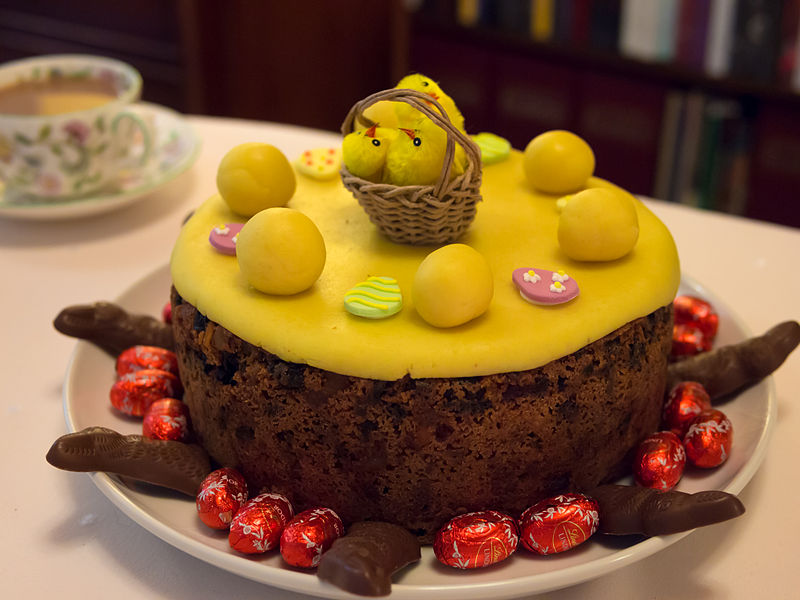
In the early days, Mothering Sunday was also known as Refreshment Sunday because the fasting rules for Lent were relaxed for that day. The special food item associated with the Day was Simnel cake – a fruit cake with two layers of almond paste (marzipan) one on top and one in the middle. It is made with eleven balls of marzipan on top, representing the eleven disciples. (Judas is not included.) Traditionally, sugar violets would also be added.
Simnel_cake_(7099859765)
Simnel Cake. Both images: Wikimedia Commons. Attribution: James Petts, London, England.

Simnel_cake_(slice)_(7099875159)

The name Simnel probably comes from the Latin word simila, referring to a fine wheat flour usually used for baking cakes. A legend has it that a man called Simon and his wife Nell argued over whether the cake for Mothering Sunday should be baked or boiled. In the end they did both, so the cake was named after both of them: SIM-NELL.

This short poem was written in 1648, by Robert Herricks:

I’ll to thee a Simnel bring

’Gainst thou goes a mothering

So that when she blesseth thee

Half that blessing thou’lt give to me

For me, Mother’s Day is also a day when I remember my own mother and the many Mother’s Days we shared. She passed away in 1998 and I still think of her a lot. But especially on Mother’s Day.

What Is Pancake Day All About?

shutterstock_130466882

This evening I cooked enough pancakes to sink a battleship. Everyone in our family loves the things, and we had several of our offspring round to join us (and save themselves the hassle of making and cooking them!) Naturally, being just ‘Mum’, I’ve got hours of spare time to cater for everyone! I wish!

Well, now I’ve just decided to write about where and when this tradition of stuffing ourselves stupid with pancakes started. So here’s the gist of it:

Shrove Tuesday – or Pancake Day – is exactly 47 days before Easter Sunday. It is called a moveable feast because it’s determined by the cycles of the moon. The date can be anywhere between February 3rd and March 9th and falls immediately before Ash Wednesday, the first day of Lent.

The word ‘shrove’ is derived from the English word, shrive – which means gaining absolution (forgiveness) for any sins. Christians attended Confession for this, followed by a penance (a type of forfeit or punishment). So on Shrove Tuesday, Christians were ‘shriven’ before the 40 days of fasting during Lent – the days leading up to Easter, the most important Christian festival.

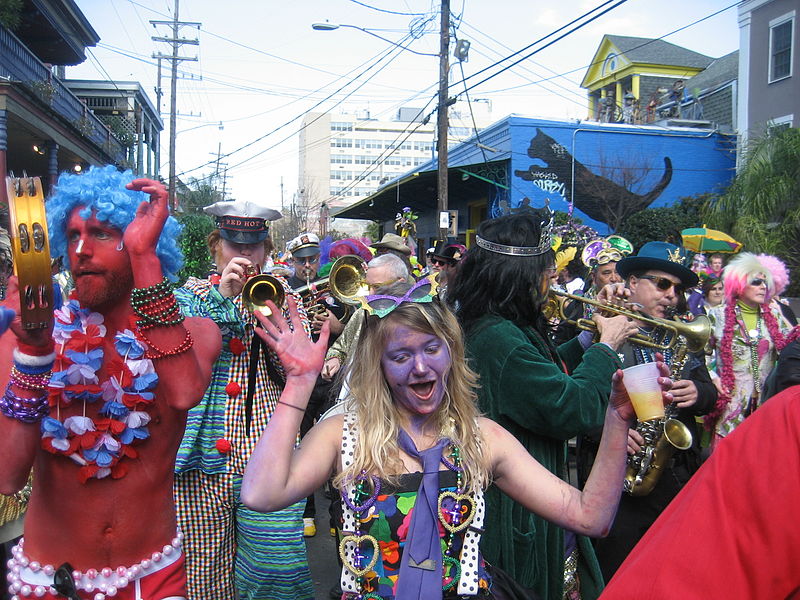
The tradition of eating pancakes on Shrove Tuesday has led to the day generally being referred to as ‘Pancake Day’ in the U.K., Ireland, Australia and Canada. This name is derived from the tradition of eating up all the rich foods (or ‘fats’) in the house before Lent. It would also provide a day of merriment and feasting before the days of austerity ahead. Outside of those countries, Catholic and Protestant countries traditionally call the day ‘Fat Tuesday’ – or ‘Mardi Gras.’

Mardi Gras Day in New Orleans. Krewe of Kosmic Revelers on Frenchmam St. 2009. Author: Infrogmation of New Orleans
Marseille-carnival-sun-and-moon
Margi Gras in Marseille. Wikimedia Commons. Attribution: Say-Mars Say-Yeah

In England, many towns once held traditional Shrove Tuesday ‘mob’ football games as part of the community celebrations, some dating back to the 12th Century. Today, only a few towns continue this tradition, which mostly died out in the 19th Century after the 1835 Highways Act was passed, banning football on public highways.

The tradition of ‘pancake races’ is said to have originated in 1445, when a housewife was so busy making pancakes she forgot the time for the usual 11 o’ clock church service. Only the ringing of the church bells reminded her and she raced to the church, still carrying her frying pan – containing a pancake.

800px-Olney_Pancake_Race_2009
Pancake Races at Olney in Buckinghamshire. Wikimedia Commons. Attribution: Lestalorm

Pancake races are still quite common in the UK, especially in England. Contestants race through the streets with their frying pans, tossing pancakes into the air and catching them in the pan while running. The most famous pancake race is at Olney in Buckinghamshire, and dates back to 1445. The contestants, traditionally women, race over a 415 yard course with their frying pans. Rules stipulate that they must must toss their pancakes at both the start and the finish, and wear an apron and scarf. Traditionally, when men want to take part, they must dress up as a housewife (usually an apron and a bandanna). The race is followed by a church service.

Preparing_for_Pancake_day_-_geograph.org.uk_-_1174994
Preparing for Pancake Day in Olney. Wikimedia Commons. Attribution: Michael Trelove

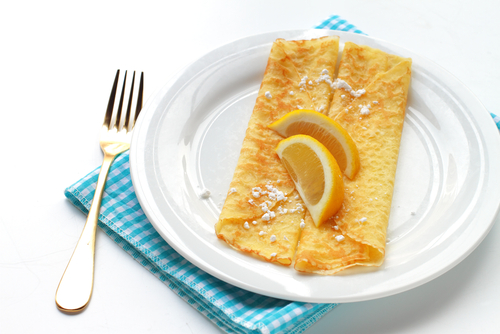
Pancakes are simple to make and cook (unless you have a family the size of mine and they all want half a dozen each! Not small ones, either!) The recipe is a basic batter, which can be found on many websites and in recipe book, so I won’t elaborate here. In Britain, lemon juice and sugar is a favourite topping, but there are lots of different sweet fillings that people choose – golden syrup, maple syrup and various jams, to name just a few.  Naturally, I’m expected to provide every possible choice. My husband prefers orange juice  to lemon, for a start.

shutterstock_204571291
Pancake with orange juice and sugar
Pancakes with raspberry filling

*****

Just Who Was Saint Valentine?

 471px-St-valentine-baptizing-st-lucilla-jacopo-bassanoValentine was a Roman priest during the reign of Emperor Claudius the Second in the third century AD. He is sometimes known as Claudius the Cruel – and is not the Emperor Claudius who was responsible for ordering the building of Hadrian’s Wall across the North of England in AD 122-130.

The story tells us that Claudius believed that married men did not make good soldiers. They worried too much about leaving wives and families behind if they were killed to be truly effective in battle. So Claudius issued an edict, prohibiting the marriage, or engagement, of young people.

Now, Roman society at this time was very permissive, and polygamy was popular. Yet some of the people were still attracted to the Christian faith. Unfortunately for them, since the Christian Church taught that marriage was sacred between one man and one woman, this posed a problem. It was obvious that something had to be done about it . . .

It was Valentine who set about encouraging people to be married within the Christian community, despite the emperor’s edict. Naturally, ceremonies were performed in secret.

Valentine was eventually caught, imprisoned and tortured. A man called Asterius, whose daughter was blind, was called to judge him. Valentine is said to have prayed with, and healed, the girl – which caused Asterius himself to become a Christian. Whatever the outcome of that, somewhere around the year AD 270 Valentine was sentenced to a three-part execution: beating, stoning and eventual beheading. Whilst in prison, awaiting execution, Valentine is said to have written a note to Asterius’ daughter. He signed it . . .

From your Valentine

. . . thus inspiring today’s romantic cards.

shutterstock_246610336

*

Some interesting points about Saint Valentine:

  • Like many stories set so long ago, this one is often questioned. The main problem stems from Valentine’s true identity. According to the Catholic Encyclopaedia, there were at least three different St. Valentines, all of them martyrs. A second one was a bishop of Interamna (now Terni, Italy) and the third, a martyr in the Roman province of Africa. It is possible that the first two are the same person. However, the confusion surrounding Valentine’s true identity caused the Catholic Church to discontinue liturgical veneration (public worship) of him in 1969, although his name remains on its list of officially recognised saints.
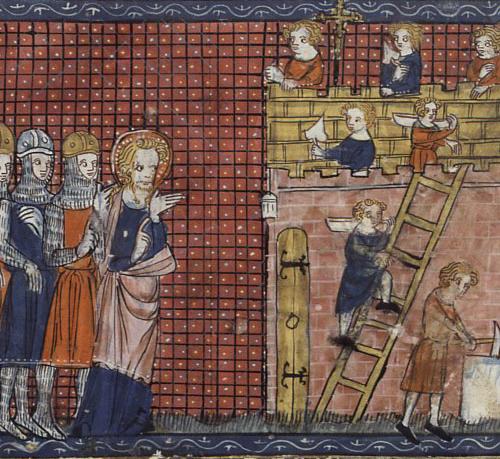
Valentineanddisciples
St. Valentine of Terni oversees the construction of his basilica at Terni. Attribution: Public Domain Wikimedia Commons
  • Valentine’s flower-adorned skull is on display in the Basilica of Santa Maria in Cosmedin, Rome. Excavation of a catacomb near Rome in the 1800’s yielded the skeletal remains, and other relics, now associated with St. Valentine. As is customary, various bits of these remains have been distributed to reliquaries around the world: Czech Republic, Scotland, England, France and Ireland:
382px-St-valentine_110921-01
Shrine of St’ Valentine at Whitefriar Street Carmelite Church in Dublin. Attribution: blackfish
  • No record exists of romantic celebrations on Valentine’s Day prior to a poem written by the medieval poet, Geoffrey Chaucer, in 1374.  It is called ‘Parliament of Foules’. In this, he links a tradition of love with the celebration of Valentine’s Feast Day. The poem refers to February 14th as the day on which birds (and humans) come together to find a mate:
For this was sent on Seynt Valentyne’s day

Whan every foul cometh ther to choose his mate…’

*

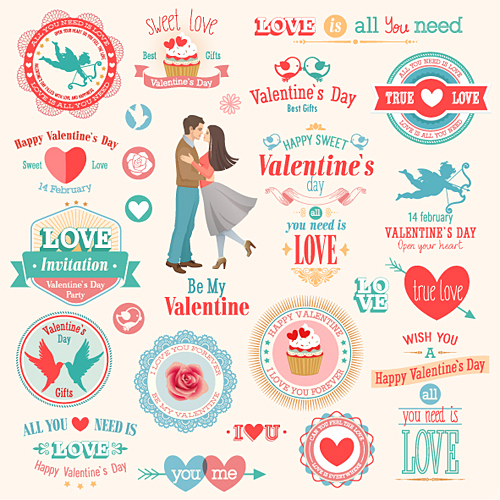
I won’t go on about the ways in which Valentine’s Day is celebrated today. There are lots of posts out there with little poems and stories. I’ll just finish off with a few pictures appropriate to a few of the things we associate with the celebration today.

shutterstock_125184527

(Header image: 1600’s painting of St. Valentine baptising St. Lucilla.  From Wikimedia Commons. Public Domain.)

What Shall We Do On Boxing Day?

shutterstock_162035069

So, today is Boxing Day here in the U.K. – the day after Christmas Day that serves to stretch the holiday out just that little bit longer. The day is a national holiday, which most people traditionally spent with family and friends, extending the party mood with further feasting and drinking. But nowadays hundreds – or more probably, thousands – of people head off to the big stores to grab the bargains in the Boxing Day sales. When I was younger, the sales didn’t happen until after New Year’s Eve, and were aptly called the January Sales.

shutterstock_156525578

I can’t say I like this new meaning of Boxing Day. I have lovely memories of the entire Christmas period being so much more peaceful. On Boxing Day years ago my parents would herd we three children into the car to visit relatives who lived some distance away – or we would be visited instead. I still can’t see the attraction of being trampled to death amidst crowds of people fighting to get at sale items. I suppose I’m just old fashioned (or just old!). But the ‘Sales Bug’ seems to feature in many countries on Boxing Day.
1200px-boxing_day_at_the_toronto_eaton_centre
Boxing Day at Eaton Center, Toronto, Canada, December 26 2007. Uploaded by Skeezix1000. Creative Commons

What I really want to think about today is the origin of the term ‘Boxing Day’. In Britain, a ‘Christmas Box’ is the name given to a Christmas present. The tradition of giving money and other gifts to the needy could well date back to the Middle Ages. It is thought that the ‘box’ could refer to the Alms Box that was placed inside churches to collect money for the poor. Still other sources tell us that the ‘box’ could refer to the custom in late Roman times whereby metal boxes were left outside of  churches to collect offerings connected to the Feast of St. Stephen – which fell on the same day as Boxing Day.

shutterstock_223072507

Another tradition revolves around December 26th being ‘a day off” for servants in more affluent homes, when they would receive a Christmas box from their master. The servants would, in turn, go home and give Christmas boxes to their families. As always, there are several possible origins for the term, Boxing Day. The tradition regarding the custom of gift-giving to servants, however, is the more widely known.

Boxing Day has also become associated with a number of social activities (other than shopping!). In Britain in recent times, the day has become widely associated with sport. There are many horse racing meetings all over the country, as well as football (soccer) matches.

800px-Mose_v_Cov_Billesley_Common
Soccer match in the U.K

Fox hunting is still carried out in various places, although, since the ban on actually hunting foxes with dogs (2004) the dogs follow artificially laid trails. Some British people also show their daring by taking part in the activity of swimming in the freezing cold seas around our coasts.

Boxing_Day_Meet_-_geograph.org.uk_-_1135618
Fox Hunting: Boxing Day Meet. From geog.org.uk Author: Dave Ward
Boxing_Day_Swimming_-_geograph.org.uk_-_1093200
A group of lads from Sleaford taking a dip on Boxing Day. The bright conditions disguise the easterly wind and the bitterly cold temperature. Geograph.org.uk Author: Ian Paterson Creative Commons

There are also various activities for charities, including fun-runs. Perhaps many of these sports originated from the need/desire to wear off some of the excess calories devoured on Christmas Day!

Exmouth_Boxing_Day_fun_run_-_geograph.org.uk_-_1091460
Exmouth Boxing Day Fun Run geograph.org.uk Author: Sarah Charlesworth. Creative Commons

In some of the countries with British roots, such as Australia, Boxing Day sports also take place. But, in Australia, Christmas falls in the middle of summer, so the sports differ accordingly. Cricket is commonly played on Boxing Day . . .

Pollock_to_Hussey
Pollock to Hussey . . . Australia v South Africa, Test Match, in Melbourne, Dec. 26 2005

. . . as well as swimming in the (warm!) seas. Picnics are enjoyed on the beach instead of the piping-hot roast dinners served in Britain, and outdoor dancing is enjoyed (at least it was – back in the1930s):

800px-StateLibQld_1_140463_Dancing_on_an_outdoor_dance_floor_at_Shorncliffe,_Boxing_Day,_1939
Outdoor dancing at Shorncliffe, Australia: Boxing Day 1939 Wikimedia Commons

Well, tomorrow is an ‘ordinary’ day – although many people will still be off work and schools are closed until a few days into the new year. Perhaps we now have time to regain some sense of normality before the parties of New Year’s Eve loom!

The Yule Log

shutterstock_739285

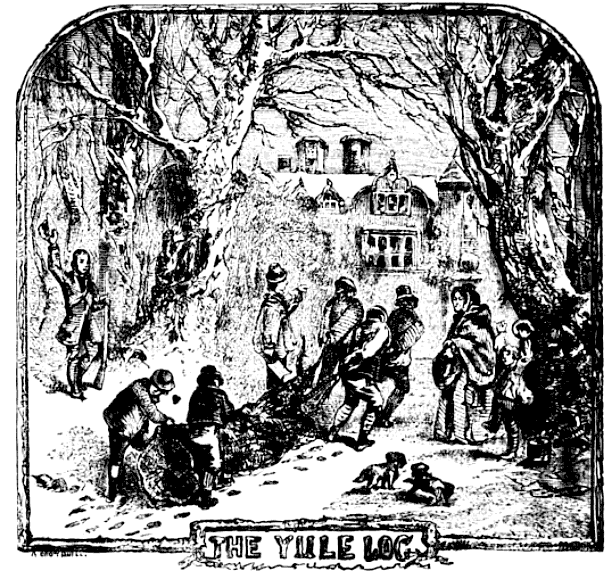
Yule is the name of the old Winter Solstice festivals in Scandinavia and parts of Northern Europe and dates back to pre-medieval times. Originally, an entire tree would be brought into the house with great ceremony. The log was believed to have magic properties which ensured good luck during the coming year to those who helped to pull it over the rough ground.

Chambers_Yule_Log
Illustration of people collecting a Yule Log from the Chambers Book of Days. 1832. Wikimedia Commons

In earliest times the log would be burned on a fire pit in the centre of the room. Later on, once chimneys became common and the hearth stood against a wall, the largest end of the log would be placed in the hearth whilst the rest stuck out into the room. It would be lit with the remains from the previous year’s log and would continue to burn throughout the twelve days of Christmas.

shutterstock_54148

The custom of the Yule Log spread all over Europe, and in each country different woods would be burned. In England, oak was common; in Scotland, it was birch. In France they chose cherry and often sprinkled the wood with wine to give a pleasant smell as it burned.

Today the custom is generally only remembered as a log-shaped chocolate cake (usually a Swiss roll) which is eaten around Christmas.

shutterstock_228205918In Viking times the celebrations were accompanied by various rites to the different gods as well as the usual feasting and drinking. Here is one very short section from my first book, Shadow of the Raven, which briefly describes some of the activities the people enjoyed. Ulf is the main character and Jorund is a young boy who has recently undergone a great trauma.


shutterstock_123315433December came and with it the celebrations of the Yule. Ulf helped Rico to loop thick ropes round a huge oak log and drag it across the frozen earth into the hall, where the women and children decorated it with sprigs of fir and holly. Throughout the festivities it smouldered in the hearth, helping to bring light and cheer to the darkest time of year. A wild boar was sacrificed to Frey, the god of fertility, to ensure a good growing season in the coming year, with warm days and gentle rain. A goat was slaughtered, and people dressed in goatskins and sang in honour of Thor, who rode the skies in his chariot pulled by two goats. The roasted meats were eaten during the celebratory feasts, and unlimited supplies of ale and mead kept everyone in festive mood.

And Jorund smiled for the first time since October.

490px-Thor_in_his_chariot
Thor in his chariot pulled by two goats

It sounds as though a fun time was had by all . . .

Merry Christmas to everyone!

Christmas Tree

shutterstock_238557670

Long before the advent of Christianity, people celebrated the winter solstice (December 21-22 in the northern hemisphere) with festivals. These were intended to brighten up the darkest time of year and prevent people from sinking into deep depression. They would bring lots of greenery indoors – branches of evergreens in particular, including spruce, fir and pine and, of course, holly and ivy. The evergreen tree was seen as a symbol of life in the midst of winter, many people believing that evergreens would keep away witches, ghosts, evil spirits and illness.

In some ancient civilisations, the sun was revered as a god. To the ancient Egyptians, for example, Ra was the Sun God. In the cold winter months the god would become weak and sick, and the solstice, the shortest day of the year, represented the turning point.  After that time the days would gradually lengthen and the god would start to grow well again.

Many traditions we have today came from ancient civilisations which were later converted to Christianity. Such traditions include gift-giving from the Roman Saturnalia, and burning the Yule log and enjoying a variety of foods from Norse and Germanic feasts.  Scandinavians today still call Christmas, Jul.

To many people, Christmas would not be the same without the resinous smell of pine or fir trees inside their homes.  Although lots of people opt for artificial trees nowadays -whether for environmental reasons, the mess of dropped needles, or the cost of buying anther tree every year – the sale of ‘real’ trees is still booming. But where did this tradition come from?

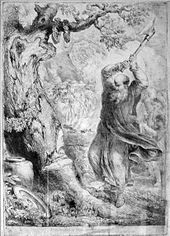
There are several stories about the earliest use of whole fir trees at Christmas. One story tells us that, in the early 8th Century, Saint Boniface travelled from Britain across Germany to convert the pagans to Christianity. Coming across a group of pagans about to sacrifice a young man beneath Odin’s sacred oak, he valiantly rescued the young man and cut down the tree.  Some legends have it that in place of the oak, a single fir tree grew. Other legends tell us that Boniface himself planted the fir. Whichever version is true, it seems that that the following year the converted Germans decorated the young fir (irrespective of the miniscule size that a year-old fir would be!)

170px-Bonifatius_Donareiche
Boniface cutting down the oak – Wikimedia Commons

One of the earliest references to whole trees actually being brought indoors comes from  Germany in the 16th Century. One story holds that the Protestant reformer, Martin Luther, was the first to add lighted candles in an attempt to replicate the brilliance of stars twinkling amidst the evergreens.

220px-Queen_Charlotte_by_studio_of_Allan_Ramsay
Queen Charlotte Wikimedia Commons

Although Prince Albert , the German husband of Queen Victoria, is generally given credit for introducing the Christmas tree into English homes, it was actually Queen Charlotte,  the German wife of George III, who set up the first Christmas tree at Queen’s Lodge, Windsor, in 840.

In Victorian times, trees were decorated with sweets and cakes hung with ribbon, and candles as a reminder of the stars in the sky on the night of Christ’s birth. Today, candles have been replaced by coloured lights, and cakes by a variety of ornaments and baubles.

Trafalgar_Square_Christmas_tree9
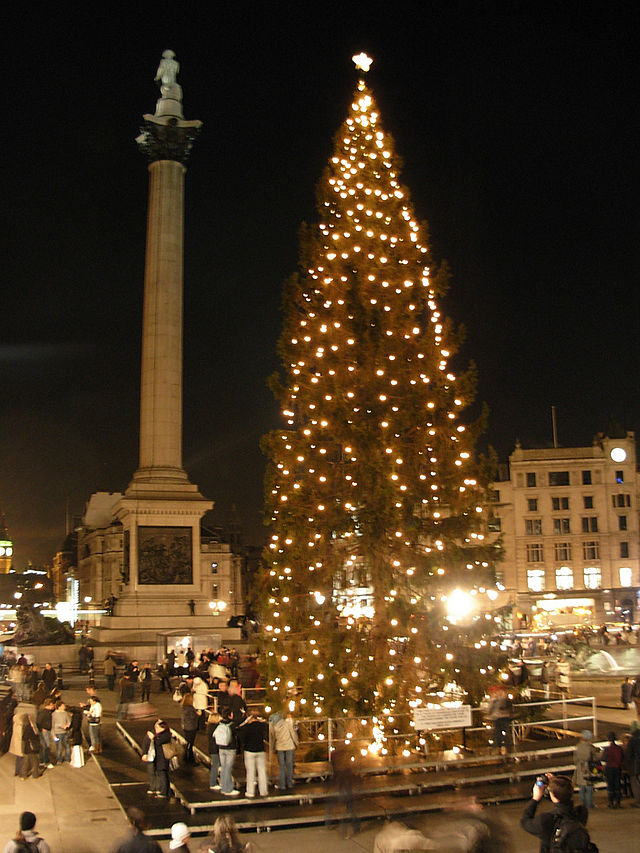
Giant Norway Spruce in Trafalgar Square

The most famous tree in Britain stands in Trafalgar Square – a giant Norway Spruce , which is a yearly gift from Norway. It is sent to the British people in thanks for the help given to King Haakon VII, who was exiled to Britain after the German occupation of Norway during WW2.

In the US, trees were not accepted until a little later, despite the many German settlers in Pennsylvania.  As late as 1840, Christmas trees were still seen as a pagan symbol by most Americans, and many  of the New England Puritans tried to stamp out what they called the ‘pagan mockery of the observance’.  It was not until the influx of German and Irish immigrants that this puritan legacy was abandoned. In the US today, perhaps the most famous tree stand in the Rockefeller Center in New York.

640px-Xmastreenewyork06

fe37000000000000
The first tree being erected in the Rockefeller Center in 1931. Wikimedia Commons

This custom dates back to the Depression Era days, and the tallest tree was in 1948, a Norway Spruce standing 100 foot tall. It came from Killingworth in Conneticut.

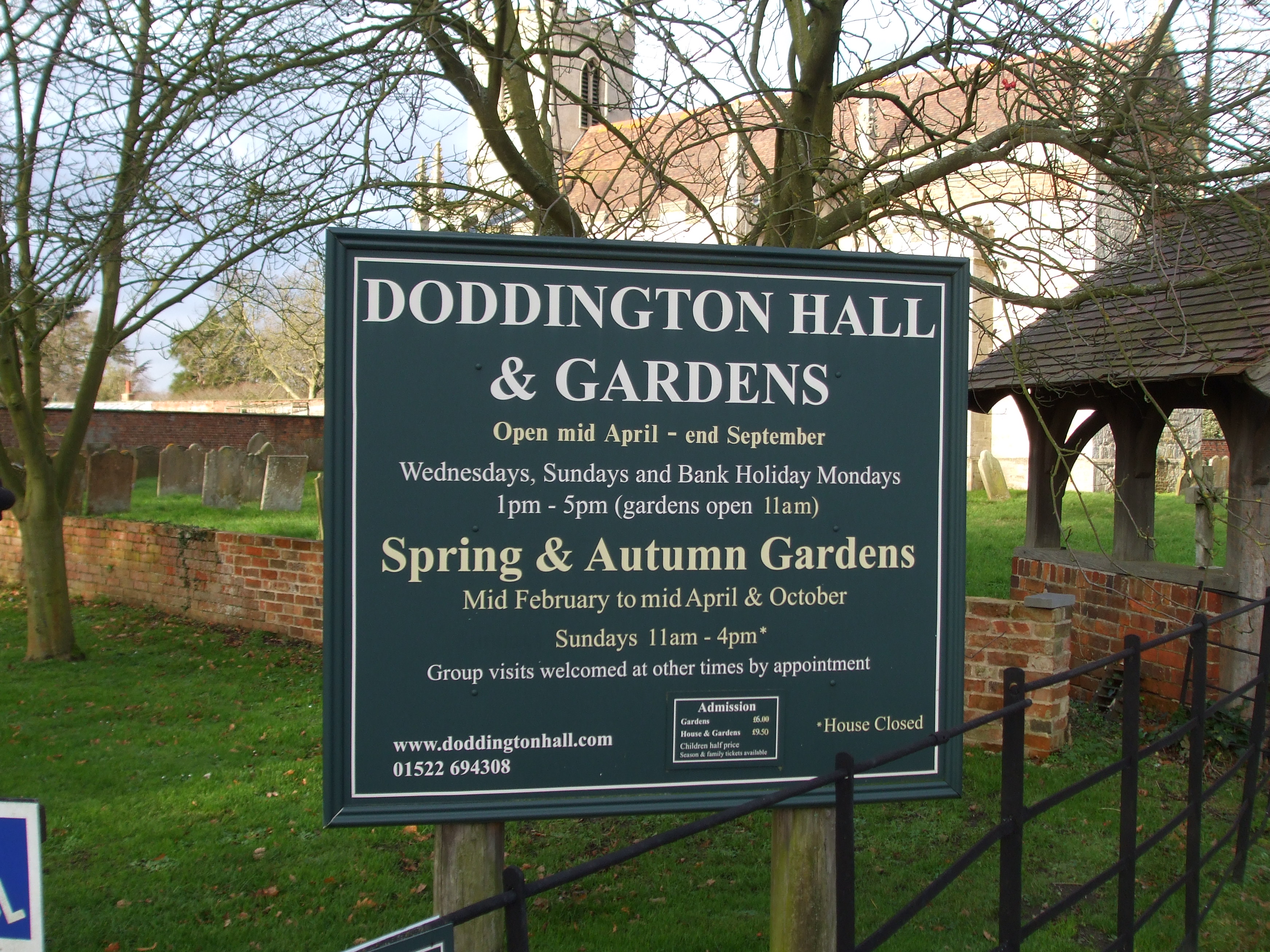
In our house we always have a real tree – and always a Norway Spruce. The smell is just amazing. We always buy from a regular ‘Christmas Tree Farm’, so I don’t feel at all guilty about damaging the environment. There is an ongoing system whereby all cut trees are replaced by newly planted ones. We go to the large estate at Doddington Hall, about five miles away. Doddington is a small, stately hall with an enormous estate on which the trees are grown (as well as wonderful fields of strawberries for ‘pick your own’ in June and July). They have different species on offer, including Norway Spruce and Nordman Fir – which has stiffer needles than the spruce, so it doesn’t drop as readily, but which doesn’t have the right smell for me.

033
Doddington Hall, Lincolnshire, UK
014
Nordman Fir
023
Sign at Doddington Hall with the old church behind

Our tree goes in the conservatory which is off our lounge so we just have the connecting doors open over Christmas. The floor in there is wooden, so the needles are easier to sweep up, and the outside door means it goes out that way when it’s dropping needles like crazy after Christmas. We have a seven-footer this year. On the top is a fairy (or it could be an angel – it’s hard to tell!). It was made years ago at school by our youngest son when he was six, and the tree wouldn’t be the same without it.

016

To Market, To Market . . .

busy street with balloons

The beginning of December means one thing to the people in the area in which I live – and I’m not talking about children starting to open their Advent Calendars!  For the past thirty-two years, the first weekend of December brings the Lincoln Christmas Market.

street view

This is a wonderful event, which draws more and more visitors each year, with an estimated 250,000 for 2014. Yet Lincoln is a relative newcomer to the world of Christmas markets, and that figure hardly comes close to those of many such markets across continental Europe.

In Germany, the number of visitors per year is staggeringly high, with Cologne reaching an awesome 4 million! Stuttgart and Frankfurt both receive 3 million, and Nuremburg and Dresden welcome 2 million.  However, many Christmas markets are held for a whole month – even some of those in England, including York – and not for just a long weekend, as is Lincoln’s. So I suppose that puts things a little more into perspective.

I know that Christmas markets are now held in many U.S. cities too, but like most British ones, they’re undoubtedly a little more recent than those on continental Europe, which have their origins back in the Middle Ages. Christmas markets were also common in England up to the 17th century -when Oliver Cromwell banned Christmas! The Victorians reintroduced them, after a fashion. Then, markets were held during the weeks leading up to Christmas but, although Christmas goods were offered, the markets never became known as ‘Christmas’ markets.

018

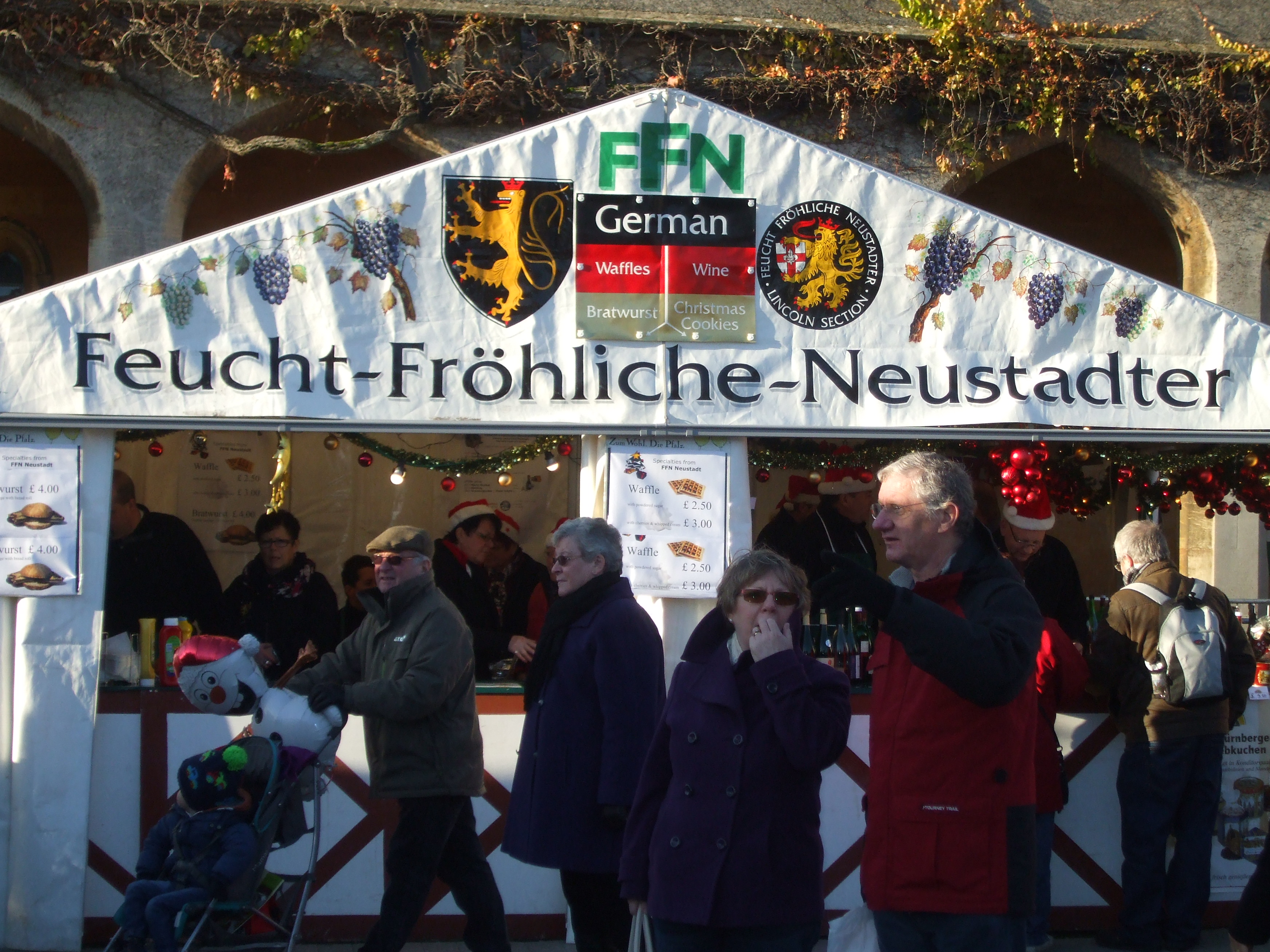
The Lincoln market is one of the oldest in England and the first one to be ‘German-styled’. It started in 1982 following the ‘twinning of the city with Neustadt in Germany, with an initial eleven stalls standing between the cathedral and castle. The Lincoln market has only been cancelled once, in 2010, when we were ‘snowed out’. Health and Safety aspects could not be ignored.

013

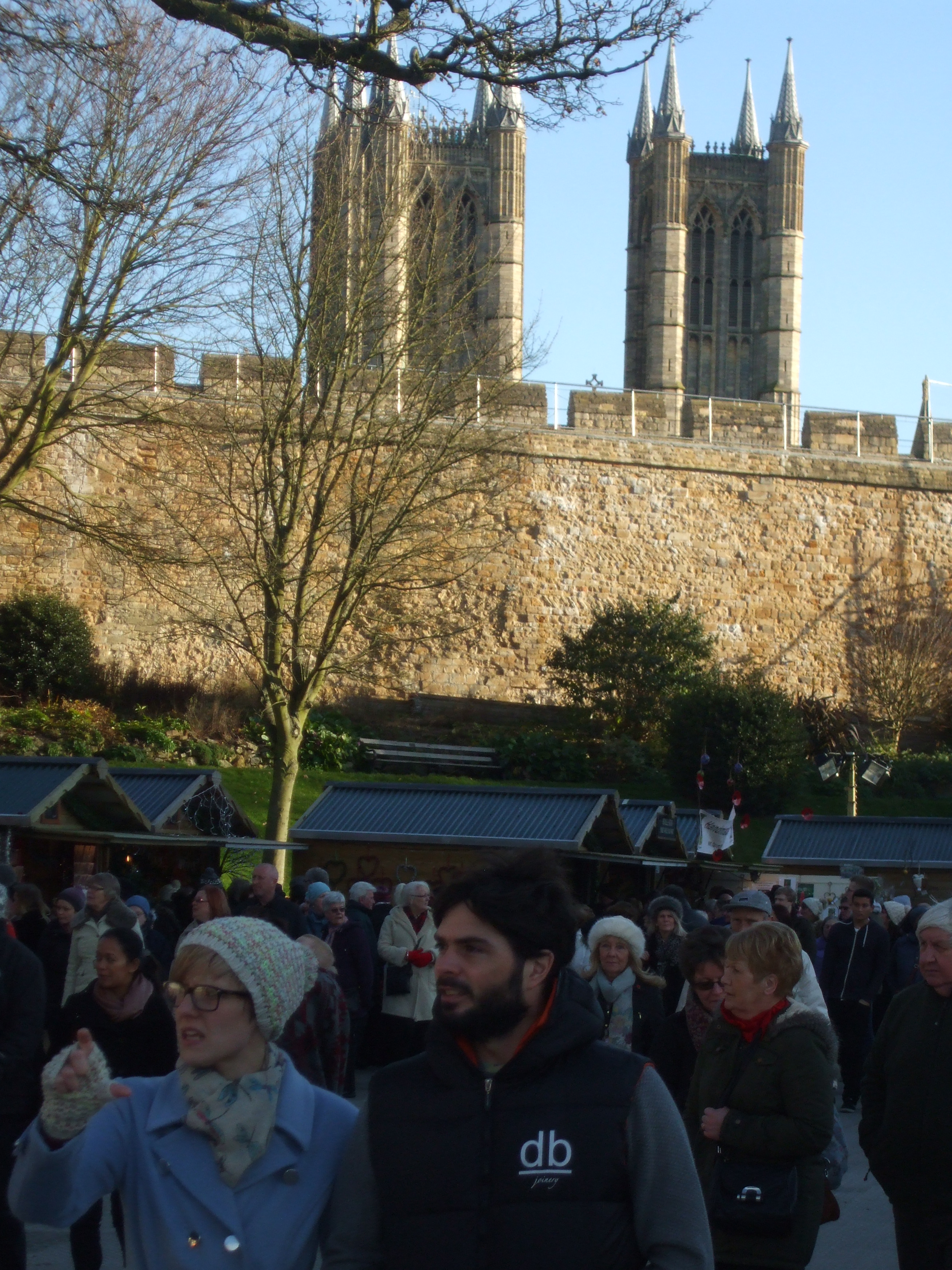
This year was the first time my husband and I, along with one of our two daughters, had visited during daylight hours. I have to say, it’s so much more atmospheric at night, with all the lovely lights and the wonderful backdrop of the medieval Cathedral and Norman castle all lit up.But even in the daytime, the whole area has a quaint medieval feel, with the cobbled streets and age-old shops and houses. It’s also absolutely packed at night.

But even in the daytime, the whole area has a quaint medieval feel, with the cobbled streets and age-old shops and houses. It’s also absolutely packed at night.

012

There are 250 stalls at the Lincoln market, many in the traditional, wooden, chalet design, others in tents or marquees. Many are inside the castle walls or outside the cathedral; others take over car parks or are spread along the streets.

042

054

This means that parking in the area is a definite no-no. But Lincoln City Council obligingly lay on a ‘park and ride’ system, whereby visitors can drive out to the huge Lincoln Showground where they leave their cars and hop on a bus. These run every 7 minutes. Most people agree that the convenience and ease well compensate for the cost, as the buses take us very close to the market.

People also come to the Christmas Market on charter trains – lovely old steam engines which add to the Victorian theme of the market. Our fifteen-year old grandson has always had a ‘thing’ about steam engines, and photographs and films them all over the country. Today (Saturday) two great huffing steam trains brought people to the market, and Kieran kindly emailed these photos for me to use.

IMG_5734

IMG_5743

The stalls come from both local people and places much further afield; some from other areas of the U.K., others from places in Europe. These are from Germany – sausages, biscuits, salami, wines . . .

Produce can be anything from cooked or uncooked foods, chocolates and fudge, deliciously scented mulled wines and hot roasted chestnuts to ales and wines to handcrafted good of all kind of materials – leather and suede, wood, wrought iron, brass, slate and so on. Then, there are areas of entertainment for children , including fun-fair rides and a big Ferris wheel.

Music is everywhere, from pre-recorded Christmas carols to buskers producing music both old and new. One young lady was making huge bubbles using two fishing-line-type devices for the children to chase.

bubbles-2 (1)


All good fun. And best of all were the many Dickensian characters behind the wonderful stalls or merely wandering about . . .

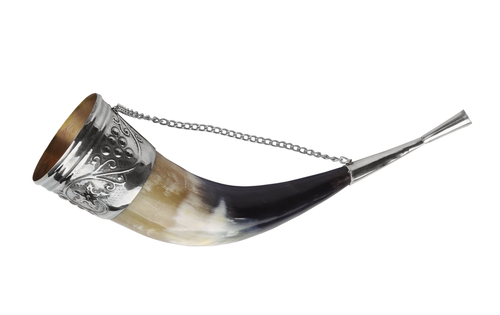
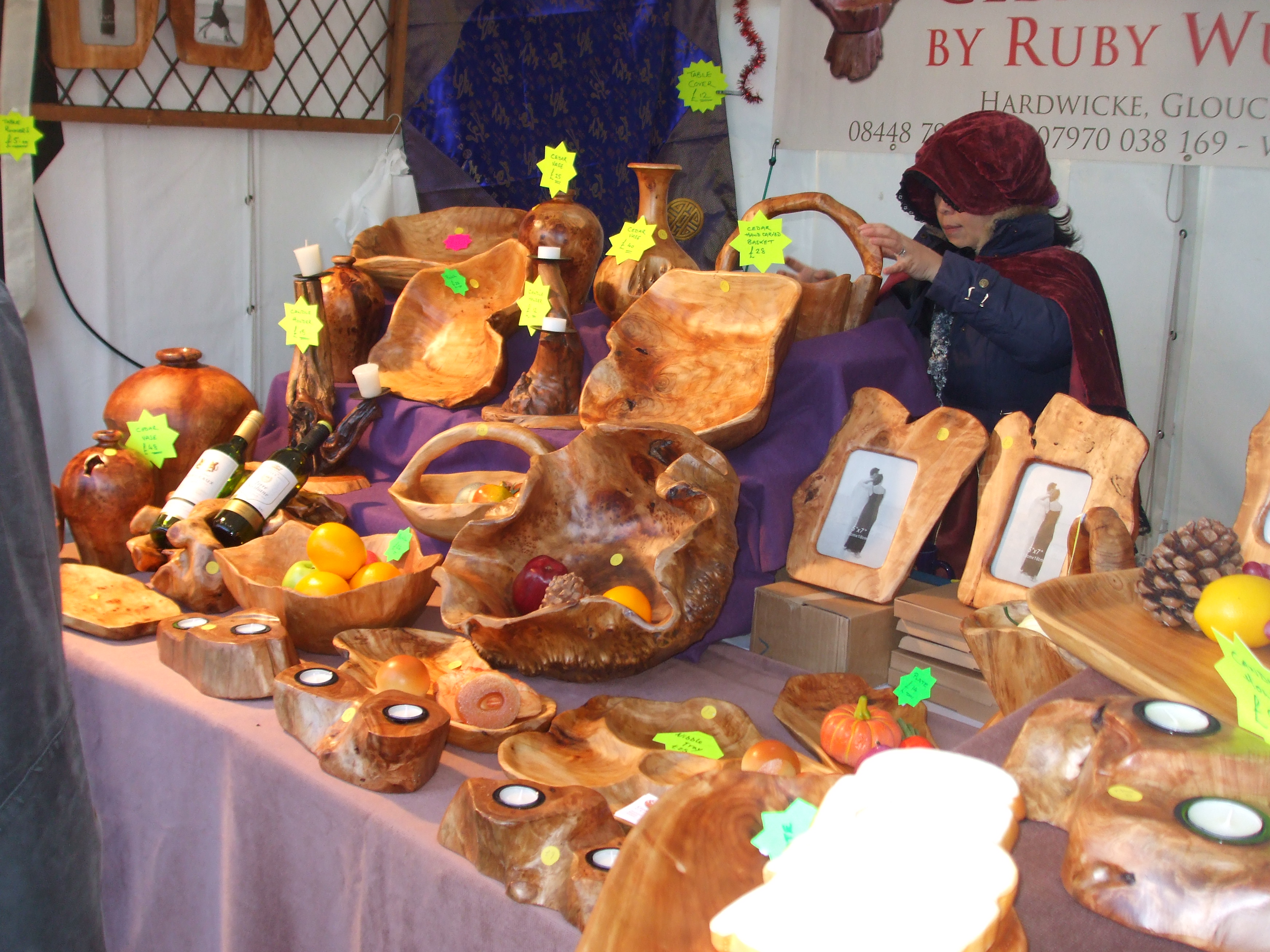
The highlight of my visit was to find a stall from Sweden. I really enjoyed chatting to the two ‘Vikings’ there who were selling typical Swedish and ‘Viking’ goods, including wooden tankards, and face masks or helmets like the ‘Sutton Hoo’ replica. There were also Thor’s Hammer amulets. I just had to have one of those! It’s only small (the larger ones were a bit pricey!) but it’s great.

Well, that’s it for the Lincoln Christmas Market for another year. Next Saturday we’re off to York. The Christmas market there lasts from November 27 to December 21, but it will probably be just as packed. But then, isn’t everywhere in the month before Christmas?

*****

A Penny For The Guy . . .

Spectators gather around a bonfire at Himley Hall near Dudley, on 6 November 2010. SJNikon - Sam Roberts Wikimedia Commons
Spectators gather around a bonfire at Himley Hall near Dudley, on 6 November 2010.
SJNikon – Sam Roberts Wikimedia Commons

Remember, remember, the fifth of November,

Gunpowder, treason and plot.

I see no reason why gunpowder treason

Should ever be forgot.

This well known rhyme has been sung in Britain by generations of children as November 5th approached. It is still sung in primary schools as children are taught the historical significance of Guy Fawkes Night / Bonfire Night and why it is celebrated with bonfires and fireworks. Literacy, drama and art work of all types also stem from this colourful spectacle.

There’s more than enough online about Guido Fawkes and his co-conspirators, and why they wanted to blow up King James I and the Houses of Parliament, so I won’t elaborate on that. Guido suffered one of the most horrible deaths imaginable for his part in the plot – and being the one caught with the barrels of gunpowder. Execution by being hung, drawn and quartered seems beyond belief to us today, although in 16th and 17th century England, treason was seen as the highest offence. And executions of all types were common.

Of course, on Bonfire Night we burn an effigy of Guy Fawkes on a bonfire, with fireworks a further fiery spectacle of celebration.

shutterstock_153822554

Nowadays there are many laws and restrictions regarding the sale and use of fireworks, the many horrendous accidents, particularly to children, being the reason. Now only adults (18+) can actually buy them. And the cost of fireworks has risen dramatically – so much so that most people tend to go to the organised displays, where they can see many, really expensive fireworks and a bonfire, for their entry fee.

Free firework display in Thornes Park, Wakefield, UK. Author: Stephen Bowler. Wikimedia Commons

How different this all is to years ago, when I was a child (way back in the Dark Ages) almost every household had its bonfire and fireworks in the back garden. Sometimes families grouped together for a communal bonfire and to share each other’s fireworks. Even when my children were young in the 70’s and early 80’s this was the case, although by then the big displays were finding favour too. But in my youth . . .

For weeks before the day we’d be getting ready. Tree branches and any bits of old wood would be grabbed by rampaging groups of kids and hawked back to gardens, to be defended to the death from other thieving kids!

Guy Fawkes Night at Chirk (North Wales) November 5th 1954. Author: Geoff Charles.  Wikimedia Commons. Public Domain

At the same time, old clothes came out from chests and drawers to be stuffed full of old rags, newspaper and autumn leaves to make the Guy’s body. A bag stuffed with newspaper – or simply a big, tightly wrapped ball of it – formed the head, with a painted mask at the front.

Guy Fawkes Night in Caernarfon, November 3rd 1960. Author: Geoff Charles. Creative Commons. Public Domain.
Guy Fawkes Night in Caernarfon, November 3rd 1960. Author: Geoff Charles.
Creative Commons. Public Domain.

How we treasured our guys! Over the week before November 5th, guys would be displayed around the streets in wheelbarrows and carts, with a sign, PENNY FOR THE GUY. And many people freely gave. The money would buy more fireworks. Nowadays this practice has died out. I suppose most modern parents would strongly object to this ‘begging’ tactic. But it was seen in a different light in the 50’s and 60’s.

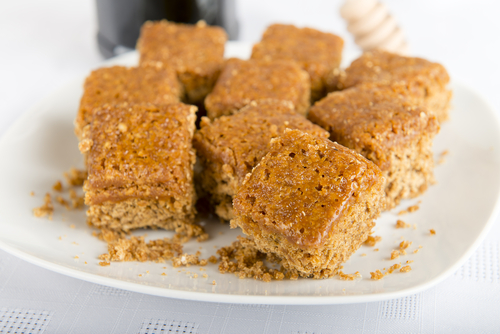
Ah well . . . I still have my memories, and I still make parkin, though not always on Bonfire Night. Treacle toffee was never for me, but I loved the chestnuts and potatoes roasted around the fire.

shutterstock_114735811

At the modern, sophisticated displays we may see the impressive great mortars, but the little fireworks are what I remember:  Roman Candles and Catherine Wheels, Mount Etnas and Rockets, Golden Rains and Rainbow Fountains and my favourites, the simple, hand-held Sparklers. I really hated bangers, but most lads thought they were great fun.

bonfire_night_fireworks_clipart_03
Image by stuartsclipart

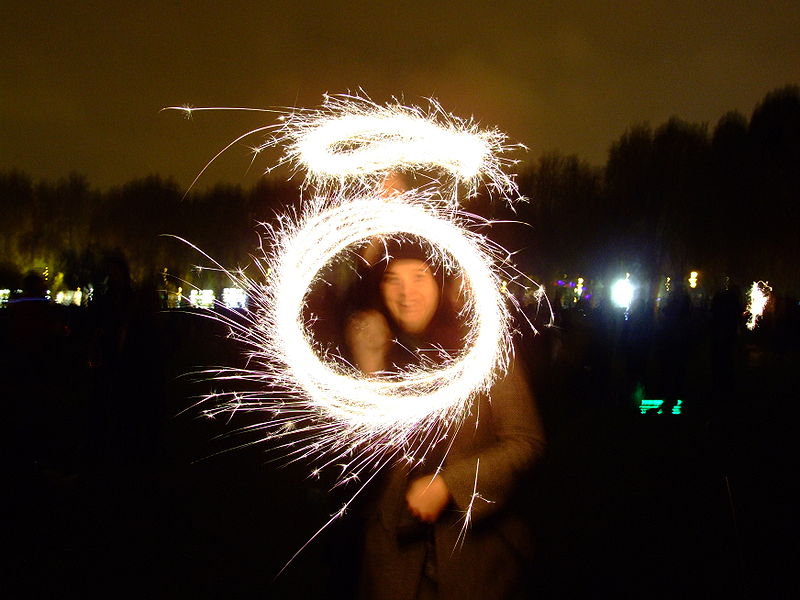
Sparklers are as popular now as they were in my day. Who doesn’t love to make fiery squiggles and circles in the air on a dark night?

Having fun with sparklers on Bonfire Night in Battersea Park, London. Author: Gaetan Lee. Creative Commons
Having fun with sparklers on Bonfire Night in Battersea Park, London. Author: Gaetan Lee. Wikimedia Commons

We can also still buy boxes of mixed fireworks today, but I’m afraid that the community feel for the night has gone and will continue to fizzle away . . .

Just like a dying firework.

49
Image from Teacher’s Pet Classroom Resources