A Pretty Village Called Dunster

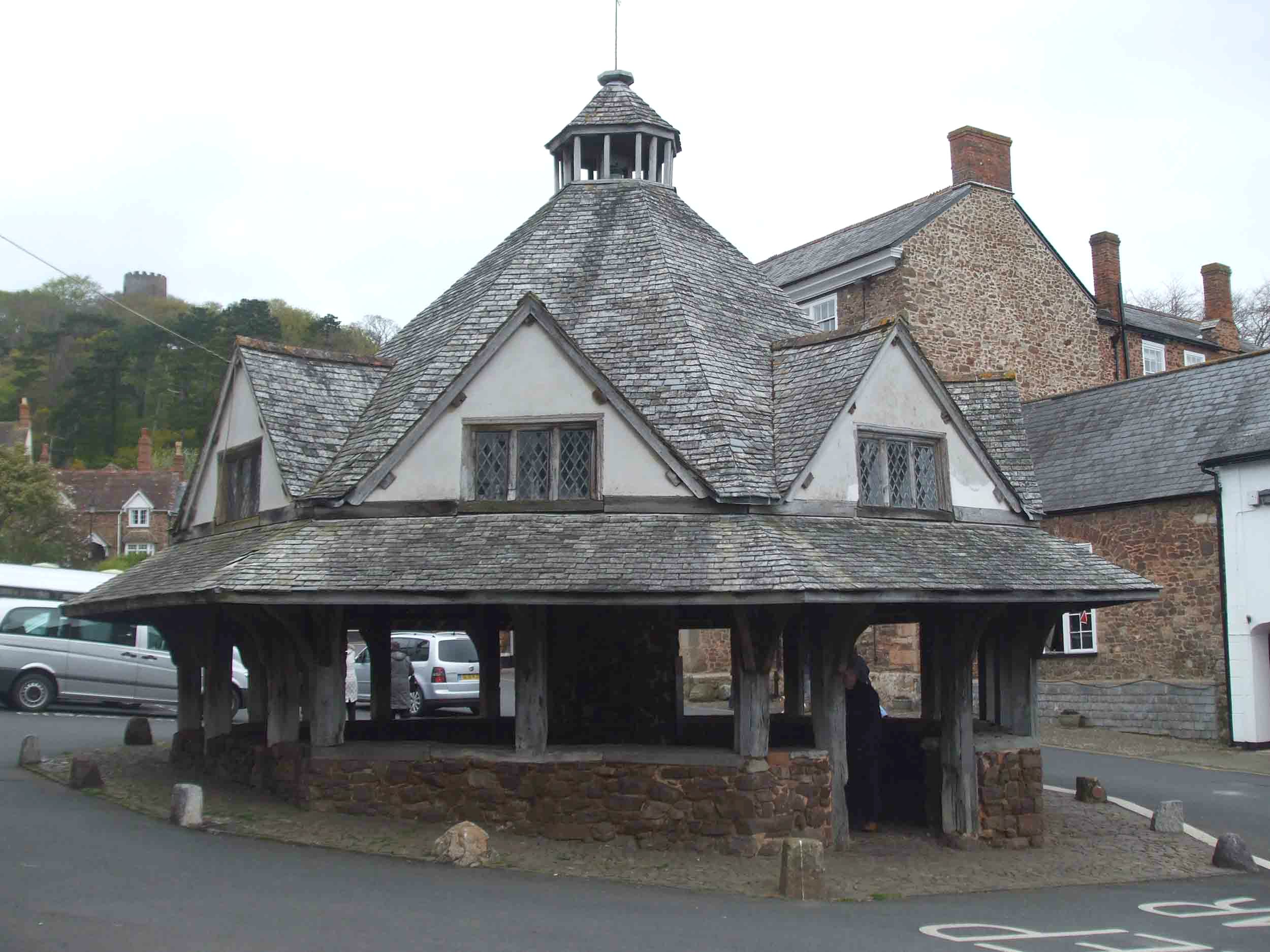
Dunster Yarn Market

Dunster village in the county of Somerset is one of the prettiest villages in England, sitting on the edge of Exmoor National Park, near the seaside town of Minehead. Many of the buildings are pretty, thatched cottages, with roses growing around the front doors. It was only the first week of May when we were there, so we saw no roses, but the cottages certainly are pretty. Dunster is also one of the best preserved medieval villages, and has over 200 listed buildings.

The origins of the village date back to the Bronze and Iron Age. Approximately 1500 years before Dunster’s castle was built in the 11th century, people lived in the hills above the River Avill, which runs from the Exmoor Hills to the Bristol Channel.

There are hints of Roman occupation of the area. It is possible that the old Carhampton road is of Roman origin (or even older) and several Roman coins were found in the 19th century. Aerial photographs of the area around the castle have shown what may be a Roman fort and in 1983 a small hoard of coins was discovered in the ramparts of Bat’s Castle, an Iron Age hillfort near to the village.

Saxons invaded the area around AD700 and soon settled on the Dunster site. Although the Domesday Book names the settlement as Torre, it was probably named after a Saxon thegn (thane) named Dunn. After the coming of the Normans in 1066, William de Mohun was granted the land around Dunster by William the Conqueror and in the late 11th century, he built a fortress, which became the administrative centre of his estate.

Like so many castles, most of Dunster Castle was destroyed in the Civil War (1642-46). Left behind was a grand Jacobean mansion, which was later transformed into a Victorian country house by the Luttrell family, who have owned the castle since 1376.Dunster Castle 5
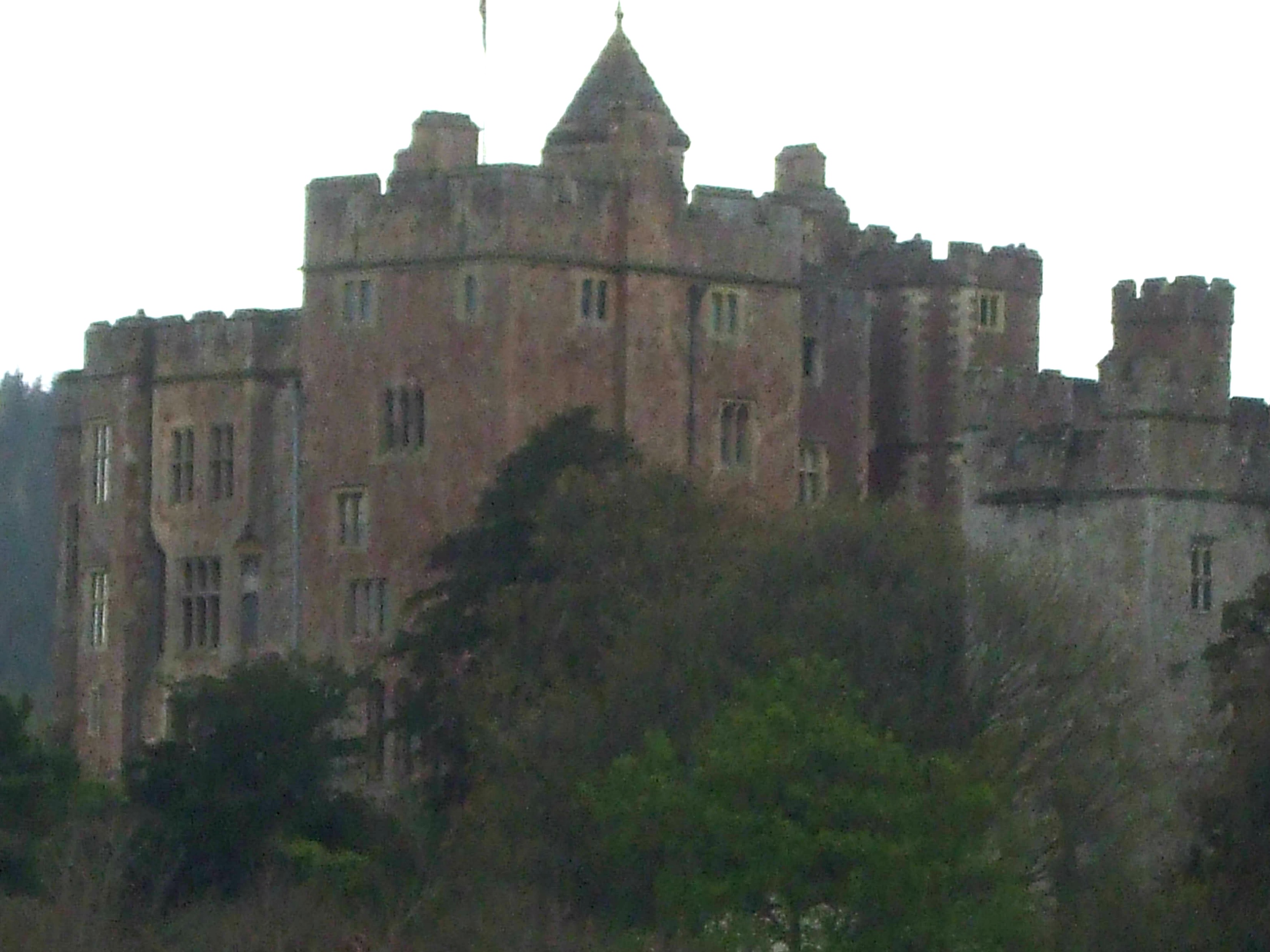
Sited up on a hill – an excellent defensive position – the castle can be seen from most parts of the village and here are a few of the photos we took of it as we walked round:

Back in the 12th century, the village was a thriving port known as Dunster Haven. The sea then retreated, leaving Dunster two miles from the coast. But the medieval wool trade continued to grow, and Dunster made the most of things by becoming the centre of a new weaving industry. By 1222, the village had a market and the first recorded fulling mill was in 1259.

After the Civil War, the wool trade continued to thrive for another 200 years. In 1609, the impressive Yarn Market was built in the middle of the village. Its purpose was to shelter traders and their wares from bad weather. It was damaged during the Civil War, but repaired in 1647:

By 1840, Dunster had many craftsmen and small businesses, all serving the local community and mostly linked, in one way or another, to the woollen industry. The industry in Dunster survived until the flourishing textile industry in the North of England presented too much competition.

There are many other old and interesting things to see around Dunster and these are a few more of them:

Many of Dunster’s buildings have interesting histories, like the Tithe Barn. A tithe was a tenth part of the agricultural produce or personal income of each family in a village and was collected by the Church. The agricultural tithe was stored in a large barn, called a tithe barn. It is recorded that in 1090, tithes of the Dunster estate, owned by the de Mohuns, were passed to the Benedictine Priory.

Today, the Tithe Barn in Dunster, which stands near to the Parish church of St George,  has become a Community Centre for the people to meet and hold various events. The Benedictine Priory was destroyed during Henry V111’s  Dissolution of the Monasteries (1536-39) but evidence of its former existence can be seen in several names in the village, particularly around the church. The dovecote was once part of the priory’s estate.

There was also an old pottery kiln, a survivor of a mid-eighteenth century pottery which produced red earthenwares. Evidence suggests it dates from 1759 and is the earliest pottery kiln to survive almost complete, as well as standing exactly where it was built.
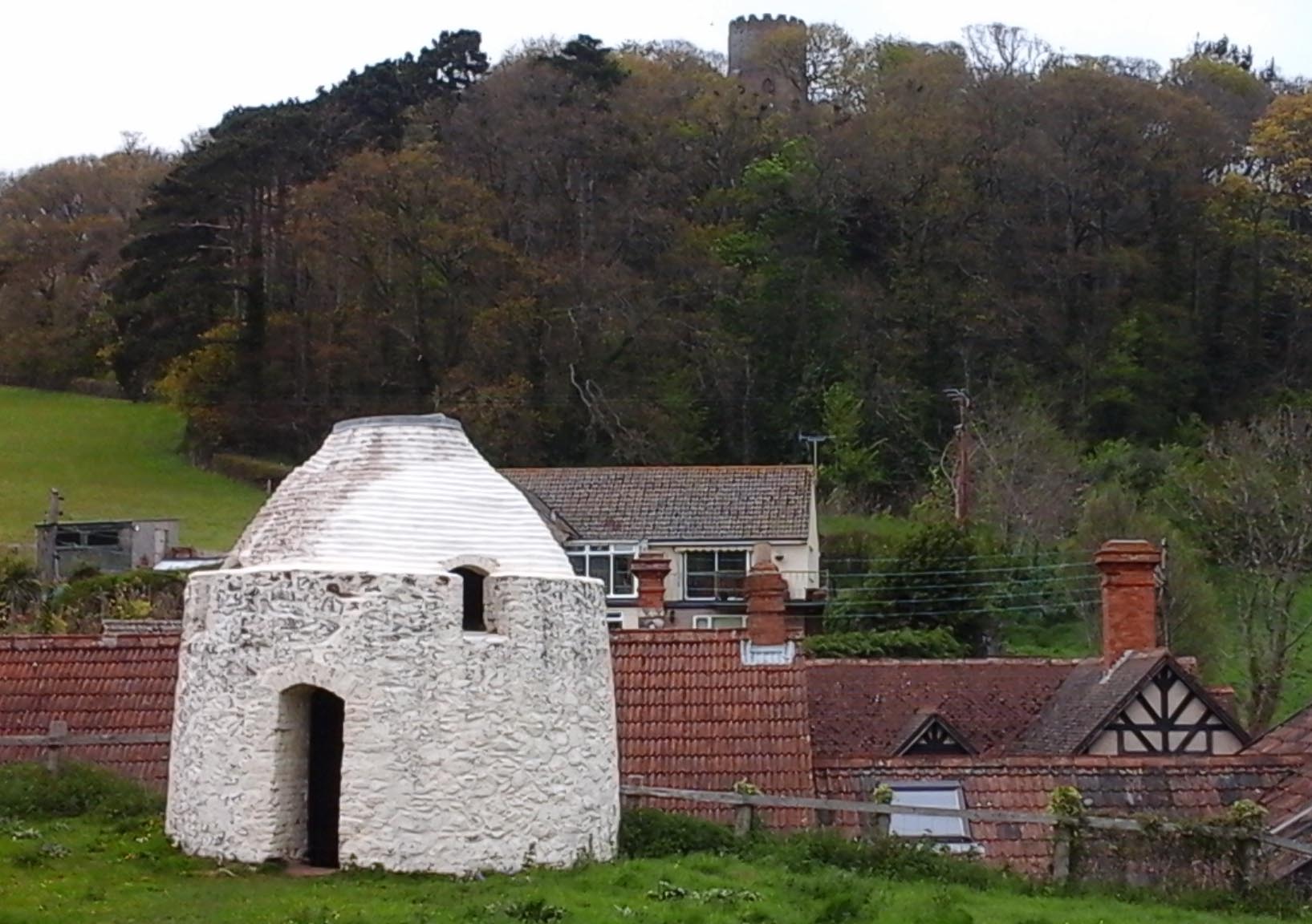
Kiln 1

On this occasion, we didn’t actually visit the castle. We hadn’t set out to visit Dunster at all, merely venturing there to look for a coffee shop on our way to Minehead. We were totally unprepared for the number of buildings of historical interest. Nor did we know there was a Civil War reenactment on at the castle that day, all well underway by the time we’d had our coffee at the Castle Coffee House (gallery above). So we just walked around with no particular idea of how much there was to see and photographing this and that before having a very nice lunch at the Luttrell Hotel (gallery) and carrying on to Minehead, then Athelney.

But we do intend to revisit Dunster at some point in time. We might manage to find the Civil War cannonball hole (that we didn’t know about at the time) that’s somewhere in the rafters of the Yarn Market.

Inside Yarn Market for header

References:
dunster tithebarn.org.uk
britainexpress.com
A variety of booklets and leaflets from Somerset, including:
‘discover Dunster – Village Guide and Map
‘THE POTTERY HOUSE IN THE PARK’ – published by the Exmoor National Park Authority
‘Dunster Castle and Gardens’ – by The National Trust

The Cheddar Gorge: Gough’s Cave and a little bit of Cheese

Model of Gough in Cox's Cave

This is my second post about the Cheddar Gorge caves and the discovery and opening up of two of the larger ones, which are still open to the public today. The first post looked mostly at Cox’s Cave, and this one will focus on Gough’s Cave, the bigger of the two. For anyone who hasn’t read my posts about the Cheddar Gorge, it’s located in the county of Somerset, UK. Here’s a link to the maps on my last post.

Richard Gough had been employed in a few different jobs in his time, including working in his family’s wholesale tea business – and failing miserably. Later, he became a sea captain, sailing back and forth to the West Indies before eventually retiring to live in the Cheddar Gorge in the mid 1860s.

By that time, Cox’s Cave – then called ‘The Great Stalactite Cave’ – was doing very nicely, financially, for George Cox. His nephew, Richard Gough, had fallen on hard times and decided to look for a cave to open up for himself and make some much-needed cash from paying visitors. The small cave he eventually purchased brought him a few visitors, but it was no match for Cox’s Cave . . . until Gough blasted away the 17 feet of consolidated rock (40-5o tons) of the rear stalactite wall. This opened up a huge new cavern, which had such excellent acoustics that musical events were later held in it. One popular event was hand-bell ringing and later on, even concerts.

In 1888, still more caverns were opened and Gough really went to town. He had fountains installed and even imported stalactites from a cave near to Weston-Super-Mare to supplement existing displays. What a con! ‘The Great New Stalactite Cave’, as Gough called it, attracted hundreds of visitors, and rivalry between Gough and his Uncle George soared. Each tried to outdo the other by opening new attractions. For example, when Cox opened a new Pleasure Gardens,  Gough opened a Tea Rooms.

And so it went on until 1892, when the Goughs discovered yet another huge cave behind a closed-up cave entrance a few yards along the Gorge. It took until 1898 – another six years – before all the chambers were opened up in the finest showcase in England.

Here are just a few of the photos we took inside Gough’s Cave. We didn’t manage to see the cave carving, unfortunately. For some reason, it just didn’t show up well that day. I won’t talk about the different caverns because it would take too long, but you can probably pick out the frozen waterfall and sections of the underground river.

Richard Gough is remembered not only as an enterprising man, but as an eccentric showman. Everywhere he went he was accompanied by his menagerie – including a monkey, a talking jackdaw and a donkey. He is even said to have taken his monkey to church with him on a Sunday. When he died in 1902, his sons took over the business and it was they, in 1903, who discovered the most famous of the Cheddar Gorge finds: Cheddar Man, Britain’s oldest, complete skeleton.

Gough's Cave 6

Cheddar Man was originally believed to date to 9,000 years ago. Recently, the bones have been re-radiocarbon dated, giving a new date of 14,700 years ago. This matches archaeological evidence better than previous radiocarbon tests and suggests that the Cheddar Gorge was one of the earliest places in Britain to be colonised after the Ice Age.

These early occupants were hunter-gatherers, who may have followed horse migrations across Doggerland (the area of land, now lying beneath the southern North Sea, which connected Britain to mainland Europe during and after the last Ice Age). As explained in yesterday’s post, these people also practised cannibalism.

It is also thought that the odd behaviour of Cheddar Man – possibly due to brain damage from a blow to the head – caused him to be buried in a pit at the edge of the cave (the ‘twilight zone’) to prevent his spirit passing to the land of the ancestors. The real skeleton, which was found complete but in a heap, has been reconstructed and is housed in the Natural History Museum in London.
.
Lastly, a little bit about cheese – Cheddar cheese, to be precise.

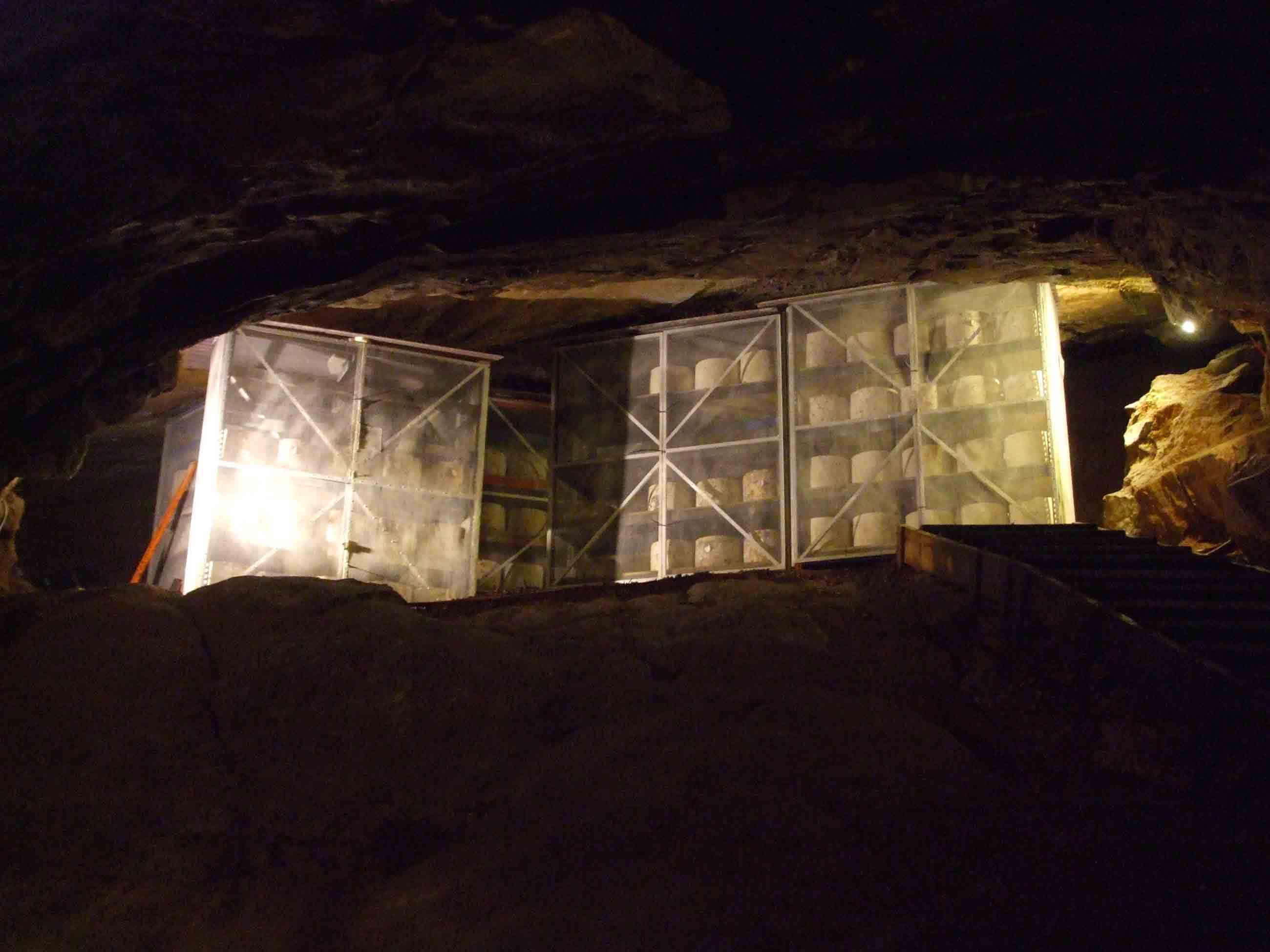
Cheddar Cheese stored in Gough's Cave
Cheddar Cheese stored in Gough’s Cave

The land around the village of Cheddar has been the centre of England’s dairy industry since the 15th century. The earliest reference to Cheddar Cheese dates from 1170. In the days when transport was poor and refrigeration didn’t exist, the problem of surplus milk was solved by turning it into cheese. It was very soon found that if the excess moisture was pressed out of the curd, the cheese lasted much longer. This method of cheese making was perfected in the Cheddar area.

The Cheddar Gorge Cheese Company, a little further along the gorge, continues to make cheese in the same way it has been made for centuries i.e, made and ‘cheddared’ by hand and matured in cloth for up to 18 months to produce the rind and allow the texture and flavour to develop. Cheddar Cheese is still matured in Gough’s Cave – as my above photo shows – just as it was 100 years ago, making it the only cave-matured cheese in the world. Visitors can buy Cheddar cheese in the Company shop in the Gorge.

***

The Cheddar Gorge Caves

A few weeks ago I wrote a post about the Cheddar Gorge in Somerset, UK, intending to follow it up quickly with a second post about the Gorge caves. Unfortunately, I’ve been busy writing and have hardly been on my blog at all.

So here, eventually, is the post about the famous caves and what they tell us. First, a couple of maps to show where the county of Somerset is located within the UK. Cheddar is an actual town on the edge of the Mendip Hills, close to the gorge named after it.

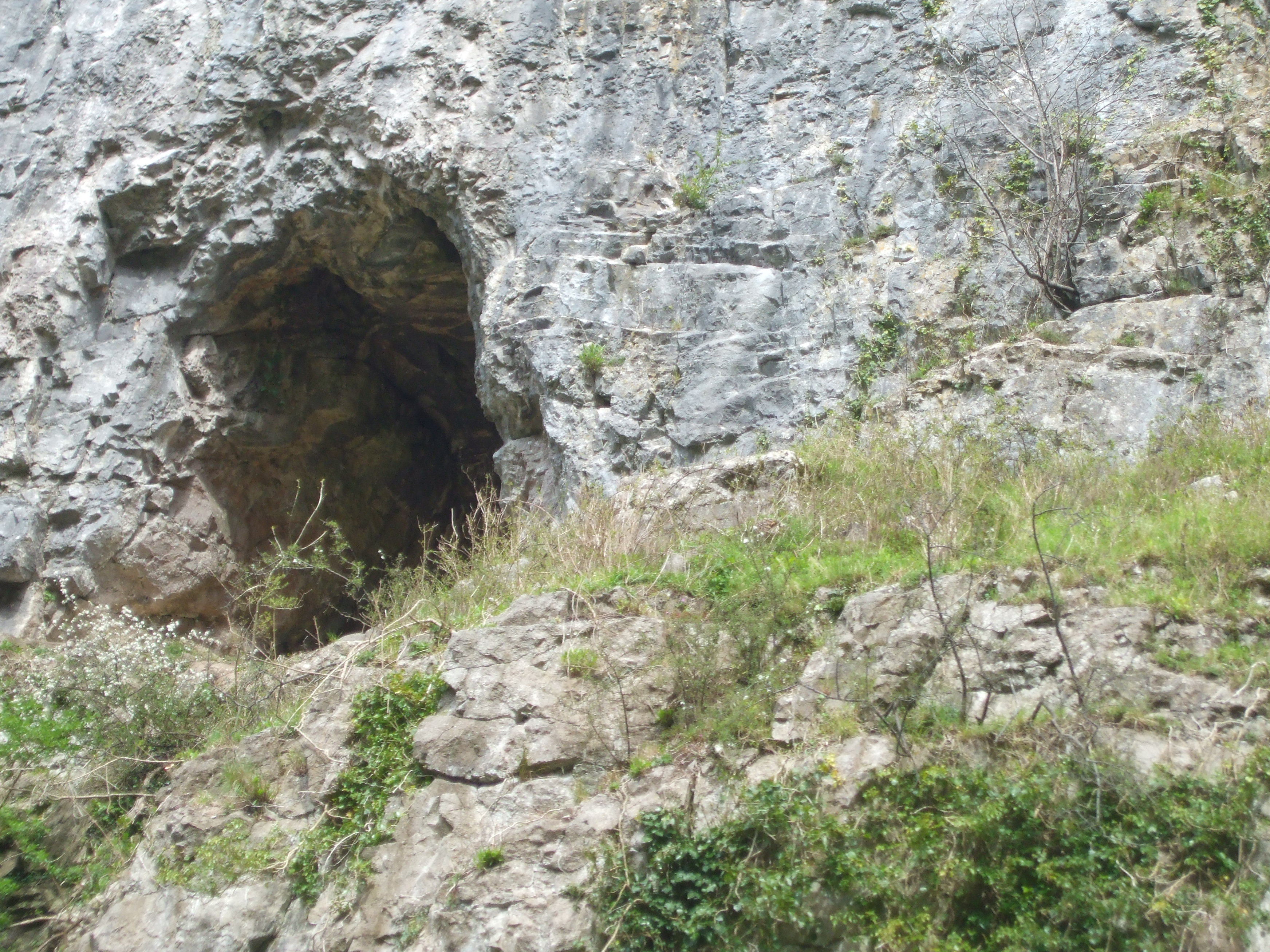
The earliest evidence for people beginning to live in the Cheddar area is from about 14,700 years ago, when ice caps covered large parts of the British Isles. The earliest evidence for human occupation of the Gorge itself comes from Soldier’s Hole, a small cave in the south cliff, 150 feet above the Gorge floor. There are many caves in the Cheddar Gorge, although most are small. Several, like Soldier’s Hole, are high up along the gorge walls, formed at a time when the river that created the gorge had not cut down to the depth it is today. The caves at that height are dry, like this one called Shepherd’s Hole:

012

The lower caves, near to the water table, have a combination of dry and wet passages.

Soldier’s Hole revealed substantial evidence of human occupation and way of life. Flint spears found in the cave are interesting because there is no flint in the Mendips. This tells us that the weapons originated from far away and were carried here by the people as they moved over different territories following migratory herds. Other tools have been found, too, including those for building and some used for the butchering and preparation of hides used for clothing, bedding and various leather items.

Only two of the caves are open to the public and both are large. They are Gough’s Cave and the smaller Cox’s Cave. Cox’s was the first one to become a ‘show cave’, so I’ll look at that one first.

As the story goes, it was George Cox who discovered the cave which was originally known as the ‘Great Stalactite Cave’. In 1837, Cox, who owned Cox’s grist mill in the Gorge . . .

Cox's Mill, Cheddar Gorge

. . . wanted the road widened to make space for the erection of a wagon house. He sent men to dig out some limestone and, by chance, they found the entrance to the cave. Being an astute businessman, Cox recognised the tourist potential and very soon opened it up to the public.

It was Cox’s nephew, Richard Gough, who discovered the second complex of caves. A former sea captain, Gough retired to the Cheddar Gorge in the mid 1860s.

Model of Richard Gough (from the entrance to Cox's Cave)
Model of Richard Gough (from the entrance to Cox’s Cave)

Impressed by how well his uncle was doing from showing visitors round his cave, Gough set out to find a cave for himself and soon became the owner of a small cave, now known as Gough’s Old Cave. He continued to blast away 5 metres/17 feet of rock from the back of the cave, eventually breaking through to a huge cavern with such amazing acoustics it became known as the Concert Chamber after musical events that were later staged there. Still further chambers  were opened in 1888. Gough called his cave ‘The New Great Stalactite Cave’, so stoking up rivalry with George Cox.

Richard Gough died in 1902 and it was his sons who made perhaps the greatest discovery of all. While excavating a pit at the mouth of Gough’s Cave in 1903, they discovered the skeleton now known as Cheddar Man. Although all the bones were there, the skeleton was in a jumble and has since been reconstructed. A replica is on display at the Cheddar Museum of Prehistory and one in the entrance to Gough’s Cave. The ‘real thing’ is in the London’s Natural History Museum.

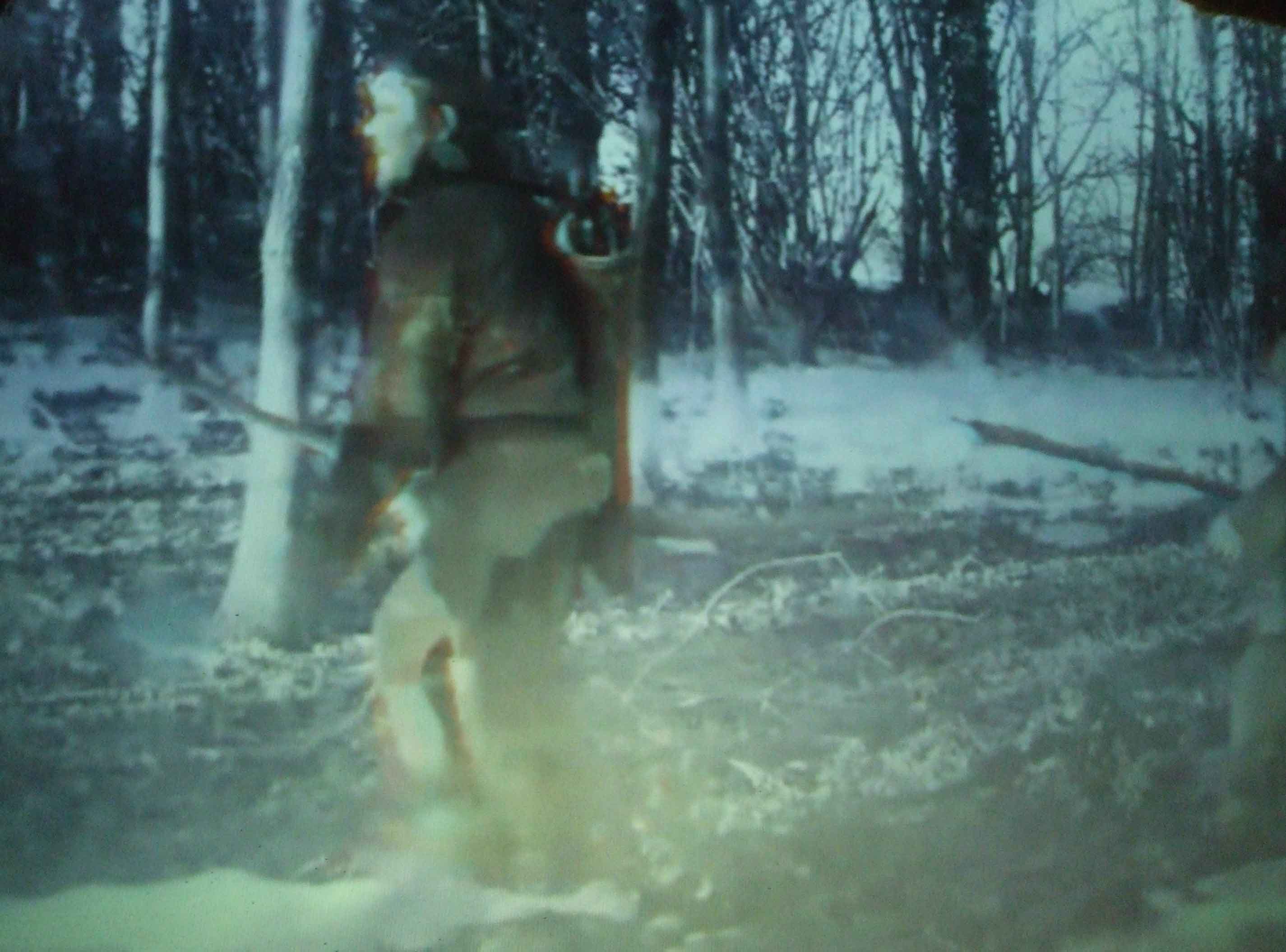
Earlier this year, Cox’s Cave was turned into Dreamhunters, decribed in the booklet as ‘a multimedia walk-through experience with theatrical lighting and video projection’. It’s very colourful, to say the least, with images of cavemen/hunter-gatherers moving across the rock walls . . .

Wall illustration in Cox's Cave - 5+ R

. . . and one of them was used to lead visitors along the route through the different caves.  Unfortunately, we couldn’t manage a decent photo of him as we were too busy trying to keep up with him and not get left behind!

Cox’s Cave also has more usual displays, including the model of Richard Gough, above. There are also images of ancient man and their tools, and how they made fire:

There are cave drawings

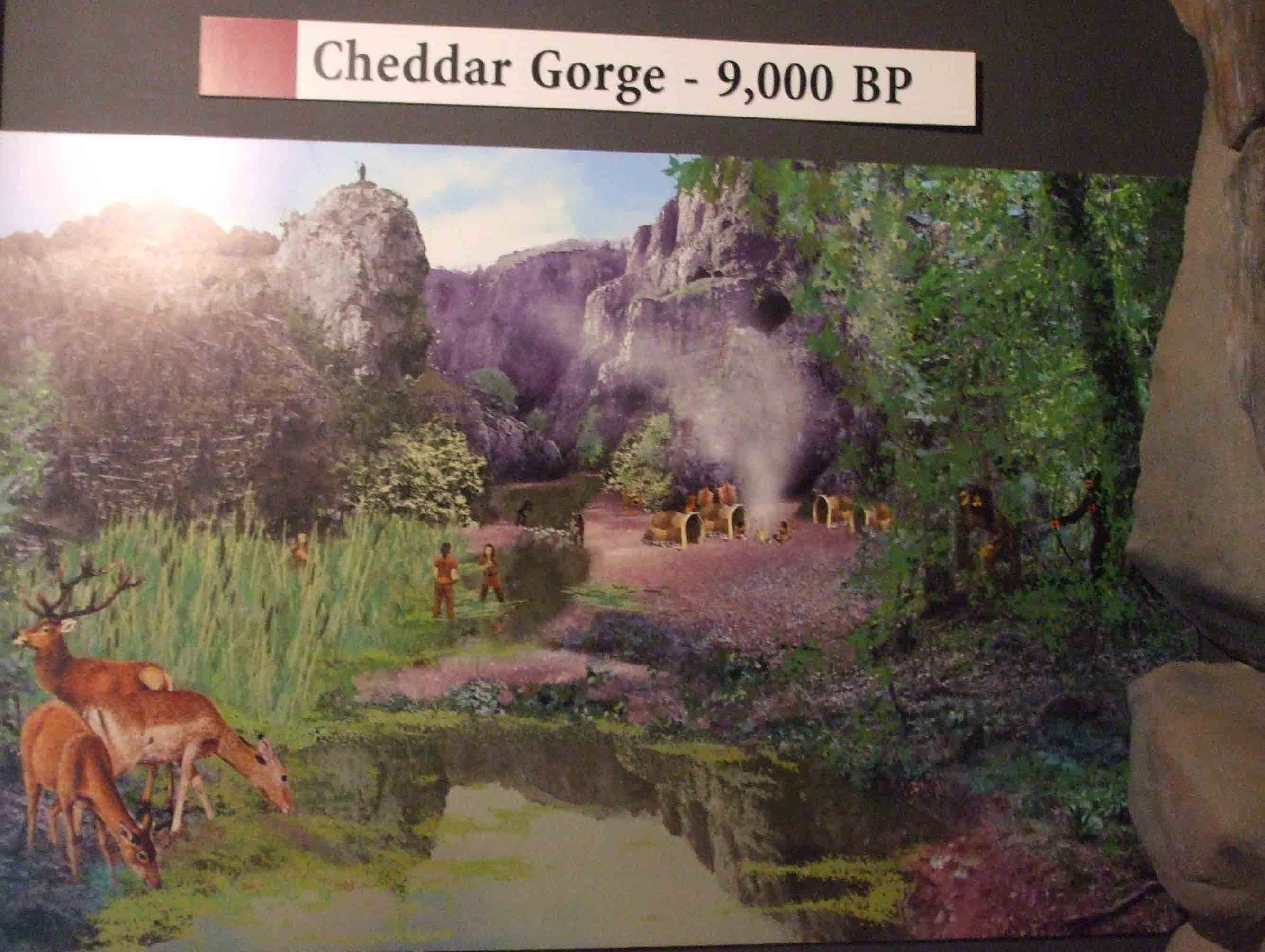
And an artist’s impression of what the Gorge may have looked like:

Artist's impression of the Cheddar Gorge 9,000 BP.
Artist’s impression of the Cheddar Gorge 9,000 BP.

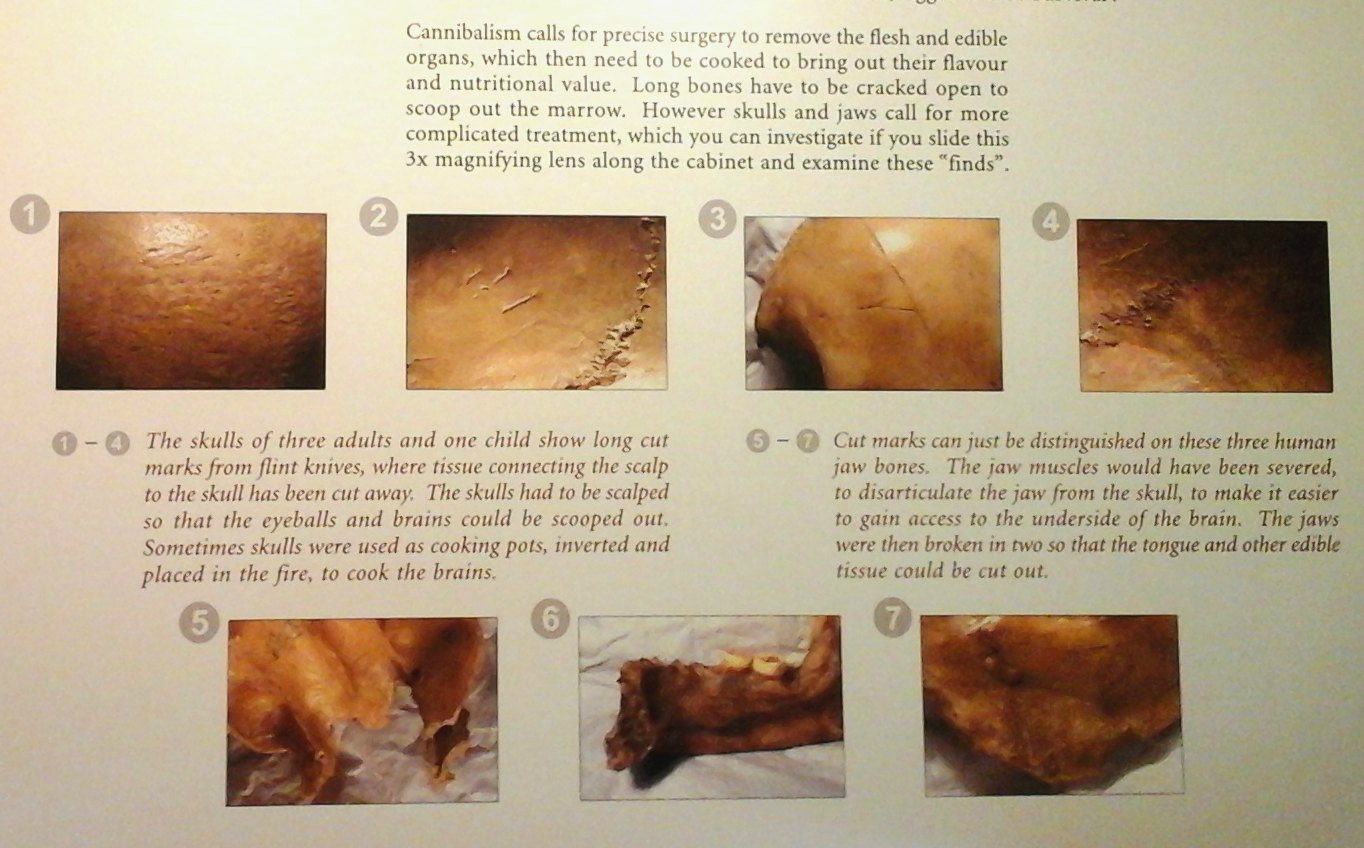
There is also a display about a very chilling discovery. It seems that the first people to colonise Britain after the Ice Age survived by practising cannibalism. Human bones have been found in the Gough’s Cave (the display is in Cox’s) with markings of the tools used to scrape off the flesh etched into them. You may need to click on this to see any details:

Evidence of cannibalism found in Gough's cave
Evidence of cannibalism found in Gough’s cave

I’ll finish on that pleasant thought, as this post is threatening to be ridiculously long. I had intended to write about both caves – but Gough’s Cave will have to waist until later.

References:
Cheddar Gorge Souvenir Guide Book
‘Cheddar Gorge and Caves’by Linda Carter (on sale at the Gorge)
Wikipedia