The Value Of A Good Editor

shutterstock_109130930

Once I’d finished writing my first book, and revised and edited it to death, I was in two minds whether or not to send it to a professional editor. Would it be at all beneficial? On the one hand, I supposed it couldn’t do any harm to have someone else’s opinion. (I must add that at this stage, no one else had read a single page of my sacred book. Not even my family. I’d certainly jabbered on about it – probably bored them to tears with it. But read it? NO! I didn’t want effusive praise simply because they felt obliged to give it. After seeing my devotion to my book, I know they wouldn’t have had the heart to criticise.)

So sending it off to an editor could be a good idea . . .

shutterstock_161593631

But, on the other hand, I was absolutely certain that after all my own editing, I had no mistakes. My spelling, punctuation and grammar were perfect, my plot was well paced and my characters did not act inappropriately. In short, I really couldn’t see the point of shelling out good cash for someone to tell me I had no mistakes.

Where had this idea of such perfection come from? Of course, then the inevitable doubt set in.

shutterstock_193060580

I knew very well there was more to a ‘good’ book than perfect spelling, punctuation and grammar. I needed someone to tell me whether the storyline was interesting, the characters sufficiently intriguing, the plot well paced and so on. So, after a careful scan online I selected the Jacqui Bennett Writers Bureau. This agency offers a variety of services, from actual writing courses to different critique and editing packages. They deal with a variety of genres, including non-fiction, and their prices compare favourably with some better known agencies.

My editor’s name is Doug Watts and he’s an absolute gem – for so many reasons:

Firstly: he made me believe in myself and my writing – something every first-time writer needs so badly. His praise meant the world to me and helped brush away any self-doubt that had set i

shutterstock_167532497

Secondly: Doug has a hawk-like ability to spot a spelling, punctuation or grammatical error from at least a hundred paces. I’m even wary when emailing him for fear he’ll send it back corrected.

shutterstock_120956638

And I soon learned what he thought about the overuse of exclamation marks and italics. I also make the odd typo (which I fail to notice because my spell check has a nasty habit of cutting out less than half way through my books. Because of all the Anglo Saxon and Danish names, the malicious little programme virtually tells me I can’t spell and abandons me. And since I’ve no idea how to reinstall it, it stays off. I know – I fully admit to being a computer ignoramus.)

Thirdly:  Doug not only edits line by line, but appraises and critiques every two or three chapters. I really like this because if there’s anything to amend, it can be done in stages. Of course, I get an overall critique at the end as well.  His appraisal of different scenes, and to what degree they work in the plot, is invaluable. He’s also on the lookout for plot holes and other inconsistencies in plot, character or dialogue and is always ready to comment on sections that need a little more detail, as well as those that may need tightening up.

Oddly enough, I found it was sometimes a little more he wanted in some scenes – which I should probably explain. When I edited the book myself, I cut out a lot of what I decided was unnecessary detail. I’d read that agents frown upon books from new authors that are much over 80,000 words and at that time my book was still over 150,000. So I decided that some serious cutting was called for. By the time I sent the manuscript to Doug, I’d got it down to around 85,000 words. Fortunately, I’d kept everything I cut out in a ‘Deleted’ file, and simply put some of these sections back in when called for! Admittedly, I did have a couple of extra bits to add to as well.

Fourthly: I always feel that Doug is there for me. Not only does he give me tremendous support and encouragement, he is happy for me to email and ask for advice at any time. I really can’t praise him enough. One of the things he says to me is, ‘Believe in yourself . . . because I do.’ How heartening is that?
shutterstock_212116630

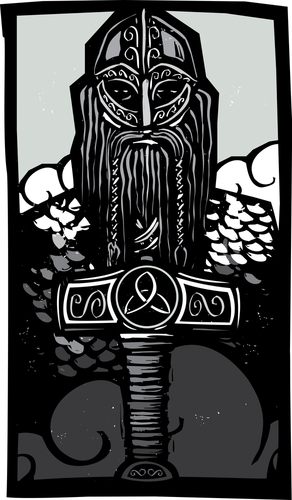
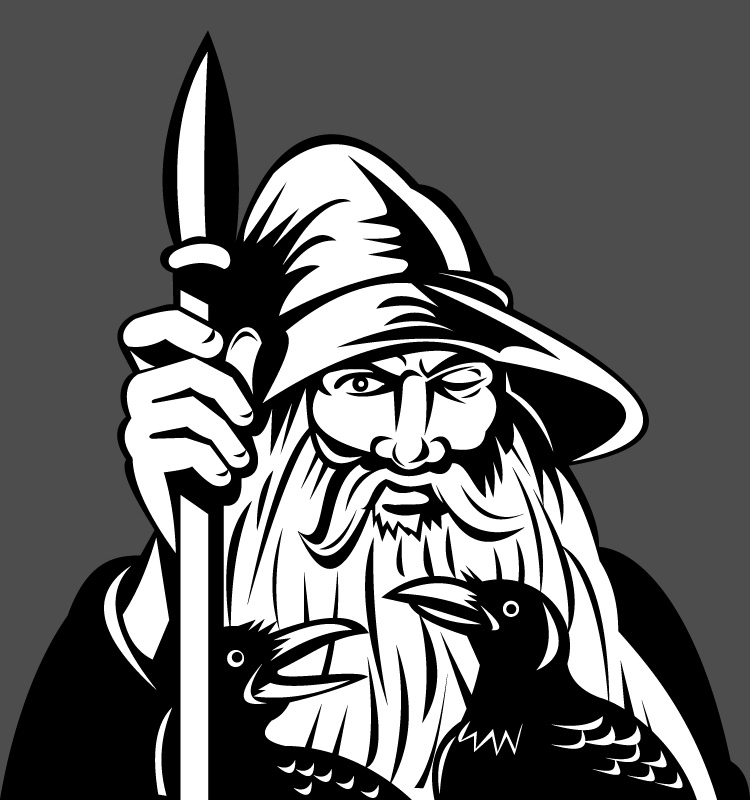
A Viking sacrifice to Odin

shutterstock_44316751

Norse mythology tells us that blood sacrifices to placate the gods took place at the key times of year – spring, summer, autumn and mid winter. Some archaeological and documented evidence also supports this. Blood sacfrifices were known as ‘blots’ -the Misumarblot, for example. Though fairly scant, there is evidence to support the idea that human sacrifice took place as well as animal.

Here’s my version of one such ceremony. It’s from my book, Shadow of the Raven. The manner of’ killing the victim I describe was selected from a few different methods I’ve read about. Gruesome stuff! Here it is:


In the sombre, grey light before sunrise, the people of Aros filed from their longhouses and followed their jarl in his flowing white robes. Guided by the fiery luminance of torches borne by a handful of thralls, the column moved in respectful silence along a narrow path that snaked between the cultivated fields and up the gentle slope behind the village. On the crest of the hill stood the sacred grove, a short way from the woodland where Eadwulf had recently collected kindling for winter fires. The ancient oaks loomed dark and ominous against the silvery-grey of the lightening sky and Eadwulf shivered, overcome with sudden foreboding.

The silent train streamed between the outer rings of trees to a clearing within. At its centre a solitary oak towered proudly over its attendants; a truly gigantic tree, the girth of its trunk of such immense proportions. Its lower branches were thick and sturdy, reaching out and dividing into myriad, twisted routeways; its still abundant foliage evidence of the oak’s jealous retention of its leaves long after most forest trees stood denuded and exposed.

The jarl’s small group positioned themselves into the shape of an arrowhead, tapering away from the wide trunk, the single figure of the jarl comprising the arrowhead’s tip. Behind him stood his sons, Bjorn, Ivar and Halfdan, and five of his men formed the rear. Amongst them was the brutal Ulrik.

Ragnar moved three paces forward, and turned to face the oak, his robes shimmering in the torchlight as he raised his arms.

‘O . . . di . . . in,’ he intoned, sinking to his knees. ‘All-Father, lord of wisdom, war and death, mighty god of all gods . . .’ Around the grove the people knelt, lifting their arms to the tree. ‘We are humbled in the shadow of your sacred oak, knowing that you are close. I, Ragnar, priest of the gods, beseech you, Father: hear the voice of your humble servant.’

‘Odin, Odin . . .’ The chanting began, rising to fever pitch before settling to a lilting hum; outstretched arms swayed like meadow grasses in the breeze. People were surely evoking the very presence of their god.

‘The wheel of the seasons has turned and winter will soon be upon us,’ Ragnar’s baritone rang out. ‘We bring our gifts of thanks and ask that you safeguard your people from the hardships of the frozen months. Let them live to serve you.’

A strong, unheralded gust swept the grove, whistling through the oak’s branches. Torches listed wildly and the droning stopped. ‘God of gods, lord of earth and sky, giver and taker of life,’ Ragnar intoned, his hands reaching up to two black shapes, now perched on the thick branch above his head. ‘We are unworthy to look upon your holy companions and avert our eyes in their presence.’

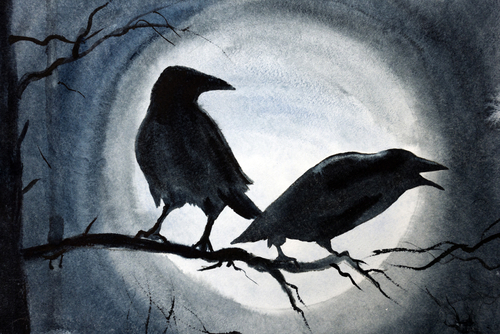
Eadwulf stayed on his knees, not understanding what was happening. He knew that Odin’s ravens, Hugin and Munin – Thought and Memory – were believed to be the god’s eyes and ears; awesome, black birds sent out each dawn to fly over Midgard, gathering information to report to Odin by the evening. But he’d always dismissed such a story as pagan nonsense before.

Ragnar rose and faced the kneeling crowd. ‘To your feet, my people, and witness our offerings to the All-Father, who has given his sign of acceptance.’

The wasted body of Cendred was dragged from the wagon, his wrists bound behind him. Panic and anger surged through Eadwulf and he drew breath to cry out.

‘Do not make a sound,’ Toke hissed. ‘Great insult to Odin if you do.’ His eyes flicked up to the tree’s thick branches. ‘Could be you or me up there next.’

Cendred slumped, seeming resigned to his gruesome end after weeks of imprisonment. His filthy clothes hung limp on his half-starved body; his hair greasy and matted from his bowed head, concealing whatever expression was on his face. At his sides two of Ragnar’s men stood grim-faced, and a few paces behind, Ulrik held a huge, heavy-headed axe. Close by, Bjorn carried a large coil of thick rope.

‘Odin!’ Ragnar shouted. ‘May the lifeblood of our people’s enemy please and strengthen you.’

Cendred was yanked to his feet and the heavy, flat handle of the axe-head crashed down on his skull. Eadwulf recoiled from the sickening crunch of shattering bones as Cendred’s head caved in like a crushed eggshell under the force of Ulrik’s strength.

The lifeless body sprawled on the rotting leaves, his blood soaking into the earth. Bjorn severed the bonds holding Cendred’s arms and rolled him over, rebinding his wrists above his head with one end of rope. The two warriors dragged the corpse beneath a thick branch close to the ravens and Bjorn hurled the loose end of the rope over it. Cendred’s body was hauled up high, where Eadwulf guessed it would stay, dangling by the wrists to feed the crows.

Bright-eyed and motionless, the ravens surveyed all.

Ragnar clutched the sacrificial knife above his head. ‘Odin!’ he yelled. ‘Remember our gifts when winter comes. Let the season be kind, our huntsmen find success, and our people survive!’

The ravens lifted their wings to take flight and the strange, gusting wind raged a second time. The flapping of silken feathers hummed through the grove, then the black shapes soared into the distance to continue their daily tasks for the All-Father.

shutterstock_204011722


In this extract, Eadwulf has been a thrall/slave of the Danes for a few months, and is still striving to come to terms with their customs and way of life. This is his first experience of a human sacrifice to Odin, the highest of the gods and father of the great Thor. It takes place in late October – a few days after the horse sacrifice to Thor I described in a recent post – when people have the bleakness of  winter ahead of them.

Aros was in the region of modern-day Aahus.


To Sleep, Perchance To Dream . . .

shutterstock_169334765

This week I’ve been following a discussion on The Online Book Club regarding whether or not dream sequences should be used in novels. As with most things, opinions vary greatly. Some people see dreams as a useful method of imparting additional information about a character or events, whereas others proclaim they should be avoided at all cost.

In my novel, Shadow of the Raven, I have one short scene in which my protagonist, Eadwulf – Ulf at this stage in the book – experiences a great tragedy in his life. The dream is a result of events too traumatic for him to bear. Here it is:


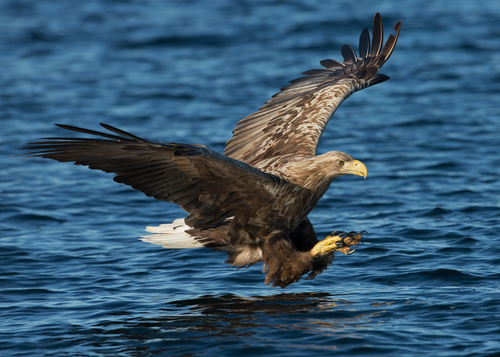
Ulf was aboard the Sea Eagle, sailing north towards the beguiling Lofoten Islands. The heavy sail flapped and seabirds wheeled and screeched, guillemots, gulls and kittiwakes amongst them. Waves slapped the hull, sunlight glistened on the blue-grey water and the salty breeze ruffled his hair. Coastward, the green-swathed Norwegian mountains, intersected by steep-sided fjords, almost took his breath away. Colonies of black and white puffins with brightly coloured beaks perched on their nests along the cliffs and cormorants stretched, drying their wings in the sun. A sea-eagle swooped to inspect the ship to which it had given its name before plucking a fish from beneath the brine. Whilst seaward, foam-white sea-horses played on the water’s surface and whiskered seals bobbed. The massive bulk of a silver whale shot great spouts of water high into the air, to cascade down again, rainbow colours of light dancing in their midst.

Somehow Ulf knew he was dreaming; yet he refused to wake up. His mind was cushioned by this sense of peace, taking him to where he wanted so much to be: this place out at sea with Bjorn and his crew, where he was valued, respected for what he was. He inhaled deeply, savouring the aroma of salty air. But the smell gradually lessened, evolving into the sharp tang of spices, mingled with the earthy smells of vegetables.

His eyes shot open . . .


Any opinions regarding the use of dreams in fiction would be very welcome.


To Contract Or Not To Contract, That Is The Question . . .

6dd2190117

I’ve been mulling over this question for a while now. Most of us use word contractions in our everyday conversations – how stuffy our chatting would sound without them? Imagine saying to a best friend, ‘Let us go for a walk now the rain has stopped.’ Wouldn’t we be more likely to say, ‘Let’s go for a walk now the rain’s stopped’? 

Perhaps not something you’d say to your best friend, anyway, but I hope you get my meaning.

So what can we say about the use of contractions in novel writing?

Personally, I think the same thing applies to written fiction as to everyday speech. Surely, a book written without the commonly used contractions, especially in speech, would be dull and extremely stilted. (There are several definitions of this word, the following amongst them: stiff or artificially formal; wooden; pompous.)

So, how can we apply this to historical fiction?

Someone who read and reviewed my book on Goodreads (very favourably with an excellent, 5 star rating) messaged me privately to say that she wasn’t sure about the use of contractions in a novel set in the ninth century . . .

Well, I was a little thrown by that at first, although I’ve read many historical novels that do use contractions. So I consulted my editor, a very experienced professional. His immediate reaction to my suggestion of removing contractions from my current work-in-progress was one of almost shock-horror!

shutterstock_187060769Then he added, ‘Don’t even consider taking out the contractions, if only for my sake!’

This was followed by a lecture which, basically, followed the theme of my earlier post entitled, ‘Forsooth sir, canst thou not speak more plainly?’

Everything comes down to the changes in language over the centuries and how it is used. The language used in ninth-century Britain would have been as different to modern English as Russian is today. And who’s to say whether or not people contracted their words in bygone days? I imagine they would have done, and an interesing article I found on the Historically Irrelevant website supports that belief.

Even Shakespeare used a contraction in the title of his play, ‘All’s Well That Ends Well.’ Admittedly, that was several hundred years later than the ninth century – but I still hold to my point.

These are the key things I understand from all this:

  1. A fiction writer obviously needs to make a story interesting. In an informal/colloquial setting, stilted speech is out of place, and would probably not endear the character to the reader (unless we are purposely creating a stiff, pompous kind of person).
  2. In formal writing, language should not be littered with contractions. In informal writing, contractions seem to be acceptable.
  3. The use of contractions in historical fiction should not be seen as incorrect – unless the author particularly chooses to write in a more formal way.

When it comes to the nitty gritty, like most things in life it’s all a question of personal preference.

Did you know . . .?

  • The commonly used word, ‘Goodbye’ is a contraction of the old phrase, ‘God be with you’? A more detailed look at this can be seen here.
  • Most word contractions use only one apostrophe. But here are a few double contractions, with two apostrophes to think about (although, I must admit, I’ve never seen the third one with two apostrophes before. I know it’s made up of two words, shall and not, but it’s usually just written as shan’t . . . isn’t it?):
blackboard_double_contractions
Image from the ‘about education’ website

Note: Header image, ‘Contractions’, is from k-3teacherresources.com

Accept our offering, mighty Thor . . .

shutterstock_144162493
The sun hung low in the near-cloudless sky, the late afternoon dry and cold with the promise of frost when darkness fell. Winter was nudging her icy nose into people’s lives and they did not relish the prospect. They’d done all in their power to ensure the well-being of the village during the bleak months ahead and hoped their hard work would reap its dividend. All that was needful now was the blessing of the gods. In sombre mood, villagers waited for the ceremony to begin. Continue reading “Accept our offering, mighty Thor . . .”

Bringing History to Life

shutterstock_170481449
The Bayeux Tapestry – an embroidered cloth depicting events leading up to the Norman conquest of England. Some historians believe it could have been made in England – not Bayeux – in the 1070’s

Most people would probably agree that to present history as a mere list of dates, or the minutiae of births, deaths, battles, coronations and political treaties and alliances, would be the best way of putting anyone off the subject for life. Undoubtedly the information referred to has its place; the chronology of historical events is vital. We wouldn’t want people believing, for example, that the Battle of Hastings was a mere hundred years ago.

But there are ways of presenting information that overcome the mundane . . .

I believe that to appreciate the importance of history – and by that I mean the magnitude of its effect on the lives we lead today; the great advances in technology that make our lives so much easier – we must project our minds back to the time being studied, or read about.

Feel it. Live it.

For me, as for millions of others, history comes alive through fiction. Historical fiction has become almost an obsession to me. I read little else. Even my favourite detective novels have an historical setting. I read novels set in any era, any culture. I love to be transported from the here and now to a world of past times; to characters with completely different moral values and attitudes to life than our own.

It all helps to understand how life has progressed; just how far – or in some cases, how little – we’ve come.

I’ll leave with these snippets to consider (there are many more on the ‘Brainy Quotes about Historical Fiction’ webpage):

‘One thing I like about historical fiction is that I’m not constantly focusing on me, or people like me; you’re obliged to concentrate on lives that are completely other than your own.’ (Emma Donoghue)

‘The thing that most attracts me to historical fiction is taking the factual record as far as it is known, using that as a scaffold, then letting imagination build the structure that fills in those things we can never find out for sure.’ (Geraldine Brooks)