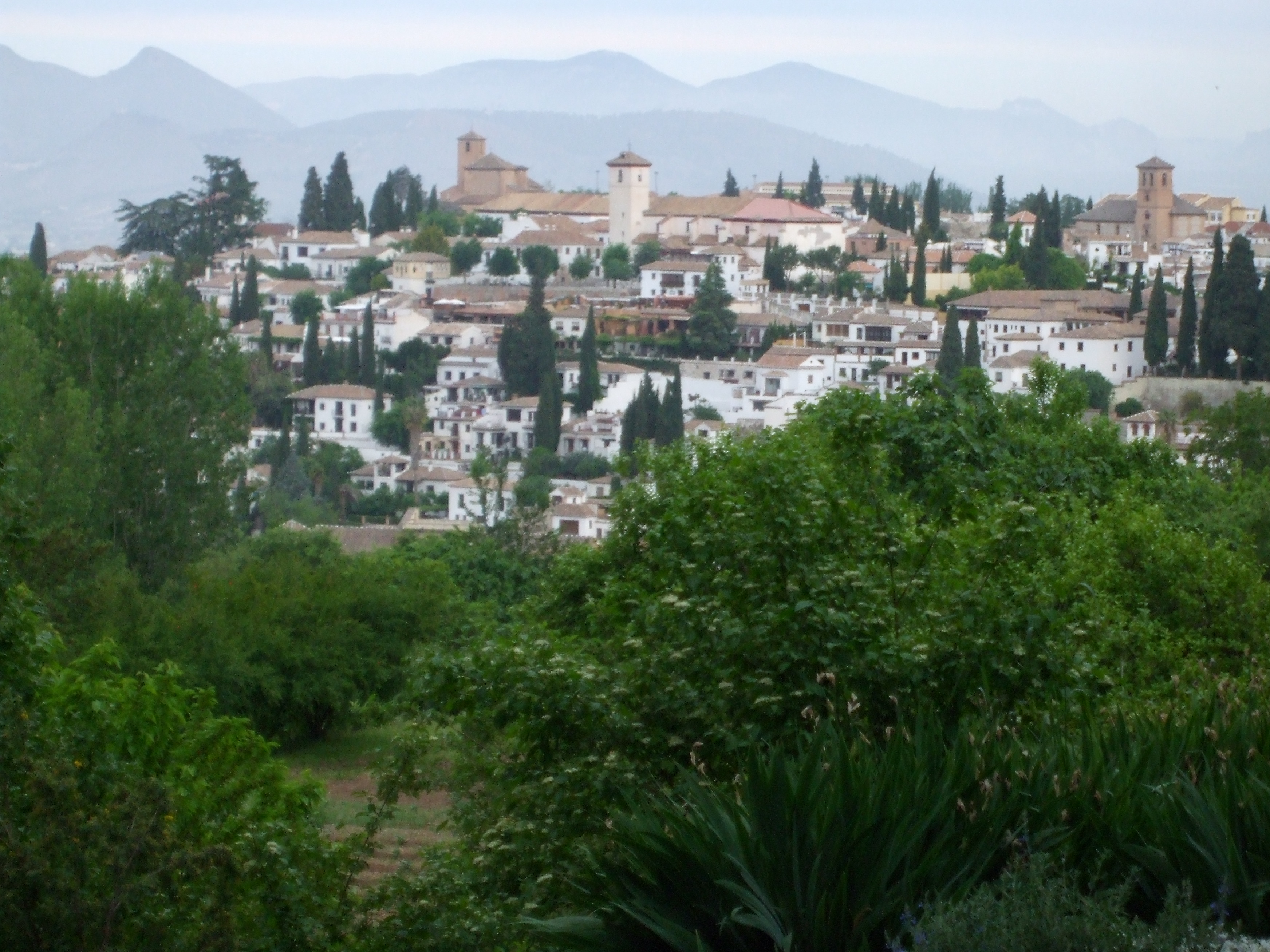
Gracious Granada

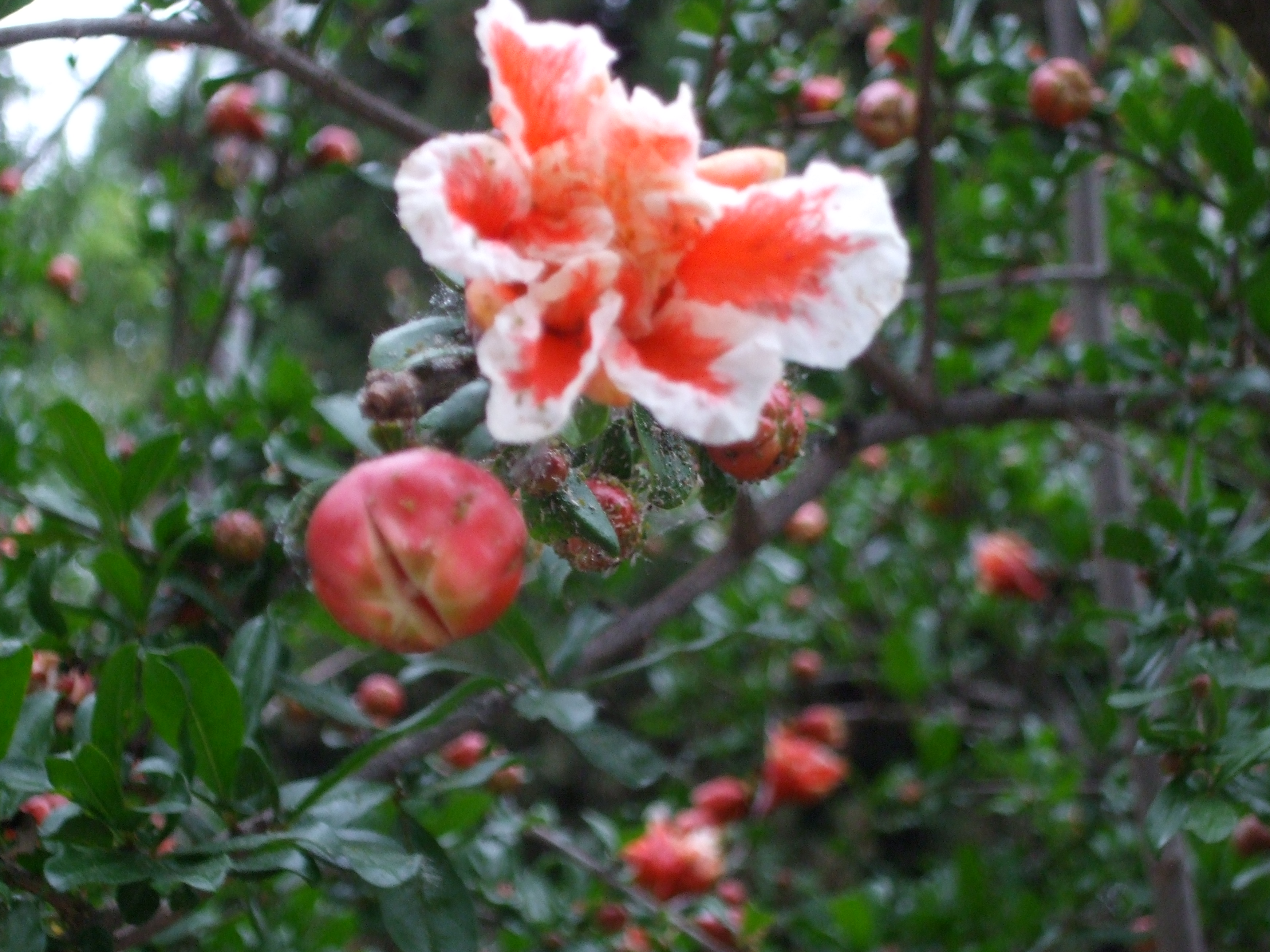
004 The final city of our visit to Andalucía was to the city of Granada, situated at the foot of the Sierra Nevada Mountains approximately one hour by car from the Mediterranean coast. The River Darrow flows through the centre of the city. Granada is named after the Spanish name for pomegranate – granada! The pomegranate symbol can be seen wherever you go in the city – on street signs, manhole covers and fire hydrants, ceramic tiles, shop signs and wall plaques. It is also the heraldic device/symbol of the city:

The Granada Coat of Arms. Wikimedia Commons: Erlenmeyer

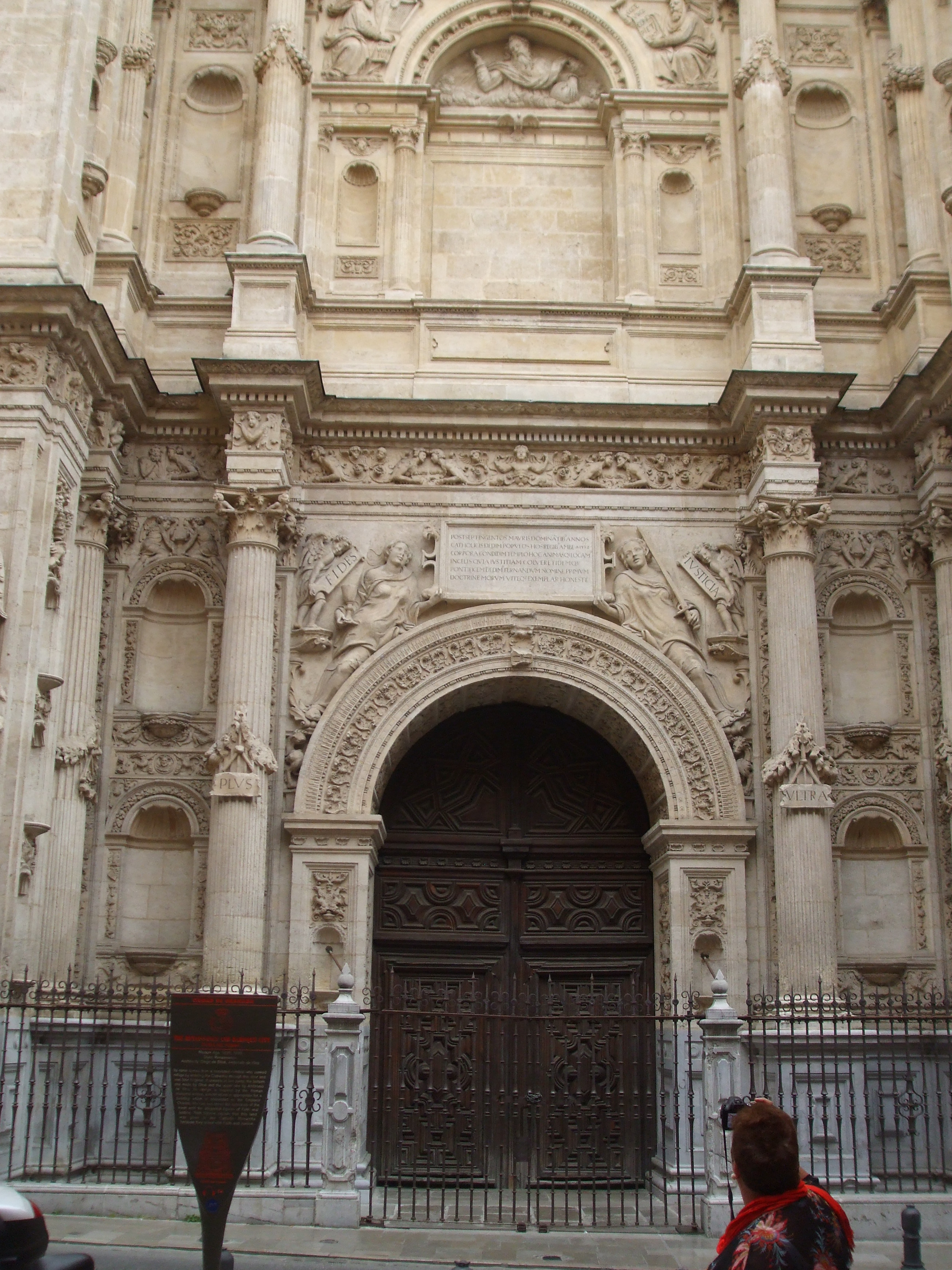
The city has much to offer tourists. Undoubtedly, the main attraction of the city is the Alhambra – a grand, Moorish citadel and palace, which most of this post will ultimately be about, but there are lots of other things to see and do in the city iteslf, if time allows. There are many shopping areas, from the ‘modern’ high street variety to the typical Spanish-style shops in the winding streets, offering Spanish leather, lace, olive oil products, wines and a variety of novelty items. Many spacious plazas host umpteen cafes, restaurants and tapas bars, all offering refreshments. We had lunch in one such plaza – probably the most popular and aptly aptly named Bib Rambla – with a statue entitled, ‘Fountain of the Giants’ in the middle of it. 082 In the centre of the city, close to Bib Rambla Plaza, is the superb Cathedral of Granada, built over the Great Mosque in the early 16th century following the conquest of Granada by the Catholic monarchs. It is contemporary with the Christian palace of the Alhambra, built by Charles V, Holy Roman Emperor. As usual, it was impossible to get far enough back to get a more meaningful view of it, but here are a couple of different views: 081 079

On the hill facing the Alhambra is the old, Moorish ‘casbah’ or medina, a labyrinth of narrow, winding streets and whitewashed houses. It is called the Albaicin/Albayzin (the latter is the English name) and was where the Moors had their palace before Alhambra was built. It is from the Albaicin that the best views of the Alhambra can be had but, as we didn’t manage to get there on this occasion, here’s one from Wikimedia Commons, entiltled, ‘Panoramic View of Alhambra from Abayzin‘. Author: Mihael Grmeh.  Panoramic View of Alhambra from the Albayzin. Author: Mihael GrmehUnless viewed from an aerial photo, it’s difficult to see the boat-shape of the fortress -long and narrow but widening in the middle. We spent an entire morning in the Alhambra, and probably could have spent longer in order to see everything properly. As it was, we were shown some pretty impressive features in the wonderful gardens, the palace and the other buildings.

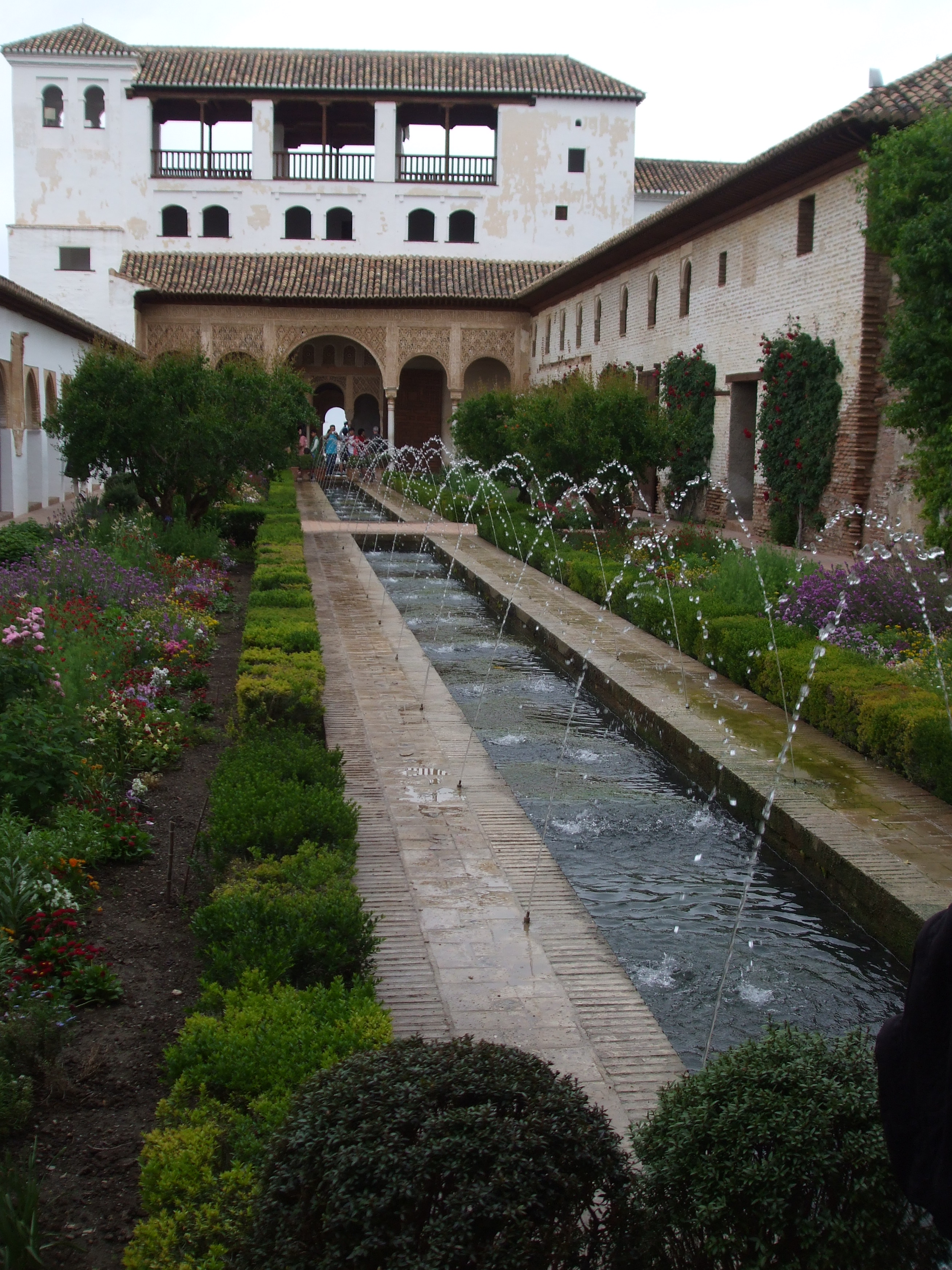
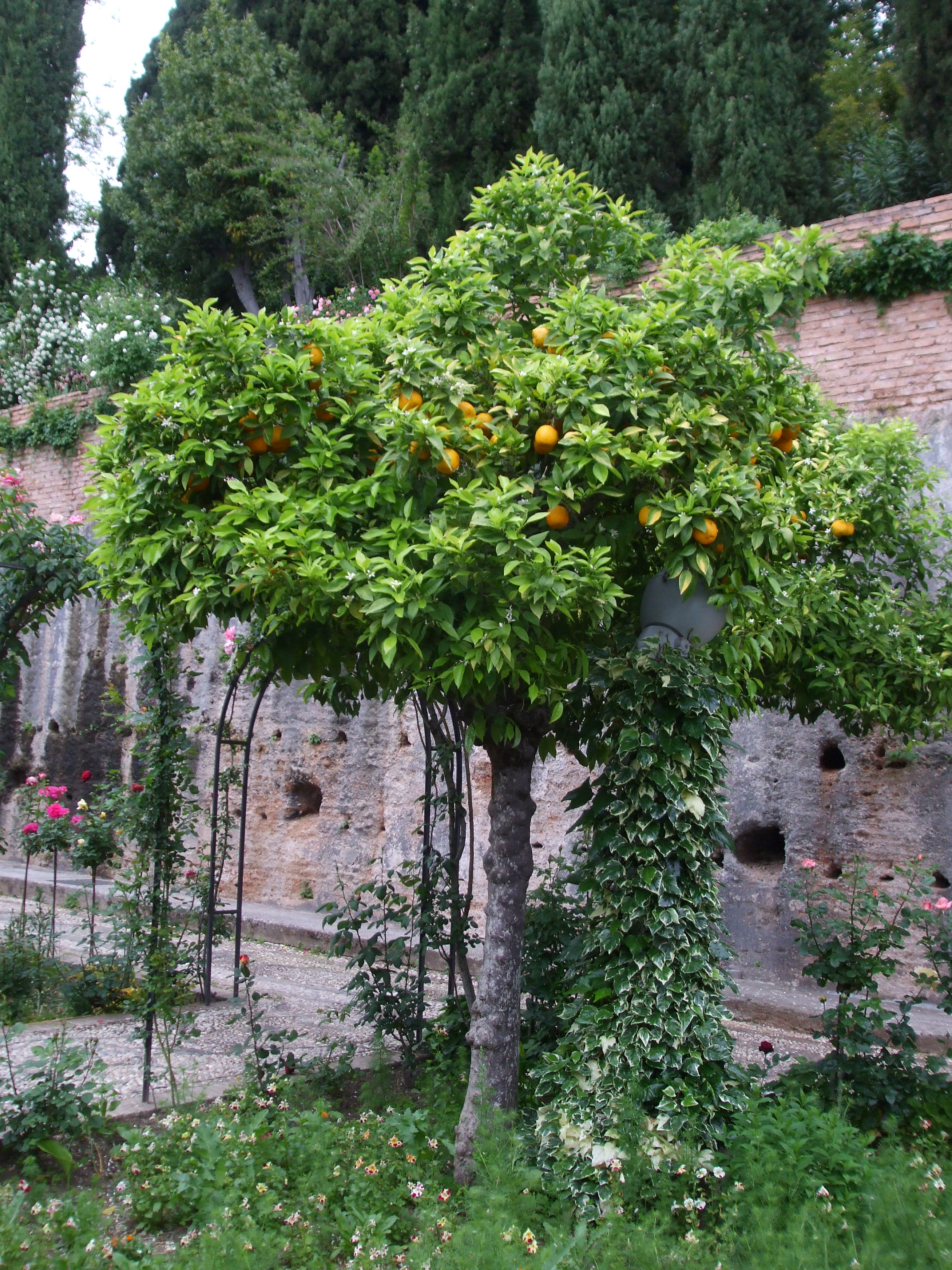
The height of the ‘Red Hill’ was one of the reasons for the initial siting the Royal Palace. It is far cooler at Alhambra, and that coolness is emphasised still further all over the grounds and inside the buildings by the ingenious use of water. There is no shortage of water at Alhambra. Despite its height, there are hills still higher not far away, and water is easily obtained simply by gravity. Wherever we walked were pools of various shapes and sizes, and the tinkling, cooling sounds of water followed us round. In winter, indoor fountains were simply converted into roaring braziers. Here are some photos of the gardens: 030 017

002
Pomeganate Flower
074
The many hedges are myrtle, unlike the usual box.

013

076

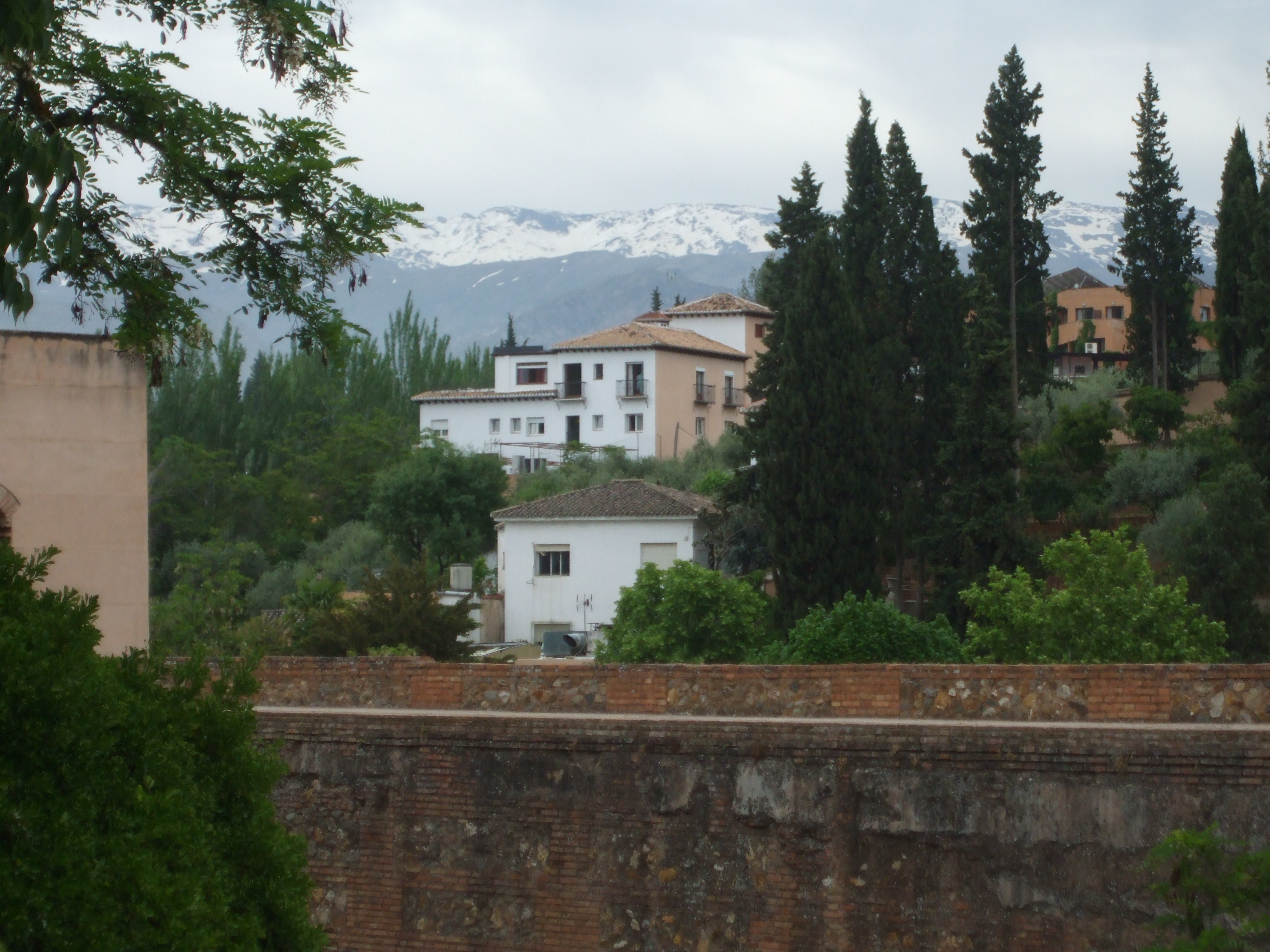
015 050051 The Courtyard of the Lions. Water springs from the mouths of twelve marble lions who bear a twelve-sided bowl. The pillars are thought to be a forest of gilded trees. The emir would have walked with eminent guests here. At other times it would have been used by the women of his harem. 057My header image is one of the views we took of Granada from Alhambra. Here are a couple of others. I particularly like the one showing the snow-capped Sierra Nevada. 014 033

Inside the Palace the beautiful arches and mosaics are still evident. In most places the wonderful colours have long since gone, but there are occasional glimpses of how amazing they might have looked.

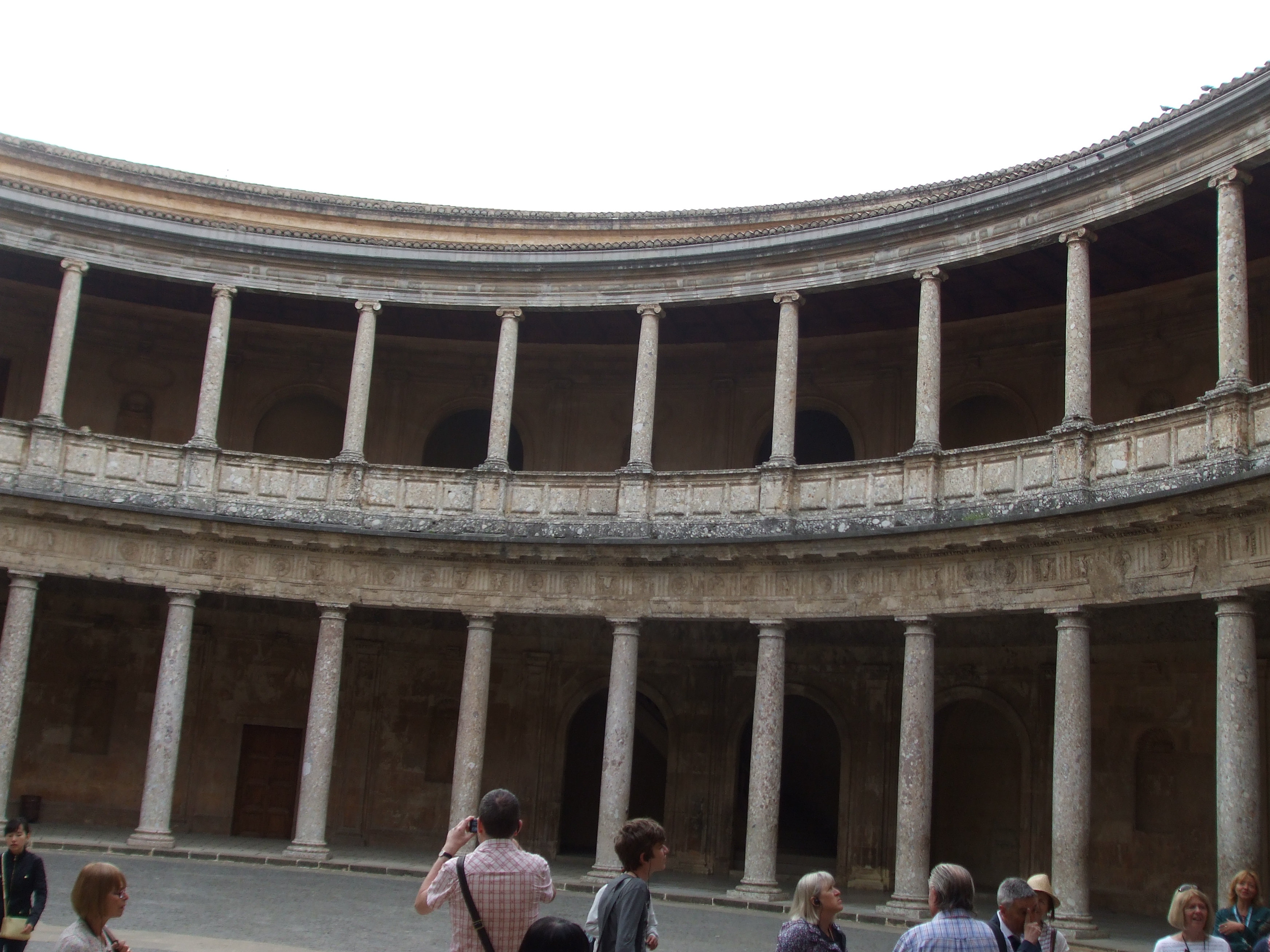
055 067 041One building we saw was a definte cube-shape from the outside, but on the inside was a circular patio. It was one of the later strucures, started by Charles V in 1527 who wanted a permanent palace in the Alhambra. Unfortunately, the building was never completed and remained without a roof until the twentieth century. 037036 I have so many more photos of Alhambra as well as from all the sites we visited on this awesome trip to Andalucía. I already feel that this post is far too long, so it’s time to come to an end.

Classic Córdoba

042

Córdoba is a beautiful city, marked by different cultures over the years and situated on the River Guadalquivir at a point where it is no longer navigable. It has the reputation for having the highest summer temperatures in Spain and is famous for its great monuments lincluding the Mesquita/Mosque, and a lovely old Jewish centre. It is now a UNESCO World Heritage Site.

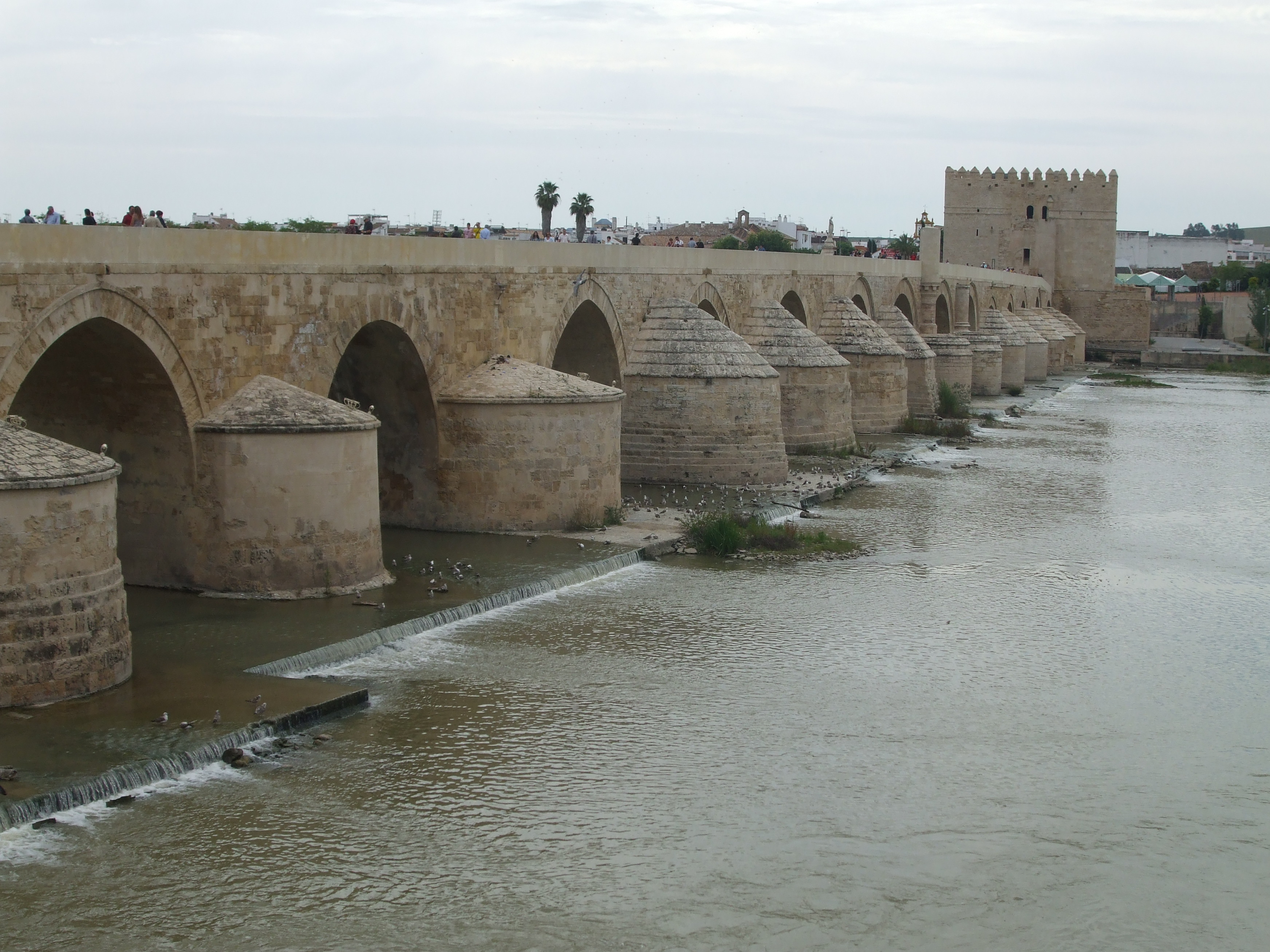
The city began as a small village in the Copper Age (3500-2300 BC). In 161 BC the Romans established a permanent camp on the banks of the river and two centuries later it competed in magnificence and importance with Rome itself. There was a large Forum, the usual walls and gateways, and a bridge, the Puente Romano across the river. It was during this time that the famous Córdoba Treasure was buried, and is now housed in the British Museum.

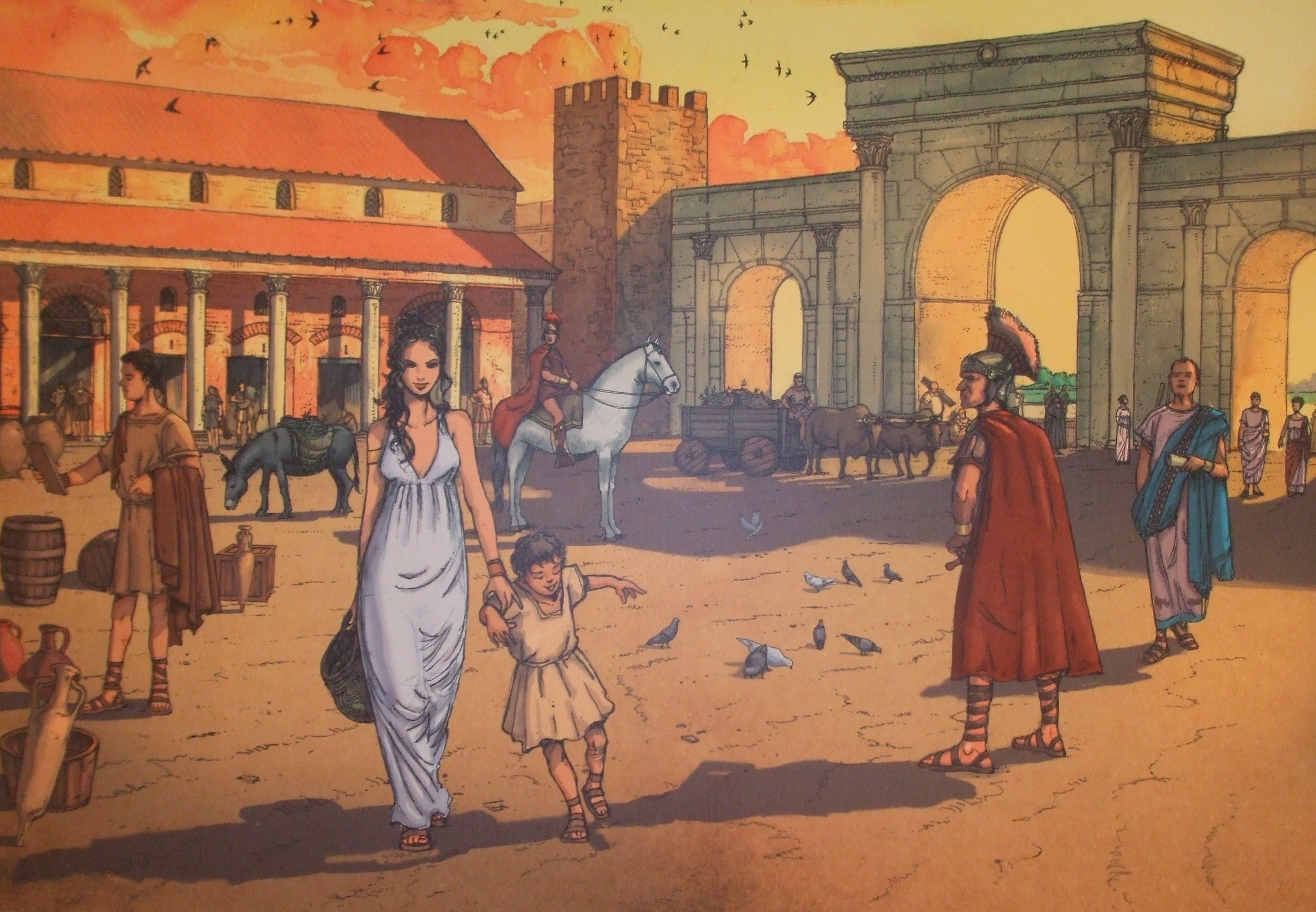
The following two pictures are from the wall in a Visitor Centre on the far side of the river. The first is a plan of the Roman town, the second shows the Forum.

053
Cordoba had at least 5 squares. The oldest, the Forum, existed around the mid 2nd century.
058
The Forum was the centre of administrative and civic activity.

The present main gateway – an 18th century replacement. Alongside it are remnants of the original, Roman wall:

066

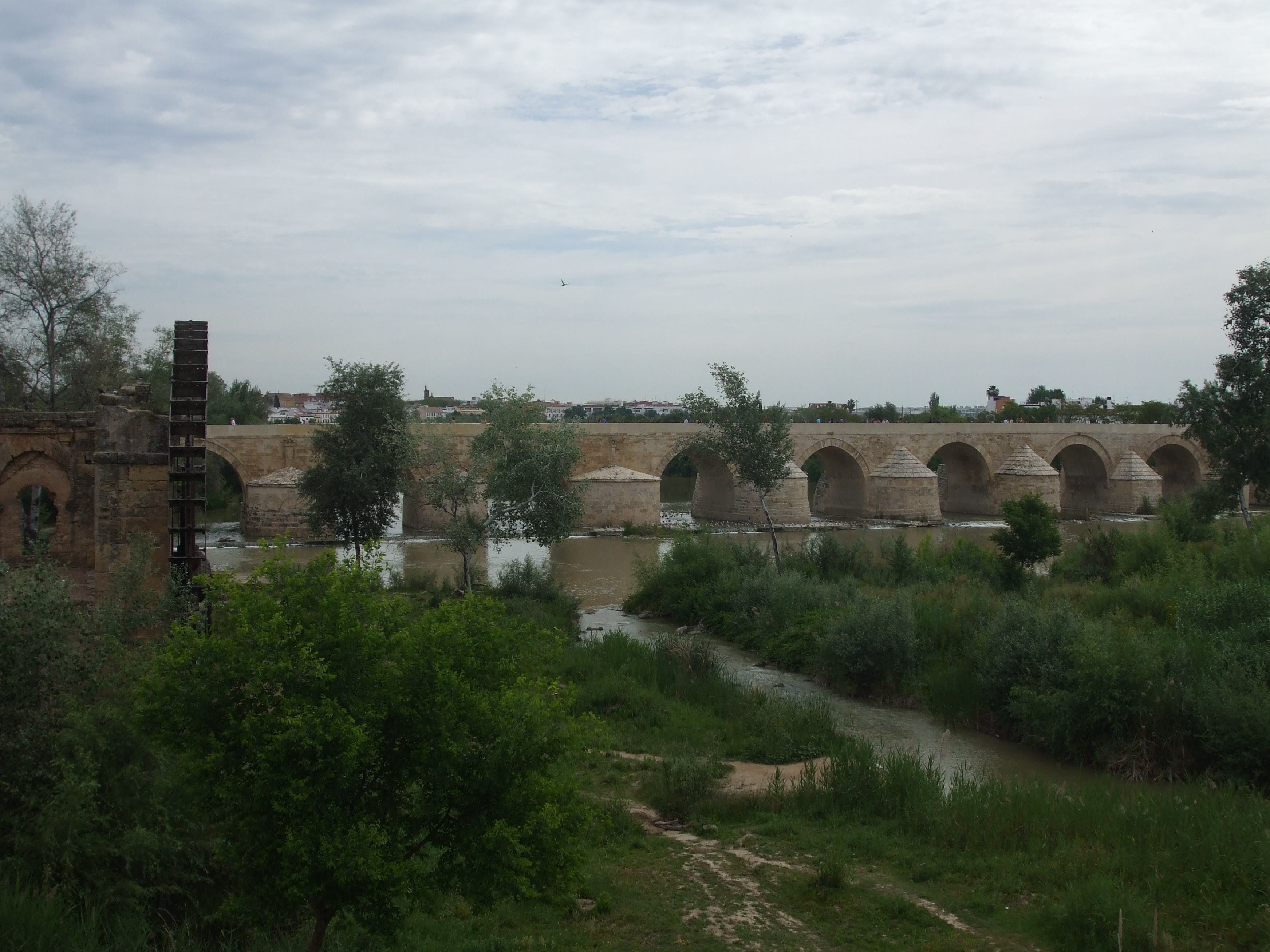
Here are a couple of photos of the bridge and river today:

024

032

After the fall of the Roman Empire, the Moors arrived in Spain in 711 and Córdoba became their headquarters. By the 10th century it had become the richest and most sumptuous city in the known world, with many libraries, medical schools and universities.

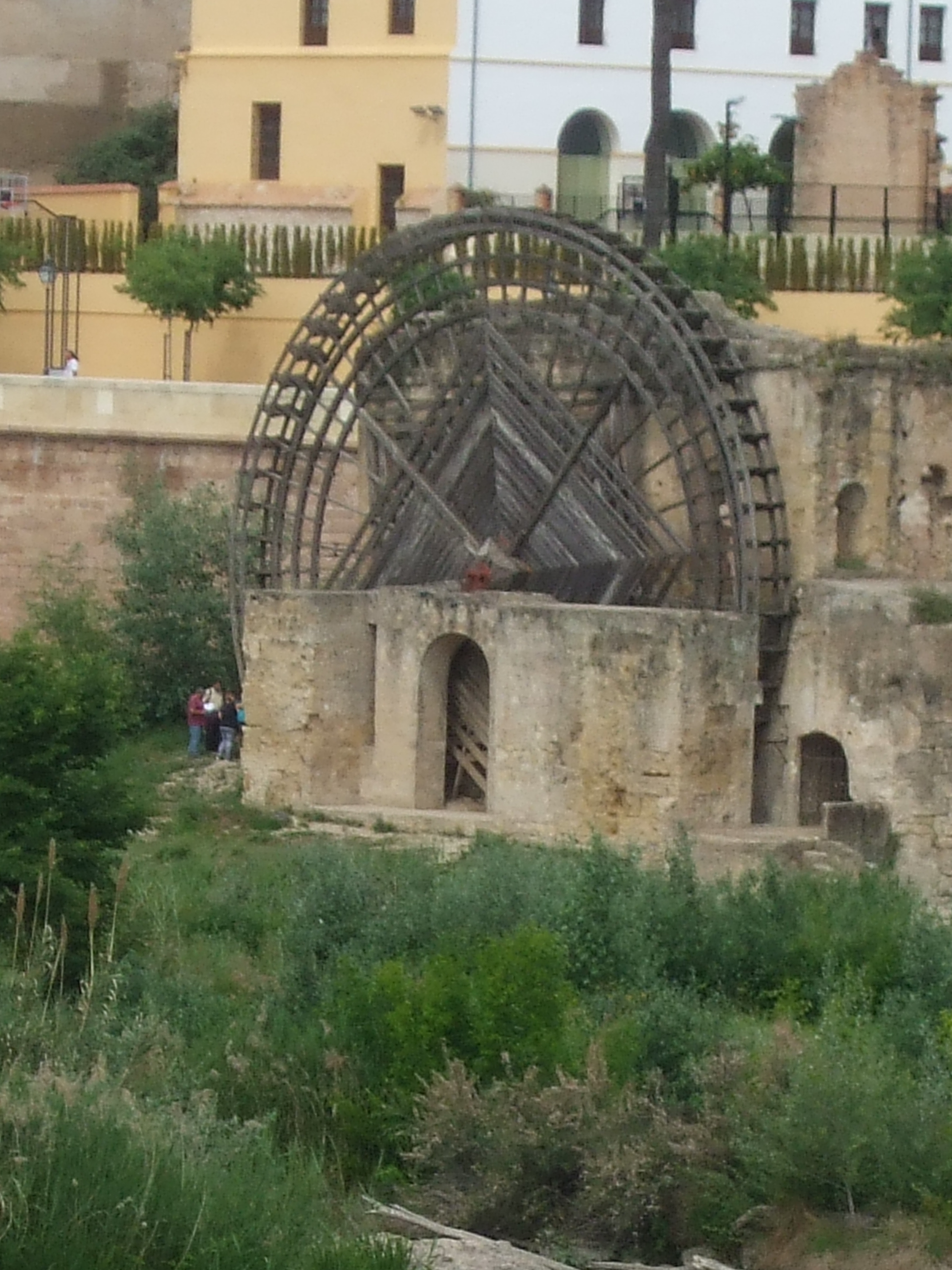
The previous picture also shows the islands downstream of the Roman Bridge. Today these are inhabited only by birds, but the remnants of flour mills can be seen on some of them. One larger mill, still with its wheel, is located close the the bank and is known as the Albolafia Water Wheel.

046

Built by Abd al-Rahman II ( (731–788) to pump water up to the Emir’s Alcazar/Palace, it lasted until the 15th century when it was dismantled on the orders of Queen Isabella (Isabel La Católica, wife of King Ferdinand). She claimed she didn’t like the sound of the noisy chains so close to the Palace.

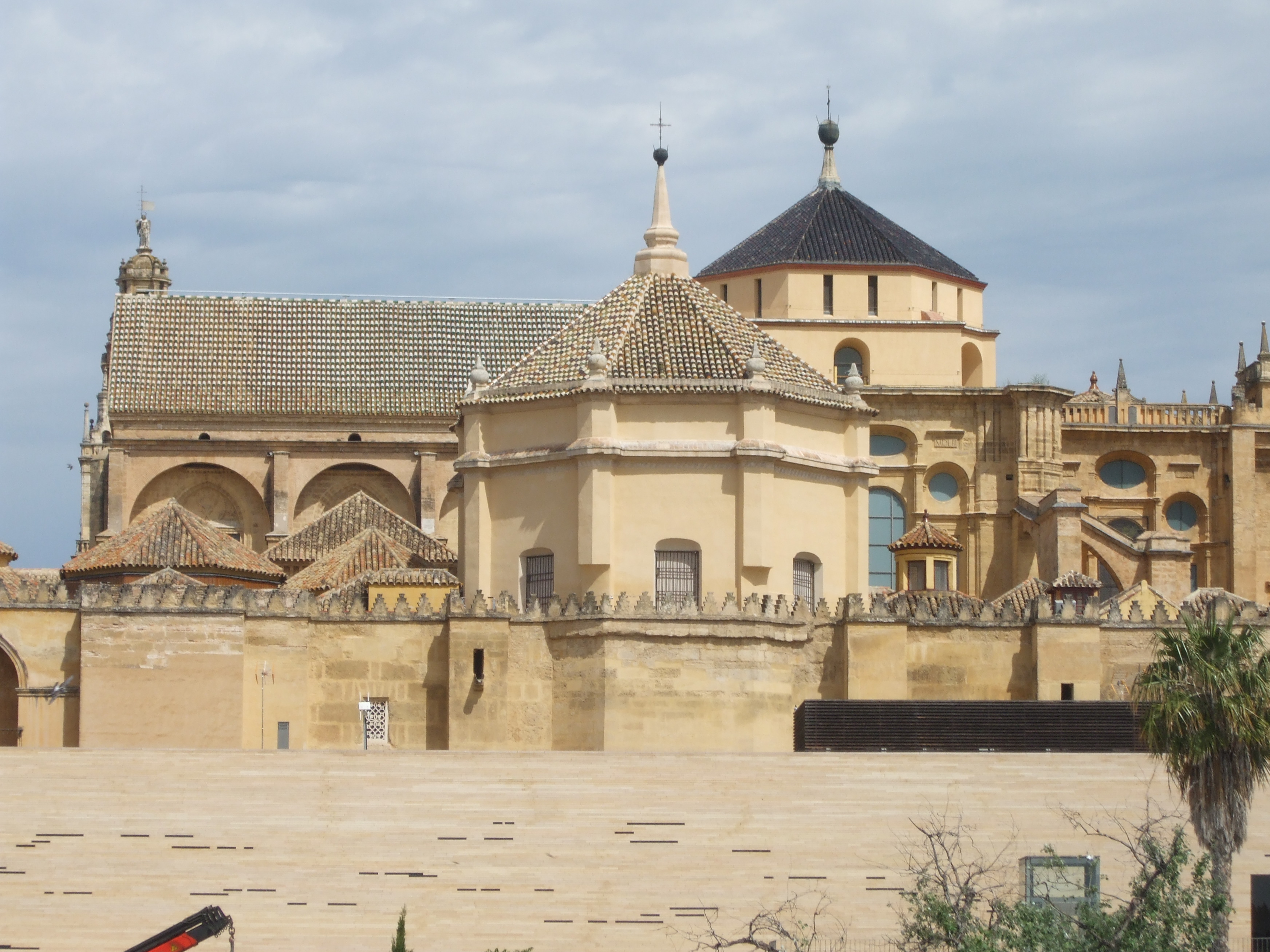
One of the main, Moorish attractions in the town is the great Mezquita-Cathedral, or simply La Mesquita. This is a view of it taken from the Roman bridge.

047

The site on which the Mezquita stands has long been a sacred place. First a Roman temple then a Visigoth Christian church occupied the site, and after the Moorish occupation, the building was initially used by both Muslims and Christians. This arrangement stopped when Caliph Abd al-Rahman I purchased the Christian half. He had the entire building demolished in order to build the Great Mosque. Its construction lasted for over two centuries.

These photos inside the Mezquita show the wonderful Moorish design. The first two show the hypostyle hall (hypostyle meaning filled with columns).

021

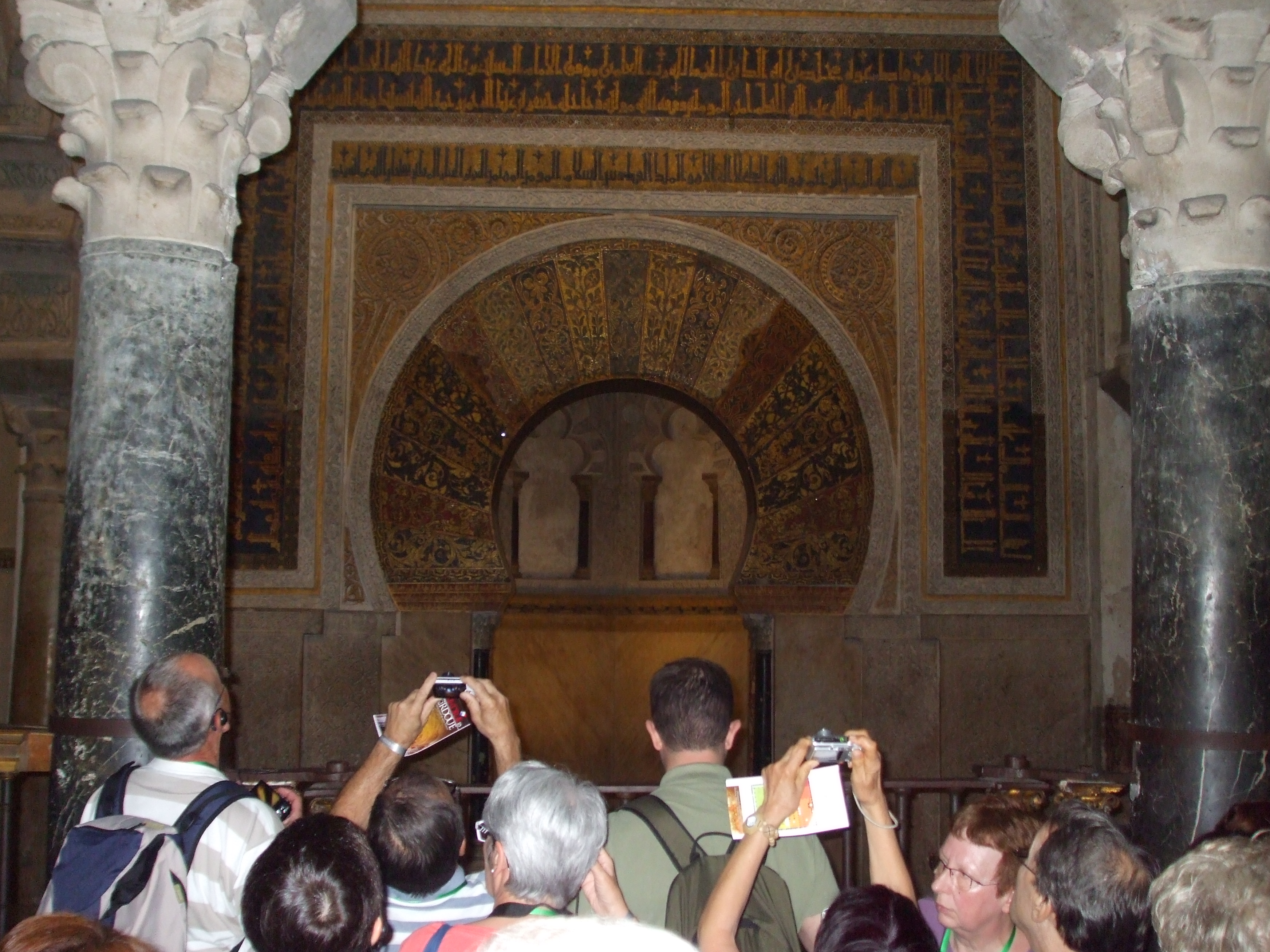
022It was difficult to get close enough for a good photo at the next site, but besides the sparkling gold work are dark blues, reddish browns and yellows:

The Mihrab, the famous horseshoe-arched prayer niche. Mihrabs are used in a mosque to denote the wall that faces Mecca in Saudi Arabia.

In 1236, Cordoba was taken by the Christians and, for a while, the building again served both Christains and Muslims. In the 16th century it officially became the Cathedral of Saint Mary of the Assumption. It is right in the centre of the mosque, and it seem odd going through one to the other. However, it’s undoubtedly a magnificent and ornate affair.

011

007

009
014

Today, Córdoba is a thriving modern city, the seat of one of the most powerful universities in Andalucía and the centre of communication between the higher and lower parts of the region. Unfortunately, this was not even an overnight stop for us, and we had only four hours here to see as much as possible and grab some lunch. We spent a while wandering around the tiny, narrow streets in the Jewish quarter, where most of the ‘eateries’ are but didn’t have time to visit the Alcazar (palace). I suppose there’s always a next time…

Stunning Sevilla

004

Seville (English spelling) is the capital of Andalucia and the third largest city in Spain. Greek mythology holds that it was founded by Hercules, but the truth is quite different. It was first settled in the 8th Century BC and later on by both Phoenicians and Carthaginians. Seville’s position on the Guadalquivir made it ideal for trade in inland Andalucia. The Romans called the city, Hispanis and founded the colony of Italica in the surrounding area. The Moors called it Ixibilia, from which the name of Sevilla is derived.

Moorish rule was a period of great splendour. Not only were there many magnificent buildings erected, it was a time of great cultural, political, social and economic significance. Yet, at the time in which my Vikings sail up the Guadalquivir in 871, Seville was of much less significance than Cordova (English: Cordoba) the Andalucian capital at that time. In 1248, the town was conquered by the Christian king, Fernando the Third.

The bougainvillea flower/bush can be seen in many places in Andalucía, and we saw a lot in Seville, especially in the gardens of the Alcazar – the Royal Palace. The flower has almost become  an emblem of the region. It is native to South America, so I can only imagine it was one of the things brought back by the Conquistadores in the 15th and 16th Centuries.071

Sevilla is a bustling city at any time of year, and over the weekend we were there, it wasn’t only full of foreign tourists. Friday, May 1st was May Day in Spain, and Spanish families were also enjoying a day out in Sevilla – many of them from other parts of the country. Queues to get into anywhere of interest were miles long, particularly into the Cathedral and the Alcazar (a royal palace). May and June are always manic in Spanish cities anyway, as this is the preferred time of year for weddings and confirmations into the Church. Everywhere, people in their best clothes were congregating on corners and close to churches.

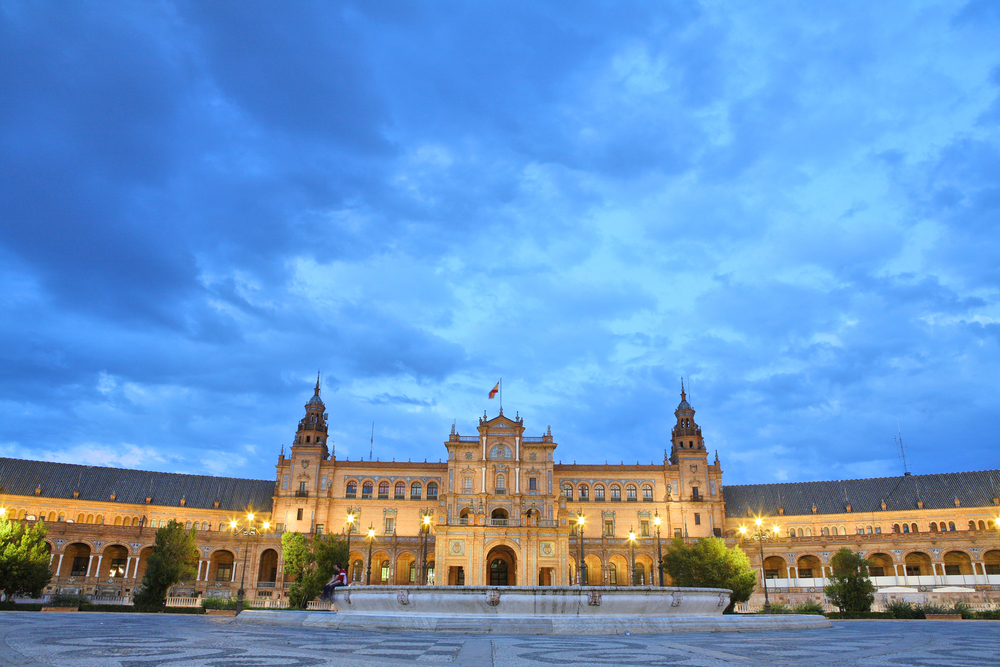
On Saturday we visited the Plaza de España, one of the many additions to the city for the Expo (Iberian-American Exposition World’s Fair) of 1929. It is located in the beautiful Maria Luisa Park and today consists mostly of Government Buildings. The first picture here in not one of our photos, but it does show most of the width of this building. Either end curves round and ends in a tall tower. Our hilarious guide told us that these curved areas represented the arms of Spain, reaching out across the Atlantic to their conquered lands in Central and South America. Whether that was the architect’s intention or not, I’ve no idea.shutterstock_19797133

Here are a couple of our own photos, which show different parts of the building. They aren’t very good – some are too dark and others make the end towers look like the Leaning Tower of Pisa!

027

015

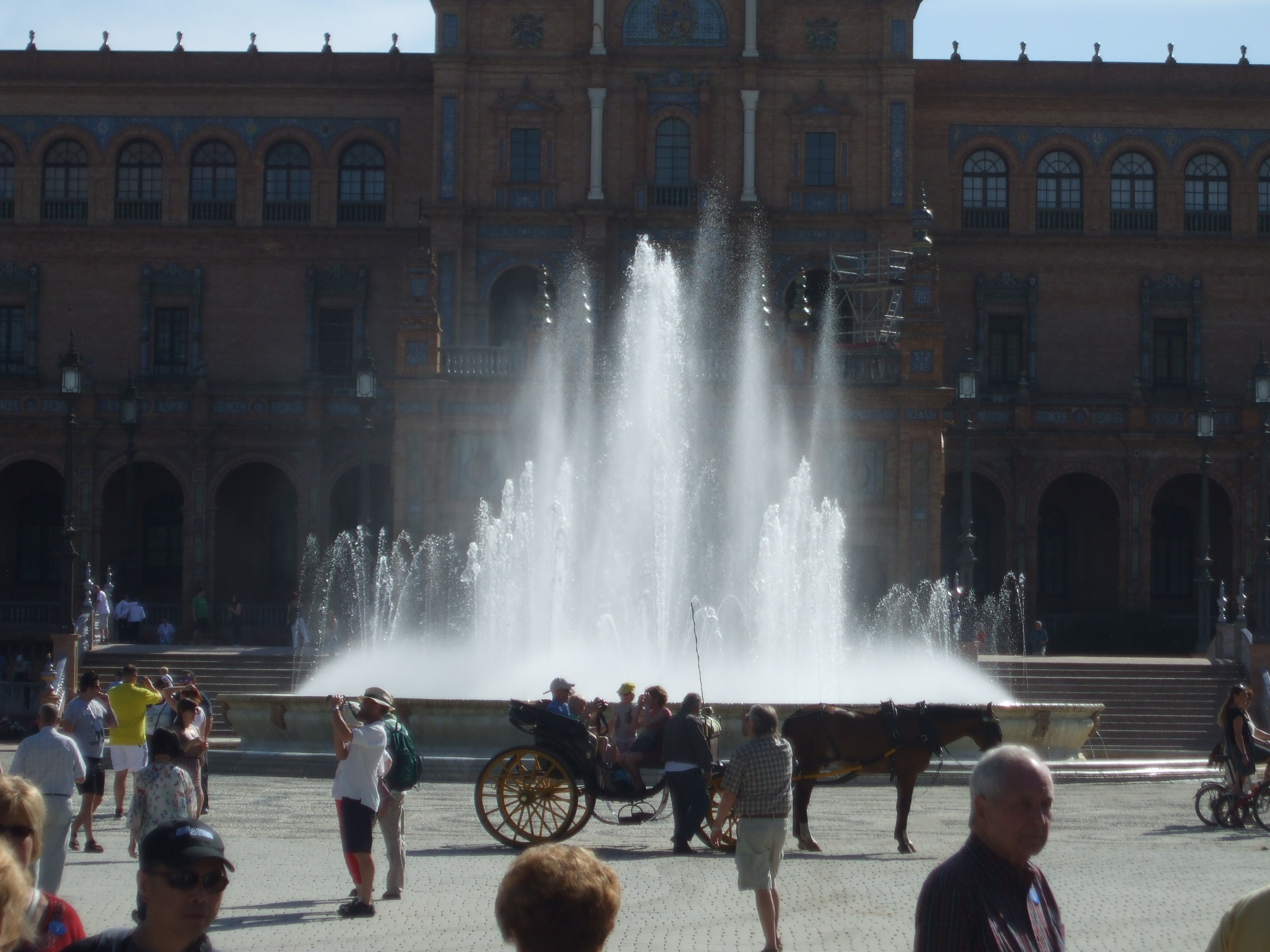
The fountain was in the middle of the plaza, but here we must have caught the bright sunlight wrongly:014

Later on, we had a boat ride along the Guadalquivir and had lots of interesting areas and buildings pointed out. It would have been so much better if the temperature had not been 36°C.037

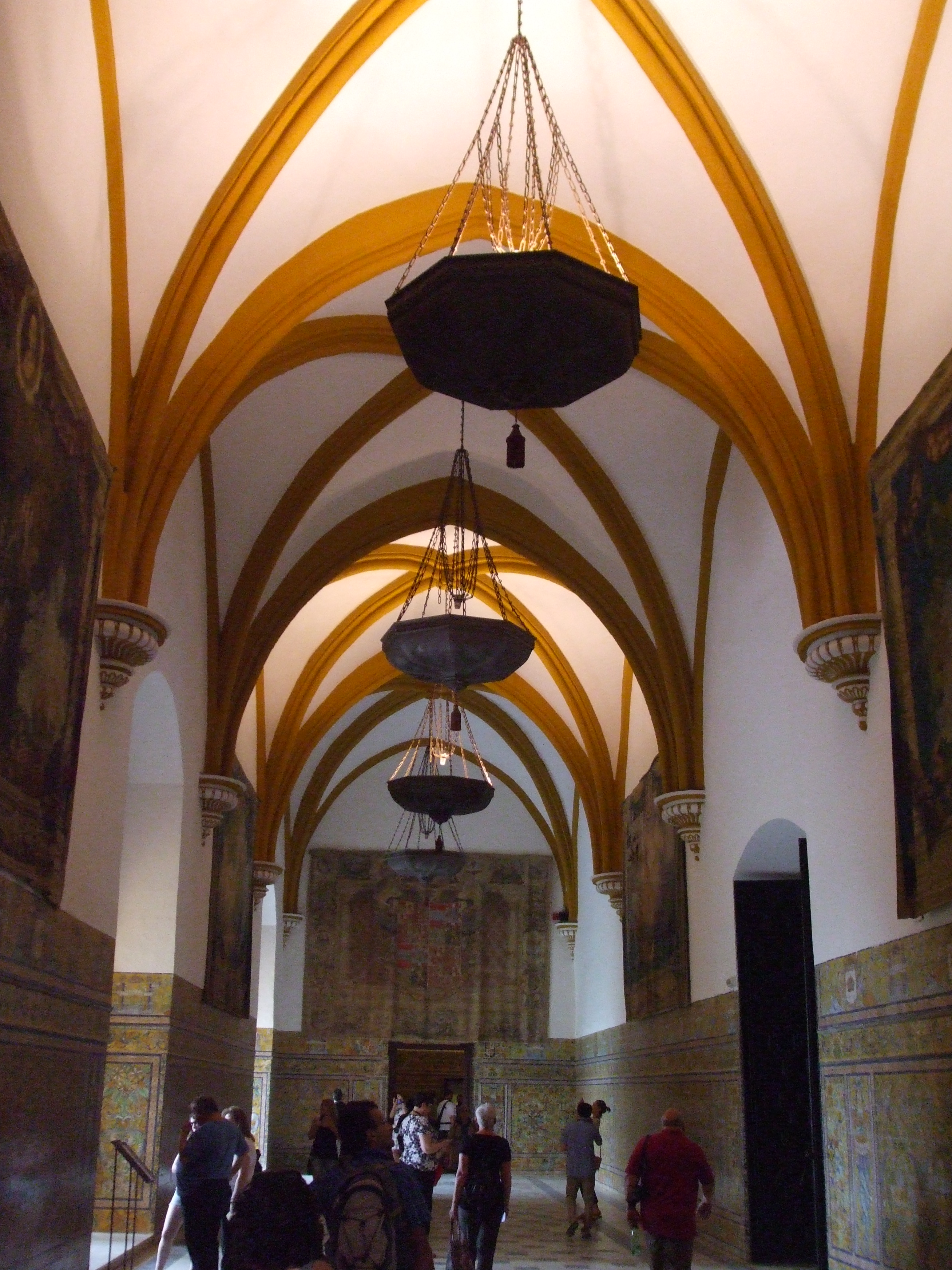
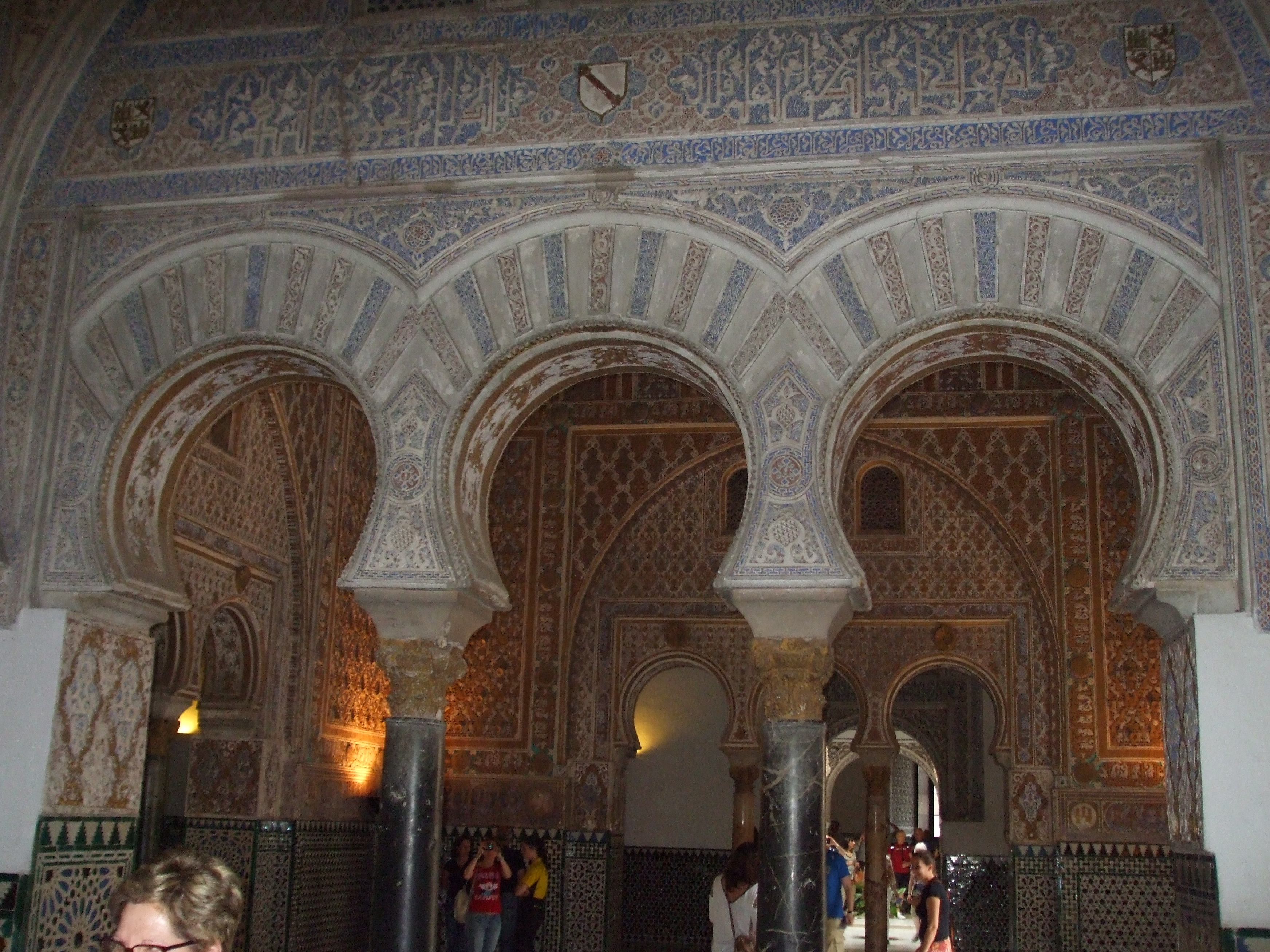
042On Sunday we managed to get into the Royal Alcazar of Seville – the oldest Royal Palace still in use in Europe. It was built in 11th Century AD. We queued for 45 minutes to get in, but it was worth the wait. The building and rooms inside are spectacular and the many gardens truly magnificent. 068

108

113

091098

118

We didn’t manage to go inside Seville Cathedral, which was used for Church Services (Mass) until almost mid-afternoon on Sunday. All we managed was a quick snap of the outside, which really doesn’t do it justice. It is thought by many to be oddly situated, right in the middle of so many Moorish buildings. It is a very ornate structure (built between 1402 and 1506) and would need several photos to show it from different angles.125

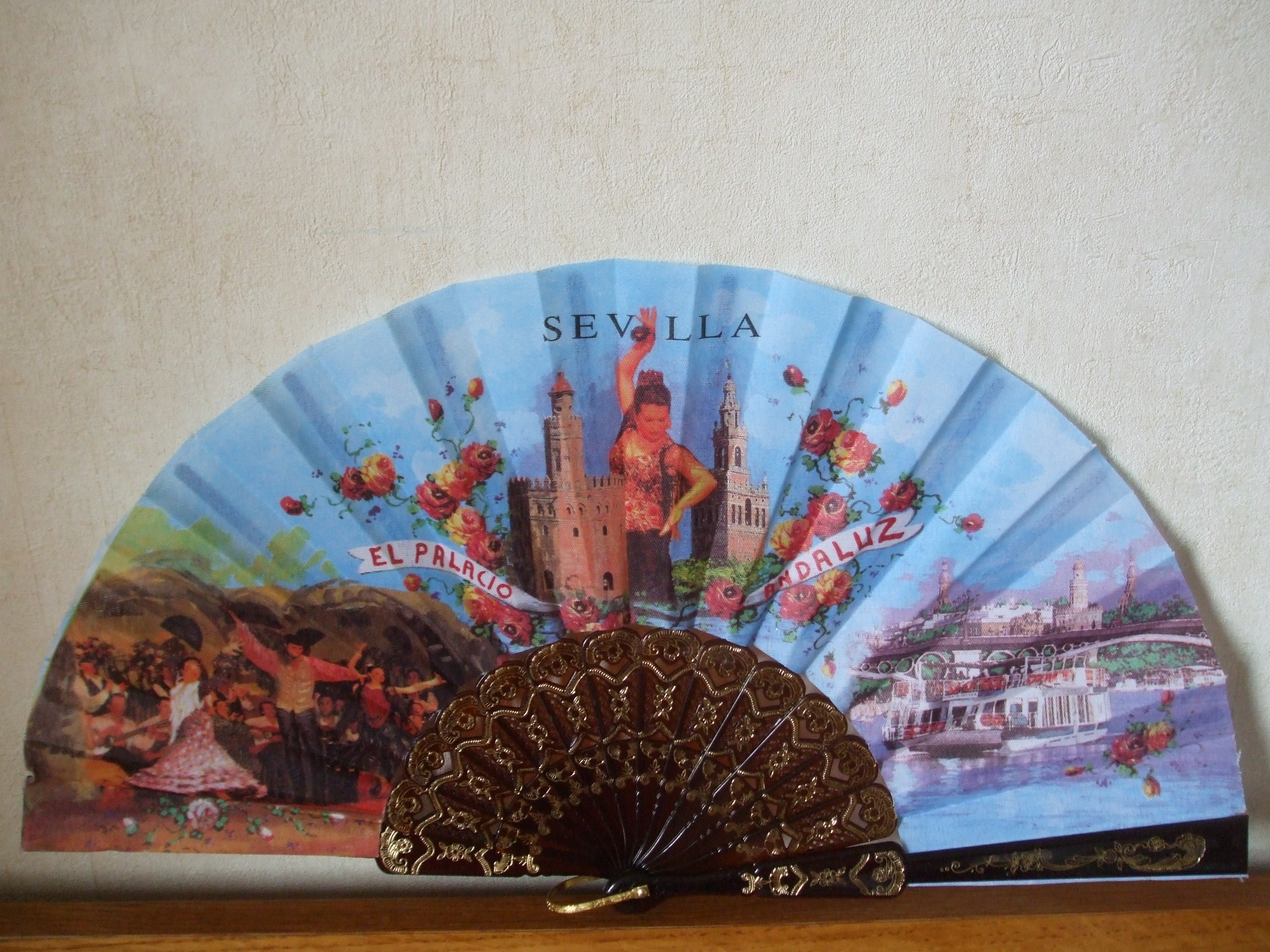
Seville also has a bullring, of course, and is the birthplace of the wonderful Flamenco dancing. It is also the town in which Carmen lived (as in Carmen, the Opera) where she worked in a tobacco factory. We spent Saturday evening watching the Flamenco dancers, who were absolutely brilliant – so colourful and full of energy! We were treated to swirling cloaks and shawls, whirling fans, castanets, superb guitar playing and singing and of course, the stamping of heels, flicking of hips and roses held between teeth! 127

Amazing Andalucia

002

It’s now Sunday, and I’ve been in Andalucia since late morning on Thursday. The two main observations I’ve made so far are that it’s very beautiful and that it’s flippin’ hot for the first week of May!

325px-Ríos_de_Andalucía
Rivers of Andalucia. Author Te y Kriptinita: Creative Commons

This map shows just how many rivers there are in Andalucía. The one that features in Book 3 of my Sons of Kings trilogy is the Guadalquivir – the longest river in Andalucia, with innumerable tributaries. It flows right across northern regions of Andalucía and out through its delta into the Atlantic Ocean. Of course, rivers were very important to my intrepid Vikings, who were heading for Cordoba, on the Guadalquivir.

Since Friday we’ve been in Seville and both today and yesterday it’s been well over 30°C. Now, that may not sound hot for this time of year to all you people who are treated to weather like this every spring. But to someone from the north of England, it’s like walking into an oven every time I step out of the hotel door!

I’ll probably do a post about Seville later on, but today I just want to post a few photos of two smaller towns we passed through after landing at Malaga.

The first was just a visit and overnight stop in the tiny village of Mijas, situated twenty one miles to the south-west of Malaga.  It’s a lovely, typical old, white-washed Andalucian village, nestling high on a hillside with wonderful views over the Mediterranean coast.

003

One of the things that Mijas is known for is its use of donkeys around the town, which has caused many complaints to be made by tourists regarding their misuse. Complaints have included the animals being left standing in the hot sun for hours on end. I won’t go into this issue here as I’m sure there’ll be plenty online about it. Of course, the donkey taxi service is regarded as a big tourist attraction, as seen in the statue we saw:

005

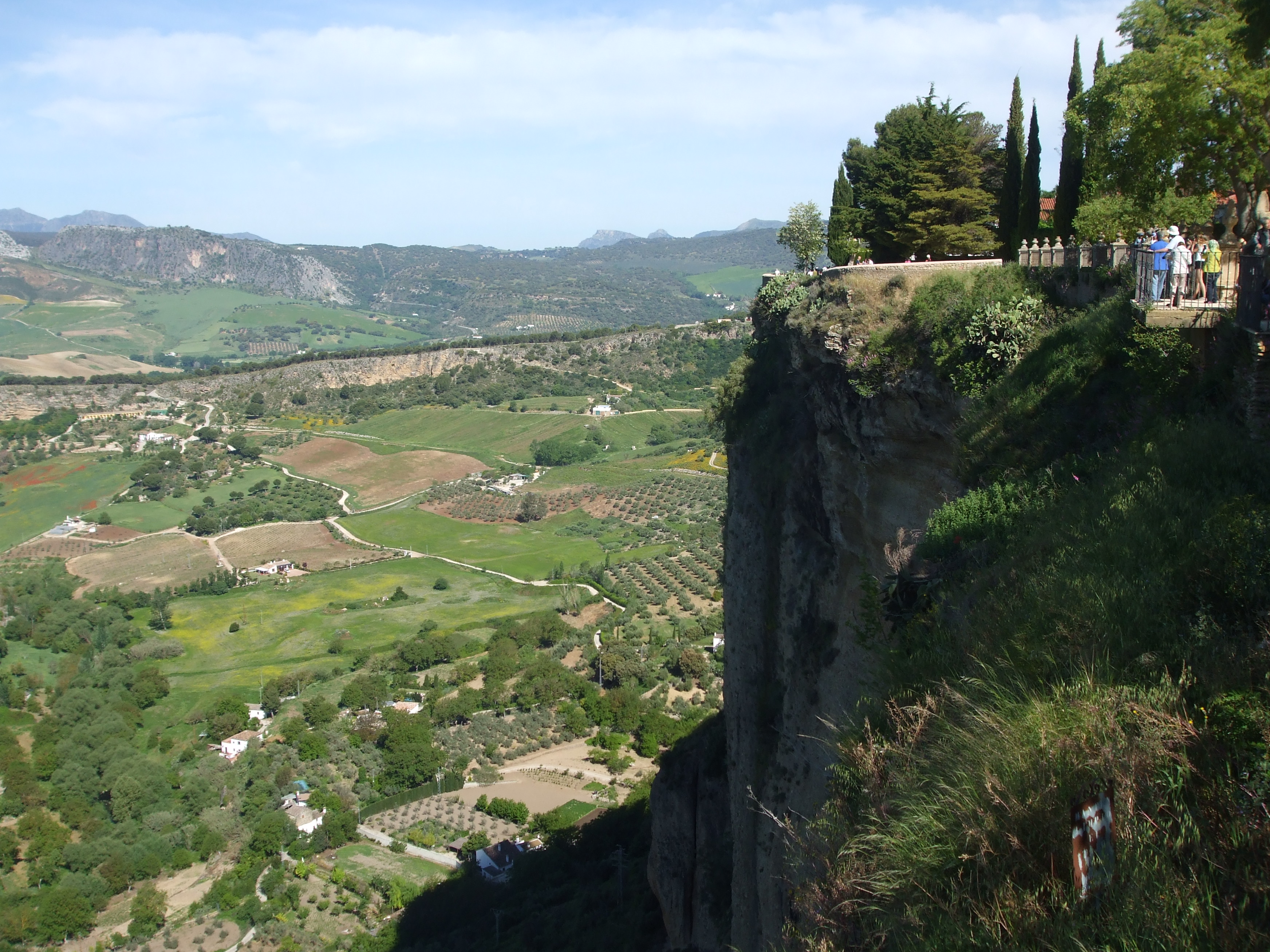
The following day we continued on to Ronda, just thirty one miles from Mijas. Ronda is of the most ancient cities in Spain, and is quite a stunning place, cut into two by the deep gorge of the River Guadalevin. On one side is new Ronda and the other, the ancient city. Both sides are joined by the Puente Nuevo bridge, (New Bridge) built between 1751 and 1793.

Here are a couple of photos of the gorge and bridge that we took.

023

010

018

016Ronda’s main claim to fame is that it has the oldest bullring in Spain, and even the world. The first fight took place in 1785.

On Monday we head for Cordoba for a few hours, before moving on to Granada for our last two days.

Andalusien_Karte
Map of Andalucía. German author Manfred Werner. Creative Commons

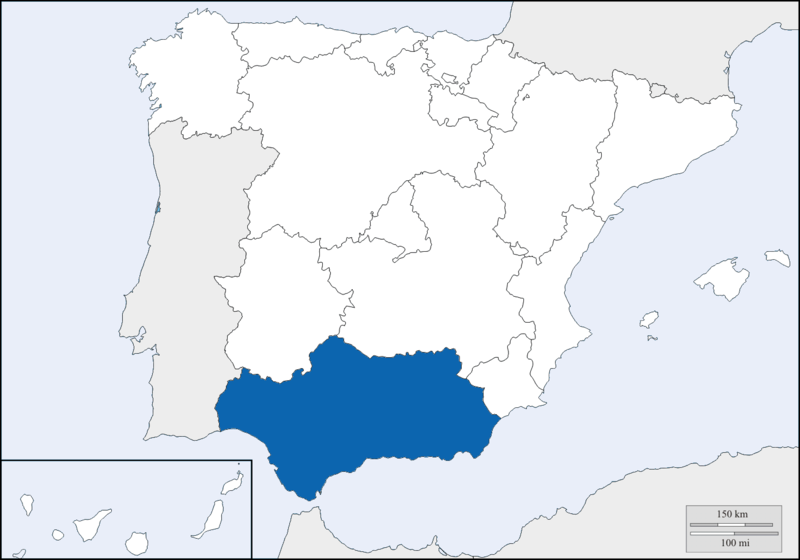
Here is a map of Andalucía to show the location of towns. It’s the  only one I could find whilst away from home:

A Trip to Spain, Writing . . . and Books I’ve Reviewed

shutterstock_160717460This is what I call a ‘multi-purpose’ post, and it’s likely to be the last post I do for a couple of weeks. The reason might be obvious from the first part of my title. Yes, I’m off to Sunny Spain.

sun-32198_640

I’ve read a few books over the last couple of months, but I’d like to mention four I really liked here. I’ll just add a link to my full reviews on Goodreads and write a shortened version here, otherwise this would become a bit of a marathon. So here they are:

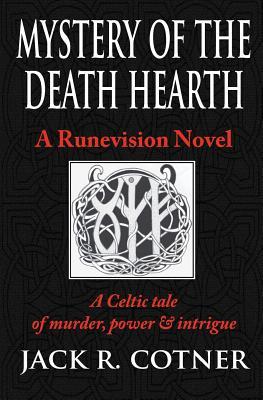
  1. The Mystery of the Death: Book One of the Runevision Series.

Author:  Jack R. Cotner.

Genre: historical fiction

As a lover of both historical fiction and murder mysteries, I really enjoyed this book.  It’s set in the 5th Century AD in the Celtic lands of north-western, mainland Europe, an area which presents strong resistance to Roman control.

The murder mystery is extremely well crafted, with many twists and turns as the plot unfolds. We follow the footsteps of the young Celtic magistrate, Weylyn, who is tasked by his superiors in the Elder Faith with finding those responsible for the theft of a Roman treasure, including the magnificent Great Cross, and capture the perpetrator of the murder which occurred at the same time.

Throughout the chase, Weylyn must also adhere to the demands of the Roman Enforcement officers, whose agendas seldom tally with his own, as well as sorting out his own future with a woman whose beliefs are contrary to his own, and evading the deadly assassin who is always hot on his heels.

This book is a great read for anyone who enjoys an intriguing murder mystery with well-rounded characters and an historical setting. The writing style suits the period well and there are some lovely descriptive phrases and poems.  Jack is currently writing Book Two of the series, which I look forward to reading.

You can read the full review on  Goodreads.

17130429

*

2.  Matchmaker of Magics: Book One of The Bleaken Series.

Author: Mara Fields

Genre: YA fantasy

It’s some time since I read a YA novel, so I wasn’t sure what to expect when I decided to read this book. I soon found that the style and content would suit both YA and adult readers. It’s an exciting story in which Mara blends magical powers with human emotion and endeavour extremely well. It is set partly in the tiny village of Bleaken and the capital city of the realm, Verdigreen.

Sacha Bleaken is a young woman whose ancestors founded the village.  Though expected to become one of the village leaders, Sacha knows she was born for far more than that. Her magical skills are already considerable. The sudden appearance of the monstrous Coldwights – not seen in Bleaken for many years – and the kidnapping of her beloved tutor, change her life completely.  Blamed for the Coldwights’ appearance, Sacha is banished from the village for a year. Whilst in Verdigreen she hones her powers under the guidance of some of the realm’s most talented mages, thus preparing herself for the tasks of finding her tutor and saving her people from the evil Coldwights.

I really enjoyed reading this book. Mara has a flowing writing style and there is a cast of intriguing characters. The magical element is fascinating. I am already half way through Book Two of this series and really enjoying it.

My full review can be seen on Goodreads.

23431875

*

3. and 4. Mission Rome and Mission Paris: ( Scavenger Hunt Adventure Series)

Author: Catherine Aragon

Genre: Travel, Discovery and Adventure books for children

There are already several other books in this excellent series but Mission Paris and Mission Rome are the two I’ve read so far. They are aimed at children in the 8-12 age range, but would equally suit older chilren and even adults could make use of them as travel guides.

The books aim to give children on holiday with their family something interesting and exciting to focus on – in order to counteract boredom.  The missions are presented in such a fun way that few children could resist, especially with the added incentive of becoming a Secret International Agency special agent on completion of the tasks. Most of the major sites of each city are visited, with extra information given as introduction – much of this as amusing little snippets. They are extremely well written and beautifully and colourfully presented, with great covers and the maps and ‘missions’/investigations are clearly and interestingly listed inside. I just wish these books had been around when my own children were young. I haven’t visited Paris yet, but when I do, I’ll certainly make use of ‘Mission Paris’!

The books published so far include missions to Paris, Rome, Barcelona and Washington D.C. My reviews of the two books I have read can be found on Goodreads:

Mission Paris and Mission Rome

2258894122594151 (1)***

On Thursday I head off to Andalusia (Andalucia) in Spanish. It’s not only somewhere I’ve wanted to visit for a while, but an area in which a section of Book 3 of my Sons of Kings trilogy takes place. So the trip is really for research into the old Moorish settlements, particularly Cordoba (Cordova in Spanish) which was the Moorish capital in the 9th century. There are also many ruins of Romans structures, which, of course, would have been there at that time. My ‘header’ image for this post shows the old Roman bridge in Cordoba. I intend to take lots of photos and visit as many sites and museums as we can manage.

Andalusia_Map

Map of Andalucia from Wikimedia Commons. Author: SantiagoFrancoRamos

So, until I get back I’m unlikely to post again, unless I find time for the odd photo. I’ll have to pick up on my blog where I left off . . .

Malta: A Slice Through History

shutterstock_107566154
The Maltese Falcon set against the Maltese Cross

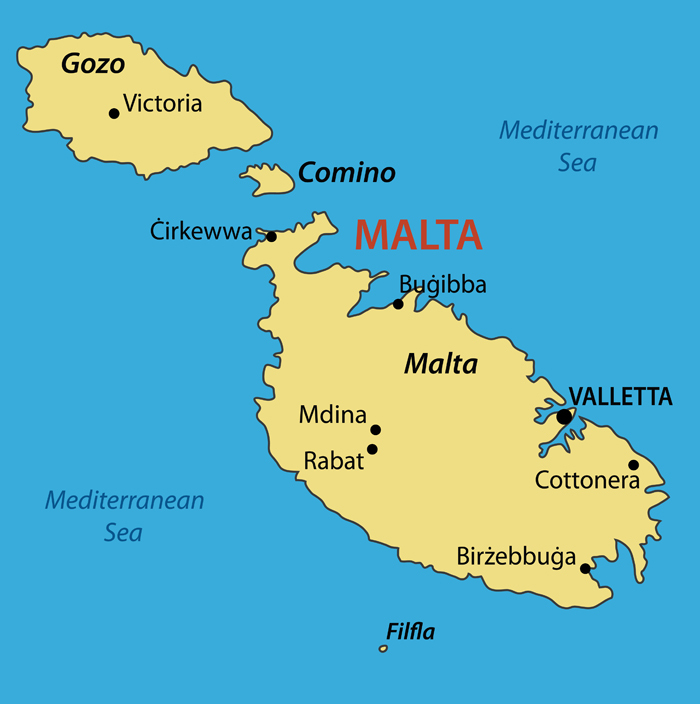
The Maltese archipelago – a group of several islands, the largest of which are Malta, Gozo and Comino – lies in the Mediterranean Sea, as far south as to be on the same latitudes as Tunisia in North Africa.  It enjoys an enviable climate of hot, dry summers and mild, wetter winters. To anyone from more northerly latitudes, like my fellow Brits, the French and the Germans, the island has a magnetic attraction, summer and winter alike. It also attracts visitors from across the globe, many of whom come to visit the wonderful historic sites.

shutterstock_105899297
The three main islands of the Maltese archipelago

The history of Malta dates back to the very dawn of civilisation, covering some 7000 years and so many different cultural periods – from the earliest appearance of Neolithic man, through the Bronze Age and the Phoenician and the Greek, Carthaginian, and Roman periods. All made their mark on Malta.

From the Roman occupation to the present time, the island underwent such changes as nation after nation fought for supremacy of its soils. As the very earliest settlers and invaders, these newer peoples came from the sea. The strategic position of the Maltese islands – at the crossroads of shipping routes across the Mediterranean Sea – made the islands highly desirable to warmongering nations wanting control of the seas.

The earliest known inhabitants on Malta (Neolithic times) arrived around 5,200 BC, likely after a perilous journey from Sicily on their primitive sea craft. They were a farming community, who brought bags of seed and flint and their tools with them.

Ruins and relics of the Temple Period on Malta, give insight into the associated rites and rituals (animal, but not human sacrifice), skills and crafts of the stoneworkers and so on of the culture. Those at Tarxien and Hagar Qim, date from 4,100-3000 are particularly well known. Here are some of the incredible designs on display at the Tarxien Temples site and the Museum of Archaeology in Valletta. The spiral patterns are a particular feature of all the temples, as are the female figurines.

In  AD 60, St. Paul the apostle was shipwrecked on the north-east coast of the island (in a bay now aptly called St. Paul’s Bay, where Bugibba stands on the map above). Here there are catacombs to visit, in which the early Christians held their services. Paul’s time on the island had long-lasting effects on the religion of the Maltese people, and there is much to be learned about his stay around Malta.

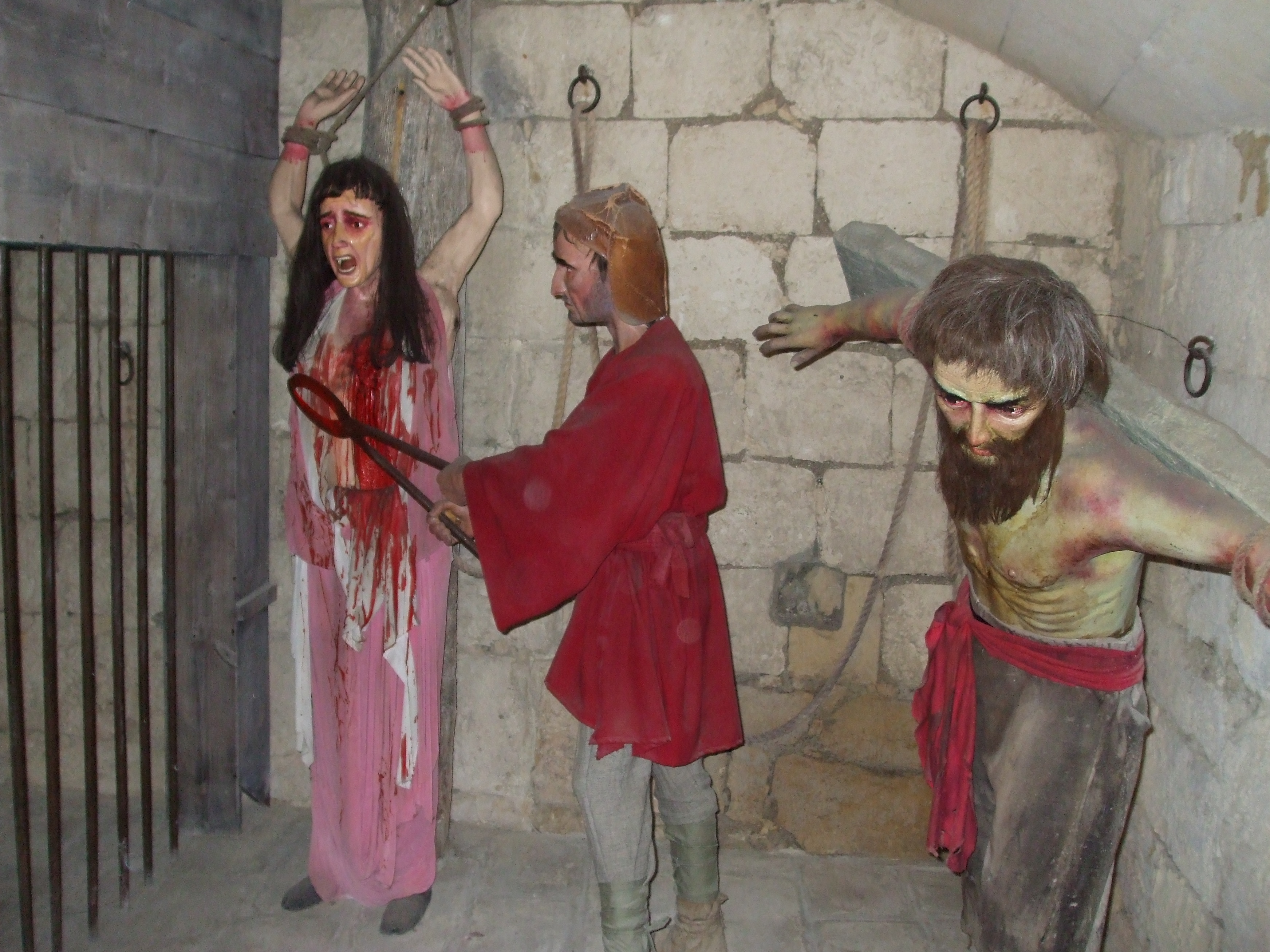
The Roman occupation of the island is interesting, although the museums tend to dwell a lot on their extreme cruelty to the native people.

117
Torture and pain administered by the Romans consisted mostly of flogging, hanging, beheading or crucifying. St, Agatha, who is reputed to have lived in the catacombs, was punished by having her breasts cut off.

Unfortunately, on Malta there is little left to show of Roman times, other than at one particular site and museum in Rabat. Again, here are a few photos we took of the remains of a villa and ruins of smaller dwellings and other buildings around it.

There is much in evidence of the Middle Ages on Malta in the architecture (although a great deal of all periods was destroyed in World War 11, and what we see is rebuilt / repaired structures). The Medieval Times museum in Mdina givess us with an excellent glimpse at the period.

Perhaps the best known period on Malta is that of the Knights of St. John. In both Valletta, Malta’s  capital city, and in Mdina, the older capital set inland, there are museums devoted to this vivid Maltese period. Here are a few photos of Mdina:

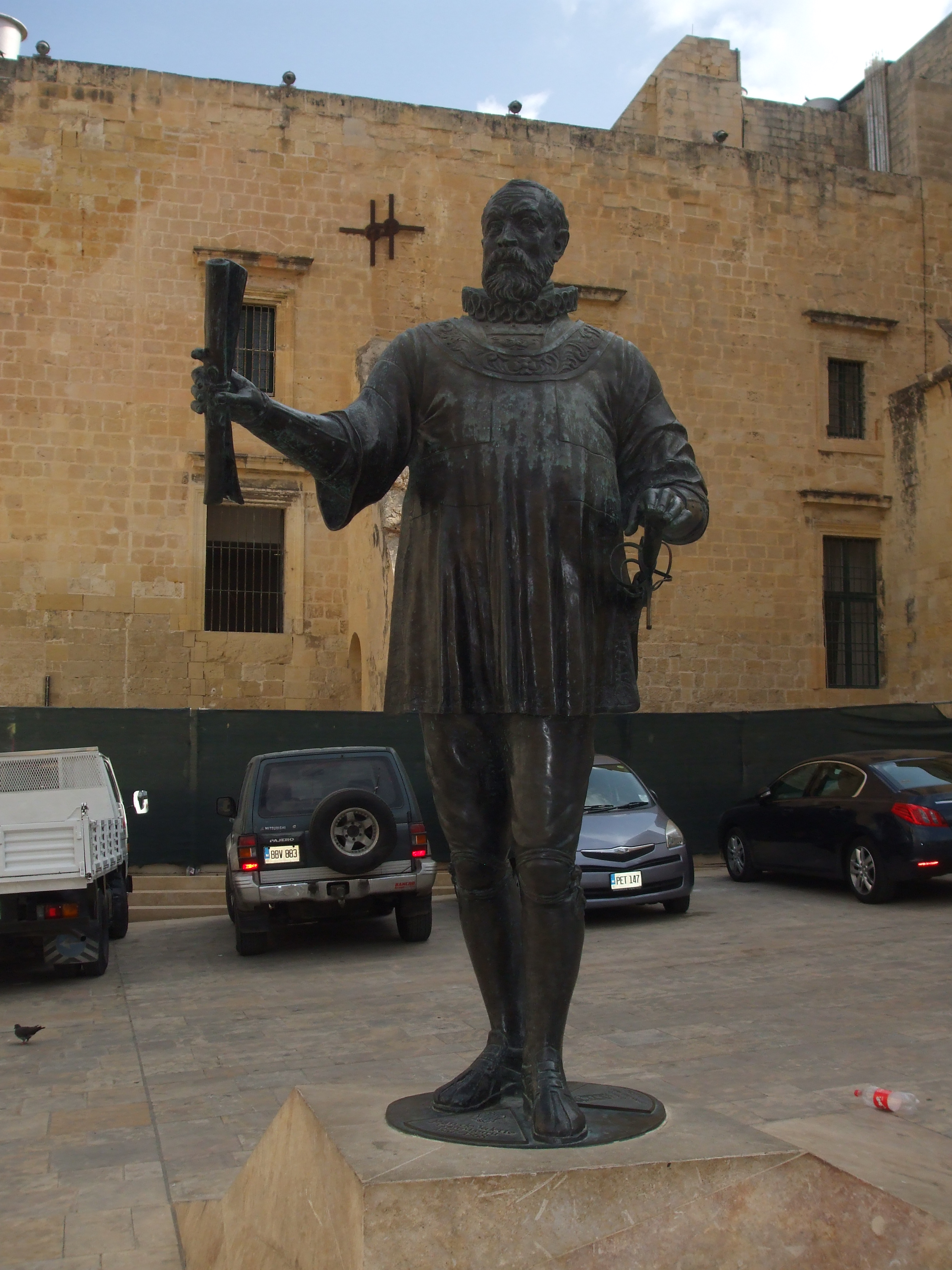
The coming of the Knights of St. John to Malta after they had been driven out of Sicily by Suleiman is ingrained into the Maltese culture. The name of Valletta itself is derived from the name of the Grand Master of the Order, Jean Parisot de la Valette. The fortress grew up on the rock of the Mount Sceberras peninsula, which rises steeply from between two deep harbours.

191
Statue of Jean Parisot de la Valette in Valletta

Some of the presentations of events at this period are extremely impressive, with moving seats, water sprays and so on. The Great Siege of 1565 by the Ottoman Turks under Suleiman the Magnificent really comes alive in these presentations and displays. One of the best collections of artefacts can be seen in the former Palace of the Grand Masters in Valletta. Here are a few of the exhibits:

St. John’s Co.Cathedral, also in Valletta, another place full of information about the Grand Masters. It is a particularly beautiful, awe-inspiring building. Here are just two of the many photos we took at these two sites:

The walls and ceilings of the cathedral are covered in paintings by two particularly well-known artists. One is  Mattia Preti, who spent much of his adult like devoted to ornamenting the cathedral. Preti began his career as an apprentice under Michelangelo Mensi da la Caravaggio, whose most admired work in the cathedral is The Beheading of Saint John the Baptist. See here for a link the painting. Caravaggio  led a tumultuous life and is known widely for his brawling, and the killing of a young man in 1606, sudden death at the age of 35.

 In 1798 the island was seized from the rule of the Knights of St. John by the Napoleon,  who was ousted by the British in 1800. British rule continued until Maltese independence on September 21 1964.

The people of Malta’s heroic efforts during World War 11 earned them the George Cross in 1942 – the greatest award for gallantry that can be awarded to civilians. Today a monument stands in Valletta to commemorate this:

Who  can fail to admire the Maltese spirit and enterprise? There is still much building work going on everywhere as the people strive to make their island an even more desirable place to live – and to visit. Their long and colourful history is amazing.

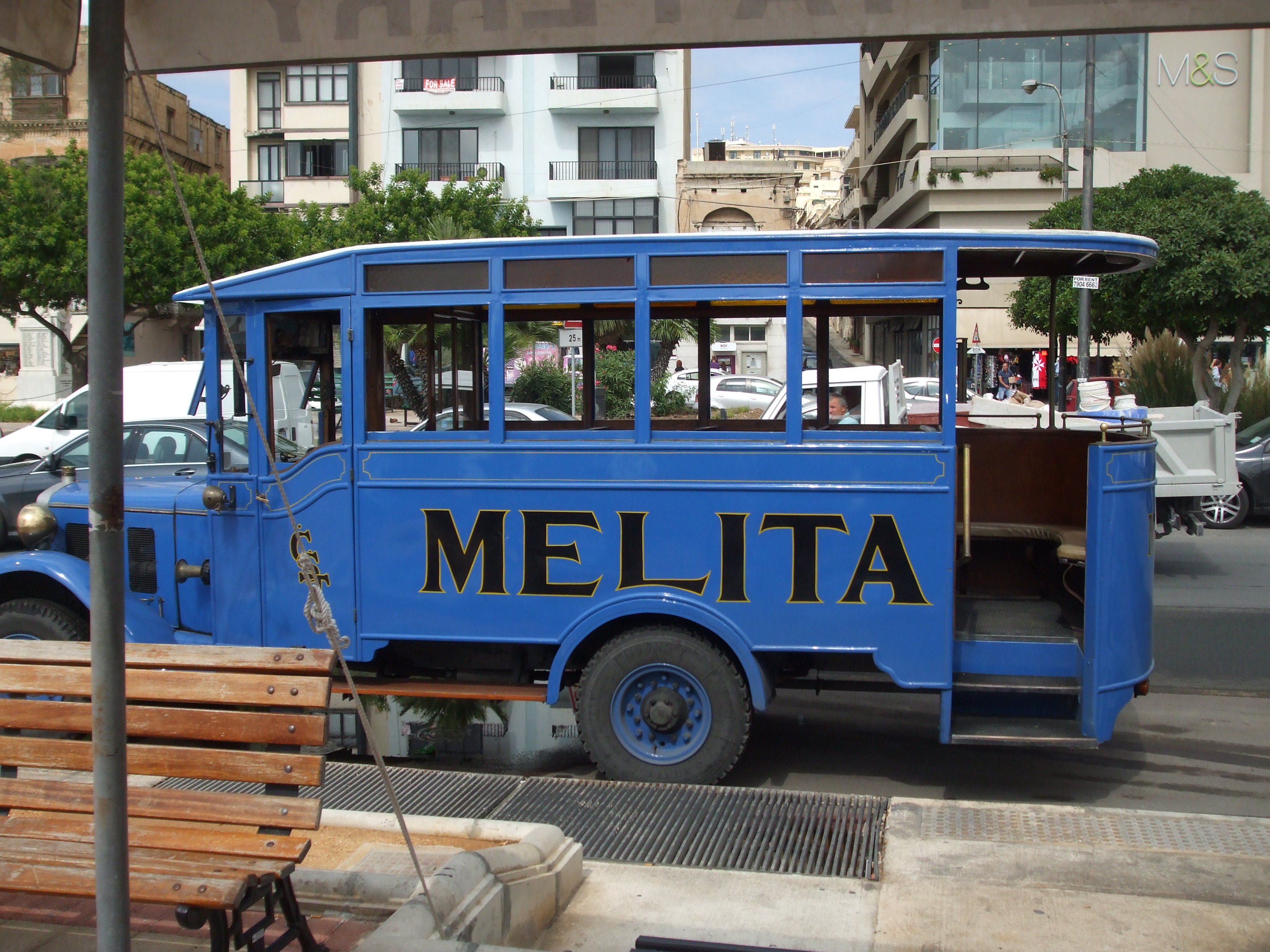
217
Old bus in Sliema showing the old name of Malta from Roman times
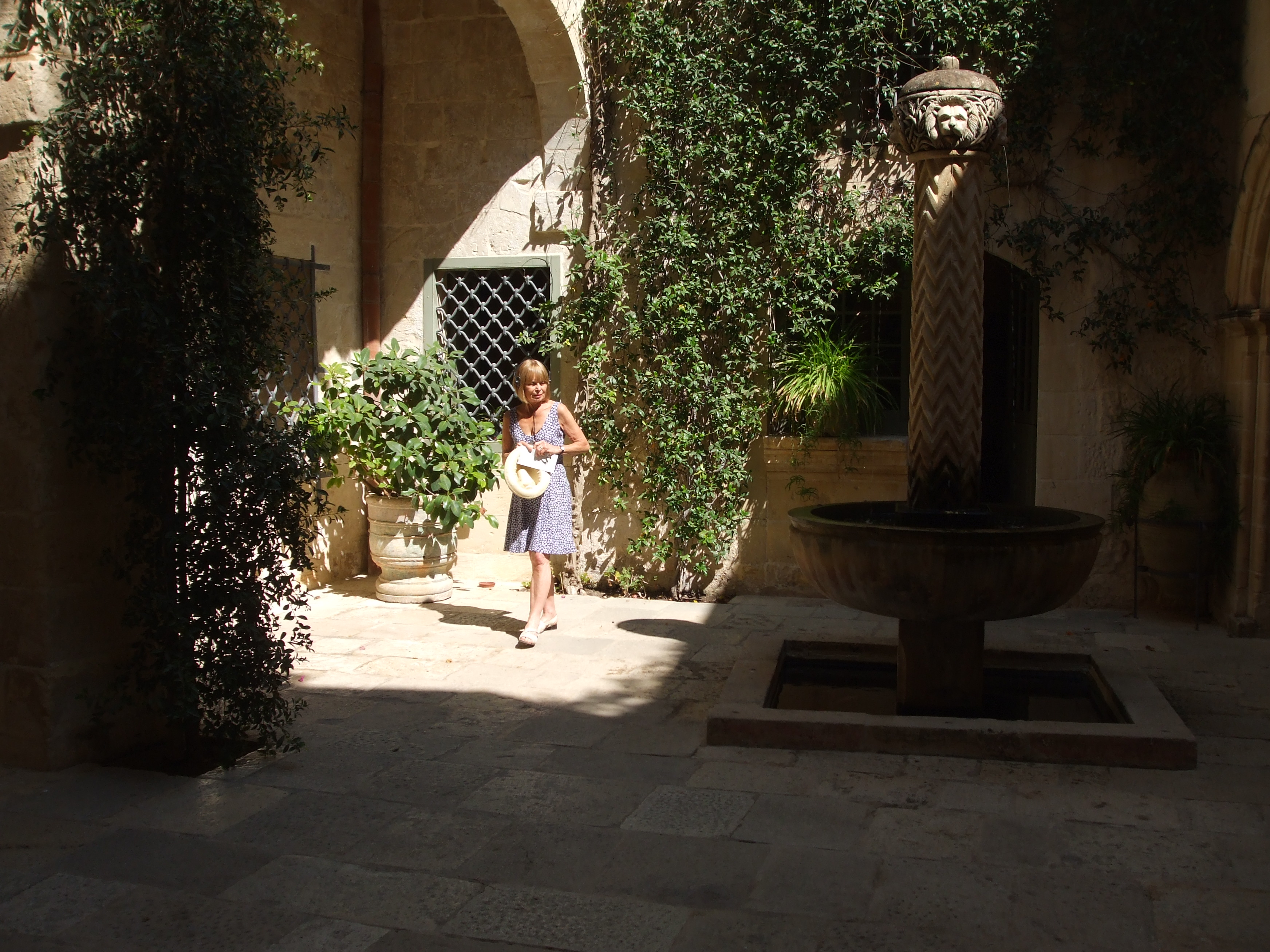
142
Me – enjoying the gardens in the Maltese sunshine

*****