
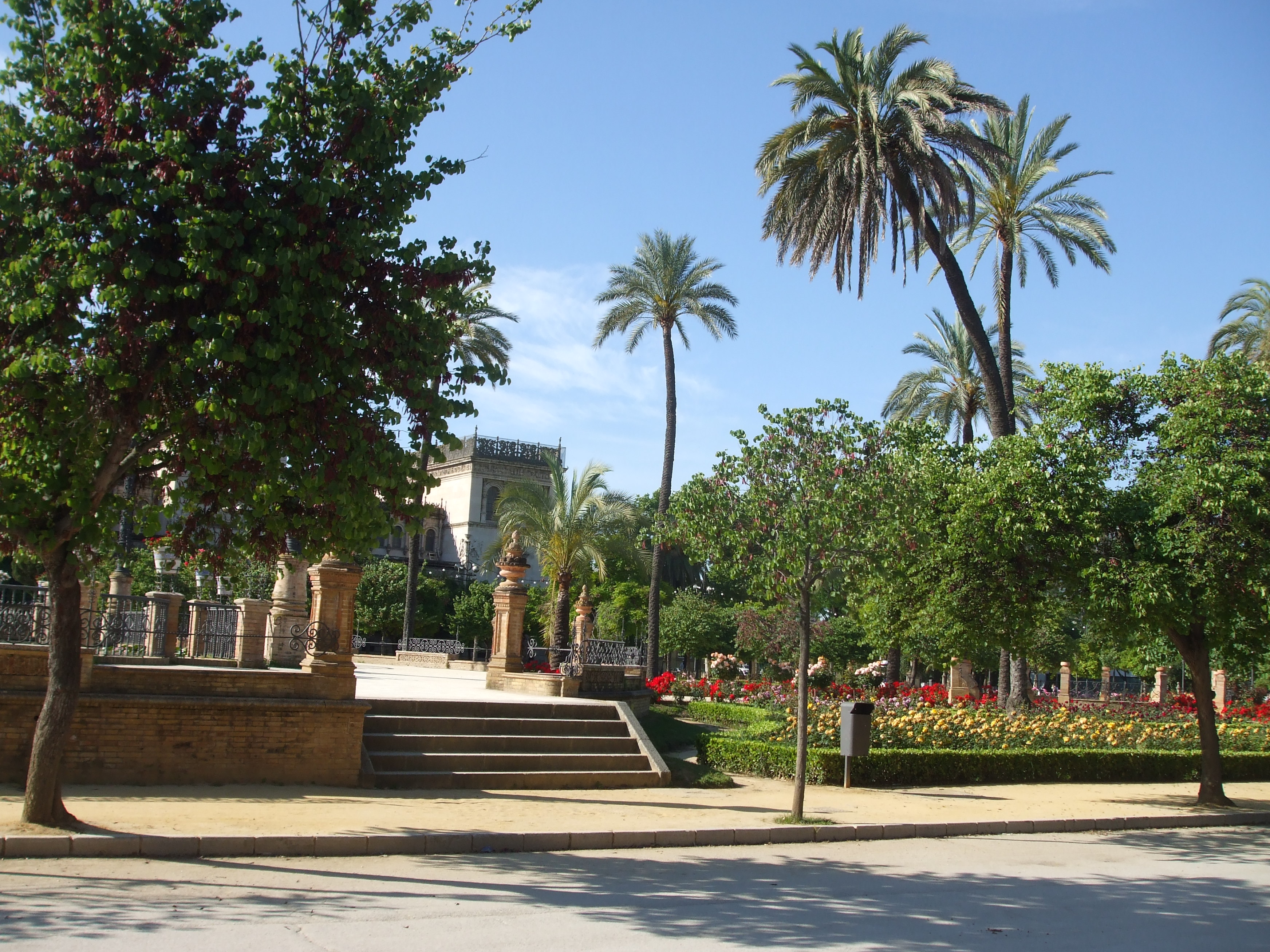
Seville (English spelling) is the capital of Andalucia and the third largest city in Spain. Greek mythology holds that it was founded by Hercules, but the truth is quite different. It was first settled in the 8th Century BC and later on by both Phoenicians and Carthaginians. Seville’s position on the Guadalquivir made it ideal for trade in inland Andalucia. The Romans called the city, Hispanis and founded the colony of Italica in the surrounding area. The Moors called it Ixibilia, from which the name of Sevilla is derived.
Moorish rule was a period of great splendour. Not only were there many magnificent buildings erected, it was a time of great cultural, political, social and economic significance. Yet, at the time in which my Vikings sail up the Guadalquivir in 871, Seville was of much less significance than Cordova (English: Cordoba) the Andalucian capital at that time. In 1248, the town was conquered by the Christian king, Fernando the Third.
The bougainvillea flower/bush can be seen in many places in Andalucía, and we saw a lot in Seville, especially in the gardens of the Alcazar – the Royal Palace. The flower has almost become an emblem of the region. It is native to South America, so I can only imagine it was one of the things brought back by the Conquistadores in the 15th and 16th Centuries.
Sevilla is a bustling city at any time of year, and over the weekend we were there, it wasn’t only full of foreign tourists. Friday, May 1st was May Day in Spain, and Spanish families were also enjoying a day out in Sevilla – many of them from other parts of the country. Queues to get into anywhere of interest were miles long, particularly into the Cathedral and the Alcazar (a royal palace). May and June are always manic in Spanish cities anyway, as this is the preferred time of year for weddings and confirmations into the Church. Everywhere, people in their best clothes were congregating on corners and close to churches.
On Saturday we visited the Plaza de España, one of the many additions to the city for the Expo (Iberian-American Exposition World’s Fair) of 1929. It is located in the beautiful Maria Luisa Park and today consists mostly of Government Buildings. The first picture here in not one of our photos, but it does show most of the width of this building. Either end curves round and ends in a tall tower. Our hilarious guide told us that these curved areas represented the arms of Spain, reaching out across the Atlantic to their conquered lands in Central and South America. Whether that was the architect’s intention or not, I’ve no idea.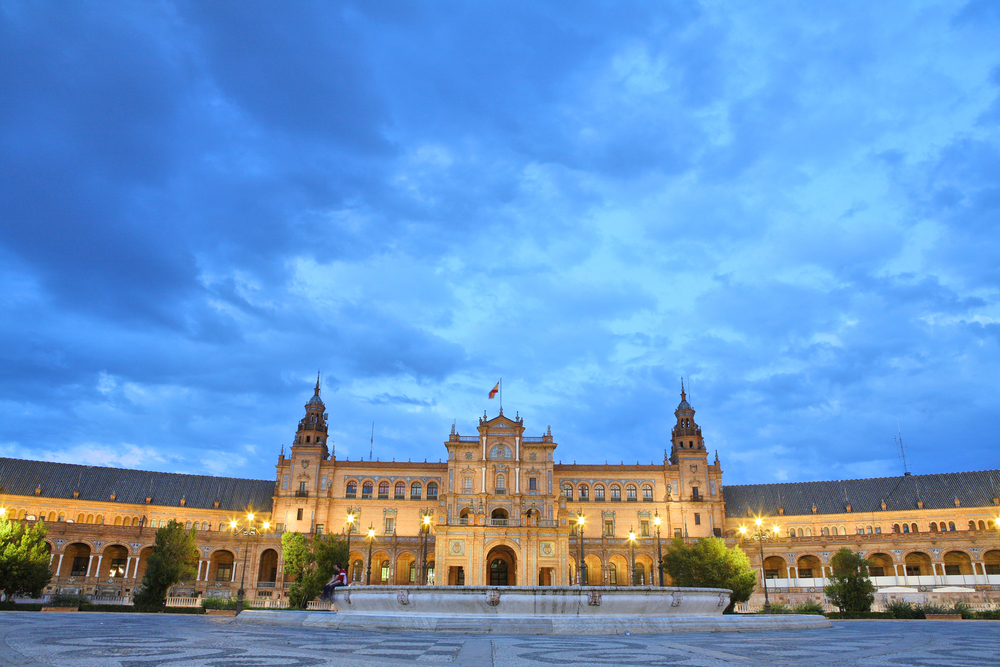
Here are a couple of our own photos, which show different parts of the building. They aren’t very good – some are too dark and others make the end towers look like the Leaning Tower of Pisa!


The fountain was in the middle of the plaza, but here we must have caught the bright sunlight wrongly: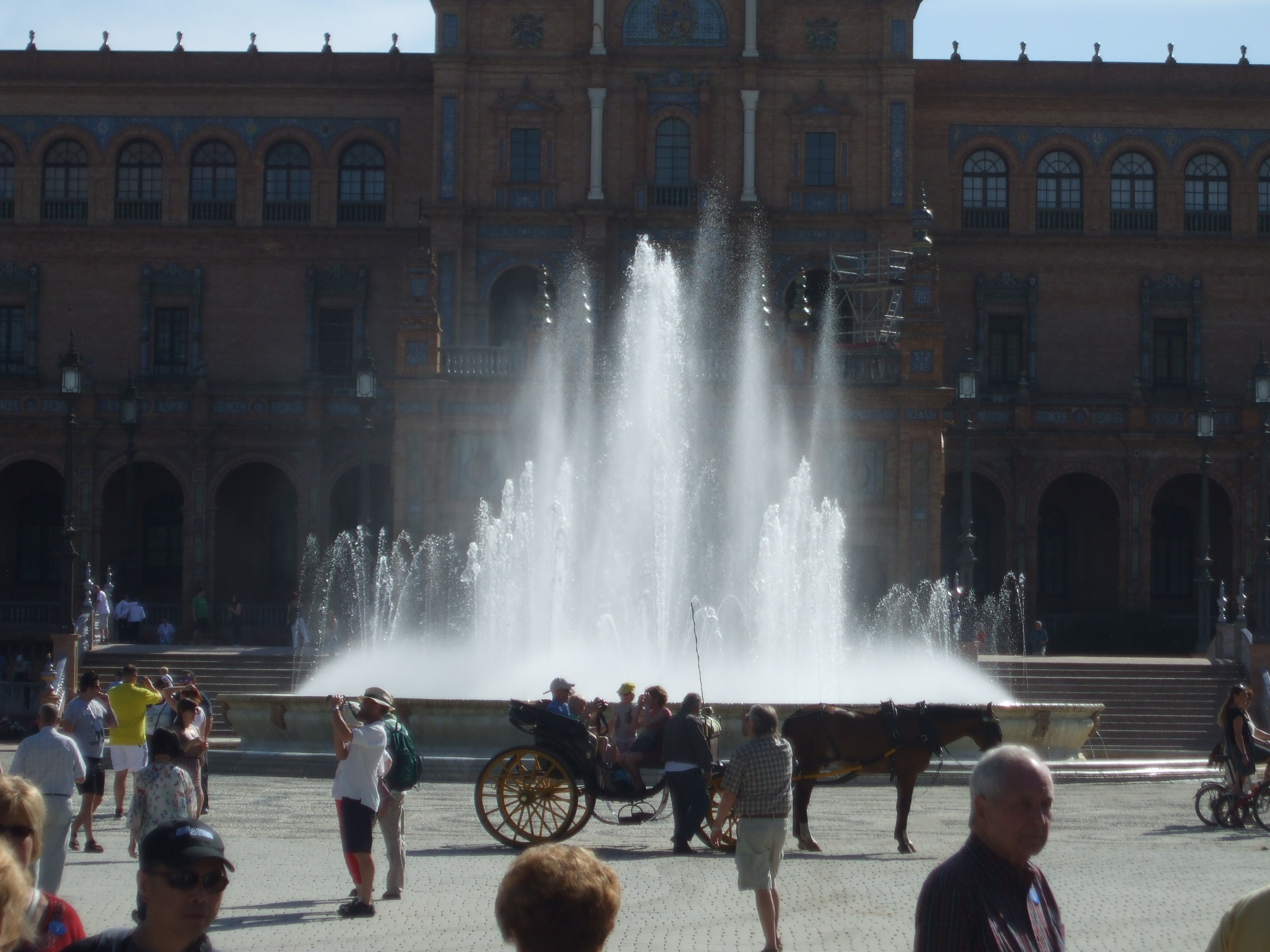
Later on, we had a boat ride along the Guadalquivir and had lots of interesting areas and buildings pointed out. It would have been so much better if the temperature had not been 36°C.
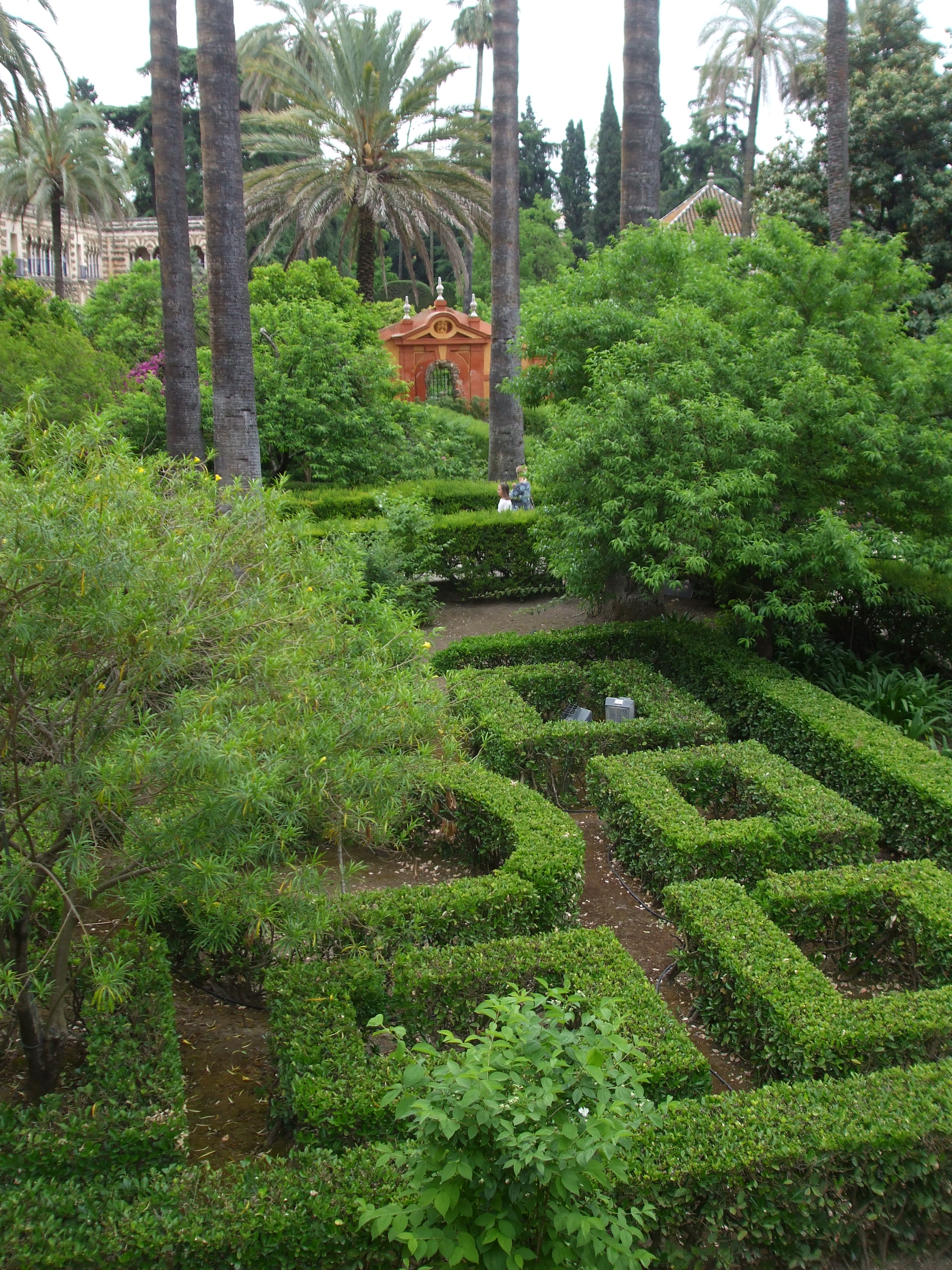
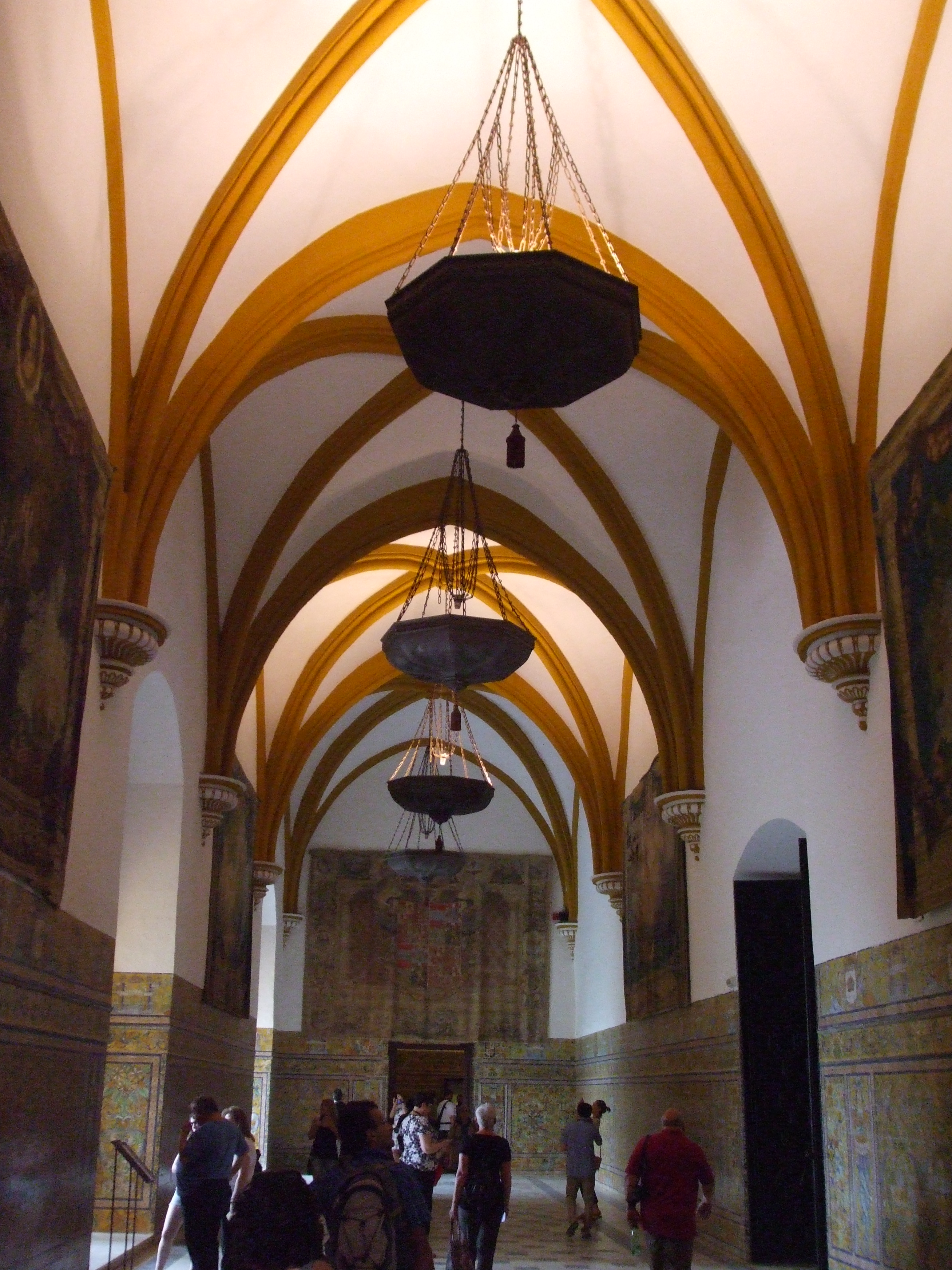
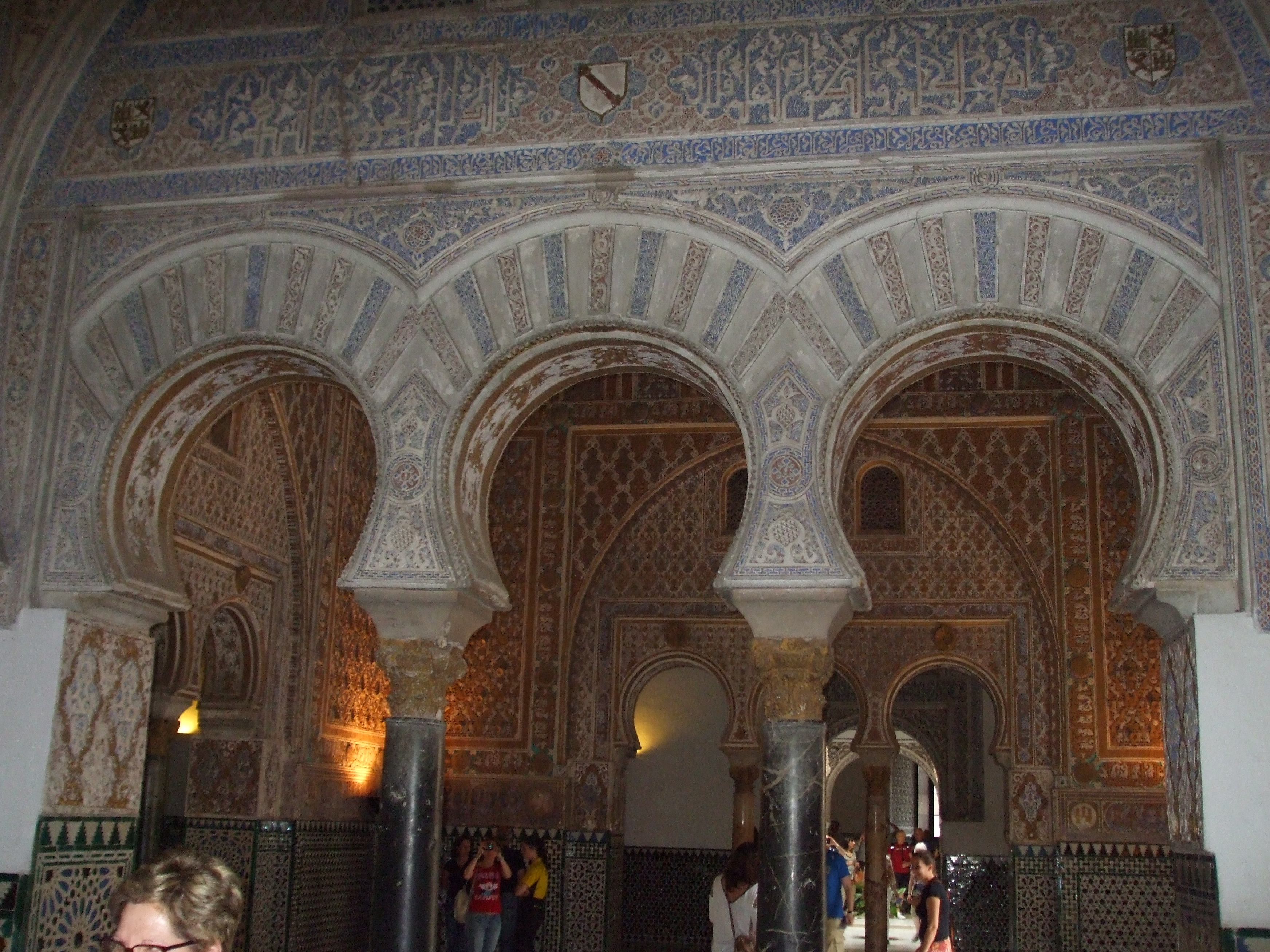
 On Sunday we managed to get into the Royal Alcazar of Seville – the oldest Royal Palace still in use in Europe. It was built in 11th Century AD. We queued for 45 minutes to get in, but it was worth the wait. The building and rooms inside are spectacular and the many gardens truly magnificent.


We didn’t manage to go inside Seville Cathedral, which was used for Church Services (Mass) until almost mid-afternoon on Sunday. All we managed was a quick snap of the outside, which really doesn’t do it justice. It is thought by many to be oddly situated, right in the middle of so many Moorish buildings. It is a very ornate structure (built between 1402 and 1506) and would need several photos to show it from different angles.
Seville also has a bullring, of course, and is the birthplace of the wonderful Flamenco dancing. It is also the town in which Carmen lived (as in Carmen, the Opera) where she worked in a tobacco factory. We spent Saturday evening watching the Flamenco dancers, who were absolutely brilliant – so colourful and full of energy! We were treated to swirling cloaks and shawls, whirling fans, castanets, superb guitar playing and singing and of course, the stamping of heels, flicking of hips and roses held between teeth! 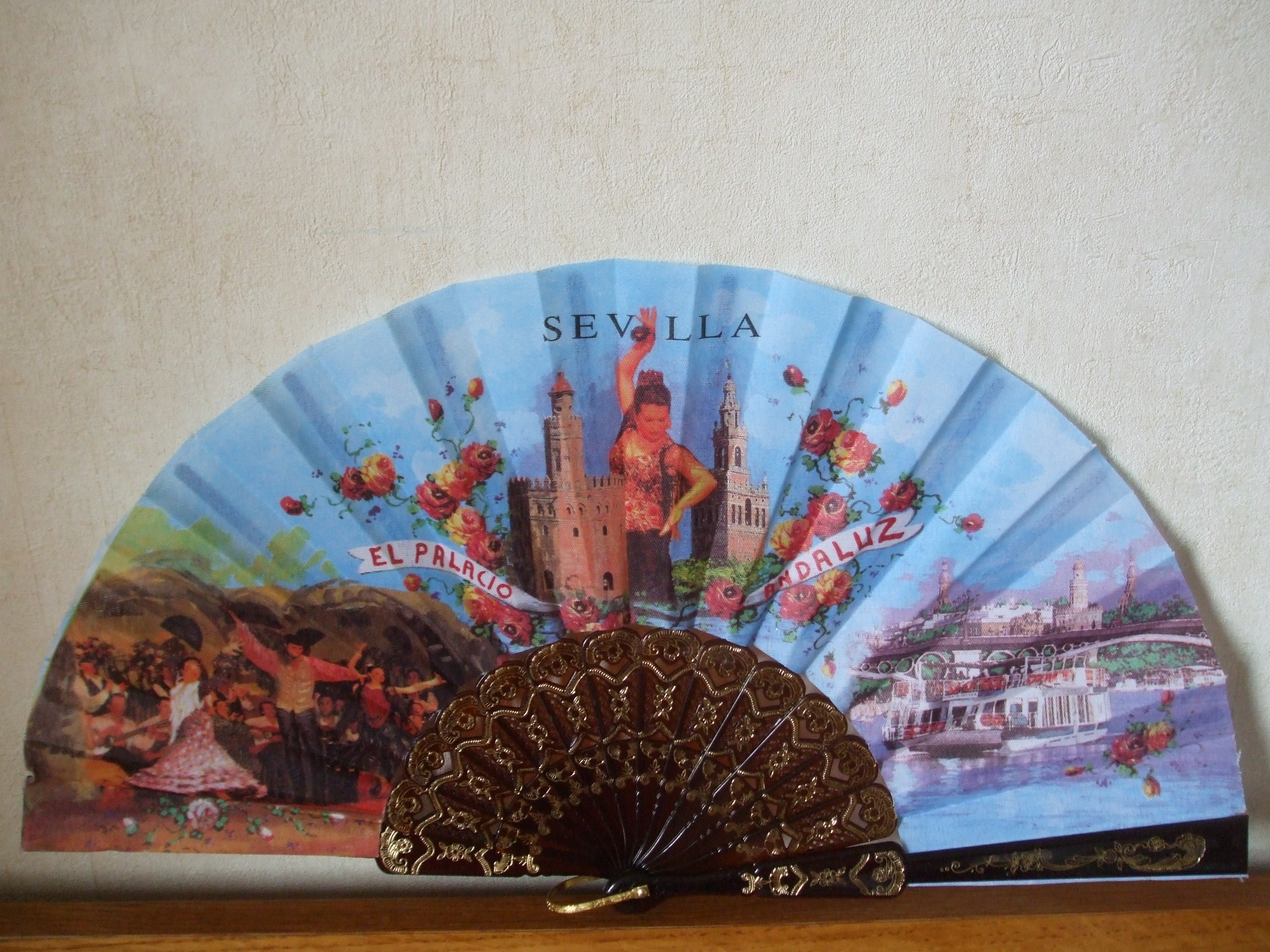
 Millie Thom